
Reviewed · KNOSSOS PALACE TOURS
Heraklion: Knossos Private Guided Tour & Skip-the-Line Entry
Knossos is where Greek myth meets solid stone, clay storage jars, and clever Bronze Age engineering. In 90 minutes, you’ll walk through the palace linked with the Minotaur, see the throne of King Minos, and hear how archaeologists separate legend from fact. Skipping the ticket line saves useful time, especially in summer.
I like the private format because your guide can answer questions instead of delivering a fixed speech. I also like the tight schedule: 90 minutes is long enough for the main palace areas without turning a hot archaeological visit into an endurance test. Guides such as Akrivi Chatzigeorgiou are praised for connecting Knossos with the archaeological museum and current research.
The main catch is the price, $206 per person, which is a serious expense for a short visit. Transportation is not included unless you add the optional transfer from Heraklion city, and the site is not suitable for wheelchair users, people with mobility impairments, or pregnant women.
Key points at a glance
- See Europe’s oldest throne: The throne associated with King Minos is one of the tour’s central sights.
- Connect myth with archaeology: Your guide explains the Minotaur, the labyrinth, and the real Bronze Age palace behind the stories.
- Enter with a private guide: The group is private, so you can ask questions and set the pace within the 90-minute visit.
- Look for advanced engineering: Ancient drains, storage areas, sunken rooms, and workshops show how sophisticated Knossos was.
- Choose an early start: A 9 a.m. visit can mean less heat and fewer crowds, based on the practical experience shared by one family.
- Plan your own transport: Meet at the Knossos ticket booth, or add a paid round-trip transfer from Heraklion city.
Why Knossos deserves a guided visit
Knossos is not a single ruined temple. It is a huge palace complex with more than 1,500 interlocking rooms, built for a powerful Bronze Age ruler. The first palace was erected soon after 2000 BC, then destroyed by an earthquake around 1700 BC. A new palace followed and remained the main center of power in Crete for more than 300 years.
That scale can be hard to grasp without help. Stone walls, reconstructed sections, open courtyards, and partial rooms spread across the site. A good guide gives you the thread to follow: this was a royal center, ceremonial space, storehouse, workshop, and administrative hub all at once.
I like that the experience does not treat mythology as simple fact. The stories of the Minotaur, King Minos, and the labyrinth are tied to the physical remains, but the guide also explains what archaeology can actually support. That mix makes the visit more useful than a quick walk through the ruins with a few signs.
The palace also gives you a look at everyday life. The royal quarters, storage spaces, large clay jars, sanctuaries, and drainage systems show how people lived and worked here. Knossos was not only about kings and ceremonies. It was a functioning center with food storage, craft areas, water management, and rooms for domestic life.
More Minoan history near Crete:
- Crete: Knossos Palace Entry Ticket with Optional Audio Guide
★ 3.9 · 2,251 reviews - Knossos: Knossos Palace Skip-the-Line Guided Walking Tour
★ 4.8 · 1,380 reviews - Crete: Knossos Palace & Heraklion Guided Tour
★ 4.4 · 1,127 reviews
Meeting your guide at the Knossos ticket booth
The meeting point is at the ticket booth at Knossos. A check-in operator waits there with a sign carrying the WeGuide.gr meeting-point logo. Check-in begins 20 minutes before the tour starts, so you should arrive with enough time to find the booth and avoid a rushed beginning.
You do not meet in central Heraklion unless you have booked the optional transfer. The normal arrangement requires you to reach Knossos yourself by local bus, car, or taxi. This matters when planning your morning, since the site can be crowded in summer and city traffic may slow a taxi ride.
The optional round-trip transfer is available from Heraklion city only. If you are staying elsewhere, an additional fee may apply, and you need to request a quote. The transfer can make sense if you prefer a simple door-to-site arrangement, but it raises the total cost beyond the already high per-person tour price.
Bring your passport or ID card, including identification for children. You should also carry water, sunscreen, sunglasses, and a sun hat. Comfortable shoes are essential. Large bags and luggage are not allowed, so leave suitcases at your accommodation rather than arriving with them.
Skipping the line and entering the palace
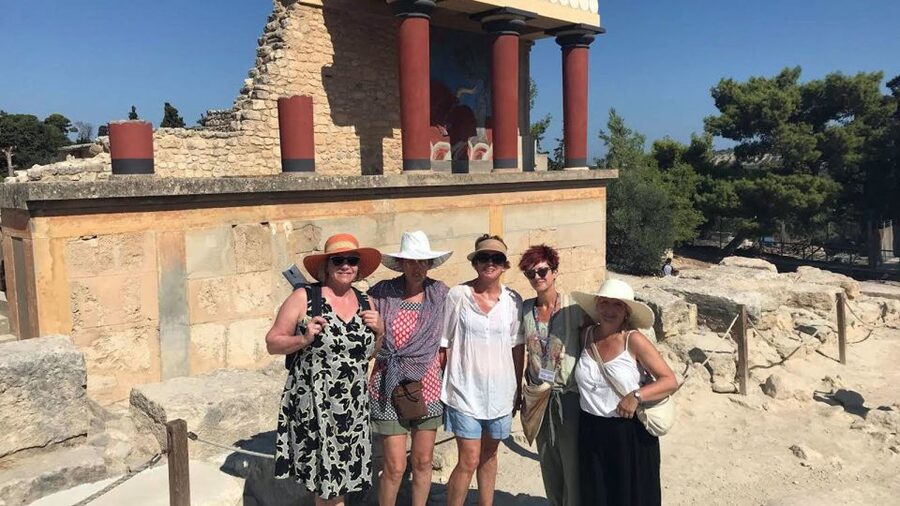
The skip-the-line entry is one of the clearest practical benefits. You receive entrance tickets as part of the tour and avoid waiting in the regular ticket line when you arrive. That does not remove the need to check in with the operator, so do not arrive at the last second.
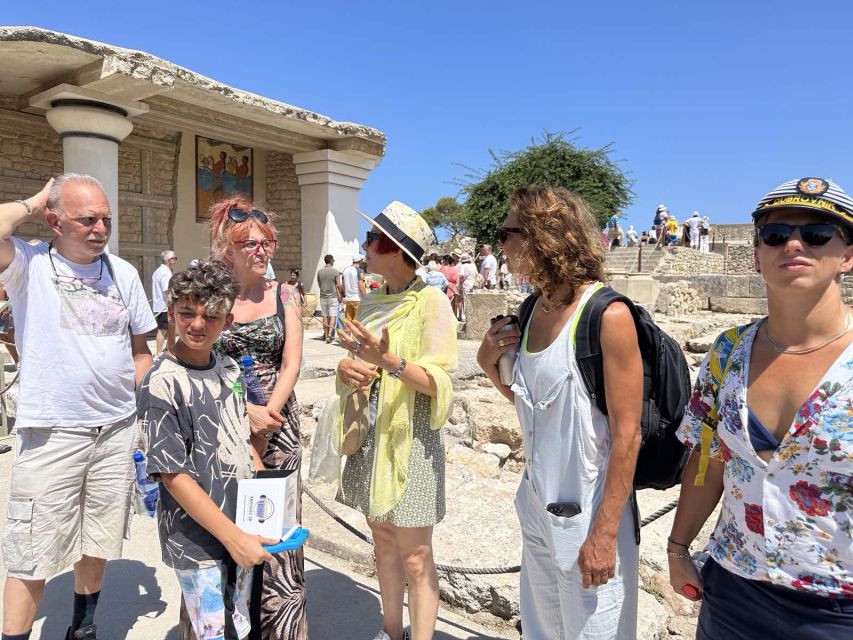
Once inside, your private licensed guide leads the visit through the main palace areas. The route is designed to make sense of a complex site that can otherwise feel scattered. You will see the most important remains while hearing how the rooms fit together.
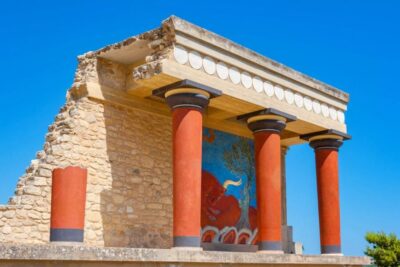
The palace was built across four storeys and included large courts, workshops, storage areas, ceremonial spaces, and domestic quarters. Not every part survives in an equally clear form, and some of what you see reflects reconstruction. That is one reason a guide matters. You can ask which features are original remains and how modern interpretation has shaped the site.
The private group format is especially useful for families and small groups. One family of two adults and two teenagers found that their guide linked Knossos to things they had already seen at the archaeological museum. That kind of connection gives children and teens a clearer picture than treating each ancient object as a separate fact.
The throne of Minos and the royal rooms
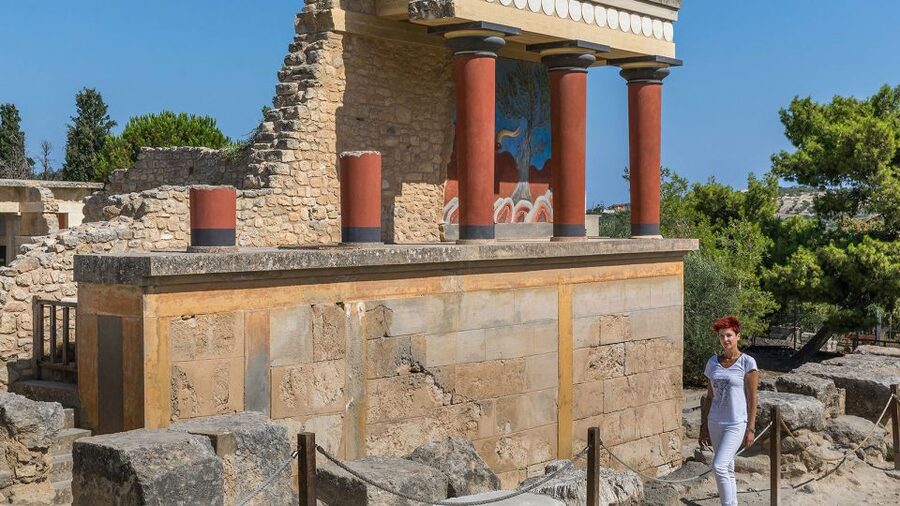
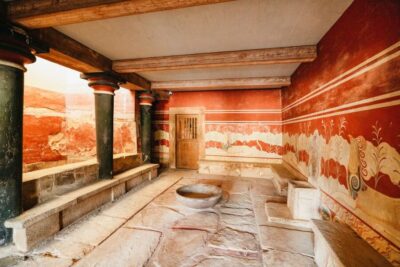
The throne associated with King Minos is the headline sight. It is often described as the oldest throne in Europe, and the visit gives you a chance to see it in its original setting rather than only in a museum display.
The throne room is important not just because of the object itself. It helps you picture Knossos as a seat of authority, ceremony, and administration. Your guide can explain the myths surrounding Minos while placing the room in the wider Bronze Age palace.
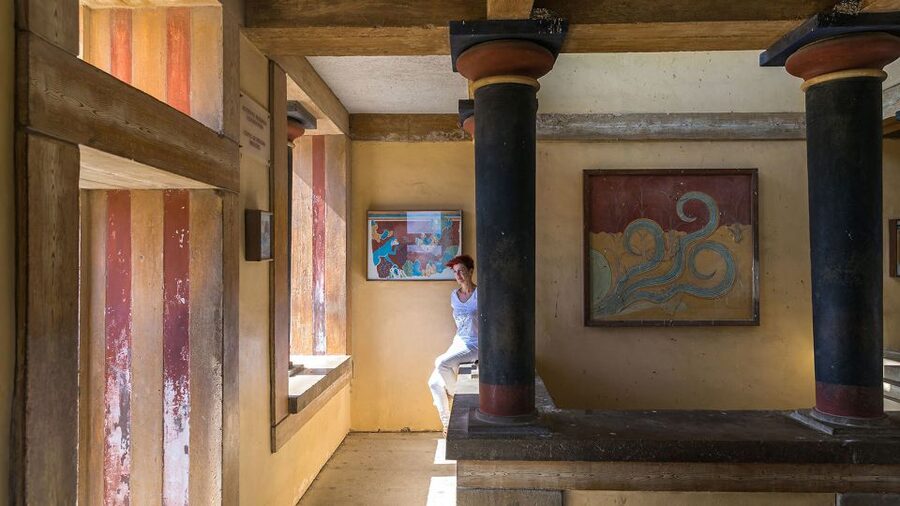
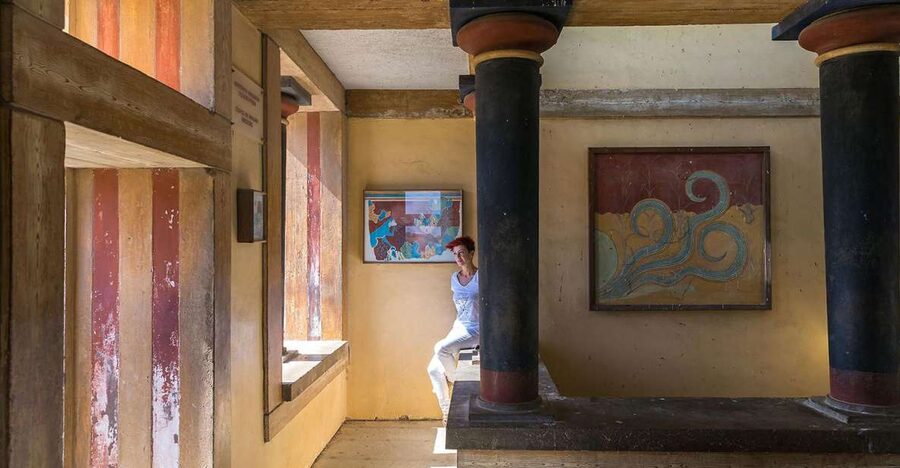
The royal domestic quarters offer another side of Knossos. The tour includes the beautiful dolphin apartment of Queen Pasiphae, with its decorative imagery and connection to the palace’s more comfortable rooms. These spaces help balance the grand story of kings with evidence of private life and decoration.
You will also see elegant wall paintings. Their bold designs later inspired Art Nouveau artists, though the surviving and reconstructed portions need to be understood in context. A guide can help you notice patterns, colors, and subjects rather than simply calling them pretty.
The site has several details that reward close attention:
- Huge clay storage jars show how food and supplies were kept.
- Sanctuaries point to religious activity within the palace.
- Specialized workshops reveal organized production.
- Sunken quarters add to the sense of a layered, maze-like complex.
- Drainage systems show careful planning for water and sanitation.
These features are easy to miss if you are focused only on the Minotaur story. I would pay equal attention to the practical systems. They show why Knossos was powerful: it could support a large court and an organized society.
A few more things to do in Crete worth a look
- Knossos Palace Skip-the-Line Ticket & Private Guided Tour
★ 4.9 · 633 reviews - Essential Athens Highlights Plus Cape Sounion Skip-The-Line Tour
★ 5.0 · 705 reviews - Athens Skip the Line: Open Air Ancient Greek Theatre Performance
★ 4.5 · 520 reviews - Half Day Athens Private Tailor-Made City Tour (Skip the line of Acropolis)
★ 4.5 · 198 reviews
Myth, Minotaur, and the real labyrinth
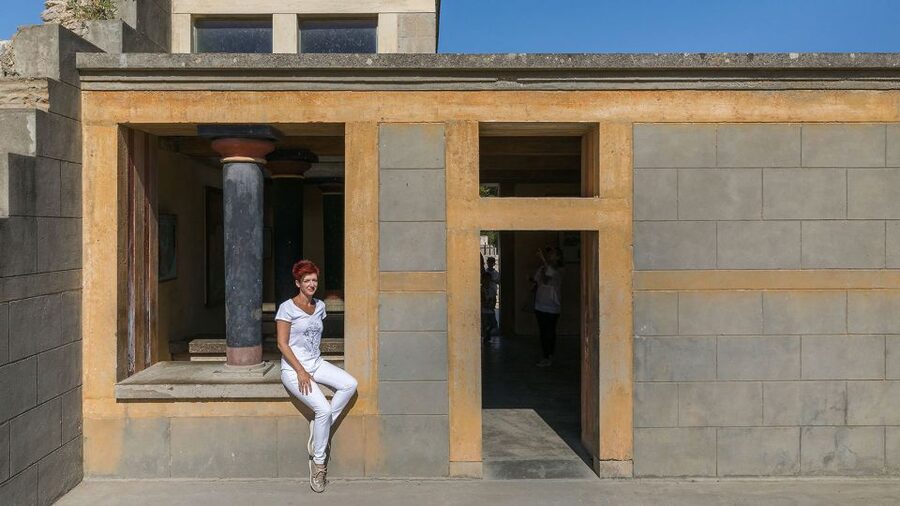
The word labyrinth is closely tied to Knossos, but the actual site is not a dark underground maze like the popular story suggests. The palace had an astonishing number of connected rooms, stairs, courtyards, storage areas, and corridors. To a visitor moving through it, that complexity helps explain why later generations connected the place with a maze.
Your guide brings in the story of the Minotaur and the thread of Ariadne, then places those legends beside the archaeological evidence. That approach is more satisfying than either extreme. You do not need to accept the myths as literal events, and you do not need to ignore them as mere fiction. They are part of how Knossos has been remembered and understood.
The mythology also gives younger members of your group an easy way into the site. A good storyteller can use the tale as a starting point, then move toward palace design, religious practice, trade, and daily life. The guide praised in one family’s visit did exactly that, tying the stories to the archaeological museum and keeping two teenagers engaged.
Akrivi Chatzigeorgiou is identified as the experience provider, and one highly praised guide named Akrivi is described as especially effective at connecting mythology with archaeological reality. Other guide names are not provided, but licensed guides are available in English, French, Russian, and Greek.
A 90-minute route that keeps moving
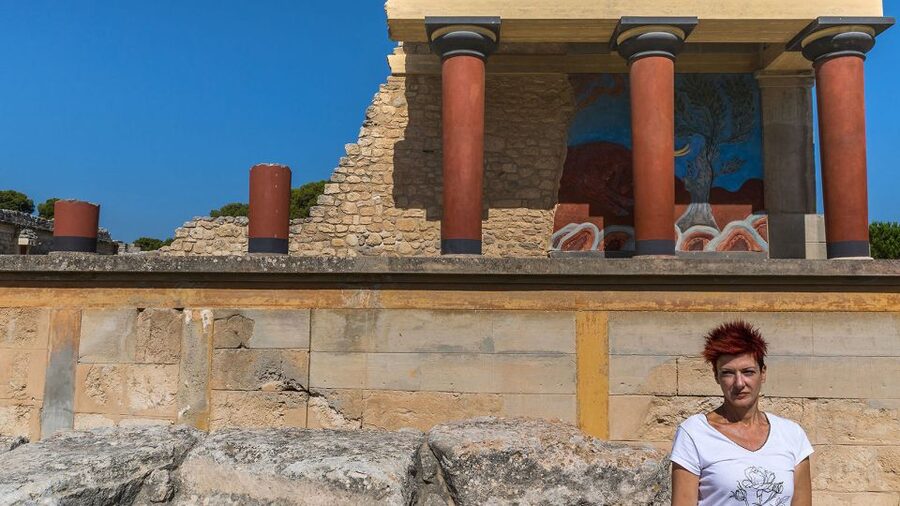
The scheduled guided visit lasts 1.5 hours. That is a sensible length for Knossos, especially under the strong Cretan sun. You have enough time for the palace’s major areas, but you are not committing to a half-day excavation visit.
The first part of the tour sets up the palace and its Bronze Age role. You then move through the main remains, with stops for the throne, royal rooms, wall paintings, storage jars, sanctuaries, and engineering features. The precise order may vary with crowd levels and the guide’s route.
One guide was praised for moving the group around crowded spots and areas of excessive sun. That is a useful benefit of a private visit. Your guide can adjust the pace and may choose a better place for explanations instead of stopping in the middle of a packed passage.
The short duration also means you should arrive with realistic expectations. You will not study every room or explore every corner of a complex with more than 1,500 rooms. You will get a focused introduction to the palace’s main story and key remains.
If you want a slower archaeological study, this may feel brief. If you want the essential Knossos experience before visiting the museum, spending time in Heraklion, or continuing elsewhere in Crete, the format works well.
Why an early morning visit makes sense
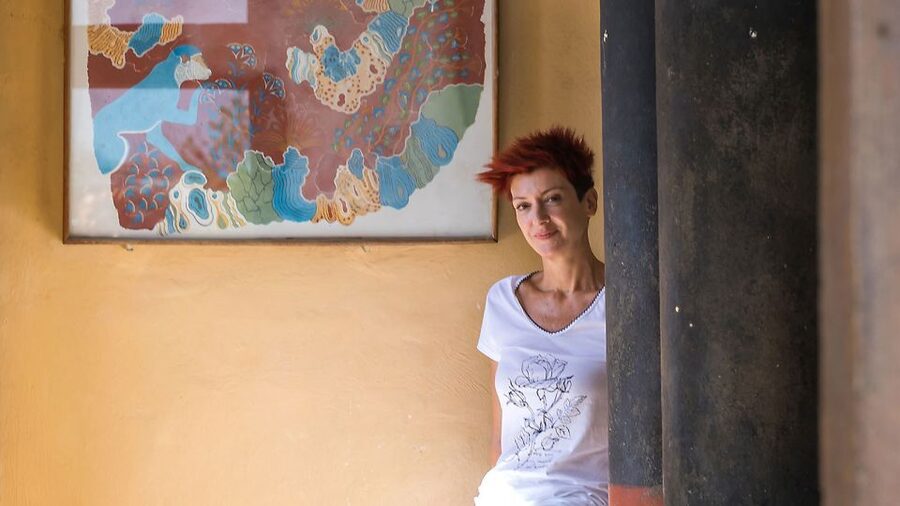
A 9 a.m. start is a smart choice if the schedule allows it. One family found that this timing brought less heat and fewer crowds, while the 90-minute length felt just right. Summer conditions can make a major difference at an exposed archaeological site.
Earlier entry also gives you a better chance of hearing the guide clearly and taking in the rooms without constant congestion. The site can be crowded during summer, so I would choose the earliest practical time rather than treating the start time as an afterthought.
You still need sun protection. Wear a hat, use sunscreen, and bring water. Comfortable shoes matter because the ground can be uneven, and the experience involves walking through an extensive ruin rather than sitting in one place.
The tour is not suitable for pregnant women, wheelchair users, or people with mobility impairments. The available information does not promise a fully accessible route, so anyone with movement concerns should not assume that the entire visit will be easy.
Is $206 per person a fair price?
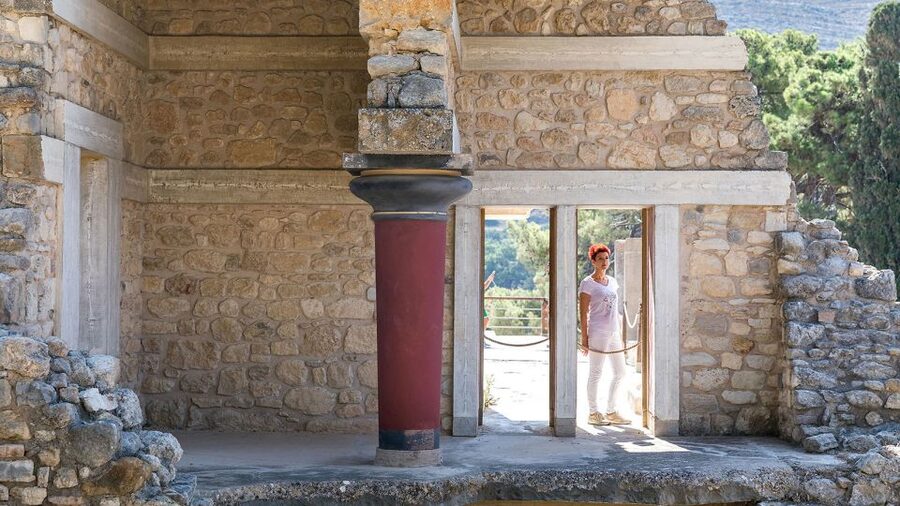
At $206 per person, this is not a budget entry to Knossos. The price includes entrance tickets, a licensed guide, skip-the-line access, and a private group. Food, drinks, and hotel pickup are not included.
The value depends on how much you want from the site. If you only need entry and are happy to read signs or explore independently, the price may feel too high for 90 minutes. You are paying mainly for private attention, interpretation, and time saved at the ticket booth.
For a family or small group that would otherwise hire a guide separately, the calculation may look better. The guide can adapt explanations to adults, children, or teens, answer questions, and link Knossos with the archaeological museum. That personal connection is the strongest reason to choose this format.
The private setting also helps if mythology, architecture, and archaeology interest different people in your group. One person can ask about the Minotaur, another about drainage systems, and another about the frescoes without having to follow a fixed large-group script.
Still, the visit is short. If you are comparing it with a longer private tour, check exactly what is included before booking. The optional transfer from Heraklion city costs extra, and transport from another location may require a separate quote.
Free cancellation is available up to 24 hours before the start time, and you can reserve now and pay later. Those terms give you some flexibility, but they do not change the basic cost calculation.
Who will get the most from this Knossos tour?
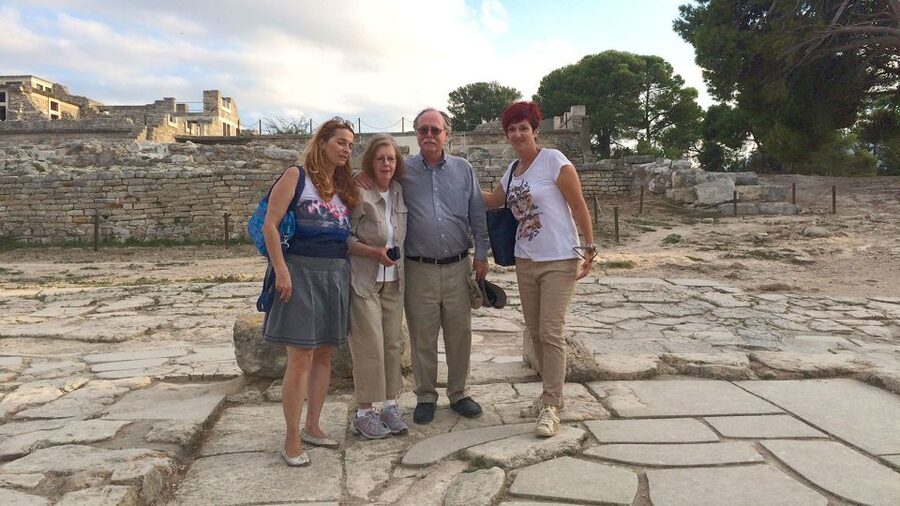
I would recommend this experience to:
- First-time visitors who want the palace explained in clear terms.
- Families with older children or teenagers who need a strong story to hold their attention.
- Small groups that prefer private questions and a flexible pace.
- Museum visitors who want to connect objects seen in Heraklion with the place where the Bronze Age culture developed.
- People who dislike ticket lines and want to make the most of a short morning.
- Anyone interested in the meeting point between Greek mythology and archaeology.
I would be more cautious if you are watching every euro, want a long archaeological study, or need step-free access. The price is high for a 90-minute visit, and the site’s physical conditions require comfortable walking shoes and careful planning in hot weather.
Practical details before you book
The tour is offered in English, French, Russian, and Greek. It is a private group experience with a licensed guide, and entrance tickets are included.
Plan to arrive at the Knossos ticket booth 20 minutes before your start time. Look for the operator holding the WeGuide.gr meeting-point sign. Do not confuse the meeting point with a hotel pickup, unless you have added the optional Heraklion transfer.
Reach the site by local bus, car, or taxi if you are making your own way. Allow extra time during summer, when the road and entrance area can be crowded.
Carry only what you need. Large bags and luggage are not allowed. Bring your passport or ID card, water, comfortable shoes, sunglasses, a hat, and sunscreen.
Should you book this private Knossos visit?
Book it if you want Knossos explained rather than simply entered. The strongest parts are the private guide, the mythology-to-archaeology connection, the skip-the-line entry, and the chance to see details such as the throne, dolphin apartment, frescoes, storage jars, and drainage systems in context.
I would choose an early start, especially in summer, and add the Heraklion transfer only if arranging your own transport is inconvenient. At $206 per person, it is best for people who value personal attention and a focused visit. If you are comfortable exploring alone and have plenty of time, a cheaper entry option may suit you better.
FAQ
Where does the Knossos tour begin?
You meet at the ticket booth at the Palace of Knossos. A check-in operator waits there with a WeGuide.gr meeting-point sign, and check-in begins 20 minutes before the tour.
How long does the guided visit last?
The guided visit lasts 1.5 hours, or 90 minutes.
Are entrance tickets included?
Yes. Entrance tickets and a private tour with a licensed guide are included.
Is hotel pickup included?
No. Hotel pickup and drop-off are not included in the standard tour. Optional round-trip transfers are available from Heraklion city only.
What languages are available?
Guides are available in English, French, Russian, and Greek.
Can I reach Knossos by public transportation?
Yes. You can reach the archaeological site by local bus from Heraklion, or by car or taxi.
What should I bring?
Bring your passport or ID card, comfortable shoes, sunglasses, a sun hat, sunscreen, and water. Children also need a passport or ID card.
Is the tour suitable for wheelchair users?
No. The experience is not suitable for wheelchair users, people with mobility impairments, or pregnant women. Large bags and luggage are also not allowed.
Just added in Crete
- Chania: 7 Villages of Apokoronas Tour with Lunch★ 4.7 · 289 reviews
- Heraklion: Self-Driving 4X4 Jeep Off-Road Tour with Lunch★ 4.6 · 26 reviews
- Crete: Samaria Gorge Hike★ 4.4 · 201 reviews
- Samariá Gorge Hike: Day Excursion from Chania★ 4.4 · 49 reviews
- Rethymno: Old Town Walking Tour with Meal★ 4.9 · 73 reviews
- Rethymno: Old Town Segway Tour★ 4.9 · 39 reviews
- Rethymno: Pirate Boat Cruise with Swimming Stops★ 4.1 · 255 reviews
- From Rethymno: Lake Kournas and Villages Full-Day Tour★ 4.4 · 45 reviews
Knossos Palace Tours, compared.
Knossos Palace Entry Ticket with Optional Audio Guide
Read our review →
Knossos: Knossos Palace Skip-the-Line Guided Walking Tour
Read our review →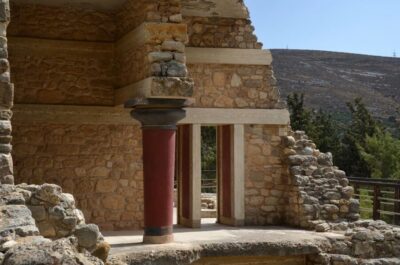
Knossos Palace and Museum E-Tickets with Audio Guides
Read our review →
Knossos-Zeus Cave -Old Traditional Villages-Olive Oil Factory
Read our review →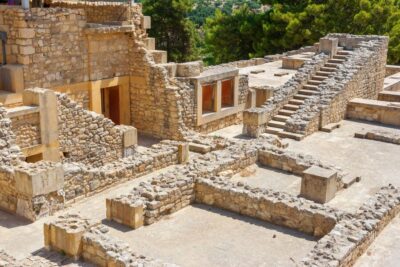
Knossos Palace Skip-the-Line Ticket & Private Guided Tour
Read our review →
Knossos, Lasithi, Lasinthos and Olive Farm Combo Tour
Read our review →Browse the lists this tour appears in