
Reviewed · KNOSSOS PALACE TOURS
Knossos Palace Skip-the-Line Ticket & Private Guided Tour
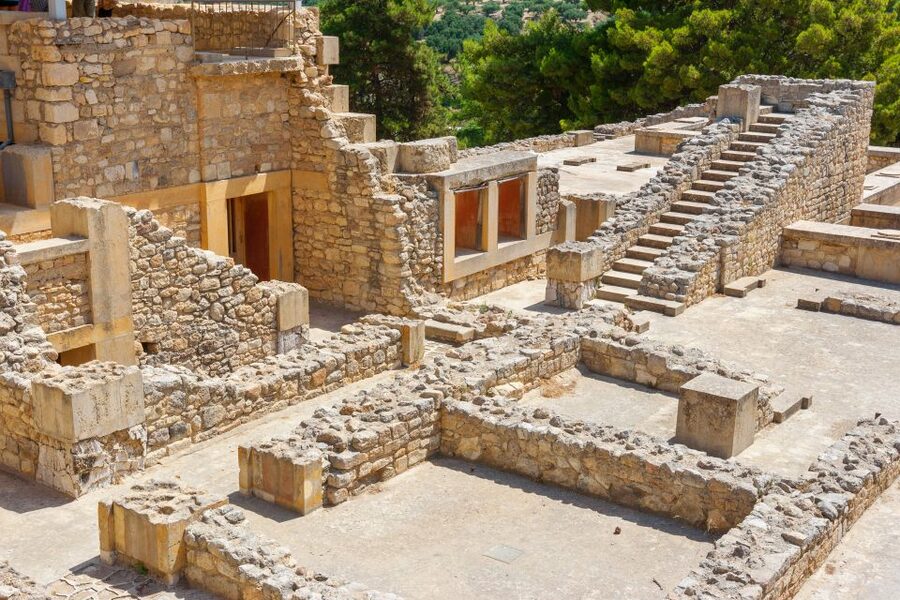
Knossos is not just a pile of ancient stones. It is a sprawling palace complex with storerooms, corridors, ceremonial areas, and traces of a civilization that flourished long before classical Greece. A private archaeologist-led tour helps you make sense of what you are seeing, especially where restored sections meet original remains.
I like two things right away: the pre-booked ticket saves time at the entrance, and the small private format lets you ask questions without shouting over a large group. Guides such as Vangelis are also praised for using old photographs and clear comparisons to show how the palace may have looked. The main consideration is the price: $247 for up to two people is a serious outlay, though it becomes easier to justify if you value personal attention and skip-the-line access.
Key points at a glance
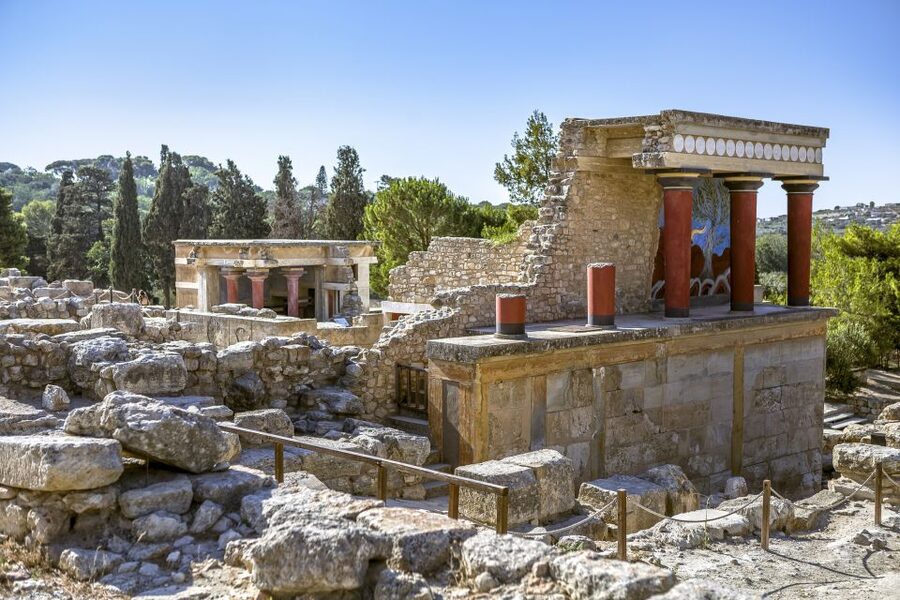
- See a palace built between 1700 and 1400 BC: Learn how advanced construction created a complex with as many as five levels in some sections.
- Use the 1.5 hours well: A licensed guide leads you through the main remains instead of leaving you to guess what each wall once meant.
- Choose your time with care: Early morning is cooler and quieter, while late afternoon can bring softer light and fewer people.
- Expect a private experience: The guide can adjust the pace, answer questions, involve children, and help with photographs.
- Bring protection from the sun: Comfortable shoes, water, sunglasses, a hat, and sunscreen matter on this exposed archaeological site.
- Know the access limits: The route includes stairs and is not suitable for wheelchair users or people with mobility impairments.
Why Knossos makes more sense with a guide
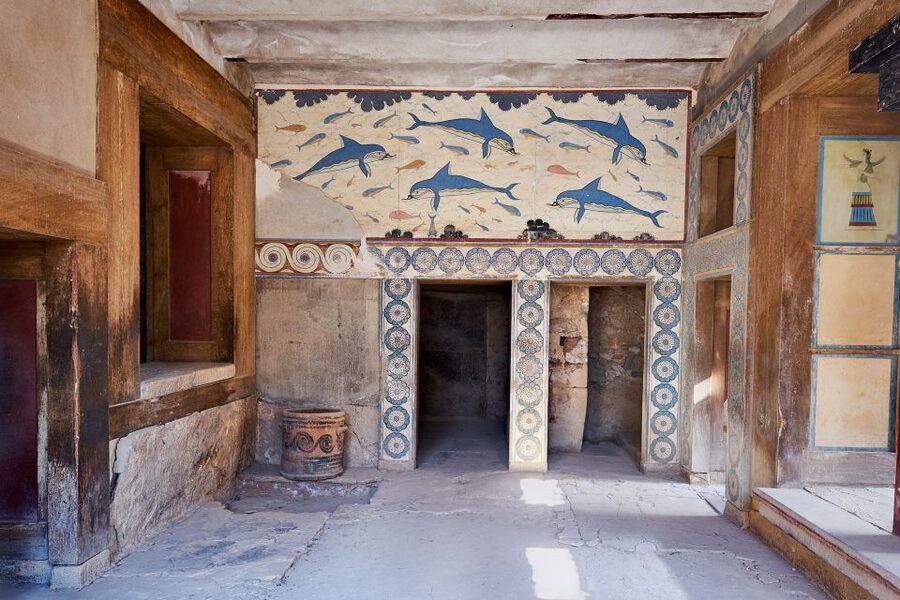
Knossos reaches back to the Neolithic period, with settlement on Crete dating as far as about 7000 BC. The palace itself was built much later, from roughly 1700 to 1400 BC, during the height of Minoan civilization.
Those dates can be hard to grasp when you are standing beside low walls and broken columns. The guide’s job is to connect the remains to the people who used them. Instead of seeing one room after another, you begin to understand a working palace with storage, administration, ritual areas, movement routes, and spaces designed for display.
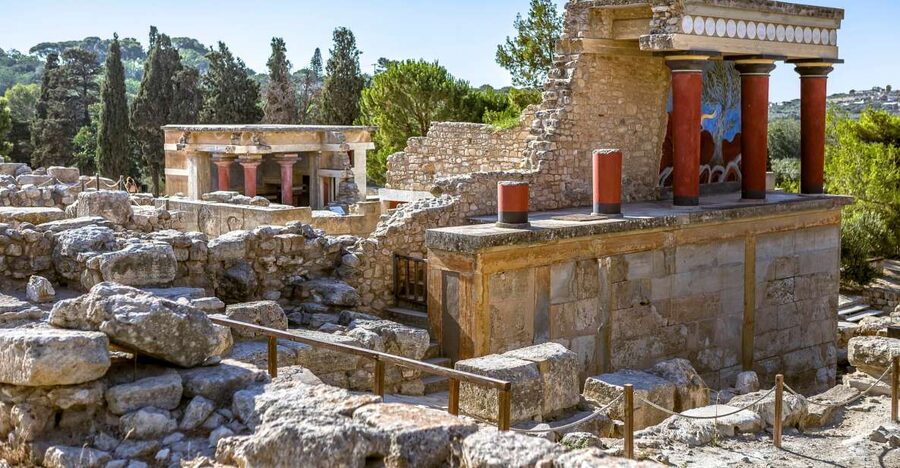
The scale is one of the site’s surprises. The palace included around 1,300 rooms linked by corridors. Some sections rose as high as five stories, which helps explain why the site can feel confusing at first. A guide gives you a mental map before the details blur together.
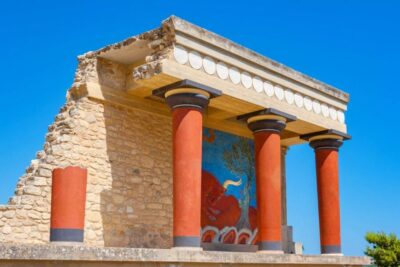
I also value the way the best guides separate what is original from what has been restored. Vangelis is particularly praised for bringing a folder of images that compares the palace as it may have appeared with the remains you see now. That visual aid is useful because Knossos is not a perfectly preserved city. You need context to tell ancient evidence from later reconstruction.
More Minoan history near Crete:
- Crete: Knossos Palace Entry Ticket with Optional Audio Guide
★ 3.9 · 2,251 reviews - Knossos: Knossos Palace Skip-the-Line Guided Walking Tour
★ 4.8 · 1,380 reviews - Crete: Knossos Palace & Heraklion Guided Tour
★ 4.4 · 1,127 reviews
Meeting at the entrance and getting inside
You meet your guide at the front entrance of Knossos Palace. The pre-booked ticket lets you skip the ticket line, a practical advantage during busy summer periods when the entrance can become crowded.
Skip-the-line access does not turn the site into a private archaeological park. You still need to arrive at the correct entrance and be ready to walk once inside. Keep your passport or identity card with you, since it is listed among the required items.
The private format is the bigger advantage. The guide can speak at a volume that suits your group, pause when you need clarification, and change the rhythm for children. Several families found that the guides kept younger visitors involved rather than delivering a long lecture aimed only at adults.
The advertised duration is 1.5 hours. That is enough for a focused introduction to the palace, but it is not an all-day archaeological study. You will cover the important areas and gain a useful framework for the site. If you like to linger over every wall or take many photographs, you may want to spend extra time exploring after the guided portion, when permitted by the site schedule.
Following the palace plan from storerooms to ceremonial rooms
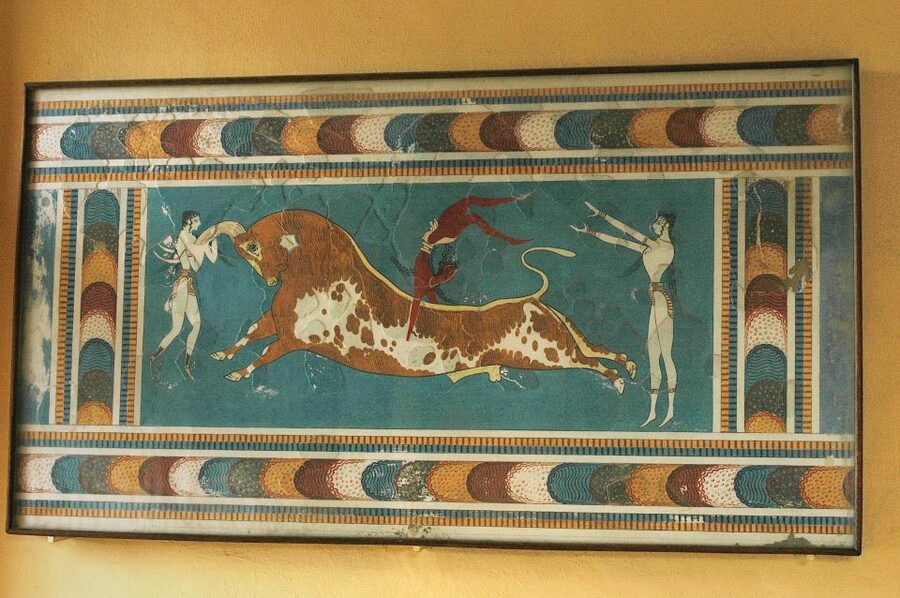
The tour focuses on the remains of the Minoan palace, where the guide explains how the different parts worked together.
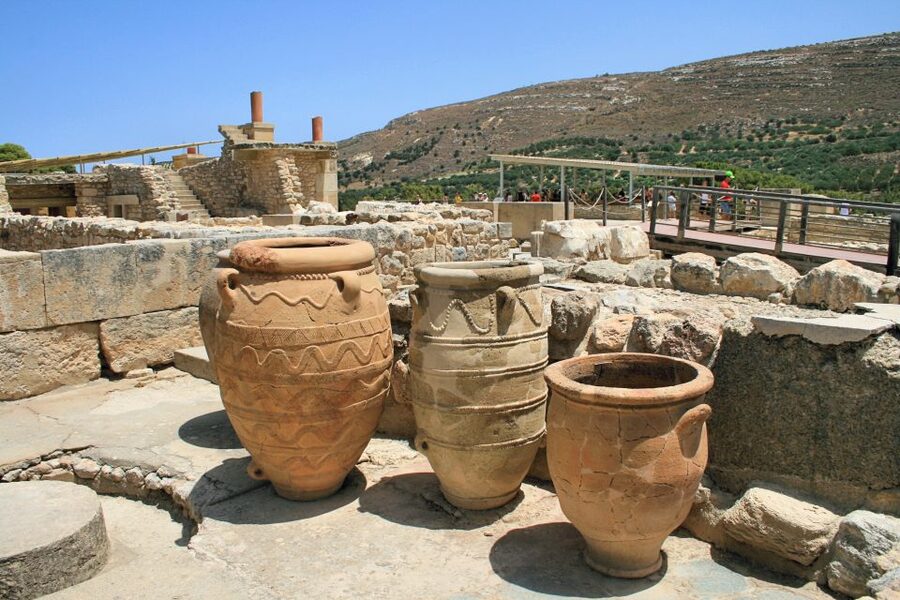
The extensive storerooms are among the most vivid stops. Large clay containers once held oil, grains, dried fish, beans, and olives. The idea of food and trade supplies being organized on such a scale makes the palace feel less like a monument and more like a functioning center of power.
The storerooms also carry a dramatic detail: gold was sometimes hidden beneath the supplies. That small fact gives the ruins a human edge. Ancient life here involved wealth, risk, planning, and the daily work of feeding a large community.
Corridors are another reason to have help. With roughly 1,300 rooms connected by passages, it is easy to lose the overall picture. Your guide can explain how movement through the palace shaped the experience, then point out details that are easy to walk past alone.
You will also hear about the palace theatre and the advanced building methods used in its construction. A five-story structure from this period is a striking reminder that Minoan builders were working with ambitious ideas about height, circulation, and space.
The guide also places the palace within the wider story of Minoan civilization. You learn about customs, daily life, myths, and the archaeological work that shaped our understanding of the ruins. This is where the tour earns its cost for many people. The stones become evidence rather than scenery.
What the private format changes
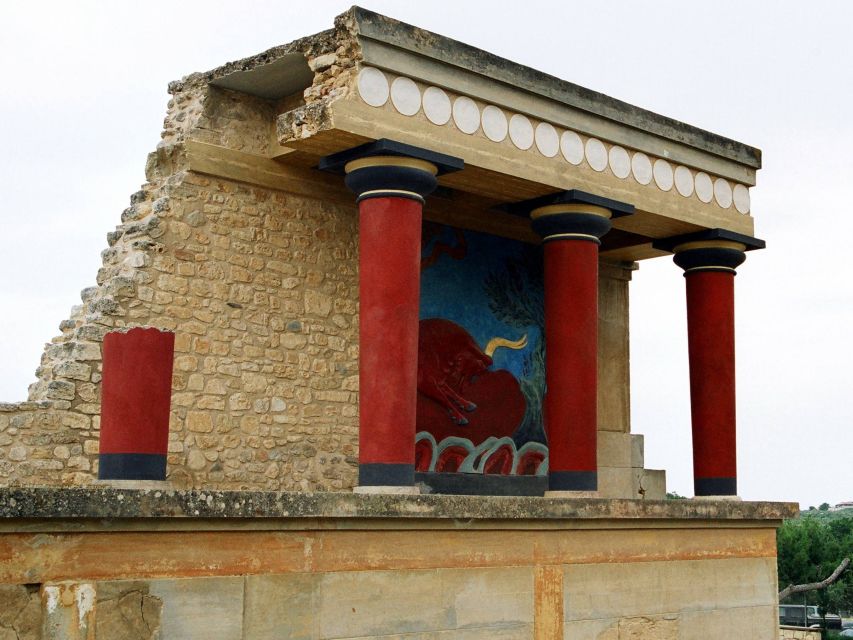
A private tour is not automatically better for everyone. If you prefer to walk at your own speed, read signs quietly, and spend little time on interpretation, a standard admission ticket may be enough. Knossos has plenty to see without a guide.
For me, the private format makes more sense when you want to ask specific questions. One group of two described the value of having the guide close by, while families appreciated a pace that did not feel rushed. The guide can also repeat a point, shift attention toward children, or spend more time on the areas that interest you.
The guides are not identical in style. Vangelis appears often in the experience details and is described as a licensed archaeologist with a strong command of Cretan history. Stella is also praised for being patient, clear, and careful about finding shade. Manos is noted for explaining the site, people, history, and culture in an understandable way.
The available languages are English, German, Italian, Russian, and Greek. Be sure to select the language that suits your group when checking availability. The guide’s ability to explain complex material clearly matters more than a flood of dates.
Another useful touch is photography help. Guides have pointed out good picture locations and taken photos for couples and families. That is not the core reason to book, but it removes one small nuisance when everyone wants to be in the frame.
A few more things to do in Crete worth a look
- Essential Athens Highlights Plus Cape Sounion Skip-The-Line Tour
★ 5.0 · 705 reviews - Athens Skip the Line: Open Air Ancient Greek Theatre Performance
★ 4.5 · 520 reviews
Timing matters more than most people expect
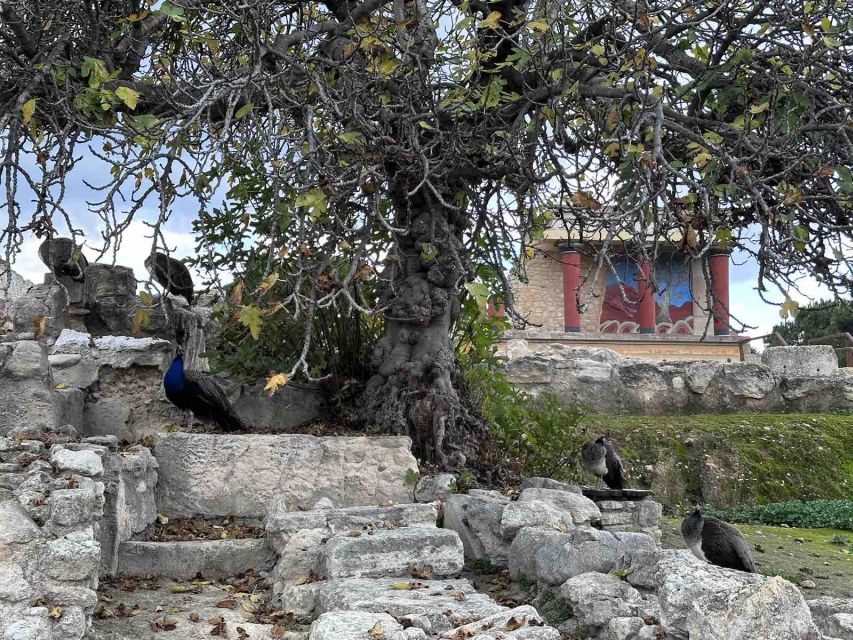
Knossos is an outdoor site, and Crete’s sun can make a major difference. Several strong recommendations point to the 9 a.m. start, especially in summer. Early visits offer cooler conditions and a better chance of moving through the palace before the busiest period.
Late afternoon can work just as well for a different reason. A 5 p.m. visit may find the site much quieter, and a 6:30 p.m. tour can bring cooler air and attractive light. The tradeoff is a firm closing time. At that hour, you have less room to linger after the 1.5-hour tour.
I would choose early morning if you want the best chance of a calm visit and plenty of time afterward. I would choose late afternoon if heat and harsh sunlight are your main concerns. Check the available starting times before booking, since the exact schedule matters here.
Even with an early start, the site can become busy. The ticket helps you avoid the ticket queue, but it does not remove other people from the archaeological grounds. A private guide can still help you move efficiently and find better positions for photographs.
Heat, stairs, and what to bring

Wear comfortable walking shoes. The site includes uneven ground and many stairs, and one family specifically found that a stroller was a poor choice. This tour is not suitable for wheelchair users or people with mobility impairments.
Bring water, sunscreen, sunglasses, and a sun hat. Shade is limited, although guides such as Vangelis and Stella have made a point of keeping groups out of direct sun when possible. That practical care can make a real difference in July and August.
Large bags and oversize luggage are not allowed. Pets are also not allowed. Pack lightly and keep what you carry to the basics.
The heat affects concentration as much as comfort. A long explanation beside exposed ruins is harder to absorb when you are thirsty and standing in full sun. An early appointment reduces that problem, while a late appointment can offer softer light and lower temperatures.
Is $247 good value for two people?
The advertised price is $247 per group of up to two people. That makes the tour expensive compared with simply buying admission and walking through the palace independently.
The value comes from four things: the pre-booked entry, the private guide, the licensed archaeological background, and the ability to shape the visit around your own questions. If you are already interested in ancient history, archaeology, or Minoan culture, the added explanation can change the entire experience.
For two people, the cost is easier to defend than for a solo visitor, since the price covers the group rather than charging each person separately. If you are booking for a larger family, check the exact group arrangement and pricing before assuming the same rate applies.
I would not pay this amount just to avoid a short ticket queue. I would pay it for interpretation. Knossos has enough restoration, fragments, corridors, and competing historical clues that a good guide can save you from leaving with a collection of disconnected impressions.
The activity also offers free entry and a guided tour for children from European countries. Children from outside European countries do not receive free entry under the stated conditions. That distinction is important for family budgets.
Free cancellation up to 24 hours before the activity and reserve-now, pay-later booking add flexibility. They do not lower the price, but they reduce the risk of committing too early when your Crete plans are still moving.
Pair it with Heraklion’s archaeological museum
The palace visit gives you the setting. Heraklion’s archaeological museum can add the objects and artwork connected with the site. One guide specifically recommended seeing the museum’s artefacts after Knossos.
That pairing makes sense because a ruin shows structure, while museum pieces can help you picture decoration, craftsmanship, trade, and daily use. I would visit Knossos first if possible, then see the museum with the palace layout fresh in your mind.
This tour does not include transportation to the museum or any personal expenses, so plan that separately. The meeting point is only the front entrance of Knossos Palace.
Who should book this Knossos tour?
I would recommend it most strongly to:
- Couples who want a private explanation without joining a large group.
- Families who need a guide able to slow down, answer questions, and involve children.
- First-time visitors who want the palace placed in historical and archaeological context.
- People visiting in summer who want help choosing a cooler, quieter time.
- Anyone who finds ruins difficult to read without visual reconstruction and background.
I would think twice if you have limited mobility, dislike stairs, or prefer complete independence. The site is not suitable for wheelchair users or people with mobility impairments, and a 1.5-hour guided route may feel structured if you would rather wander.
My verdict: book it for understanding, not just entry
Book this tour if Knossos is a major reason for your time in Crete and you want the palace to make sense. The strongest feature is the guide’s interpretation, especially the use of photographs, stories, archaeological detail, and comparisons between original remains and restored areas.
Choose an early morning appointment for cooler conditions and fewer people, or a late afternoon time for softer light and less heat. Bring water, sun protection, and good shoes, and leave large bags behind.
Skip it if your main goal is only cheap admission or a quick look. But if you want to understand how 1,300 rooms, towering construction, storage jars, theatre space, and Minoan customs fit together, the private format is a worthwhile upgrade.
FAQ
Where does the Knossos Palace tour meet?
You meet the licensed guide at the front entrance of Knossos Palace.
How long does the guided tour last?
The tour lasts 1.5 hours.
Does the ticket let me skip the ticket line?
Yes. The entry ticket is pre-booked and includes skip-the-ticket-line access.
Is the tour private?
Yes. The activity is offered as a private group experience.
Which languages are available?
Guided tours are available in English, German, Italian, Russian, and Greek.
Who are the guides?
The experience provider is Vangelis Alefantinos. Guides associated with the activity also include Vangelis, Stella, and Manos, depending on availability and language.
What should I bring?
Bring your passport or ID card, comfortable shoes, sunglasses, a sun hat, sunscreen, and water.
Is the tour suitable for wheelchair users?
No. The activity is not suitable for wheelchair users or people with mobility impairments. The site also includes many stairs.
Can I cancel the booking?
Yes. You can cancel up to 24 hours in advance for a full refund. The activity also offers reserve-now, pay-later booking.
Just added in Crete
- Balos & Gramvousa Luxury Catamaran Sailing Cruise from Kissamos★ 5.0 · 116 reviews
- Cretan Cooking Class and Olive Oil Tasting★ 5.0 · 178 reviews
- Dia Island Catamaran – Premium Lunch, Open Bar, Small Group★ 5.0 · 126 reviews
- Panormo: Luxury Catamaran Cruise with Lunch & Open Bar★ 5.0 · 80 reviews
- Rethymno Catamaran Cruise: Healthy Lunch & Open Bar★ 4.5 · 79 reviews
- From Chania: Wine and Olive Oil Tasting Tour with Snacks★ 4.8 · 354 reviews
- The Terra Creta Olive Oil Experience Tour★ 4.7 · 344 reviews
- Heraklion: Beginner Scuba Diving Lesson with PADI Instructor★ 4.9 · 355 reviews
Knossos Palace Tours, compared.
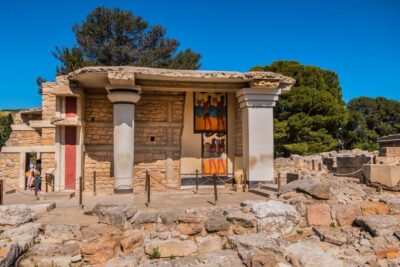
Knossos Palace Entry Ticket with Optional Audio Guide
Read our review →
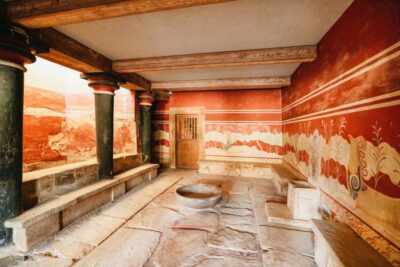
Knossos: Knossos Palace Skip-the-Line Guided Walking Tour
Read our review →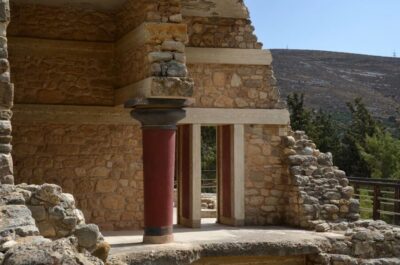
Knossos Palace and Museum E-Tickets with Audio Guides
Read our review →
Knossos-Zeus Cave -Old Traditional Villages-Olive Oil Factory
Read our review →
Knossos, Lasithi, Lasinthos and Olive Farm Combo Tour
Read our review →
Browse the lists this tour appears in