

Reviewed · METEORA MONASTERY TOURS
Athens: Meteora Monasteries Tour with Local Guide and Greek Lunch
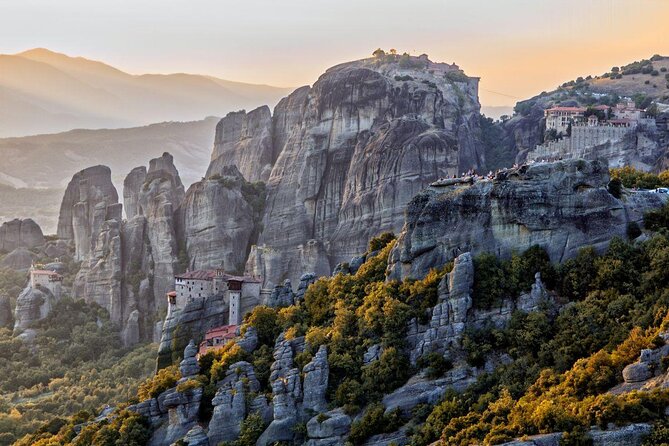
Meteora is one of Greece’s great sights: six monasteries perched on towering rock pillars, reached by bridges and steep stairways. This full-day trip from Athens gives you a practical way to see the site without arranging buses, taxis, and local transport yourself. The views are extraordinary, and guides such as Maria and Nicholas add useful stories about hermits, monks, and the old climbing routes.
I especially like the multiple photo stops and the chance to see every monastery from the road while entering three of them. The stop in Kalambaka also gives the day a local touch beyond the monasteries. The catch is simple: this is a very long day, with roughly four hours each way by bus, and the stairs can be demanding.
Key points to know before booking
- Four hours each way: The ride is scenic but takes up about eight of the tour’s 14 hours.
- Three monasteries inside, all six from outside: The exact three can depend on opening schedules.
- A local guide joins at Meteora: Guides including Maria and Nicholas have been praised for lively explanations and helpful service.
- Greek lunch is optional: Select the lunch option, or use the hour in Kalambaka to choose your own restaurant.
- Bring cash and proper clothing: Entry is €5 per monastery, and strict dress rules apply.
- Expect stairs and uphill walking: Holy Trinity requires 145 steps, while some other approaches are much steeper.
Why Meteora is worth the long ride from Athens

Meteora feels unlike almost anywhere else in Greece. Huge stone pillars rise from the plain, and monasteries sit on their tops as if placed there by hand. The setting is not just scenic. It explains the whole story of the place: hermits came here for isolation, then religious communities built monasteries in positions that were once reachable only by rope ladders, nets, and hand-carried supplies.
You get the best value from this outing if Meteora is high on your list but you do not have time to spend a night in Kalambaka. The tour handles the long transfer and takes you between the monasteries, which would be difficult to manage independently in one day from Athens.
Still, do not mistake this for a relaxed excursion. You leave Athens around 7:45 or 8:00 in the morning and return to the same meeting point at about 10:15 at night. That makes this a major commitment, especially if you have only a short stay in Athens.
Other monastery and cliff-top days from Athens:
- Athens: Meteora Monasteries Day Trip with Caves and Lunch
★ 4.7 · 2,964 reviews - Athens: Meteora Monasteries Day Tour with Lunch
★ 4.8 · 2,196 reviews - Athens: Meteora Tour with Local Guide and Greek Lunch
★ 4.8 · 1,561 reviews
The early departure and four-hour coach ride
The meeting point is on the street across from Athens Central Railway Station, also called Stathmos Larisis. This is convenient if you can reach the station by metro or another form of public transport, but the boarding process can be confusing when several buses gather in the same area. Have your voucher ready, check the bus markings, and confirm your name before settling in.
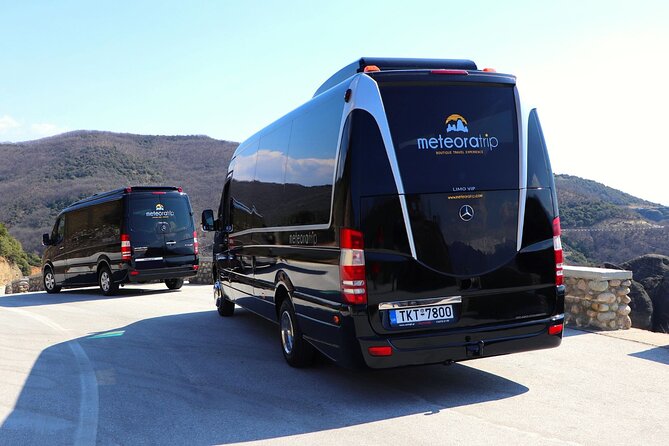
The advertised vehicle is an air-conditioned coach with Wi-Fi and USB charging. Transport quality has not been perfectly consistent. Some departures have used modern coaches with reclining seats, while other accounts describe smaller or older vehicles, weak air-conditioning, missing USB ports, or unreliable Wi-Fi. The operator has said it moved toward its own private buses and professional drivers after earlier transport problems, but I would still bring a power bank and keep expectations modest.
The drive takes about four hours in each direction, with a rest stop roughly halfway. These stops are useful for coffee, snacks, and a bathroom break, though the facilities can be crowded and the food is more roadside cafeteria than Greek culinary discovery. Bring water and a small snack, especially for the late return to Athens, since dinner is not included.
The countryside makes the ride more pleasant than a city transfer. You pass through mainland Greece, watching the scenery change as Meteora approaches. On the way back, however, most people are tired. A seat near the front may help if you are sensitive to motion, and headphones can make the long return easier.
Meeting the local guide in Kalambaka
By around noon, you reach the Meteora area and meet your local English-speaking guide. The guide does not usually remain inside the monasteries with you. Instead, you receive explanations during the coach ride and at viewpoints, then explore each monastery on your own before returning at the agreed time.
That arrangement has advantages. You can move at your own pace inside, study the religious paintings, and pause for photographs without a guide hurrying beside you. The trade-off is that you do not get a detailed guided explanation in every monastery.
Maria is repeatedly singled out for her energy, humor, and clear explanations. Nicholas has also been praised for his guiding. The experience can vary by departure, but the local guide is one of the strongest parts of the day. If you do not speak English comfortably, free audio guides are available in Spanish, French, German, Italian, Japanese, Chinese, and Korean. Bring your own smartphone and earphones.
Kalambaka and the optional Greek lunch
The lunch stop takes place in or near Kalambaka, the small town at the foot of Meteora. This is a useful pause before the monastery visits, and it gives you a chance to see a little of the town rather than spend every minute on the rock formations.
With the lunch option, you receive a traditional Greek meal with salad, bread, water, and a choice of main dishes. Vegetarian and vegan choices are available. The meal is designed to keep you going through the afternoon, not to be a major gastronomic event. Some people find it tasty and filling, while others consider it average tourist fare.
I would choose lunch if you value convenience and want a proper sit-down meal. Choose the no-lunch option if you prefer control over what you eat. You still have the opportunity to use a local restaurant or cafe in Kalambaka, and the free hour can be spent browsing shops, walking toward town, or sitting beneath the rock pillars.
Use the restroom before leaving Kalambaka. Several monasteries have limited or no facilities for visitors, and toilets at roadside stops may charge a small fee. Keep some coins or small euro notes handy.
A few more things to do in Athens worth a look
- All Day Cruise -3 Islands to Agistri,Moni, Aegina with lunch and drinks included
★ 5.0 · 4,958 reviews - From Athens: Hydra, Poros, and Aegina Day Cruise with Lunch
★ 4.1 · 4,305 reviews - Athens cruise: Agistri, Moni/Metopi, Aegina with lunch & drinks
★ 5.0 · 1,783 reviews - Athens: Delphi Guided Trip with Optional Lunch and Entry
★ 4.7 · 1,553 reviews
Seeing all six monasteries from the road
The route lets you see all six monasteries, though you enter only three. The three selected can change according to opening days and local schedules, so do not book this expecting a guaranteed visit to one particular interior.
The photo stops are important. From the road and viewpoints, you can see monasteries that you do not enter, often with several buildings framed against the cliffs. These stops also help you understand how extreme the setting is. Inside a monastery, you focus on icons and stone walls. From outside, you see the full relationship between the buildings and the rock pillars.
The guide also points out hermit caves and the St. George Mandilas cave. These are generally viewed from below or from photo stops. Do not expect to climb inside them. Many are high on the rock faces and are accessible only to skilled climbers.
Roussanou and Saint Nicholas Anapafsas
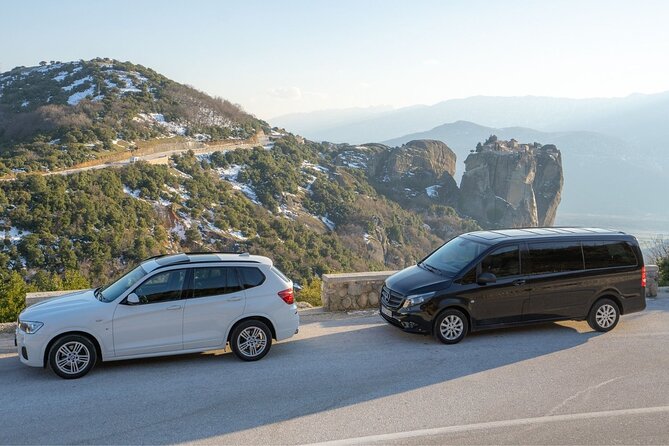
Roussanou Monastery sits on a steep rock between Saint Nicholas Anapafsas and Varlaam. Its position gives you a strong sense of how the monasteries were built to protect a life of solitude. The approach is less about a single grand staircase than about the height and narrow setting around the building.
Saint Nicholas Anapafsas is the first monastery encountered from Kastraki village. It is compact and appears suspended above the road on a small rock. The visit is listed at about 30 minutes, so you will need to keep moving, especially if the group is working around opening hours.
These visits reward close attention. Look at the painted interiors, the small spaces, and the way the buildings fit onto the rock. The monasteries are active religious sites, not simply monuments, so quiet behavior and respectful clothing matter.
Varlaam and the serious stair climbing
Varlaam is the second-largest monastery and sits opposite Great Meteoron. It has a more substantial feel than some of the smaller monasteries, with broad views and important religious art. The scheduled visit is about an hour, giving you more time to look around.
This is also where the physical side of the tour becomes clear. Steps, inclines, and uneven surfaces are part of the experience. One approach is described as involving roughly 370 steps, and the climb can feel much harder in summer heat.
Wear sturdy shoes with good grip. Carry water, but avoid bringing a large bag that becomes heavy on the climb. The bus returns to a fixed meeting time, so you may need to choose between carefully studying the interior and lingering at every viewpoint.
Holy Trinity and Agios Stefanos
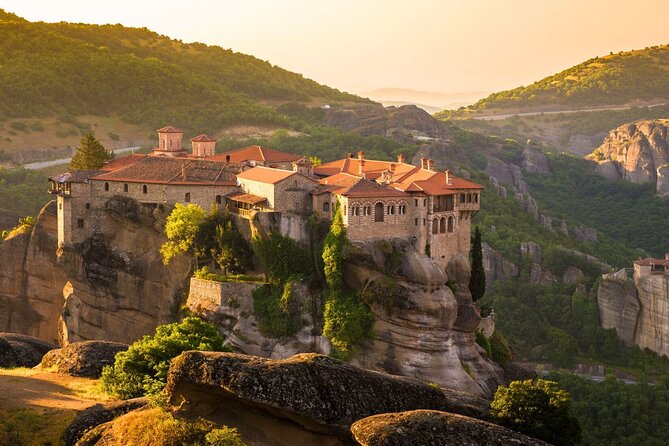
Holy Trinity is among the most dramatic stops. You first descend, then climb 145 rock-cut steps to reach the monastery. The old story of ropes, ladders, and nets gives the visit extra force, because you can see how hard access once was compared with today’s staircase.
This is not a good stop for anyone who struggles with steep paths, long walks, or repeated stairs. Even fit people may find it tiring in July, when heat can make the stone steps feel much longer.
Agios Stefanos is the easiest monastery to reach. There are no stairs to the entrance, and a small stone bridge leads across to the building. That makes it an important part of the route for anyone who wants to experience a monastery interior but is concerned about the more demanding climbs.
The contrast between Holy Trinity and Agios Stefanos is useful. One shows the old defensive isolation of Meteora. The other is comparatively gentle and accessible.
Great Meteoron, the historic centerpiece
Great Meteoron, also called the Monastery of the Transfiguration, is the oldest and most important monastery at Meteora. It is the centerpiece of the site, with a larger complex and a stronger sense of scale than the smaller foundations.
Allow about an hour here. The interior art and religious objects deserve more than a quick glance, and the views from the rock make it worth taking your time. Still, opening schedules may affect how long you spend at each monastery, and the day’s tight timing can make the visits feel rushed.
The guide’s stories help connect the paintings and buildings to the people who lived here. Before the tour, it is worth reading a little about Orthodox icons and the history of Meteora. You will recognize more of what you see, rather than treating the monasteries as attractive old stone buildings.
Dress rules, cash, and physical demands
Meteora’s monasteries enforce a dress code. Men need long trousers and shirts with sleeves. Women must wear skirts below the knee and cover their shoulders. Women may use a long scarf around the waist over trousers, and the monasteries provide some cover-up clothing when needed.
Entry costs €5 per monastery and is not included in the tour price. The monasteries accept cash only, so carry at least €15 if you plan to enter all three included monasteries. Small euro notes are sensible for toilets and snacks as well.
The tour is described as suitable for most people, but that does not mean it is easy. You should be comfortable walking uphill, climbing multiple flights of stairs, and standing in heat. If mobility is a serious concern, the route may be frustrating even though Agios Stefanos itself has easy access.
Is $84.66 good value?
At $84.66 per person, the tour offers fair value for a destination that is difficult to reach from Athens in a single day. Round-trip transport, a local guide, photo stops, access to all six monastery sites from the outside, and entry to three monastery interiors are included in the basic structure. The optional lunch adds convenience, but not necessarily a memorable meal.
The value depends on what you want from Meteora. If you mainly want to see the famous rock formations and monasteries without renting a car or spending a night away from Athens, the price is attractive. If you dislike long bus rides or want time for hiking and quiet exploration, staying in Kalambaka for one or two nights would be a better use of your time.
The tour has a maximum of 35 people, so it is not a private or tiny-group outing. That size keeps the price down, but it can make boarding, meal service, and meeting times feel less personal.
Best season and the sunset option
Summer gives you long daylight but also serious heat. July departures can feel hot inside the monasteries and on the stairs, especially if the bus air-conditioning is not strong enough. Spring and autumn should be more comfortable, though conditions can change.
From November through January, the tour may include a sunset at a panoramic viewpoint. This is a special seasonal feature, but winter also brings shorter days and the possibility of weather-related changes. The activity requires good weather, and poor conditions can lead to a different date or a full refund.
Who should book this Athens day trip?
I would book this tour if you have one free day, Meteora is a priority, and you want transport and a local guide handled for you. It suits people who can tolerate a long coach ride and moderate to strenuous walking in exchange for seeing an extraordinary place.
I would not choose it if you have limited time in Athens, dislike organized schedules, or want a slow visit to the monasteries. In that case, stay in Kalambaka and explore over several days. You will have more room for hiking, longer monastery visits, and a less tiring return.
For the one-day version, prepare well: bring water, snacks, a power bank, cash, suitable clothing, and comfortable shoes. With those basics covered, the long ride becomes a fair price for a memorable day at one of Greece’s most remarkable sights.
FAQ
How long does the Athens to Meteora tour last?
The full experience lasts about 14 hours. Departure is around 7:45 or 8:00 in the morning, with arrival back at the Athens meeting point at approximately 10:15 at night.
How long is the bus ride to Meteora?
The bus ride takes about four hours each way, so roughly eight hours of the day are spent on the road. Rest stops are provided during the journey.
Where does the tour leave from in Athens?
The meeting point is on the street across from Athens Central Railway Station, Stathmos Larisis, at Athina 104 39.
How many monasteries do you visit?
You see all six Meteora monasteries from the route and photo stops, and you enter three of them. The exact three can depend on opening schedules.
Is lunch included?
Lunch is included only if you select the lunch option. It includes salad, a choice of main dish, bread, and water, with vegetarian and vegan choices available.
How much are the monastery entrance fees?
Each monastery charges €5 per person. These fees are not included in the tour price, and the monasteries accept cash only.
What should I wear to the monasteries?
Men need long trousers and shirts with sleeves. Women need skirts below the knee and covered shoulders. A long scarf wrapped around the waist can be used to meet the skirt requirement.
Is the tour difficult physically?
The tour involves uphill walking, uneven paths, and many stairs. Holy Trinity requires a descent followed by 145 steps, and another monastery approach can involve about 370 steps.
Are audio guides available in other languages?
Yes. Free audio guides are available in Spanish, French, German, Italian, Japanese, Chinese, and Korean. Bring a smartphone and earphones to use them.
Just added in Athens
- Ceramic and Pottery Creative Workshop with Two Local Artists★ 4.0 · 57 reviews
- Small-Group Women History in Ancient Greece Walking Tour★ 5.0 · 38 reviews
- Athens Old City Private Photoshoot Tour / 2 hrs★ 5.0 · 109 reviews
- Athens: Wine Workshop Create your Own Wine under the Acropolis★ 5.0 · 77 reviews
- Athens: Greek Wines Tasting with Sommelier and Acropolis Views★ 5.0 · 88 reviews
- Wine Trails Private Tour/ Nemea visit 3 wineries from Athens or Nafplion (10 h)★ 5.0 · 44 reviews
- FLYING DRESS Photoshoot in Athens – Greece★ 5.0 · 47 reviews
- Small-Group Wine Tour in Athens with Tasting★ 5.0 · 33 reviews
Meteora Monastery Tours, compared.
Meteora Monasteries Day Trip with Caves and Lunch
Read our review →

Meteora Tour with Local Guide and Greek Lunch
Read our review →
Meteora Monasteries, Caves & Coastal Stopovers with Lunch
Read our review →
Meteora Monasteries & Caves DayTrip from Athens with Greek Lunch
Read our review →
4-Day Classical Greece Tour: Epidaurus, Mycenae, Olympia, Delphi, Meteora
Read our review →Browse the lists this tour appears in