
Reviewed · METEORA MONASTERY TOURS
Kastraki: Meteora Via Cordata Hiking Tour to the Great Saint
Meteora’s sandstone towers are best understood from above, and this Via Cordata route gives you a more active way to reach the Great Saint. You scramble over rock, follow old paths cut into the stone, and use a safety line where needed. I especially like the small guide ratio, with no more than three people per mountain guide, and the chance to see quieter corners away from the monastery crowds.
The other big plus is the guide team. Kostas, Costa, and Evin are praised for calm instruction, local stories, and helping with photos. The main consideration is the climb itself: three hours may sound brief, but the route is moderate to challenging, and you need closed shoes, steady footing, and a fair level of fitness.
Key points at a glance
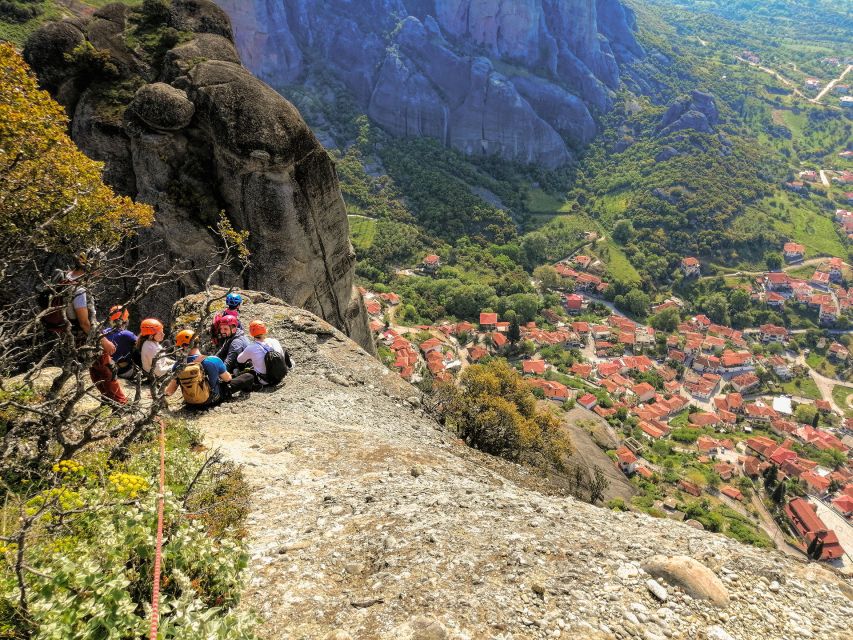
- A real Via Cordata route: Use helmets, harnesses, and fixed safety equipment on sections of the climb.
- Three hours with a small group: Groups are limited to six, with up to three people per mountain guide.
- Great Saint’s 360-degree view: The summit gives you a wide look across Meteora’s towers and monasteries.
- Old paths through the rock: Follow routes carved and used by monks, rather than staying on a standard road or viewpoint.
- Strong guide support: Kostas, Costa, and Evin are noted for clear instructions, history, humor, and patient help.
- Best for active visitors: This suits adults and older children with good fitness, not anyone looking for an easy walk.
Starting in old Kastraki
Your meeting point is in the center of the old habitation of Kastraki village, at Qastiro Meteora. This is a useful starting place because Kastraki sits directly below the rock towers, so the setting changes quickly once you leave the village.
You meet your English-speaking mountain guide here and receive a safety briefing before setting off. The guide provides the necessary equipment, including a helmet and harness. Water is also included, which matters on a steep route, especially during warm weather.
Hotel pickup is not included from Kalampaka or Kastraki. You need to make your own way to the meeting point unless you arrange the optional pickup service. Check that detail carefully when booking, since the advertised price covers the guided activity rather than a full door-to-door outing.
The group limit is six people. That is small enough for useful attention, but the more important figure is the guide ratio of three participants per mountain guide. On a route that includes scrambling and balancing, this makes a real difference. You can ask questions, receive help with foot placement, and avoid being left to work out the harder parts alone.
Other monastery and cliff-top days from Greece:
- Thessaloniki: Full-Day Bus Trip to Meteora
★ 4.8 · 3,471 reviews - Athens: Meteora Monasteries Day Trip with Caves and Lunch
★ 4.7 · 2,964 reviews - Athens: Meteora Monasteries Day Tour with Lunch
★ 4.8 · 2,196 reviews
Scrambling beneath Meteora’s towers
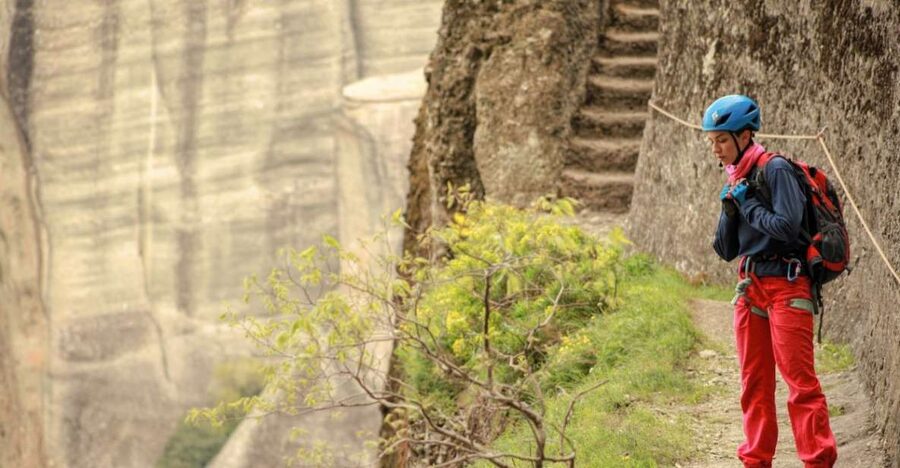
The early part of the route takes you through the sandstone formations that make Meteora so unusual. You are not simply walking beside the rocks. You use your hands at times, step across uneven sections, and work your way around formations that call for balance.
The rock can make a short distance feel like a proper workout. The activity is described as moderate to challenging, so I would not treat the three-hour duration as a sign that it is effortless. You need enough strength and confidence to move over irregular ground, and you should be comfortable with the idea of climbing rather than taking a level village walk.
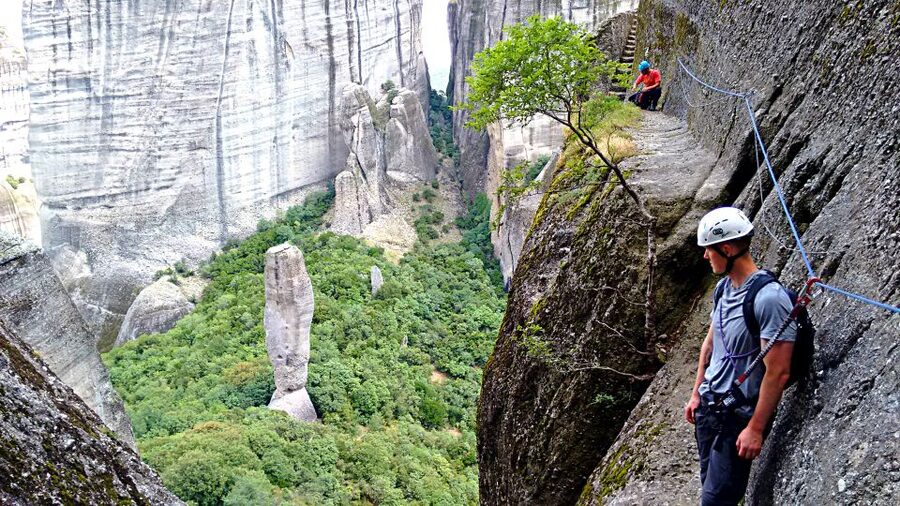
The route also uses a path carved by monks into the rock. This is one of the most appealing parts of the outing. The old route gives the climb a human story, not just a physical challenge. Your guide can explain the local history as you move, and the walk becomes a lesson in how people once reached these high religious sites.
This is also where the guide’s role matters most. You are not expected to race uphill or solve every obstacle alone. The guides offer direction and safety support, including ropes where required. Kostas is praised for patience and for making the route manageable even for someone who does not exercise regularly.
How the Via Cordata feels
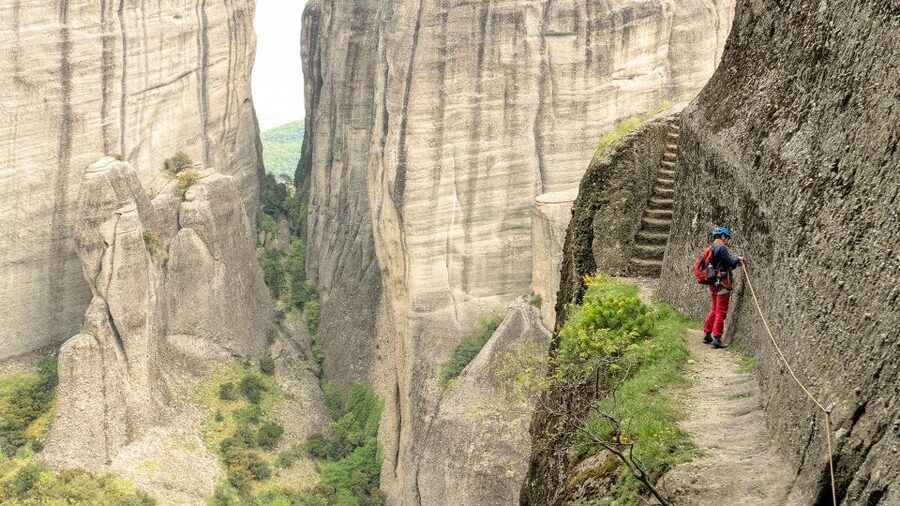
Via Cordata means a protected climbing route with fixed equipment to help you move through more difficult sections. It is not the same as a full technical climbing trip, and it is not simply a hike on a marked footpath.
You may use a harness and connect to safety lines while moving over rock. The aim is to give you extra protection while you scramble, balance, and climb. One useful point from the experience is that the Via Cordata route is considered less physical and less vertiginous than a traditional Via Ferrata, though it still climbs steadily and requires effort.
That makes this a good introduction for someone who wants a taste of protected rock movement without signing up for a serious climbing day. Still, accessible does not mean easy. You should expect uphill work, uneven footing, and sections where you need to pay close attention to the guide.
If heights make you nervous, tell your guide early. The equipment and instruction are designed to improve safety, and one family member who began frightened reportedly felt secure with the support of two instructors. That does not remove every sensation of exposure, but it suggests that patient guidance is part of the experience.
Bring closed-toe shoes with a firm, comfortable fit. Sandals and flip-flops are not allowed. Gloves are not listed as required, though one participant found they might have made the handwork more comfortable. You can consider lightweight gloves if you already own a suitable pair, but do not treat them as essential equipment.
Quiet routes and views along the way
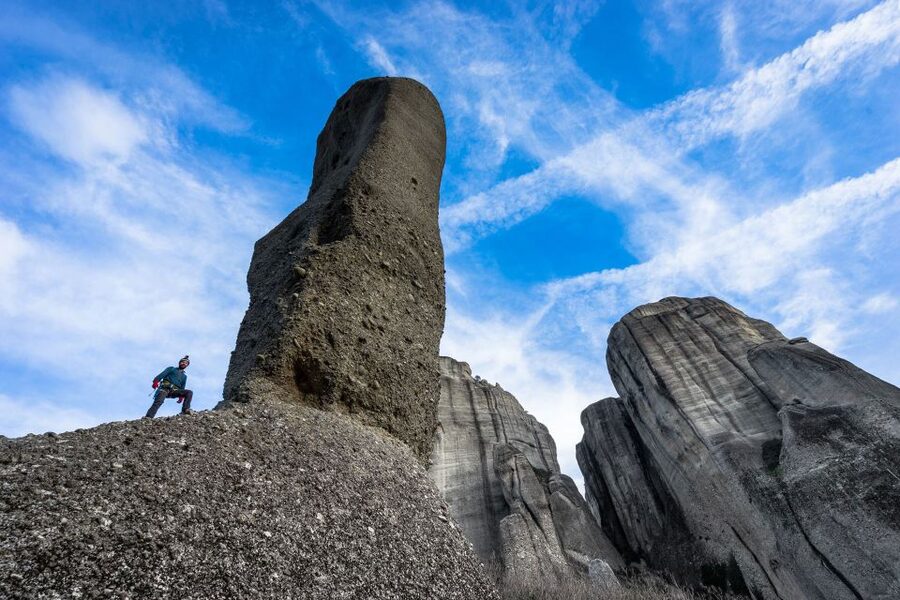
One of the strongest reasons to choose this tour is the chance to leave the busiest monastery access points behind. Meteora can draw large crowds around its famous religious sites, while a guided rock route gives you a different rhythm.
The quiet does not mean the views are limited. As you gain height, the sandstone towers open into broad views across the area. There are plenty of natural pauses for photographs, and the guides can help take pictures during stops. That is useful because scrambling and handling a phone at the same time is a poor combination.
Starting early is a smart choice in warm weather. An early departure can help you avoid the strongest heat, and parts of the ascent have shade. Starting times vary, so check availability and choose the earliest practical option if you are visiting during summer.
The route’s appeal comes from the contrast between effort and reward. You spend part of the climb watching your hands and feet, then reach a viewpoint and see the towers from a completely different angle. The views are not a quick roadside photo stop. You earn them through the climb, which makes the final panorama feel more substantial.
A few more things to do in Greece worth a look
- From Chania: Full-Day Samaria Gorge Trek Excursion & Guide
★ 4.6 · 3,191 reviews - From Rethymno: Samaria Gorge Full-Day Trek, Pickup & Guide
★ 4.5 · 1,610 reviews - From Chania/Rethymno: Samariá Gorge Guided Hike with Pickup
★ 4.5 · 1,010 reviews - From Chania: Samaria Gorge with Professional Hiking Guide
★ 4.6 · 720 reviews
Reaching Great Saint
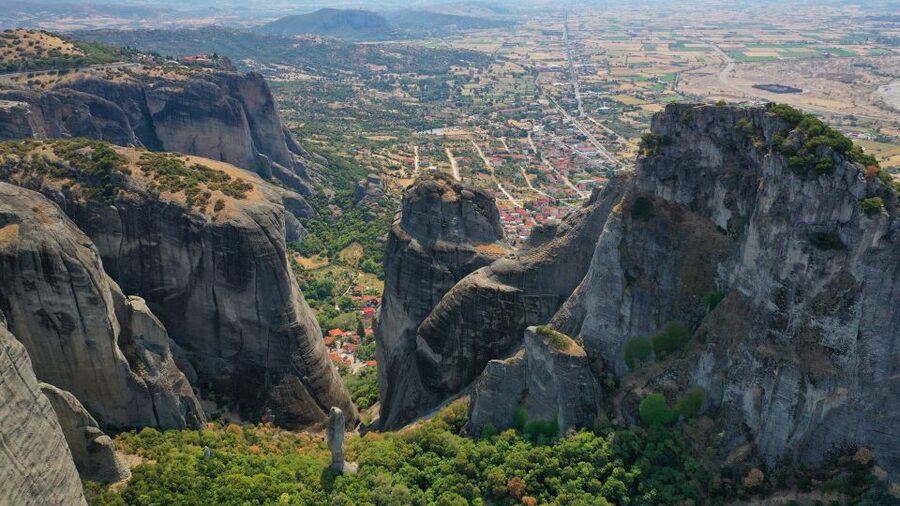
The high point is Great Saint, where you can stop and catch your breath before heading back down. From here, the view reaches across the Meteora rock formations and monasteries, with a 360-degree sweep rather than a narrow outlook.
This is the moment to allow time for photos and to look back at the route you have climbed. The sandstone towers are especially striking from a high position because their shape, height, and separation become easier to understand. You can also appreciate how unusual the old monk-carved paths are when seen as part of the larger rock system.
The summit stop is not presented as a long picnic break. The total experience lasts about three hours, including the climb and descent, so think of it as a compact active outing rather than a full-day mountain expedition. The short length works well if you are fitting the hike around monastery visits or other time in Kastraki and Kalampaka.
One point to keep in mind is that experienced climbers may find the route fairly easy. A participant with Via Ferrata experience described the activity as shorter and gentler than expected. For a first protected climb, that can be a benefit. For a regular climber seeking sustained technical difficulty, it may feel more like an introduction than a major challenge.
Descending with the same care
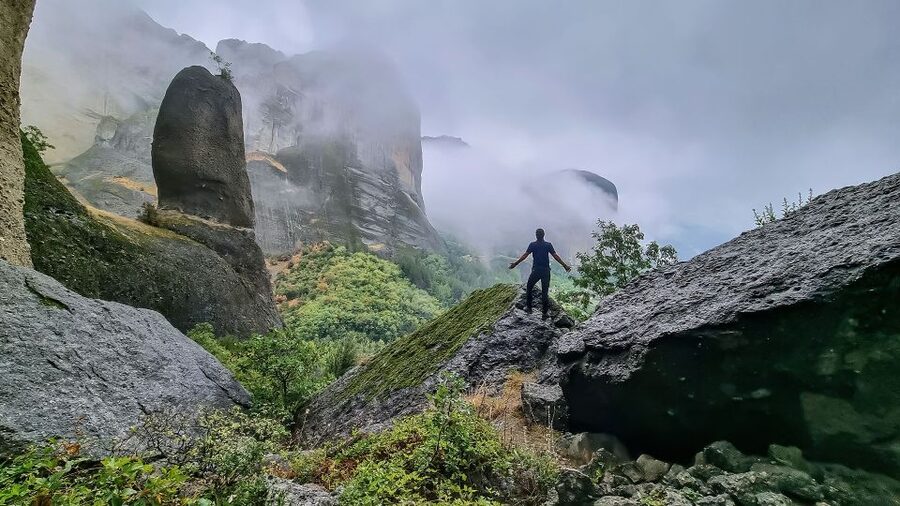
The descent returns along the trail, with the guide continuing to manage the scrambling and protected sections. Going down can be harder on the legs than going up, especially when you are tired, so do not rush the final part.
Your guide remains nearby to help with balance and equipment. Clear instructions matter here, particularly if the rock feels more awkward on the way down. The small group format means you can stop when needed without disrupting a large party.
The route is weather dependent. Rain can make the rock and equipment unsafe, so the activity is cancelled in rainy conditions. You are offered a full refund or an alternative date. This policy is helpful, but keep your schedule flexible if the forecast looks uncertain.
What the $88 price includes
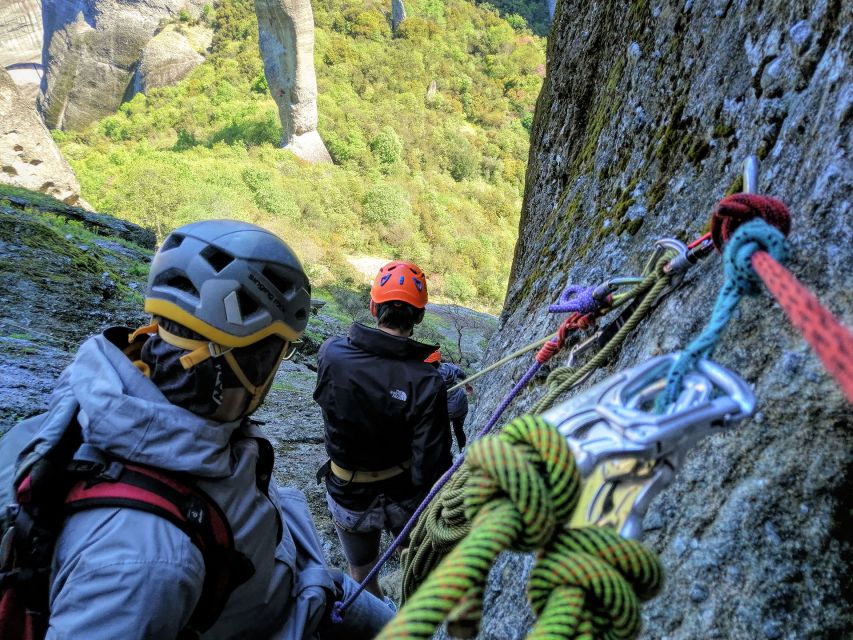
At $88 per person, this is not the cheapest way to see Meteora. The value comes from the specialist guide, safety equipment, small group size, and access to a route that you would not approach casually on your own.
You receive an English-speaking mountain guide, helmet, harness, other necessary equipment, and water. You do not receive food, drinks beyond the supplied water, or hotel transportation. Add those practical costs when comparing this with a standard sightseeing excursion.
I think the price makes the most sense if you want more than a photo stop. You are paying for instruction and route management as much as for the view. The guide helps you use the equipment, handles the more demanding parts of the route, and adds local stories along the way.
It is less good value if you mainly want a gentle walk or a simple monastery visit. Meteora has other ways to enjoy the scenery that require less physical effort. This tour earns its price through participation, not comfort.
Who should book this Meteora hike
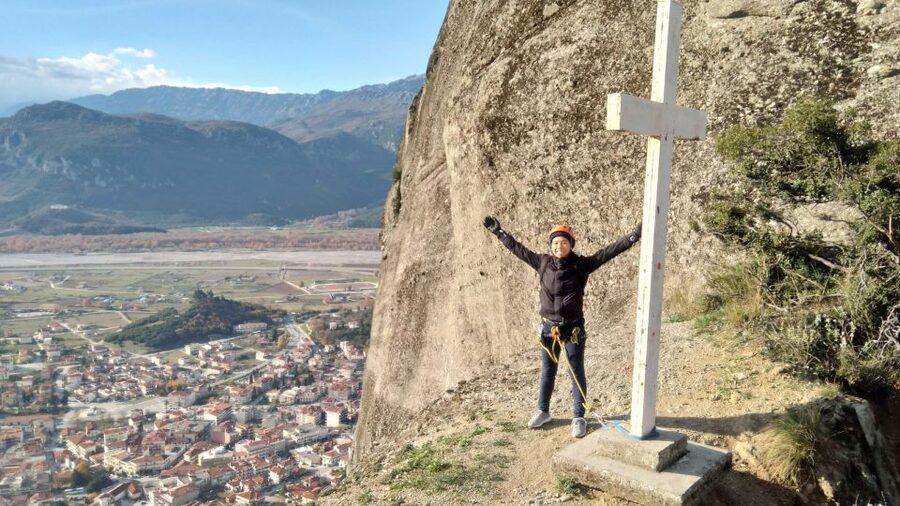
I would choose this activity if you enjoy outdoor challenges, want a more unusual view of Meteora, and have enough fitness for a steady uphill climb. It also suits families with older children who are confident on uneven ground. Children under eight cannot join.
You do not need advanced climbing experience. The route has been described as manageable for beginners, and the guide supplies the protective equipment and instruction. Still, you should be honest about your fitness. Anyone with a low fitness level may find the scrambling and climb tiring.
The tour is also a good match for people who dislike large sightseeing groups. With a maximum of six participants and a guide ratio of three to one, you get a more personal outing. That makes it easier to ask about the rock formations, monasteries, and old paths as you go.
I would skip it if you want a relaxed morning, dislike heights, or are uncomfortable using your hands on rock. The Via Cordata is friendly compared with more demanding climbing routes, but it is still an active experience with exposed sections and a real climb.
Practical details before you go
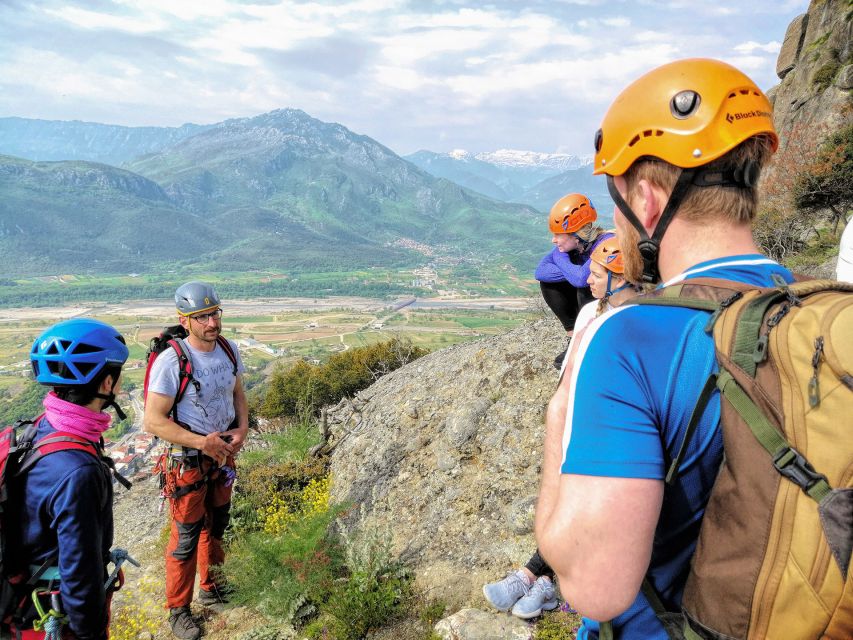
Wear closed-toe shoes. A comfortable pair with good grip is the sensible choice, since you need to balance on uneven rock and walk downhill later.
Bring only what you can carry securely. A small bag is easier than a loose daypack, and you should keep phones and cameras protected during scrambling. Water is supplied, but food is not, so plan any snacks around the tour rather than expecting refreshments on the route.
The tour is conducted in English. If local stories and historical explanations are important to you, make sure you are comfortable following spoken English while walking and handling equipment.
You can cancel up to 24 hours before the activity for a full refund, and reserve now while paying later. Those terms help if you are building a flexible Meteora schedule. Weather remains the main uncertainty, since rain can lead to cancellation or a new date.
Should you book the Great Saint Via Cordata?
Book it if you want to see Meteora through movement rather than from a bus, road, or monastery terrace. The strongest features are the monk-carved route, the small group, the safety support, and the broad view from Great Saint. The guides, including Kostas, Costa, and Evin, add patience, humor, history, and practical help.
Skip it if you want an easy stroll or if you are not comfortable with a moderate to challenging climb. For most active visitors, the three-hour length gives you a useful dose of adventure without taking an entire day. At $88, it is a fair buy for specialist guidance and equipment, especially if a quiet route and a memorable view matter more to you than keeping costs to a minimum.
FAQ
Where does the Meteora Via Cordata tour meet?
You meet your English-speaking guide at the center of the old habitation of Kastraki village, at Qastiro Meteora.
How long does the activity last?
The tour lasts three hours, including the climb to Great Saint and the descent.
How high is the group limit?
The group is limited to six participants, with up to three people per mountain guide.
Is climbing experience required?
Advanced climbing experience is not stated as a requirement. The route is suitable for people with good fitness, and the guide provides instruction and safety equipment.
What equipment is included?
The tour includes all necessary equipment, including helmets and harnesses, plus water.
What should I wear?
Wear closed-toe shoes. Sandals and flip-flops are not allowed.
Can children join the tour?
Children under eight years old cannot join. Participants should also have a good level of fitness.
What happens if it rains?
The tour is cancelled in rainy weather. You can receive a full refund or choose an alternative date.
Just added in Greece
- Luxury Day Cruises to Ithaca – swimming, snorkeling food and more !★ 5.0 · 84 reviews
- Manousakis Winery Shuttle Service Tour and Taste★ 4.5 · 34 reviews
- Knossos Palace, Museum & Rethymno city Private Tour from Chania★ 5.0 · 69 reviews
- Zante Cruise to Blue Caves & Shipwreck Beach Photo stop★ 4.0 · 64 reviews
- Queen Bee Sunset Cruise with Swim Stops and Dinner★ 5.0 · 100 reviews
- Full-Day Private Tour in Kefalonia★ 5.0 · 111 reviews
- Kefalonia in a day: Full-Day Private Sightseeing Tour★ 5.0 · 26 reviews
- “QueenBee” Full-Day Boat Trip with Lunch★ 5.0 · 293 reviews
Meteora Monastery Tours, compared.
Meteora Monasteries Day Trip with Caves and Lunch
Read our review →

Meteora Tour with Local Guide and Greek Lunch
Read our review →
Meteora Monasteries, Caves & Coastal Stopovers with Lunch
Read our review →
Meteora Monasteries & Caves DayTrip from Athens with Greek Lunch
Read our review →
4-Day Classical Greece Tour: Epidaurus, Mycenae, Olympia, Delphi, Meteora
Read our review →Browse the lists this tour appears in