
Reviewed · METEORA MONASTERY TOURS
2 Days Private Tour: Delphi & Meteora
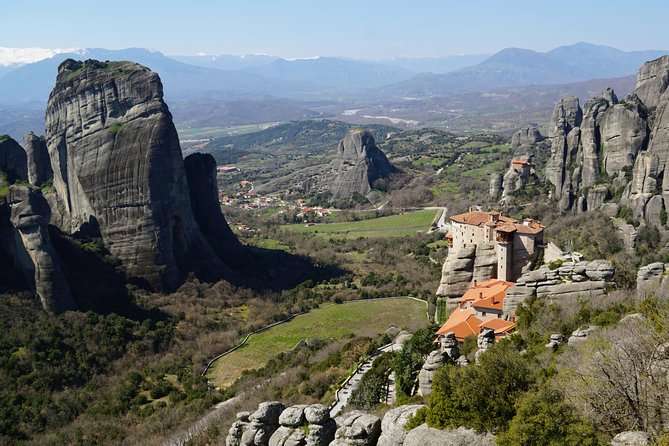
The most striking part of this two-day journey is the contrast between Delphi’s ancient sanctuary and Meteora’s monasteries perched on towering rock. One site asks you to picture priests, pilgrims, and Greek city-states. The other feels almost unreal, with Orthodox monasteries set high above the plain.
I like the private format for two clear reasons: you can set your own pace, and the long drive becomes far more pleasant in a private vehicle with hotel pickup. The chance to catch a Meteora sunset, as several itineraries with drivers such as Chris, Andreas, and George did, is another real advantage.
The main drawback is distance. You cover a lot of northern and central Greece in only two days, and entrance fees, meals, and possibly your licensed site guide cost extra. The drivers can explain the places, but they cannot accompany you inside the archaeological sites or museums unless you hire a licensed guide.
Key points to know before booking
- Two UNESCO sites in one compact trip: Delphi and Meteora give you ancient Greek religion, Orthodox monastic life, mountain scenery, and art in one outing.
- Private timing makes a difference: You can slow down for photographs, adjust lunch, and sometimes arrange a sunset stop or an earlier return.
- The drive is part of the experience: You pass through Arachova, Lamia, Trikala, and Karditsa rather than simply rushing between major sights.
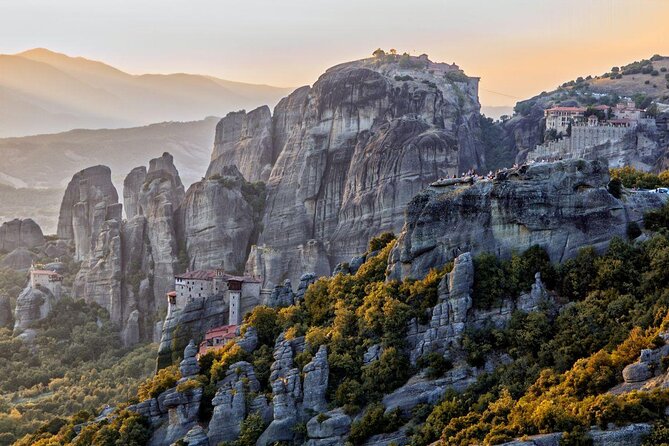
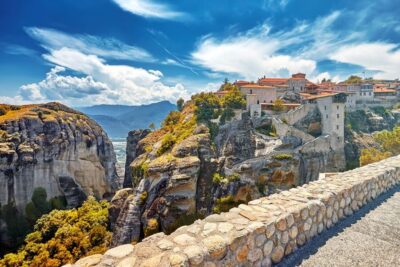
- Meteora is the visual high point: Roussanou, Agios Stefanos, and Great Meteoron each offer a different view, scale, and feel.
- Thermopylae adds a useful historical stop: The battlefield, 3D film, and Leonidas Monument turn a short roadside visit into a memorable lesson.
- Plan for extra costs: Entrance fees and a licensed guide are not included, and accommodation depends on the booking selected.
Why this private route works so well
From Athens, Delphi and Meteora are awkward to combine by public transport in only two days. This private tour solves that problem with door-to-door transport, a hotel or Airbnb pickup, and one overnight stay in Kalambaka, the small town below Meteora.
You spend the first day heading northwest toward Delphi, then continue through the interior to Kalambaka. The second day brings the monasteries, Thermopylae, and the return to Athens. It is a full schedule, but not a pointless race from one photo stop to another.
The strongest feature is control. Your driver can help decide how long to spend at the museum, how much time to allow for lunch, and where to stop for photographs. Past guests especially appreciated drivers such as Panos, who helped with time planning, and Marios, who assisted with difficult viewpoints.
That flexibility matters most when conditions change. In poor weather, one private group visited fewer monasteries and returned to Athens early enough for an evening visit to the Acropolis. A coach tour would give you far less room to change plans.
Other monastery and cliff-top days from Athens:
- Athens: Meteora Monasteries Day Trip with Caves and Lunch
★ 4.7 · 2,964 reviews - Athens: Meteora Monasteries Day Tour with Lunch
★ 4.8 · 2,196 reviews - Athens: Meteora Tour with Local Guide and Greek Lunch
★ 4.8 · 1,561 reviews
Day one: Arachova, Mount Parnassus, and Delphi
The route begins on the national highway toward northern Greece. You pass the Plain of Thieves and the city of Levadia before climbing toward Mount Parnassus. The scenery shifts from urban Athens to mountain roads and open countryside.
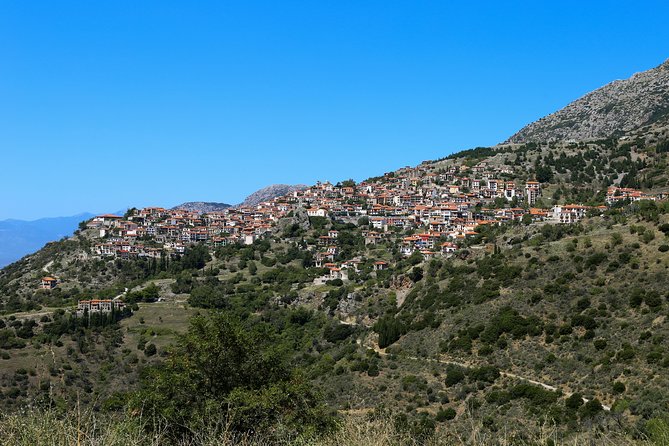
Arachova is the natural gateway to Delphi. The mountain village is a pleasant place to stroll, though the schedule may not provide a long stop. Its position on the slopes of Parnassus gives you a first taste of the mountain setting that makes Delphi so memorable.
The approach is important. Delphi was not built on a flat plain with easy access. Its sanctuary sits on the slopes above the valley, surrounded by mountains and wide views. Even before you reach the main ruins, the location explains why the ancient Greeks considered this a special place.
Delphi: Apollo’s sanctuary and the center of the ancient Greek world
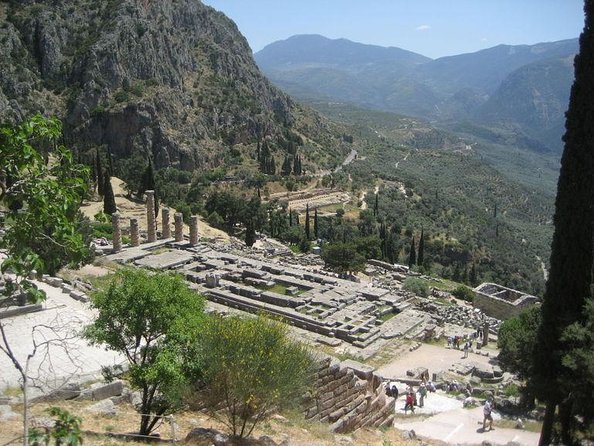
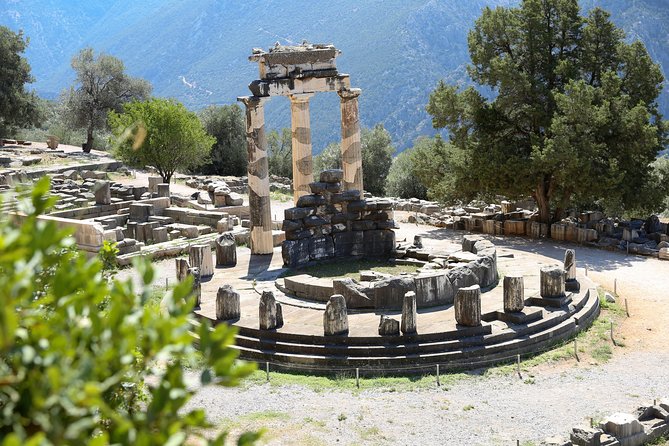
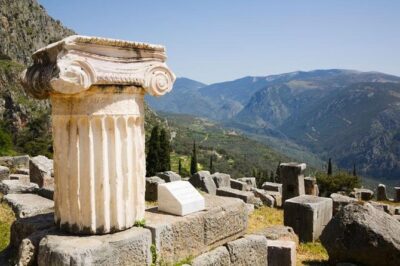
At Delphi, you walk through the sanctuary of Apollo, where the oracle known as the Pythia delivered predictions. Ancient Greeks treated Delphi as a pan-Hellenic center, a place connected to many city-states rather than one local community.
The site is best understood as both a religious center and a meeting place. Temples, treasuries, monuments, theater seats, and processional paths show how much importance Greek communities placed on Apollo and the oracle.
Allow enough energy for uneven paths and uphill walking. The ancient theater gives you a fine view back across the sanctuary, while the stadium sits higher up and requires extra effort. One especially useful tip is to make time for the stadium. It is easy to stop at the lower ruins and skip it, but the walk rewards you with a better sense of the full scale of Delphi.
The Temple of Apollo is the emotional center of the visit, even though only portions remain. This is where the Pythia was associated with Apollo’s oracle. Your driver can offer context on the way and help you understand what you are seeing, but remember that drivers are not licensed to guide you inside the site.
That distinction matters. If you want a detailed explanation beside each ruin, arrange a licensed guide for an additional fee. If you are comfortable walking independently after receiving background information in the vehicle, the included driver service may be enough.
Delphi Archaeological Museum: the pieces that complete the ruins
The museum sits near the archaeological site and is essential rather than optional. The ruins give you foundations and columns. The museum supplies the sculpture and objects that show how polished and ambitious Delphi once was.
The famous Charioteer of Delphi is the star attraction. Its calm expression and careful bronze work make it easy to understand why this sculpture is so highly valued. The tour information also points to a gold and ivory statue, another reminder that Delphi was not a modest mountain shrine.
You normally have about an hour for the museum and site areas listed for Delphi, though your private format gives you some room to adjust. I would not rush the museum to add another minor stop. Delphi works best when you give the sanctuary and its art enough time to connect.
Afterward, you stop in the modern village of Delphi for lunch, with views across the mountains of Phocis. Restaurant choice is part of the private experience. Drivers such as Vasileios and Basilis have been praised for useful meal suggestions, while Lysandros helped arrange food for vegetarians.
More ancient sites within reach of Athens:
- Athens: Mythology of Delphi, Museum and Arachova Guided Tour
★ 4.6 · 4,008 reviews - From Athens: Delphi Full Day V.R. Audio Guided Tour
★ 4.6 · 3,028 reviews - From Athens: Small-Group Delphi, Museum & Arachova Day Trip
★ 4.8 · 2,476 reviews - Delphi English Day Trip from Athens with Official Guide
★ 4.5 · 2,199 reviews
The countryside drive to Kalambaka
After Delphi, the route continues through central Greece. Instead of staying on the national highway, the vehicle travels through mountain country and passes Lamia, Trikala, and Karditsa before reaching Kalambaka.
This is a long transfer, so set realistic expectations. You will spend several hours in the vehicle. The benefit is that you see more of inland Greece than you would on a direct highway run, and the private van gives you a quieter, more comfortable ride than a large coach.
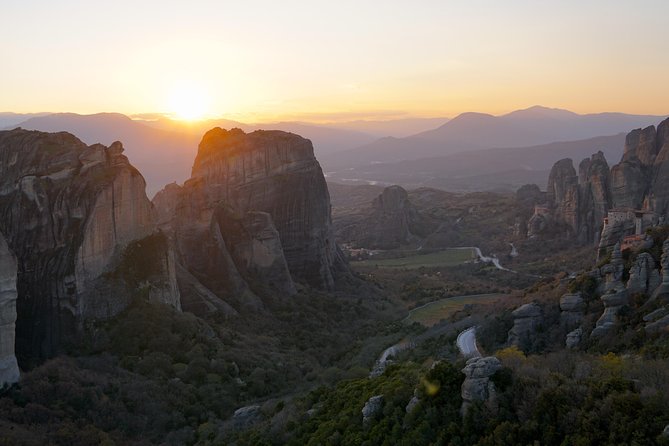
Kalambaka is a good base because Meteora rises directly above town. After checking into the hotel, you have time for an evening walk and dinner. If conditions and timing cooperate, ask about a sunset viewpoint. That unplanned sunset has been a highlight for people guided by George and Constantinos.
Accommodation and breakfast depend on the option selected when you book. The information is inconsistent about whether they are included, so confirm the exact package and hotel before paying. The overnight stay itself is part of the appeal, since Meteora at evening light is very different from Meteora in midday sun.
Day two: the strange beauty of Meteora
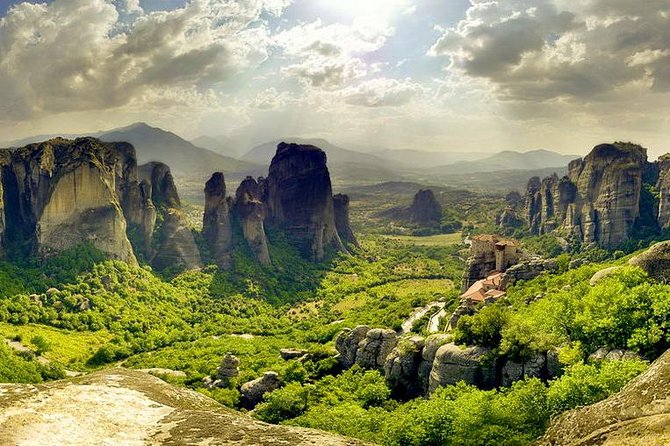
Meteora means suspended in the air, an apt name for the enormous rock pillars above Kalambaka. The site combines unusual geology with an important group of Eastern Orthodox monasteries, many of which remain active religious communities.
The first general Meteora stop gives you time to look across the cliffs and understand the setting. Do not treat this as a quick photo stop. The scale is hard to grasp from one viewpoint, and the monasteries appear at different heights and angles as the road winds around the rocks.
Clothing and walking matter here. You should bring water and wear practical shoes. Several stops involve paths, stairs, or uneven surfaces. One past guest also recommended binoculars and hiking poles, especially if you want to inspect distant buildings or feel steadier on the paths.
Roussanou, Agios Stefanos, and Great Meteoron
Roussanou Monastery provides a close look at one of the smaller monastic foundations and a different angle toward the surrounding cliffs. The pathway from the monastery to the upper road leads to a less obvious viewpoint where you can walk on bare rock.
That viewpoint is a good example of why a private driver helps. You can ask for a little extra time for photographs instead of being pulled along with a large group. Still, the stop is not long, so do not expect a lengthy hike.
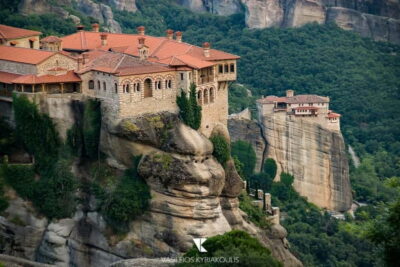
Agios Stefanos is one of Meteora’s female monasteries. Its exact construction date is uncertain, but evidence places it in the 15th century. The wall paintings in its main church were completed in 1560.
The monastery adds variety to the day. You are not only looking at cliffs and distant buildings. You also see a living religious setting, painted interiors, and the way monastic communities adapted to an almost inaccessible location.
Great Meteoron is the largest and best-known monastery in the group. Dedicated to the Transfiguration, it gives you the clearest sense of Meteora’s historical importance and physical scale.
The listed visit times at individual monasteries are short, around 30 minutes each. That can be enough for a focused visit, but not for a slow study of every room, icon, and wall painting. If your main goal is religious art, ask about a licensed guide and discuss the order of stops before the morning begins.
Meteora can also be physically demanding. Stairs and paths may challenge anyone with mobility limits. The supplied information says most people can participate, but it does not promise easy access at every monastery. Ask the operator about current conditions and the exact sites planned for your date.
Thermopylae: a compact stop with a big story
The return route includes Thermopylae, where King Leonidas and the 300 Spartans fought the Persian army. The battlefield stop is brief, but it breaks up the drive and gives the journey a clear historical finish.
The historical information center adds a 3D film that presents the battle and the people who died there. This is useful because the modern roadside setting does not immediately reveal the importance of the place.
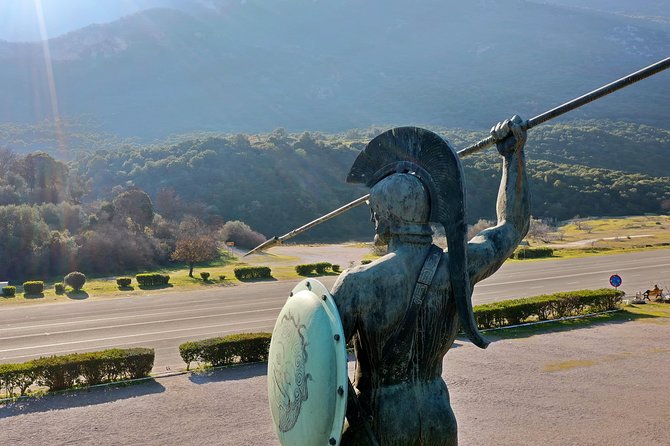
You then see the Leonidas Monument opposite Kolonos Hill, associated with the Spartans’ final stand. The statue takes only a few minutes, but it gives you a concrete image to carry away from the stop.
Thermopylae is not comparable in size to Delphi or Meteora. Think of it as a focused lesson and a chance to stretch your legs, not a third full archaeological visit.
Lunch at Kamena Vourla and the road back to Athens
Before Athens, the tour stops at the coastal town of Kamena Vourla for a traditional Greek lunch by the sea. This changes the mood after two days of mountains, ruins, and monasteries.
The meal is not included, so budget for it separately. The private format lets you spend roughly an hour here and gives the driver room to recommend a suitable restaurant. Several drivers have been praised for finding good lunch and dinner places, but restaurant choice can vary.
The drive back to Athens completes a long second day. You will probably appreciate the private vehicle by this point. Bottled water and hotel drop-off are included, but the overall schedule still demands stamina.
Drivers, guiding, and what you actually receive
The company uses professional drivers with strong knowledge of Greek history and local routes. Names associated with this experience include Andreas, Chris, Panos, Marios, George, Alex, Terry, Constantinos, Vasileios, Stavros, Lysandros, and Alexander.
Their role is more than simply driving. They can suggest viewpoints, help with photographs, advise on time, find suitable restaurants, and adjust the order of the day. Several people especially valued the care shown by Andreas, Chris, and Lysandros, while Panos was noted for practical time advice.
But you should understand the limits. Drivers are not licensed to accompany you inside archaeological sites or museums. If you want formal interpretation at Delphi, the museum, or Meteora, hire a licensed guide at extra cost.
That arrangement can be a good value for independent-minded visitors. You receive private transport and local assistance without paying for a full guide every minute. It is less suitable if you want a detailed lecture beside every monument.
Is $712.03 per person a fair price?
At $712.03 per person, this is an expensive excursion. The value depends heavily on group size. A couple pays more per person than a family or small group sharing the private vehicle, but a larger group can make the arrangement more reasonable.
You are paying for two days of private transport from Athens, hotel pickup and return, an overnight stay, breakfast according to the booking, bottled water, and a route that would be difficult to organize independently in the same time.
You still need money for entrance fees, meals, and a licensed guide if desired. Accommodation also needs checking because the package details differ depending on the booking option.
I see the price as an indulgence that makes sense for a short Athens stay. If you have only two days and want both Delphi and Meteora, the convenience is substantial. If your budget is tight or you can spend several extra days in Greece, independent travel may offer better value.
Who should book this two-day trip?
I would choose this for couples, families, and small groups who want major sights without driving themselves. It also suits people who value photographs, flexible meal stops, and the ability to change plans around weather.
History and archaeology fans get Delphi, the museum, Thermopylae, and the oracle of Apollo. Anyone interested in Orthodox art and religious buildings gets three major Meteora monasteries plus the chance to see the evening light.
Families can benefit from the private pace. A driver such as Alexander has adjusted the experience for parents and children, and you can take breaks without waiting for a whole coach.
I would hesitate if you dislike long drives, steep paths, or tightly packed sightseeing days. Meteora and Delphi deserve more time than this tour allows, and the route is demanding even though the vehicle is comfortable.
Should you book it?
Book this tour if your priority is seeing both Delphi and Meteora from Athens in two days, with private transport and room to adjust the schedule. The sunset possibility, countryside route, and Thermopylae stop add more than a basic transfer would.
Before booking, confirm the hotel category, breakfast arrangement, entrance fees, and cost of a licensed guide. Ask which monasteries are planned and tell the operator about mobility needs, food requirements, and your preferred pace.
For a first visit to central Greece, this is a strong but busy introduction. You will trade leisurely exploration for range, comfort, and the freedom to shape the day around your own group.
FAQ
How long is the tour?
The experience lasts approximately two days and includes one overnight stay in Kalambaka.
Where does pickup take place?
Pickup is available from your hotel, Airbnb, or port in Athens. The pickup time can be adjusted on request.
Is the tour private?
Yes. Only your group participates in the private activity.
Is accommodation included?
Accommodation and breakfast depend on the booking selected. Confirm the exact accommodation arrangement before booking because the package details can vary.
Are entrance fees included?
No. Entrance fees for Delphi, the museum, Meteora monasteries, and the Thermopylae historical center are not included.
Can I hire a licensed guide?
Yes. A licensed guide can be arranged for an additional cost. The drivers themselves are not licensed to accompany you inside sites or museums.
Which places do I visit at Meteora?
The route includes the Meteora rock formations, Roussanou Monastery, Agios Stefanos, and Great Meteoron Monastery. The exact order can depend on timing and conditions.
Is lunch included?
No. Lunch and dinner are not included. Planned meal stops include the modern village of Delphi and Kamena Vourla by the sea.
Can I cancel for a full refund?
You can cancel at least 24 hours before the experience begins for a full refund. Cancellations or changes made less than 24 hours before the start time are not accepted for a refund.
More 2-Day Experiences in Athens
- From Athens: Delphi and Meteora 2-Day Guided Tour
★ 4.5 · 825 reviews - 2-Day Tour to Delphi & Meteora with Guide and Tickets From Athens
★ 4.0 · 692 reviews - From Athens: Delphi and Meteora 2-Day Tour with Hotel
★ 4.4 · 392 reviews - Athens: 2 Days in Meteora with 2 Guided Tours and Hotel Stay
★ 4.7 · 376 reviews
Just added in Athens
- Ceramic and Pottery Creative Workshop with Two Local Artists★ 4.0 · 57 reviews
- Small-Group Women History in Ancient Greece Walking Tour★ 5.0 · 38 reviews
- Athens Old City Private Photoshoot Tour / 2 hrs★ 5.0 · 109 reviews
- Athens: Wine Workshop Create your Own Wine under the Acropolis★ 5.0 · 77 reviews
- Athens: Greek Wines Tasting with Sommelier and Acropolis Views★ 5.0 · 88 reviews
- Wine Trails Private Tour/ Nemea visit 3 wineries from Athens or Nafplion (10 h)★ 5.0 · 44 reviews
- Hydra Private Day Trip by Ferry from Athens with Transfers★ 4.0 · 30 reviews
- FLYING DRESS Photoshoot in Athens – Greece★ 5.0 · 47 reviews
Meteora Monastery Tours, compared.
Meteora Monasteries Day Trip with Caves and Lunch
Read our review →

Meteora Tour with Local Guide and Greek Lunch
Read our review →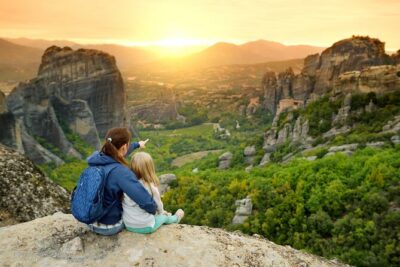
Meteora Monasteries, Caves & Coastal Stopovers with Lunch
Read our review →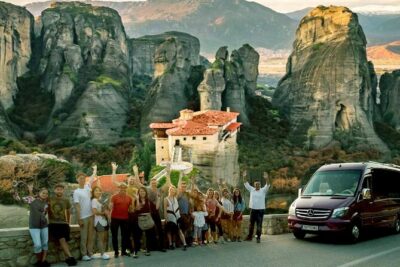
Meteora Monasteries & Caves DayTrip from Athens with Greek Lunch
Read our review →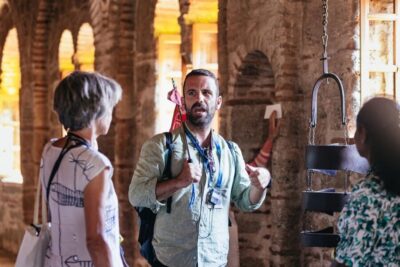
4-Day Classical Greece Tour: Epidaurus, Mycenae, Olympia, Delphi, Meteora
Read our review →Browse the lists this tour appears in