
Reviewed · OLIVE OIL TASTING TOURS
Kalamata: The Olive Oil Routes Tour
The best part of this experience is that olive oil is not treated as a product in a shop. You see the trees, hear the family stories, visit a 120-year-old working mill, and then taste the oil with food. I like the way the tour connects farming with Greek customs, and I like that certified taster Dimitra makes the tasting active rather than formal.
You should know that the meeting point is outside Androusa Castle, not in central Kalamata. You’ll need your own car or a taxi for the 20-minute trip, and the sunny olive groves call for comfortable shoes, a hat, and sunscreen.
Key points at a glance
- Androusa Castle sets the scene: Begin beside a 13th-century castle, about 20 minutes from Kalamata and 10 minutes from Ancient Messene.
- Old trees tell local stories: Walk through Messinia’s olive groves and learn how different varieties shape the region’s food and farming.
- A fifth-generation mill brings the process to life: See how olives become oil, then learn about storage and standardization.
- The tasting is hands-on: Compare Koroneiki, Manaki, Xalkidikis, and Mavroelia oils in blue tasting glasses.
- Food makes the lesson practical: Pair oils with kalamata olives, olive paste, lalaggia, sfela, smoked ham, cheeses, fruit, tzatziki, and small local dishes.
- The price covers more than a tasting: At $106, you get three venues, food tastings, entrance fees, guides, a certified taster, taxes, and tour photos.
Why Androusa is a better starting point than Kalamata
This tour begins at the castle of Androusa, on the main road outside the village. The 13th-century ruins provide a useful sense of place before the food and farming begin. You are not simply dropped at an olive mill with a quick explanation. The castle, village, groves, and family business fit together.
From Kalamata, the drive takes about 20 minutes. Ancient Messene is only about 10 minutes away, so you can combine this tour with the archaeological site if your day is planned carefully. Hotel pickup is not included, so you need to arrange a car or taxi. Check the meeting instructions closely, since the castle is the important reference point.
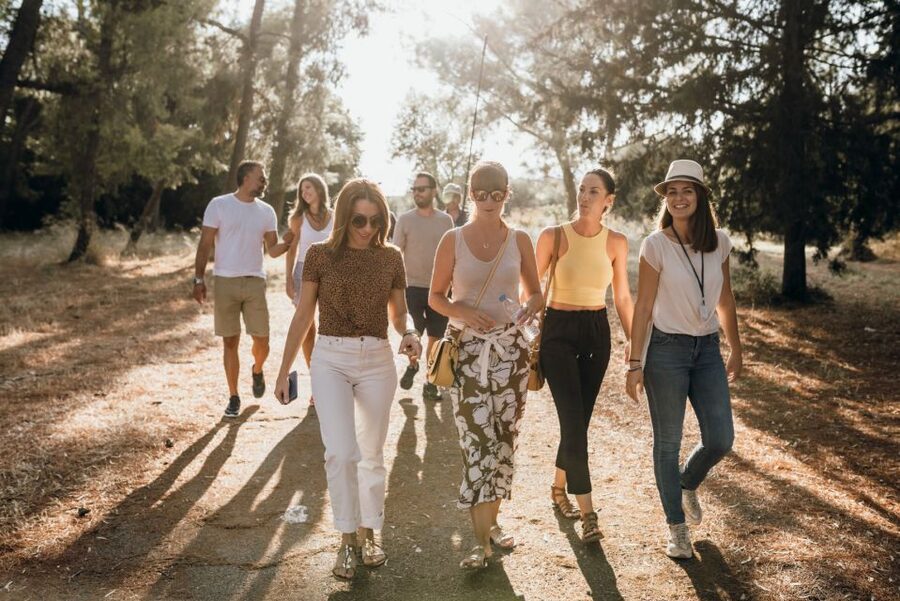
The first walk gives you an overview of the olive-growing area around Messinia. It is not a strenuous hike, but you will be outside among uneven ground and trees, so sensible shoes matter. The experience works best when you allow yourself time to look around rather than treating the walk as a quick transfer to the next stop.
Other tastings in the countryside near Greece:
- Knossos-Zeus Cave -Old Traditional Villages-Olive Oil Factory
★ 5.0 · 694 reviews - The Governor’s Olive Mill Tour with Olive Oil Tasting
★ 5.0 · 502 reviews - From Chania: Olive Oil, Wine, Cheese & Honey Tasting Tour
★ 4.6 · 490 reviews
Walking among Messinia’s old olive trees
The olive grove is where the tour gains its sense of place. Your guide explains local olive varieties, the role of olive farming in Greek life, and the stories attached to the trees around Androusa. The trees are not just scenery. Their trunks and age help explain how farming has shaped family life and village identity over many generations.
The guide also brings in myths and local traditions connected with the castle olive trees. That makes the early part useful even if you know little about oil. You begin to understand why olives appear on Greek tables in so many forms, from table olives and paste to oil used in nearly every stage of cooking.
Dimitra has a personal connection to this subject. Her family has produced olives for five generations, and several tours include a visit to the family orchard. That family link gives the talk a more personal angle than a standard agricultural demonstration. You hear about land, work, family, and food as parts of one story.
The tour has also worked well for mixed-age groups. A four-year-old joined one outing, and older family members were able to take part too. Dimitra uses questions and simple games to get people involved. One guide’s energetic style may feel a little school-like at first, especially if you already know Greek history, but the approach helps the group relax and gives children something to do.
Inside a fifth-generation olive oil mill

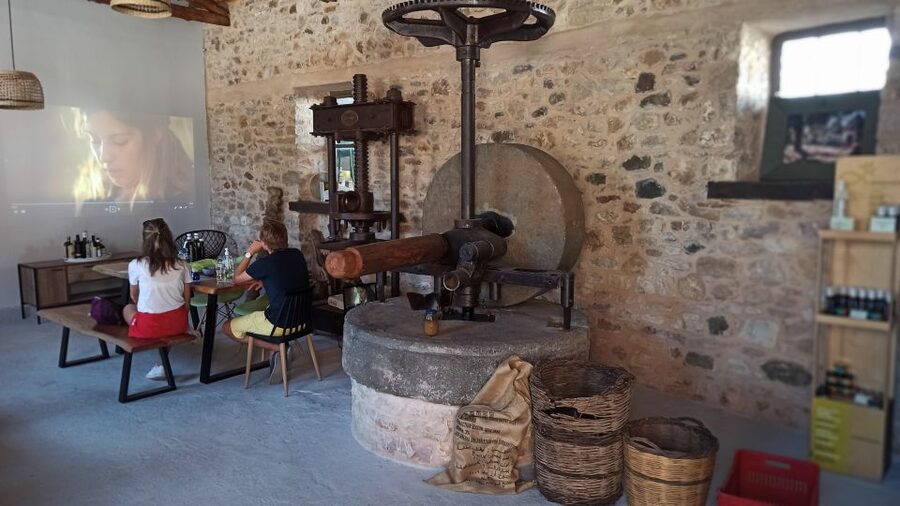
In the center of Androusa, you visit an olive press and mill that has operated for more than 120 years. The fifth-generation owner explains extraction, storage, and standardization. This is the part that turns the grove walk into a practical lesson in how oil reaches your kitchen.
You learn that the work does not end when olives are picked. The tour explains the movement from fruit to oil and the choices that affect the final product. At the mill, you can ask questions about how different olive varieties are handled and how extra virgin olive oil is prepared and stored.
The family connection matters here. You are hearing about a working tradition that has remained tied to the same area, not looking at a display built only for tourism. That said, the exact mill activity can vary with the season and the day’s operation. In November, during harvest, one group saw workers picking olives and was able to take part briefly. If you visit at another time, you may spend more time listening and observing.
The mill visit also covers table olives and different olive varieties, not only bottled oil. That is useful for anyone who thinks all Greek olives and oils taste alike. The region’s products have more range than the familiar Kalamata olive suggests.
Learning to taste oil instead of just eating it

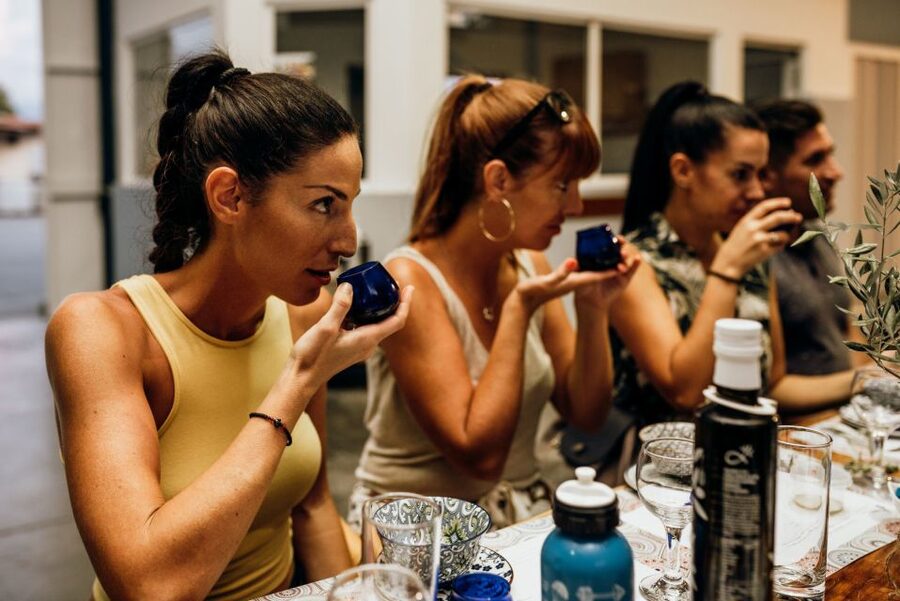
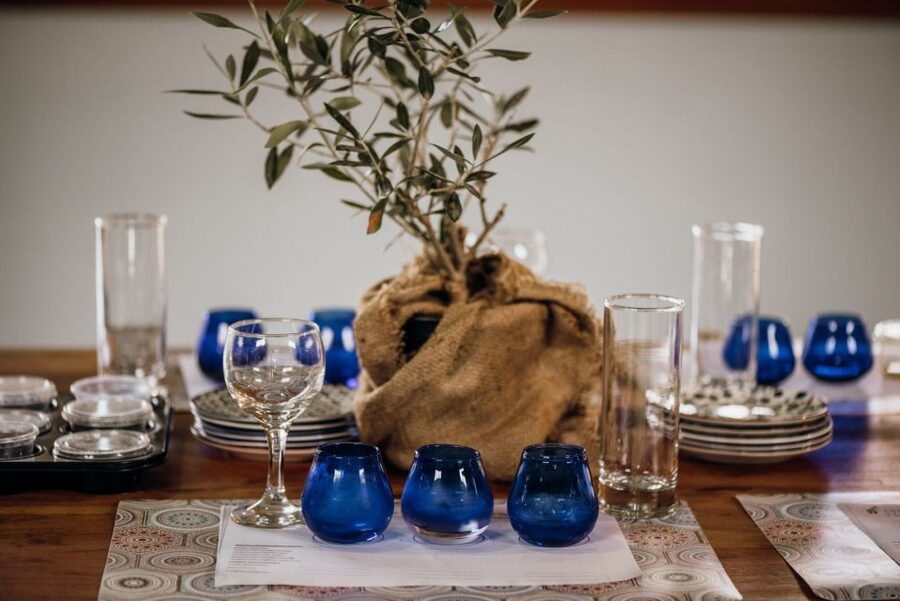
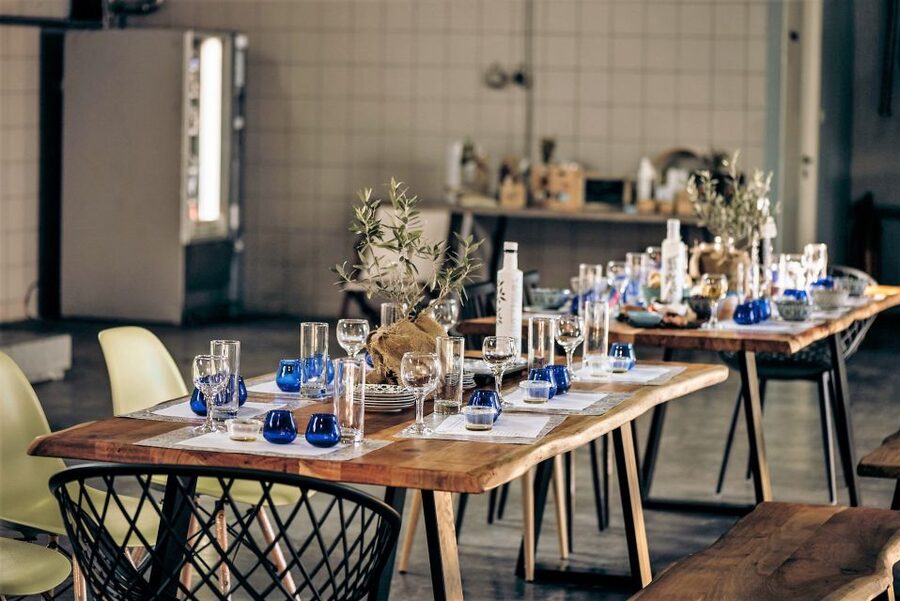
The tasting takes place around a table set with small blue olive oil glasses. A certified olive oil taster introduces the basic elements used to judge extra virgin olive oil. You first taste the oil by itself, then compare varieties and notice how flavor changes from one sample to another.
Koroneiki is the key local variety in the tasting. You may also try Manaki, Xalkidikis, and Mavroelia oils. The aim is not to memorize technical terms. It is to notice smell, flavor, bitterness, peppery sensations, and the general balance of the oil.
The blue glasses are part of the tasting method. Their color keeps you from judging oil by appearance alone. That is a small but useful detail, since a green tint does not automatically mean better oil. Dimitra explains what separates extra virgin oil from lower grades and helps you recognize the characteristics that matter.
This is a good activity for anyone who buys olive oil but has never compared several types side by side. You learn why one oil might suit a salad while another works better with cheese, bread, or cooked food. The tasting is more useful because you immediately test those ideas with local dishes.
Do not expect a long professional certification class. The session is designed for visitors, and the tone is friendly and interactive. You get enough detail to shop and taste more intelligently without spending the afternoon on technical chemistry.
Same base, a completely different day:
- Athens: Acropolis & up to 5 Archaeological Sites Combo Pass
★ 4.4 · 12,619 reviews - Athens: Acropolis Ticket with Optional Audio or Live Guide
★ 4.2 · 11,055 reviews - Athens: Acropolis, Parthenon & Acropolis Museum Guided Tour
★ 4.8 · 9,316 reviews - Athens: Cape Sounion & Poseidon Temple Sunset Half-Day Trip
★ 4.8 · 8,241 reviews
Pairing oil with a real table of Messinian food
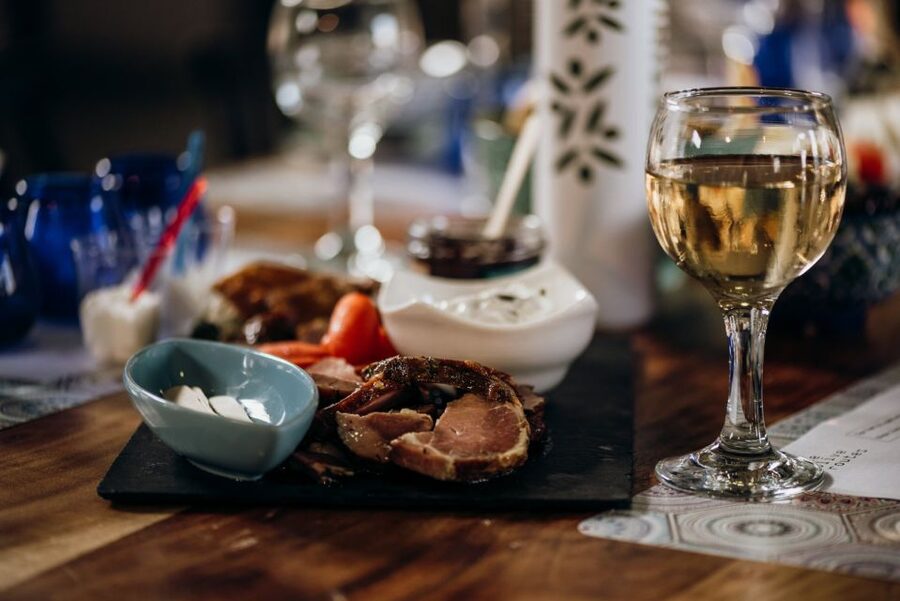
The tasting becomes much more memorable when the oil is paired with food. You may try at least four different combinations, using fruit, small gourmet dishes, tzatziki, kalamata olives, olive paste, lalaggia, pasto, and local cheeses.
Lalaggia is a regional fried dough, and sfela is a local cheese with a firm, salty character. Pasto is smoked ham. These foods give the oils something substantial to work with, so you can see how flavor changes when the oil meets salt, dairy, smoke, or warm dough.
Several outings have ended with a generous local lunch at a tavern rather than a few token bites. The meal may include homemade dishes prepared by the local team, and wine has also been served. The advertised inclusions describe food tastings and small plates, so you should think of the meal as a substantial food component rather than assume a formal restaurant lunch is guaranteed every time.
This is one of the tour’s strongest features. A bottle of oil can taste sharp or grassy when sampled alone, but food shows you how to use it. I like that you are encouraged to make your own combinations. It turns the tasting from a lecture into a shared table.
Dietary needs can sometimes be accommodated. One gluten-free participant was able to eat nearly everything except the pumpkin pie on that particular outing. Still, tell the provider in advance. The supplied information does not promise a fixed dietary menu.
What the guide adds to the experience
The guides are a major part of the tour. Dimitra is both a family olive producer and a certified taster. She explains the grove, mill, food, and cultural side of the subject, while other members of the team help at the mill and food stops. Athanasia has also led tours and is described as especially warm and enthusiastic about family, land, and Greek foodways.
Expect an involved teaching style. The guide may ask your name, invite you to answer questions, and use small games to bring the group into the conversation. This is not the right tour if you want to walk silently through an orchard and take photographs without much explanation. It is a social experience built around participation.
The approach suits first-time visitors especially well, but it can work for repeat visitors too. One frequent Greece visitor initially found the teaching style a bit basic, then found the games and questions surprisingly effective. That is a fair warning: the presentation is lively and accessible rather than restrained or academic.
English and Greek are offered. The personal family connection also means the discussion goes beyond facts about pressing machines. You get an explanation of why olive trees matter to Greek families, village economies, cooking, and identity.
Is $106 a fair price?
At $106 per person, this is not a cheap snack stop. It is a half-day experience with three main parts: an olive walk, a mill visit, and an oil tasting with food. Entrance fees, food and oil tastings, a local tour leader, a certified taster, taxes, and photos are included.
The value improves if you would otherwise pay separately for transport to the countryside, a food tasting, and a mill visit. You also get access to a family operation and guidance from someone who works with olive oil professionally. Several outings included a full and filling meal, which makes the cost easier to justify, although the official description promises small plates rather than a fixed lunch menu.
You pay less for a polished attraction and more for contact with the people who produce the food. If you only want to taste Kalamata olives, you can do that for far less in a market. If you want to understand why the oil tastes different, where it comes from, and how it fits the local way of life, the price is more reasonable.
The tour also includes photos, which is a nice extra for a short experience. You may be able to arrange shipment of oil home through the team, as one family did, but treat that as an option to ask about rather than a listed inclusion.
Who will enjoy this tour most?
I would recommend it to food lovers, families, couples, and anyone visiting Kalamata who wants a countryside experience without giving up half a day. It suits people who like to ask questions and taste several foods. It also makes sense for visitors staying near Costa Navarino, as one past participant used it as a day activity from that area.
The tour is a good match for a visit to Ancient Messene. Since the meeting point is only about 10 minutes away, you can place the archaeological site before or after the olive route, depending on opening hours and your transport.
It is less suitable if you have no way to reach Androusa, dislike group discussion, or want a quiet private tasting. The walk takes place outdoors, and the tour is better with sun protection and shoes that handle rough ground.
The 3.5-hour length is well judged. You have enough time for the grove and mill to feel meaningful, but the day does not become an exhausting agricultural seminar. Food slows the pace in a pleasant way, and the final table gives you time to talk with the group.
Practical details before you book
The meeting point is outside Androusa Castle on the main road. The tour does not include hotel pickup or drop-off, so arrange your own taxi or drive. The castle location is the key detail to confirm before leaving Kalamata.
Bring comfortable shoes, a sun hat, and sunscreen. The olive walk and grove visit are central to the experience, and the weather can make the outdoor portion feel very different from the indoor tasting.
The tour is available in Greek and English. You can cancel up to 24 hours before the start for a full refund, and the reserve-now, pay-later option lets you hold a place without paying immediately. Check the available start times when booking.
Should you book the Olive Oil Routes Tour?
Book it if you want more than a tasting spoon and a bottle to take home. The combination of castle, old olive trees, family mill, expert tasting, and local food gives you a clear picture of Messinia’s olive culture in a single morning or afternoon.
I would especially choose it for a first visit to Kalamata, a family trip, or a food-focused itinerary. The main drawbacks are the need to arrange transport and the possibility that the guide’s interactive style may feel more animated than you expect. For most people, those are small tradeoffs for a personal look at one of Greece’s most important foods.
FAQ
Where does the Olive Oil Routes Tour meet?
Meet your guide outside the 13th-century castle of Androusa, on the main road. The meeting point is about a 20-minute drive from Kalamata and 10 minutes from Ancient Messene.
Is transportation from Kalamata included?
No. Hotel pickup and drop-off are not included. The meeting point is reachable by car or taxi.
How long does the tour last?
The tour lasts 3.5 hours. You should check the available starting times when booking.
Which olive oils will I taste?
The tasting includes Koroneiki extra virgin olive oil and may also include Manaki, Xalkidikis, and Mavroelia varieties. A certified olive oil taster explains how to assess their flavors and characteristics.
What food is included?
Food tastings include kalamata olives, olive paste, lalaggia, sfela, smoked ham called pasto, local cheeses, tzatziki, fruit, and small dishes. Some outings also include a substantial local lunch.
Is the tour available in English?
Yes. The tour is offered in Greek and English, with a live local guide and a certified olive oil taster.
Just added in Greece
- Luxury Day Cruises to Ithaca – swimming, snorkeling food and more !★ 5.0 · 84 reviews
- Manousakis Winery Shuttle Service Tour and Taste★ 4.5 · 34 reviews
- Queen Bee Sunset Cruise with Swim Stops and Dinner★ 5.0 · 100 reviews
- Knossos Palace, Museum & Rethymno city Private Tour from Chania★ 5.0 · 69 reviews
- Zante Cruise to Blue Caves & Shipwreck Beach Photo stop★ 4.0 · 64 reviews
- Full-Day Private Tour in Kefalonia★ 5.0 · 111 reviews
- Kefalonia in a day: Full-Day Private Sightseeing Tour★ 5.0 · 26 reviews
- “QueenBee” Full-Day Boat Trip with Lunch★ 5.0 · 293 reviews
Olive Oil Tasting Tours, compared.
Knossos-Zeus Cave -Old Traditional Villages-Olive Oil Factory
Read our review →
The Governor’s Olive Mill Tour with Olive Oil Tasting
Read our review →
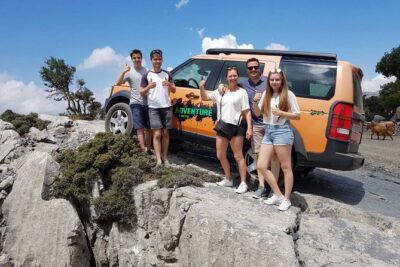
Zeus Cave, Lassithi Plateau, Olive Oil Factory, Kritza, Pottery
Read our review →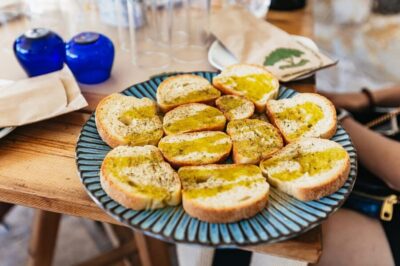
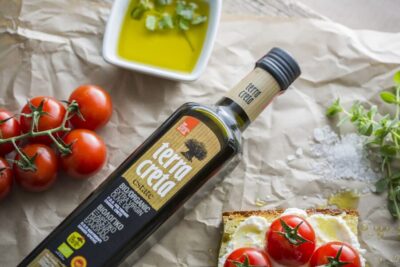
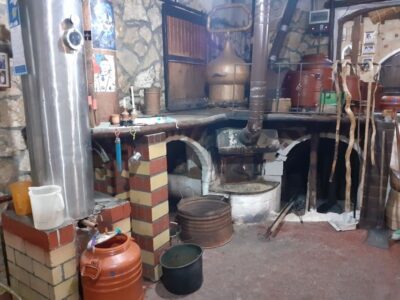
Full-Day Cretan Wines, Olive Oil, Raki and Food Tour
Read our review →
Browse the lists this tour appears in