
Reviewed · ACROPOLIS & ATHENS HIGHLIGHTS
Athens: Acropolis, Parthenon & Acropolis Museum Guided Tour
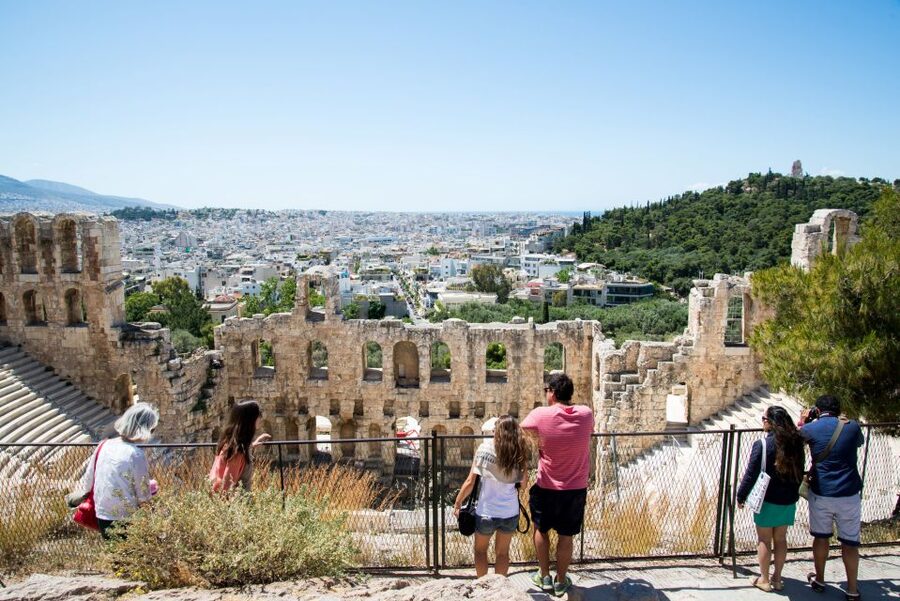
The best part of this Athens tour is the way it links the Acropolis hill with the museum below it. You see the monuments in their setting, then meet the surviving sculptures and friezes indoors, where your guide can explain what time, war, religion, and restoration have done to them. I especially like the visit to the Theater of Dionysus and the museum’s glass floors, which reveal excavations beneath your feet.
I also like the practical structure: a licensed guide keeps the ancient sites from turning into a jumble of unfamiliar names, and the separate museum entrance helps you avoid one line. The main drawback is the physical effort. You will walk over uneven stone, climb the Acropolis, and spend three to four hours on your feet. There is no separate skip-the-line entrance to the Acropolis itself, only help avoiding the ticket-office queues.
Key points to know before booking
- See the Theater of Dionysus first: This is where ancient Greek drama took shape, and it gives the hill a human starting point before the grand temples.
- The Parthenon is part of a larger hilltop story: You also visit the Propylaea, Temple of Nike, Erechtheion, Odeon of Herodes Atticus, and sanctuary of Asclepius.
- The museum completes the picture: Original Caryatids, Parthenon sculptures, daily-life objects, and visible excavations help you understand what the hill once held.
- Guides are a major strength: Jason, Chrysa, Giota, Sotos, Ioannis, and Julia have been singled out for clear English, humor, strong storytelling, and good pacing.
- Expect a workout: Comfortable shoes, a hat, water, and light clothing matter more here than fancy sightseeing clothes.
- Choose your ticket option carefully: The ticket-included version is simpler. If you book without tickets, you must arrange entry in advance or risk buying full-price adult tickets in cash at the meeting point.
Why this Acropolis tour works well

Athens can make the ancient world feel both obvious and confusing. You know the Parthenon is important, but once you arrive, you face columns, broken foundations, statues, signs, and a crowd of people taking photos. A good guide gives those pieces an order.
This tour begins with the Acropolis and continues to the Acropolis Museum. That sequence makes sense because the hill shows you the surviving buildings, while the museum shows you many of the objects that once belonged to them. You get place and evidence together.
The tour lasts about three to four hours, though the advertised duration is two to four hours. The pace can change with weather and the group. That flexibility is useful on a hot or crowded day, but you should not expect a slow, private archaeological seminar at every column.
The price is about $40 per person, depending on the option you choose. For that amount, the value rests mainly in the guide and in the time saved at ticket offices. If you already know the Acropolis well, prefer to wander alone, or have a strict budget, buying tickets and exploring independently may suit you better. If this is your first visit, the explanations can make the admission cost feel worthwhile.
More of the old city on foot in Athens:
- Athens: Acropolis & up to 5 Archaeological Sites Combo Pass
★ 4.4 · 12,619 reviews - Athens: Acropolis Ticket with Optional Audio or Live Guide
★ 4.2 · 11,055 reviews - Athens: Acropolis and Parthenon Guided Walking Tour
★ 4.6 · 5,882 reviews
Starting at the Theater of Dionysus
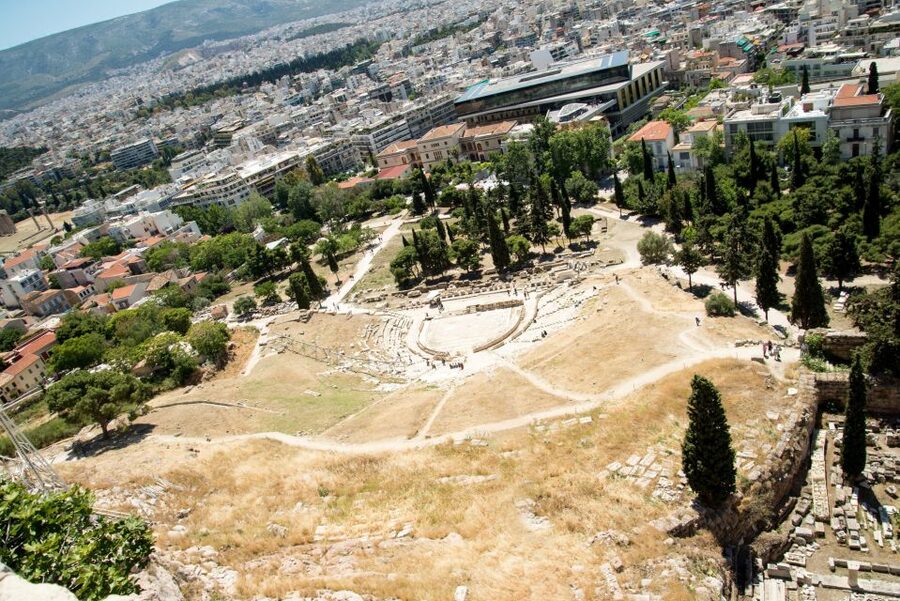
The Theater of Dionysus is a smart first stop. Many people rush straight uphill toward the Parthenon, but this theater explains how Greek culture was experienced by ordinary citizens and audiences.
Here, ancient dramas and tragedies were first performed. Your guide can connect the physical rows of seats with the plays, festivals, and public life that made theater part of Athens rather than a private pastime.
The theater also helps you picture ancient Athens as a working city. The Acropolis was not simply a photo backdrop or a collection of temples. It was tied to civic life, religious ceremonies, performance, healing, and political identity.
After the theater, the route takes you toward the Odeon of Herodes Atticus. Its curved structure remains one of the most striking sights on the south side of the hill. You also see the sanctuary of Asclepius, associated with the ancient healing god. These stops broaden the visit beyond the Parthenon and show how many different activities took place around the sacred hill.
Walking up to the Parthenon
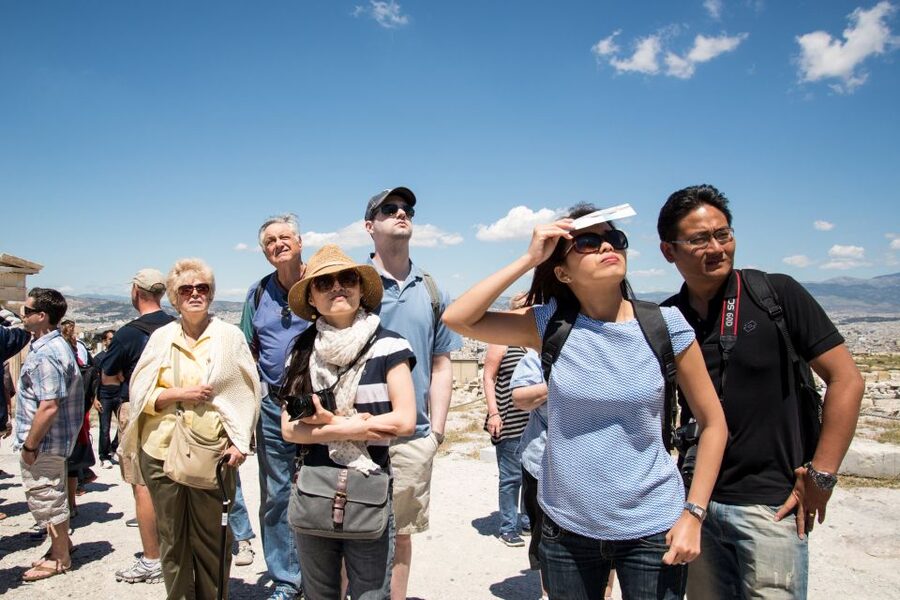
The climb to the top is not technically described as a difficult hike, but it is still a climb over uneven ground. You should wear shoes with a firm sole and bring water. A hat is useful because much of the visit is exposed.
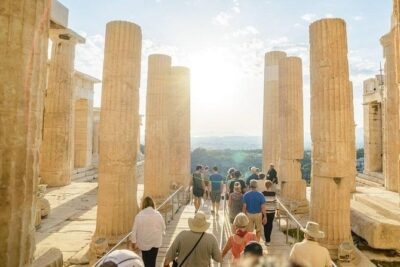
The route includes the Propylaea, the monumental gateway to the Acropolis. Passing through it gives the hill a sense of arrival. The Temple of Athena Nike follows, a smaller structure with a powerful position near the entrance.
The Erechtheion is often the most visually detailed building on the hill. Its unusual design reflects several sacred traditions, and its porch with sculpted female figures is easy to recognize. Five original Caryatids are now displayed in the museum, while a sixth is in the British Museum. The figures you see on the hill are copies, a detail your guide can put into context.
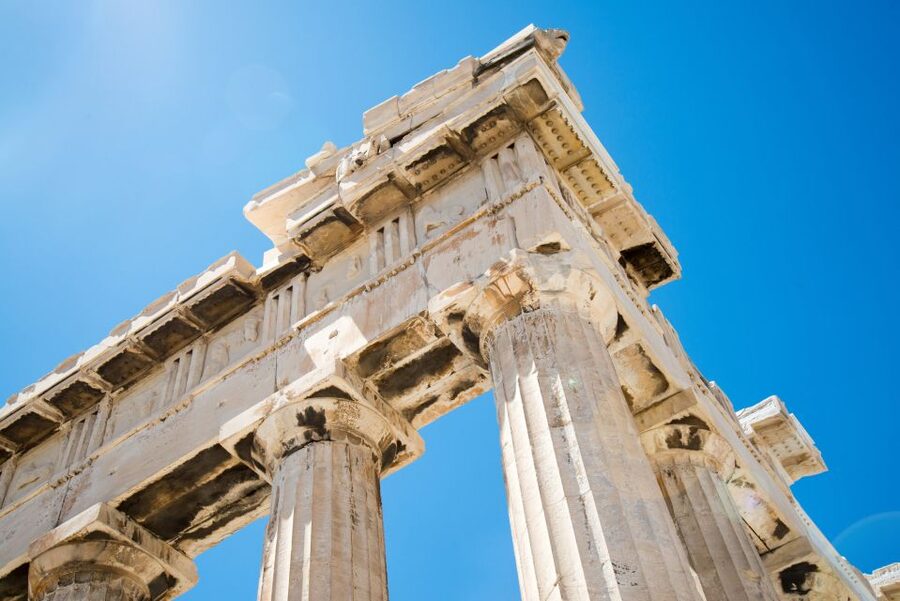
Then comes the Parthenon. It is the symbol most people associate with Athens, but the experience is better when you understand it as part of the wider Acropolis complex. The building dates from the fifth century BCE and is connected with the Golden Age of Pericles. Its meaning reaches beyond ancient religion: it has become linked with democracy and Western civilization.
Do not expect to walk inside the Parthenon. You view it from outside and move around the area with the group. The guide’s explanation matters here because the building’s size, damage, and missing sculptures can otherwise leave you with a beautiful but incomplete impression.
You will have time for photos and for looking around on your own. That pause is important. One strong guide can explain the structure, but you still need a quiet moment to look at the light on the stone, the city below, and the surviving parts of the hill without listening to a speech.
A note about lines and entry
The phrase skip the line needs careful reading. There is no separate skip-the-line entrance to the Acropolis itself. The ticket-included option helps you avoid the ticket-office line, but everyone still enters through the normal access process and passes through security.
At the Acropolis Museum, the arrangement is more useful. The tour includes access through a separate entrance when the museum ticket option is selected. This can save time, especially when several groups are arriving at once.
If you select an option without tickets, buy both Acropolis and museum tickets at least a day ahead and contact the operator to confirm the correct time slots. If you arrive without tickets, the guide may be able to supply full-price adult tickets at the meeting point, paid in cash. Reduced or free admission requires a passport or ID, so keep the document with you if that applies.
The tour may change the order of the sites to reduce discomfort from weather or crowds. That is sensible. Do not worry if the museum comes before the hill or if the route differs slightly from the expected order.
A few more things to do in Athens worth a look
- Athens: Mythology of Delphi, Museum and Arachova Guided Tour
★ 4.6 · 4,008 reviews - Athens: Acropolis, Parthenon & Acropolis Museum Guided Tour
★ 4.8 · 3,579 reviews - Acropolis monuments & Parthenon Walking Tour with Optional Acropolis Museum
★ 5.0 · 2,678 reviews - Athens All Included: Acropolis and Museum Guided Tour with Ticket
★ 4.5 · 2,673 reviews
What makes the Acropolis Museum worthwhile
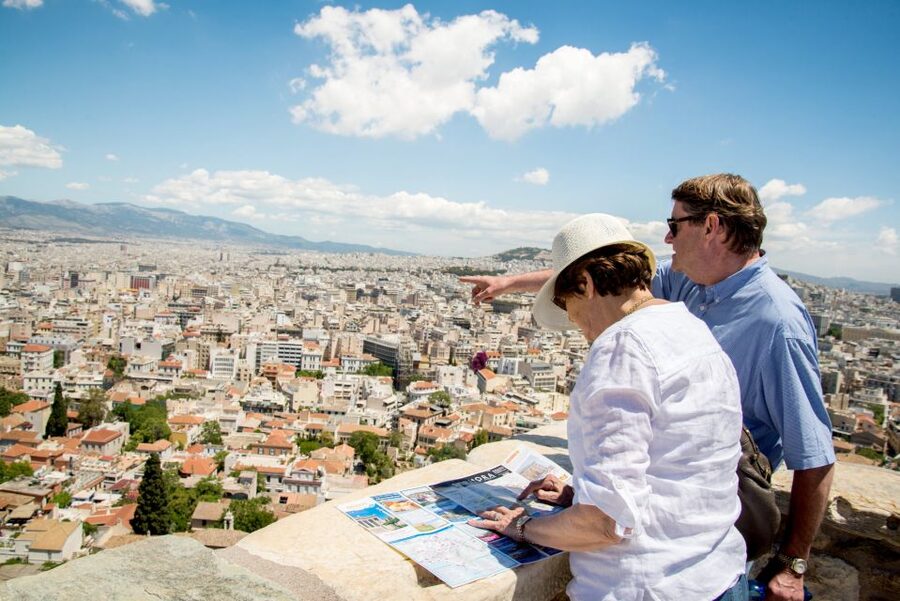
The museum is not just an air-conditioned add-on after the main event. It changes how you read the Acropolis.
The contemporary building uses glass and natural light to display original surviving works from the temples. Excavations beneath the building can be seen through glass floors and walkways. That design lets you look down at earlier layers of Athens while standing in a modern museum.
On the ground floor, objects help show daily life. This section gives you a useful counterweight to the grand monuments above. Ancient Athens was made by people who worked, worshipped, raised families, traded goods, and attended public events.
The first floor includes five original Caryatids. Seeing them at close range is different from viewing the porch on the hill. You can study the carving and proportions without standing far below the building.
The top floor is the museum’s grand payoff. It contains the Parthenon frieze and a recreation of the Parthenon, with a view back toward the actual monument. That visual connection is one of the tour’s best teaching moments. You look at the sculpture, then toward the hill where it once belonged.
The museum also gives you a break from the outdoor route. The schedule includes a short pause before entering, with time to use the bathroom. Once inside, you may have a chance to get coffee or look around independently, depending on the guide and group pace.
One caution: the hill and museum together can be a lot of information. A guide called Giota has been praised for using a timeline to put Athens into perspective, while other guides such as Jason and Chrysa are noted for keeping the presentation lively without overloading you with facts. Still, if you like to study every display, you may prefer to visit the museum separately or return on your own.
The guides and the style of storytelling
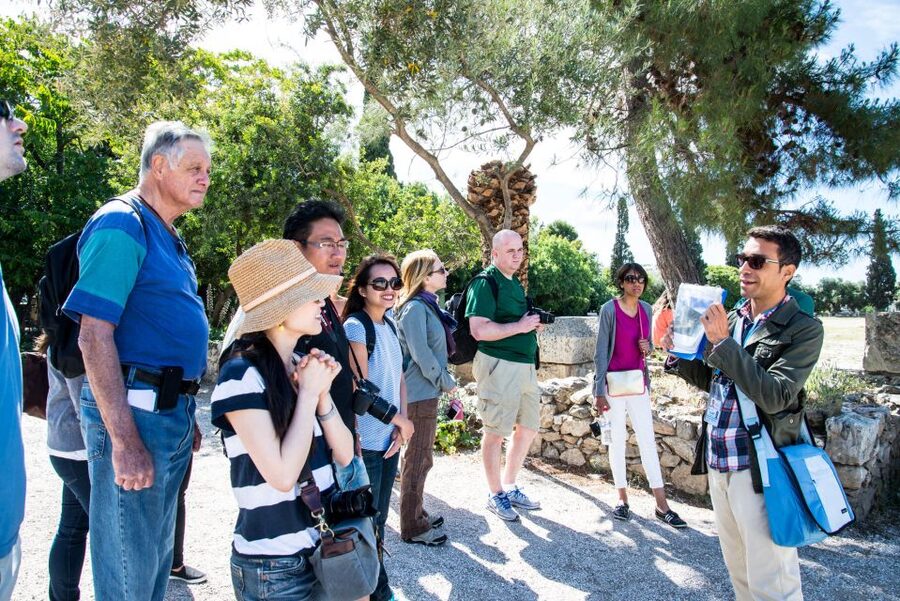
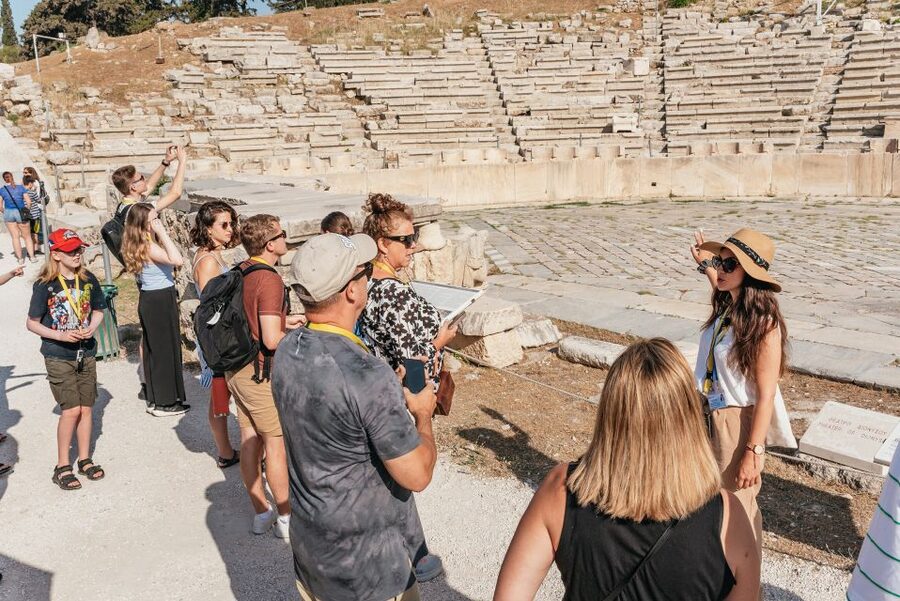
The guide is the difference between a useful tour and a long walk among stones. The guides assigned to this experience are licensed and English-speaking, with several praised for strong delivery.
Jason is described as engaging, passionate, and good at bringing the sites alive. Chrysa is noted for friendly storytelling and firm group leadership. Giota uses a timeline to make the sequence of Athens easier to follow. Sotos has been praised for excellent English and broad knowledge of Greek history. Ioannis is described as enthusiastic about Athens, while Julia kept the experience moving even in poor weather.
Those names do not guarantee a particular guide on your date, but they give you a fair sense of the expected style. You are likely to hear history, mythology, architectural explanation, and practical commentary rather than a list of dates.
Large groups use disposable earphones when there are more than eight people. This helps you hear the guide, though crowded conditions can affect audio quality when other groups use similar equipment. A private group is available if you want more control over the pace or prefer to ask frequent questions.
The shared tour is the better value for most people. The private option makes more sense if you are traveling with family or friends and want the guide to adjust the amount of detail, walking speed, or time spent at particular monuments.
How hard is the walking?
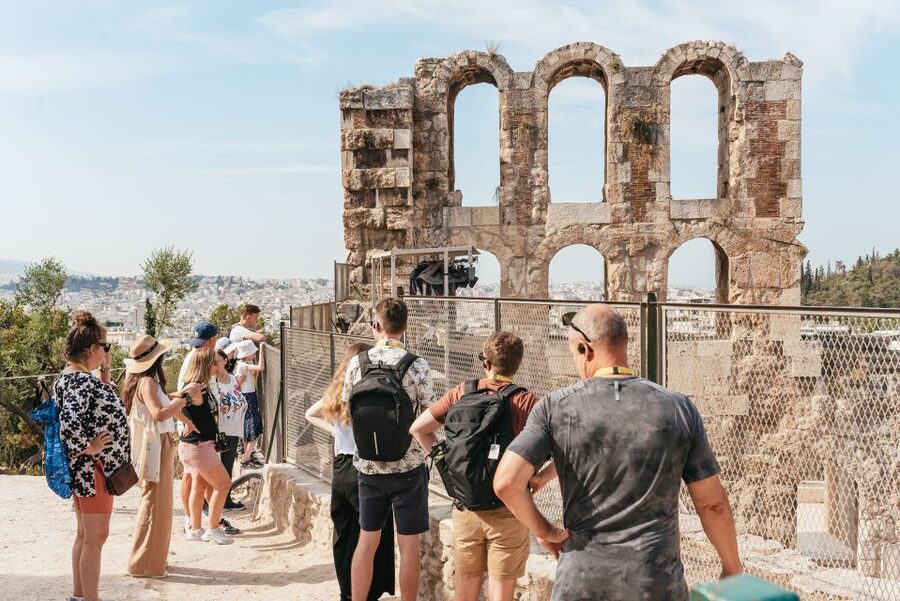
You need reasonable mobility for this tour. The Acropolis route includes slopes, steps, uneven surfaces, and exposed areas. The elevator at the Acropolis is not included, and the tour is not suitable for wheelchair users, people with mobility impairments, people with heart problems, or children under six.
That does not mean every older person should avoid it. One group included an elderly couple who managed the route, but you should judge your own ability rather than rely on that example. The key question is whether you can walk uphill and over uneven stone for several hours, with pauses.
Bring water and wear comfortable clothes. Avoid large bags and luggage, which are not allowed, and leave the stroller at home. Pets are also not permitted.
Weather can affect the experience. There is limited shade on the hill, so a hat matters in warm weather. Rain can make the stones more awkward, while heat can slow the group and alter the order of the sites.
Who should book this experience?
I would choose this tour for a first visit to Athens, especially if you want the main monuments explained in one well-organized outing. It suits you if you like history but do not want to read every sign alone, and if you value a guide who can connect ancient drama, temples, sculpture, religion, and civic life.
It is also a good fit for visitors with limited time. In a few hours, you cover the Acropolis and museum without arranging separate tickets, finding the entrances, or working out how the sites fit together.
You may want another plan if you need a slow pace, have mobility limits, or prefer long periods of independent viewing. The museum and hill can feel rushed if you want to examine every object. In that case, consider booking the two parts separately, even though this combined route is efficient.
Families should note the minimum age of six. Children who receive reduced-price or free admission may need a passport or ID for verification, so carry the required document.
Should you book the Acropolis and Museum tour?
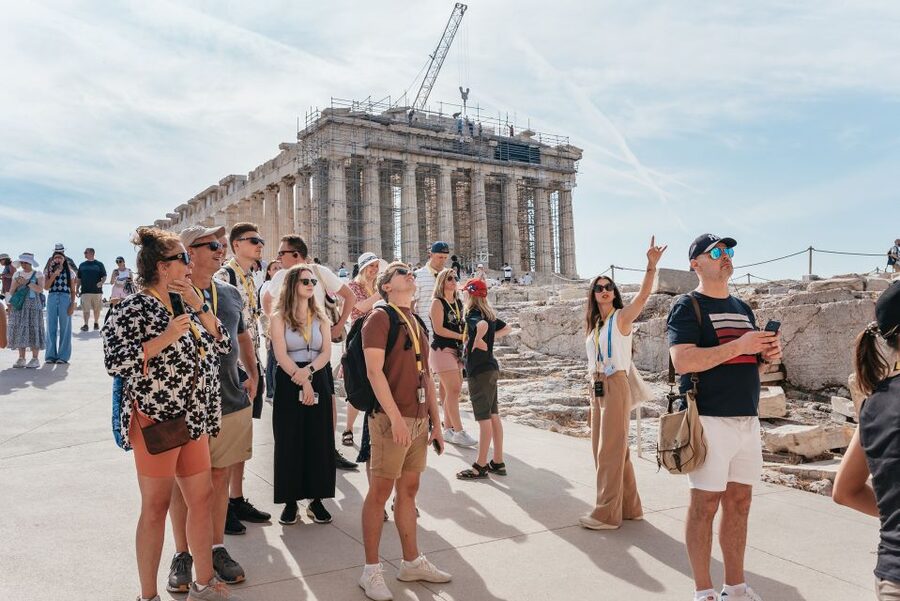
Book it if you want Athens’ two essential ancient sights explained by a licensed guide, with ticket-office lines reduced and the route handled for you. The strongest features are the clear storytelling, the range of monuments, and the museum’s close-up view of sculptures connected to the hill.
At about $40 per person, it offers good value when the ticket-included option saves time and gives you a guide such as Jason, Chrysa, Giota, Sotos, Ioannis, or Julia. Just remember that the Acropolis itself has no separate skip-the-line entrance, and prepare for several hours of walking.
I would select the combined tour for a first-time visit and a separate museum visit for a second look. If you want the broad story of Athens in one morning or afternoon, this is a practical choice.
FAQ
How long does the Acropolis and museum tour last?
The activity is listed as lasting two to four hours, while the practical tour time is usually three to four hours. The pace can change with weather and the group.
What places do I visit on the Acropolis?
You visit the Theater of Dionysus, Odeon of Herodes Atticus, sanctuary of Asclepius, Propylaea, Temple of Athena Nike, Erechtheion, and Parthenon.
Is there a skip-the-line entrance to the Acropolis?
There is no separate skip-the-line entrance to the Acropolis itself. The ticket option helps you avoid the ticket-office line, but you still use the standard entry process.
Is there a separate entrance to the Acropolis Museum?
Yes. When the museum ticket option is selected, the tour includes entry through a separate museum entrance.
What can I see inside the Acropolis Museum?
You see original surviving works from the Acropolis temples, daily-life objects, five original Caryatids, the Parthenon frieze, a recreation of the Parthenon, and excavations visible beneath glass floors and walkways.
Is the tour available privately?
Yes. You can select a shared tour or a private group, depending on the option booked.
What language is the tour conducted in?
The live tour guide conducts the experience in English.
What should I bring?
Bring comfortable shoes, a hat, water, and comfortable clothing. A passport or ID is required for reduced or free tickets.
Is the tour suitable for wheelchair users or people with mobility problems?
No. The tour is not suitable for wheelchair users or people with mobility impairments, heart problems, or similar concerns. The Acropolis elevator is not included.
Just added in Athens
- Athens: Half-Day Morning Catamaran Cruise with Meal & Drinks★ 4.9 · 221 reviews
- Athens hotels to Athens airport Private departure transfer★ 5.0 · 285 reviews
- Argolis: Full-Day Tour in Mycenae & Nafplio★ 4.2 · 350 reviews
- Athens: Riviera Catamaran Cruise with Meal and Drinks★ 5.0 · 345 reviews
- Athens: Delphi, Corycian Cave, and 300 Battlefield Day Trip★ 4.8 · 344 reviews
- 3-Day Classical Greece Tour: Epidaurus, Mycenae, Nafplion, Olympia, Delphi★ 4.5 · 342 reviews
- Best of Athens Half Day Private Tour★ 5.0 · 353 reviews
- Electric Bike Tour of Athens by Night★ 5.0 · 355 reviews
Acropolis & Athens Highlights, compared.
Acropolis & up to 5 Archaeological Sites Combo Pass
Read our review →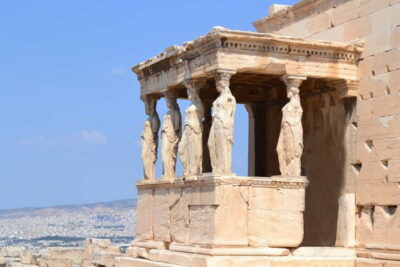
Acropolis, Parthenon & Acropolis Museum Guided Tour
Read our review →
Acropolis monuments & Parthenon Walking Tour with Optional Acropolis Museum
Read our review →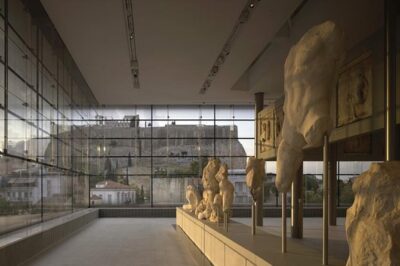
Athens All Included: Acropolis and Museum Guided Tour with Ticket
Read our review →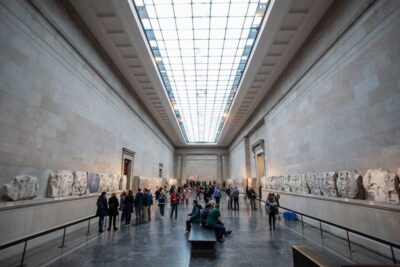
Acropolis Museum Ticket with optional Audio Guide
Read our review →
Acropolis Ticket & Optional Self-Guided Audio Tours
Read our review →Browse the lists this tour appears in