
Reviewed · ACROPOLIS & ATHENS HIGHLIGHTS
Athens: Acropolis, Parthenon & Acropolis Museum Guided Tour
The best thing about this tour is the order: you approach the Acropolis from its southern slope, pass ancient theaters and a healing sanctuary, then reach the Parthenon with the story already taking shape. Afterward, the Acropolis Museum helps you understand the statues, temples, and fragments you have just seen instead of leaving you with a stack of impressive ruins and no framework.
I especially like the archaeologist guides, who explain construction, myths, excavation work, and everyday life rather than pointing only at the famous columns. I also like the wireless hearing devices, which make it easier to follow guides such as Petros, Demos, Anna, Lisa, and Artemis in a crowd. The main drawback is physical: this is a serious uphill walk on uneven stone, with limited time to wander on your own.
Key points to know before booking
- Theater first, Parthenon later: The southern approach takes in the Theater of Dionysus, Herodes Atticus theater, and ancient healing grounds before the hilltop monuments.
- A real guide adds value: Archaeologists explain myths, building methods, changing uses, and excavation details that are easy to miss alone.
- The museum completes the picture: The 90-minute museum visit includes statues, daily-life objects, Caryatids, and the glass-floor excavation area.
- Skip-the-line depends on your booking: Choose the ticket-included option if you want the simplest arrival.
- Expect a physical outing: Comfortable shoes and a sun hat matter. The tour is not suitable for wheelchair users or people with mobility impairments.
- The group may be sizable: One group was about 20 people, while another was about 15, so the headsets are useful.
Starting at Porinou 5 and walking into ancient Athens
You meet the guide at the Athens Walks office on Porinou 5, on the ground floor. The meeting point is near the Acropolis, so the tour gets to the monuments quickly, without spending time on a bus or waiting for a city transfer.
The walk begins through Makrygianni and heads toward the southern slope. This is a smart route for a first visit because the Acropolis is more than the Parthenon. You see the lower sanctuaries and theaters before reaching the citadel above, giving you a sense of how religion, public entertainment, medicine, and civic life worked together.
The guide speaks English, and the company supplies wireless hearing devices. That small piece of equipment matters. The Acropolis can be crowded, and a guide standing a few paces away is much easier to follow through an earbud than by trying to catch every word in open air.
The advertised duration is two to four hours, though the detailed schedule allows about 90 minutes in the museum alone. Several bookings have taken around four hours, so I would leave a generous half-day around this outing. The pace includes regular stops, but it is not a gentle stroll through a flat museum.
More of the old city on foot in Athens:
- Athens: Acropolis & up to 5 Archaeological Sites Combo Pass
★ 4.4 · 12,619 reviews - Athens: Acropolis Ticket with Optional Audio or Live Guide
★ 4.2 · 11,055 reviews - Athens: Acropolis, Parthenon & Acropolis Museum Guided Tour
★ 4.8 · 9,316 reviews
Theater of Dionysus: where ancient drama took shape
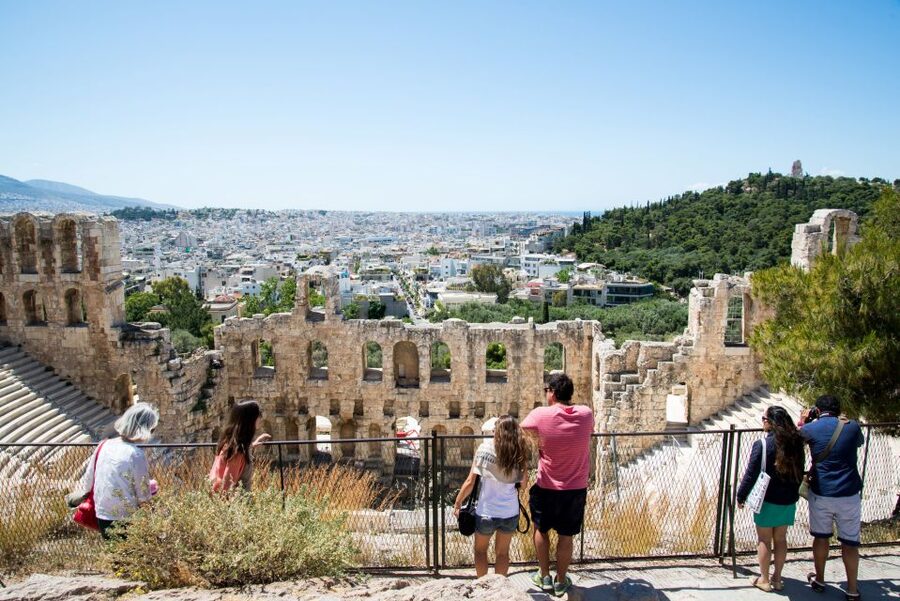
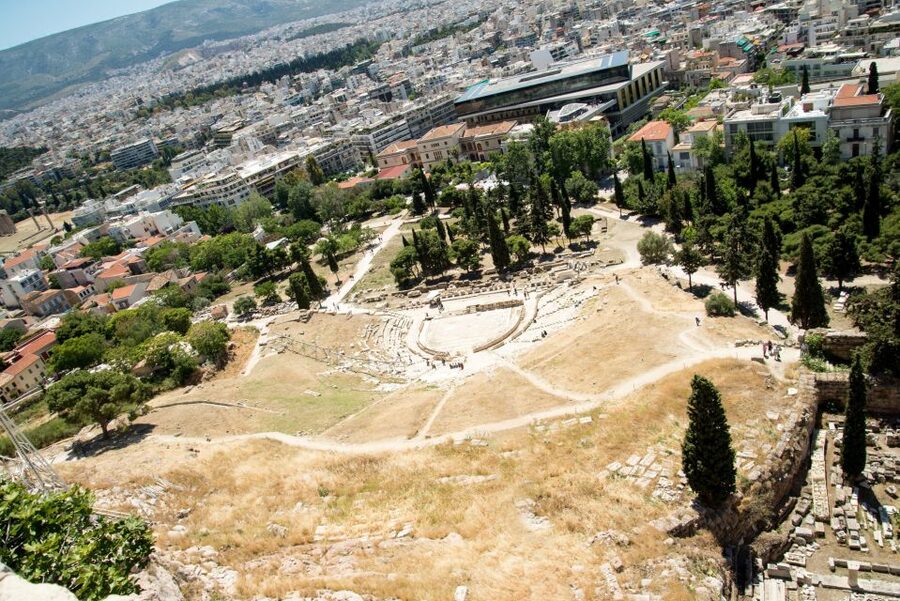
The first major stop is the Theater of Dionysus, an open-air amphitheater cut into the southern slope. This is where the tour begins to feel like a journey through daily ancient life rather than a checklist of temples.
You can sit or perch near the stone seats while the guide explains how audiences watched plays by Aeschylus, Sophocles, and Euripides. The value here is the setting. Instead of hearing about Greek drama in a classroom, you are looking at the actual performance space and imagining the public rituals, music, actors, and crowds that once filled it.
The stop is scheduled for about 15 minutes. That is enough for a clear explanation and photographs, but not enough for a long, independent examination of every stone. If you want extended time at each monument, a self-guided visit gives you more freedom. This tour gives you context at a steady pace.
Herodes Atticus and the old healing sanctuary
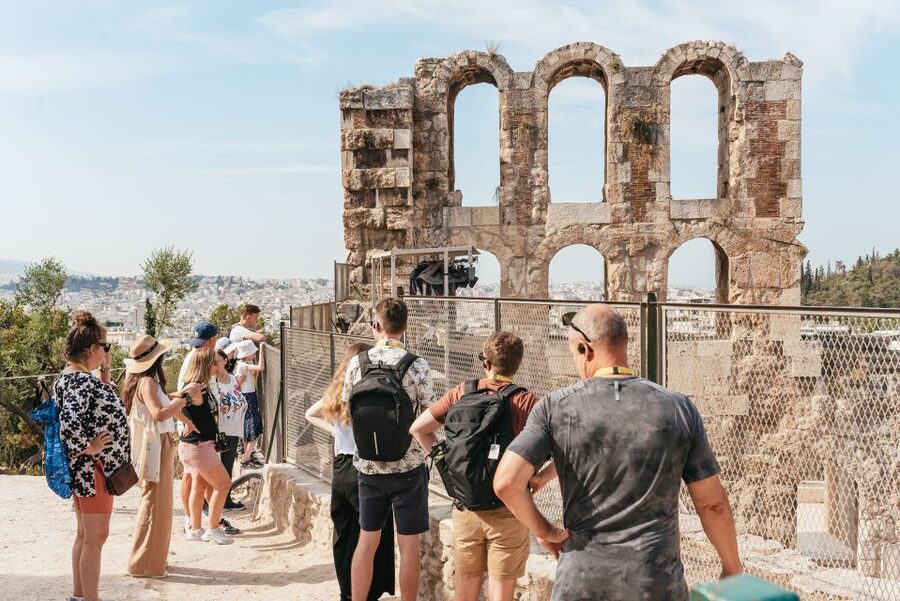
The route continues past the Odeon of Herodes Atticus, a Roman-era theater still used for performances during the Athens Festival from May through October. Its curved stone structure sits dramatically against the Acropolis slope, and the guide explains both its ancient purpose and its modern use.
You do not attend a performance on this tour, but the fact that the theater remains part of Athens cultural life helps connect the ancient site with the modern city. The guide also points out details that are easy to walk past when you are focused only on the Parthenon.
Near the route is an Asclepius, a healing sanctuary dedicated to the god of medicine. This quieter stop adds another layer to the visit. The Acropolis was not simply a place for grand temples and official ceremonies. People also came here seeking treatment, comfort, and divine help.
I like this part because it broadens the story beyond famous names and battles. You get a glimpse of the concerns of ordinary people: illness, performance, worship, and the need for a place of healing. The walking and uneven ground begin to add up here, so use the pauses to rest rather than treating them as wasted time.
Propylaea and the Temple of Athena Nike
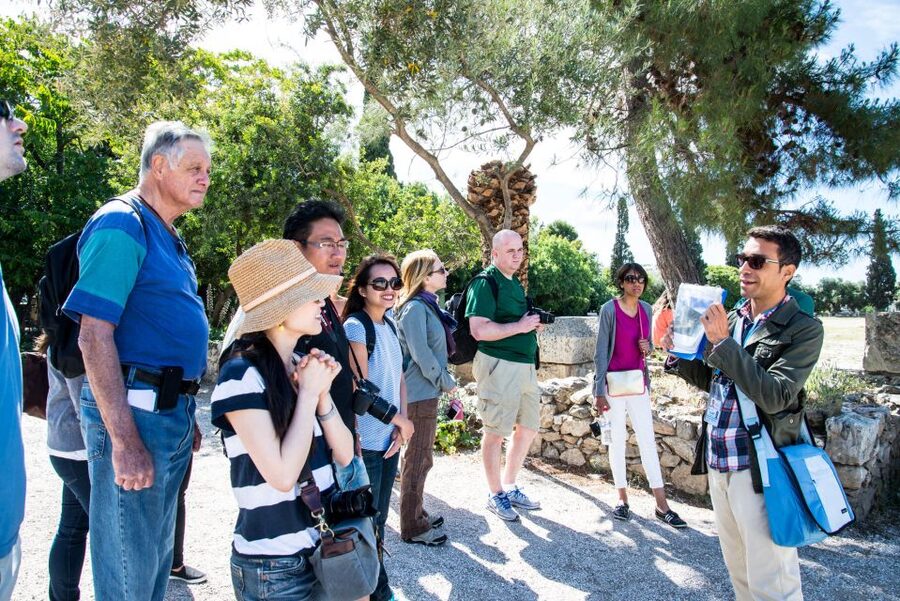
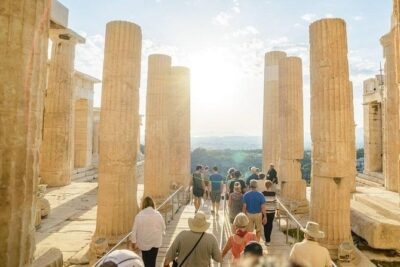
The climb continues toward the Propylaea, the monumental gateway to the Acropolis. This is your threshold into the hilltop sanctuary, and the approach gives you a strong sense of movement from the lower public spaces into the sacred precinct.
The Propylaea is also a good place for photographs, but it can be crowded. Stay close enough to hear the guide and watch your footing. One guide specifically warned the group about slippery sections and reminded everyone to protect personal belongings in crowded areas, sensible advice at a major site with many people moving in several directions.
Nearby, the small Temple of Athena Nike honors Athena in her role as a bringer of victory. The stop is brief, about five minutes, but the guide uses it to explain how even a small building could carry political and religious meaning.
The tour does not linger equally at every structure. That is useful if you want the major story in a limited time, but less satisfying if you prefer to study architectural details at length. You can return after the guided portion if you have the energy and the site rules allow it.
A few more things to do in Athens worth a look
- Athens: Mythology of Delphi, Museum and Arachova Guided Tour
★ 4.6 · 4,008 reviews - Acropolis monuments & Parthenon Walking Tour with Optional Acropolis Museum
★ 5.0 · 2,678 reviews - Athens All Included: Acropolis and Museum Guided Tour with Ticket
★ 4.5 · 2,673 reviews - Athens: Acropolis Museum Ticket with optional Audio Guide
★ 4.4 · 2,652 reviews
The Parthenon and the main Acropolis summit
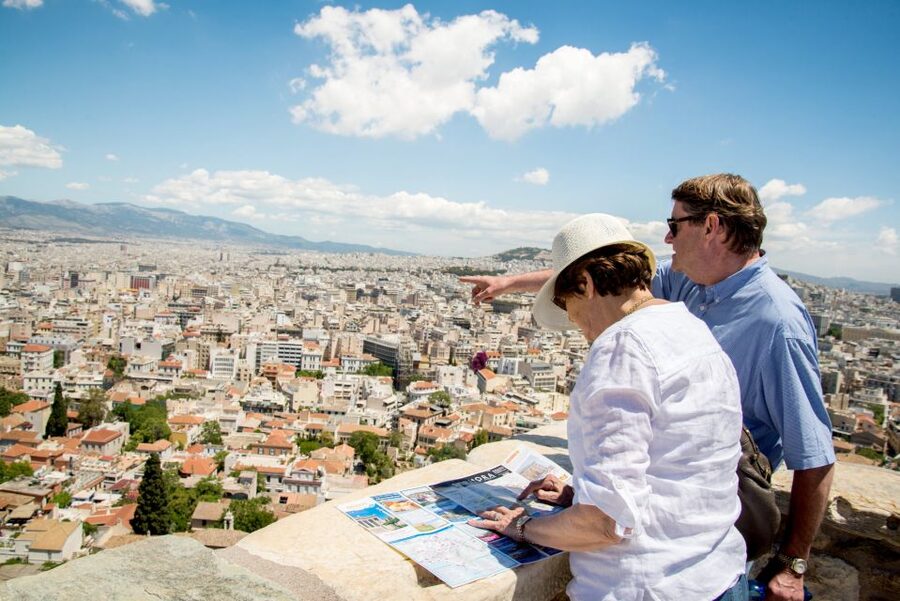
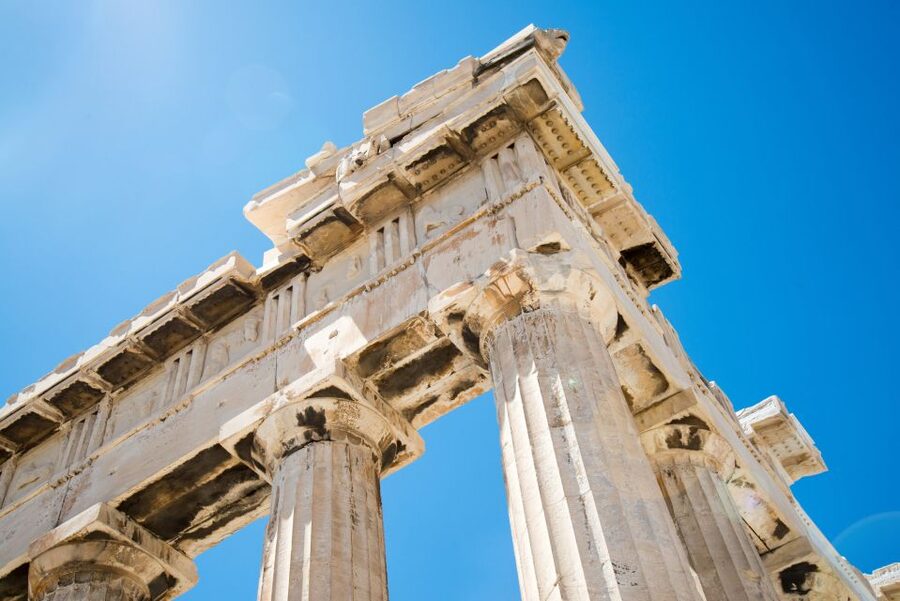
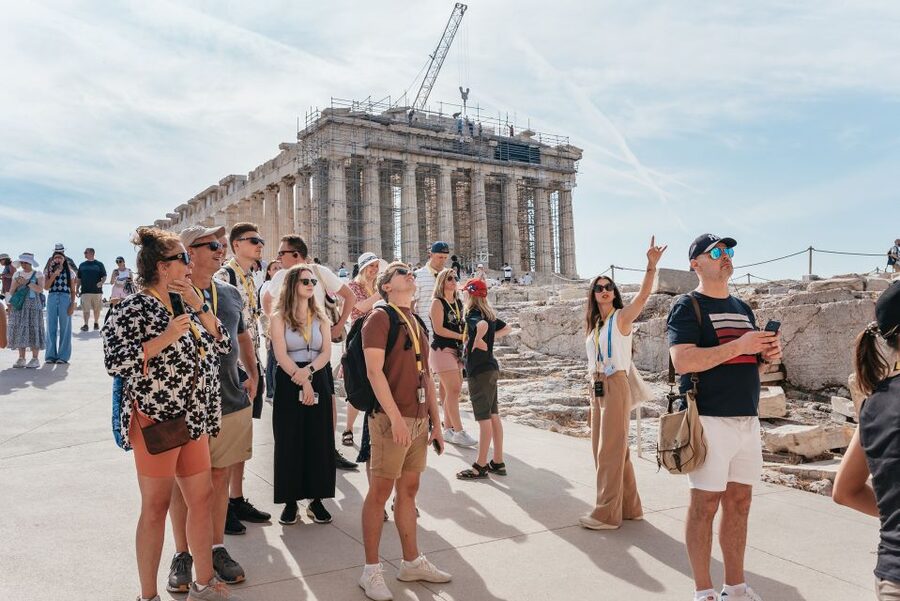
The Parthenon receives the longest stop, about 30 minutes. Built for Athena, it is the monument most people picture before arriving in Athens, yet the guide helps you see more than its familiar outline.
Expect explanations of how the temple was constructed, why its proportions matter, and how its appearance changed over time. The current building is not simply an untouched survivor from classical Greece. War, damage, later religious use, removal of sculptures, and conservation work all shaped what you see today.
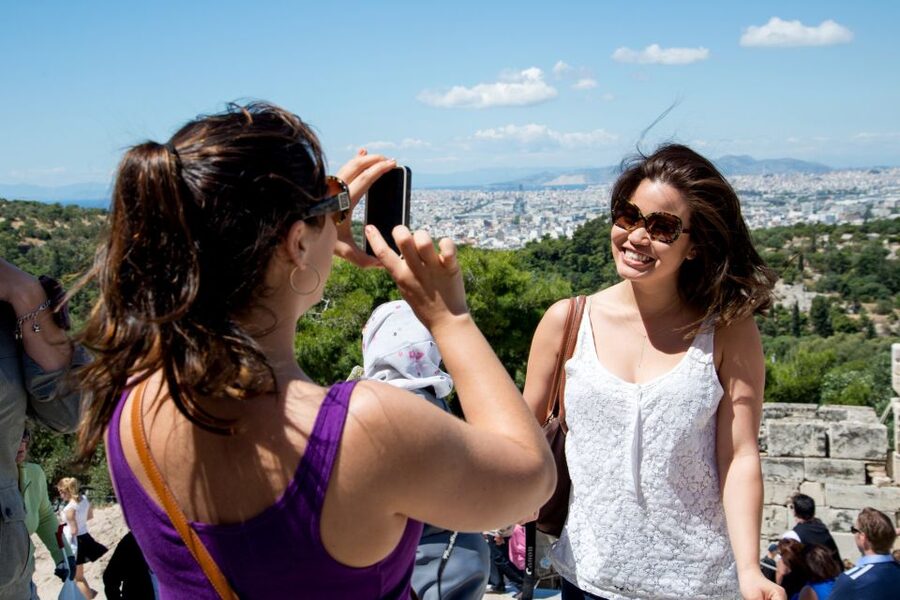
This is also the point for the broad Athens views. From the top of the Acropolis, you can look across the city and understand why this hill has carried such importance for so long. Bring a phone or camera, but do not let photographs take the whole stop. The guide’s explanation of the temple’s purpose and later history is what turns a famous view into a meaningful one.
The surface is uneven and the ascent takes effort. Wear shoes with a firm sole, not smooth fashion sneakers. A sun hat is useful in warm weather because much of the hilltop is exposed. Water and food are not included, and large bags, oversize luggage, strollers, smoking, and pets are not allowed.
Erechtheion and the Caryatids
The Erechtheion is a different kind of temple, less symmetrical and more layered than the Parthenon. Its unusual design reflects the many sacred associations gathered on the Acropolis, and this is where a guide can explain the myths and religious traditions tied to the site.
The famous Caryatids, the sculpted female figures used as architectural supports, receive attention here and later in the museum. Seeing both settings is helpful. On the hill, you understand their place within the temple. In the museum, you can examine their form and preservation more closely.
The scheduled stop is about ten minutes, so listen carefully. The tour has to keep moving, and the guide cannot give every monument a long lecture. Still, the combination of short explanations on the hill and a more focused museum visit gives you a well-shaped introduction.
After the Erechtheion, you get about 15 minutes for a break, photographs, and some free time around the Acropolis. This is useful, though it is not a long independent exploration period. One person specifically found that the guided format offered limited free time, so book this experience for interpretation first and personal wandering second.
The Acropolis Museum: the visit that brings it together
The tour then heads down Dionysiou Areopagitou to the New Acropolis Museum. The museum visit lasts about 90 minutes, making it much more than a quick indoor add-on.
The museum holds statues, architectural pieces, and objects connected with everyday life around the Acropolis. Here, the guide can explain what the original sculptures looked like, how the buildings changed, and why certain fragments matter. The museum is especially valuable after the hilltop visit because you can connect actual objects with the spaces where they once belonged.
The Gallery of the Slopes includes a glass floor that can reveal archaeological excavation below. It is a striking reminder that Athens is built above layers of earlier life. The museum also includes the Caryatids and a glass gallery that lets you view the Parthenon and its surrounding city setting.
Several guides use photographs and reconstructions to show how parts of the Acropolis may have appeared in the past. That is one of the strongest reasons to include the museum. Ruins can be hard to read, especially when you are seeing them in bright sun and among crowds. Inside, the objects and visual material help fill in what time has removed.
You can take a short break and buy refreshments at the museum cafe, but food and drinks are at your own expense. The museum section can feel like a lot after the uphill walk. If you tire easily, pay attention early and save some energy for the final galleries rather than trying to absorb every label.
Guides, group size, and the value of interpretation
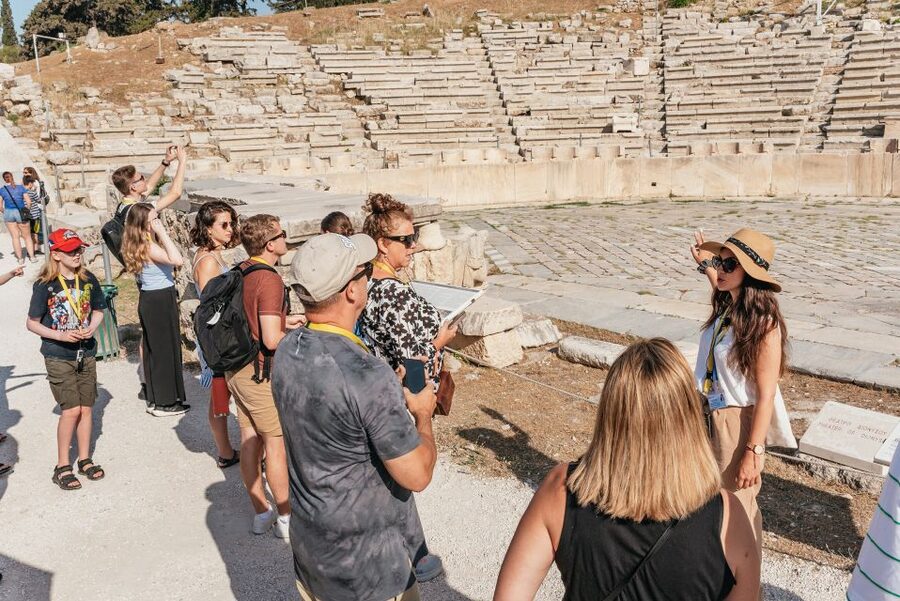
The strongest part of this experience is the guide. The company uses archaeologists and guides with a firm grasp of Greek mythology, architectural history, and excavation. Petros has been praised for keeping a group together while balancing explanations with pauses. Demos is known for anecdotes and a friendly style, while Anna has been especially effective with thorough explanations and questions.
Other guides named during the season include Lisa, Artemis, Aphrodite, Helena, Selina, Annie, George, Elizabeth, and Ermes. You cannot choose a specific guide from the information provided, but the repeated pattern is clear: the guide makes a major difference to the experience.
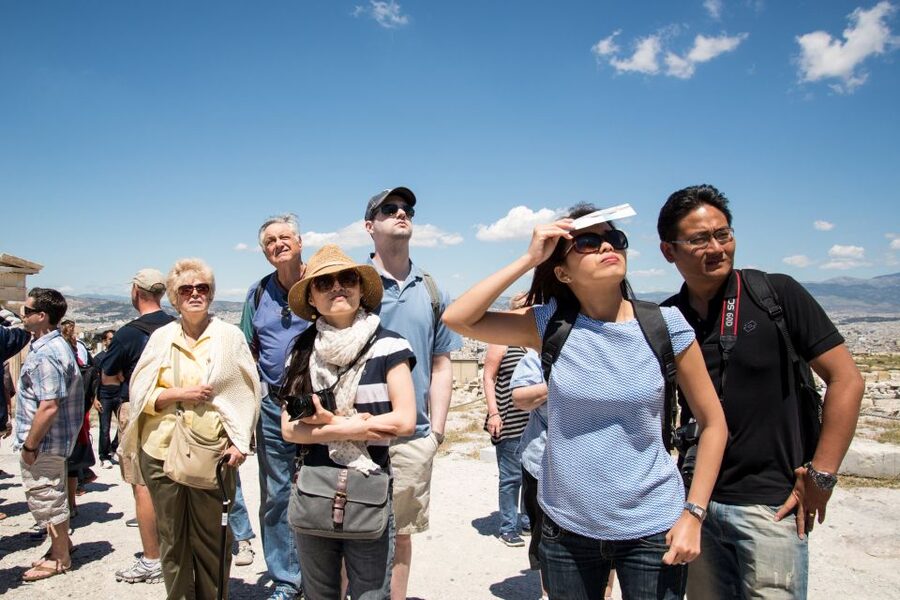
The groups can be around 15 to 20 people. That is not private touring, and the most popular viewpoints may feel crowded. The hearing devices help, and a good guide will gather the group before moving on. If you prefer to stop for ten minutes at one column or take photographs without a schedule, consider visiting independently or adding personal time before or after the tour.
For families, the format can work well. One guide kept four children engaged, including a seven-year-old who stayed close throughout the walk. The stories, myths, and visible ruins give younger children something concrete to follow, though the heat, stairs, and length still require patience.
Is the $41 price good value?
At about $41 per person, the cost is reasonable if you want the Acropolis and museum covered in one organized outing. The value comes from the guide, museum explanation, hearing devices, and the time saved by using the separate entrance when the ticket-included option is selected.
Check the exact booking option carefully. Skip-the-line Acropolis tickets are included only when you choose the option with tickets, while skip-the-line entry to the museum is included. If you book without Acropolis entrance tickets, you are instructed to arrange those online before reaching the meeting point.
The ticket-included choice is simpler for a first visit. It removes one chore and reduces the risk of arriving without the right admission. Food, drinks, hotel pickup, drop-off, and the Acropolis elevator are not included.
The tour ends at the Acropolis area or near Areopagus Hill, so you are left in a useful central location rather than taken back to a hotel. Plan your next stop nearby and avoid scheduling a distant appointment immediately afterward.
Practical advice for a smoother visit
Book an early starting time if you can. The Acropolis is busy even early in the day, and cooler temperatures make the climb easier. The exact start times vary, so check availability for your date.
Bring a passport or ID card, comfortable shoes, and a sun hat. Large bags and luggage are not permitted, and glass bottles may be refused at monument entrances. Follow the guide’s instructions about bags and personal items.
Give yourself extra time to reach Porinou 5. The tour does not include pickup, and arriving at the wrong street can create a stressful start. If you arrive very early, do not assume the office will be open for waiting. One cold-weather arrival found the waiting arrangement less comfortable than expected.
Weather can change the order of the tour. On one rainy day, the group spent more time in the museum first and went up to the Acropolis when conditions improved. That flexibility can make the experience more pleasant, but the outdoor section may still be affected by rain or slippery stones.
The tour is not suitable for wheelchair users or people with mobility impairments. There are uphill sections, uneven surfaces, stairs, and plenty of standing. The Acropolis elevator is not included, so ask about access needs before booking rather than hoping the standard route will work.
Should you book this Acropolis tour?
Book it if this is your first visit to Athens and you want the major monuments explained in plain language. The combination of the southern slope, Parthenon, Erechtheion, and Acropolis Museum gives you the best overall understanding of the site in a single half-day.
It is also a strong choice for families and for anyone who finds ancient ruins difficult to interpret alone. The guides add the stories, building details, myths, and modern context that make the stones readable.
Skip it if you want a slow photographic walk with long periods of silence and complete control over your pace. You will follow a group, climb uneven ground, and spend much of the visit listening.
For most first-time visitors, I would choose the ticket-included option, bring sturdy shoes, and book an early start. At $41, this is a fair way to turn a famous monument into a connected story rather than a quick look at some old stones.
FAQ
Where does the tour meet?
The meeting point is the Athens Walks tour office at Porinou 5, on the ground floor.
What language is the tour conducted in?
The live tour is conducted in English.
How long does the tour last?
The stated duration is two to four hours. The detailed schedule includes about 90 minutes at the Acropolis Museum, and some outings have taken around four hours.
Is the Acropolis entrance ticket included?
It depends on the option you select. Skip-the-line Acropolis tickets are included with the ticket-included option. If you choose an option without entrance tickets, you should order the tickets online before reaching the meeting point.
Is the Acropolis Museum included?
The tour includes guided entry to the Acropolis Museum, including skip-the-line museum entry.
Are food and drinks included?
No. Food and drinks are not included. You can buy refreshments at the museum cafe at your own expense.
Does the tour include hotel pickup and drop-off?
No. Pickup and drop-off are not included. The tour ends at two possible locations in the Acropolis area, including near Areopagus Hill.
What should I bring?
Bring a passport or ID card, comfortable shoes, and a sun hat. Avoid bringing large bags, oversize luggage, or a stroller.
Is the tour suitable for wheelchair users?
No. The experience is listed as unsuitable for wheelchair users and people with mobility impairments. The route includes uphill walking and uneven ground, and the Acropolis elevator is not included.
Just added in Athens
- Athens: Half-Day Morning Catamaran Cruise with Meal & Drinks★ 4.9 · 221 reviews
- Athens hotels to Athens airport Private departure transfer★ 5.0 · 285 reviews
- Argolis: Full-Day Tour in Mycenae & Nafplio★ 4.2 · 350 reviews
- Athens: Riviera Catamaran Cruise with Meal and Drinks★ 5.0 · 345 reviews
- Athens: Delphi, Corycian Cave, and 300 Battlefield Day Trip★ 4.8 · 344 reviews
- 3-Day Classical Greece Tour: Epidaurus, Mycenae, Nafplion, Olympia, Delphi★ 4.5 · 342 reviews
- Best of Athens Half Day Private Tour★ 5.0 · 353 reviews
- Electric Bike Tour of Athens by Night★ 5.0 · 355 reviews
Acropolis & Athens Highlights, compared.
Acropolis & up to 5 Archaeological Sites Combo Pass
Read our review →
Acropolis, Parthenon & Acropolis Museum Guided Tour
Read our review →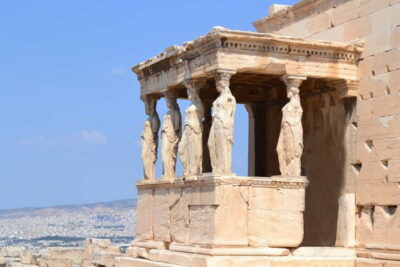

Acropolis monuments & Parthenon Walking Tour with Optional Acropolis Museum
Read our review →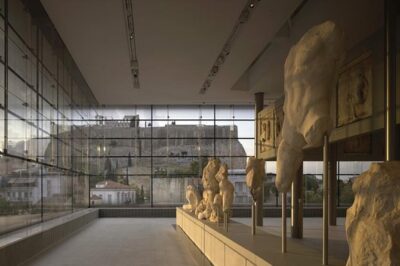
Athens All Included: Acropolis and Museum Guided Tour with Ticket
Read our review →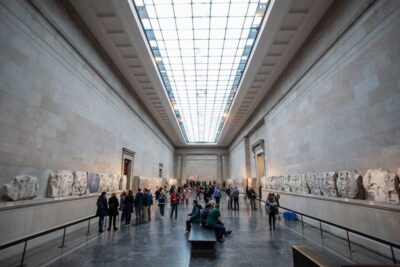
Acropolis Museum Ticket with optional Audio Guide
Read our review →
Acropolis Ticket & Optional Self-Guided Audio Tours
Read our review →Browse the lists this tour appears in