
Reviewed · ACROPOLIS & ATHENS HIGHLIGHTS
Athens: Acropolis and Parthenon Guided Walking Tour
The best part of this Athens tour is the route itself. You begin below the Acropolis at the Theater of Dionysus, then climb through one of the world’s most famous archaeological sites, passing the Odeon of Herodes Atticus, Propylaea, Erechtheion, and Parthenon. I like the licensed local guides and the personal earsets, which make it much easier to follow the stories in a noisy crowd.
I also like that the guide explains both Greek myths and the hard facts behind the ruins. Guides such as Eva, Dory, Maria, Victor, Kalli, Antonis, and Giota have been praised for clear storytelling and good group management. The main drawback is the heat, exposed stone, crowds, and uphill walking, so this is not a good fit for wheelchair users or anyone with limited mobility.
Key points at a glance
- Starts on the Acropolis south slope: Enter through the Theater of Dionysus and the Asklepieion rather than heading straight to the summit.
- Covers the essential monuments: See the Odeon of Herodes Atticus, Propylaea, Temple of Athena Nike, Erechtheion, and Parthenon.
- Personal earsets included: You can hear the guide without standing shoulder to shoulder with the group.
- Ticket choice matters: Select an option with Acropolis entry, or buy a correctly timed ticket yourself immediately after booking.
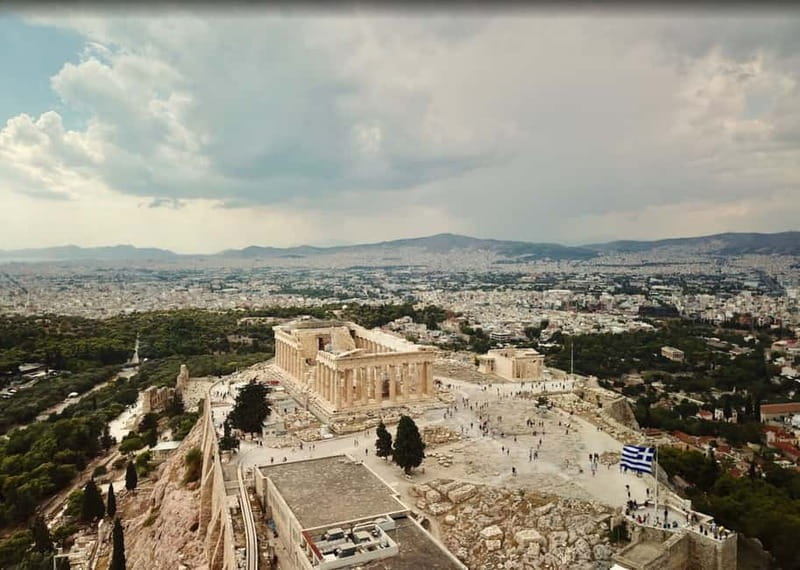
- Best views come near the top: Look across Athens toward Filopappos Hill, Mars Hill, Pnyx, and the National Observatory.
- Allow two to three and a half hours: The exact length depends on the option and starting time you choose.
Why this Acropolis route works so well
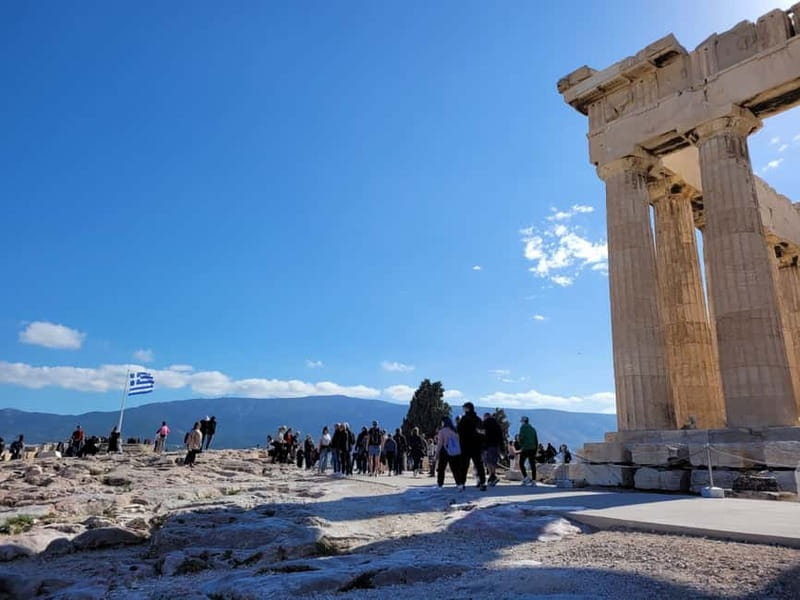
The Acropolis can feel like a pile of pale marble, columns, and half-understood names when you first see it. A guide gives those stones a sequence and a purpose. You begin at the lower archaeological area, then walk upward through the monuments in the same general direction as the ancient approach.
That order matters. The Theater of Dionysus introduces the civic and religious world below the Acropolis. The climb then brings you past Roman-era and classical sites before the main gateway. By the time you reach the Parthenon, you have a better sense of how the hill functioned as a sacred center rather than simply a scenic platform.
The tour has been operating for 20 years, and its format is straightforward: a local licensed guide, a walking route, commentary in English, and a fairly concentrated visit to the Acropolis. You are not left to guess which broken wall matters. The guide points out the details and connects them to Greek myths, politics, religion, and daily life.
The 4.6 rating from 5,882 reviews reflects the tour’s strongest feature: the guiding. Several guides receive specific praise for being easy to understand, patient, friendly, and good at holding a group together. That matters here because the Acropolis is often crowded, and it is easy to lose the person explaining the monument while you are trying to find a photo angle.
More of the old city on foot in Athens:
- Athens: Acropolis & up to 5 Archaeological Sites Combo Pass
★ 4.4 · 12,619 reviews - Athens: Acropolis Ticket with Optional Audio or Live Guide
★ 4.2 · 11,055 reviews - Athens: Acropolis, Parthenon & Acropolis Museum Guided Tour
★ 4.8 · 9,316 reviews
Meeting at Dionysiou Areopagitou Street
The meeting point is 3 Dionysiou Areopagitou Street, at the beginning of the pedestrian walkway leading toward the Acropolis from Hadrian’s Arch and Syngrou Avenue. Look for the orange Athens Walking Tours sign.
Arrive 20 minutes before departure. This is not a place to cut things close. The tour enters the Acropolis soon after meeting, and strict entry times mean the guide cannot wait for late arrivals. Security can also create delays, especially during peak season, with waits of 30 minutes or more possible.
The start is central and reachable on foot from several parts of central Athens. There is no hotel pickup, so plan your own route to the meeting point. Bring your passport or ID card, even though the supplied information does not specify that every visitor will be asked for it at the gate.
From the Theater of Dionysus to the sacred hill
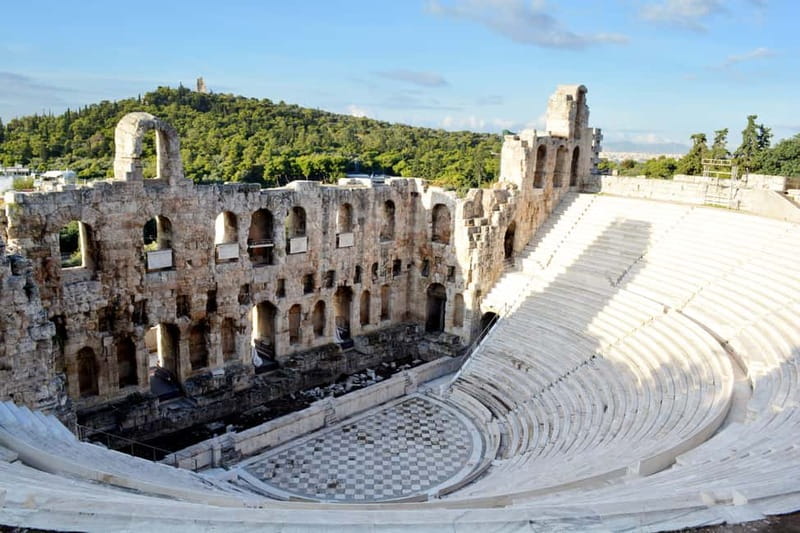
The first stop is the Theater of Dionysus, below the Acropolis. This is an important beginning because ancient Greek theater was not just entertainment in the modern sense. It formed part of religious festivals and civic life, and the theater sits in a setting that makes its connection to the Acropolis clear.
Your guide explains the site during a short walk of about 10 minutes. You will begin to see how the Acropolis was surrounded by sanctuaries, theaters, and public spaces rather than isolated from the city below.
Next comes the Asklepieion of Athens, a healing sanctuary associated with Asklepios. It is less famous than the Parthenon, which is exactly why a guide helps. Without commentary, you could easily pass it as another set of stones. Here, the story adds another layer to the hill: worshippers came not only for grand civic ceremonies but also in hope of healing.
The route then reaches the Odeon of Herodes Atticus. Its surviving curved structure is one of the most recognizable sights on the south slope. The guide places it in the story of later Athens and helps you distinguish it from the older Theater of Dionysus.
There are short walks between these stops, with guided explanations along the way. The pace is designed to keep the group moving while leaving time to look around. It is not a free-roaming visit where you can linger everywhere as long as you like, so tell yourself to enjoy the key pauses rather than trying to study every stone.
Passing through the Propylaea
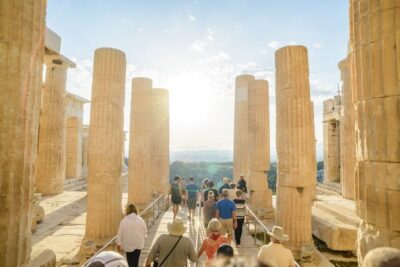
The Propylaea is the monumental gateway to the Acropolis. For many people, this is the moment the visit changes from an archaeological walk to an encounter with the famous hilltop monuments.
The approach also gives you some of the first broad views over Athens. Have your camera ready, but do not spend the entire approach looking at your screen. The marble, the slope, and the city beyond work best when you pause and take in the whole setting.
The gateway can be crowded, and the stone surface is uneven. This is one of the places where the earsets earn their keep. You can step slightly aside for a view or move with the group without losing the explanation.
The route also includes the Temple of Athena Nike, a smaller temple near the gateway. Its compact scale can make it easy to overlook beside the larger monuments. A guide draws your eye to it and explains its role in the sacred complex.
A few more things to do in Athens worth a look
- Greek Food Walking Tour in Athens
★ 5.0 · 4,740 reviews - Acropolis: Acropolis and Parthenon Guided Walking Tour
★ 4.7 · 3,442 reviews - Acropolis monuments & Parthenon Walking Tour with Optional Acropolis Museum
★ 5.0 · 2,678 reviews - Athens Acropolis and Parthenon Walking Tour
★ 4.5 · 1,355 reviews
The Erechtheion and its famous details
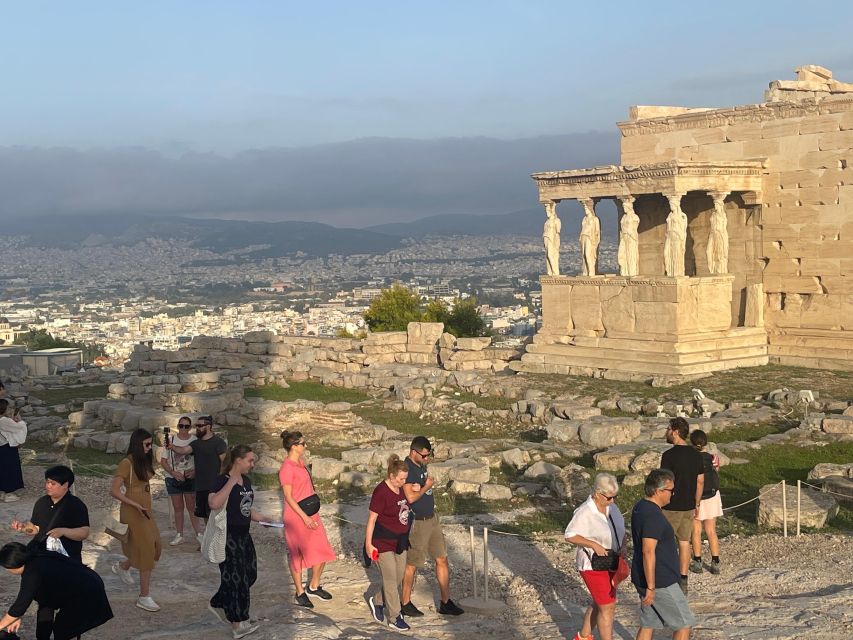
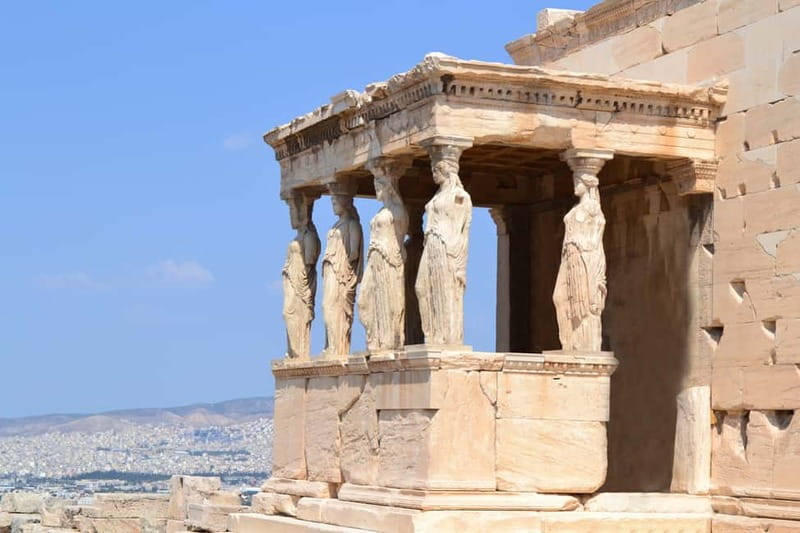
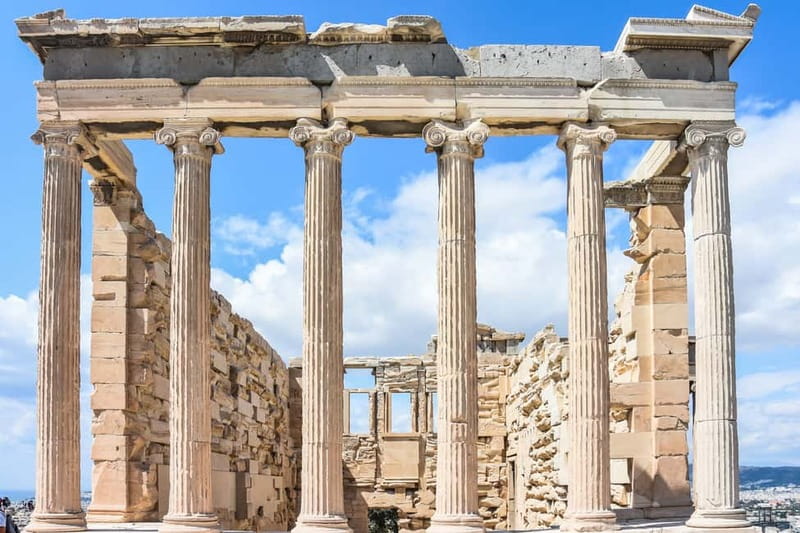
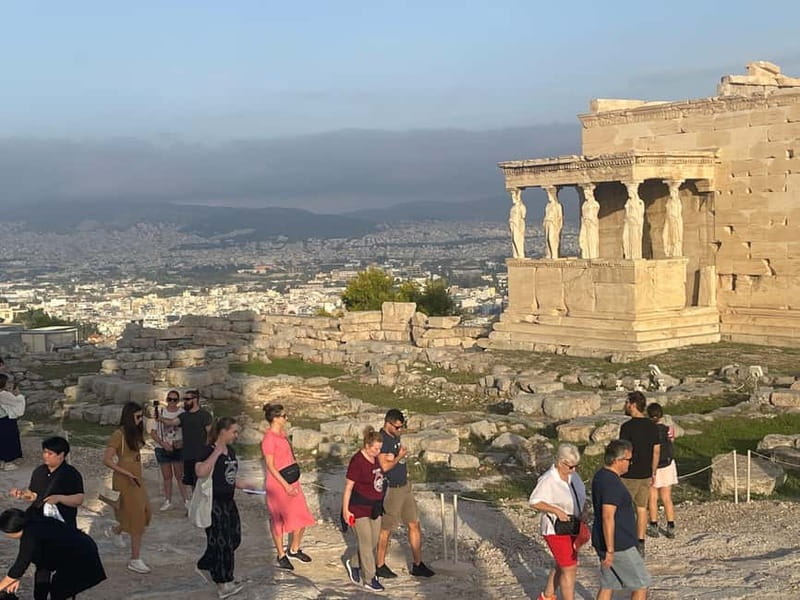
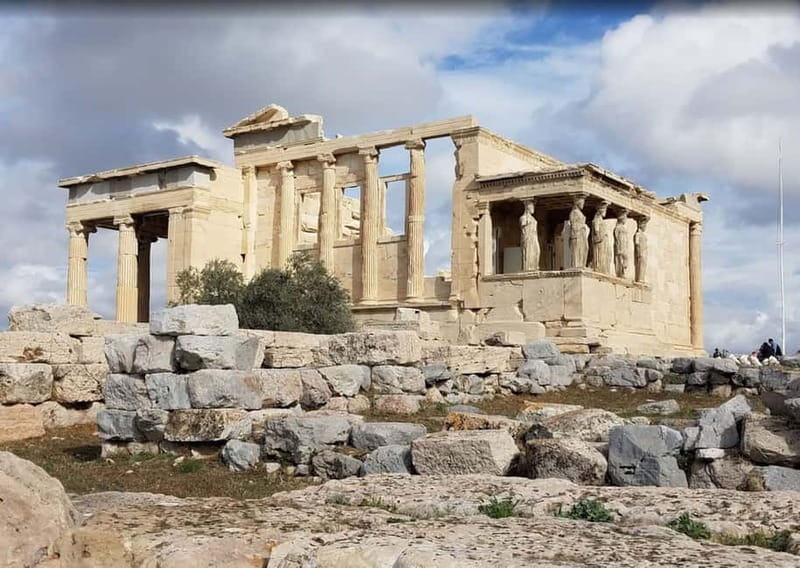
The Erechtheion is one of the most visually distinctive buildings on the Acropolis. Its unusual design and the Caryatid figures make it a highlight for many visitors, but the building can be confusing without context.
Your guide explains the myths and traditions linked with the site, including the rival claims of Athena and Poseidon. This is one reason the tour works particularly well for first-time visitors. Greek mythology is not treated as a separate storybook subject. It is tied to the places in front of you.
Take time to look closely at the building’s uneven layout. The Erechtheion does not have the simple, commanding shape most people expect from a Greek temple. That difference is part of its appeal, and a good guide helps you understand why it was built as a complex sacred space.
The group may pause here for about 10 minutes before moving toward the Parthenon. Expect other groups nearby and limited room at popular viewing spots. The earsets let you listen while standing a short distance from the guide, which is more comfortable than clustering around one person.
The Parthenon: famous, crowded, and worth the effort
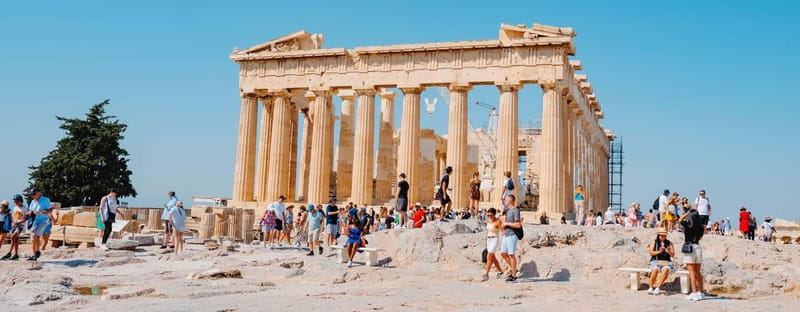
The Parthenon is the final major stop. You will not enter the interior, but you will walk around the exterior with the guide and study its proportions, columns, sculptural decoration, and long history of damage and repair.
This is where the earlier stops help. The Parthenon means more after you have seen the approach, the gateway, the smaller temples, and the wider sacred setting. Your guide can also separate myth from history, explain the monument’s purpose, and point out details that are easy to miss from a distance.
Expect crowds here. The Parthenon is the main reason most people come to the Acropolis, so it is rarely quiet. A late afternoon start, such as the 5:30 p.m. time noted in the tour information, can offer softer light and may feel more comfortable in hot weather. An early start, including the 8:30 a.m. option, is another sensible choice if you want to reduce exposure to the strongest midday sun. Availability varies by date.
The views are one of the tour’s rewards. From the top, you can look over Athens toward Filopappos Hill, Mars Hill, Pnyx, and the National Observatory. These are not just distant scenery. The guide uses them to show how the Acropolis relates to the city around it.
The activity information says the route ends on the Acropolis, while the meeting details say the activity ends back at the meeting point. Confirm the exact end arrangement for your selected departure. In either case, do not assume the guide will escort you through the rest of Athens after the main Acropolis visit.
What the earsets change
Personal earsets may sound like a small extra, but they solve one of the biggest problems on a guided site visit. The Acropolis is open, exposed, and noisy. Wind, nearby groups, and the distance between you and the guide can easily swallow a normal speaking voice.
With the earsets, you can stand a few steps away, take a photo, or move around a viewpoint while still hearing the explanation. Multiple reviews praise the clear audio, and that is especially useful for children or anyone who finds it tiring to lean toward a guide at every stop.
The system does not remove the need to pay attention to the group. You still need to stay close enough to follow the route and hear instructions. It simply gives you more breathing room at the monuments.
Choosing the ticket and museum options
The price begins at $38.39 per person, but the value depends on which option you select. The basic tour fee includes the guide, earsets, an Athens map, and an Athens Guide magazine. Acropolis entry is included only if you choose the ticketed option.
If you choose the option without tickets, you must buy your own admission from the official website. Do this immediately after booking, and select the correct date, time, and ticket category. Your admission time must match the tour time because the group enters the Acropolis almost at once.
This is the point where saving a little money can create a costly problem. If you arrive without a valid ticket, the tour fee is not refunded, and the guide cannot simply wait for you to sort it out. If you prefer fewer moving parts, the option with tickets is the safer choice.
Some options also include entry to the Acropolis Museum and a museum tour. That can turn a short archaeological visit into a longer half-day plan, but check exactly what your chosen option includes before paying. Food and drinks are not included, and you will need to arrange your own water and snacks around the visit.
Heat, hills, and what to bring
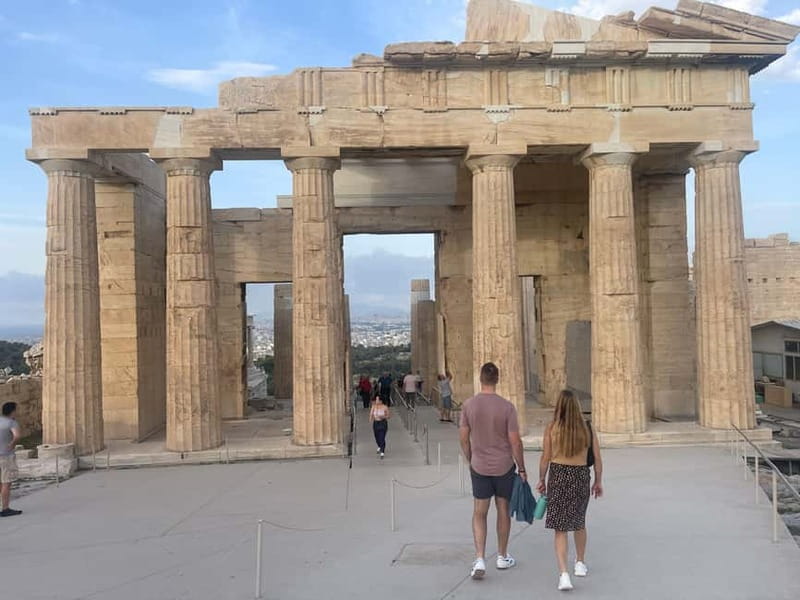
Wear comfortable shoes. The route includes an uphill walk, uneven ancient surfaces, and exposed areas with little shade. Bring water, sunglasses, a sun hat, sunscreen, and light, comfortable clothing.
One useful practical point comes from the guide experience itself: shade is not guaranteed during every explanation. You may spend several minutes in full sun while the guide describes a monument. A hat and water are not optional comforts in hot weather.
Tours run rain or shine. Large bags and luggage are not allowed, and baby strollers are not permitted. If you are visiting Athens with a toddler, the route may still be manageable with careful planning, but the walking surface and lack of stroller access require more attention.
The experience is not suitable for wheelchair users or people with mobility impairments. The uphill route and ancient surfaces make that limitation important, not a minor footnote.
Who will get the most from this tour
I would choose this tour for a first visit to Athens, a short stay, or a family that wants the monuments explained without reading a guidebook at every stop. The myths help hold children’s attention, and guides have been praised for keeping young people interested, including by using visual aids and stories.
It also suits independent visitors who usually prefer to explore alone but want expert context for one major site. You still have room to look and take photographs, while the guide handles the sequence and background.
The tour is less suitable if you want a quiet, unhurried study of every monument. It is also not ideal for anyone who dislikes fixed entry times, group pacing, or hot outdoor walking. The Acropolis is a demanding site even on a well-run tour.
Guide quality can vary from one departure to another, but the repeated strengths are clear: easy-to-understand English, strong storytelling, patience, and good crowd control. Names praised in the supplied feedback include Eva, Dory, Maria, Victor, Kalli, Antonis, Andrea, Giota, Marianna, Alice, and Phillipia. That range suggests a sizeable guide team rather than one guaranteed individual, so book for the format, not for a specific guide unless the operator confirms one.
Should you book the Acropolis and Parthenon tour?
Book it if you want the main Acropolis sights in a logical order, clear explanations, and help making sense of the myths and monuments. At $38.39 before any ticket or museum upgrade, it offers solid value for a focused guided visit, especially if you are in Athens for only a day.
Choose the ticket-included option if you do not want to manage timed admission yourself. Pick an early or late departure for better heat management, arrive 20 minutes early, and carry water, sun protection, and only a small bag.
Skip it if you need wheelchair access, want complete freedom to set your own pace, or plan to spend the entire day at the Acropolis and Museum without a group schedule. For most first-time visitors, though, the guide, route, and earsets make this a sensible way to meet Athens’s most important ancient monuments.
FAQ
How long does the Acropolis walking tour last?
The tour lasts between two and three and a half hours. Check the available starting times and the exact option before booking.
Where does the tour start?
It starts at 3 Dionysiou Areopagitou Street. Look for the orange Athens Walking Tours sign at the beginning of the pedestrian walkway toward the Acropolis.
How early should I arrive?
Arrive 20 minutes before the scheduled departure. Timed Acropolis entry is strict, and late arrivals may not be able to join or receive a refund.
Is the Acropolis entry ticket included?
It is included only when you select the option with tickets. If you select the option without tickets, you must buy your own admission from the official website.
Can I visit the Acropolis Museum on this tour?
Some options include Acropolis Museum entry and a museum tour. Check the selected option carefully because museum access is not included in every booking.
What language is the tour in?
The live guided tour is in English.
Are headphones provided?
Yes. Personal earsets are provided so you can hear the guide more clearly during the walk.
What should I bring?
Bring your passport or ID card, comfortable shoes, sunglasses, a sun hat, sunscreen, and comfortable clothing. Water is also a sensible addition for the exposed uphill route.
Is the tour suitable for wheelchair users or strollers?
No. The activity is not suitable for wheelchair users or people with mobility impairments, and baby strollers are not allowed. Large bags and luggage are also prohibited.
Just added in Athens
- Athens: Half-Day Morning Catamaran Cruise with Meal & Drinks★ 4.9 · 221 reviews
- Athens hotels to Athens airport Private departure transfer★ 5.0 · 285 reviews
- Argolis: Full-Day Tour in Mycenae & Nafplio★ 4.2 · 350 reviews
- Athens: Riviera Catamaran Cruise with Meal and Drinks★ 5.0 · 345 reviews
- Athens: Delphi, Corycian Cave, and 300 Battlefield Day Trip★ 4.8 · 344 reviews
- 3-Day Classical Greece Tour: Epidaurus, Mycenae, Nafplion, Olympia, Delphi★ 4.5 · 342 reviews
- Best of Athens Half Day Private Tour★ 5.0 · 353 reviews
- Electric Bike Tour of Athens by Night★ 5.0 · 355 reviews
Acropolis & Athens Highlights, compared.
Acropolis & up to 5 Archaeological Sites Combo Pass
Read our review →
Acropolis, Parthenon & Acropolis Museum Guided Tour
Read our review →
Acropolis: Acropolis and Parthenon Guided Walking Tour
Read our review →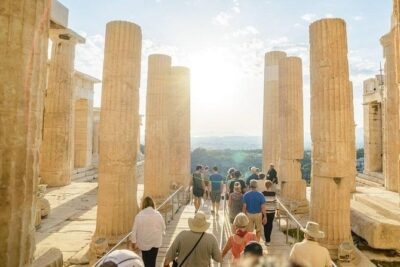
Acropolis monuments & Parthenon Walking Tour with Optional Acropolis Museum
Read our review →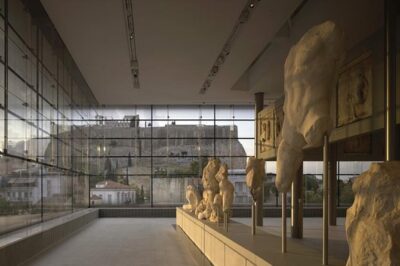
Athens All Included: Acropolis and Museum Guided Tour with Ticket
Read our review →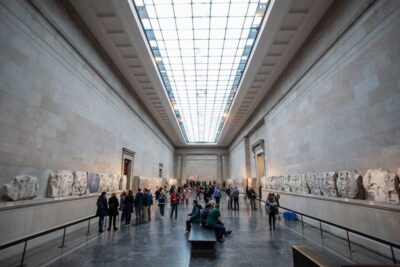
Acropolis Museum Ticket with optional Audio Guide
Read our review →
Acropolis Ticket & Optional Self-Guided Audio Tours
Read our review →Browse the lists this tour appears in