
Reviewed · ANCIENT CORINTH, MYCENAE & NAFPLIO TOURS
Ancient Sparta Ancient Corinth Private Tour from Athens/ Nafplio
Ancient Sparta is the surprise here. You do not come for a grand ruin on the scale of Athens. You come to walk through a scattered ancient city, see the theater, stand before Leonidas, and picture how a famously disciplined society once worked. The long drive through the Peloponnese is part of the day, not just a way to reach the sites.
I like the private vehicle and flexible pace, especially for families or small groups who want to stop for photos, lunch, or a short detour. I also like the mix of famous sights and local culture, from the Corinth Canal to olive oil production. The drawback is clear: this is a long day with limited time at some stops, and your driver is not an archaeologist guide unless you arrange one separately.
Key points to know before booking

- A very full 10-hour day: You cover the Corinth Canal, Sparta, Leonidas Monument, optional olive oil museum, and Ancient Corinth.
- Private transport from Athens or Nafplio: Your group travels alone in a sedan, minivan, or minibus, with fuel, tolls, parking, and hotel pickup included.
- Sparta is atmospheric rather than monumental: The ruins are spread out and modest, but the ancient theater and Leonidas connection give the visit real weight.
- Your driver sets the tone: Drivers such as Christos, Nikolaos, Takis, Makis, and Philippe have been praised for safe driving, clear English, local knowledge, and thoughtful stops.
- A guide costs extra: The driver provides history through books, audio material, and conversation, but does not walk through the museums and ruins as a licensed archaeologist.
- Bring extra money for tickets: Summer admission can total €30 per person if you visit every paid site, with lower winter prices.
Why this private Sparta trip works
This excursion is designed for people who want to see a large section of the Peloponnese without renting a car. From Athens, the route is long, but you avoid driving, navigation, toll booths, and parking. You can watch the countryside pass by while your driver explains what you are seeing.
The private format matters. You are not tied to a large bus group or a fixed lunch stop. If your group wants more time at Ancient Corinth and less time at the olive oil museum, you can discuss that with the driver. One party even exchanged a planned stop for another attraction, and other groups added short photo stops when time allowed.
The tour is listed at $265.50 per person, but the final value depends heavily on group size and vehicle choice. A couple pays more per head than a family or a group of friends sharing a minivan or minibus. Since fuel, toll roads, parking, and pickup are covered, the price buys convenience as much as sightseeing.
You should still budget for entrance fees. In summer, Sparta’s Archaeological Museum costs €10, Ancient Corinth costs €15, and the Olive and Greek Olive Oil Museum costs €5. That is €30 per person if you visit all three. Winter prices are lower, with Sparta at €5 and Ancient Corinth at €8. The olive oil museum is closed every Tuesday, and the Sparta museum is also closed Tuesday.
More Peloponnese days from Athens:
- From Athens: Mycenae, Epidaurus & Nafplio Full Day Trip
★ 4.8 · 2,438 reviews - From Athens: Mycenae, Epidaurus & Nafplio Full-Day Tour
★ 4.5 · 1,580 reviews - From Athens: Ancient Corinth Day Trip with Canal & VR Guide
★ 4.6 · 1,073 reviews
The Corinth Canal gives you a quick first stop
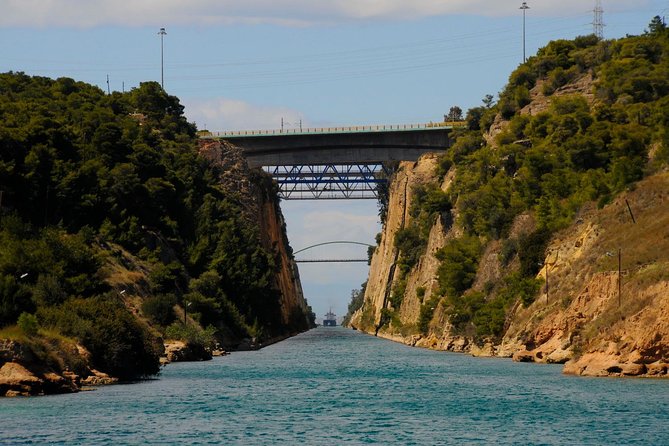
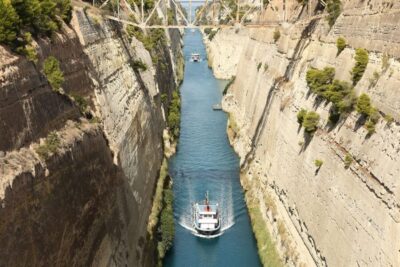
The Corinth Canal is usually the first major photo stop. The cut links the Aegean and Ionian seas and separates the Peloponnese from central Greece. It is 6,400 meters long and took twelve years to build, from 1881 to 1893, with more than 2,500 workers involved.
You get about 15 minutes here. That is enough to walk across the pedestrian bridge and look down into the narrow channel from roughly 80 meters above the water. It is a short stop, but it breaks up the drive and gives you one of the day’s clearest photographs.
Do not expect a long visit or a boat ride. This is a viewpoint and photo stop. If you enjoy engineering, ambitious construction projects, or dramatic cuts through rock, it earns its place. If you need more time for the archaeological sites, this is one of the stops best kept brief.
Sparta asks you to adjust your expectations
Modern Sparta does not present a single grand ruin surrounded by intact columns. The ancient city is scattered, and much of what made Sparta powerful was its social system rather than its surviving buildings. That can feel underwhelming if you arrive expecting another Acropolis.
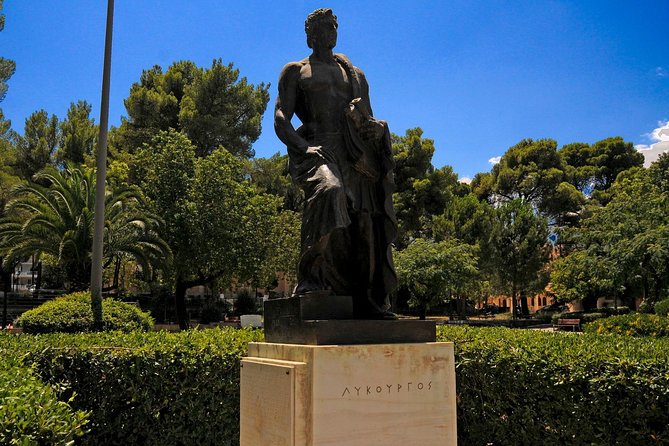
I think the appeal is different. Sparta was built around military training and physical discipline under the system linked to the lawgiver Lycurgus. Society was divided among full Spartan citizens, free residents involved in trade, non-Spartan men raised as Spartans, and helots, who were state-owned serfs. Your driver’s explanations can help turn a quiet field of ruins into a place connected to a very unusual society.
The scheduled city visit is about 30 minutes, so you will not have time for a long independent study. Use the stop to get your bearings, then save your closer look for the acropolis, theater, and museum. Comfortable shoes are useful, though the provided details do not describe the exact walking surfaces at every site.
The Archaeological Museum of Sparta fills in the gaps
Sparta’s Archaeological Museum occupies a neoclassical building dating from 1874 to 1876. It is described as the oldest provincial archaeological museum in Greece, and its small scale can work well during a packed day.
You have about 30 minutes inside. That is not enough for a slow museum visit, but it can give you context that the open ruins cannot. Objects and displays help explain daily life, religious practice, art, and the city’s place in the ancient world.
Admission is separate. The listed price is €10 in summer and €5 in winter, and the museum is closed every Tuesday. Check the day before you go if this stop matters to you, since a closed museum changes the balance of the day.
A few more things to do in Athens worth a look
- Best of Athens Half Day Private Tour
★ 5.0 · 3,714 reviews - Athens Full Day Private Tour
★ 5.0 · 2,903 reviews - Athens Airport Private Arrival Transfer with Meet & Greet
★ 4.5 · 1,495 reviews - Athens Airport to Athens Hotels Private Arrival Transfer
★ 5.0 · 947 reviews
The ancient theater shows Sparta’s public life
The acropolis and ancient theater are the strongest physical remains in Sparta. The theater was built from local white marble during the Roman period, in the late first century BC. It could hold an estimated 16,000 people and had a mobile stage, a feature that suggests a busy public venue rather than a remote ruin.
You spend about an hour in this area. Much of the seating was damaged during the Byzantine period, and erosion has worn down the surviving marble and limestone. Still, the size of the theater gives you a useful sense of ancient Sparta as a city with public events, performances, and civic life.
This is where a private tour has an advantage over a rushed bus visit. You can ask your driver questions, pause for photographs, and take in the shape of the site without being pushed along by a large group. Just remember that the driver does not accompany you as an archaeologist guide.
Leonidas brings the Spartan story into focus
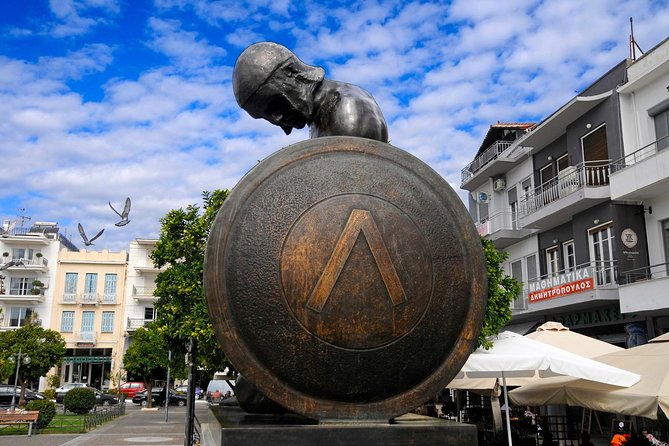
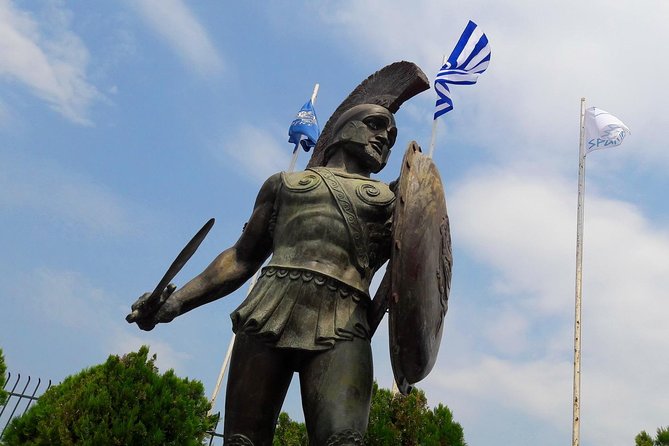
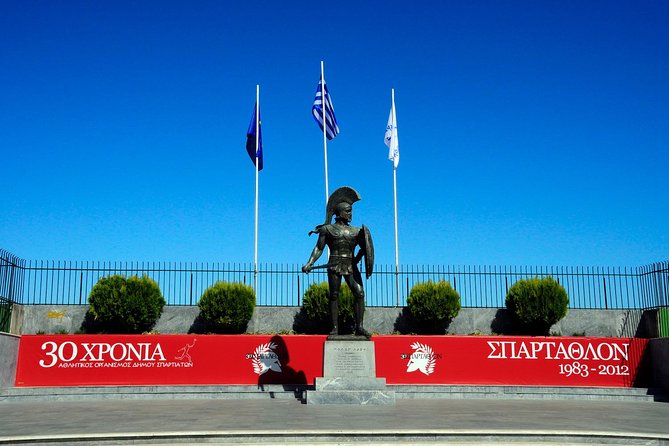
The Leonidas Monument is a brief but memorable stop. The statue of the Spartan king faces a stadium, recalling his famous reply at Thermopylae when ordered to surrender his weapons: Molon labe, meaning come and get them.
The visit lasts about 15 minutes, so this is not a major archaeological walk. It is a place to pause, take a photograph, and connect the modern city with the story most people already associate with Sparta.
Nearby excavations revealed a fifth-century BC limestone structure. It was first thought to be a small temple, but it is now believed by some to be the tomb of Leonidas. Its use has not been verified, yet it is the only preserved monument of the ancient agora. That uncertainty is worth keeping in mind. The site is tied to a powerful tradition, but the identification is not proven.
The olive oil museum adds a local touch

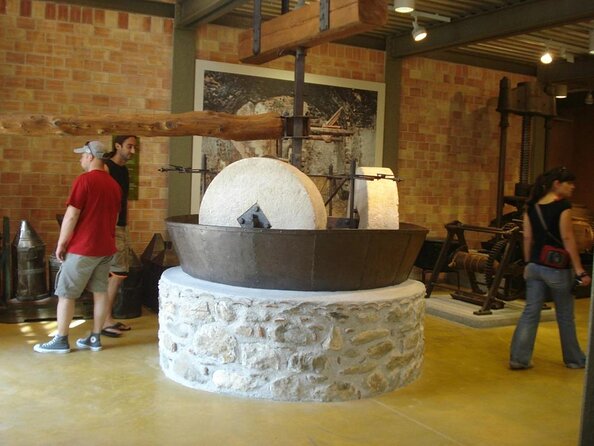
The Museum of the Olive and Greek Olive Oil is optional and depends on the time available. If open, it offers a change of pace from ruins and statues. Displays cover the olive tree and oil production through Greek history, including food, trade, religion, art, and technology.
The museum includes unusual material, such as fossilized olive leaves from Santorini dated to 50,000 to 60,000 years ago. It also presents replicas of Linear B tablets from the fourteenth century BC, among the earliest written evidence connected with olives and olive oil in Greece.
You receive about 20 minutes here, which is enough for a quick introduction but not a detailed museum study. Admission is €5, and the museum closes on Tuesdays. Some groups have had an olive oil tasting arranged during the visit, but you should not treat that as guaranteed. It depends on the stop and the available time.
Ancient Corinth deserves your full attention
Ancient Corinth is likely the most rewarding archaeological stop for many people on this route. The city was one of the largest in ancient Greece, and the remains are easier to read as an organized urban site than Sparta’s scattered ruins.
You get about 70 minutes at Ancient Corinth, followed by roughly 30 minutes in the archaeological museum. That is a useful amount of time, but still not generous if you want to study every display. One practical tip is to protect this time. If the day runs late, do not give away too much of your Corinth visit for optional stops.
The site also connects with the Christian story of Saint Paul. Corinth appears in the New Testament through First and Second Corinthians and in the Acts of the Apostles, which recounts Paul’s missionary travels. That gives the visit another layer, especially if you have read those texts or want to connect ancient Greek cities with early Christian history.
Ancient Corinth admission includes the museum. The combined ticket is €15 in summer and €8 in winter. The museum is closed on Tuesdays during winter, while the site ticket includes museum entry when it is open.
The drive is part of the experience
The route to Sparta takes you away from Athens and into the Peloponnese. Several people have found the drive more comfortable than expected, especially with newer roads through the region. You will spend many hours in the vehicle, though, so the tour suits you best if you enjoy scenery, conversation, and a full sightseeing day.
The driver can provide historical books and an audio documentary during the journey. The best driver experiences described here go beyond reciting dates. Christos has been praised for choosing good stops and answering questions. Nikolaos was noted for safe driving, helpful information, and a good gyro recommendation. Takis has been especially valued for connecting ancient sites with Greek culture, land, and daily life.
Those details matter because the driver is not simply a chauffeur. At the same time, you should be clear about the limit of the service. If you want a specialist to explain the ruins while you walk, request a licensed archaeologist in advance. Availability is not guaranteed at the last minute, and the extra guide fee is separate.
Timing, vehicles, and pickup details
The tour lasts about 10 hours. An 8:00 am start, or earlier in winter, is recommended. Starting early gives you a better chance of seeing the planned stops without cutting short Ancient Corinth or lunch.
Pickup and drop-off are offered at hotels or apartments in central Athens within 7 kilometers, and at other agreed locations. Pickup from Piraeus costs an additional €15 each way. Airport and Lavrio Port transfers require a prior agreement and are not covered by that port surcharge.
You can also begin or end in Nafplio, where the price changes because Sparta, its acropolis, and Corinth are closer. This option can make particular sense if your Greece trip already includes the Peloponnese and you do not want to return all the way to Athens.
Vehicle choices include a sedan for up to three adults, a minivan for one to seven people, and a minibus for one to fourteen. Two children up to age 12 can travel free in the stated family arrangements, though the price changes by vehicle and group size.
Who should book this day trip?
I would choose this tour if you want to combine several distant places without driving yourself. It is a strong fit for families, couples with limited time, and small groups who value a private car more than a fixed group itinerary.
It also works well if your main interests include Greek history, the Spartan story, engineering, archaeology, and food culture. The mix keeps the day from feeling like eight similar ruin stops.
I would hesitate if you want a slow archaeological study. Sparta receives short visits, the olive oil museum is optional, and the 10-hour schedule leaves little room for wandering. You should also avoid booking on a Tuesday if the Sparta or olive oil museums are central to your plan.
Cancellation is free up to 24 hours before the start time. Changes or cancellations made less than 24 hours before departure are not accepted for a refund.
Should you book the Ancient Sparta and Corinth tour?
Book it if you want a private, efficient way to reach Sparta and Corinth from Athens or Nafplio, and if a long day on the road sounds worthwhile. The best parts are the freedom to adjust the pace, the personal attention from drivers such as Christos, Takis, Nikolaos, Makis, or Philippe, and the chance to see both major ruins and smaller local sights.
Go in with realistic expectations. Sparta is not a grand monument park, and the driver is not an archaeologist guide. If you accept those limits, this is a practical way to connect the famous Spartan story with the actual place, then finish the day at one of the Peloponnese’s most substantial ancient cities.
FAQ
How long does the private tour last?
The tour lasts approximately 10 hours, including transportation between Athens or Nafplio and the Peloponnese sites.
Can I be picked up from my hotel in Athens?
Yes. Pickup and drop-off are offered from hotels or apartments in central Athens within 7 kilometers. Pickup from locations farther away may cost extra.
Can I start the tour in Nafplio?
Yes. Pickup and drop-off are available from hotels, apartments, or ports in Nafplio. The price changes because Sparta, its acropolis, and Corinth are closer to Nafplio.
Is an archaeologist guide included?
No. The English-speaking driver provides historical information, books, and an audio documentary while you travel. A licensed archaeologist guide must be requested separately and depends on availability.
Are entrance fees included?
No. Ancient Corinth costs €15 in summer or €8 in winter, including the museum. Sparta’s Archaeological Museum costs €10 in summer or €5 in winter. The Olive and Greek Olive Oil Museum costs €5.
Is the tour available every day?
The tour can operate when arranged, but the Sparta Archaeological Museum and the Olive and Greek Olive Oil Museum are closed every Tuesday. Ancient Corinth’s museum is closed on Tuesdays in winter.
Just added in Athens
- Ceramic and Pottery Creative Workshop with Two Local Artists★ 4.0 · 57 reviews
- Small-Group Women History in Ancient Greece Walking Tour★ 5.0 · 38 reviews
- Athens Old City Private Photoshoot Tour / 2 hrs★ 5.0 · 109 reviews
- Athens: Wine Workshop Create your Own Wine under the Acropolis★ 5.0 · 77 reviews
- Athens: Greek Wines Tasting with Sommelier and Acropolis Views★ 5.0 · 88 reviews
- Wine Trails Private Tour/ Nemea visit 3 wineries from Athens or Nafplion (10 h)★ 5.0 · 44 reviews
- FLYING DRESS Photoshoot in Athens – Greece★ 5.0 · 47 reviews
- Small-Group Wine Tour in Athens with Tasting★ 5.0 · 33 reviews
Ancient Corinth, Mycenae & Nafplio Tours, compared.
Ancient Corinth Day Trip with Canal & VR Guide
Read our review →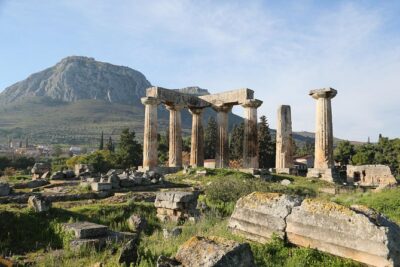
Private Biblical Tour Ancient Corinth & Isthmus Canal from Athens
Read our review →
4-Day Classical Greece Tour: Epidaurus, Mycenae, Olympia, Delphi, Meteora
Read our review →
Ancient Corinth & Nafplio Full Day Trip with Swim
Read our review →
Mycenae and Nafplion Day Trip from Athens with Official guide
Read our review →
Browse the lists this tour appears in