
Reviewed · ANCIENT CORINTH, MYCENAE & NAFPLIO TOURS
Private Luxury Biblical Tour: Apostle Paul in Athens & Corinth
Paul’s Athenian speech about the Unknown God gives this private tour its focus, but the day soon widens into a full journey through Greek myth, Roman power, and early Christianity. You move from the Areopagus and Ancient Agora to Corinth’s Bema, where Paul faced the Roman authorities.
I like the easy hotel or port pickup, and I like having a cool private car between outdoor sites. Drivers such as Periklis, Demetrios, Giorgos Kalantzis, Nick, and Manos are praised for their biblical knowledge, good humor, and flexibility. The main caution is important: a licensed archaeological guide is not included, so explanations inside the sites may be less detailed than you expect.
Key points at a glance
- Follow Paul across two major cities: See the Athenian places tied to his speech, then continue to Corinth, where he worked and faced a Roman tribunal.
- Enjoy private door-to-door transport: Hotel and port pickup are included, with a sedan for groups of one to four and a minivan for groups of five to seven.
- Expect a full day: The tour takes about 8 to 9 hours, including driving between Athens, the Corinth area, and the return point.
- Budget for extras: Archaeological admission costs €36 per person, and lunch, gratuities, and any airport pickup cost more.
- Choose your level of historical detail: Your English-speaking driver can explain the places and Paul’s story, but a licensed guide requires an additional arrangement.
- Bring practical gear: Wear good walking shoes and carry a hat, sunscreen, and water for the hot, exposed ruins.
Why Paul’s Athens story works so well here
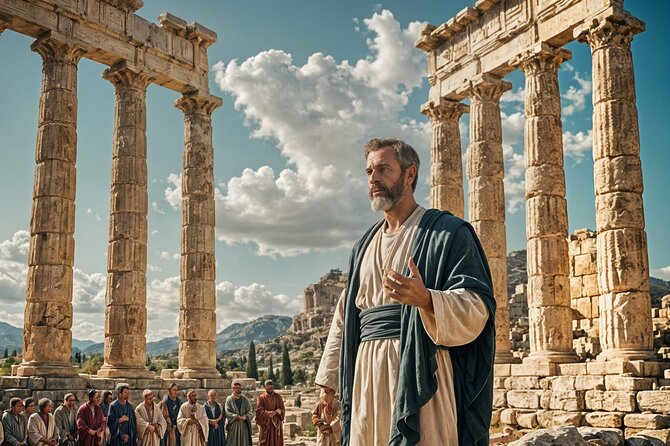
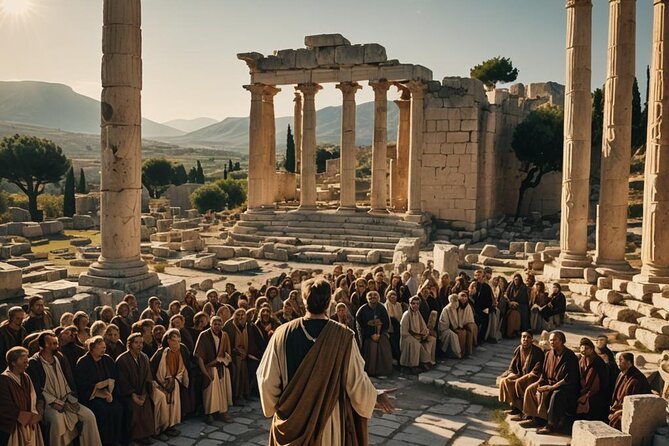
The tour begins with a clear biblical thread. Paul’s visit to Athens, described in Acts 17, is linked to his speech before the Athenians and his reference to an altar dedicated to an Unknown God. You are not simply looking at old stones. You are following the route of a religious debate that took place in a city known for philosophy, civic life, and many competing gods.
The Ancient Agora is the first major stop. This was the public center of Athens, with temples, meeting places, and civic buildings spread across a broad archaeological site. You have about 40 minutes here. That is enough to get a feel for the site and see key remains, but not enough for an unhurried examination of every corner.
Admission is not included. If you want detailed explanations of the ruins, ask your driver what can be covered before entering, or arrange a licensed guide at an extra cost. This distinction matters because the tour is built around a driver who can provide historical and biblical context, not an official guide stationed inside each archaeological site.
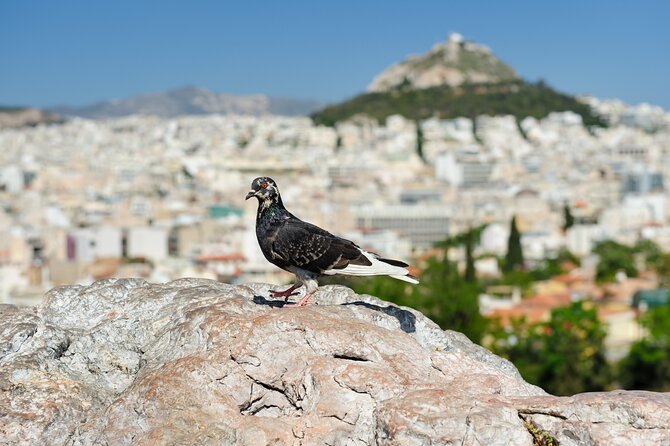
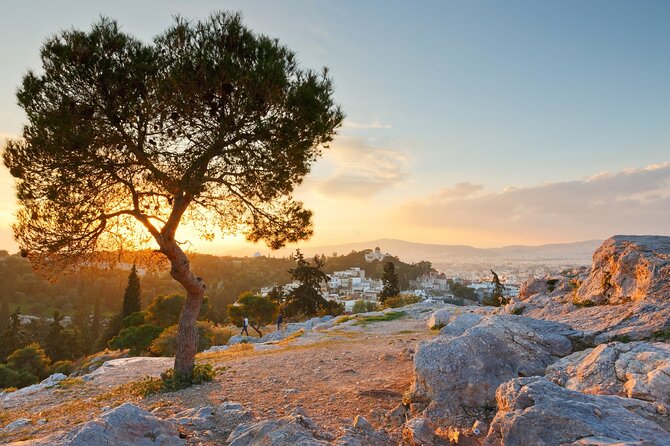
From the Agora, you go to Areopagus Hill, also called Mars Hill. The rough stone slope gives you a strong view toward the Acropolis and the city below. It is a short stop, about 30 minutes, and admission is free. You should wear shoes with a firm grip because the rock can be uneven.
This is one of the most meaningful stops for anyone interested in Paul. Here, the setting helps you picture his address to the Athenians. The site does not require a long visit, but I would take a few quiet minutes after hearing the story. The view adds a useful sense of place, showing how close the civic, religious, and intellectual centers of ancient Athens were to one another.
More Peloponnese days from Athens:
- From Athens: Mycenae, Epidaurus & Nafplio Full Day Trip
★ 4.8 · 2,438 reviews - From Athens: Mycenae, Epidaurus & Nafplio Full-Day Tour
★ 4.5 · 1,580 reviews - From Athens: Ancient Corinth Day Trip with Canal & VR Guide
★ 4.6 · 1,073 reviews
A quiet church linked to Athens’ first convert
The Church of St. Dionysius the Areopagite adds a later Christian connection to the Athenian route. Dionysius was associated with the Areopagus and is traditionally regarded as one of Paul’s early converts in Athens. The church visit lasts about 20 minutes and is free.
This stop is less about grand ruins and more about continuity. The Agora and Areopagus show the world Paul entered. The church points toward the Christian community that followed. You can expect a peaceful pause, religious architecture, and a chance to connect Paul’s speech with the early spread of Christianity in Greece.
The church is also a useful change of pace. Much of the day takes place outdoors under the Greek sun. A short indoor visit gives you a break before the drive toward Corinth.
Crossing the Isthmus toward Corinth
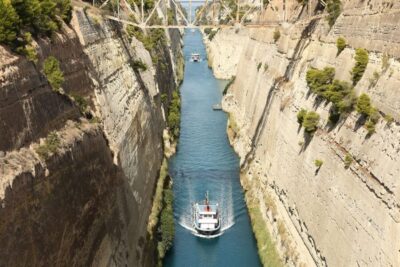
The road to Corinth changes the rhythm of the day. The Isthmus of Corinth is a narrow strip of land joining mainland Greece with the Peloponnese. Today, the Corinth Canal cuts through the rock and offers a clear view of the engineering work that transformed sea travel in the 19th century.
You spend about 20 minutes here, with no admission fee. This is a photo and orientation stop rather than a long archaeological visit. It helps explain why Corinth mattered. The city controlled an important land bridge and sat near routes linking different parts of the Greek world.
I would not expect a long guided presentation at the canal. Its value is visual and geographic. Once you see the narrow passage between the mainland and the Peloponnese, Corinth’s commercial importance becomes easier to understand.
Kenchreai, Paul’s eastern gateway
The Ancient Port of Kenchreai is another brief stop, lasting about 20 minutes. This eastern port served Corinth and is associated with Paul’s arrival in 53 AD. The remains include Roman harbor features, temples, and early Christian structures.
Kenchreai is not as visually complete as Ancient Corinth, so it rewards visitors who enjoy fragments and setting rather than polished monuments. You might find the remains modest, but the connection to Paul’s movements gives the stop a clear purpose.
The short visit also keeps the day moving. With eleven stops on the schedule, the tour cannot linger everywhere. That is useful if you want to cover the full route in one day, but less ideal if your goal is a slow archaeological study.
A few more things to do in Athens worth a look
- Best of Athens Half Day Private Tour
★ 5.0 · 3,714 reviews - Athens Full Day Private Tour
★ 5.0 · 2,903 reviews - Athens Airport Private Arrival Transfer with Meet & Greet
★ 4.5 · 1,495 reviews - Athens Airport to Athens Hotels Private Arrival Transfer
★ 5.0 · 947 reviews
Ancient Corinth brings Paul’s world into focus
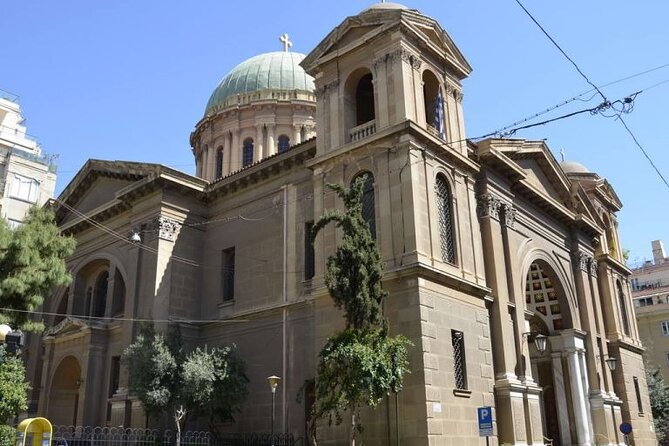
Ancient Corinth is the center of the tour. You have about an hour for the main archaeological area, with additional short visits listed for the Temple of Apollo and the Bema. Admission is not included.
The ruins bring together several layers of the city’s past. The Temple of Apollo is especially striking. Its surviving Doric columns are among the oldest examples of their kind in the Peloponnese, and they give you a strong visual sense of the city’s religious life before Christianity.
The Glauke Fountain adds Greek mythology to the story. According to legend, Glauke, daughter of King Creon, took refuge here after Medea poisoned her. This is a reminder that Corinth was not only a place of Roman administration and Christian preaching. Greek myths and older religious traditions remained part of the cultural setting Paul encountered.
The most important Christian stop is Paul’s Bema in the Roman Forum. The Bema was an elevated platform used for public addresses and legal decisions. According to the account in Acts 18, Paul was brought before Gallio, the Roman proconsul, around 51 AD. Gallio dismissed the case, allowing Paul to continue his work.
You can see why this site carries so much weight for biblical visitors. Paul’s story here is not a vague association. The New Testament places him in Corinth during a specific legal dispute. The stone platform also shows how Roman government operated in the city.
Modern mosaics depicting Paul’s trial and journey add a devotional touch. Some visitors will find that helpful; others may prefer to focus on the older archaeological remains. Either way, the Bema gives the biblical account a firm physical setting.
One practical note: the itinerary lists the Temple of Apollo twice, once as part of the main Ancient Corinth visit and again as a separate 20-minute stop. Your driver can clarify the exact order on the day. The schedule may also shift slightly based on traffic, site conditions, and how much time you want at each location.
The museum fills in the missing pieces

The Archaeological Museum of Corinth deserves its full hour. Its displays range from prehistoric objects to Roman-era material, including sculpture, pottery, and items connected with the Sanctuary of Asklepios.
This visit helps you read the ruins outside. A broken column in the open air tells only part of the story. Inside the museum, statues, household objects, and religious artifacts show how people lived, worshiped, and used the city over time.
The museum is also a welcome break from the sun. Admission is not included, and the stated archaeological entrance cost is €36 per person. Confirm how the fee applies to the sites you plan to enter, since the day includes several locations with different admission arrangements.
Acrocorinth adds the big view
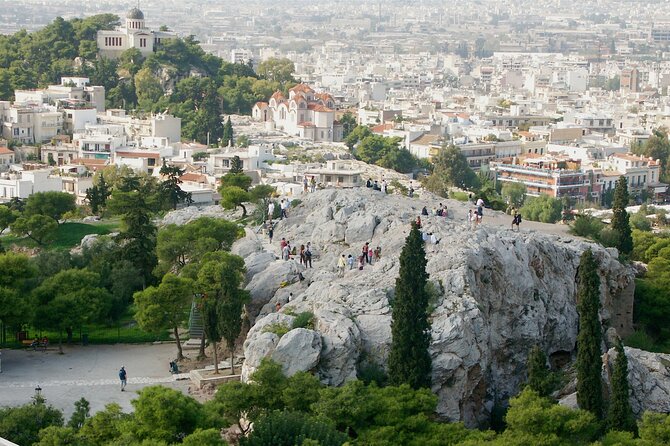
Acrocorinth is the fortified acropolis above Ancient Corinth. Its defenses reflect several periods, including classical Greek, Byzantine, Frankish, and Ottoman control. The site gives you broad views over the Corinth area and makes clear why this high point was valuable.
The visit lasts about 1 hour and 10 minutes. That is enough time to explore at a measured pace, but the terrain can be uneven and exposed. Comfortable shoes are essential. A hat, sunscreen, and bottled water are not optional luxuries on a warm day.
The tour includes a lunch stop at a traditional taverna near Acrocorinth, but the meal is not part of the price. This is a useful moment to slow down and eat local food rather than rush from one ruin to the next. A lunch stop also gives you a chance to discuss the day with your driver and adjust the remaining pace.
The high point of Acrocorinth makes it one of the more scenic parts of the route. If you care more about views and fortifications than detailed biblical interpretation, this may be one of your favorite stops. If steep or uneven walking is difficult, tell the operator in advance and ask what part of the site is practical for you.
The final church returns the day to Paul
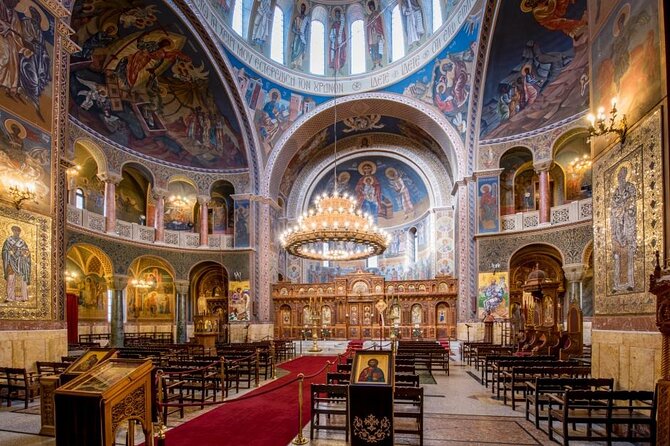
The last stop is the Church of the Apostle Paul in Ancient Corinth. Built in 1936 as a three-aisled basilica, it commemorates the earlier Christian presence associated with Paul.
After a full day of pagan temples, Roman law courts, harbor remains, and fortified walls, the church gives the tour a clear closing point. It is a modern place of worship with a direct link to the local Christian tradition. The visit takes about 20 minutes and is free.
I like this ending because it does not pretend that Paul’s era survives unchanged. Instead, it shows how later generations remembered his work and built a place of worship connected with his name.
What the private car adds to the day
The practical advantage is simple: you do not have to manage several transfers across Athens and Corinth. Pickup is available from your hotel or apartment, and port pickup is included at selected ports. At the port, the driver meets you in the arrival area with a sign showing your name. The tour returns you to the original meeting point.
Groups of one to four use a luxury sedan. Groups of five to seven use a minivan. The vehicles are air-conditioned, include WiFi, and come with bottled water. That matters in Greece, where much of the sightseeing takes place on exposed stone and the car becomes your cool resting place between stops.
The driver also has to manage Athens traffic and narrow streets. Nick, for example, is praised for driving a clean Mercedes-Benz sedan through crowded Athens roads while explaining the day’s plan. Other drivers named in the feedback include Periklis, Demetrios, Giorgos Kalantzis, Manos, and Makis.
The strongest pattern is personal service. Drivers ask if you need anything, keep the car nearby while you explore, and may adjust the pace. Periklis is also noted for helping with a rooftop restaurant reservation in Athens after the tour. That kind of local help can be valuable, though restaurant assistance should be viewed as a courtesy, not a guaranteed part of the program.
The guide question is the key decision
You need to understand the difference between a driver-guide and a licensed guide. The included service provides an English-speaking driver with historical knowledge. This person can explain Paul’s route, Greek culture, and the broad story of Athens and Corinth.
A licensed guide does not accompany you into the archaeological sites unless you arrange one at an additional cost. If you want detailed discussion of inscriptions, construction dates, museum objects, or biblical scholarship at every stop, pay for that added service.
If you already enjoy reading the Bible and want the freedom of a private car, the included driver may be enough. If you are a serious archaeology enthusiast, a church group seeking formal teaching, or someone who wants detailed explanations at each ruin, arrange the licensed guide before the day begins.
Is $250.90 a fair price?
The advertised price is $250.90 per person. You should add €36 per person for archaeological entrance fees, plus lunch and gratuity. Airport pickup also costs extra. The final total therefore depends on your group size, meal choices, and whether you add a licensed guide.
The value comes from the private transport and the amount covered in one long day. You reach Athens sites, Kenchreai, Ancient Corinth, the museum, Acrocorinth, and several Christian locations without arranging a rental car or public transport. For a small private group, that convenience can justify the cost.
The price is less attractive if you only want a short Athens biblical walk. You spend several hours driving and pay for a full-day route. I would choose this tour when Corinth is a priority, especially if you are arriving by cruise ship or want hotel pickup without handling the logistics yourself.
Who should book this tour?
This experience fits you best if you want:
- A private day for your own group
- A direct connection between Paul’s story and actual places
- Comfortable transport across a wide area
- Time at both Athens and Corinth
- An English-speaking driver who can adapt the pace
- A mix of biblical sites, Greek mythology, Roman ruins, museums, and scenic views
It is less suitable if you want a slow, specialist archaeological tour or a short activity with little driving. It is also not the best choice if you dislike outdoor walking in warm weather.
The tour requires good weather. You can cancel for a full refund up to 24 hours before the start time, while cancellations or changes made inside that window are not refunded. If poor weather forces cancellation, you are offered another date or a full refund.
Should you book it?
I would book this tour if Paul’s time in Athens and Corinth is the reason you are visiting. The Bema, Areopagus, Kenchreai, and Ancient Corinth work together to give the biblical story a clear route, while Acrocorinth and the museum broaden the day beyond religious history.
Before paying, decide how much explanation you need. For a flexible private ride with a driver who can discuss Paul and Greece, the package is strong. For formal, detailed teaching at every site, add a licensed guide and include the extra cost in your budget.
FAQ
How long does the Apostle Paul tour take?
The tour lasts approximately 8 to 9 hours, including the time spent driving between Athens, Corinth, and the other stops.
Is hotel or cruise port pickup included?
Yes. Pickup is available from designated hotels, apartments, and selected cruise ports. The driver waits outside a hotel or apartment, and meets port arrivals with a sign showing your name.
Is airport pickup included?
Airport pickup is available, but it costs extra.
Are entrance fees included in the tour price?
No. Entrance fees for archaeological sites and museums cost €36 per person. Lunch and gratuities are also separate.
Does a licensed guide accompany the group?
No licensed guide is included. The tour provides an English-speaking driver with historical knowledge. A licensed guide can be arranged at an additional cost.
What size groups can the vehicles carry?
Groups of one to four people travel in a luxury sedan. Groups of five to seven travel in a minivan. The activity is private, so only your group participates.
Just added in Athens
- Ceramic and Pottery Creative Workshop with Two Local Artists★ 4.0 · 57 reviews
- Small-Group Women History in Ancient Greece Walking Tour★ 5.0 · 38 reviews
- Athens Old City Private Photoshoot Tour / 2 hrs★ 5.0 · 109 reviews
- Athens: Wine Workshop Create your Own Wine under the Acropolis★ 5.0 · 77 reviews
- Athens: Greek Wines Tasting with Sommelier and Acropolis Views★ 5.0 · 88 reviews
- Wine Trails Private Tour/ Nemea visit 3 wineries from Athens or Nafplion (10 h)★ 5.0 · 44 reviews
- Hydra Private Day Trip by Ferry from Athens with Transfers★ 4.0 · 30 reviews
- FLYING DRESS Photoshoot in Athens – Greece★ 5.0 · 47 reviews
Ancient Corinth, Mycenae & Nafplio Tours, compared.
Ancient Corinth Day Trip with Canal & VR Guide
Read our review →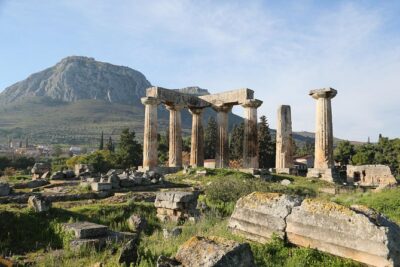
Private Biblical Tour Ancient Corinth & Isthmus Canal from Athens
Read our review →
4-Day Classical Greece Tour: Epidaurus, Mycenae, Olympia, Delphi, Meteora
Read our review →
Ancient Corinth & Nafplio Full Day Trip with Swim
Read our review →
Mycenae and Nafplion Day Trip from Athens with Official guide
Read our review →
Browse the lists this tour appears in