
Reviewed · ANCIENT CORINTH, MYCENAE & NAFPLIO TOURS
Biblical Ancient Corinth Canal Epidaurus Nafplio Private Tour
The best thing about this private day is its reach. From Athens, you can cross the Corinth Canal, walk through Ancient Corinth, hear the famous acoustics of Epidaurus, and finish in pretty Nafplio without changing hotels or piecing together several buses. It is a big day, but it covers a satisfying slice of the Peloponnese.
I like the private vehicle and flexible schedule, especially in Greece’s hot summer months. I also like that the driver can offer historical commentary and adjust the plan. Giannis, Themos, and Chris are named in past guest accounts, with Chris praised for adding extra stops and staying beyond the planned time.
The main consideration is cost. At $240.93 per person, the tour can be good value for a small group, but entrance fees, lunch, tips, and a licensed guide at the sites are extra. You will also spend much of the day on the road, so this suits people who prefer broad coverage over a slow visit to one place.
Key points to know before booking
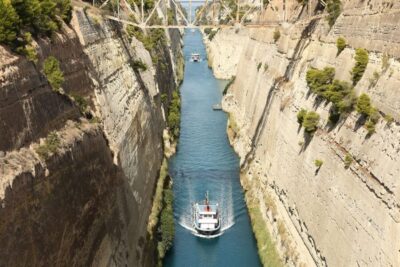
- The Corinth Canal is a quick but memorable first stop: You get about 20 minutes for views of the waterway and the narrow isthmus.
- Ancient Corinth brings together Roman, Greek, and Christian history: Allow 1.5 hours for the site, plus time for its museum and Temple of Apollo.
- Epidaurus has the day’s most famous single monument: Its ancient theater is known for striking acoustics and careful design.
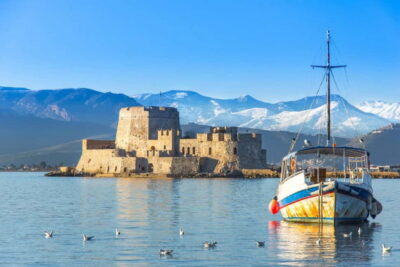
- Nafplio gives the itinerary a change of pace: Use free time for lunch, coffee, shopping, harbor views, and a look toward Bourtzi.
- The driver is not a licensed archaeological guide: Historical explanations are included, but detailed guiding inside the monuments costs extra.
- The route works best for a private group: Sedans carry one to three people, while groups of four to seven use a minivan.
Why this private Athens day works
This is not a short excursion to one famous ruin. It is a long loop from Athens into the northeastern Peloponnese, combining major archaeological sites with a pleasant coastal town. You get mythology, early Greek architecture, Roman remains, Christian connections, Venetian fortifications, and modern Greek history in one day.
The private format matters. Your pickup time can be adjusted, and the driver collects you from an Athens hotel, apartment, port, or, for an additional fee, the airport. You return to the same place or another agreed point. For a family or group of friends, that flexibility can make the $240.93 per-person price easier to justify.
The vehicles are air-conditioned and supplied with Wi-Fi and bottled water. That is not a small detail in the Peloponnese during warm weather. One group ranging from teenagers to people in their seventies found the day workable because people could explore more at some stops, rest in shade, or wait in cafés when needed.
Still, keep your expectations realistic. This is an ambitious schedule. Corinth, Epidaurus, and Nafplio are not next-door neighbors, and the 8.5-hour estimate includes driving between them. You will see a lot, but you will not have unlimited time at every monument.
More Peloponnese days from Athens:
- From Athens: Mycenae, Epidaurus & Nafplio Full Day Trip
★ 4.8 · 2,438 reviews - From Athens: Mycenae, Epidaurus & Nafplio Full-Day Tour
★ 4.5 · 1,580 reviews - From Athens: Ancient Corinth Day Trip with Canal & VR Guide
★ 4.6 · 1,073 reviews
The Corinth Canal and a 2,000-year-old idea
The Corinth Canal is a natural opening act. You stop for about 20 minutes to look across the narrow cut linking the Gulf of Corinth with the Saronic Gulf. The canal separates the Greek mainland from the Peloponnese, making the peninsula function like an island.
The modern canal was completed in the late 19th century, but the idea is far older. In the 7th century BC, Periander, ruler of Corinth, is said to have considered cutting through the isthmus. Since ancient engineers could not build the canal, ships and cargo were moved along the diolkos, a stone route using wheeled platforms.
Before the canal, ships had to sail around the Peloponnese. That added about 185 nautical miles to a voyage between the Aegean and Adriatic. The stop is short, but the setting gives you a useful lesson in why Corinth became so important.
Do not expect a long walk or a full museum visit here. This is mainly a viewpoint and photo stop. The canal’s scale is easier to understand from above, and your driver can help connect the scene with the geography of the day ahead.
Ancient Corinth, where Paul met a powerful city
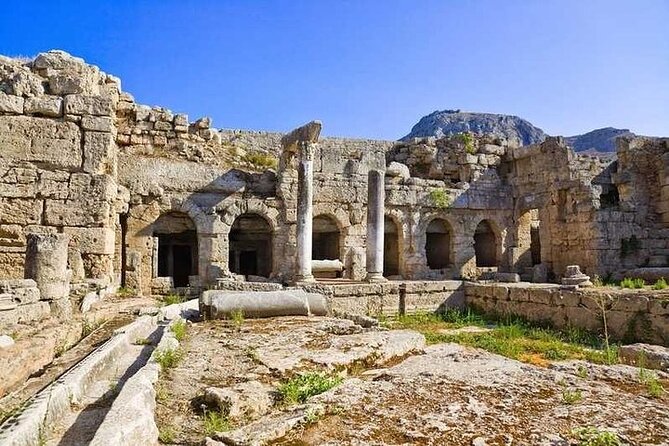
Ancient Corinth is the first substantial archaeological visit. Plan about 1 hour and 30 minutes here, though the exact pace depends on your group and how much time you spend in the museum. The ancient city sat on the isthmus between mainland Greece and the Peloponnese, roughly between Athens and Sparta.
Corinth was a major city-state and a commercial power. Around 400 BC, its population is estimated at 90,000. Rome destroyed the city in 146 BC, then founded a new Roman Corinth in 44 BC. The later Roman city became the provincial capital of Greece.
For Christian travelers, Corinth has a special connection to Saint Paul. The Acts of the Apostles describes his missionary work here, and the New Testament letters First Corinthians and Second Corinthians address the Christian community in the city. That connection adds another layer to the ruins. You are not only looking at temples and roads, but at a place central to the early Christian story.
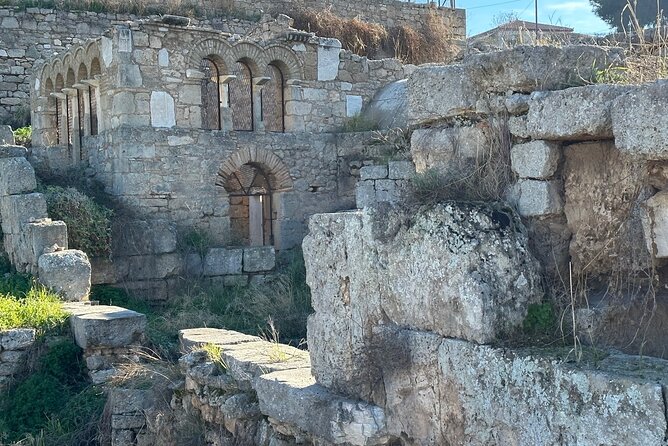
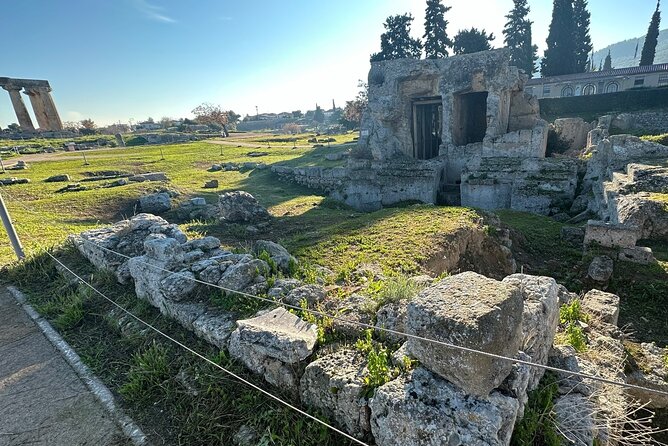
The site includes the Agora, the Lechaion Road, the Fountain of Peirene, a basilica, a theater, a stoa, and other remains. The open-air ruins require walking, and the sun can be strong. Bring water, wear sensible shoes, and use the supplied bottled water as a backup rather than your only drink.
A useful point: the driver is an English-speaking professional with historical knowledge, but a licensed guide is not included. If you want detailed explanations of every structure, arrange a guide or pay close attention to the site information. One person who visited Corinth and Epidaurus found that a site guide added much more context.
The Corinth Museum and Temple of Apollo
The Archaeological Museum of Ancient Corinth sits within the archaeological site, so it fits naturally into the visit. Allow about 40 minutes. It was built in 1931 and 1932 to display finds from excavations in the area.
The museum helps make sense of the stones outside. Objects, architectural pieces, and inscriptions can show how the city changed over time, from Greek settlement to Roman provincial center. If you rush through the ruins, the museum gives you a compact second look at the city’s public life and religious buildings.
The Temple of Apollo is a brief stop of about 10 minutes. Built around 550 BC, it is one of the earliest Doric temples in the Peloponnese and mainland Greece. Its surviving monolithic columns are the key sight. The visit is short, but these columns are among the clearest visual reminders of early Greek temple design.
You should check current entrance prices when booking. Ancient Corinth is listed at €15 per person, while museum admission is separate. The tour price does not cover either.
A few more things to do in Athens worth a look
- Best of Athens Half Day Private Tour
★ 5.0 · 3,714 reviews - Athens Full Day Private Tour
★ 5.0 · 2,903 reviews - Athens Airport Private Arrival Transfer with Meet & Greet
★ 4.5 · 1,495 reviews - Athens Airport to Athens Hotels Private Arrival Transfer
★ 5.0 · 947 reviews
Acrocorinth and the fortress above the ruins
Acrocorinth, or Upper Corinth, rises on a large rock above the ancient city. You have about 30 minutes here. The fortress controlled the isthmus and served as a last defensive position for southern Greece because an army entering the Peloponnese had to contend with this strategic point.
The height gives you broad views toward Corinth and the surrounding area. The site also reflects centuries of changing control and defense. Its water supply helped make the rock useful as a fortress, not simply as a lookout.
Thirty minutes is enough for a quick look and photographs, but not for a slow exploration of every wall or path. If steep or uneven ground is difficult for someone in your group, discuss the stop with the driver before the day begins. The private format makes it easier to shorten or adjust the visit.
Epidaurus and the sanctuary of Asclepius
Epidaurus changes the mood. Here, the focus is medicine, worship, and performance. The sanctuary was dedicated to Asclepius, the ancient Greek figure associated with healing, and it became one of the most important healing centers in Greece. Its main temple was built in the early 4th century BC.
The larger Epidaurus visit lasts about one hour, followed by roughly 30 minutes in the archaeological museum, 15 minutes at the Sanctuary of Asclepius, and 45 minutes in the theater. Exact timing can shift, but the schedule gives you a fair look at the main features.
Ancient patients came to the sanctuary seeking healing. The site’s importance rivaled major religious centers connected with Zeus at Olympia and Apollo at Delphi. The remains help you picture a place where religion and medical practice were closely linked.
The museum, established in 1902 and opened in 1909, is useful for its reconstructions, columns, and inscriptions. It is not a huge museum visit, so it works well in a packed day. Admission is not included.
The theater of Epidaurus and its famous acoustics
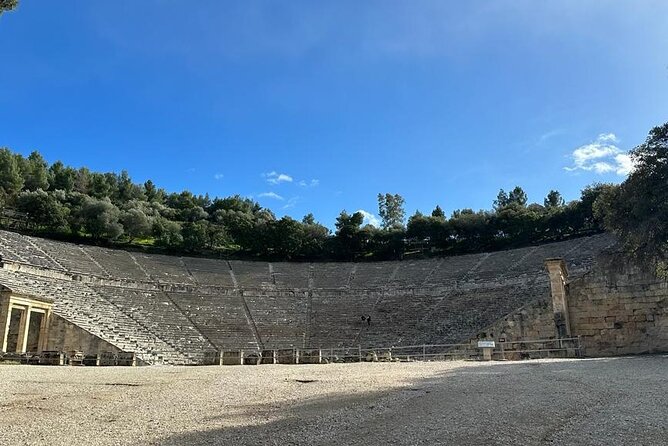
The Ancient Theatre of Epidaurus is likely to be the most memorable stop. It is often regarded as the finest ancient Greek theater for both acoustics and design. Its structure still shows the theatron, orchestra, and skene, the main parts of a Hellenistic theater.
From the upper seats, a small sound from the stage can carry remarkably well. The classic demonstration is a coin drop or a quiet word, although the effect depends on where you stand and how busy the theater is. The key point is not a party trick. The theater’s carefully planned shape allowed performances to reach a large audience without modern amplification.
You get about 45 minutes here. That is enough to sit, take in the proportions, and walk around the seating area, but you may wish for more time if the theater is crowded or if you enjoy ancient architecture. The site can be exposed to the sun, so a hat and water are sensible.
The theater is also a reminder of the tour’s pace. You may be standing in one of Greece’s most celebrated monuments, then looking at your watch because Nafplio and the return drive still lie ahead.
Nafplio for lunch, coffee, and a slower hour
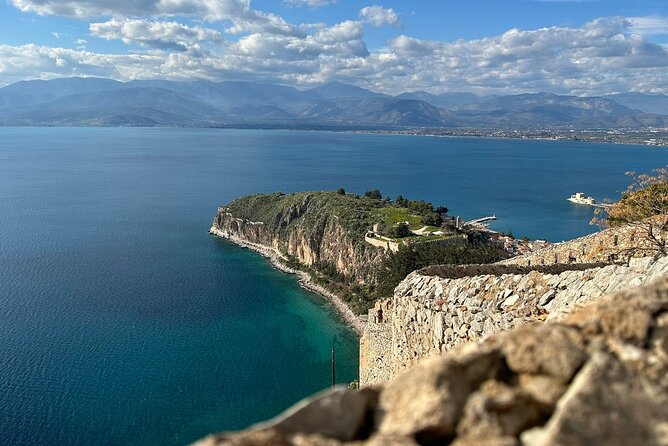
Nafplio provides a welcome pause after the archaeological sites. The town sits at the northern end of the Argolic Gulf and served as the capital of the First Hellenic Republic and the Kingdom of Greece during the early years of the modern Greek state.
Your free time is intended for lunch, coffee, and shopping. Meal costs are not included, but the driver can suggest a place. Giannis was specifically praised for showing a parent and child a good lunch spot, so do not be shy about explaining what kind of meal or setting you want.
Nafplio is also a useful place to break up the day. You can choose a proper meal, browse shops, or simply sit with a drink instead of adding another long monument visit. That choice is one of the private tour’s strengths.
The Lion of the Bavarians is another short sightseeing point. Carved into the rock above Michael Iatrou Street, the sleeping lion honors Bavarian soldiers of King Otto’s dynasty who died in Nafplio during a typhoid epidemic in 1833. It sits above a small park and takes about an hour within the wider Nafplio stop, depending on how the schedule is arranged.
Palamidi, Akronafplia, and Bourtzi
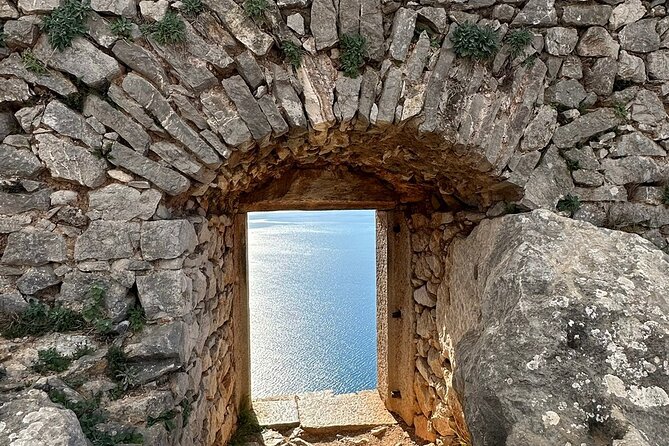
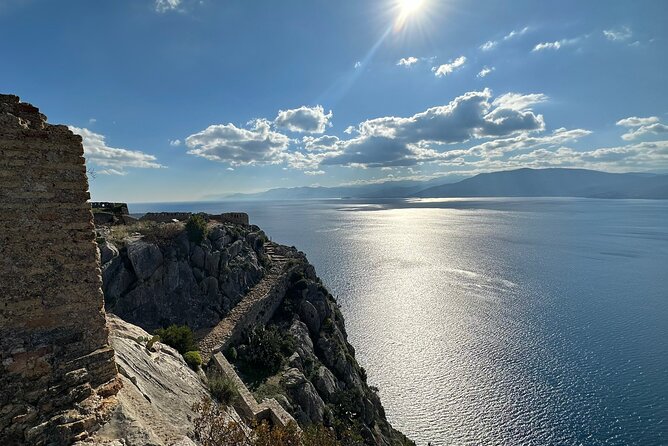
Palamidi Castle sits on a 216-meter-high hill above Nafplio. Built by the Venetians during their second period of rule from 1686 to 1715, it commands views over the town and Argolic Gulf. The fortress is among the best-preserved in Greece, with defensive walls, routes through the complex, and the prison associated with Kolokotronis.
The famous count is 913 steps from town to the fortress, though local tradition often rounds the number to 999. This tour includes about 30 minutes at Palamidi, and the entrance fee is listed at €20 per person. If you want to climb every stair from town, that is not realistic within this schedule. Ask how the vehicle will approach the fortress and how much walking your group wants.
Akronafplia is the oldest part of Nafplio. Its fortifications changed under Frankish and Venetian rule, and part of the area was later used as a prison. The viewpoint gives you a useful sense of how the old town, harbor, and defensive heights fit together.
The final photo stop is Bourtzi, the Venetian water castle in the harbor. You view it from the waterfront rather than taking a boat to the fortress. Ten minutes is enough for photographs, but do not expect an interior visit.
What the $240.93 price really buys
The listed price is per person, and the value depends heavily on group size. For one person or a couple, it is a significant outlay before admissions and lunch. For four to seven people sharing a private minivan, the convenience and private transport become easier to justify.
The price includes hotel, apartment, or port pickup and return, fuel, tolls, bottled water, Wi-Fi, air conditioning, and an English-speaking driver. Groups of one to three use a luxury sedan, while groups of four to seven use a minivan. Airport pickup costs extra.
You still need to budget for Ancient Corinth at €15, Palamidi at €20, and the Epidaurus archaeological site at €20, along with museum admissions, lunch, and tips. The stated total can therefore rise noticeably. Ask for the current admission prices before departure, since fees can change.
The greatest value is control. You are not tied to a large group’s pace, and the program can be adjusted. Chris was praised for adding extra sites, helping with a hotel-to-port transfer, and extending the day. Themos was praised for careful driving, clear explanations, and attention to individual needs. These examples suggest that communication with your driver can shape the day, but a specific driver is not guaranteed.
Who should book this tour?
I would choose this day if you have limited time in Athens, want to see several major Peloponnese sights, and prefer a private car to public transport. It suits families and mixed-age groups particularly well because people can vary their walking pace and take breaks when needed.
It also works for cruise passengers arriving at the port, since port pickup is offered and the return point can be arranged. Tell the operator your timing clearly, especially if you must return to a ship or catch a flight.
I would not choose it if your priority is a slow, scholarly visit to Corinth or Epidaurus. The route is full, and the driver is not a licensed guide inside the sites. In that case, consider a shorter private excursion with more time at one archaeological area and arrange a licensed guide.
Book it if the combination of ancient sites, Nafplio, private transport, and flexible pacing matters most. Before paying, confirm entrance fees, the airport supplement if needed, the child-seat request, and how much walking your group wants. With those points settled, this is an efficient and memorable way to turn one Athens day into a much wider Greek experience.
FAQ
How long does the private tour last?
The tour lasts approximately 8 hours and 30 minutes.
Where does pickup take place?
Pickup is offered from an Athens hotel, apartment, port, or airport for an additional charge. The driver waits in the hotel lobby, at the apartment entrance, in the airport arrivals hall, or at the port gate.
Is the pickup time fixed?
The pickup time can be adjusted upon request.
Is this a private tour?
Yes. Only your group participates.
What kind of vehicle is provided?
Groups of one to three people use a luxury sedan. Groups of four to seven people use a comfortable minivan. Vehicles include air conditioning, Wi-Fi, and bottled water.
Is a licensed archaeological guide included?
No. The English-speaking driver provides historical information, but a licensed guide to accompany you inside the archaeological sites is not included.
Are entrance fees included?
No. Entrance fees and museum admissions are separate. Listed examples include €15 for Ancient Corinth, €20 for Palamidi Castle, and €20 for the Epidaurus archaeological site.
Is lunch included?
No. Time is set aside for lunch in Nafplio, but the cost of the meal is not included.
Can the itinerary be changed?
Yes. The tour can be customized according to your group’s needs, and the pickup time is adjustable upon request.
Are child seats available?
Yes. Car seats can be provided if requested in advance.
What happens if the weather is poor?
The experience requires good weather. If it is canceled because of poor weather, you can receive a different date or a full refund. You can cancel for a full refund up to 24 hours before the start time.
Just added in Athens
- Ceramic and Pottery Creative Workshop with Two Local Artists★ 4.0 · 57 reviews
- Athens Old City Private Photoshoot Tour / 2 hrs★ 5.0 · 109 reviews
- Small-Group Women History in Ancient Greece Walking Tour★ 5.0 · 38 reviews
- Athens: Wine Workshop Create your Own Wine under the Acropolis★ 5.0 · 77 reviews
- Athens: Greek Wines Tasting with Sommelier and Acropolis Views★ 5.0 · 88 reviews
- Wine Trails Private Tour/ Nemea visit 3 wineries from Athens or Nafplion (10 h)★ 5.0 · 44 reviews
- FLYING DRESS Photoshoot in Athens – Greece★ 5.0 · 47 reviews
- Small-Group Wine Tour in Athens with Tasting★ 5.0 · 33 reviews
Ancient Corinth, Mycenae & Nafplio Tours, compared.
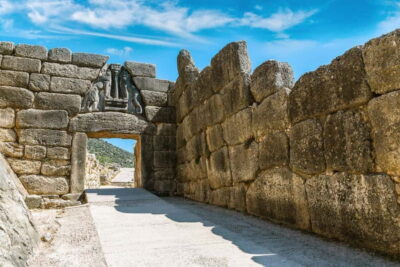
Ancient Corinth Day Trip with Canal & VR Guide
Read our review →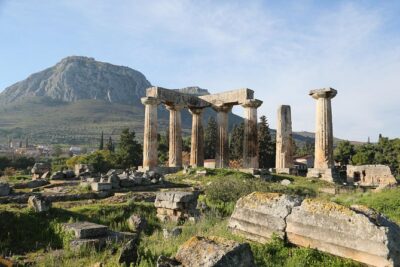
Private Biblical Tour Ancient Corinth & Isthmus Canal from Athens
Read our review →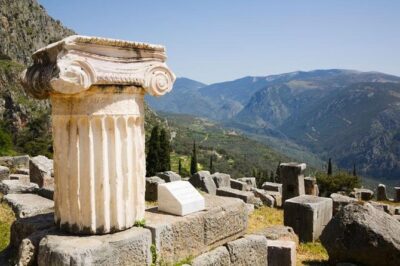
4-Day Classical Greece Tour: Epidaurus, Mycenae, Olympia, Delphi, Meteora
Read our review →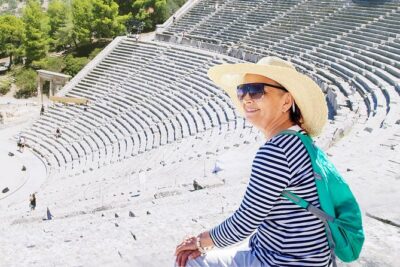
Ancient Corinth & Nafplio Full Day Trip with Swim
Read our review →
Mycenae and Nafplion Day Trip from Athens with Official guide
Read our review →
Browse the lists this tour appears in