
Reviewed · HISTORICAL TOURS
Corfu: History and Culture Walking Tour
Corfu’s story is written in stone. On this three-hour walk, you move from a Venetian fortress to narrow old-town lanes, a Greek Orthodox church, and a grand square once favored by Corfu’s elite. The best part is seeing how Venetian, French, British, and Greek influences overlap instead of treating the island’s past as a single chapter.
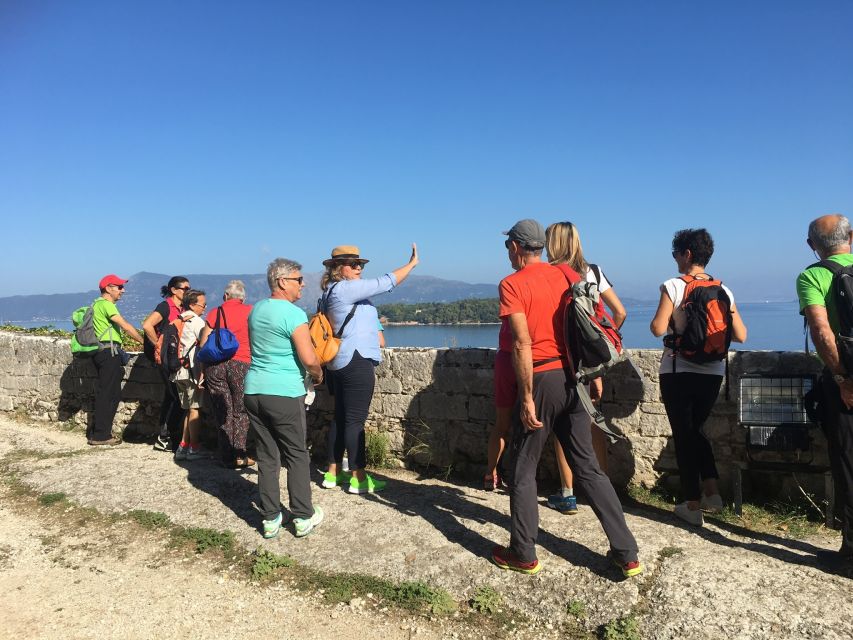
I like the small group of up to eight, which gives you room to ask questions and makes it easier for the guide to adjust the pace. I also like the route’s shape: the Old Fortress gives you a strong historical start, while St. Spyridon Church and Town Hall Square show how that history carried into everyday life. The main caution is practical: this is a walking tour with uneven streets and steps, and it is not suitable for people with mobility impairments.
Key points at a glance
- The Old Fortress sets the scene: Begin inside a Venetian stronghold with a guided visit and scenic views along the way.
- Several cultures appear in one short walk: Learn how Venetian, French, British, and Greek influences shaped Corfu.
- St. Spyridon Church adds a local focus: See the 16th-century church and its tall bell tower, noted as the highest in the Ionian Islands.
- Town Hall Square reveals Corfu’s social history: Finish in an area once associated with the island’s most prominent residents.
- The guides bring different strengths: Alice, Nausica, Valia, Arita, and other English-speaking guides have been praised for clear explanations, warmth, and flexibility.
- The $93 price buys context, not just access: Your fee includes the Old Fortress entrance and a licensed guide, but not food or hotel transfers.
Why this Corfu walk is more than a fortress visit
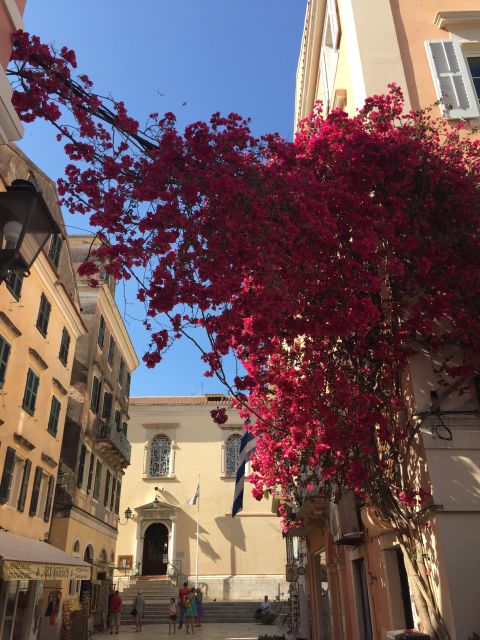
Many short city tours give you a quick look at a few monuments and little sense of how they connect. This one works better because Corfu Town is treated as a cultural meeting point. The Venetian period is only the opening chapter. As you walk, the guide explains how French and British rule left marks on buildings, public spaces, customs, and local identity.
That matters because Corfu can look familiar at first glance. It is Greek, of course, but parts of the old center also feel distinctly Venetian, with narrow passages, formal squares, arcades, and old civic buildings. A guide helps you notice the difference between simply seeing an attractive street and understanding why it looks that way.
The tour begins at Agoniston Politechniou, with the guide waiting by the statue of Schulenburg in front of the Old Fortress. This is a useful meeting point because the fortress is not a side stop squeezed into the middle of the walk. It gets proper attention at the start.
A few more things to do in Corfu worth a look
- Historical Delphi One Day Tour with Arachova Stop & Expert Guide
★ 4.5 · 1,247 reviews - Historic Athens: Small Group Electric Bike Tour
★ 4.9 · 740 reviews - Naxos Half Day History and Culture Guided Tour
★ 5.0 · 491 reviews
Inside the Old Fortress, where Venetian Corfu begins
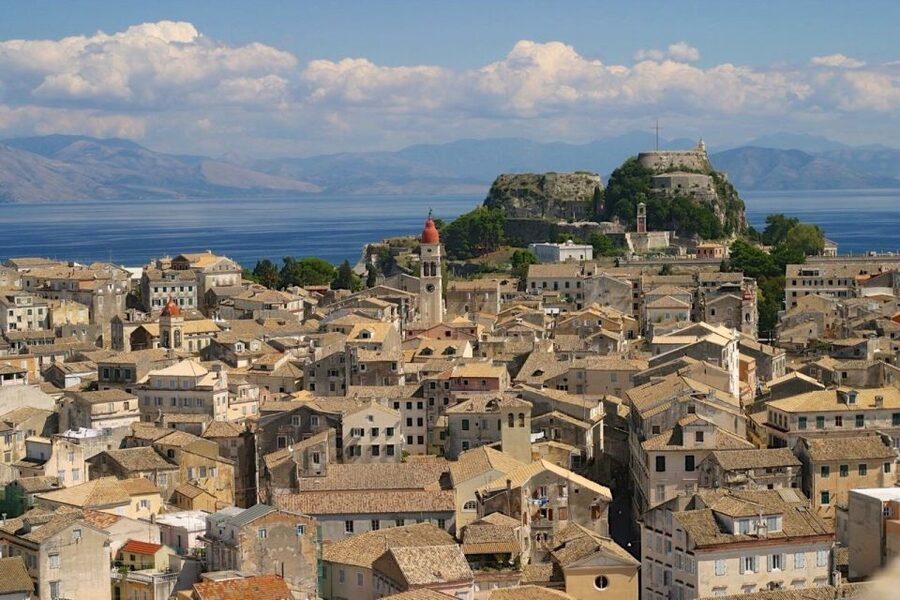
The Old Fortress dates from the Venetian period and gives you the clearest physical introduction to Corfu’s strategic importance. You receive a guided visit and the entrance fee is included, so you do not need to arrange a separate ticket for this part.
Expect a mix of history and sightseeing rather than a museum-style presentation. The route includes walking through the fortress and taking in views along the way. The guide explains the Venetian impact on local culture and tradition, helping you connect the military site with the wider story of the island.
I especially like starting here because it gives the rest of the walk a frame. When you later pass through the old center, you have already heard why foreign powers cared about Corfu and how their presence shaped the town.
There is a physical cost. Fortresses are rarely flat, and the tour requires comfortable shoes. The activity is specifically listed as unsuitable for people with mobility impairments, so you should take that seriously rather than assume the walk will be gentle. If you have trouble with steps, uneven paving, or extended walking, this may not be the right choice.
Narrow lanes and lively squares in Corfu Town
After the fortress, the route continues through Corfu Town’s historic center. You pass through quiet alleyways, more active squares, and fountains as you make your way toward St. Spyridon Church.
This section is where the tour becomes less about one monument and more about how the town works. You see the contrast between deserted side lanes and busier public spaces. The guide can explain what you are looking at while you are standing in it, rather than asking you to remember a list of names from a map.
The walk also gives you a useful orientation for the rest of your stay. Several people who took the tour used the guide’s suggestions afterward, including recommendations for restaurants and other places to visit. One participant was pointed toward the Asian Museum after the walk, while another received advice on local dining. Those suggestions are not formal stops included in the tour, but they show the practical value of having a local guide at the start of your time in Corfu Town.
You should not book this expecting a food tour. Food is not included, and the stated program focuses on history, architecture, and culture. An older account of the experience included local food and liqueur tasting, but that should not be treated as a guaranteed part of the current tour.
St. Spyridon Church and the local heart of Corfu
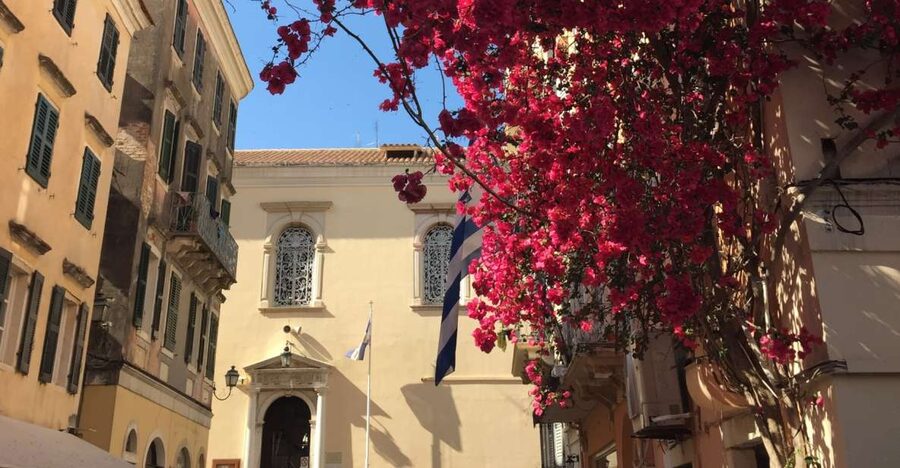
St. Spyridon Church is one of the route’s most important cultural stops. This 16th-century Greek Orthodox church has distinctive architecture and a bell tower described as the highest in the Ionian Islands.
The church helps balance the Venetian fortress. The fortress shows outside power and military control, while St. Spyridon points to the religious traditions that remain central to Corfu’s local identity. Your guide explains the church’s place in the town and gives you a better sense of how history is lived, not just displayed.
This is also where the tour’s focus on Corfu’s many identities becomes especially useful. The island has absorbed outside influence over centuries, but that does not mean local traditions disappeared. The route encourages you to look at both sides: the marks left by foreign rulers and the customs that continued within the community.
Guides are likely to shape this portion differently. Nausica has been praised for bringing strong local feeling and energy to the story. Valia was noted for explaining the island’s traditions and different identities. Arita was singled out for her command of Corfu Town, the fortress, and local heritage. Alice was praised for making the culture and history easy to understand. You cannot choose the exact style of the guide from the information available, but the range of named guides gives you a sense of the team behind the experience.
Same base, a completely different day:
- From Corfu Island: Antipaxos & Paxos Blue Caves Boat Cruise
★ 4.6 · 2,963 reviews - From Corfu: Day Cruise to Paxos, Antipaxos, and Blue Caves
★ 4.6 · 2,851 reviews - Full-Day Boat Tour of Paxos Antipaxos Blue Caves from Corfu
★ 4.5 · 1,567 reviews - Corfu: City Sightseeing Hop-On Hop-Off Bus Tour
★ 4.1 · 937 reviews
Town Hall Square and the old social order
The final main stop is Town Hall Square. This area was once considered Corfu’s most exclusive neighborhood, and the guide uses its buildings and monuments to explain the island’s former elite.
That gives the tour a welcome shift in subject. You have already heard about military power, religion, and foreign rule. Here, the focus turns to status, civic life, and the people who shaped Corfu’s public world. The square is not just a place to photograph grand architecture. It helps explain who had influence and where the island’s upper ranks gathered.
I like finishing here because it leaves you with a social picture of the city rather than ending at a single church or fortress. You see Corfu as a place where power was expressed through streets and public buildings, not only through walls and weapons.
The tour returns to the Agoniston Politechniou area. Since the walk lasts three hours, you still have time afterward for lunch, further sightseeing, or a museum visit. Ask your guide for suggestions before saying goodbye, especially if this is your first time in town.
What the guide adds to the experience
The guide is the main reason to book this instead of walking the same streets alone. The monuments are accessible without a tour, but the links between them are not always obvious. A licensed English-speaking guide gives you the background and answers questions as they come up.
The strongest praise has focused on four things:
- Clear historical explanations: Guides have covered Corfu’s past without burying the group in dates.
- Local perspective: The discussion reaches beyond rulers and buildings to traditions, identity, and daily life.
- Good personal manner: A pleasant sense of humor and an easy style help keep three hours from feeling like a lecture.
- Flexible pacing: One guide adjusted the time spent in different areas, and another worked around bad weather.
That flexibility matters in a small group. With a maximum of eight participants, the guide can respond to questions more easily than on a large coach-style tour. You can ask about a church, a building, a local custom, or a restaurant and receive an answer suited to your interests.
The guide names associated with this experience include Alice, Nausica, Valia, Arita, and Ariti. The descriptions of their styles differ, but the consistent picture is of guides who care about Corfu and explain it with enthusiasm.
Is $93 a fair price for three hours?
At $93 per person, this is not the cheapest way to walk around Corfu Town. You are paying for a small group, a licensed English-speaking guide, and admission to the Old Fortress. Hotel pickup, drop-off, and food are not included.
The value depends on what you want from a city visit. If you are happy reading signs and using a map, you can see parts of the route independently for less. But you would lose the connected story, the chance to ask questions, and the local advice that can help with the rest of your day.
For a first visit, the price is easier to justify because the tour covers several major themes in one sitting. It is also useful if you have only a short time in Corfu Town and want a structured introduction rather than wandering without context.
The small group improves the value. Eight people is still enough for a social outing, but it is far more personal than a large group. If the guide spends time on your questions and adjusts the route’s emphasis, the experience becomes more than a standard sightseeing circuit.
When to book it, and what to bring
This tour works best early in your time on Corfu. Take it near the beginning of your stay so you can use the guide’s suggestions for meals, museums, and further walks. It also makes sense for anyone arriving with only a few hours to understand the old center.
Bring comfortable shoes. That is not a minor suggestion, since the tour includes the fortress and historic streets, and the activity is not suitable for people with mobility impairments.
The schedule has a duration of three hours, but starting times vary, so check availability when you book. You can cancel up to 24 hours in advance for a full refund, and the reserve-now, pay-later option lets you hold a place without paying at once.
This is an English-only experience. If you need another language, the available information does not indicate that one is offered.
Who will enjoy this tour most?
You are a good fit if you like history explained through real places. The route suits first-time visitors, architecture fans, people interested in religion and local traditions, and anyone who wants a useful introduction to Corfu Town without spending a full day on a formal museum program.
It also suits repeat visitors. One person who had already been to Corfu Town found that the guided context changed the way the city felt. That is believable: knowing why a lane, church, square, or monument matters can make a familiar place more rewarding.
You may want to skip it if you dislike walking, need step-free access, or mainly want free time for shopping and cafés. It is also not the right pick if you expect meals, tastings, or hotel transport to be part of the price.
Should you book the Corfu History and Culture Walking Tour?
Book it if you want Corfu Town to make sense, not just look attractive. The combination of the Venetian Old Fortress, narrow historic lanes, St. Spyridon Church, and Town Hall Square gives you a clear three-hour introduction to the city’s military, religious, cultural, and social past.
The strongest reason to go is the guide. Alice, Nausica, Valia, Arita, and Ariti have each been praised for making the story understandable, personal, and enjoyable. At $93, it is a considered purchase, but the small group and included fortress admission add real value.
Choose it early in your visit, wear proper shoes, and arrive ready to ask questions. If you can manage the walking, this is a sound way to get your bearings and understand why Corfu feels Greek, Venetian, French, British, and entirely its own.
FAQ
Where does the Corfu walking tour start?
Your guide meets you by the statue of Schulenburg in front of the Old Fortress, at Agoniston Politechniou.
How long does the tour last?
The walking tour lasts three hours.
What places does the route include?
The route includes the Old Venetian Fortress, Corfu Town’s historic center, St. Spyridon Church, and Town Hall Square.
Is the Old Fortress admission included?
Yes. The entrance fee for the Old Fortress is included.
Is the tour conducted in English?
Yes. The tour has a live English-speaking guide.
How many people are in the group?
The tour is limited to eight participants.
Is hotel pickup included?
No. Hotel pickup and drop-off are not included, so you need to reach the meeting point yourself.
Is food included?
No. Food is not included in the tour price.
Is the walk suitable for people with mobility impairments?
No. The activity is listed as unsuitable for people with mobility impairments. Comfortable shoes are recommended.
Just added in Corfu
- Corfu Town: Guided Walking Tour and Local Food Tastings★ 4.9 · 313 reviews
- Symphony of Flavors – Olive Oil & Food Pairing at Corfu Town★ 4.9 · 66 reviews
- Corfu: Northwest Coast and Village Charms 4×4 Tour★ 4.7 · 44 reviews
- Corfu: Shore & Shared – Palaiokastritsa, Lakones, Kratsalo★ 4.9 · 137 reviews
- Corfu: Paxos Island Full-Day Cruise with Blue Caves★ 4.2 · 120 reviews
- Corfu: Shore & Shared Tour – Kassiopi & Canal d’Amour★ 4.8 · 328 reviews
- Corfu: Shore & Shared Tour – Achilleion, Mon Repos, Old Town★ 5.0 · 45 reviews
- From Corfu: Luxury Yacht Cruise to Paxos and Antipaxos★ 4.7 · 288 reviews
Historical Tours, compared.
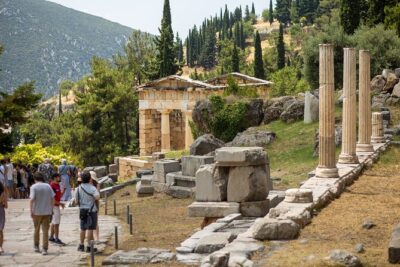
Historical Delphi One Day Tour with Arachova Stop & Expert Guide
Read our review →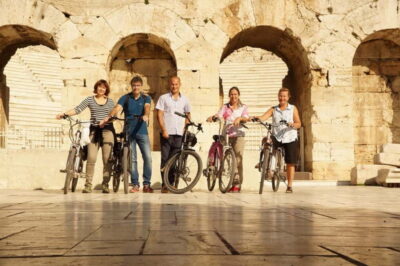
Historic Athens: Small Group Electric Bike Tour
Read our review →


Throne of Helios: The History of Rhodes in 9D Experience
Read our review →
The History of Athens: Greek Mythology Private Tour
Read our review →

Browse the lists this tour appears in