

Reviewed · FOOD & DRINK
Explore the hidden food gems of Athens
Athens reveals itself particularly well through food. This small-group walk moves through the Central Market, Psiri, and Monastiraki, stopping at family-run shops and local eateries rather than simply checking off famous restaurants. You can expect Greek coffee and pastries, olives, oils, honey, spices, pies, cheese, meat, and a full traditional meal.
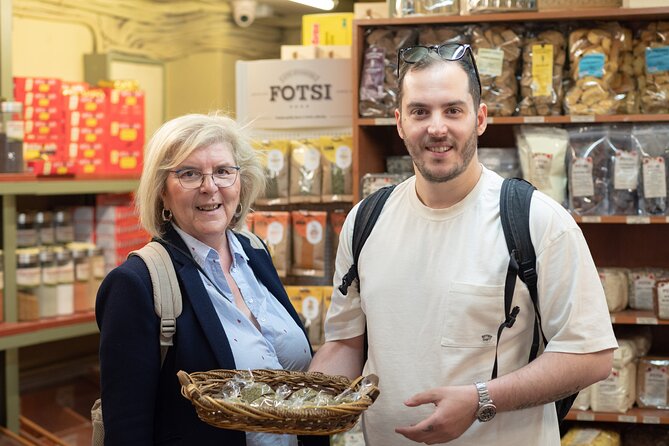
I like two things right away: the guides, including Julia, Douk, George, and Dimitri, bring personal food knowledge and a good sense of humor, and the generous portions mean this is much more than a few polite samples. The chance to taste products such as different olives, regional honey, specialty tea, and olive oil is another real strength.
The main consideration is simple: do not eat beforehand. This is a very filling three-and-a-half-hour outing, and the combination of snacks, tastings, drinks, and lunch may be too much for anyone wanting only a light introduction to Greek cuisine.
Key points to know before booking
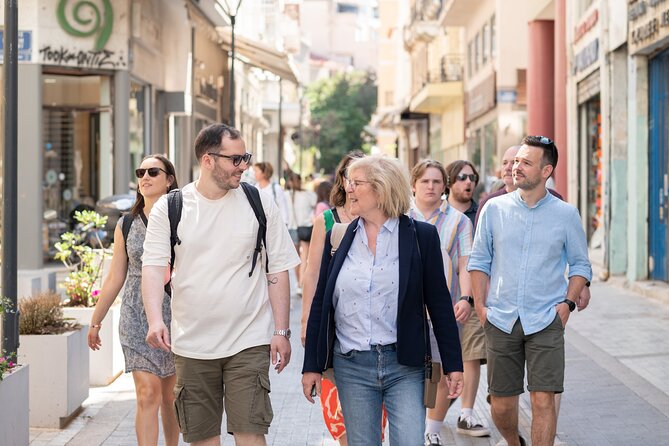
- A full meal, not just nibbles: Lunch, snacks, coffee or tea, and alcoholic drinks are included.
- Three central Athens areas: The route links the Central Market with Psiri and Monastiraki.
- Local shopping stops: Expect family-run food shops, spice sellers, honey specialists, and market stalls.
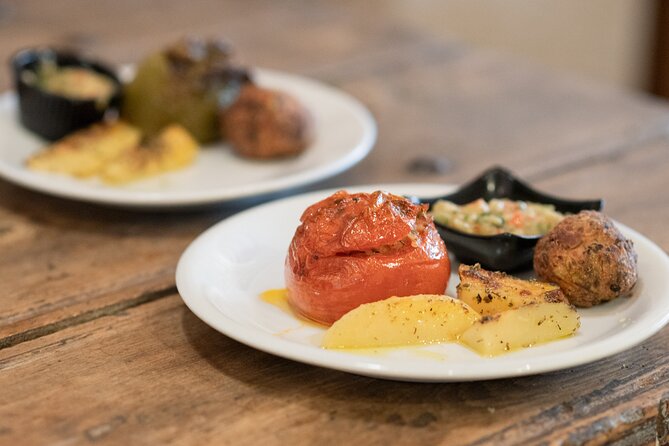
- Traditional Greek cooking: Dishes can include stuffed vegetables, zucchini balls, roasted potatoes, grilled meat, olives, cheese, and cold cuts.
- Small group size: The maximum is 10 people, which allows plenty of questions and conversation.
- Useful early-trip advice: Guides share suggestions for eating in Athens and on the Greek islands.
What this Athens food walk does well
The best food walks teach you how to recognize a place, not just what to swallow. This one uses everyday Greek food as a doorway into local life. At the Central Market, you are not looking only at finished dishes. You are seeing the ingredients that shape Greek cooking: olives, herbs, spices, honey, cheese, meat, vegetables, and fish.
That matters because Greek food is often presented too narrowly. Visitors are shown a plate of grilled meat, a Greek salad, and perhaps some yogurt, then sent on their way. Here, you get more context. You can taste the ingredients separately, hear where they come from, and then see how they work together in a meal.
The guides also bring different strengths. Julia is described as especially engaging when explaining food traditions and family stories. Douk and George help keep the route moving and add local advice. Dimitri is known for mixing food information with history, humor, and even poetry. The exact guide depends on the departure, but the experience is designed around conversation rather than a rehearsed speech.
The food is generous. You may start with coffee and pastries or savory pies, then move through tastings of olives, olive oil, honey, tea, spices, cheese, and cold cuts. Later come meat, wine or retsina, and a proper meal. Plan this as lunch with a walking tour attached, not as a quick morning snack.
A few more things to do in Athens worth a look
- Greek Food Walking Tour in Athens
★ 5.0 · 4,740 reviews - Athens: Street Food Tasting Tour
★ 4.9 · 2,557 reviews - Small Group Greek Traditional Food Tour in Athens 20+ Tastings
★ 5.0 · 1,759 reviews
Starting at the Central Market
The meeting point is Athinas 37, in central Athens. This puts you near the city’s food-shopping district and within reach of public transportation. The route begins in a useful place because the market gives you immediate visual evidence of how people cook at home.
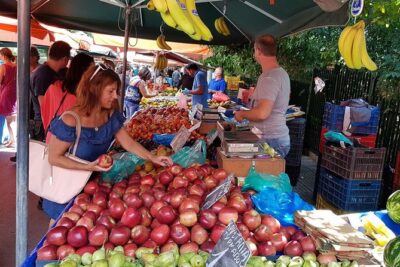
The Central Market is where the tour’s food education becomes practical. You may walk through the meat and fish sections, look at produce, and stop at nearby food shops. Tastings can include olives, olive oil, honey, tea, and spices. The point is not to rush from one bite to the next. It is to understand why a particular olive tastes different, how Greek honey varies by source, or which herbs and spices are used in household cooking.
The olive tasting is one of the more distinctive parts. Greek olives are not one uniform item, and the range can surprise anyone who knows only the standard green or black varieties served with a drink. Sampling several types side by side makes the differences easier to notice.
Olive oil also receives proper attention. Bread with olive oil and balsamic may appear during the tastings, giving you a simple way to compare flavor and texture. If you want to take food home, this is one of the better places to ask questions before buying. You may also find pistachio cream, honey, teas, and spices that are easier to choose after you have tried them.
The market portion can feel crowded and noisy. That is part of its character, but it may be less comfortable for anyone who dislikes busy indoor shopping areas. Wear shoes suited to several hours on foot and keep your appetite in reserve.
Psiri and the food shops locals use
From the market, the walk continues toward Psiri. This central neighborhood is close to the tourist core, but the experience aims to show its working food side rather than only its bars and nightlife.
Here, small businesses matter. Family-run shops often have a different feel from large stores aimed at visitors. The selection may be modest, but the food has a clear connection to ordinary Greek kitchens. You can ask about ingredients, preparation, and regional differences rather than simply picking up a souvenir package.
The route may include a bakery or coffee stop. Greek coffee and pastries are useful introductions because they show how food fits into the rhythm of the day. Savory pies and sweet pies can appear among the samples, and the portions are substantial enough that you should not treat this as a token welcome.
Psiri is also a good place for the guide to explain the overlap between Greek food and the wider eastern Mediterranean. Greek cooking has absorbed influences from Ottoman, Mediterranean, and Middle Eastern traditions. You may notice this in spice blends, filled vegetables, pies, yogurt sauces, and ways of combining meat, herbs, and vegetables.
That broader context keeps the tour from becoming a checklist of famous Greek dishes. It also helps you understand why recipes can vary from one family to another. A dish may be recognizably Greek while still showing a connection to neighboring cuisines or to a particular region of the country.
Monastiraki and the transition to lunch
The final area is Monastiraki, one of the most familiar parts of central Athens. The value here is not simply seeing another famous neighborhood. It is the change from market sampling to a sit-down meal.
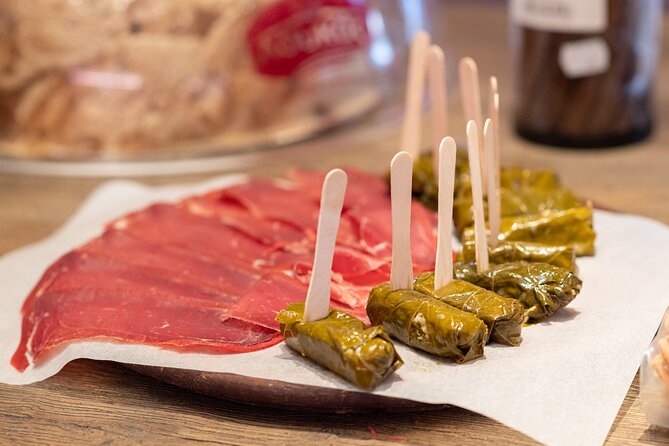
By this point, you may have tasted cheese, cold cuts, olives, bread with oil, honey, tea, pies, grilled meat, and perhaps retsina. The full lunch gives those separate tastes a proper setting. Possible dishes include stuffed vegetables, zucchini balls, oven-roasted potatoes, and other seasonal Greek foods.
Tzatziki is another useful part of the meal. In some departures, Julia demonstrates how it is made, giving you something practical to recreate at home. That sort of small lesson is more valuable than a long lecture because you leave with a clearer idea of how the dish is assembled and served.
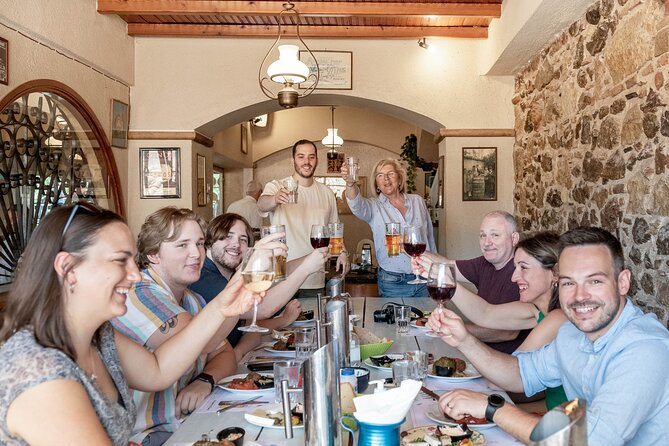
Lunch may be served in a private room within an established restaurant. Some arrangements include a view toward the Acropolis, which adds a memorable finish, though the food remains the main reason to book. The setting is also helpful in hot weather, since an air-conditioned room has been available on some outings.
Drinks are included with the meal. The sample menu lists grilled meat and retsina, while other meals may include wine. Alcohol is part of the experience, not an extra charge added at the end. If you do not drink, coffee and tea are included as well, but you should confirm any personal dietary or drink needs when booking.
Same base, a completely different day:
- Athens: Acropolis & up to 5 Archaeological Sites Combo Pass
★ 4.4 · 12,619 reviews - Athens: Acropolis Ticket with Optional Audio or Live Guide
★ 4.2 · 11,055 reviews - Athens: Acropolis, Parthenon & Acropolis Museum Guided Tour
★ 4.8 · 9,316 reviews - Athens: Cape Sounion & Poseidon Temple Sunset Half-Day Trip
★ 4.8 · 8,241 reviews
The food you are likely to taste
The precise menu changes with the season, which is a good sign for a food walk focused on local cooking. The listed meal includes:
- Cheese and cold cuts
- Olives
- Grilled meat with retsina
- Stuffed vegetables
- Zucchini balls
- Oven-roasted potatoes
- Tzatziki and other seasonal dishes
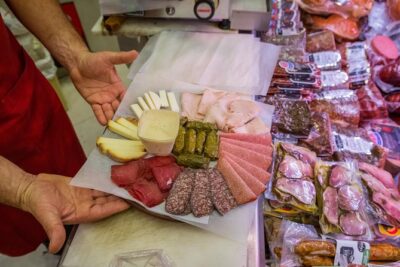
Additional tastings can include Greek coffee, pastries, meat or cheese pies, specialty tea, honey, olive oil, balsamic, spices, and a full gyro. The tour is not limited to one style of restaurant food. You may taste products in shops, sample street-style items, and then sit down to a more complete meal.
This range is what gives the experience value. You are not just learning that Greece has good olive oil. You are tasting it with bread. You are not just hearing that honey differs by region. You are trying it. You are not simply being told that spices matter. You are smelling and sampling them in the shops where locals buy them.
The food also suits curious eaters who want to move past the usual tourist menu. Traditional dishes may be familiar in name but different in preparation from what you find outside Greece. The emphasis is on recipes and ingredients tied to Greek households, regional customs, and long-running family businesses.
A guide-led experience with room for questions

The guides are central to the value. Julia brings warmth and clear enthusiasm for Greek cuisine. George and Douk add local help and practical suggestions, including places to eat after the tour. Dimitri has a lively style that combines food, Athens history, humor, and occasional poetry. Ste has also led the walk and offered suggestions for good places to eat later.
The personalities vary, but the pattern is consistent: this is an interactive experience. You can ask about recipes, ingredients, markets, islands, and restaurants. The small maximum of 10 people makes that easier than on a large coach-style food outing.
I would book it near the beginning of your Athens stay. The guides can point you toward other places to eat, and the food advice becomes more useful when you still have several meals ahead. You may also gain enough confidence to order dishes you would otherwise overlook.
One small uncertainty is that the guide and exact tasting order can change. That is normal for a food route tied to seasonal products and local shops. If you want a fixed menu or a specific guide, ask before booking rather than assuming every departure follows the same sequence.
Is $82.27 a fair price?
At $82.27 per person, the tour is not the cheapest way to grab a gyro and a coffee. That is not really the right comparison. You are paying for three and a half hours of guiding, several tastings, a full meal, alcoholic drinks, coffee or tea, and access to small food businesses that can be hard to identify on your own.
The amount of food is a major part of the value. You should expect enough to replace a meal, and perhaps more than one meal if you eat lightly. The included drinks also help keep the final cost predictable.
The price makes more sense for someone who values explanation and local direction. If you are happy wandering Athens and choosing food at random, you can spend less. If you want a structured introduction to Greek ingredients, a chance to ask questions, and a reliable lunch without paying separately at every stop, the price is reasonable.
There are also practical savings. A guide can help you avoid ordering a dish you do not want, identify products worth buying, and suggest places for later meals. Those tips can be especially useful on a first visit or during a short stay.
Who should book this experience?

I would recommend it to anyone who plans meals around a trip. It suits curious eaters, first-time visitors, couples, families, and small groups who enjoy walking and conversation. You do not need to be a serious food expert. The tour works just as well if you simply want a good meal and a clearer sense of Athens.
It is particularly useful for people who want more than the standard tourist circuit. You visit central neighborhoods, but the focus is on where people shop and eat, not only on famous viewpoints.
The tour may be less suitable if you have strict dietary requirements that have not been discussed in advance, dislike substantial meals, or want a fast route with only a few tastings. It also includes walking through market areas, so anyone with mobility concerns should ask about the route before booking, even though most people can participate and service animals are allowed.
The tour is offered in English and uses a mobile ticket. It begins and ends at Athinas 37. Free cancellation is available up to 24 hours before the start time. Changes or cancellations inside that window are not accepted for a refund.
My call: book it if food is part of your Athens plan
I would book this tour, ideally early in an Athens visit, if you want a generous meal wrapped in a useful introduction to Greek food. The strongest features are the small group, the range of tastings, the family-run shops, and the guides’ willingness to explain both food and local life.
Go hungry. Expect a relaxed pace rather than a rushed sequence of samples. And leave room in your suitcase for olive oil, honey, spices, tea, or pistachio cream if something catches your attention.
Skip it only if you want a very light tasting route or prefer to explore restaurants without guidance. For everyone else, this is a practical and tasty way to see central Athens through the ingredients that keep its kitchens going.
FAQ
How long does the Athens food tour last?
The experience lasts approximately 3 hours and 30 minutes.
Where does the tour begin and end?
It starts at Athinas 37, Athina 105 54, Greece, and ends back at the same meeting point.
What food and drinks are included?
The tour includes seasonal traditional Greek lunch, snacks, alcoholic beverages, coffee or tea, and breakfast. Tastings may include cheese, cold cuts, olives, olive oil, honey, tea, pastries, spices, grilled meat, and other Greek dishes.
Which areas of Athens does the tour visit?
The route includes the Central Market, Psiri, and Monastiraki.
How large is the group?
The tour allows a maximum of 10 people.
Can I cancel for a full refund?
Yes. You can cancel at least 24 hours before the experience starts for a full refund. Cancellations or changes made less than 24 hours before the start time are not accepted.
More Food in Athens
- Athens: Greek Foodie Tour with Tastings
★ 4.9 · 2,177 reviews - Athens: Food Market Visit and Cooking Class with Wine
★ 4.9 · 1,087 reviews - Athens Authentic Greek Food Walking Tour (Small Group)
★ 5.0 · 809 reviews - Athens Greek Food Tour Small-Group Experience
★ 5.0 · 802 reviews
Just added in Athens
- Ceramic and Pottery Creative Workshop with Two Local Artists★ 4.0 · 57 reviews
- Small-Group Women History in Ancient Greece Walking Tour★ 5.0 · 38 reviews
- Athens Old City Private Photoshoot Tour / 2 hrs★ 5.0 · 109 reviews
- Athens: Wine Workshop Create your Own Wine under the Acropolis★ 5.0 · 77 reviews
- Athens: Greek Wines Tasting with Sommelier and Acropolis Views★ 5.0 · 88 reviews
- Wine Trails Private Tour/ Nemea visit 3 wineries from Athens or Nafplion (10 h)★ 5.0 · 44 reviews
- Hydra Private Day Trip by Ferry from Athens with Transfers★ 4.0 · 30 reviews
- FLYING DRESS Photoshoot in Athens – Greece★ 5.0 · 47 reviews
Food & Drink, compared.

Small Group Greek Traditional Food Tour in Athens 20+ Tastings
Read our review →

Santorini Wine Stories: Sunset Tour with Tasting & Dinner
Read our review →
Food Market Visit and Cooking Class with Wine
Read our review →
Browse the lists this tour appears in