
Reviewed · METEORA MONASTERY TOURS
From Athens: 4-Days Classical Tour with Meteora
Meteora’s monasteries, perched on towering rock pillars, provide the tour’s most dramatic finale. Before reaching them, you’ll trace Greece’s story through Epidaurus, Mycenae, Olympia, and Delphi, with a professional guide and comfortable coach handling the long connections.
I like the way this tour combines major archaeological sites with memorable road scenery, especially the Corinth Canal and the bridge over the Corinthian Gulf. I also like that entrance fees, hotels, breakfast, and dinner are included, which makes the $711 price easier to judge. The tradeoff is simple: four days cover a lot of ground, so expect several hours on the road and only short stops in places such as Nafplio and Thermopylae.
Key points at a glance
- Hear Epidaurus come alive: The ancient theater is famous for its remarkable acoustics.
- Walk through Homeric Greece: Mycenae includes the archaeological site and the Tomb of Agamemnon.
- See where the modern Olympic flame begins: Olympia includes the sanctuary, stadium, torch-lighting spot, and museum.
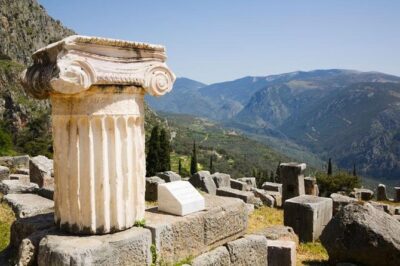
- Meet the oracle at Delphi: The archaeological site and museum explain one of the ancient world’s most important religious centers.
- Reach Meteora by coach: Visit monasteries built high on enormous rock formations.
- Expect a packed route: The tour links southern and central Greece efficiently, but it is not a slow-paced village holiday.
A four-day route through Greece’s great ancient sites
This is a history-heavy circuit for anyone who wants the major sights without arranging several hotels, transfers, entrance tickets, and long-distance drives alone. You leave Athens and cross the Peloponnese before heading north to Delphi and Meteora, then return to the capital through central Greece.
The route is carefully packed. You see ancient theaters, royal tombs, Olympic ruins, an oracle sanctuary, Byzantine monasteries, and a battlefield memorial in four days. That range is the chief appeal, but it also means you should be comfortable with an organized schedule and plenty of time on the coach.
The tour costs $711 per person. That is not a low-cost bus outing, but the price includes three nights of accommodation, a professional guide, luxury air-conditioned coach transport, entrance fees, breakfast, dinner, and Wi-Fi on the bus. Lunch and drinks are extra, and a small overnight accommodation tax is paid at the hotel.
Other monastery and cliff-top days from Athens:
- Athens: Meteora Monasteries Day Trip with Caves and Lunch
★ 4.7 · 2,964 reviews - Athens: Meteora Monasteries Day Tour with Lunch
★ 4.8 · 2,196 reviews - Athens: Meteora Tour with Local Guide and Greek Lunch
★ 4.8 · 1,561 reviews
Day one: Epidaurus, Mycenae, and Olympia
The first day begins along the coastal road with a stop at the Corinth Canal. The canal cuts through the narrow Isthmus of Corinth, and the brief visit gives you a chance to see the waterway before the tour turns toward the ancient sites of the Peloponnese.
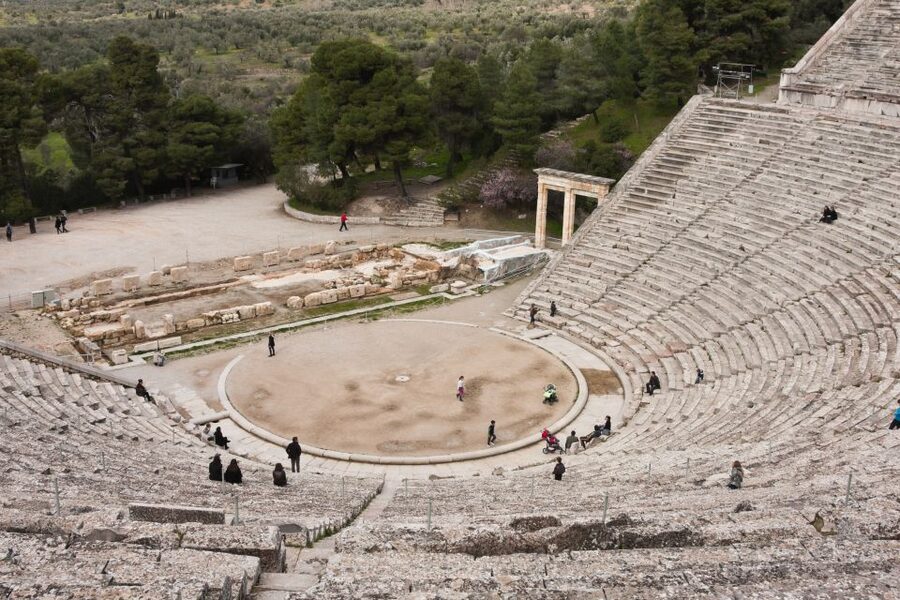
The next major stop is Epidaurus. Its ancient theater is famous for its acoustics, and this is one of those places where a short guide demonstration can make the stones feel less distant. The theater’s graceful shape and impressive preservation are the main attractions, so listen closely and take time to look across the seating area before moving on.
You then make a short photo stop in Nafplio. This attractive town is included as a glimpse rather than a full visit. Do not expect time for a long waterfront walk, a museum, or a leisurely meal here. The stop works best as a quick break during a demanding day.
At Mycenae, the focus shifts from classical Greece to the much older world associated with Homeric legend. You visit the archaeological site and the Tomb of Agamemnon, also called the Treasury of Atreus. The massive stone entrance and beehive-shaped interior give the site a strong sense of age, even for visitors who are not specialists in archaeology.
Mycenae is one of the tour’s most useful stops because it broadens the story beyond the familiar image of marble temples and democratic Athens. You are looking at a powerful Bronze Age center, then moving forward through later periods as the journey continues.
From Mycenae, the coach crosses the central Peloponnese through Tripolis and Megalopolis before reaching Olympia. This is a long first day, but the driving is broken into visits and short stops rather than one uninterrupted transfer.
You spend the night in Olympia, described as the cradle of the Olympic Games. Dinner is included, although meal choices are described as safe buffet-style offerings rather than strongly local Greek cooking. If food is a major part of your trip, keep your expectations modest and plan to buy lunch and drinks separately during the day.
Day two: ancient Olympia and the road to Delphi
Olympia receives a proper morning visit. The archaeological site includes the Sanctuary of Olympian Zeus, the ancient stadium, and the spot where the torch for the modern Olympic Games is lit. The scale is different from a single monumental temple complex. You move among the remains of a religious and athletic center that shaped the idea of international sporting competition.
The ancient stadium is especially important because it connects the physical site to the modern games still held today. The torch-lighting location adds a modern layer to the visit, showing how ancient symbols continue to be used.
The Archaeological Museum of Olympia is included as well. That matters because the open-air ruins alone can leave you guessing about how the buildings and sculptures once looked. The museum gives the objects a proper setting and helps fill in the gaps left by broken columns and foundations.
After Olympia, the route crosses the plains of Ilia and Achaia toward the Corinthian Gulf. You cross the bridge from Rion to Antirion, an impressive modern structure linking the mainland with the northern side of the gulf. It is a useful change of pace after two days focused on ancient stone.
The route passes Nafpaktos, known historically as Lepanto, and continues through Itea before reaching Delphi. These places are seen from the road or during brief stops rather than treated as full sightseeing destinations. The value here is the sense of moving through the country instead of simply being dropped at isolated monuments.
You spend the second night in Delphi, with dinner included. By this point, the route has already covered a large section of Greece, so a quiet evening at the hotel can be welcome.
Day three: Delphi and the oracle of Apollo
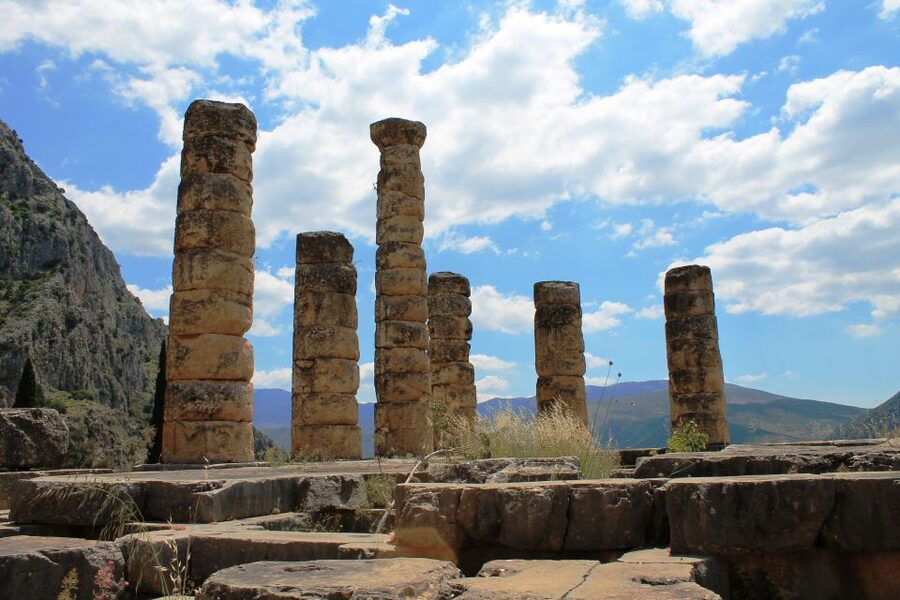
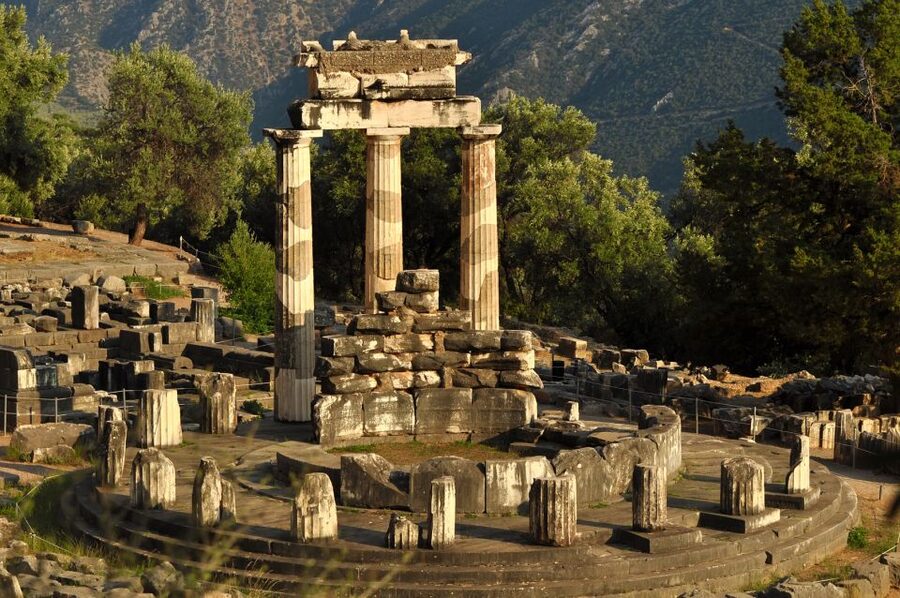
Delphi is one of the intellectual and spiritual highlights of the tour. In the ancient world, people came to the oracle of Apollo seeking advice on war, politics, colonization, and personal decisions. The site’s importance is not only its setting on the slopes of Mount Parnassus, but also its role as a shared religious center for the Greek world.
You visit both the archaeological site and the Museum of Delphi. The combination is essential. At the site, you can follow the remains of the sanctuary and understand its position along the hillside. In the museum, surviving sculptures and objects provide the detail that ruins alone cannot supply.
The famous Charioteer of Delphi is among the pieces associated with the museum, though the supplied tour details do not promise a particular guided focus on individual exhibits. Your guide’s commentary will shape how much context you receive, and the tour is offered in English, French, and Italian.
Delphi is also a good test of your sightseeing pace. The site involves walking and uneven ancient surfaces, so comfortable shoes make sense. You should also use the visit to ask questions, since the sanctuary can be confusing without a clear explanation of what each structure once did.
After Delphi, you drive to Kalambaka, a small town at the foot of Meteora. This is another substantial transfer, but it leads to one of Greece’s most unusual settings. Huge rock formations rise above the town, creating a sharp contrast with the open plains and coastal roads earlier in the trip.
You spend the third night in Kalambaka and visit Meteora the following day. The overnight location is practical because it puts you close to the monasteries rather than requiring a rushed day trip from Athens.
Same base, a completely different day:
- Athens: Acropolis & up to 5 Archaeological Sites Combo Pass
★ 4.4 · 12,619 reviews - Athens: Acropolis Ticket with Optional Audio or Live Guide
★ 4.2 · 11,055 reviews - Athens: Acropolis, Parthenon & Acropolis Museum Guided Tour
★ 4.8 · 9,316 reviews - Athens: Cape Sounion & Poseidon Temple Sunset Half-Day Trip
★ 4.8 · 8,241 reviews
Day four: Meteora’s monasteries above the rocks
Meteora is the visual payoff of the route. Monasteries sit on top of enormous rock pillars that appear to hang above the plain. The combination of geology, architecture, and Byzantine art makes this stop unlike the ancient sanctuaries visited earlier.
The monasteries are not simply viewpoints. They contain examples of Byzantine art, and the setting explains why religious communities chose such difficult locations. You get a sense of how isolated the buildings were intended to be, even though modern roads now make access possible.
The tour information does not specify which monasteries are entered, how many are visited, or how much time is spent inside each one. That detail can vary, so check the current schedule before booking if a particular monastery is essential to you.
After Meteora, the coach returns to Athens through Trikala and Lamia. There is a short stop at Thermopylae, where you can see across the road to the monument of Leonidas. The stop is brief, but it adds another well-known chapter to the ancient Greek story.
You arrive back in Athens early in the evening at the meeting point. The exact starting and ending point can vary according to the option booked, so confirm the details before departure. Three starting options are listed at Zappeio, but the booking option remains the final word on meeting arrangements.
The coach, hotels, meals, and guide quality
The transport is a luxury air-conditioned coach with free Wi-Fi. That matters on a route with long stretches between sites. You can rest, follow the guide’s explanations, and use the travel time to look out at central Greece rather than worrying about navigation.
The guide is a major part of the experience. The tour operates in English, French, and Italian. Specific guides praised in the available feedback include Georgia Dova, Evie, and Anthony, while drivers named John and Socrates received strong personal praise. Guide assignments can change, but these comments point to the importance of the human side of the trip: a clear guide can make Delphi or Mycenae far easier to understand.
Breakfast and dinner are included. Lunch and drinks are not, so budget for midday meals during the sightseeing stops. Dinner is described as buffet-style and dependable, but not especially focused on local Greek specialties.
Accommodation is included, and an upgrade option may be available when booking. I would pay close attention to that choice. The standard hotels were not viewed as equally appealing by everyone, while the four-star upgrade received particularly strong approval for comfort and quality.
The overnight tax is separate. The stated rates are €1.50 per night for a three-star hotel, €3 for a four-star hotel, and €4 for a five-star hotel, paid at the hotel. The general booking information also notes a possible range of €1.50 to €10 per night or room, so check the exact amount attached to your chosen accommodation.
Who will get the most from this tour
I would recommend this circuit to you if you want to see the major ancient sites but do not want to plan a complicated route across Greece. It is especially useful for a first visit, since it gives you a broad introduction to the Peloponnese, central Greece, Delphi, and Meteora.
It also suits people who enjoy context. You are not just visiting one famous ruin. You move from Bronze Age Mycenae to classical Epidaurus, Olympic Olympia, religious Delphi, Byzantine Meteora, and modern references such as the Olympic torch and Leonidas’ monument.
The tour is less suited to you if you want long, unstructured time in each town. Nafplio, Nafpaktos, Itea, and Thermopylae receive limited time, while the main archaeological sites are visited within a fixed group schedule.
The pace may also be tiring for anyone who dislikes coach travel. The route is well planned, and the driving is divided into manageable stretches, but there is no way to cover this much of Greece in four days without spending many hours on the road.
Is the $711 price good value?
The value depends on how you would otherwise arrange the route. At $711, you are paying for three nights of accommodation, coach transport, a guide, entrance fees, breakfast, and dinner. Organizing the same trip independently would require several long-distance drives or transfers, separate hotel bookings, and individual admission tickets.
The included entrance fees are useful because the tour visits several major archaeological sites and museums. The dinners also reduce the daily planning burden, though you should not choose this trip mainly for gourmet meals.
The strongest value comes from the route itself. Meteora is far from Athens, and combining it with Olympia and Delphi in a short trip is difficult without a car or a carefully timed private itinerary. If your priority is seeing many landmark sites efficiently, the price is reasonable.
For better comfort, I would investigate the hotel upgrade before booking. A more comfortable room can make a real difference after long sightseeing days and coach transfers.
Practical details before you book
Cancellation is free up to 24 hours before the activity for a full refund, and you can reserve now and pay later. The total duration is four days, with starting times shown during the availability check.
The activity ends back at the meeting point in Athens. The meeting location can vary by booking option, so do not assume every departure uses the same exact point even though Zappeio is listed among the starting locations.
Wear comfortable shoes for the archaeological sites and Meteora. The schedule includes ruins, museum visits, and monastery settings, with walking spread across several days. You should also allow extra money for lunches, drinks, and the hotel tax.
The overall rating is 4.4 from 50 reviews, and the most consistent strengths are organization, the coach, the guide service, and the number of important sites covered. The main caution is the pace, along with the difference between standard and upgraded accommodation.
Should you book this four-day Greek history tour?
Book it if you want an efficient introduction to Greece beyond Athens, especially if Mycenae, Olympia, Delphi, and Meteora are all on your wish list. You will see an impressive range of places, and the included transport, guide, tickets, hotels, breakfast, and dinner remove much of the usual planning work.
I would choose the hotel upgrade if the price difference is comfortable, and I would approach the trip as a moving history lesson rather than a relaxed resort break. If you accept the long drives, this is a strong way to connect Greece’s ancient, Byzantine, and modern stories in one well-packed journey.
FAQ
How long is the tour?
The tour lasts four days and returns to Athens early in the evening on the fourth day.
Where does the tour start?
The meeting point depends on the option booked. Zappeio is listed among the starting locations, so confirm the exact meeting details for your reservation.
Where does the tour end?
The activity ends back at the meeting point in Athens.
Which languages are available?
Live guides are available in English, French, and Italian.
Are hotel stays included?
Yes. Overnight accommodation is included for the three nights of the tour.
Are meals included?
Breakfast and dinner are included according to the schedule. Lunch and drinks are not included.
Are entrance fees included?
Yes. Entrance fees for the scheduled archaeological sites and museums are included.
Is the hotel accommodation tax included?
No. The accommodation tax is paid at the hotel. The stated rates are €1.50 for a three-star hotel, €3 for a four-star hotel, and €4 for a five-star hotel per overnight stay.
Can I cancel the booking?
You can cancel up to 24 hours in advance for a full refund. The tour also offers a reserve-now-and-pay-later option.
Just added in Athens
- Ceramic and Pottery Creative Workshop with Two Local Artists★ 4.0 · 57 reviews
- Small-Group Women History in Ancient Greece Walking Tour★ 5.0 · 38 reviews
- Athens Old City Private Photoshoot Tour / 2 hrs★ 5.0 · 109 reviews
- Athens: Wine Workshop Create your Own Wine under the Acropolis★ 5.0 · 77 reviews
- Athens: Greek Wines Tasting with Sommelier and Acropolis Views★ 5.0 · 88 reviews
- Wine Trails Private Tour/ Nemea visit 3 wineries from Athens or Nafplion (10 h)★ 5.0 · 44 reviews
- FLYING DRESS Photoshoot in Athens – Greece★ 5.0 · 47 reviews
- Small-Group Wine Tour in Athens with Tasting★ 5.0 · 33 reviews
Meteora Monastery Tours, compared.
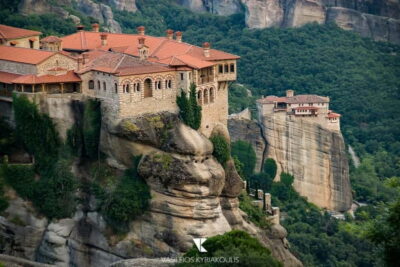
Meteora Monasteries Day Trip with Caves and Lunch
Read our review →

Meteora Tour with Local Guide and Greek Lunch
Read our review →
Meteora Monasteries, Caves & Coastal Stopovers with Lunch
Read our review →
Meteora Monasteries & Caves DayTrip from Athens with Greek Lunch
Read our review →
4-Day Classical Greece Tour: Epidaurus, Mycenae, Olympia, Delphi, Meteora
Read our review →Browse the lists this tour appears in