
Reviewed · METEORA MONASTERY TOURS
Meteora: Sunset Hike to Secret Caves
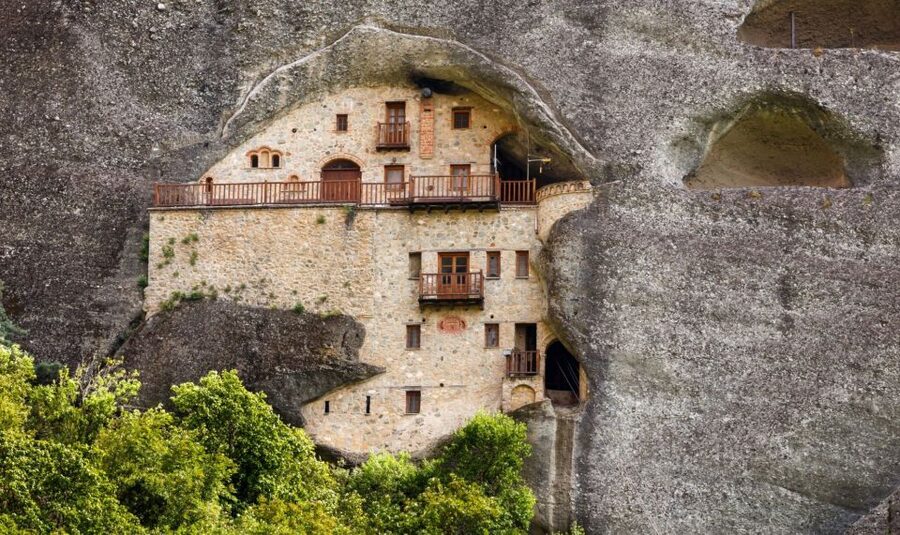
Meteora’s famous monasteries get the crowds, but this sunset hike to the hermit caves takes you into the quieter foothills below the cliffs. You’ll follow lesser-used paths to the thousand-year-old Bandovas hermitages, the Ancient Monks’ Prison, and a fine sunset viewpoint above the rocks.
I like two things in particular: the small groups make the walk calm and personal, and local guides such as Kostas, Nikolas, and Giorgios add useful stories about Meteora’s geology, monasteries, and old monastic life. The main consideration is the moderate 6-kilometre hike, which can feel demanding if your knees, breathing, or fitness are limited.
Key points at a glance
- Bandovas hermitages: See old cliff dwellings where monks lived in isolation many centuries ago.
- Ancient Monks’ Prison: Visit one of Meteora’s most unusual and mysterious sites.
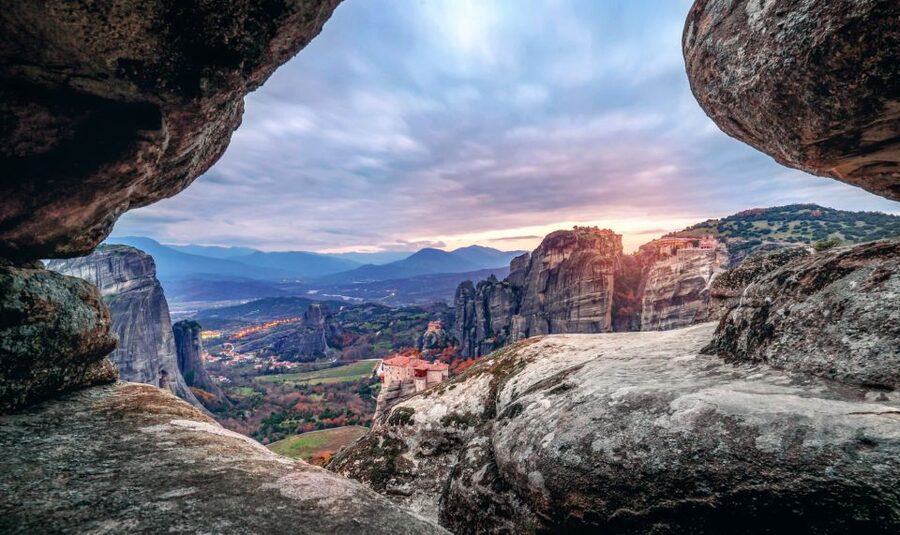
- Sunset above the rocks: Finish with broad views and warm evening light, though clear weather is never guaranteed.
- Local mountain guides: Kostas, Nikolas, and Giorgios have been praised for their pacing, stories, and personal approach.
- Small-group walking: Enjoy quieter paths and more time for questions than on a standard bus tour.
- Simple logistics: Hotel pickup and drop-off in Kalabaka or Kastraki, minibus transport, and water are included.
Why this hike shows you a different Meteora
Meteora is often treated as a monastery stop. You ride up, climb a few steps, take photographs, and move on. That approach works if your time is tight, but it leaves out the older and stranger side of the area: solitary monks living in rough caves, narrow paths below the cliffs, and the silence of the pine-covered foothills.
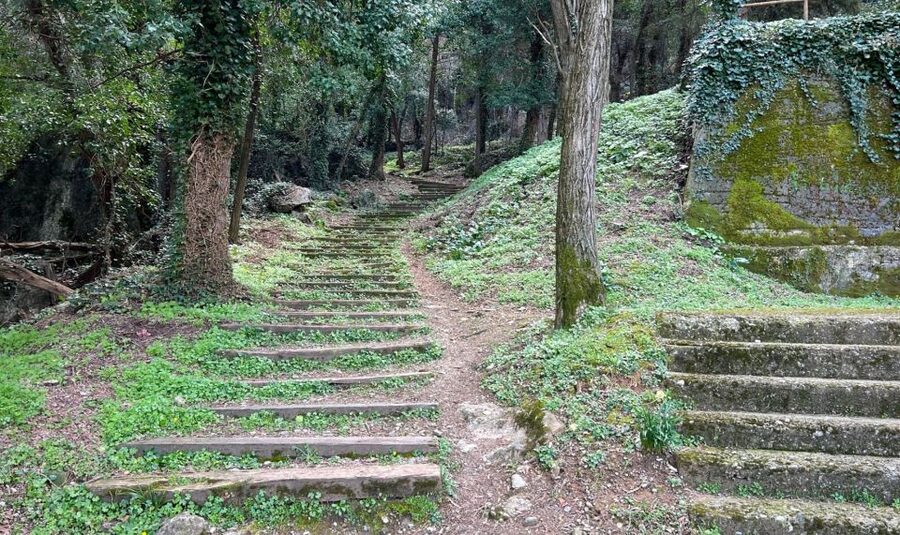
This excursion gives those places the main role. You start near the base of the rocks and work gradually uphill through the natural park. The route is not just a walk to a viewpoint. It connects the scenery with the people who once chose these cliffs for prayer, solitude, and survival.
I like that the experience is built around places many standard sightseeing trips skip. The Bandovas hermitages and the Ancient Monks’ Prison are not simply photo stops. They help explain how Meteora developed before the better-known monasteries became the center of attention.
The setting also changes as the afternoon goes on. Early in the walk, you focus on the trail, rock walls, and caves. Later, the route opens toward the huge stone pillars and the sunset. That gradual change gives the outing a better rhythm than a quick drive to a lookout.
Other monastery and cliff-top days from Kalabaka:
- Meteora: Morning Half Day Sightseeing and Monasteries Tour
★ 4.7 · 478 reviews - Meteora: Majestic Sunset Tour & Monasteries with Local Guide
★ 4.7 · 359 reviews - Meteora: Panoramic Morning Small Group Tour with Local Guide
★ 4.7 · 334 reviews
Starting in Kalabaka or Kastraki
Pickup is included from your accommodation in Kalabaka or Kastraki. You travel in an air-conditioned minibus to the start of the walk, then return by vehicle after the hike. That saves you from arranging a taxi to a trailhead and is useful if you are staying in town without a rental car.
The exact starting time changes with the season because the walk is planned around sunset. Check the available time when booking. You should also allow a little flexibility around the four-hour length, since walking pace, stops, photographs, and sunset conditions can affect the schedule.
The group format is small, and a private group is available if you want the outing arranged just for your party. Small groups matter here. Caves and narrow paths are easier to enjoy without a large crowd, and you can ask your guide about the places you are seeing instead of listening to a general speech from a distance.
Several guides have led this experience. Kostas has been praised for knowing the area as a local and for making the walk feel like a personal introduction to his home. Nikolas has been noted for mixing historical information with an easygoing, friendly manner. Giorgios has handled questions about history, culture, and geology while keeping a steady pace and adding rest stops.
Your guide may be different, but the important point is the local mountain-guide format. This is not a self-guided stroll with a driver dropping you at a trail. You have someone with you who can explain why these caves matter and help you manage the rougher parts of the route.
The 6-kilometre trail through Meteora’s foothills
The hike covers about 6 kilometres and is rated moderate. That description is fair, but it needs some context. Several people have found the route comfortable when taken slowly, while another walker with knee trouble and a tendency to get winded needed help and frequent breaks.
You should expect uneven ground, uphill sections, and the normal effort that comes with a mountain trail. Comfortable clothes and proper sports shoes are essential. Sandals, smooth-soled shoes, and stiff city footwear would make the walk less pleasant and less secure.
The guides appear to adjust the pace rather than treat the group like a race. That is especially useful if you have already visited monasteries earlier in the day, where the stairs can leave your legs tired. One guide was praised for noticing this and setting a sensible rhythm. Another offered breaks and practical help when needed.
The route suits active children from age six, but the minimum age does not mean every six-year-old will find it easy. Parents should judge the child’s ability to walk for several hours on uneven ground. The activity is not suitable for wheelchair users or people with mobility impairments, heart or respiratory problems, high blood pressure, recent surgery, pregnancy, or other pre-existing medical conditions. It is also not recommended for people over 70.
Those limits are worth taking seriously. Meteora’s scenery can tempt you to underestimate the physical side of the visit. If you are unsure about your fitness, ask the provider before booking rather than relying only on the word moderate.
Bandovas hermitages and the old caves
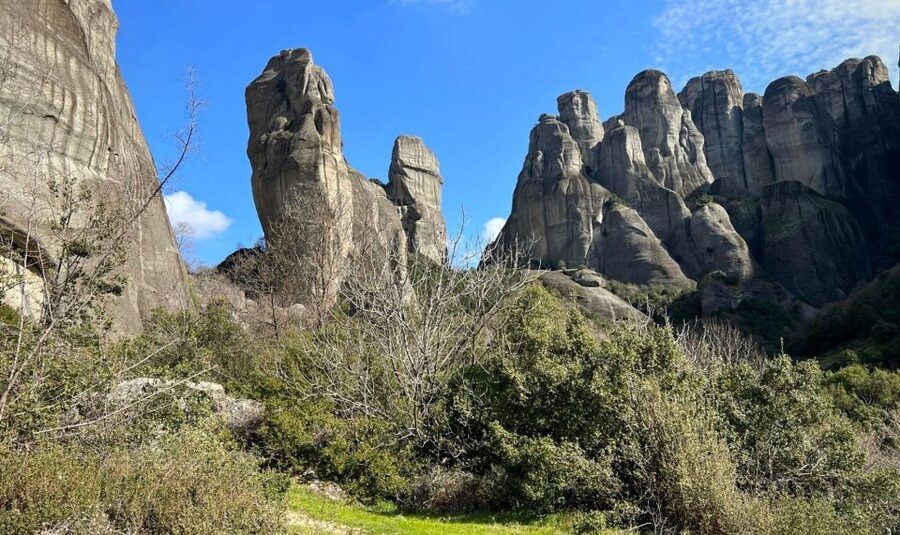
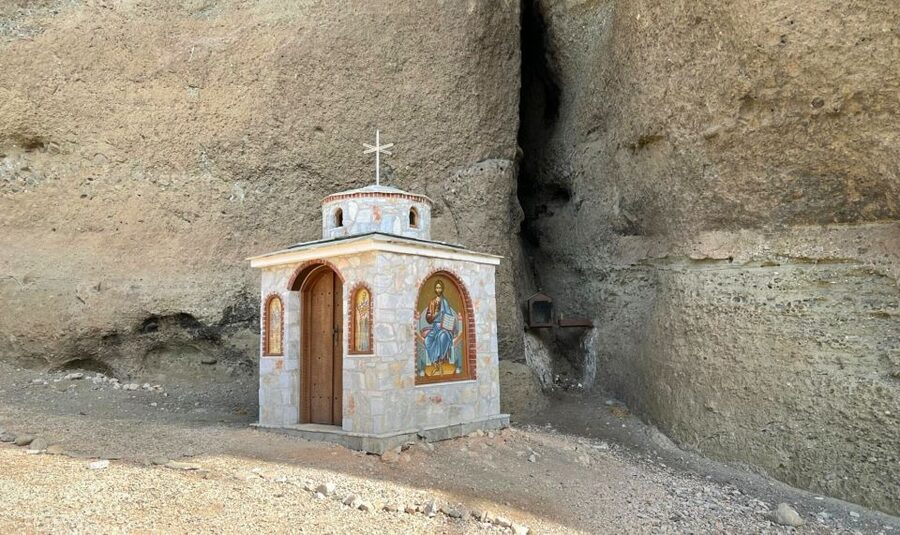
The Bandovas hermitages are among the most meaningful stops on the route. These old shelters are associated with monks who lived in isolation among the rocks roughly a thousand years ago. Their position makes the choice clear: Meteora offered natural protection, solitude, and a setting suited to a severe form of religious life.
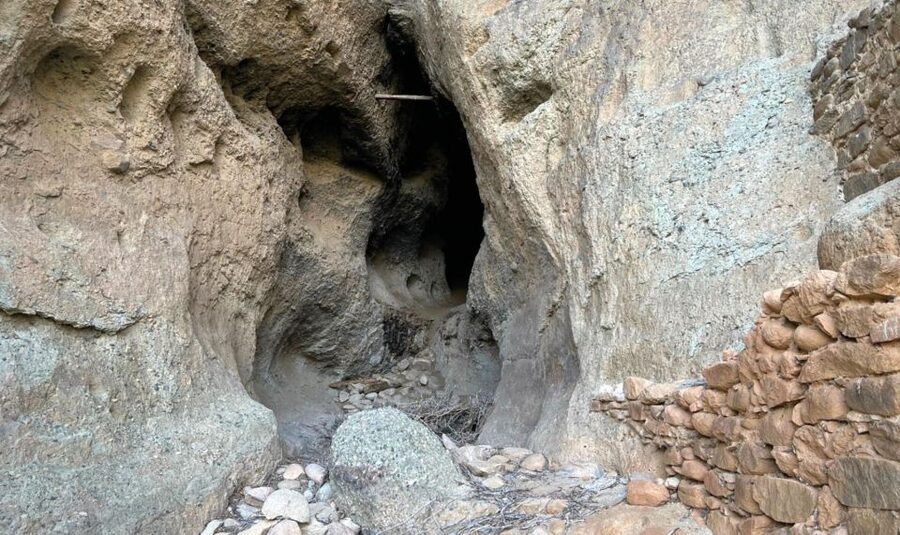
You may see the remains and openings of these cliffside living spaces rather than polished monuments. That is part of their appeal. The experience is less about entering a grand building and more about understanding how difficult daily life must have been in such a place.
The caves also give your guide room to explain the difference between Meteora’s hermit tradition and the later monasteries. Without that context, the rocks can look like dramatic scenery alone. With it, the cliffs become evidence of a long human story shaped by faith, isolation, and the natural structure of the stone.
Take your time with photographs, but keep your attention on the footing. Caves and rock paths are interesting precisely because they are not arranged like a museum. The walking surface may be uneven, and the best views are not always beside a flat place to stand.
A few more things to do in Kalabaka worth a look
- Kalabaka: Meteora Small-Group Hiking Tour w/ Monastery Visit
★ 4.9 · 205 reviews - From Chania: Full-Day Samaria Gorge Trek Excursion & Guide
★ 4.6 · 3,191 reviews - From Rethymno: Samaria Gorge Full-Day Trek, Pickup & Guide
★ 4.5 · 1,610 reviews - From Chania/Rethymno: Samariá Gorge Guided Hike with Pickup
★ 4.5 · 1,010 reviews
The Ancient Monks’ Prison
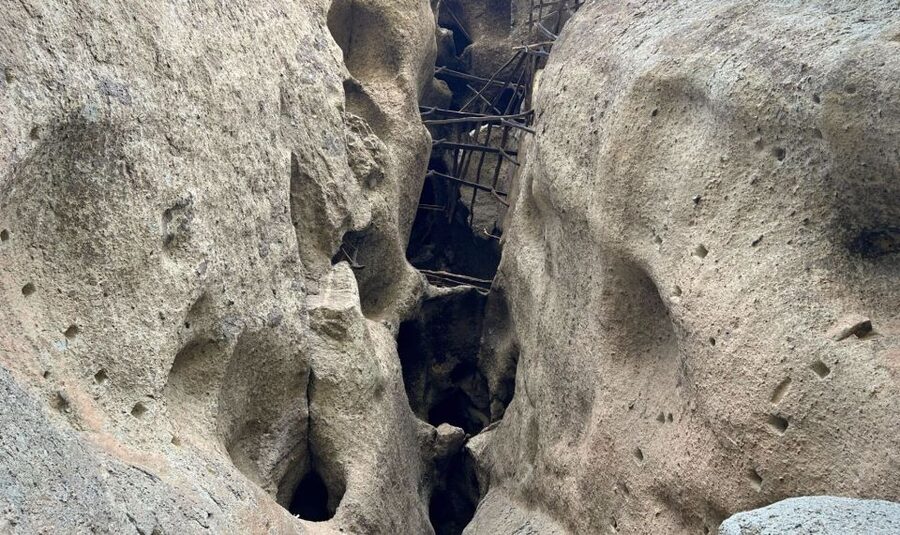
The Ancient Monks’ Prison is one of the route’s more unusual stops. Its name gives the place an air of mystery, but the value is not just the dramatic label. It adds another layer to Meteora’s monastic past and shows that the cliffs were used for more than prayer and scenic isolation.
Your guide provides the meaning behind the site and helps you see why it belongs in the story of Meteora. This is where a local guide makes a real difference. On your own, you might pass a rock opening or rough structure without knowing what you are looking at.
The stop also breaks up the walk nicely. You move between natural scenery and human traces, then continue toward the evening viewpoint. I prefer this kind of route to one made up only of lookout points because it gives you something to think about as you walk.
Do not expect a large formal attraction with extensive displays or staff. This is an outdoor historical site reached by trail. Its character comes from the setting and the explanation you receive along the way.
The sunset viewpoint above the Meteora rocks
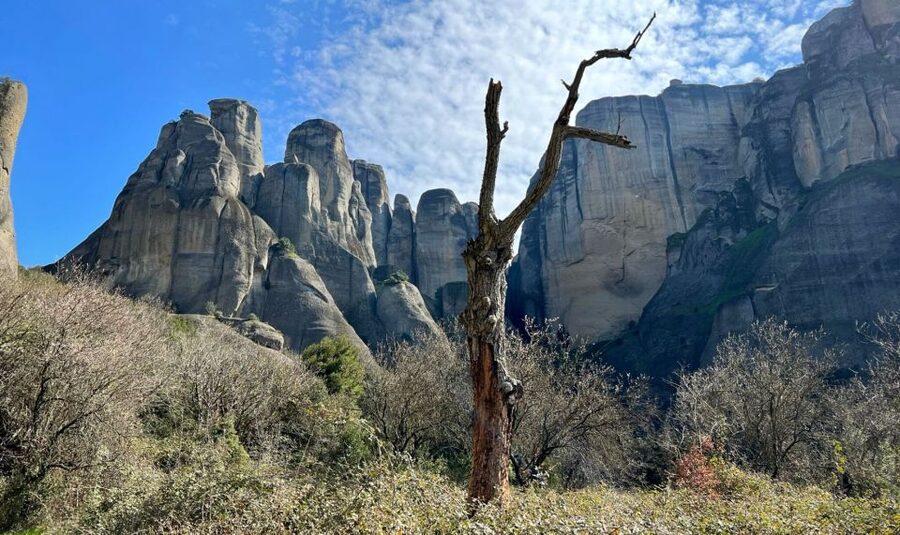
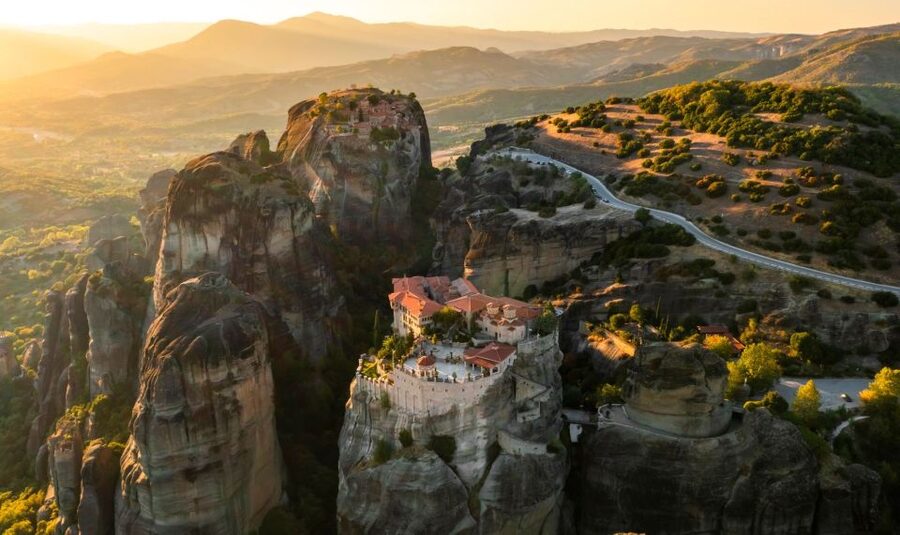
The final payoff is the sunset. From a suitable vantage point, the rocks catch the late light and turn warm gold, while the surrounding scenery takes on longer shadows and softer color. It is the kind of view that rewards staying still for a few minutes instead of rushing through a list of sights.
Your guide chooses the viewpoint as part of the route and allows time for photographs. Bring a phone or camera, but also give yourself a few moments without the screen. The scale of Meteora is easier to appreciate when you are looking across the stone pillars rather than only at a close-up image.
Sunset is, of course, weather dependent. One person had poor conditions for photographs but still found the walk and scenery worthwhile. That is a useful way to judge this tour. If you need a guaranteed dramatic sunset image, no outdoor activity can promise that. If you value the trail, caves, history, and views as well, cloudy weather will not ruin the entire outing.
The evening timing also offers a calmer feel than a busy daytime sightseeing circuit. You are not guaranteed complete solitude, but the route and small-group design help reduce the sense of being moved from one crowded stop to another.
What the guide adds to the experience
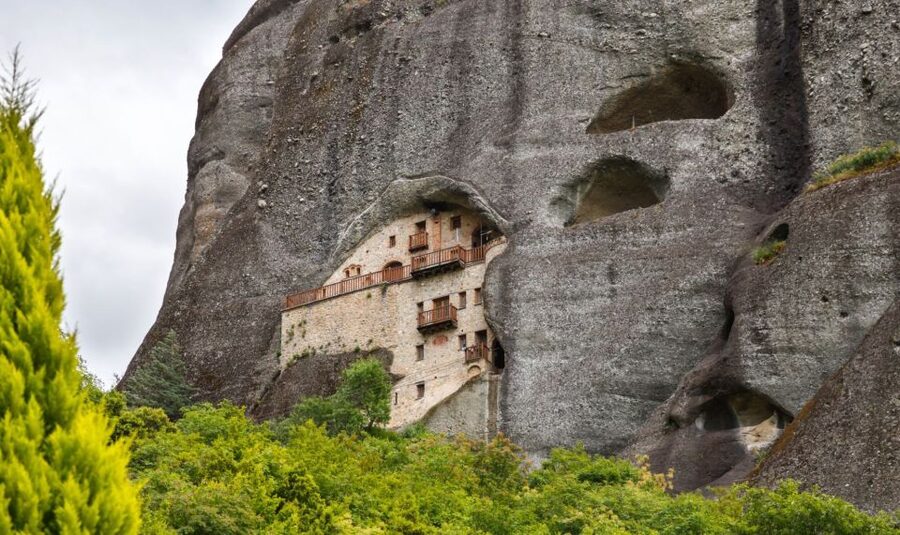
The guide is the heart of this activity. The route itself is attractive, but the stories give the caves and prison their meaning. Guides have answered questions about geology, culture, monasteries, and local history, and they can point out details that are easy to miss from a road or monastery terrace.
Kostas has been described as a proud local who knows the area from childhood. That kind of connection is valuable because the outing feels tied to a real place rather than assembled from generic sightseeing facts.
Nikolas has received praise for balancing adventure with historical information. That balance matters. Too much lecture would slow a hike, while too little explanation would reduce the experience to a pretty walk. A good guide lets you keep moving while giving the landscape a human story.
Giorgios has been especially good at adapting to the group. He has set a comfortable pace, answered a long list of questions, and stopped for rests when needed. You should still tell the guide about any concern at the start. Clear communication helps the guide judge the pace and make the walk more comfortable.
Some groups have been only one or two people, while others have included families. The private-group option gives you more control, but even the small-group version offers more personal attention than a large coach excursion.
Price, inclusions, and what you need to bring
At $44 per person, this is a strong-value outing if you want more than a sunset photo. The price covers hotel pickup and drop-off in Kalabaka or Kastraki, minibus transport, a local mountain guide, a small-group format, and a bottle of water.
The value comes from combining transport, a guided trail, historical interpretation, and sunset timing in one four-hour activity. You would need to arrange transport and find the route yourself if you tried to recreate it independently. The caves and old sites are also easier to appreciate when someone can identify them and explain their place in Meteora’s past.
Food and drinks are not included. Bring anything you may need for the afternoon, along with extra water if you normally drink more during exercise. One earlier group received a Greek snack from the guide, but that should not be treated as a standard inclusion.
Wear sports shoes with a reliable grip and comfortable clothing. Pack light, since you will carry everything along the trail. A small camera, sunscreen, and a layer for the evening may also be useful, but the confirmed essentials are comfortable footwear and clothing.
Free cancellation is available up to 24 hours before the activity, and you can reserve now and pay later. Those terms are helpful if your Greece itinerary may shift, but the key practical decision is still the physical demand of the walk.
Who should book this Meteora hike
I would choose this experience if you have already seen, or plan to see, the major monasteries and want a closer look at Meteora’s older trails and hermit sites. It also works well as a first introduction if you prefer walking and local stories to a quick sightseeing circuit.
Families with active children can enjoy it, especially when the guide keeps a relaxed pace. Couples and solo visitors may appreciate the small-group setting, while private groups have the option of a more personal outing.
This is not the right pick if you want an easy stroll, a guaranteed sunset, or a fully accessible route. It is also a poor fit if you have a medical condition that makes moderate hiking risky. In those cases, a vehicle-based Meteora tour would be a safer choice.
Should you book it?
Book this hike if you want to see the lesser-known side of Meteora, enjoy a moderate walk, and value a local guide who can connect caves, monasteries, geology, and legends. The Bandovas hermitages and Ancient Monks’ Prison give the outing real character, while the sunset provides a memorable finish.
Skip it if you dislike uneven trails, need a fully predictable schedule, or are mainly interested in entering the famous monasteries. For most active visitors staying in Kalabaka or Kastraki, though, $44 is a sensible price for four hours of walking, transport, local insight, and scenery that a standard road tour cannot provide.
FAQ
How long is the Meteora sunset hike?
The activity lasts about four hours. The walking distance is approximately 6 kilometres, with stops at the hermit caves, Bandovas hermitages, the Ancient Monks’ Prison, and a sunset viewpoint.
Where does hotel pickup take place?
Pickup and drop-off are included from accommodations in Kalabaka or Kastraki. Transportation between the accommodation and trail area is by air-conditioned minibus.
What language is the tour offered in?
The live tour guide speaks English.
Is the hike difficult?
The route is rated moderate. You should expect about 6 kilometres of walking on trails with some uphill and uneven sections. Sports shoes and comfortable clothing are required.
What age can join the activity?
The minimum age is six years. The route may still be demanding for younger children, so you should consider the child’s ability to walk for several hours on uneven ground.
Is food included?
No. Food and drinks are not included, although water is provided. One guide has offered a Greek snack during a past outing, but this is not listed as a standard inclusion.
Just added in Kalabaka
- Meteora Sunset Tour on E-bikes★ 5.0 · 54 reviews
- Meteora Electric Bike Tour★ 5.0 · 61 reviews
- Meteora Evening Tour with Breathtaking Sunset View★ 5.0 · 44 reviews
- From Kalabaka/Kastraki: Meteora Monasteries Morning Tour★ 4.8 · 178 reviews
- Meteora: Monasteries Tour, Lunch, and Athens Transfer Option★ 4.8 · 102 reviews
- Meteora: Sunset Small Size Tour with Monastery & Caves visit★ 4.9 · 171 reviews
- Kalabaka: Meteora Monasteries Minibus Tour with Photo Stops★ 5.0 · 74 reviews
- Kalabaka: Meteora Private Day Tour with a Local Guide★ 4.8 · 26 reviews
Meteora Monastery Tours, compared.
Meteora Monasteries Day Trip with Caves and Lunch
Read our review →

Meteora Tour with Local Guide and Greek Lunch
Read our review →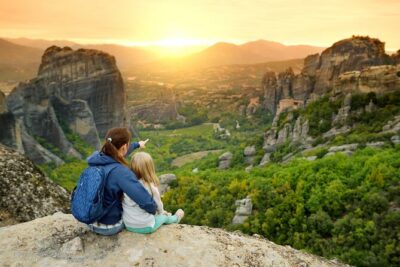
Meteora Monasteries, Caves & Coastal Stopovers with Lunch
Read our review →
Meteora Monasteries & Caves DayTrip from Athens with Greek Lunch
Read our review →
4-Day Classical Greece Tour: Epidaurus, Mycenae, Olympia, Delphi, Meteora
Read our review →Browse the lists this tour appears in