
Reviewed · ANCIENT CORINTH, MYCENAE & NAFPLIO TOURS
Mycenae, Epidaurus, Nafplio Full Day Private Tour from Athens
The best part of this private Peloponnese tour is its sweep: in one long day, you move from a modern engineering marvel to Bronze Age citadels, a nearly perfect ancient theater, and a handsome seaside town. You get far beyond Athens without changing buses or racing after a group leader.
I like the door-to-door pickup and the freedom to set your own pace. I also like the drivers’ strong command of Greek history. Spiros, George, Notis, Petros, Fotis, Michael, Alex, and Kostas are among the drivers praised for clear explanations, good lunch suggestions, and thoughtful timing.
The catch is simple: this is an ambitious eight- to nine-hour day with plenty of road time. Your driver is not a licensed guide and will not enter the archaeological sites with you, so you need to be comfortable exploring some places independently or arrange a licensed guide in advance.
Key points to know before booking
- Four major stops in one day: Combine the Corinth Canal, Mycenae, Epidaurus, and Nafplio without arranging separate transport.
- Private car and flexible timing: Your group travels alone, with pickup and drop-off from a hotel, apartment, airport, or port.
- Ancient sites need extra fees: Mycenae and its museum area cost €20, while Epidaurus and its museum cost another €20 per person.
- Lunch is included: The day includes lunch, with a Greek traditional food option, usually during your free time in Nafplio.
- Your driver gives the context: Drivers provide English commentary in the vehicle, but they are not licensed site guides.
- Wear sensible shoes: Stone paths can be uneven or slippery, and Palamidi involves a steep hill and many steps.
Why this private Athens day trip works
This tour is built around contrast. The Corinth Canal takes only about 15 minutes, yet it gives you a clear sense of the route ahead. Then come the heavy stone walls and burial chambers of Mycenae, the graceful theater and healing sanctuary at Epidaurus, and the Venetian streets of Nafplio.
I like this order because the stops do not blur together. Mycenae feels severe and prehistoric. Epidaurus is more open and ceremonial. Nafplio gives you time to sit down, eat, and enjoy present-day Greece after hours among ruins.
The private format matters here. You are not tied to a large group’s bathroom breaks or fixed lunch table. Your driver can allow more time at a site, shorten a stop, or add a small roadside pause if the day permits. Several drivers have also made extra photo stops or suggested a better place for lunch.
The price is $229.14 per person. That is not a bargain-basement bus excursion, but the value improves with two or more people because you are paying for a private vehicle, fuel, hotel or airport transfer, Wi-Fi, bottled water, lunch, and a full day of driving. You still need to add up to €40 per person for the main archaeological admissions, and a licensed guide costs extra if you want one.
More Peloponnese days from Athens:
- From Athens: Mycenae, Epidaurus & Nafplio Full Day Trip
★ 4.8 · 2,438 reviews - From Athens: Mycenae, Epidaurus & Nafplio Full-Day Tour
★ 4.5 · 1,580 reviews - From Athens: Ancient Corinth Day Trip with Canal & VR Guide
★ 4.6 · 1,073 reviews
The Corinth Canal gives the day a strong opening
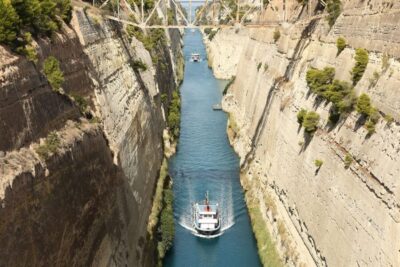
The canal is a short stop, but do not dismiss it as filler. From above, you look down at steep limestone walls and watch ships pass through a narrow cut between the Gulf of Corinth and the Saronic Gulf.
The canal is 6.4 kilometers long and only about 21.4 meters wide at its base. It has no locks because it was cut at sea level. Modern ships can find it too narrow, which gives you an idea of how dramatic the engineering challenge was.
You will have about 15 minutes here. That is enough for photographs and a quick look from the viewpoint, not a full study of the canal. If you like bridges, water, and large-scale engineering, this is a worthwhile first pause. If ancient sites are your main interest, you will be glad the stop is brief.
Mycenae brings Bronze Age Greece to life
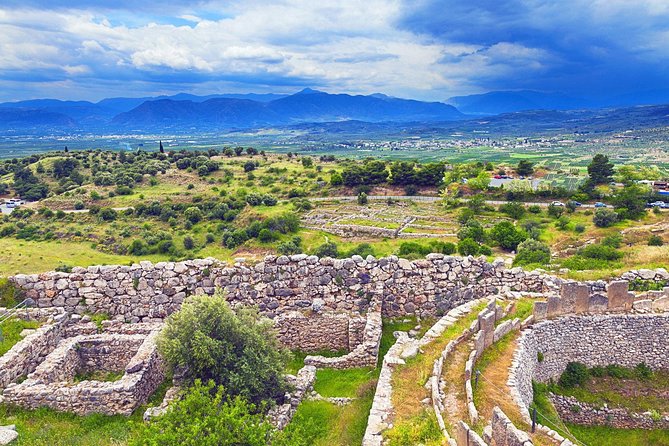
Mycenae is the day’s most demanding archaeological stop and one of its most memorable. The fortified citadel sits above the Argive plain, surrounded by massive Cyclopean walls. Ancient builders used stones so large that later Greeks imagined only the Cyclopes could have moved them.
This was the center of the Mycenaean civilization, which flourished roughly from 1600 to 1100 BC. At its height, around 1350 BC, the citadel and lower town may have supported about 30,000 people. The place is tied to the legendary King Agamemnon, but the stones matter even if you set the myths aside.
The main archaeological site receives about 40 minutes in the planned schedule. That is enough to see the key features, though you will need to keep moving if you want the full setting to sink in.
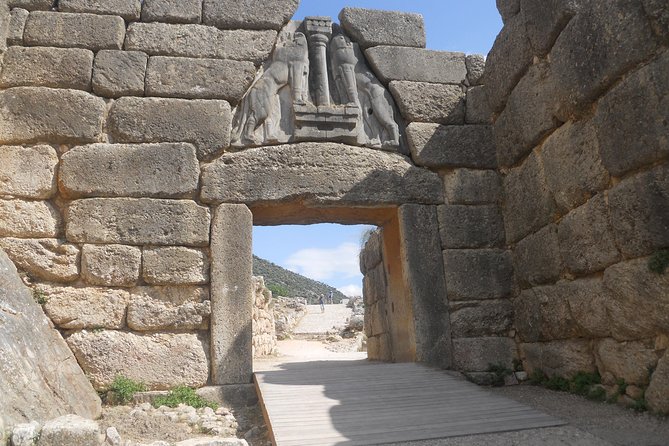
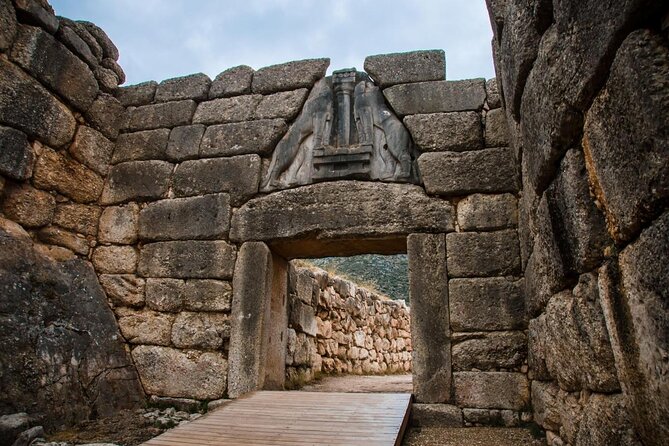
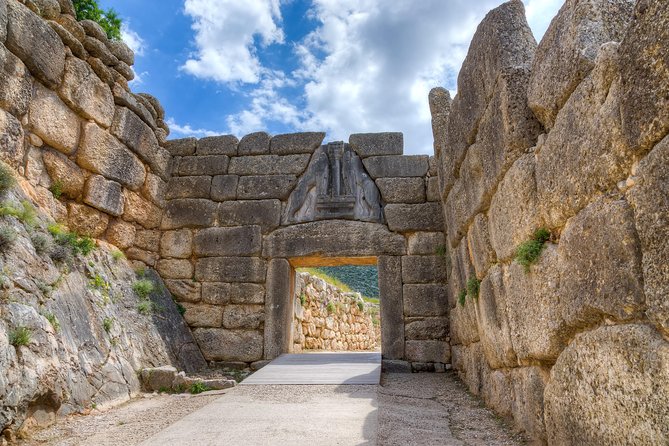
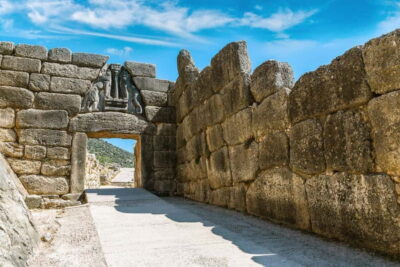
The Lion Gate is your first great encounter. Built around 1250 BC, it served as the main entrance to the citadel. Two lions or lionesses face one another above the doorway, framed by the triangular space that helped relieve pressure from the massive stones below.
This relief is rare. It is the only monumental Mycenaean sculpture still visible above ground, and it is the largest sculpture known from the prehistoric Aegean. Take a moment before walking through. The gate is more than a photogenic entrance. It announced power to anyone approaching the citadel.
Inside, you will see the walls, foundations, and remains of the upper settlement. The site is not reconstructed into a neat ancient town. You need to use the setting, the surviving stonework, and your driver’s explanation to picture how the citadel functioned.
The nearby Archaeological Museum of Mycenae adds useful detail. Its displays include objects and architectural pieces from the site, and the museum sits close to the entrance. Plan about 30 minutes if the schedule allows. Since the museum and archaeological site require admission, keep the €20 fee in mind for the Mycenae portion, including the Treasury of Atreus according to the tour information.
The Treasury of Atreus is worth the short extra stop
The Treasury of Atreus, also called the Tomb of Agamemnon, is a tholos tomb cut into a hillside near Mycenae. Its interior has a beehive shape, with carefully laid stone courses rising to a pointed top.
The entrance lintel is the showpiece. It weighs about 120 tons and measures roughly 8.3 by 5.2 by 1.2 meters. That is an astonishing piece of Bronze Age construction, especially when you remember the builders had no modern cranes.
You get about 15 minutes here. It is not enough for a long archaeological lesson, but it gives you time to enter the cool stone chamber and appreciate the scale. The tomb is separate from the main citadel area, so the stop helps you see that Mycenae was more than a hilltop fortress.
The footing around Mycenae can be uneven. Wear shoes with a firm sole, especially if rain has passed through. A careful pace is more useful than trying to squeeze in one more photograph.
A few more things to do in Athens worth a look
- All Day Cruise -3 Islands to Agistri,Moni, Aegina with lunch and drinks included
★ 5.0 · 4,958 reviews - From Athens: Delphi Full Day V.R. Audio Guided Tour
★ 4.6 · 3,028 reviews - Athens Full Day Private Tour
★ 5.0 · 2,903 reviews - Athens Greece Full Day private tour
★ 5.0 · 785 reviews
Epidaurus shows the graceful side of ancient Greece
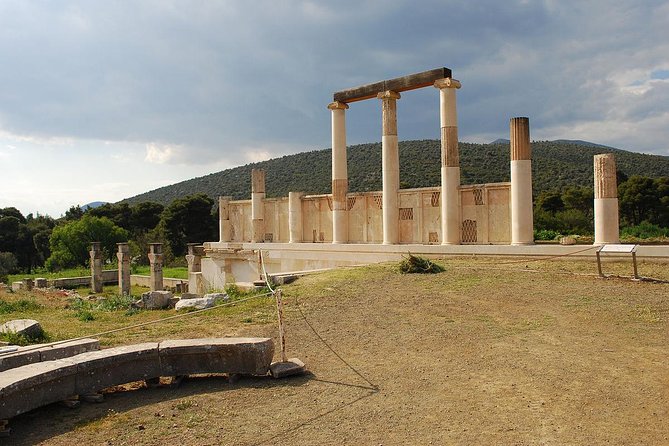
Epidaurus changes the mood completely. The sanctuary was dedicated to Asclepius, the ancient Greek god of medicine, and became one of the major healing centers of the Greek world. The site competed with famous sanctuaries at Olympia and Delphi.
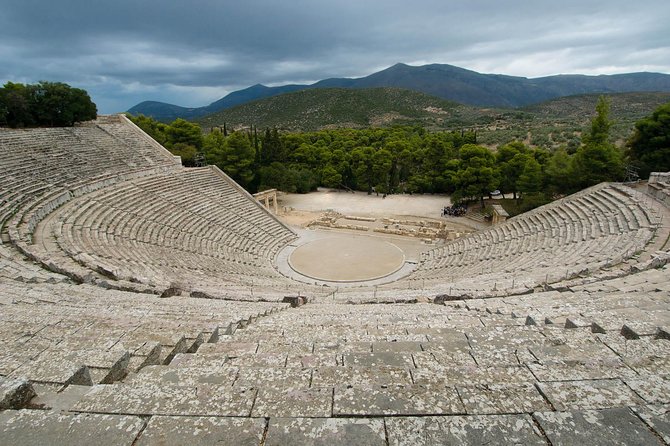
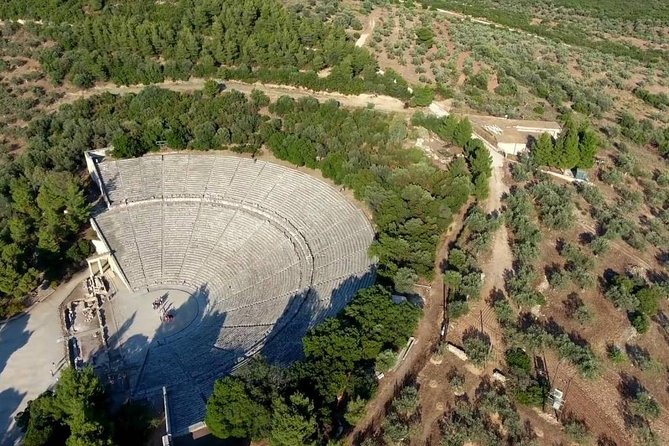
The Ancient Theatre of Epidaurus is the main draw. Its fan of stone seats, circular orchestra, and stage building form the classic three-part arrangement of a Hellenistic theater. Unlike many Greek theaters, it was not altered during Roman times.
The acoustics are the reason people come, but the setting deserves equal attention. A person speaking from the orchestra can often be heard clearly from high rows. You should test it yourself if the site is quiet, but do so briefly and respectfully.
The planned theater visit lasts about 30 minutes. That gives you time to climb a few rows, look across the seating bowl, and study the geometry. It does not allow a slow wander through every part of the sanctuary, so listen carefully to the introduction before leaving the vehicle.
The Epidaurus Archaeological Museum takes another 30 minutes. Founded in the early 20th century, it contains finds from the sanctuary, including columns, inscriptions, and reconstructions that help explain buildings now reduced to foundations.
You will also see the remains of the Temple of Asclepius. About 15 minutes is allotted to the sanctuary area. The scattered stones may seem less immediately impressive than the theater, but this is where the purpose of the entire complex becomes clear. People came here seeking healing, ritual care, and contact with the god.
Admission to Epidaurus and its museum costs €20 per person. The ticket cost is easy to overlook when comparing tour prices, so include it in your budget from the start.
Nafplio gives the day room to breathe
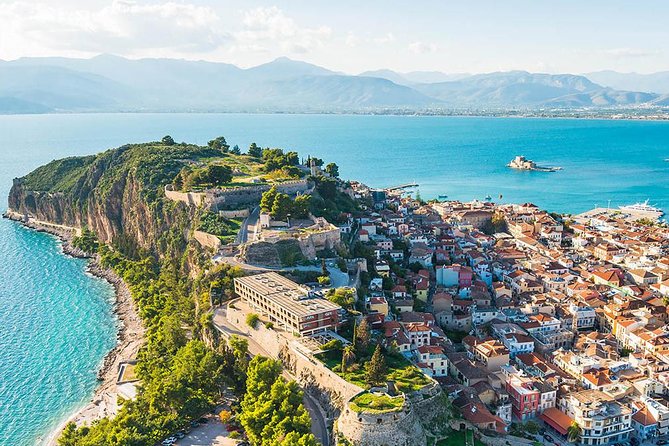
After the archaeological sites, Nafplio feels like a reward, but it is more than a pleasant lunch stop. The town served as the capital of the newly independent Greek state from 1821 until 1834. Venetian, Ottoman, and Greek influences remain visible in its streets, harbor, fortifications, and squares.
You receive about 90 minutes of free time. That is enough for lunch, coffee, a short walk, and some shopping, but not enough to explore every corner or climb every fortress.
Lunch is included, with a Greek traditional food option. You can also find seafood and other choices around the harbor. One account of the day described a seafood meal with pasta, langostinos, and Greek wine, while other drivers have made well-liked restaurant suggestions. The exact restaurant can vary, so ask your driver what fits your group and the remaining schedule.
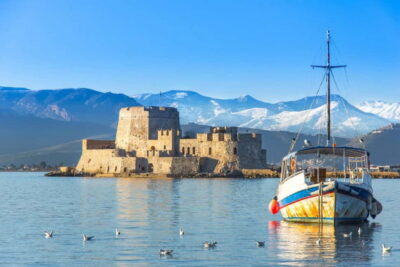
The Bourtzi is the small Venetian water castle in the harbor. You will view it from shore and have time for photographs. The tour does not promise a boat trip to the castle, so think of this as a harbor view rather than a separate interior visit.
Acronauplia forms the oldest part of Nafplio. Its fortifications were shaped by the Franks and Venetians, and the area later had military and prison uses. From town, you can look up toward the old defensive walls and see how tightly the older settlement fits the hills.
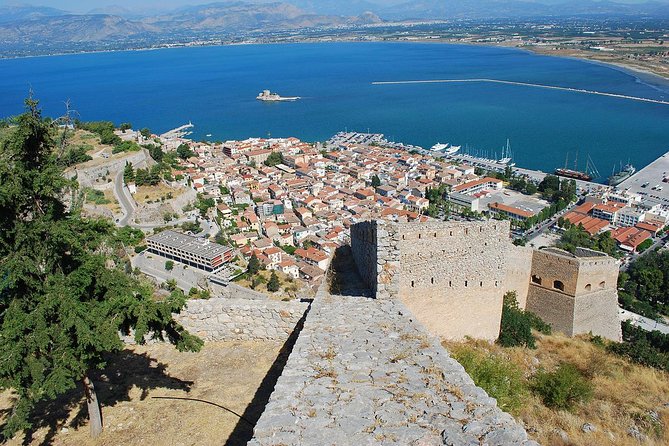
Palamidi Castle dominates the town from a hill about 216 meters high. The Venetians built it during their second period of control, from 1686 to 1715. It commands wide views over Nafplio, the Argolic Gulf, and the surrounding countryside.
The schedule allows about 30 minutes at Palamidi. That is a short visit, especially if you plan to climb from town. The winding stairway has 913 steps, while the full route to the top is often described locally as 999 or more than 1,000 steps. Your vehicle can make the approach easier, but the fortress itself still includes uneven ground and inclines.
If you love fortifications and views, Palamidi may be the highlight of Nafplio. If you have limited mobility or dislike steep stone steps, focus on the accessible viewpoints and town streets instead of trying to cover every section.
Your driver is the key to the experience
The driver makes a larger difference here than on a simple transfer. You spend several hours in the vehicle, and good commentary turns those drives into part of the day rather than dead time.
Spiros is repeatedly described as attentive, friendly, and able to adjust the day around a family’s interests. George is praised for explaining Greek history and mythology in an easy, personal way. Notis has shared details about local life, olive and orange farming, and the surrounding region, as well as helping with a hotel-to-hotel transfer.
Petros, Fotis, Michael, Alex, and Kostas are also named as drivers who handled timing, history, photo stops, and local suggestions well. Kostas has even added a small Athens landmark tour when time remained. Driver assignment is not guaranteed, so treat these names as examples of the service style rather than a promise.
The important limit is official guiding. Drivers can provide fluent English commentary and answer questions, but they cannot accompany you inside the archaeological sites as licensed guides. If ancient architecture is your main reason for coming, request a licensed guide when booking and confirm availability.
Transport, timing, and practical comfort
Pickup is available from your Athens hotel, apartment, airport, or port. At a hotel, the driver waits in the lobby. At an apartment, the meeting point is the building entrance. Airport and port pickups use a name sign, and the service says flights are tracked for airport arrivals.
The vehicle is air-conditioned, private, and equipped with Wi-Fi and bottled water. Pickup time can be adjusted on request, and your group returns to the same place or another agreed point. This flexibility is especially useful if you are moving between hotels or finishing at an airport hotel.
The day lasts about eight to nine hours. That includes substantial time on the road, particularly between Athens and the western Peloponnese sites. I would choose this trip for the scenery and the chance to see olive and orange groves from the road, not for anyone who wants constant walking or activity.
Most people can take part, but the archaeological sites have stone paths and uneven surfaces. A study shoe with good grip is a smart choice. Bring sun protection and water even though bottled water is supplied, and keep your schedule flexible because a private day can still feel rushed if you try to linger at every stop.
Free cancellation is available until 24 hours before the start time. Changes or cancellations inside that window are not accepted for a refund.
Who should book this tour
I would choose this tour if you have one free day in Athens and want to see major sites that are difficult to reach comfortably by public transport. It is also a strong fit for families, couples, and small groups that value a private vehicle and a driver who can adjust the pace.
The tour suits people who want a broad introduction to the Argolis region. You will see a canal, a Bronze Age citadel, a healing sanctuary, a famous theater, a Venetian harbor, and hilltop fortifications in one outing.
I would hesitate if you want a slow archaeological study. The schedule gives you a useful look at each place, but Mycenae and Epidaurus both deserve more time than a packed day allows. In that case, staying overnight in Nafplio or booking a private licensed guide would make more sense.
At $229.14 per person, the best value comes when the private vehicle cost is shared. Add the €40 in listed site admissions and any guide fee, then compare that total with the convenience of pickup, lunch, Wi-Fi, and a full day shaped around your group.
Should you book the Mycenae, Epidaurus, and Nafplio tour?
Book it if you want a comfortable, history-packed escape from Athens and prefer a private car to a large coach. The Corinth Canal, Lion Gate, Treasury of Atreus, Epidaurus Theatre, Bourtzi, and Palamidi create a satisfying mix, while Nafplio gives you a proper meal and a little free time.
Do not book it expecting a formal guided tour inside every ruin. The strongest version of this experience is a private driving day with an excellent English-speaking driver, plus either your own preparation or a licensed guide added in advance.
FAQ
How long does the private tour last?
The tour lasts approximately eight to nine hours.
Where can pickup and drop-off take place?
Pickup and drop-off are available from your Athens hotel, apartment, airport, or port. You can also request another agreed drop-off point.
Is the tour private?
Yes. Only your group participates.
Is lunch included?
Yes. Lunch is included, with a Greek traditional food option available.
Are archaeological entrance fees included?
No. Mycenae, the Archaeological Museum of Mycenae, and the Treasury of Atreus cost €20 per person. Epidaurus and the Epidaurus Archaeological Museum cost another €20 per person.
Is a licensed guide included?
No. The driver provides English commentary but is not licensed to accompany you inside the archaeological sites. A licensed guide may be requested, subject to availability and an additional fee.
What is included in the vehicle service?
The tour includes private air-conditioned transportation, Wi-Fi, bottled water, pickup and drop-off, and an English-speaking professional driver.
Just added in Athens
- Ceramic and Pottery Creative Workshop with Two Local Artists★ 4.0 · 57 reviews
- Small-Group Women History in Ancient Greece Walking Tour★ 5.0 · 38 reviews
- Athens Old City Private Photoshoot Tour / 2 hrs★ 5.0 · 109 reviews
- Athens: Wine Workshop Create your Own Wine under the Acropolis★ 5.0 · 77 reviews
- Athens: Greek Wines Tasting with Sommelier and Acropolis Views★ 5.0 · 88 reviews
- Wine Trails Private Tour/ Nemea visit 3 wineries from Athens or Nafplion (10 h)★ 5.0 · 44 reviews
- FLYING DRESS Photoshoot in Athens – Greece★ 5.0 · 47 reviews
- Small-Group Wine Tour in Athens with Tasting★ 5.0 · 33 reviews
Ancient Corinth, Mycenae & Nafplio Tours, compared.
Ancient Corinth Day Trip with Canal & VR Guide
Read our review →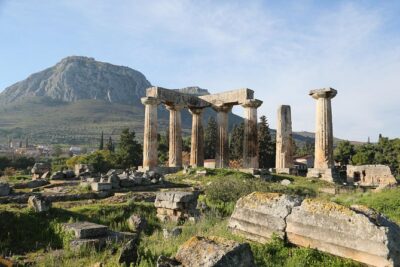
Private Biblical Tour Ancient Corinth & Isthmus Canal from Athens
Read our review →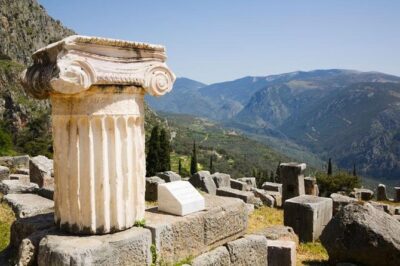
4-Day Classical Greece Tour: Epidaurus, Mycenae, Olympia, Delphi, Meteora
Read our review →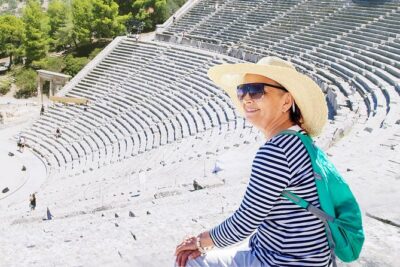
Ancient Corinth & Nafplio Full Day Trip with Swim
Read our review →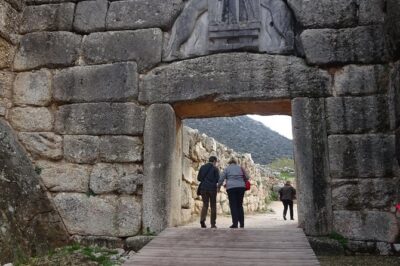
Mycenae and Nafplion Day Trip from Athens with Official guide
Read our review →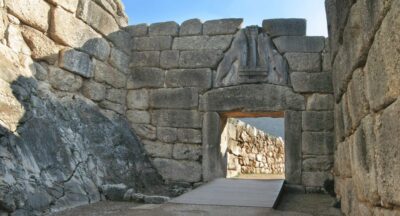
Browse the lists this tour appears in