
Reviewed · TOURS IN ATHENS
3-Day Ancient Greek Archaeological Sites Tour from Athens
From the theater at Epidaurus to the mountain sanctuary of Delphi, this three-day journey gives you a strong first look at classical Greece without asking you to plan a complicated chain of buses and hotels. You will also see Olympia, Mycenae, the Corinth Canal, Nafplio, Arachova, and the new bridge across the Corinthian Gulf.
I like two things especially: the route connects famous ruins with the myths that make them memorable, and the guide usually gives you a clear tour before allowing time to explore on your own. The main drawback is the pace. Long drives, hot archaeological sites, and three major ancient centers in three days can leave you tired, especially in summer.
Key points to know before booking
- Three major ancient sites in one route: Visit Mycenae, Olympia, and Delphi, each with a very different story and setting.
- Epidaurus delivers a memorable first stop: Its ancient theater is famous for acoustics that let a voice carry across the seating area.
- Guides add real value: Guides including Anna, Marianna, Dimitris, Evangelist, and Christina have been praised for clear explanations, mythology, and practical care.
- The route covers serious mileage: You will spend plenty of time on the road, but the transport links sites that are difficult to combine independently in three days.
- Breakfast and dinner are included: Lunch, drinks, personal expenses, and hotel tax are extra.
- Small details matter: Pack sun protection, take photos as you go, and confirm your pickup time and hotel category before departure.
A smart route for seeing ancient Greece
At $506 per person, this tour is not the cheapest way to visit one Greek ruin. It is a useful package for seeing several major sites from Athens, with transport, entrance fees, a guide, two hotel nights, breakfast, and dinner included.
That value depends on how you travel. If you enjoy arranging buses, comparing hotels, and working out connections across the Peloponnese and central Greece, you could build a similar trip yourself. But fitting Corinth, Epidaurus, Mycenae, Olympia, and Delphi into three days would take careful planning and little room for a missed connection.
I see the tour as a time-saving circuit rather than a slow archaeological holiday. You will see a lot. You will also spend hours in a vehicle. The reward is the way the sites connect: Mycenae introduces heroic Bronze Age Greece, Olympia brings the ancient athletic world into focus, and Delphi shows how religion and politics met at a mountain sanctuary.
The tour is carbon-neutral, which adds a useful environmental feature to a route that necessarily involves substantial road travel. The exact vehicle can vary. Some departures use a larger coach, while small groups may travel in a mid-sized air-conditioned van with charging ports.
A few more things to do in Athens worth a look
- 3-Day Classical Greece Tour: Epidaurus, Mycenae, Nafplion, Olympia, Delphi
★ 4.5 · 342 reviews - From Athens: 3 Days in Meteora & Delphi with Tours & Hotel
★ 4.6 · 97 reviews - Meteora & Delphi 3 Days Semi Private Tour
★ 4.5 · 80 reviews
Day one: Corinth Canal, Epidaurus, Nafplio, and Mycenae
Your first morning begins with pickup from most centrally located Athens hotels, usually about an hour before departure. You can also meet at the supplier’s office 15 minutes before the scheduled start, but confirm the exact meeting point and time in advance.
The first major sight is the Corinth Canal, cut through the narrow isthmus between the Saronic Gulf and the Corinthian Gulf. It is not an ancient monument, but it helps explain the geography of the journey. The canal made the sea route shorter for ships and remains an impressive piece of nineteenth-century engineering.
You then continue to Epidaurus, home to one of the best-known theaters of the ancient Greek world. The theater is famous for its acoustics, and your guide will usually demonstrate why the design still fascinates visitors. From the upper seating, even a quiet voice can carry toward the stage.
This is a good opening stop because the theater is easy to understand at a glance. You can see the orderly stone seating, the circular orchestra, and the surrounding countryside. Wear shoes with a firm sole, since ancient sites involve uneven paving and steps.
The route continues to Nafplio, often spelled Nafplia, a graceful harbor town that served as the first capital of the modern Greek state. The stop helps break up the archaeology with a glimpse of a later chapter in Greek history. You then drive across the plain of Argos toward Mycenae.
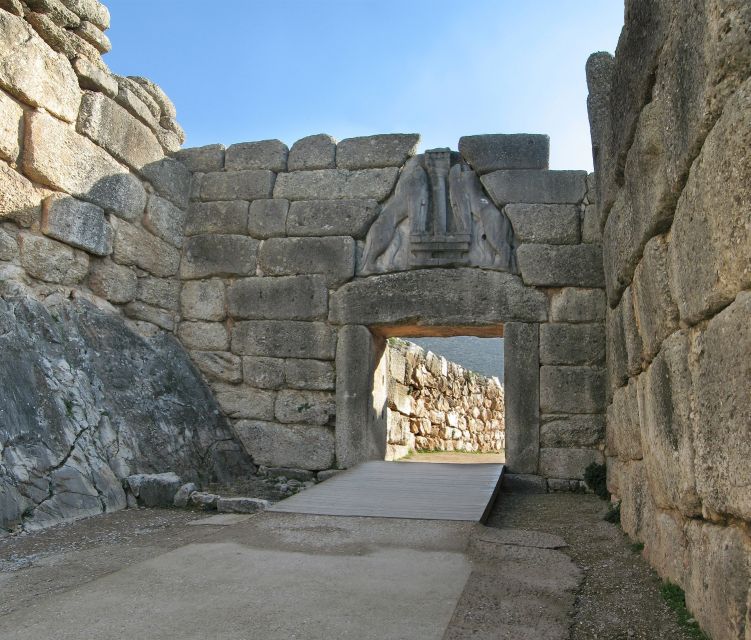
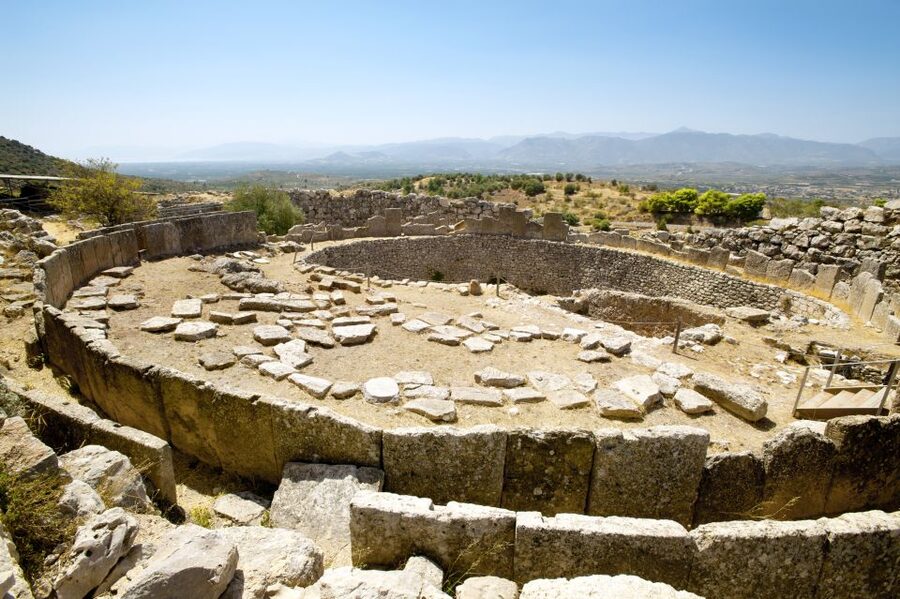
Mycenae is one of the tour’s most dramatic stops. The citadel sits above the plain, and its massive stone walls helped create the later legend of a heroic age ruled by figures such as Agamemnon. You will see the famous Lion Gate, the remains of the fortified settlement, and the tomb known as the Treasury of Atreus, commonly linked in popular tradition with Agamemnon.
Do not expect a complete ancient city with standing buildings. Much of Mycenae consists of foundations, walls, and stone chambers. A good guide makes the site easier to picture by explaining how the citadel worked and by connecting the remains with Greek myth without presenting legend as simple fact.
The first overnight stop is Olympia, reached after passing through Tripolis and Megalopolis. These are mainly short breaks for stretching your legs or buying a snack or souvenir. The drive is long, but regular stops help.
Day two: Olympia and the road to Delphi
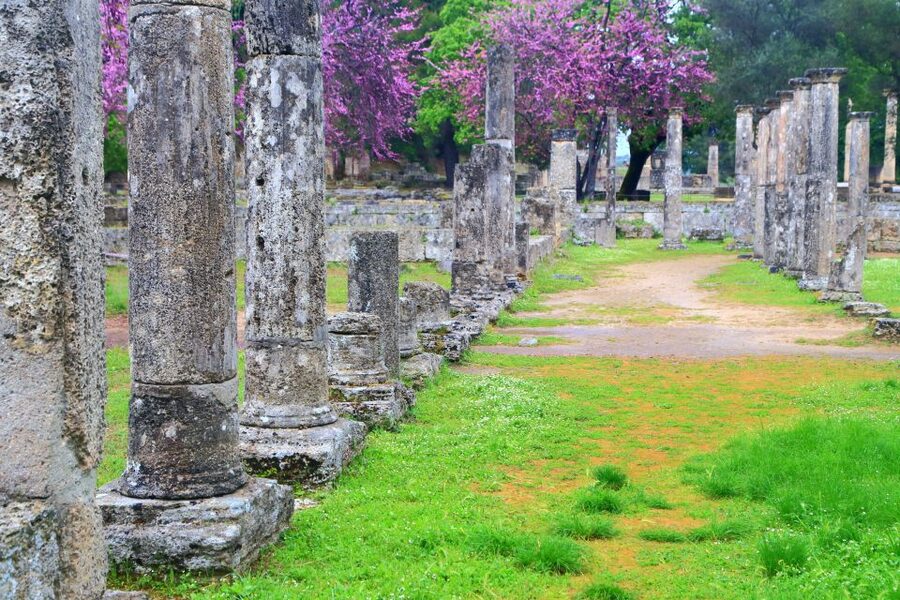
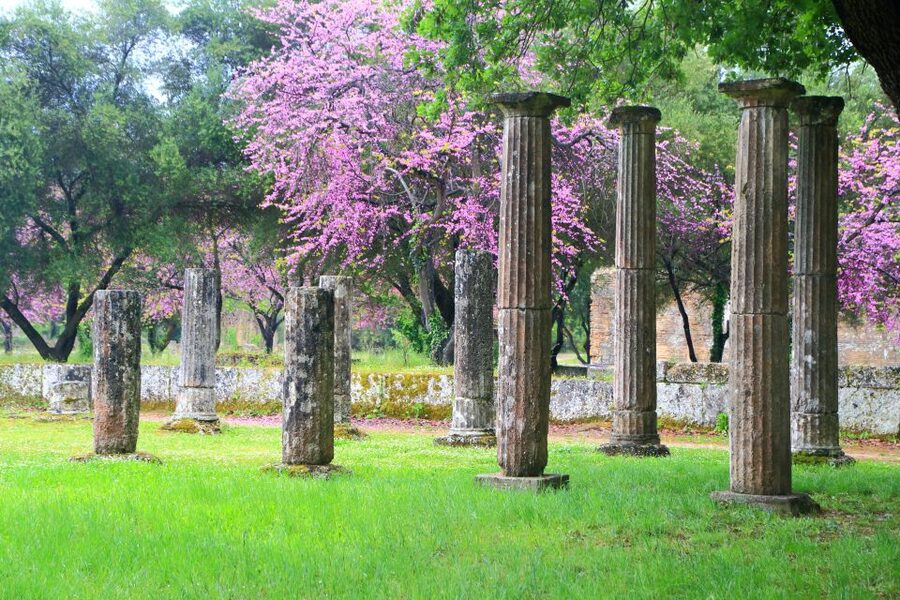
Olympia is more than the birthplace of the modern Olympic movement. In antiquity, it was a major religious center dedicated to Zeus, and athletic contests formed part of a wider sacred festival.
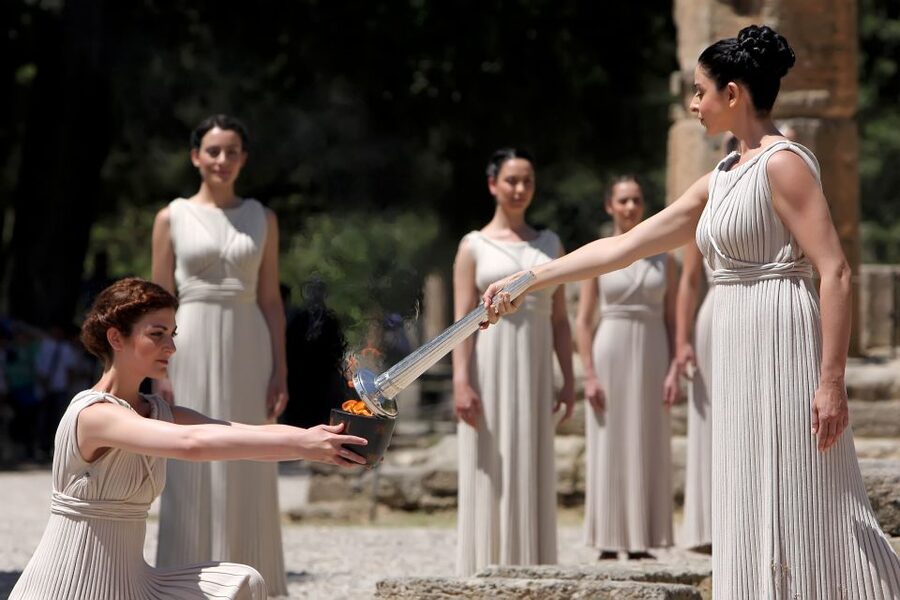
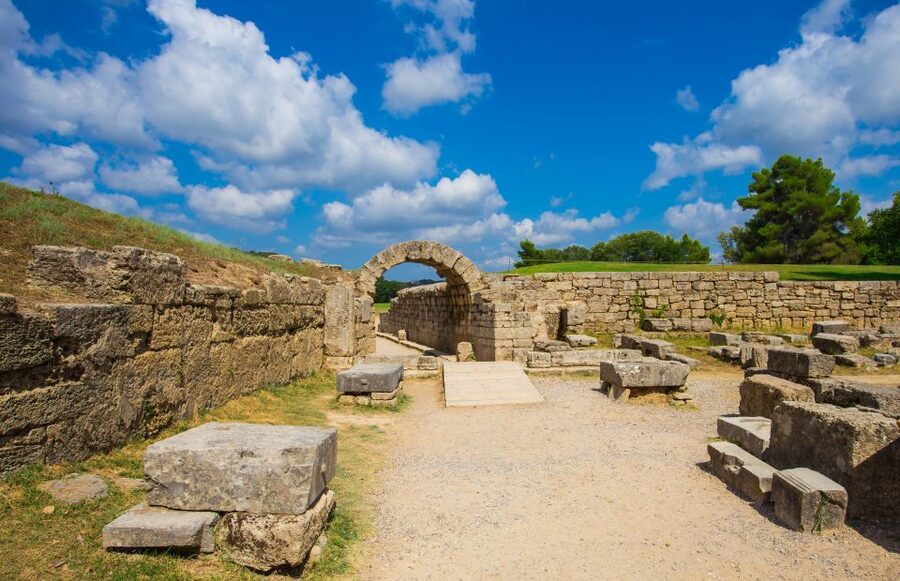
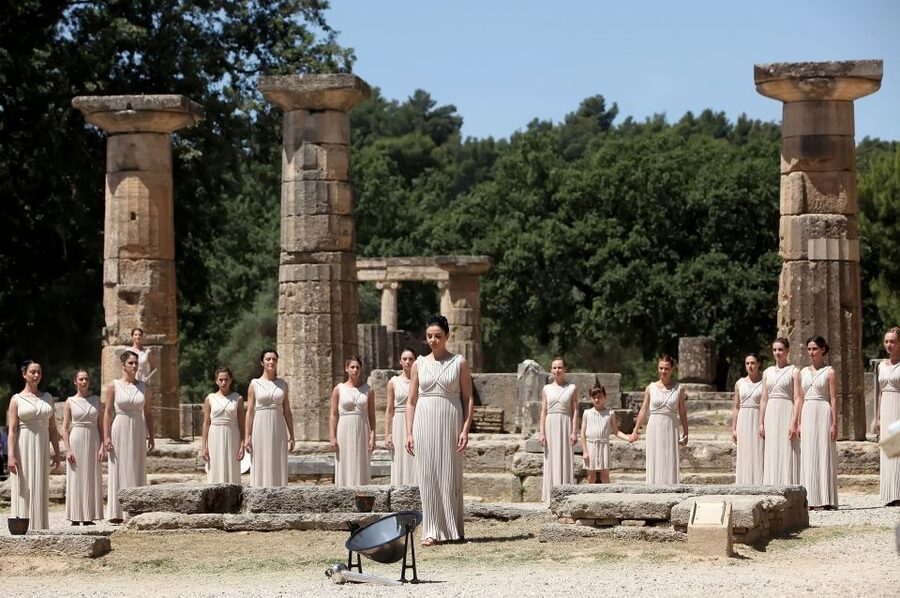
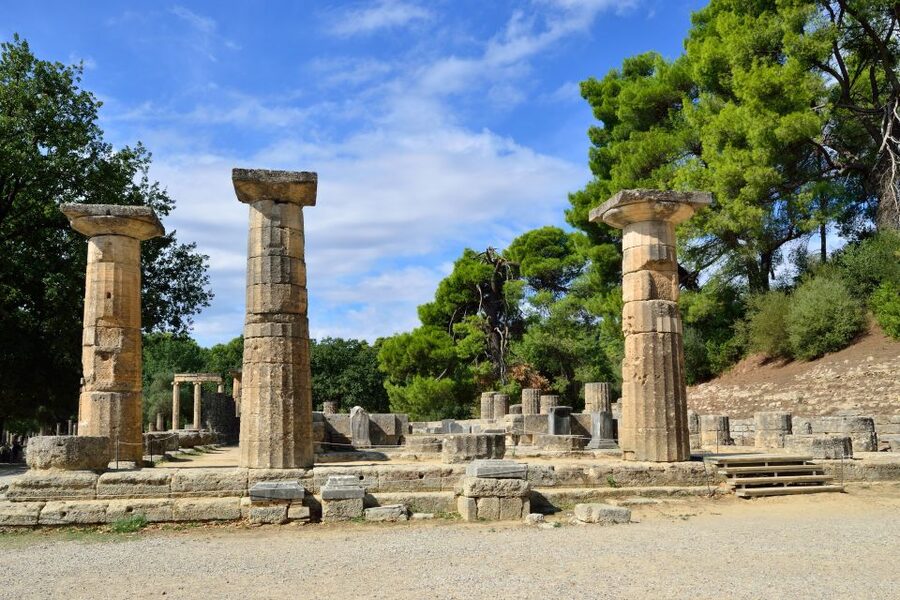
The archaeological site includes the remains of the Temple of Zeus, the Temple of Hera, the stadium, and the altar associated with the Olympic flame. The surviving columns and foundations require some imagination, so the guide’s explanation matters. You will get more from the visit if you picture the site as a sanctuary filled with visitors, athletes, priests, and monuments rather than as a quiet field of ruins.
The Archaeological Museum of Olympia sits directly opposite the excavations. It holds artifacts found at the site and gives you a closer look at the sculpture, decoration, and objects that the outdoor remains can no longer show. The museum is an important part of the stop, not an optional extra.
Allow time for heat. A visit to Olympia can last around three hours, and much of the site is exposed. In July and August, a broad hat, sunglasses, water, and light clothing are practical necessities. Guides have sometimes found shaded places for explanations, but you will still walk in direct sun.
After Olympia, the route heads toward Rion and crosses the Corinthian Gulf on the modern bridge to Antirion. The crossing is a pleasant change from ruins and mountain roads. You then follow the coast toward Nafpaktos, a small harbor city with a more relaxed feel than the major ancient sites.
The road continues inland toward Delphi. In the afternoon, you stop at Arachova, a mountain village on the slopes of Mount Parnassus. This is a short scenic stop rather than a full second archaeological visit. It gives you a chance to see a mountain setting and buy refreshments before the next morning’s main site.
You spend the second night in Delphi. Hotel quality depends on the option you choose and on availability. The tour offers three-star or four-star accommodation, but standards can vary between properties. Most people will value the location and included dinner more than luxury features.
Day three: Delphi, Apollo, and the Oracle
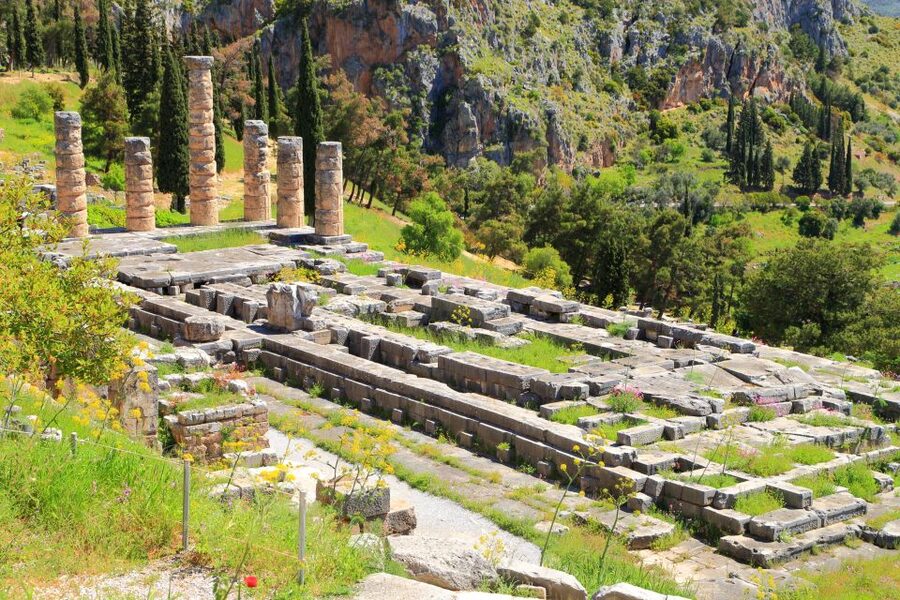
Delphi is the emotional high point of the route for many people. The sanctuary rises on the slopes of Mount Parnassus, with views over the valley below. Its setting helps explain why ancient Greeks treated this place as the center of the world.
The sanctuary was connected with Gaia, or Mother Earth, and guarded in myth by the Python. Apollo later became the principal god of the site after defeating the dragon. These stories are not just decorative background. They explain why Delphi carried such religious weight and why rulers and city-states came to seek guidance from the Oracle.
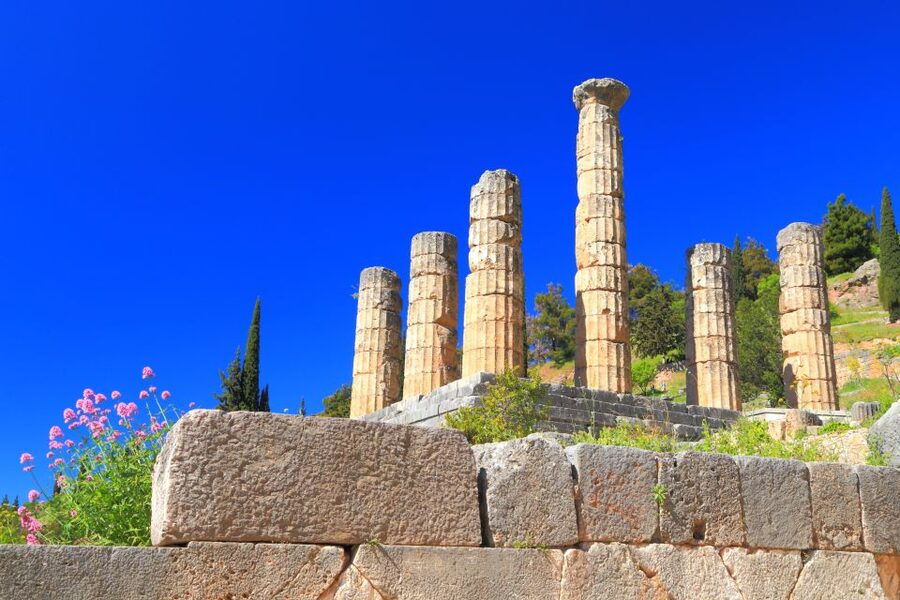
You will visit the Temple of Apollo, where the Oracle gave pronouncements that shaped decisions across the Greek world. The remains are fragmentary, but the location and the surrounding mountain views make the site memorable.
The theater sits higher on the hill and once held as many as 5,000 spectators for plays, poetry readings, and festivals. From here, look back across the sanctuary and down into the valley. Delphi is a place where the view is part of the experience, not just a pleasant extra.
The Archaeological Museum of Delphi follows or accompanies the site visit. It contains sculpture and objects linked with the sanctuary, including important finds from the excavations. Seeing the museum after walking through the ruins helps connect the scattered stones with the artistic and religious world they once supported.
Delphi also brings the most demanding walking of the three days. The site is perched on a slope, and the path rises through uneven ancient remains. If you dislike hills, take the visit at a steady pace and use the available rest points. This tour is not suitable for wheelchair users.
After Delphi, you return to Athens through the hills of Parnassus and the Valley of Phocis, passing vineyards and olive groves. The drive gives you one last look at the countryside before the city. Expect to arrive tired, but with the feeling that the route has covered a large piece of Greece in a short time.
Same base, a completely different day:
- Athens: Acropolis & up to 5 Archaeological Sites Combo Pass
★ 4.4 · 12,619 reviews - Athens: Acropolis Ticket with Optional Audio or Live Guide
★ 4.2 · 11,055 reviews - Athens: Acropolis, Parthenon & Acropolis Museum Guided Tour
★ 4.8 · 9,316 reviews - Athens: Cape Sounion & Poseidon Temple Sunset Half-Day Trip
★ 4.8 · 8,241 reviews
Guides make the difference
The strongest part of this experience is the guiding. Names and assignments change, but guides such as Anna, Panos, Marianna Tsigaridou, Dimitris, Evangelist, Christina, and Mando have led departures. The most praised guides combine archaeology with mythology, modern Greek culture, and clear instructions about where to meet and when to return to the bus.
That matters on a route with several sites and group changes. At Mycenae and Delphi, you may sometimes join a larger local group for part of the site tour. Instructions can feel confusing if you are not paying attention, so keep your guide in sight and note the meeting times.
A good guide also helps you avoid wasting energy. One guide has been praised for finding shade while explaining artifacts, while another used photographs and reconstruction books to show how ruined buildings may once have looked. That sort of visual help is valuable at Olympia and Mycenae, where foundations alone can be hard to read.
You should still expect some independent time. The usual pattern is a guided explanation of the key areas followed by time to take photos, look around, or sit down. Bring a phone or camera and photograph the important spots as you go. You may not have enough time to retrace the route later.
Hotels, meals, and what the price covers
Your package includes two nights in three-star or four-star hotels, depending on the selected option, along with breakfast and dinner. The hotels are generally chosen for practical access to the overnight towns, and some departures have included especially good accommodation in Olympia.
Do not book this expecting a uniform hotel standard. One Delphi property was described as needing repairs, including worn carpets and a faulty toilet, while other stays were praised for good service and comfortable rooms. The exact hotels may not be confirmed until shortly before departure.
Dinner is included, and food quality can be good. Special diets can be accommodated when arranged ahead of time. A guest with celiac disease received gluten-free meals throughout the journey, but you should contact the operator before departure rather than assume every restaurant will know your needs.
Lunch is not included. You will need to buy it during stops or pay for any pre-arranged meal yourself. Drinks and personal expenses are also extra. Hotel tax is paid directly to the property: €5 per room per night at a three-star hotel or €10 per room per night at a four-star hotel.
The booking is based on a double or triple room. A single room requires a separate booking for one person. This is worth checking before you pay, particularly if you are traveling alone and do not want to share.
How hard is the schedule?
The physical demands are moderate, but the days are full. You will walk over uneven archaeological ground, climb at Delphi, and spend long periods sitting on the bus. The route is manageable for most reasonably mobile adults, but it is not a relaxed resort schedule.
The bus is an important part of the experience. Drivers handle narrow roads, mountain curves, and small towns, and the route includes some impressive driving. Smaller departures may feel more personal and make it easier to chat with other passengers. Larger groups can offer more departure dates but may involve more waiting and group transfers.
Spring and autumn are the most comfortable seasons for this route. The tour runs year-round, but summer heat can be intense, especially at Olympia and Delphi. Bring water, sunscreen, a hat, sturdy walking shoes, and a small day bag. Keep your larger luggage easy to identify, since one departure experienced a luggage mix-up that lasted a day.
Who should book this three-day tour?
I would recommend it to a first-time visitor who wants the main classical Greek sites without renting a car or arranging several overnight stays. It also suits history fans who like a guide to explain the myths, architecture, and political background rather than simply pointing out ruins.
Families with older children can benefit from the stories and variety. The tour is also useful for solo visitors who prefer organized transport and the easy company of a group. The included dinners and hotel stays reduce the number of decisions you need to make each evening.
I would hesitate if you want long, quiet visits at each site. You will not have unlimited time to explore every corner. I would also think twice if you dislike long drives, hot weather, uneven ground, or changing hotels.
The $506 price is fair when you count transport, entrance fees, two nights, breakfasts, dinners, and an English-speaking guide. Add lunch, drinks, hotel tax, and personal spending to your budget. The main thing you are buying is not luxury. It is efficient access to a difficult route, with someone explaining what you are seeing.
Should you book it?
Book this tour if you want a well-organized introduction to ancient Greece and accept a busy schedule. My favorite feature is the way the route links myth and place: Agamemnon at Mycenae, Zeus at Olympia, and Apollo at Delphi each feel different because the guide gives the stones a story.
Skip it if you want to linger, hike freely, or choose your own hotels. For most first-time visitors with only three days, though, it is a practical and rewarding circuit. Choose the four-star option if room quality matters, confirm pickup and hotel details, and plan your clothing for sun and hills.
FAQ
What sites are included in the three-day tour?
The route includes the Corinth Canal, Epidaurus, Nafplio, Mycenae, Olympia, Delphi, Arachova, and a drive through or stop in Tripolis and Megalopolis. It also includes the bridge crossing from Rion to Antirion and a stop near Nafpaktos.
Is the tour conducted in English?
Yes. The live tour guide and tour information are provided in English.
Are entrance fees included?
Yes. Entrance fees for the included archaeological sites and museums are covered in the tour price.
Are hotel stays included?
Yes. The package includes two nights in a three-star or four-star hotel, depending on the option selected and availability.
Are meals included?
Breakfast and dinner are included. Lunch, drinks, and personal expenses are not included.
How much is the hotel tax?
The hotel tax is paid directly to the hotel. It is €5 per room per night at three-star hotels and €10 per room per night at four-star hotels.
Does the tour include pickup in Athens?
Free pickup is available from most centrally located Athens hotels on request. Pickup usually takes place about one hour before departure. You need to contact Key Tours for the exact location and time.
Is the tour suitable for wheelchair users?
No. The tour is not suitable for wheelchair users because the archaeological sites include uneven ground, steps, and sloping paths.
Just added in Athens
- Ceramic and Pottery Creative Workshop with Two Local Artists★ 4.0 · 57 reviews
- Small-Group Women History in Ancient Greece Walking Tour★ 5.0 · 38 reviews
- Athens Old City Private Photoshoot Tour / 2 hrs★ 5.0 · 109 reviews
- Athens: Wine Workshop Create your Own Wine under the Acropolis★ 5.0 · 77 reviews
- Athens: Greek Wines Tasting with Sommelier and Acropolis Views★ 5.0 · 88 reviews
- Wine Trails Private Tour/ Nemea visit 3 wineries from Athens or Nafplion (10 h)★ 5.0 · 44 reviews
- Small-Group Wine Tour in Athens with Tasting★ 5.0 · 33 reviews
- Hydra Private Day Trip by Ferry from Athens with Transfers★ 4.0 · 30 reviews
Tours in Athens, compared.
Acropolis & up to 5 Archaeological Sites Combo Pass
Read our review →
Acropolis, Parthenon & Acropolis Museum Guided Tour
Read our review →
Cape Sounion & Poseidon Temple Sunset Half-Day Trip
Read our review →

All Day Cruise -3 Islands to Agistri,Moni, Aegina with lunch and drinks included
Read our review →
Cape Sounio & Poseidon Temple Trip with Audio Guide
Read our review →
Browse the lists this tour appears in