
Reviewed · METEORA MONASTERY TOURS
Kalabaka: Meteora Small-Group Hiking Tour w/ Monastery Visit
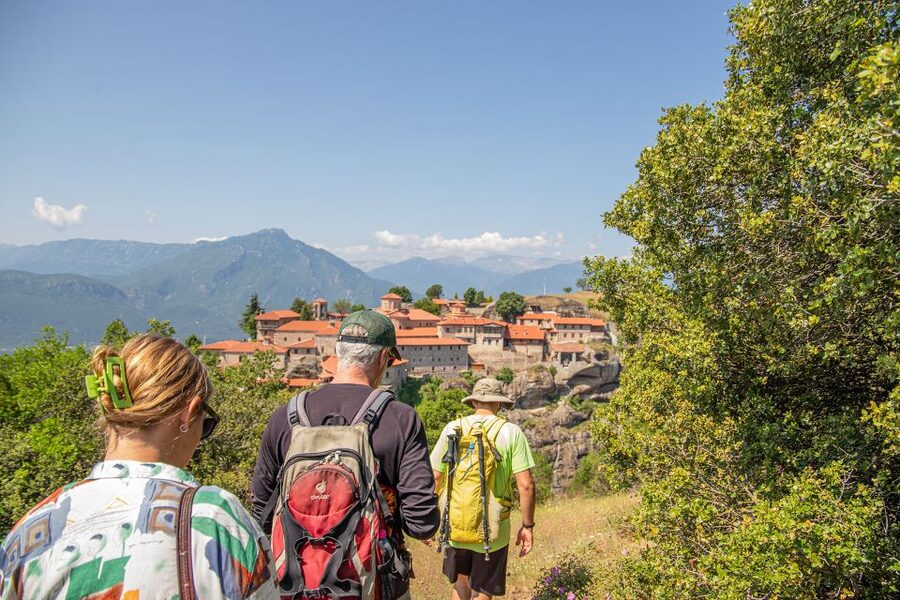
Meteora makes the most sense on foot. From Kastraki, this five-hour morning hike follows old paths beneath towering sandstone pillars, past ruined monasteries and hermit sites, then up toward Great Meteoron and Varlaam. You get the views a road tour cannot provide, along with the odd little details, such as the cliffside place where local children climb by rope to leave offerings for St. George.
I like the small-group feel and the guides’ local knowledge. Guides such as Evan, Chris, Christos, and Dimitris explain geology, plants, animals, myths, and monastery history without turning the walk into a lecture. I also like the pace: guides provide rests, adjust to the group, and may offer a walking stick when the trail gets rough. The drawback is simple: this is a real hike, with steep and rocky sections, especially on the descent.
Key points at a glance
- Old paths from Kastraki: Walk past Dupiani Hermitage, ruined Pantokratoros, Ypapanti Monastery, and St. Dimitrios.
- One monastery visit: The route reaches Great Meteoron and Varlaam, but your paid interior visit is to one monastery, usually Great Meteoron or Varlaam.
- Excellent viewpoints: You’ll see the sandstone pillars and monasteries from angles hidden from the main road.
- Guides make the difference: Evan, Chris, Christos, Dimitris, and other local guides are praised for clear explanations and flexible pacing.
- Mostly manageable, not effortless: Beginners can handle much of the trail, but fitness, balance, and proper shoes matter.
- Good base price: The $35 cost includes transport, guide, map, and water, but not the €5 monastery entrance fee.
Why Meteora is better on foot
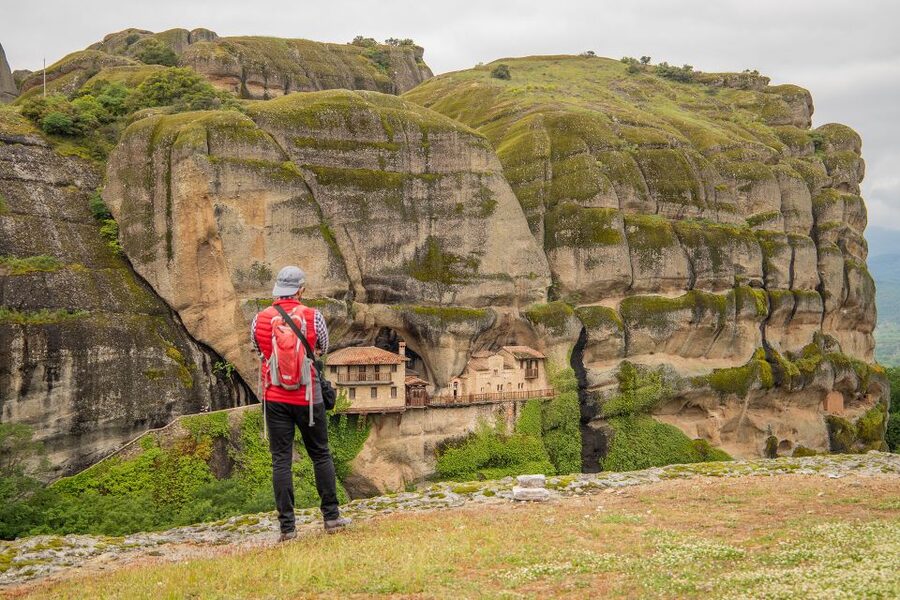
Meteora is famous for its monasteries perched on tall rock towers. From a bus or car, you can admire the broad view, but you miss the strange details that make this place memorable: caves, narrow paths, weathered rock patterns, tiny hermit sites, and old routes between the cliffs.
This tour gives you time to notice those things. Your guide points out plants, animals, local stories, and the way monks once used the rocks for isolation. Past participants have seen turtles and lizards along the trail, and one group even spotted a hermit monk on a balcony taking in some sunshine. Encounters like that are not guaranteed, but they show why walking adds something beyond a standard monastery transfer.
The route begins in Kalabaka with a short ride to Kastraki Square. That transfer is useful because it saves your legs for the trail and puts you directly at the edge of the rock formations. From there, the walking begins in earnest.
Other monastery and cliff-top days from Kalabaka:
- Meteora: Morning Half Day Sightseeing and Monasteries Tour
★ 4.7 · 478 reviews - Meteora: Majestic Sunset Tour & Monasteries with Local Guide
★ 4.7 · 359 reviews - Meteora: Panoramic Morning Small Group Tour with Local Guide
★ 4.7 · 334 reviews
Kastraki to Dupiani Hermitage
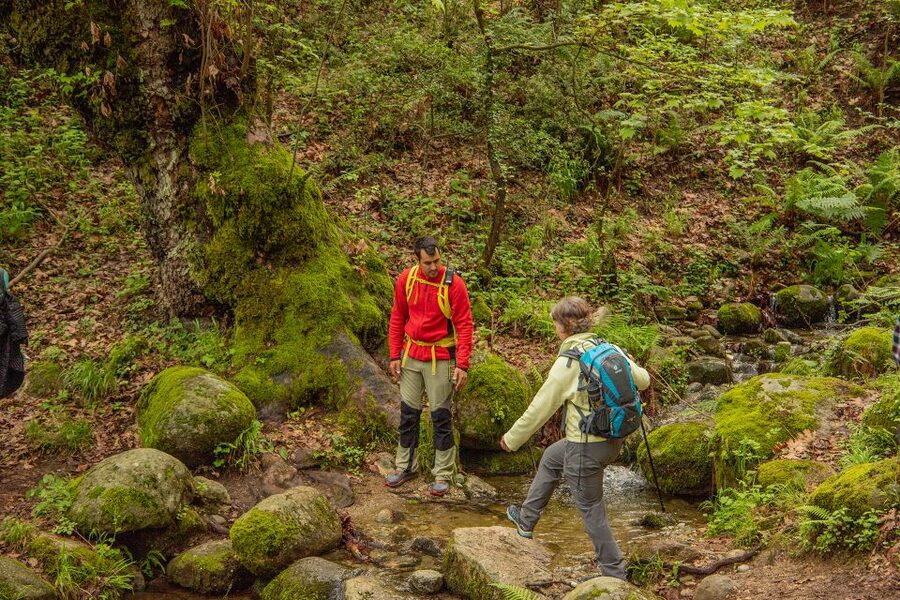
Kastraki is the natural starting point for exploring the lower paths of Meteora. The village sits below the cliffs, and the route quickly shifts from streets to trails and rock.
The first notable stop is Dupiani Hermitage. Meteora’s religious story began with solitary monks seeking caves and ledges high above the plain. At Dupiani, your guide can give this tradition a physical sense: the rocks are not just scenery, but the setting for a demanding form of religious life.
You then pass below the ruined Pantokratoros Monastery on the north side of Dupiani Rock. It is not a polished monument with tidy rooms and signs at every turn. The ruins make the point more strongly: Meteora has seen centuries of worship, abandonment, conflict, and change.
This early part of the walk is also a good warm-up. The path is generally manageable, but it is not a paved promenade. Wear closed shoes with soles that grip the ground. Sandals and flip-flops are specifically unsuitable.
Ypapanti and the ruins of St. Dimitrios
The path continues toward Ypapanti Monastery, a monastery built into the rock. Its setting shows how dramatically the monks used the natural formations. Instead of placing a church beside the cliffs, they worked within the cliffs.
Nearby are the ruins of St. Dimitrios, destroyed by Ottoman forces in 1808 during a local uprising. Your guide supplies the political and religious context, helping you understand why these apparently remote buildings mattered. This is one of the tour’s strengths: you are not only looking at old stones, you are connecting them to local events and the people who lived here.
Guides vary, but the strongest ones add small details without slowing the whole group. Christos and Chris are praised for mixing local stories with geology and nature. Evan is often noted for explaining the route in an easy, friendly way. Dimitris is praised for adapting the pace to different abilities. The exact guide depends on the day, but the tour is conducted in English.
The climb toward Great Meteoron and Varlaam
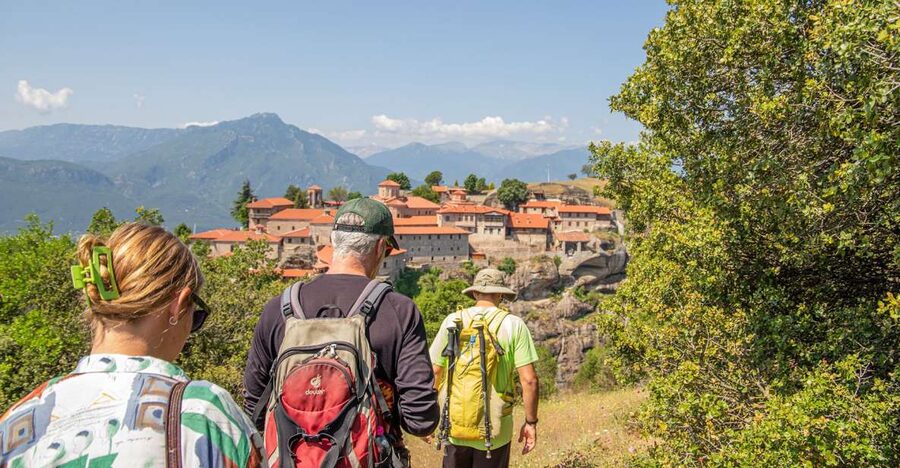
From Ypapanti and St. Dimitrios, the trail rises toward the two major monasteries, Great Meteoron and Varlaam. This is where the hike feels most rewarding and most demanding.
The climb gives you changing views of the rock towers rather than one repeated postcard angle. You see the pillars from below, then from the side, and eventually from higher points. The monasteries appear and disappear behind rock as you walk. It is a much more interesting approach than arriving by road and stepping directly into a ticket line.
The route is described by many participants as suitable for beginners, but that needs a little translation. It is not technical mountaineering, and the pace is usually moderate. Still, there are uphill sections, rocky ground, steep steps, and a descent that can challenge your knees and balance. One experienced older couple found it manageable but still called it a challenge. That is a fair description.
Most of the route may be shaded, which helps in warm weather. Even so, summer heat matters. Bring a hat, water, snacks, and comfortable clothing. One bottle of water is included, but you should not treat that as your entire supply for five hours of walking.
A few more things to do in Kalabaka worth a look
- Meteora: Sunset Hike to Secret Caves
★ 4.9 · 56 reviews - From Chania: Full-Day Samaria Gorge Trek Excursion & Guide
★ 4.6 · 3,191 reviews - From Rethymno: Samaria Gorge Full-Day Trek, Pickup & Guide
★ 4.5 · 1,610 reviews - From Chania/Rethymno: Samariá Gorge Guided Hike with Pickup
★ 4.5 · 1,010 reviews
Visiting one of Meteora’s monasteries
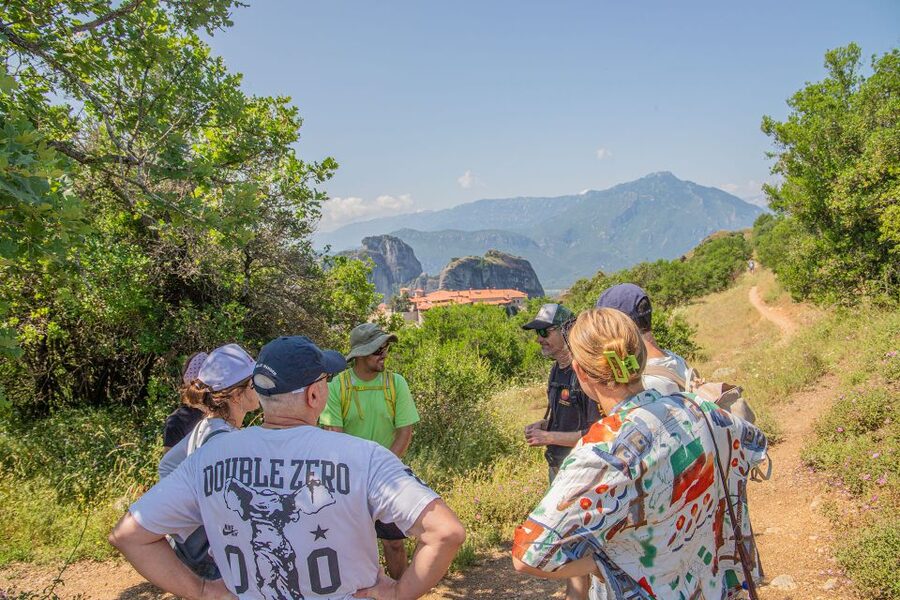
Great Meteoron and Varlaam are two of the six Eastern Orthodox monasteries in the Meteora area. Together with the other monasteries, they form part of a UNESCO World Heritage Site.
The tour reaches both monastery areas, but the paid interior visit is to one monastery. The activity information identifies Great Meteoron or Varlaam, while the planned itinerary gives Great Meteoron a one-hour visit. It is wise to check the exact arrangement for your departure rather than assume you will tour both interiors.
The monastery stop is largely self-guided. Your hiking guide explains what to look for before you enter, but a guide inside the monastery is not included. That arrangement works well if you prefer time to look around at your own pace. It also means you should pay attention to opening hours and any rules given on the day.
Entry costs €5 per person per monastery, not included in the tour price. Bring cash. Modest clothing is required, and sleeveless shirts are listed as not allowed. A hat is useful outdoors, but you may need to remove it inside religious spaces.
Allow about an hour for the visit. That is enough to see the main areas without turning the hike into a rushed dash. It is not enough time to explore every corner of a major monastic complex, so set your expectations accordingly.
The descent to St. George the Madilas
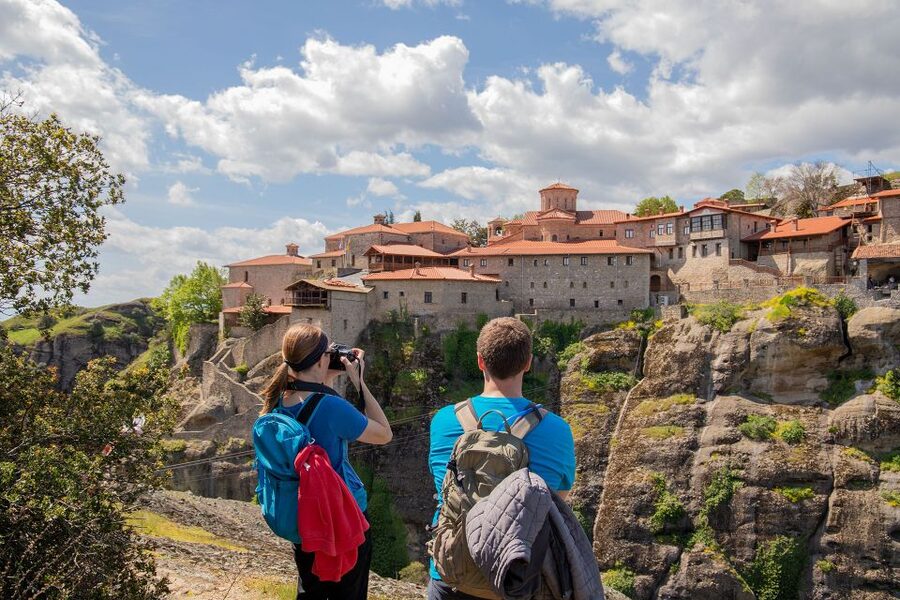
After the monastery visit, the route returns through Meteora for another hour of walking and viewpoints. The descent from the monastery is the part to take seriously.
A downhill trail can be harder than an uphill one, especially over loose or uneven ground. The path is not described as extreme, but several people found the descent more demanding than the climb. Walking shoes or trail-style sneakers with non-slip soles will help. Some guides carry walking poles or offer a stick for extra support.
One memorable stop is St. George the Madilas. The site is connected with a local tradition in which children climb using only a rope to leave offerings to St. George. You do not need to copy that feat. The point is to see the place and understand the unusual customs that grew around Meteora’s cliffs.
This stop also shows the value of having a local guide. A road-based tour might pass nearby without explaining why a rope hangs from the rock or what the site means to local people. Here, the story is part of the walk.
How hard is the hike?
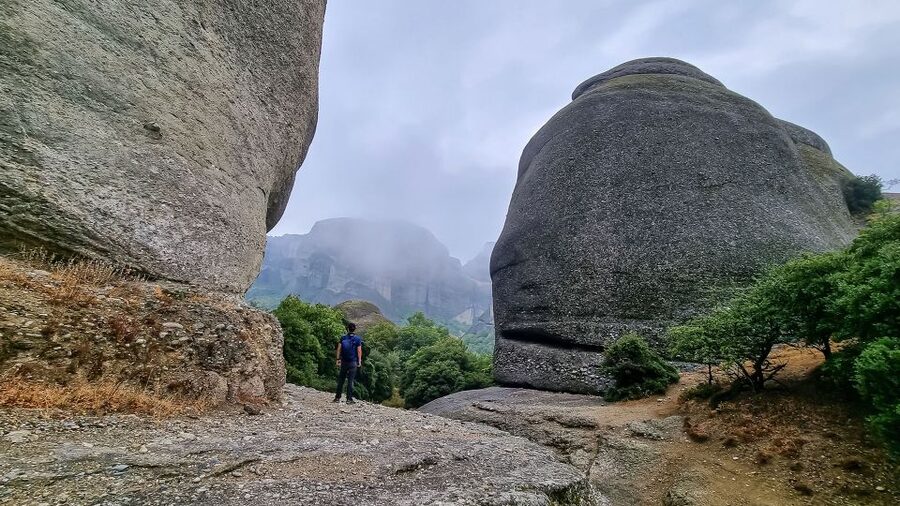
The safest description is moderate, with some steep and rocky sections. Several people with limited hiking experience found the trail accessible, while others pointed out that it is not an easy stroll. Both impressions can be true because the route combines gentle walking with short, more strenuous sections.
You should be comfortable walking for several hours and handling uneven ground. The tour is not suitable for children under seven, people with mobility impairments, people with heart problems, or people with a low level of fitness. It is also not suitable for visually impaired participants, given the rocky trail and changing footing.
The guides appear to take safety and group pace seriously. Stops are built in, and the pace can be adjusted. One guide divided a group into two smaller groups to make the walk more comfortable. That may happen depending on the day and group makeup, but it is not something to count on as a guaranteed feature.
If you have asthma, a foot problem, or another medical concern, think carefully before booking. One person with asthma and a blister still enjoyed the tour, but that is not a reason to ignore your own limits. Meteora rewards a steady pace, not bravado.
What the $35 price really includes
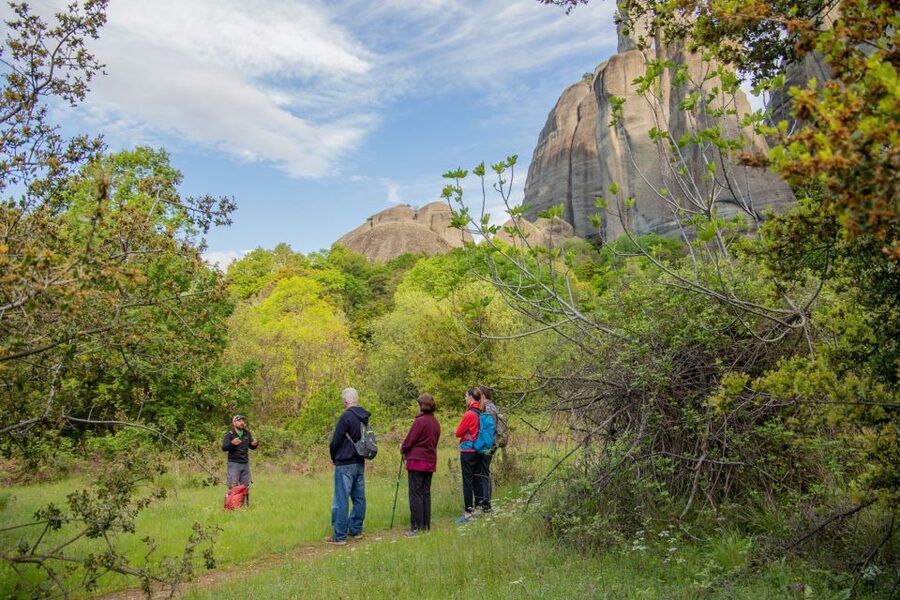
At $35 per person, this is a strong value if you want a guided introduction to Meteora rather than a simple ride between monasteries.
The price includes pickup and drop-off from listed Kalabaka and Kastraki-area hotels, transport to the trailhead, an English-speaking mountain guide, a map, and a bottle of water. The vehicle ride is short, about ten minutes at the start and fifteen minutes on the return, so most of your time is spent walking rather than sitting in a bus.
You will need to add €5 for the monastery entrance. Food and extra drinks are also your responsibility. Bring cash for the entry fee and pack a snack. At this price, the tour gives you access to local route-finding, historical interpretation, and viewpoints that would be difficult to locate on your own.
The main value is not the transport. It is the guide and the route. Meteora has many trails and unusual rock formations, and finding the traditional paths without local help could cost you time or lead you onto the wrong route. If you only want to see monastery interiors, a vehicle tour may be more efficient. If you want to understand how the rocks, monasteries, and local traditions fit together, this hike earns its price.
Morning timing and seasonal comfort
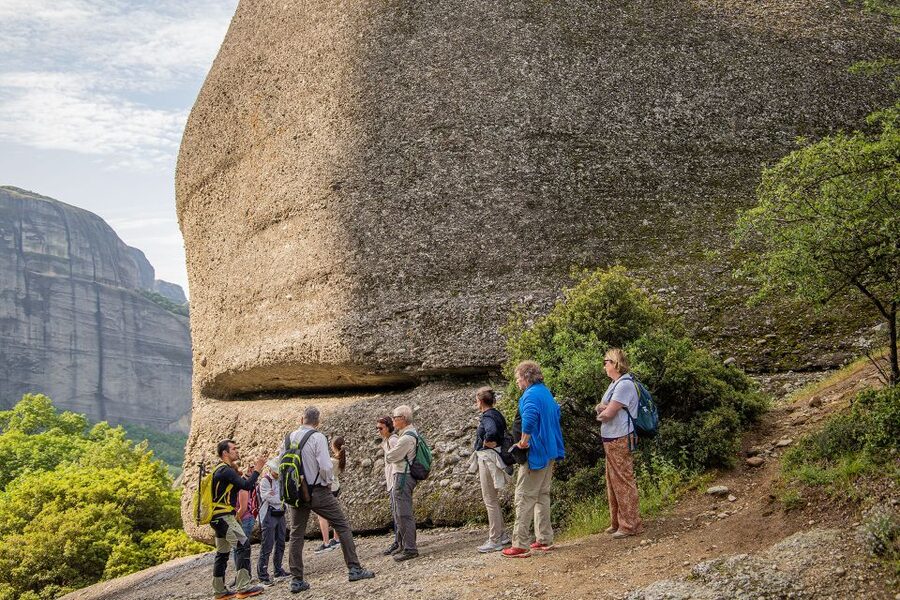
The tour lasts about five hours, with many departures running roughly from 8:30 a.m. to 1:30 p.m. A morning start is smart in warm months because much of the walking takes place before the worst afternoon heat.
Summer can still be hot, especially on exposed sections. Wear light, comfortable clothes that meet monastery dress rules, and carry a hat. Spring and autumn should be pleasant for walking, but weather can change in the hills. Winter rain does not automatically cancel the experience. One rainy-day outing still went ahead and became a memorable walk, but wet rock makes good shoes even more important.
The tour provider offers free cancellation up to 24 hours before departure and a reserve-now, pay-later option. Those policies are useful when weather or transport plans are uncertain, but they do not remove the need to check the forecast and dress sensibly.
Who will enjoy this tour most?
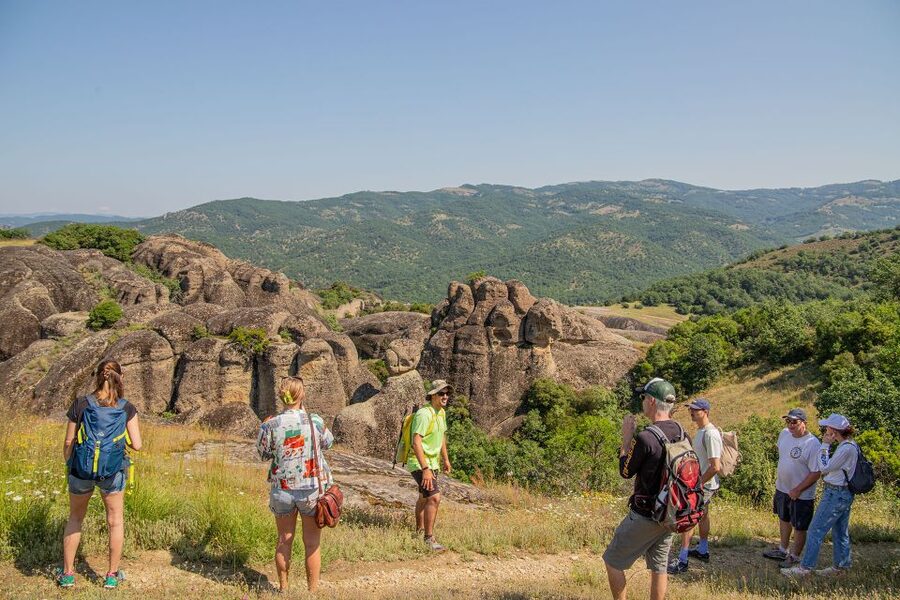
I would choose this tour if you want your first close look at Meteora to include exercise, local stories, and quieter paths. It suits couples, active families with older children, and adults who want more than a photo stop. Children aged nine, eleven, and thirteen have enjoyed the route, but the formal minimum age is seven and the child still needs to manage a genuine hike.
It also suits visitors who value a flexible guide. Evan, Chris, Christos, Dimitris, and other guides have been praised for answering questions, telling stories, and adjusting the pace. That personal element matters in a place where the route, weather, and group fitness can shape the day.
I would choose another option if you have mobility limits, heart problems, very low fitness, or difficulty walking on uneven ground. I would also skip it if your main goal is to tour several monastery interiors. This tour visits one interior and uses the rest of its time to explore the trails.
Should you book the Meteora hiking tour?
Yes, if you can handle five hours on foot and want to see Meteora from below, beside, and above its sandstone pillars. The combination of Kastraki paths, Dupiani Hermitage, Ypapanti, ruined St. Dimitrios, one major monastery, and St. George the Madilas gives you a fuller sense of the area than a quick coach circuit.
Book it with proper shoes, cash for the €5 monastery fee, a snack, and realistic expectations about the descent. The $35 price is especially good for a first visit, since transport, a local mountain guide, and access to lesser-known paths are included.
Skip it only if walking is a serious problem or if you need a relaxed, vehicle-based sightseeing day. For everyone else, this is one of the more personal and active ways to meet Meteora.
FAQ
How long does the Meteora hiking tour last?
The tour lasts about five hours, including transport from Kalabaka, hiking, the monastery visit, and the return transfer.
Which monastery will I visit?
The tour visits one monastery, either Great Meteoron or Varlaam. The planned route reaches the areas of both monasteries, while the interior visit is allocated to one.
Is the monastery entrance fee included?
No. Entry costs €5 per person per monastery and should be paid separately. Bring cash.
What should I wear for the hike?
Wear walking boots, sneakers, or other closed-toe shoes with non-slip soles. Comfortable clothing, a hat, and suitable modest clothing for the monastery are also recommended. Sandals and flip-flops are not allowed for the hike, and sleeveless shirts are not allowed at the monastery.
Is the hike suitable for beginners?
Much of the route is manageable for beginners, and the guide can set a moderate pace with rest stops. However, the trail includes uphill sections, rocky ground, steep steps, and a challenging descent, so basic fitness and steady footing are needed.
Is hotel pickup included?
Yes. Pickup and drop-off are included from the listed Kalabaka and Kastraki-area hotels, including Hotel Dellas Boutique, Hotel Doupiani House, Hotel Kastraki, Hotel Meteora, Hotel Tsikeli, Villa San Giorgio, and many others.
Just added in Kalabaka
- Meteora Sunset Tour on E-bikes★ 5.0 · 54 reviews
- Meteora Electric Bike Tour★ 5.0 · 61 reviews
- From Kalabaka/Kastraki: Meteora Monasteries Morning Tour★ 4.8 · 178 reviews
- Meteora Evening Tour with Breathtaking Sunset View★ 5.0 · 44 reviews
- Meteora: Monasteries Tour, Lunch, and Athens Transfer Option★ 4.8 · 102 reviews
- Meteora: Sunset Small Size Tour with Monastery & Caves visit★ 4.9 · 171 reviews
- Kalabaka: Meteora Monasteries Minibus Tour with Photo Stops★ 5.0 · 74 reviews
- Meteora: Sunset Hike to Secret Caves★ 4.9 · 56 reviews
Meteora Monastery Tours, compared.
Meteora Monasteries Day Trip with Caves and Lunch
Read our review →

Meteora Tour with Local Guide and Greek Lunch
Read our review →
Meteora Monasteries, Caves & Coastal Stopovers with Lunch
Read our review →
Meteora Monasteries & Caves DayTrip from Athens with Greek Lunch
Read our review →
4-Day Classical Greece Tour: Epidaurus, Mycenae, Olympia, Delphi, Meteora
Read our review →Browse the lists this tour appears in