
Reviewed · TOURS IN ATHENS
Unexpected Athens Orientation Tour
Athens is more than ancient stones, and this four-hour walk makes that point early. You move from grand Syntagma Square through upscale Kolonaki, outspoken Exarchia, artistic Psiri, and the market streets of Monastiraki. The result is a useful portrait of the city Athenians live in today, not just the one preserved in museums.
I like the small group limit of 12, which makes it easier to ask questions and keep moving through crowded streets. I also like the way the guides connect neighborhoods to modern Greek politics, architecture, daily life, and the city’s 20th-century story. The main drawback is physical: this is a long walk with some steep climbs, and hot weather can make it tiring.
- Five distinct neighborhoods: See how Athens changes from polished and wealthy to political, artistic, commercial, and market-oriented.
- Modern Athens takes center stage: The tour explains how the Greek capital developed beyond its ancient monuments.
- Small groups help: A maximum of 12 people allows for questions and a more personal pace.
- Local breaks add texture: There may be a coffee stop, water break, or useful food recommendation along the way.
- The route ends well: Monastiraki puts you near food, shopping, Hadrian’s Library, and public transport.
- Wear proper shoes: Four hours of walking, uphill sections, and uneven city streets are part of the deal.
Why This Is a Smart First Walk in Athens
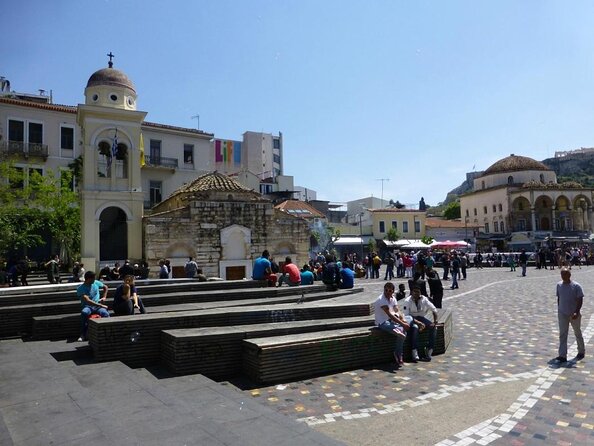
Many first-time visitors arrive in Athens with the Acropolis at the center of their plans. That makes sense, but it can leave you with a narrow picture of the city. This tour gives you a wider frame.
You begin in Syntagma, the formal heart of modern Greece, then move through neighborhoods with very different personalities. By the end, you have seen polished shopping streets, student hangouts, political meeting places, street art, working districts, archaeological remains, and a lively market quarter.
I especially like this approach for the first or second day of a stay. You get a working map of central Athens, learn how the areas fit together, and gather ideas for where to return later. A good guide can also help with lunch, coffee, and neighborhood choices, which is often more useful than another list of monuments.
The guides named in the feedback include Nikos, Leo, Simos, Antigoni, Antigone, Mary Kate, and Elissavet. Their backgrounds and styles differ, but the strongest pattern is clear: this tour depends heavily on the guide. Some guides bring an archaeologist’s eye, others focus on modern history, architecture, social change, or local food. Simos, in particular, is described as an archaeologist and cultural historian, while Leo is praised for explaining how the city’s past appears in buildings, street art, and neighborhoods.
Syntagma Square: Where Modern Greece Begins
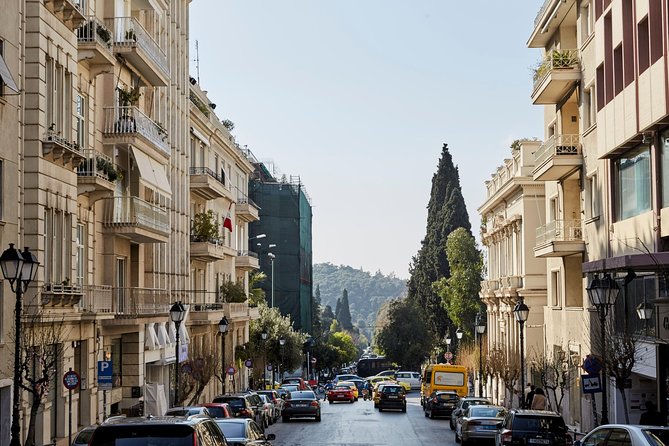
The walk starts at Syntagma Square at 9:30 a.m. This is a practical meeting point because it sits near public transportation and is easy to recognize. The square is dominated by the Greek Parliament, once the Royal Palace, and it remains one of the main crossroads of the capital.
The first half hour gives you a useful introduction to Athens as a national capital. People move through the square all day, and the setting helps explain the difference between Athens as an ancient city and Athens as the center of the modern Greek state.
Do not expect a long formal visit inside a monument. The value here is orientation. You learn where the main central districts sit and begin to understand how Athens operates around its government, streets, shops, and transport links.
Starting here also makes the tour easy to fit into a first morning. You finish in Monastiraki rather than returning to the starting point, so the route takes you across the center instead of simply circling back.
Other days out people book in Athens:
- Athens: Acropolis & up to 5 Archaeological Sites Combo Pass
★ 4.4 · 12,619 reviews - Athens: Acropolis Ticket with Optional Audio or Live Guide
★ 4.2 · 11,055 reviews - Athens: Acropolis, Parthenon & Acropolis Museum Guided Tour
★ 4.8 · 9,316 reviews
Kolonaki and Lykavittos: Athens at Its Most Polished
From Syntagma, the walk heads toward Kolonaki and Lykavittos, the city’s long-established upscale district. This is where you see cutting-edge boutiques, smart sidewalk cafés, and higher-end restaurants.
Kolonaki is useful because it shows an Athens that differs sharply from the Acropolis zone. The streets feel more polished and commercial, and the neighborhood has long been associated with wealth, fashion, and social status. You might not spend money here, but you get a clear sense of how the capital’s social districts are arranged.
The Lykavittos section also brings uphill walking into the picture. The climb is not a minor detail. Several people found the route more strenuous than expected, especially in hot weather, and some sections include steep grades. One older couple in their seventies found the walk manageable, but that does not mean every participant will find it easy.
I would plan on comfortable walking shoes, water, and a sensible pace. The guide may stop for a rest or coffee, but this is not a sightseeing bus tour with long seated breaks. If you have knee trouble or dislike hills, ask about the route before booking.
Exarchia: Politics, Students, and Affordable Food
Exarchia changes the mood. This central district is known for progressive politics, university life, inexpensive tavernas, bars, and snack shops. Its proximity to educational institutions helps give the area a younger, more outspoken character.
This is one of the tour’s most useful stops because it challenges the neat postcard version of Athens. Exarchia has a strong political identity, and the streets offer a way to discuss ideas that shaped modern Greek public life. The neighborhood also helps explain where students and local residents eat and socialize without paying tourist-area prices.
A guide makes a real difference here. Without context, you might see graffiti, busy cafés, or small shops and simply keep walking. With a good explanation, those details become clues about the district’s social and political character.
The route does not promise a meal, and food and drinks are not included. Still, the area can help you decide where to eat later. If you want only ancient temples and polished streets, Exarchia may feel outside your comfort zone. If you want to understand how Athens argues, studies, eats, and changes, it is an important stop.
Psiri: Craftsmen, Street Art, and Evening Athens
Psiri brings another shift. Once associated with small workshops and local craftsmen, it has become one of the city’s popular areas for evening food and drinks. It is also a strong place to look at current street art.
This part of the route works well as a bridge between old working Athens and the city’s newer nightlife culture. You see how a district can retain traces of its former trade life while taking on new uses. The point is not just to admire painted walls. It is to notice how restaurants, bars, workshops, and creative activity sit close together.
Psiri is also a good place to return after the tour. The morning walk introduces the neighborhood, but its food and drink scene are more active later in the day. Your guide may point out places worth trying, although the tour price does not cover any purchases.
I would pay attention to the smaller details here: shopfronts, side streets, building facades, and the way public art changes the feel of a block. The route is designed to show you places you might pass by without understanding.
Same base, a completely different day:
- Athens: Cape Sounion & Poseidon Temple Sunset Half-Day Trip
★ 4.8 · 8,241 reviews - Athens: Acropolis and Parthenon Guided Walking Tour
★ 4.6 · 5,882 reviews - All Day Cruise -3 Islands to Agistri,Moni, Aegina with lunch and drinks included
★ 5.0 · 4,958 reviews - Athens, Piraeus, and Coastline: Blue Hop-On Hop-Off Bus
★ 3.9 · 4,849 reviews
Monastiraki: Ancient Remains and Everyday Commerce
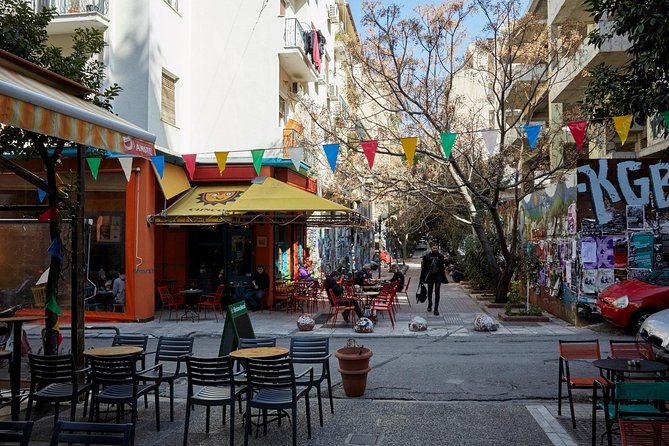
The final stop is Monastiraki, a fitting end for a tour that mixes old and new Athens. This district is known for its flea market, street food, archaeological remains, and surviving Ottoman mosque.
You may see Hadrian’s Library, a reminder that major ancient remains are not isolated from modern city life. They appear beside shops, roads, cafés, and metro entrances. That close contact between daily commerce and archaeology is one of the most revealing features of central Athens.
Another unusual detail here is an underground river hidden beneath a metro station. It is the kind of fact that is easy to miss when you explore alone, and it shows how much of Athens sits above older layers of the city.
The stop lasts about 30 minutes, but you end in a useful location. Monastiraki is well placed for lunch, street food, shopping, and further sightseeing. It also gives you an easy base for continuing your day instead of leaving you in a residential area far from your next plan.
What Four Hours of Walking Really Means
The advertised duration is about four hours, but you should treat it as a serious walking morning. The route includes five neighborhoods, uphill sections, crowded central streets, and planned pauses. One coffee break was especially appreciated, while another person found the tour longer than expected.
The pace is generally relaxed, but relaxed does not mean effortless. You will be on your feet for most of the experience. Wear shoes with good support, carry water, and consider a hat during the warmer months. The tour is much more pleasant when you are prepared for the physical side.
The morning start helps. At 9:30 a.m., you avoid the worst heat of the day in summer, though Athens can still be hot. Starting early also leaves your afternoon free for the Acropolis, a museum, a long lunch, or a return to one of the neighborhoods you discovered.
The route is near public transportation, and most people can take part. Service animals are allowed. Still, the combination of hills, uneven pavement, and four hours on foot means you should judge your own comfort honestly.
Why the Small Group Matters
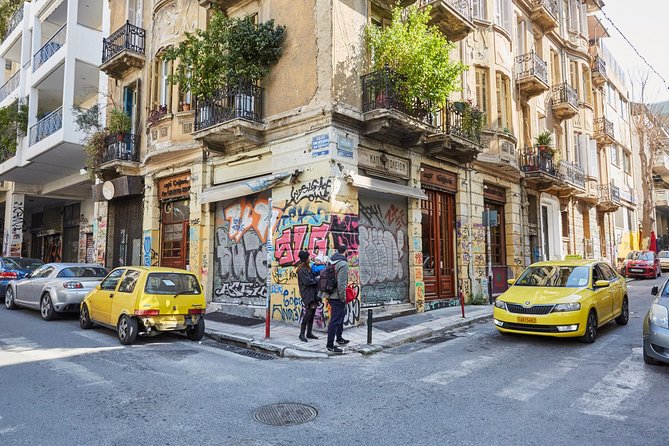
The group limit is 12 people, though the actual number may be smaller. Some tours have ended up with only a few participants, which changes the experience in a useful way.
A small group allows the guide to answer questions without turning every stop into a lecture. It also helps on narrow streets and crowded sidewalks. You are less likely to lose the guide at a busy crossing, and it is easier to hear explanations about street art, buildings, or local customs.
Small groups also make it more possible for the guide to respond to your interests. Elissavet, for example, is described as adjusting the walk as she learned what interested the group and later sharing restaurant suggestions. Nikos is praised for answering questions and helping with lunch ideas. That sort of personal response can be more useful than a fixed script.
The tradeoff is that the experience still depends on the guide assigned that day. The names and styles vary, so you should book this for the route and format rather than expecting a particular person.
Modern History Instead of Ancient Monuments
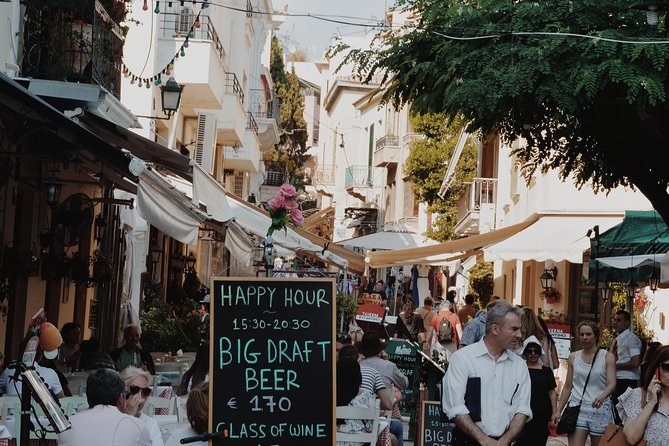
This tour’s strongest feature is its focus. It is not designed to replace the Acropolis, Ancient Agora, or National Archaeological Museum. It shows you the city around those major attractions.
You may hear about the making of the modern Greek state, the development of Athens, the occupation during the Second World War, architecture, intellectual life, and social change. One route included a bunker linked to the hardship of the Nazi occupation, as well as excavated ruins in the middle of commercial streets.
That mix gives the city more depth without turning the walk into a formal academic lesson. Simos, Leo, and the other guides are praised for making history understandable through places you can see directly. The best moments are likely to come when a building, street, or neighborhood answers a question about how Athens became the city it is now.
If you already have several ancient-site tours booked, this is a useful contrast. If your main goal is detailed archaeological interpretation, choose a dedicated ancient-history tour instead.
Price and Overall Value at $64.12
At $64.12 per person, this is not the cheapest way to walk around Athens. You can explore the neighborhoods independently for very little money, especially if you use public transportation and follow a map.
The added value is the interpretation. You are paying for a local guide, a small group, a planned route, and the ability to connect places that might otherwise seem unrelated. You also receive a fun map of Athens, which can help you continue exploring after the walk.
I consider the price fair for visitors who want context and a smoother first look at central Athens. It is less compelling if you prefer wandering alone, already know the city, or have a strict budget. Food, drinks, and hotel pickup are not included, so allow extra money for coffee or lunch.
The tour is booked, on average, well ahead of time, about 53 days in advance. That suggests you should not wait until the last minute if your dates are fixed, especially during a busy season.
Who Should Book This Walk
I would recommend it most strongly to first-time visitors who want to understand Athens beyond the famous ancient sites. It also suits repeat visitors who have seen the Acropolis and now want a closer look at local neighborhoods.
It is a good match for you if you:
- Like walking and asking questions
- Want modern Greek history and culture
- Prefer small groups
- Enjoy seeing several neighborhoods in one morning
- Want restaurant and neighborhood ideas for later
- Are comfortable with hills and warm weather
I would think twice if you dislike long walks, need frequent seated breaks, or want a tour focused only on major monuments. Families can participate, but one piece of feedback suggested that the pace and subject matter may suit adults better than young children. The supplied information does not set a minimum age, so ask before booking if that matters to you.
Booking, Meeting Point, and Cancellation
You meet at Syntagma Square, Plateia Syntagmatos, at 9:30 a.m. The tour ends in Monastiraki, and hotel pickup and drop-off are not provided. Confirmation is normally issued at booking, though last-minute bookings made within one hour of departure are subject to availability.
Free cancellation is available up to 24 hours before the start time for a full refund. Cancellations or changes made less than 24 hours ahead are not refunded or accepted. The experience also requires a minimum number of participants, so a cancellation by the operator may result in an alternative date, another experience, or a full refund.
Should You Book the Unexpected Athens Orientation Tour?
Book it if you want Athens to make sense as a living city, not just an ancient one. The route covers a lot, the group stays small, and the best guides bring modern history, politics, architecture, street art, and food culture into one walk.
I would schedule it near the start of your stay, then use the rest of your trip to return to the neighborhoods that interest you most. Bring water, wear good shoes, and expect some uphill walking.
Skip it if you want a short, gentle stroll or a detailed tour of classical ruins. For everyone else, this is a practical way to get your bearings fast and see parts of Athens you might not choose on your own.
FAQ
Where does the Unexpected Athens Orientation Tour start?
It starts at Syntagma Square, Plateia Syntagmatos, Athens.
What time does the tour begin?
The scheduled start time is 9:30 a.m.
Where does the tour end?
The walk ends in Monastiraki, Athens.
How long does the tour last?
The tour lasts approximately four hours.
How many people can join the tour?
The maximum group size is 12 participants.
Is food or drink included?
No. Food and drinks are not included, although the route may include a coffee or rest stop and guides may offer local suggestions.
Can I cancel for a full refund?
Yes. You can cancel at least 24 hours before the local start time for a full refund. Cancellations or changes made less than 24 hours before the start are not accepted or refunded.
Just added in Athens
- Ceramic and Pottery Creative Workshop with Two Local Artists★ 4.0 · 57 reviews
- Small-Group Women History in Ancient Greece Walking Tour★ 5.0 · 38 reviews
- Athens Old City Private Photoshoot Tour / 2 hrs★ 5.0 · 109 reviews
- Athens: Wine Workshop Create your Own Wine under the Acropolis★ 5.0 · 77 reviews
- Athens: Greek Wines Tasting with Sommelier and Acropolis Views★ 5.0 · 88 reviews
- Wine Trails Private Tour/ Nemea visit 3 wineries from Athens or Nafplion (10 h)★ 5.0 · 44 reviews
- Hydra Private Day Trip by Ferry from Athens with Transfers★ 4.0 · 30 reviews
- FLYING DRESS Photoshoot in Athens – Greece★ 5.0 · 47 reviews
Tours in Athens, compared.
Acropolis & up to 5 Archaeological Sites Combo Pass
Read our review →
Acropolis, Parthenon & Acropolis Museum Guided Tour
Read our review →
Cape Sounion & Poseidon Temple Sunset Half-Day Trip
Read our review →

All Day Cruise -3 Islands to Agistri,Moni, Aegina with lunch and drinks included
Read our review →

Cape Sounio & Poseidon Temple Trip with Audio Guide
Read our review →