Reviewed · TOURS IN ATHENS
From Athens: Aegina Island guided tour in a day
Aegina makes a fine escape from Athens because it gives you ancient sites, island villages, and beach time in one day, without the frantic rush of a multi-island cruise. The ferry crossing takes about 70 minutes, and once you arrive, an archaeologist guide such as Vivian, Vasilis, Vanessa, or Dimitra can add useful context to places you might otherwise see as scattered ruins and churches.
I like the tour’s easy mix of history and free time, especially the two hours set aside for swimming, lunch, or a cold drink by the shore. I also like having island transportation included, since Aegina’s sights are spread out and the road to the monastery and mountain churches is winding. The main caution is cost clarity: the advertised price is $58.87, but you must add €30 for ferry tickets, €10 for the Temple of Athena Aphaia, and your own food.
Key points to know before you book
- The ferry is a practical crossing, not a private cruise: The trip from Piraeus to Aegina takes about 70 minutes each way.
- An archaeologist guide leads the historical visits: Guides including Vivian, Vasilis, Vanessa, Dimitra, and Stavroula have been praised for clear explanations and patient answers.
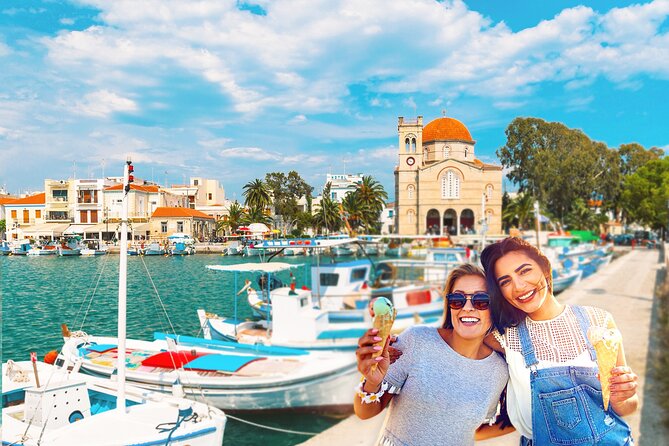
- You get a real break at the beach: About two hours are set aside for swimming, seafood, lunch, or a drink.
- The €30 ferry charge is extra: It includes the pre-booking and service fee plus the sea taxi fare, and tickets are issued before departure.
- The pistachio tasting may be brief: It is a local sample at a shop, not a full food tour or extended tasting session.
- Summer heat can affect the schedule: In very hot weather, the Temple of Athena Aphaia may close during the afternoon.
Why Aegina works so well as a day trip from Athens
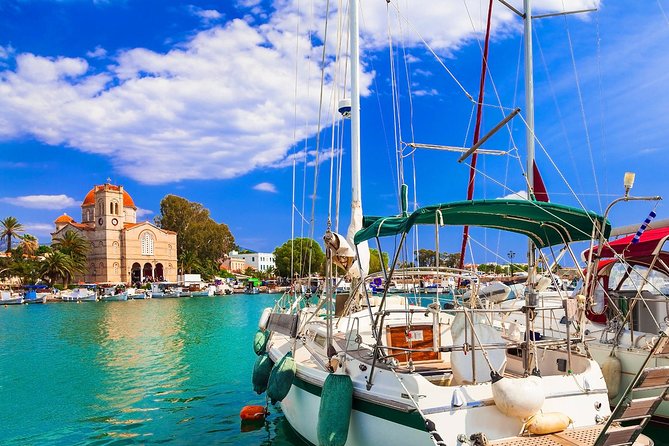
Aegina sits in the Argosaronic Gulf, close enough to Athens for a long day out rather than an overnight trip. That proximity matters. You can leave the city in the morning, cross by ferry, tour several very different parts of the island, and return to the same Piraeus meeting area at the end.
The day lasts about 11 hours, but it is not 11 hours of nonstop guiding. The schedule combines guided sightseeing with open time, which makes the day more comfortable than tours that try to squeeze several islands into one outing. You get a better sense of Aegina itself instead of collecting quick photographs from a boat.
The group can reach up to 50 people, so do not expect a private island tour. The tradeoff is a lower starting price and organized transport, with less flexibility than hiring a car or private guide. The guide does appear to make practical adjustments when possible, especially around lunch, swimming, and the pace of the group.
A few more things to do in Athens worth a look
- Athens: Acropolis Ticket with Optional Audio or Live Guide
★ 4.2 · 11,055 reviews - Athens: Acropolis, Parthenon & Acropolis Museum Guided Tour
★ 4.8 · 9,316 reviews - Athens: Acropolis and Parthenon Guided Walking Tour
★ 4.6 · 5,882 reviews
Meeting in Piraeus at 8:20 a.m.
The starting point is on Astiggos Street in Piraeus, near public transportation. The meeting instructions deserve careful attention. Several people had trouble finding the representatives in the port, and one traveler needed help by text before locating the group.
I would arrive early and keep the tour operator’s contact details handy. Piraeus is a working port with many piers, offices, ferries, and signs. Do not assume that the ferry itself is the meeting point. The tour team handles the ferry booking and gives you the tickets before departure, but you still need to reach the correct meeting area at 8:20 a.m.
The ferry is included in the day’s plan, but not in the advertised tour price. The extra €30 includes €6 for pre-booking and service charges and €24 for the sea taxi fare. This is an important part of the real cost. It also means you do not need to arrange the ferry yourself.
The ferry ride to Aegina
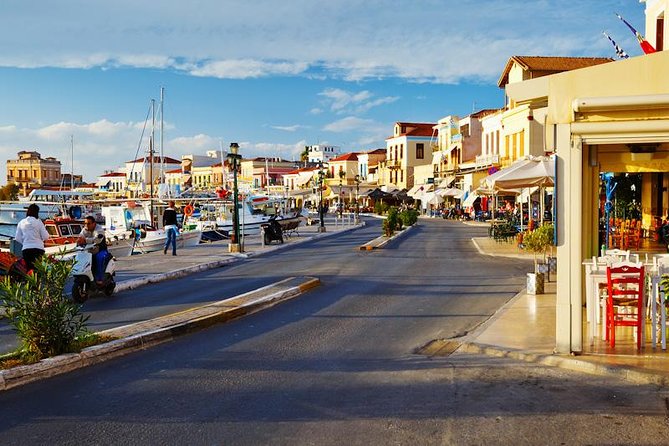
The crossing takes roughly 70 minutes and gives you a useful change of pace after time in Athens. You travel with an archaeologist guide, who can begin explaining the island before you arrive.
This is a standard ferry experience rather than a private boat excursion. That distinction matters because some people book island trips expecting a scenic cruise with dedicated seating or onboard service. Here, the ferry is simply the transport link, and the main value begins once you reach Aegina.
Comfort appears to be a strong point. The ferry was described as comfortable, but remember that conditions and seating can vary. Bring water, sun protection, and a light layer if you are sensitive to wind on the crossing.
Aegina Marina and the first island impressions
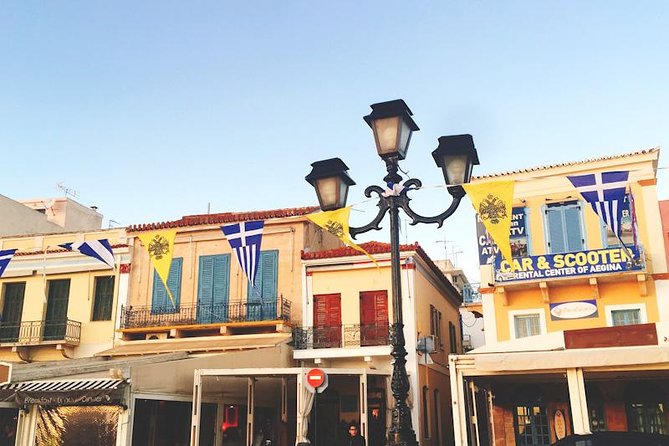
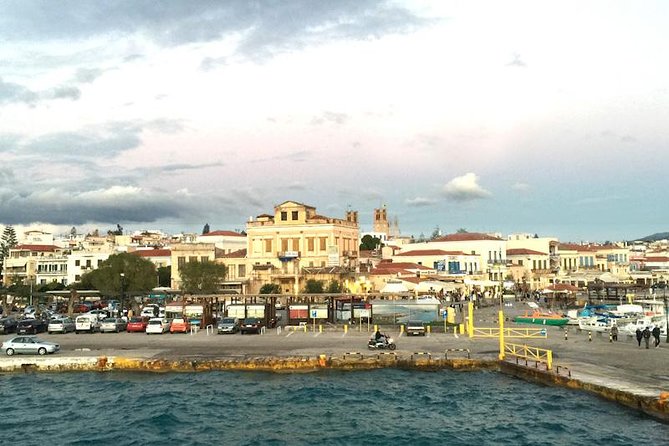
Your first stop is Aegina Marina. This is where the day shifts from city travel to island touring. The guide helps you get oriented and explains how Aegina fits into the wider story of the Saronic region.
The marina area also gives you a first look at the island’s everyday rhythm. You are not sent straight from the ferry into a single monument and then back again. The route gives you time to see how the waterfront, roads, villages, religious sites, and archaeological remains connect.
The island vehicle is included, which is a major practical benefit. Aegina’s sights are not all within walking distance of the port. The transport saves you from arranging taxis or trying to coordinate local buses during a one-day visit.
Same base, a completely different day:
- Athens: Acropolis & up to 5 Archaeological Sites Combo Pass
★ 4.4 · 12,619 reviews - Athens: Cape Sounion & Poseidon Temple Sunset Half-Day Trip
★ 4.8 · 8,241 reviews - All Day Cruise -3 Islands to Agistri,Moni, Aegina with lunch and drinks included
★ 5.0 · 4,958 reviews - Athens, Piraeus, and Coastline: Blue Hop-On Hop-Off Bus
★ 3.9 · 4,849 reviews
Kolona and Aegina’s ancient remains
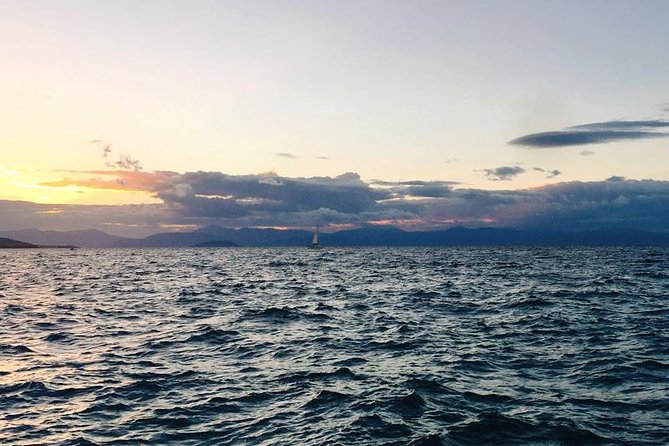
The archaeological focus begins at ancient Kolona, the acropolis area associated with Aegina’s early history. This is where the guide’s archaeological background can make the biggest difference.
On your own, you might see stones, foundations, and a single surviving column. With a trained guide, you can better understand the site as part of an older settlement and religious center. The tour is designed to give you context rather than leave you to decode the ruins from a signboard.
The Temple of Athena Aphaia is a separate highlight later in the route. Its archaic architecture is remarkably well preserved, and the hilltop setting gives the visit a strong visual payoff. The entrance fee is €10 and is not included.
Plan for that extra fee in advance. Free admission is available to European Union citizens up to age 25 with valid identification or a passport, and to non-EU citizens up to age 18. EU citizens aged 65 and over receive reduced admission only from October 1 through May 31. From June through October, including the summer period, the full ticket price applies to seniors.
Heat can affect this stop. One exceptionally hot day, with temperatures above 95 degrees Fahrenheit, led to the ruins closing from 1 to 5 p.m. The site could still be viewed from the main road, but visitors could not walk around the ruins during the closure. If you visit in hot weather, ask the guide about the exact timing and bring a hat, water, and sunscreen.
Paleochora and the churches on the hill
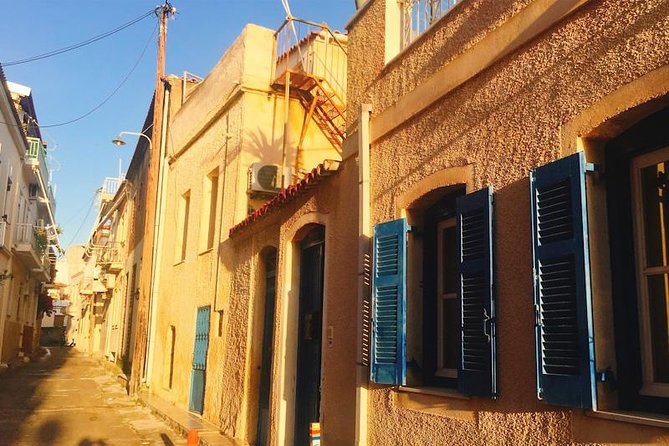
The tour continues to Paleochora, the former Byzantine center of Aegina. The area once had many churches, with 28 surviving structures noted for their wall paintings.
This stop is different from the classical monuments. You are looking at a quieter hillside setting, old religious buildings, and painted interiors that require a slower eye. The guide can help explain the role of the settlement and point out details that are easy to miss.
You may also have the chance to look out from the mountain and take photographs. The road is winding, and the skill of the driver matters here. A strong driver can make the ride much more comfortable, particularly for passengers who do not enjoy sharp turns or narrow mountain roads.
Paleochora is best approached as a place for atmosphere and small details. It is not a single grand monument with a dramatic entrance. Give yourself time to notice the stonework, hillside position, and surviving paintings.
Agios Nektarios Monastery
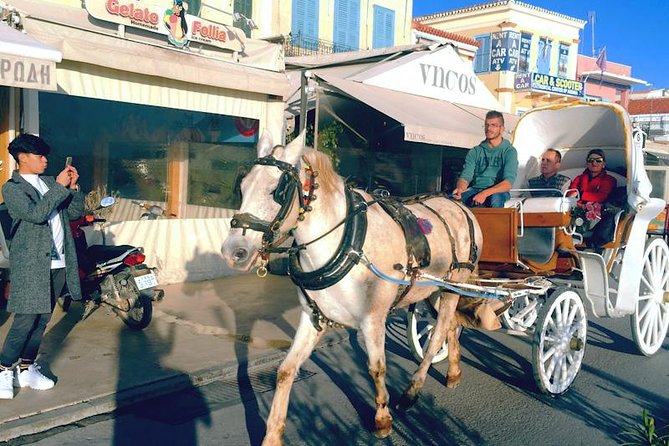
Agios Nektarios Monastery is one of the day’s most striking stops. It is described as one of the largest monasteries in the Balkans, and its scale and setting make it feel very different from the ancient sites.
The visit has a spiritual side, even if you are not religious. Dress respectfully and be prepared for a quieter tone than at the beach or marina. The monastery and church can be a powerful part of the day, especially when the guide explains the importance of St. Nektarios and the site.
The historical background here could be more extensive than the standard visit allows. If St. Nektarios is a major reason for your interest, ask your guide for more detail. Guides such as Vivian and Vanessa have been praised for their explanations of the monastery, while Vasilis has been singled out for his command of Greek history and Aegina’s archaeology.
Two hours for the beach, lunch, and a slower pace
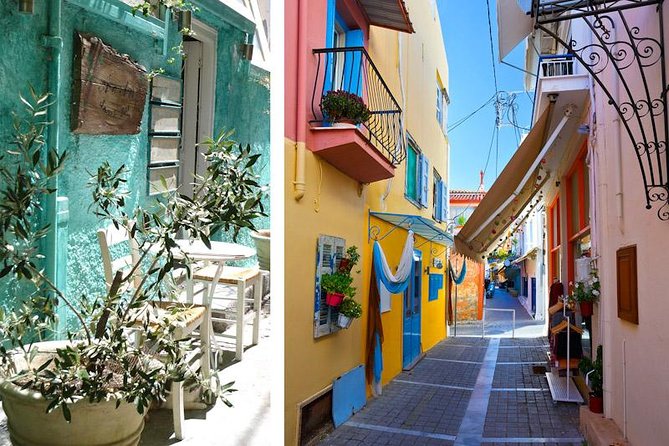
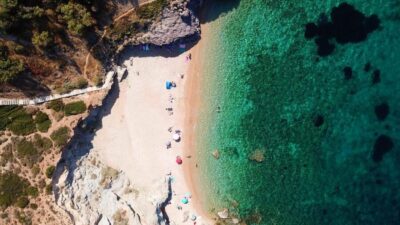
After the historical stops, you get about two hours by the shore. This is one of the tour’s best choices. Aegina can feel hot and full after a morning of ruins and church visits, so time to swim or sit in the shade helps balance the day.
The beach section is not a separate water-sports program. It is open time for swimming, relaxing, eating, or having a drink. You pay for food and drinks yourself, and seafood at a traditional taverna is a natural choice.
Some beach restaurants place tables and chairs directly on the sand, which gives lunch a distinctly Greek island feel. Ask the guide for suggestions on tavernas and swimming areas. Vanessa was noted for giving practical advice about where to swim and which restaurants suited different kinds of meals.
Bring a swimsuit, towel, sunscreen, and a change of clothes. If you want a proper lunch rather than a quick snack, keep enough time for the meal without giving up your swim. The day works best when you accept that you cannot do everything at every stop.
Aegina Town, neoclassical buildings, and pistachios
The final portion takes place in Aegina Town. Here you can wander through the alleys, browse shops, and look at neoclassical buildings connected with the early years of modern Greece. The town is a pleasant closing stop because it brings you back from ancient and religious history to the island’s more recent civic life.
You also get time to sample Aegina’s famous pistachios. The island is known for pistachio products used in sweets and other treats, so this is a good place to try flavors you may not find elsewhere in Greece.
Set your expectations correctly. The tasting can be a small sample at a shop, sometimes just a little pistachio cream on a spoon. Some people find that underwhelming, while others enjoy the chance to try local products before shopping. If you are hoping for a full tasting table with several varieties, this tour may not satisfy you.
Use the town stop to buy packaged pistachios, sweets, or other local products if you want a more substantial taste. You will also have a chance to ask the guide about what is genuinely local and what is simply marketed to visitors.
Winter cooking class and seasonal differences
Winter departures include a cooking class on Aegina. This changes the character of the experience and gives the colder-season version a more hands-on local element.
The exact dishes and class format are not specified, so you should confirm the details before booking if the cooking session is your main reason for choosing a winter date. In warmer months, the beach time is likely to be the more appealing part of the schedule, while winter gives greater emphasis to indoor food and cultural activities.
Season also affects archaeological access. Senior discounts follow the October through May rule, while summer heat can limit access to the Temple of Athena Aphaia. Check the expected weather and do not assume every stop will operate on an identical timetable.
What the $58.87 price really gives you
The base price of $58.87 per person is reasonable for a full-day organized excursion with a guide and island transportation, but it is not the final amount you should budget.
Add:
- €30 per person for the ferry tickets, pre-booking, service fee, and sea taxi fare
- €10 for the Temple of Athena Aphaia
- Lunch, drinks, beach purchases, and optional activities
- Tips, which are discretionary
The ferry charge is handled for you, which removes one task from a busy morning. Still, the price should be presented clearly when you compare this tour with other Aegina options. At maximum group size, this is a large group experience. Its value comes from convenience, transport, and a guide who can connect the sites, not from private attention.
The tour has free cancellation up to 24 hours before the start time. Weather can also lead to a date change or full refund. Changes made inside 24 hours are not accepted, so keep that limit in mind when planning around flights or other fixed bookings.
The guides can shape the whole day
The strongest part of this experience is the guide. Names attached to especially positive experiences include Vivian, Vasilis, Vanessa, Dimitra, Stavroula, and Varoula. Their described strengths include archaeology, Greek history, local culture, clear explanations, patience, and practical help.
You cannot assume a particular guide will lead your departure, so do not book solely to secure one person. Still, the format gives a well-prepared guide room to make the island more meaningful. A good guide can explain why Paleochora matters, add context at the monastery, answer questions about modern Greek life, and help you choose a beach taverna.
Some guides have also helped with practical problems, including late return arrangements. That is useful on a long day, though you should still follow the meeting and return instructions carefully.
Who should book this Aegina day trip?
I would choose this tour if you want a balanced first look at Aegina and do not want to rent a car, arrange ferry tickets, or build a route between distant sites. It suits couples, families, and solo visitors who want history but also need time to swim and eat.
It is especially good for you if:
- You prefer one island at a relaxed pace over a rushed multi-island itinerary
- You enjoy ancient sites but want a beach break
- You value a guide with archaeology or history training
- You want organized transport around the island
- You are comfortable in a group of up to 50 people
I would look elsewhere if you want a private guide, a long food tasting, extensive time at the Temple of Athena Aphaia, or a luxury boat trip. You should also reconsider if unclear port directions would cause stress, though arriving early and contacting the operator can help.
Should you book it?
Book this Aegina tour if you want an efficient day that combines Kolona, Paleochora, Agios Nektarios, Athena Aphaia, a beach, and Aegina Town without managing the details yourself. The archaeologist guide and island transport add real value, and the two-hour beach break keeps the schedule from feeling like a march between monuments.
Go in with clear expectations. Budget for the €30 ferry charge and €10 site entrance, treat the pistachio stop as a small sample, and expect a standard ferry rather than a private cruise. If those terms suit you, this is a strong Athens side trip and one of the better ways to see several sides of Aegina in a single day.
FAQ
How long is the Aegina tour from Athens?
The experience lasts approximately 11 hours, beginning at 8:20 a.m. and returning to the meeting point in Piraeus at the end of the day.
Where does the tour start?
The meeting point is on Astiggos Street in Piraeus, Greece. The area is near public transportation, but you should allow extra time to find the correct meeting location in the port.
Is the ferry ride included in the tour price?
No. Ferry tickets cost €30 per person. This includes €6 for pre-booking and service fees and €24 for the sea taxi fare. The tour team issues the tickets before departure.
How long does the ferry to Aegina take?
The crossing from Piraeus to Aegina takes about 70 minutes.
Is the entrance fee to the Temple of Athena Aphaia included?
No. The entrance fee is €10. Free and reduced admission rules apply to eligible visitors, with different conditions based on age, citizenship, and season.
Is lunch included?
No. Lunch, seafood, drinks, and other food purchases are at your own expense. You receive about two hours for the beach and a meal.
Is the pistachio tasting a full food tour?
No. The activity includes a pistachio sample, but the tasting may be brief. You can buy additional pistachio products and sweets in Aegina Town.
Does the tour include beach time?
Yes. About two hours are set aside for time on a sandy beach, swimming, lunch, or relaxing by the shore.
Is there a cooking class?
Winter tours include a cooking class on Aegina. The supplied details do not specify the dishes or exact format, so confirm those points before booking if the class is important to you.
Just added in Athens
- Ceramic and Pottery Creative Workshop with Two Local Artists★ 4.0 · 57 reviews
- Small-Group Women History in Ancient Greece Walking Tour★ 5.0 · 38 reviews
- Athens Old City Private Photoshoot Tour / 2 hrs★ 5.0 · 109 reviews
- Athens: Wine Workshop Create your Own Wine under the Acropolis★ 5.0 · 77 reviews
- Athens: Greek Wines Tasting with Sommelier and Acropolis Views★ 5.0 · 88 reviews
- Wine Trails Private Tour/ Nemea visit 3 wineries from Athens or Nafplion (10 h)★ 5.0 · 44 reviews
- Hydra Private Day Trip by Ferry from Athens with Transfers★ 4.0 · 30 reviews
- FLYING DRESS Photoshoot in Athens – Greece★ 5.0 · 47 reviews
Tours in Athens, compared.
Acropolis & up to 5 Archaeological Sites Combo Pass
Read our review →
Acropolis, Parthenon & Acropolis Museum Guided Tour
Read our review →
Cape Sounion & Poseidon Temple Sunset Half-Day Trip
Read our review →

All Day Cruise -3 Islands to Agistri,Moni, Aegina with lunch and drinks included
Read our review →
Cape Sounio & Poseidon Temple Trip with Audio Guide
Read our review →