
Reviewed · ANCIENT CORINTH, MYCENAE & NAFPLIO TOURS
4day Spanish tour in Epidaurus Mycenae Olympia Delphi and Meteora
The big draw here is the sheer range of ancient Greece packed into four days. You move from the Lion Gate at Mycenae and the theater at Epidaurus to Olympia, Delphi, Meteora, and the battlefield at Thermopylae, with the scenery changing from the Peloponnese to central Greece and Thessaly.
I like that entrance fees, three breakfasts, three dinners, hotels, and a Spanish-speaking guide are included. I also like the cultural focus: guides such as Gogo, Magdalena, Fanery Aguirre, Estela, Elena, and Zoe have been praised for turning art, mythology, and history into clear stories rather than dry lectures.
The catch is time on the road. Some days involve six to seven hours on the bus, and the group can reach as many as 55 people. This is a strong choice for seeing major sites quickly, but not for a slow, stay-put holiday.
Key points to know before booking
- Five major ancient sites in four days: Mycenae, Epidaurus, Olympia, Delphi, and Meteora form the heart of the trip.
- Spanish guidance throughout: The guide stays with you during the circuit, with headsets supplied for easier listening.
- Hotels and meals are included: You receive three nights in three or four-star hotels, breakfast each morning, and three dinners.
- Long bus sections are part of the deal: The route covers much of mainland Greece, so expect substantial travel between stops.
- Meteora adds a different side of Greece: Two monasteries introduce Byzantine art, mountain views, and religious history.
- A good first circuit, not a relaxed retreat: You see a great deal, but most visits are tightly timed.
Why this four-day Greek circuit works
This trip links places that are awkward to visit independently in a short stay. Mycenae and Epidaurus sit in the Peloponnese, Olympia is farther west, Delphi is across the Gulf of Corinth, and Meteora lies well north in Thessaly. Reaching all of them by public transport would take careful planning and several extra nights.
Here, your transport, guide, admission fees, hotels, and most evening meals are arranged in one package. At $728.56 per person, the price is not bargain-basement, but it covers many expenses that quickly add up on a self-planned trip. The included dinners also make late arrivals easier, since you do not have to find a restaurant after a long coach ride.
The price is most attractive if you value structure and want explanations in Spanish. It is less attractive if you prefer choosing your own restaurants, lingering at one ruin, or changing plans when a site catches your interest.
The group may reach 55 people, so this is a coach tour rather than a private cultural walk. Headsets are included, which matters when you are standing at a temple or theater with a large group. The guide can speak to everyone without asking the front row to crowd around.
The tour begins at 8:00 a.m. at the Melina Mercouri Monument on Leoforos Vasilisis Amalias in Athens and returns to that same meeting point. It is near public transport. Confirmation is provided when you book, and the experience is listed as suitable for most people.
Other monastery and cliff-top days from Athens:
- Athens: Meteora Monasteries Day Trip with Caves and Lunch
★ 4.7 · 2,964 reviews - Athens: Meteora Monasteries Day Tour with Lunch
★ 4.8 · 2,196 reviews - Athens: Meteora Tour with Local Guide and Greek Lunch
★ 4.8 · 1,561 reviews
Day one: Corinth Canal, Mycenae, and Epidaurus
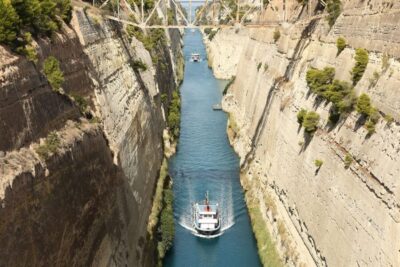
The first stop is the Corinth Canal, where you have about 20 minutes for photographs. The canal links the Saronic Gulf with the Corinthian Gulf, cutting through the narrow strip of land that connects the Peloponnese to mainland Greece.
This is a quick orientation stop, not a guided visit. Keep your expectations modest. You will have time to see the cut through the rock and take photographs, but not to linger or explore the surrounding area.
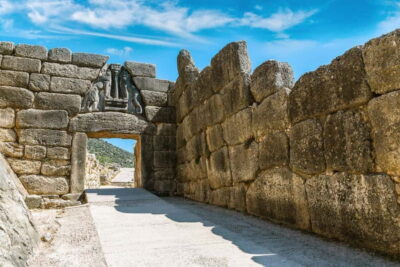
Mycenae is the first major archaeological visit. You spend about an hour around the ancient site, seeing the Lion Gate, Cyclopean Walls, royal tombs, and the Treasury of Atreus, often linked with the tomb of Agamemnon. The local museum is also included in the visit.
Mycenae rewards a guide because the stones alone do not explain the importance of the place. The site connects heroic stories, Bronze Age power, burial customs, and later Greek ideas about the legendary age of Agamemnon. You will need to move at a brisk pace, though. One hour is enough for the principal monuments and museum, but not for a slow examination of every feature.
The theater at Epidaurus brings a completely different mood. The fourth-century BC theater is celebrated for its balanced design and famous acoustics. You have about an hour there, which gives you time to see the seating, stage area, and setting.
Epidaurus is one of the most immediately understandable stops on the trip. You can appreciate the shape of the theater without being an archaeology specialist, and the guide can add context about classical performance and the sanctuary connected with the site. Comfortable shoes are useful because archaeological visits involve walking over uneven ground.
After Epidaurus, you travel to Olympia for the first overnight stay. This is where the day’s main compromise becomes clear: the program covers three significant places, but the coach ride afterward is long. Dinner is included, along with hotel accommodation and breakfast the next morning.
Day two: Olympia and the crossing to Delphi
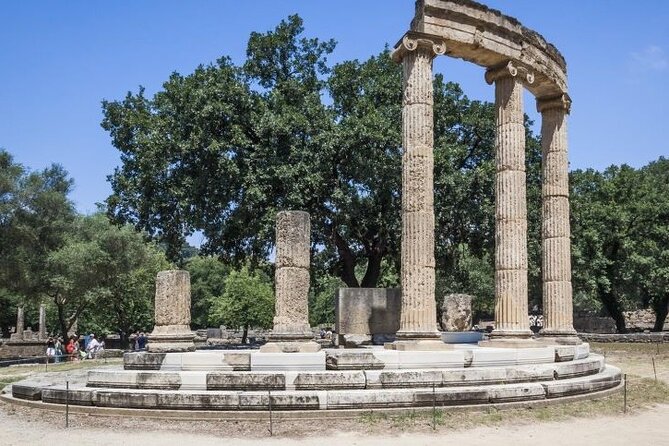
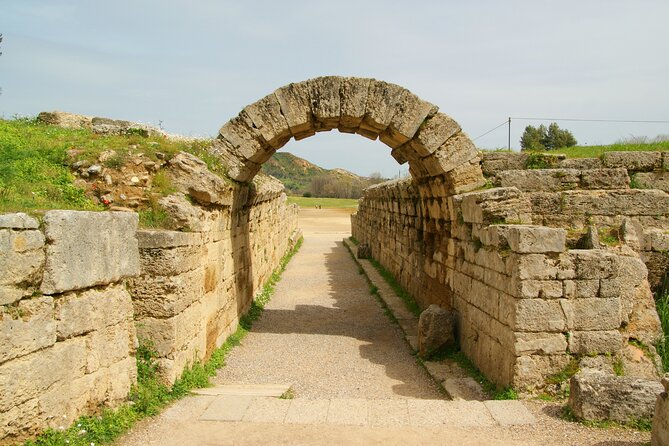
Olympia receives more time than the first-day sites. The morning includes about two hours at the archaeological site, followed by an hour in the Archaeological Museum of Olympia.
The ruins are tied to the ancient Olympic Games, but the importance of Olympia extends beyond sport. The site helps explain how athletic contests, worship, civic identity, and competition between Greek communities came together. A guide can make sense of foundations and scattered columns that might otherwise feel difficult to read.
The museum gives the visit a stronger visual focus. One of its prized works is the statue of Hermes by Praxiteles. You also learn more from the objects removed from the site than from the stones alone, so it is useful that the museum receives a separate hour rather than being treated as an afterthought.
The timing at Olympia is one of the better-balanced parts of the tour. Two hours outdoors followed by an hour indoors gives you a chance to see the main site without rushing through every section. In warm weather, the museum break is welcome.
After Olympia, the coach crosses the Rio-Antirrio Bridge toward mainland Greece. At 2,883 meters, the bridge is a major piece of modern engineering and connects the Peloponnese with the Greek mainland across the Corinth Strait.
This is mainly a travel segment, but it helps you understand the geography of the route. You are not simply moving between isolated ruins. You are crossing a major divide between regions, with the coach carrying you toward Delphi and the mountains of central Greece.
You arrive in Delphi for the night. Since lunch and drinks are not included, plan to pay separately during the day. Dinner is included at the hotel, and the accommodation is listed as three or four star, depending on the booking arrangement.
Day three: Delphi, Arachova, and the road to Kalambaka
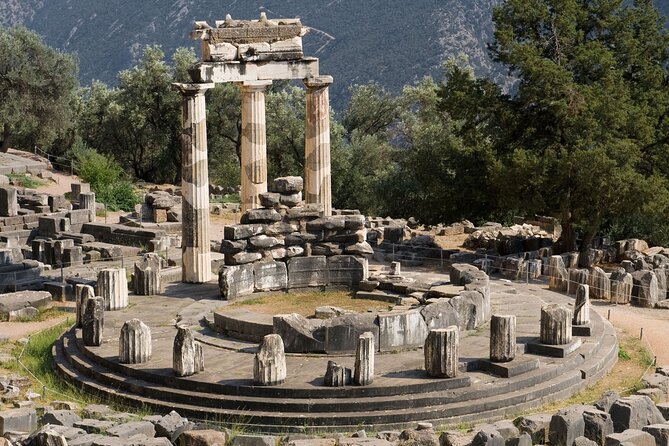
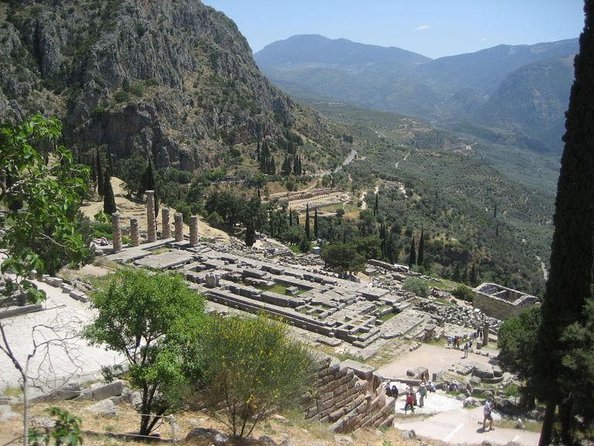
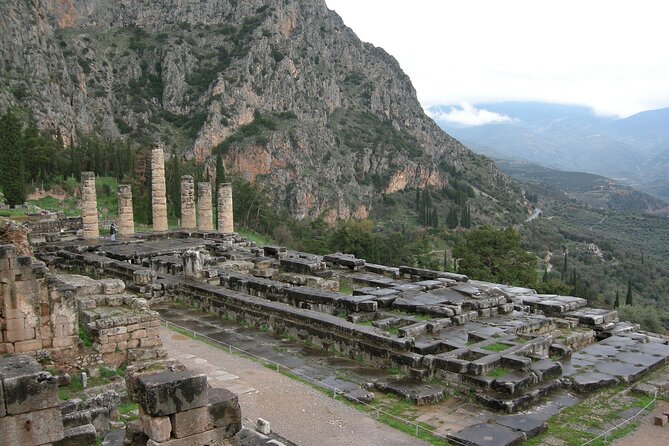
Delphi is one of the intellectual and religious high points of the trip. The archaeological visit lasts about 90 minutes and includes the Sacred Way, the Treasury of Athens, the Temple of Apollo, and a panoramic view from the ancient theater.
The site rises above the surrounding valley, so the setting is part of the experience. The Temple of Apollo is the central focus, but the route through the sanctuary helps you see how pilgrims encountered Delphi. Your guide’s explanations matter here because the remaining columns and foundations need a clear story to connect them.
The Archaeological Museum receives about 45 minutes. Its famous Charioteer of Delphi, a bronze figure of a young athlete, is the key attraction. The museum also gives useful context for the sanctuary, and its compact size makes a short visit worthwhile.
The schedule is tight but sensible. Delphi can absorb a full day if you want to study every detail, but the planned visit covers the main path and principal museum object. If you are especially interested in sculpture or ancient religion, you may wish you had more time.
The coach then passes through Arachova, a mountain town known for local crafts. The stop is listed at about 20 minutes, so treat it as a brief look rather than a shopping expedition. It offers a change from ruins and museums, but you should not expect a long village visit.
The route continues toward Kalambaka, the base town for Meteora. This is another substantial driving day. The reward is that the next morning brings a setting unlike anything earlier on the trip.
More ancient sites within reach of Athens:
- Athens: Mythology of Delphi, Museum and Arachova Guided Tour
★ 4.6 · 4,008 reviews - From Athens: Delphi Full Day V.R. Audio Guided Tour
★ 4.6 · 3,028 reviews - From Athens: Small-Group Delphi, Museum & Arachova Day Trip
★ 4.8 · 2,476 reviews - Delphi English Day Trip from Athens with Official Guide
★ 4.5 · 2,199 reviews
Day four: Meteora and Thermopylae
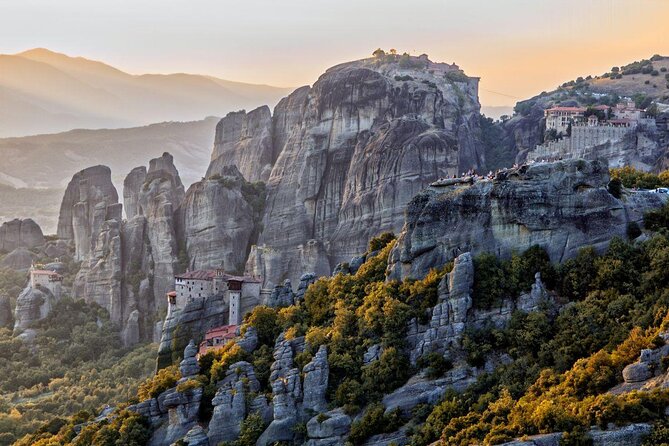
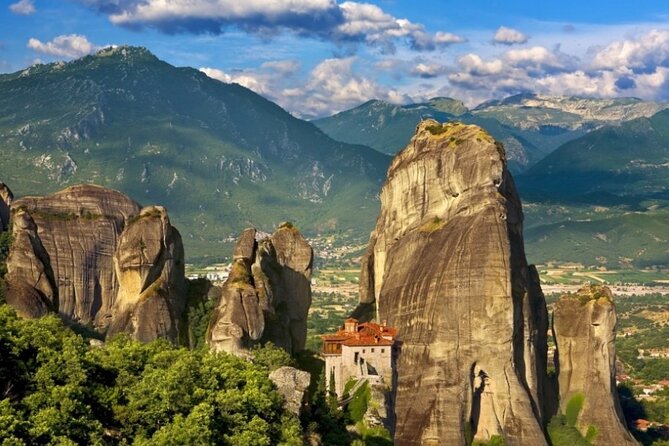
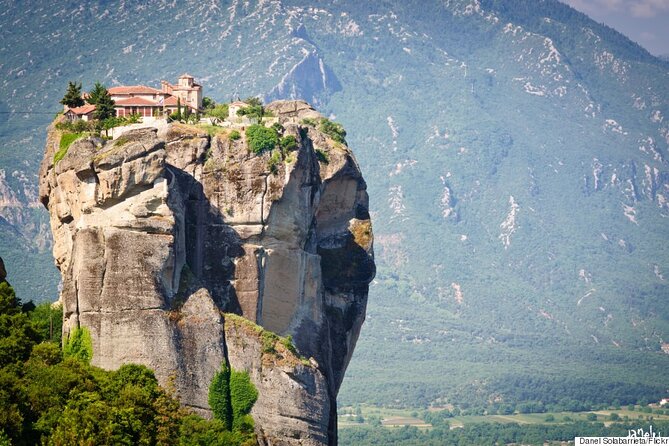
Meteora is the most visually different stop. The monasteries sit on tall rock formations above the Thessaly plain and have been protected as a UNESCO World Heritage Site since 1988.
The program visits two monasteries and allows about two hours in total. This is a visit focused on Byzantine art and religious buildings, but the setting also gives you some of the most memorable views of the entire circuit.
The number of monasteries you enter can matter. Two gives you a useful introduction without turning the morning into a long series of similar stops, but the visit still moves quickly. Dress and behavior should be respectful because these are active religious places. The supplied information does not specify a dress code, so check current guidance before departure if you have concerns.
Meteora also requires a little physical readiness. The tour is described as suitable for most people, but monastery visits can involve steps and uneven surfaces. Anyone who has difficulty walking should confirm current conditions before booking.
The final historical stop is the Leonidas Monument at Thermopylae. You spend about 20 minutes at the statue and battlefield area associated with the famous 480 BC battle.
This is a short stop, but it gives the route a fitting final chapter. After days focused on sanctuaries, athletic contests, palaces, and monasteries, Thermopylae brings the story back to military history and the idea of heroic resistance. It is a photo and orientation stop rather than a full museum visit.
From Thermopylae, the coach returns to Athens and finishes at the original meeting point.
The Spanish guides are a major part of the experience
The guide can make or break a fast historical circuit. Names praised in the supplied feedback include Gogo, Magdalena Kotsakinou, Fanery Aguirre, Estela, Elena, and Zoe. The descriptions of their work repeatedly focus on clear Spanish explanations, strong knowledge of art and mythology, warmth, humor, and the ability to keep a long drive interesting.
You should understand that the exact guide is not guaranteed in the details provided. Still, the repeated emphasis on the guiding gives you a useful clue about the tour’s main strength: it is designed around interpretation, not just transportation.
Spanish is the exclusive guiding language, so this tour makes the most sense if you are comfortable listening to history, art, and practical instructions in Spanish. Headsets are supplied, an important detail in a large group.
The guide also helps with the practical rhythm of the trip. Several comments describe well-timed bathroom and shopping stops, organized departures, and smooth handling of hotel and meal arrangements. That does not remove the long hours on the road, but it can make them easier to manage.
Hotels, meals, and what is not covered
Three nights of accommodation are included in three or four-star hotels, with breakfast and dinner each day. Specific properties cited in the supplied information include Neda in Olympia, Olympique in Delphi, and Orpheus in the Meteora area, though hotel assignment can vary.
The accommodation is intended to meet basic quality needs rather than provide a destination hotel experience. You should expect a practical overnight base after a full day of touring.
Lunch and drinks are not included. This gives you some freedom, but you need to budget for midday food over four days. Tips and personal expenses are also separate.
A hotel fee is charged per room per night. The listed amount is €1.50 in winter and €3 in summer for three-star hotels, and €3 in winter and €7 in summer for four-star hotels. That fee is easy to overlook when comparing prices, so include it in your budget.
The real tradeoff: more Greece, less free time
The strongest reason to book this tour is efficiency. You can see five major ancient sites, two Meteora monasteries, the Corinth Canal, Arachova, the Rio-Antirrio Bridge, and Thermopylae without arranging multiple regional connections.
The cost is time. At least one person found the six-to-seven-hour bus days too demanding, and that concern is fair. The route covers a large part of mainland Greece, so long transfers are not an accident or a minor inconvenience. They are the structure that makes the four-day circuit possible.
I would choose this tour if you have limited time in Greece, want Spanish guidance, and care more about seeing a wide range of places than settling into one region. I would not choose it if you dislike early starts, changing hotels, or coach travel.
The tour is booked an average of 67 days ahead, which suggests that planning early may be sensible for preferred dates. Group discounts are available, adding value for families or larger parties.
Cancellation is allowed for a full refund up to three full days before the start time. Poor weather or failure to reach the minimum number of participants can lead to a changed date or a full refund.
Should you book this Spanish Greece tour?
Book it if your goal is a broad first look at mainland Greece with strong Spanish interpretation and many costs bundled together. You will see places that are hard to connect efficiently on your own, and the mix of ancient sites, Byzantine monasteries, modern engineering, and battlefield history keeps the four days varied.
Think twice if you want relaxed meals, long museum visits, or several nights in one hotel. The program is demanding, and the largest groups may feel impersonal.
For the right person, this is a practical cultural circuit: ambitious, well organized, and packed with major stops. Just board the coach knowing that the road between the monuments is a large part of the experience.
FAQ
Where does the tour begin?
It begins at 8:00 a.m. at the Melina Mercouri Monument, Leoforos Vasilisis Amalias 54, Athens.
Where does the tour end?
The tour ends back at the original meeting point in Athens.
Is the tour conducted in Spanish?
Yes. The professional guide is exclusively Spanish-speaking.
How long is the tour?
The experience lasts approximately four days and includes three nights of accommodation.
Which major archaeological sites are included?
The route includes Mycenae, Epidaurus, Olympia, Delphi, and Meteora. It also includes the Corinth Canal and a stop at the Leonidas Monument in Thermopylae.
Are entrance fees included?
Yes. Entrance fees to the listed places of interest are included.
Are hotels and meals included?
Three or four-star accommodation, three breakfasts, and three dinners are included. Lunch and drinks are not included.
How large can the group be?
The group can include up to 55 participants.
Can I cancel for a full refund?
Yes, if you cancel at least three full days before the experience start time. Cancellations made later are not refundable under the stated policy.
More Ancient Olympia tours from Athens
- 4-Day Classical Greece Tour: Epidaurus, Mycenae, Olympia, Delphi, Meteora
★ 4.5 · 732 reviews - 3-Day Classical Greece Tour: Epidaurus, Mycenae, Nafplion, Olympia, Delphi
★ 4.5 · 342 reviews - 4-Day Tour of Mycenae, Epidaurus, Olympia, Delphi & Meteora
★ 4.8 · 168 reviews - 4-Day Greece Highlights Tour: Epidaurus, Mycenae, Olympia, Delphi and Meteora
★ 5.0 · 79 reviews
More Corinth and Mycenae tours from Athens
- From Athens: Mycenae, Epidaurus & Nafplio Full Day Trip
★ 4.8 · 2,438 reviews - From Athens: Mycenae, Epidaurus & Nafplio Full-Day Tour
★ 4.5 · 1,580 reviews - From Athens: Ancient Corinth Day Trip with Canal & VR Guide
★ 4.6 · 1,073 reviews - Private Biblical Tour Ancient Corinth & Isthmus Canal from Athens
★ 5.0 · 762 reviews
Just added in Athens
- Ceramic and Pottery Creative Workshop with Two Local Artists★ 4.0 · 57 reviews
- Small-Group Women History in Ancient Greece Walking Tour★ 5.0 · 38 reviews
- Athens Old City Private Photoshoot Tour / 2 hrs★ 5.0 · 109 reviews
- Athens: Wine Workshop Create your Own Wine under the Acropolis★ 5.0 · 77 reviews
- Athens: Greek Wines Tasting with Sommelier and Acropolis Views★ 5.0 · 88 reviews
- Wine Trails Private Tour/ Nemea visit 3 wineries from Athens or Nafplion (10 h)★ 5.0 · 44 reviews
- FLYING DRESS Photoshoot in Athens – Greece★ 5.0 · 47 reviews
- Small-Group Wine Tour in Athens with Tasting★ 5.0 · 33 reviews
Ancient Corinth, Mycenae & Nafplio Tours, compared.
Ancient Corinth Day Trip with Canal & VR Guide
Read our review →
Private Biblical Tour Ancient Corinth & Isthmus Canal from Athens
Read our review →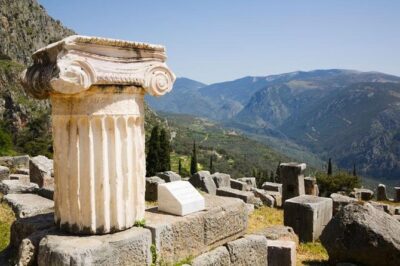
4-Day Classical Greece Tour: Epidaurus, Mycenae, Olympia, Delphi, Meteora
Read our review →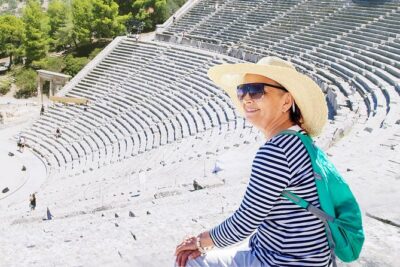
Ancient Corinth & Nafplio Full Day Trip with Swim
Read our review →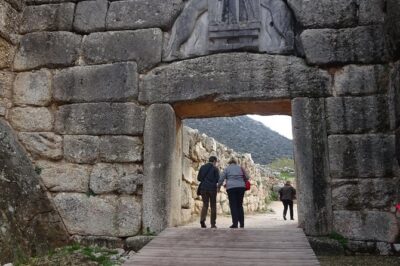
Mycenae and Nafplion Day Trip from Athens with Official guide
Read our review →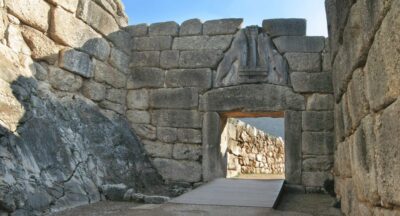
Browse the lists this tour appears in