Reviewed · TOURS IN ATHENS
Marathon, Thermopylae, Thebes/Plataea, Herodotus Private Tour 10h
The most unusual thing about this Athens day trip is that it takes you to the actual ground where the Persian Wars unfolded. You will see the burial mound at Marathon, the pass at Thermopylae, and the battlefield at Plataea, rather than simply hearing about them in a city museum. This is a military-history tour first, with scenery and museums filling out the story.
I like the private format and the amount of preparation built into the drive. Your guide can use maps, booklets, and historical documentaries to explain each stop before you arrive, and the air-conditioned car makes a long day far easier. I also like the flexibility: past guides such as Christos and Nikos have adjusted stops, added photo breaks, and even fitted in Salamis or Delphi when time allowed.
The drawback is the pace. Marathon, Thermopylae, Thebes, and Plataea cover a large area, so you will spend many hours in the vehicle and only brief periods at some battle sites. If ancient military history is not your main interest, the day may feel like a lot of empty ground and highway for the price.
Key points to know before booking
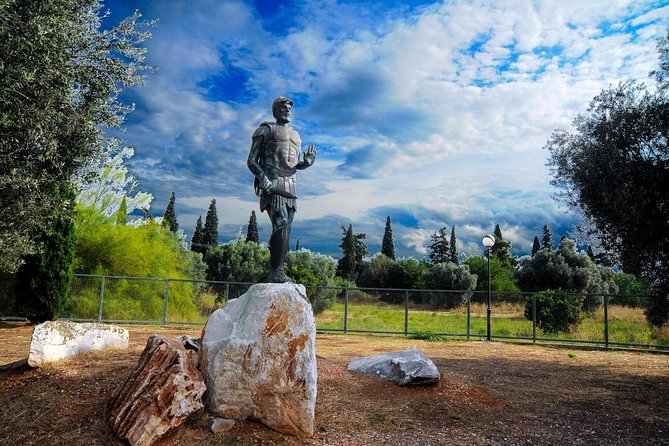
- You visit three major Persian War battlefields: Marathon, Thermopylae, and Plataea, with Salamis or Delphi possible only if time and your guide permit.
- The tour lasts about 10 hours: An early 7:30 am departure gives you the best chance of fitting in the full route.
- The private car matters: You get hotel pickup, air conditioning, fuel, tolls, parking, and a driver-guide for your own group.
- The museums add essential context: The Archaeological Museum of Marathon and Archaeological Museum of Thebes help connect the open fields to real artifacts.
- The sites are not major ruin complexes: Expect monuments, burial mounds, springs, roads, and broad battle areas rather than extensive ancient remains.
- Budget for entrance fees: Museum and site admissions are not fully covered, with the stated combined estimate ranging from about €18 in winter to €20 in summer.
Why this private battlefield tour is different
Most Athens excursions focus on temples, islands, or famous classical ruins. This one follows a military route through central Greece, asking you to picture armies moving across fields, mountain passes, and coastal plains.
That approach works best when you already have some interest in the Persian Wars. Reading the relevant sections of Herodotus before you go will make the stops more satisfying, since the guide can point out how geography shaped each battle.
You are not joining a large coach group. The vehicle may be a sedan for up to three adults, a minivan for up to seven people, or a minibus for up to 14. The exact price varies with group size and vehicle type, while the quoted rate is $331.32 per person.
That price is high for a day trip, but it covers private transportation, fuel, toll roads, parking, hotel pickup and drop-off, and a full day with an English-speaking driver-leader. For two or three people who would otherwise need to arrange several separate taxis or a rental car, the convenience can make sense.
I would not book it simply because you want to see attractive Greek countryside. The tour is built around battle sites, interpretation, and long drives. Its value depends heavily on how much you want to stand where ancient armies fought.
A few more things to do in Athens worth a look
- Best of Athens Half Day Private Tour
★ 5.0 · 3,714 reviews - Athens Full Day Private Tour
★ 5.0 · 2,903 reviews - Athens Airport Private Arrival Transfer with Meet & Greet
★ 4.5 · 1,495 reviews
Marathon Tomb and the first Persian War
The day usually begins with the Marathon Tomb, about 1 kilometer west of Marathon beach. This 10-meter-high burial mound marks the burial place of Athenian soldiers who died in the Battle of Marathon in 490 BC.
The mound is not a huge archaeological complex. You will spend about 20 minutes here, and the entrance fee is not included, with a listed price of €5 or €3 reduced admission. The attraction is the setting and the meaning of the mound. Once your guide explains the battle, the open ground becomes easier to read.
This is one place where preparation helps. The Persian landing, the Athenian response, and the famous run from Marathon to Athens are easier to understand when you can see the coastal plain and the direction of the modern road.
The next stop is Schinias, on Marathon Bay. Today it is known for clear water and beach facilities, but the coastal setting also helps explain why the bay mattered to an invading force. The stop lasts only about 15 minutes and is free, so expect a quick look and perhaps a photo rather than a beach visit.
You then continue along Leoforos Marathonos, the road linked with the modern Athens Marathon. The race begins in the modern town of Marathon and finishes at Athens Olympic Stadium. This brief stop connects ancient Marathon with a modern athletic tradition that still gives the name international meaning.
The Archaeological Museum of Marathon
The Archaeological Museum of Marathon is about 5 kilometers from the bay. Its exhibits cover several periods, including Neolithic pottery from the Cave of Pan and finds from the Tomb of the Athenians.
This museum is important because the battlefield itself is visually quiet. The artifacts provide physical evidence for the people and communities connected with the area. You will have about 20 minutes, and admission is included in the itinerary details, though the general note about entrance fees says museum costs are generally paid separately. Confirm the current admission arrangement when booking.
The short visit is useful, but it is also a limitation. Twenty minutes is enough for an introduction, not a careful museum study. If you want to read every label or spend time with individual objects, this schedule may feel too tight.
The museum is closed every Tuesday. That matters because the route has several museum stops, and a Tuesday departure could remove both Marathon or Thebes museum time from the day. Check the opening schedule before you choose your date.
The long road to Thermopylae
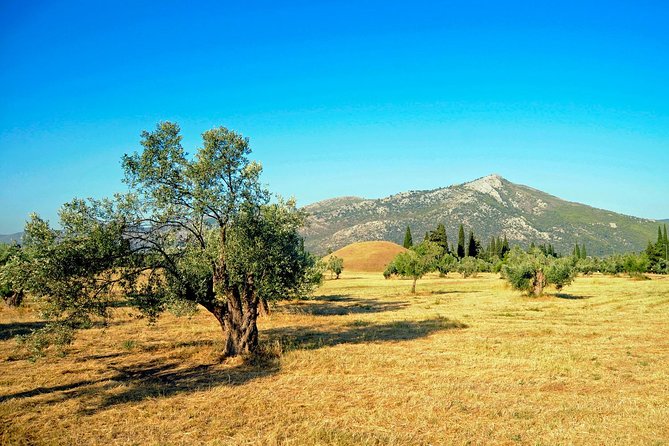
After Marathon, the tour turns toward Thermopylae. This is where the day becomes a major driving trip rather than a collection of nearby Athens sights.
The journey is part of the experience, but it demands stamina. Guides provide maps, booklets, and audio or video material during the drive, which helps turn the road time into a history lesson. Christos, a guide praised for safe driving and clear explanations, has used historical videos before arrival. Other guides named for this route include Nikos, Nikolaus, and Phillipi.
The private setup gives you more control than a fixed coach tour. You can ask for a break, request a scenic photo stop, or discuss the amount of time spent at each place. Still, do not assume the schedule can expand without limit. Extending beyond 10 hours costs an additional €30 per hour for a sedan, €45 for a minivan, or €60 for a minibus.
Same base, a completely different day:
- Athens: Acropolis & up to 5 Archaeological Sites Combo Pass
★ 4.4 · 12,619 reviews - Athens: Acropolis Ticket with Optional Audio or Live Guide
★ 4.2 · 11,055 reviews - Athens: Acropolis, Parthenon & Acropolis Museum Guided Tour
★ 4.8 · 9,316 reviews - Athens: Cape Sounion & Poseidon Temple Sunset Half-Day Trip
★ 4.8 · 8,241 reviews
Thermopylae and the Hot Gates
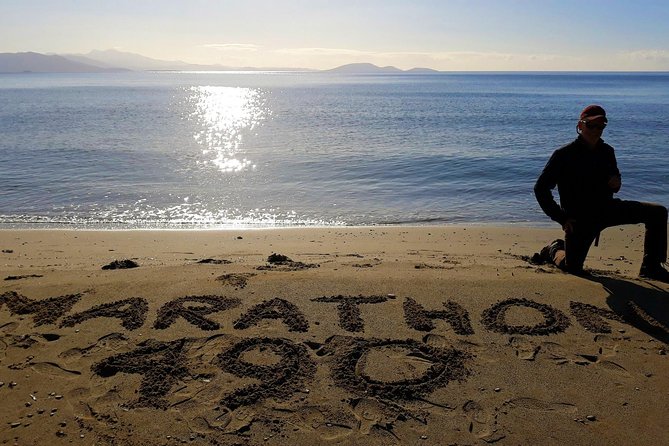
Thermopylae is the emotional center of the tour. In 480 BC, Greek forces, including the Spartans, tried to hold this narrow passage against the Persian army. The site is tied to the famous epitaph for the fallen Spartans, and the terrain explains why the pass was so important.
Your stop at the battlefield lasts about 30 minutes and is free. The modern geography has changed, so you should not expect the pass to look exactly as it did in antiquity. Your guide’s explanation is crucial here. The value comes from relating the present road, mountains, and plain to the ancient route.
There is a practical safety issue. One past participant found that reaching part of the Thermopylae site required crossing a busy highway. Ask your driver to handle the approach carefully and do not rush across simply to save a few minutes.
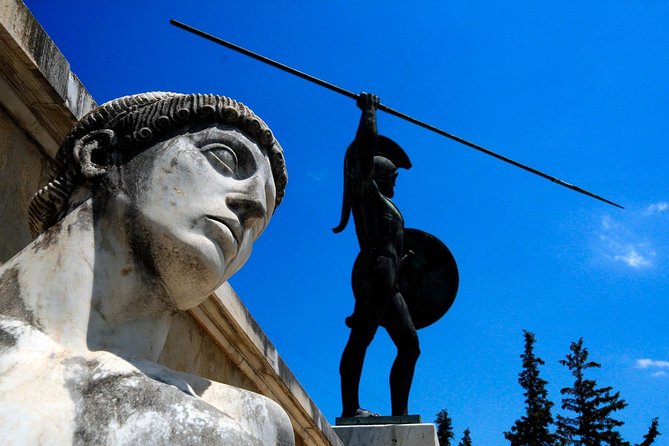
Next comes the Thermopylae Museum, beside the Leonidas monument. This interactive museum focuses on the 480 BC battle and uses displays to explain the conflict. Admission is listed at €3, with €1 reduced admission, and the planned visit lasts 30 minutes.
The museum is small enough to fit into a packed day, but it adds useful structure to what can otherwise be a difficult site to visualize. I would give priority to the museum if you must choose between lingering at the monument and studying the displays.
The final Thermopylae stop is Loutra Thermopilon, the hot springs. The name Thermopylae means hot gates, and the springs are connected with the area’s ancient identity and mythology. You have about 15 minutes here, with no admission charge.
This is a brief atmospheric stop, not a bathing session. It gives you a different way to understand why the pass was named as it was, but it will not replace the battlefield explanation.
Thebes and Plataea, where the story continues
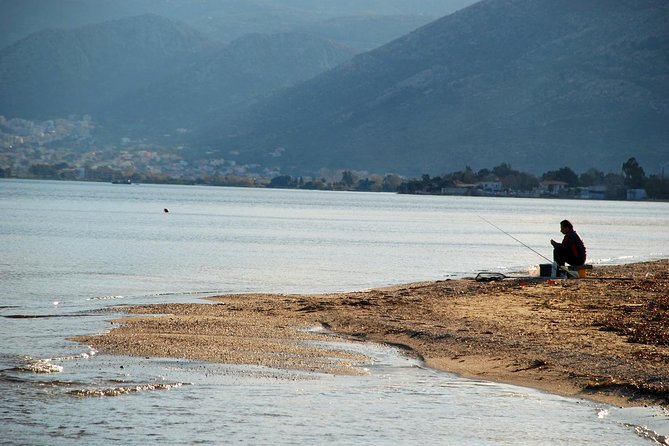
The route then heads through Thebes to the Archaeological Museum of Thebes. This is the longest museum visit of the day, at about one hour.
The collection covers Boeotia from the Paleolithic period through the post-Byzantine era. That broad range makes the museum valuable even though the tour’s main focus is the Persian Wars. The exhibits help place the battles within a much older regional story, rather than treating the area as a backdrop for one famous conflict.
General summer admission is listed as €10, with reduced winter admission of €5. The museum is closed Tuesdays. Since museum visits are not fully covered in the tour price, include these fees in your budget.
Plataea follows, with about 30 minutes at the battlefield. The battle in 479 BC helped end the Persian invasion of mainland Greece, and the stop at Gargaphia Spring marks the reported beginning of the battle.
Plataea is exactly the kind of site that rewards a guide. You will not find a grand ruin complex waiting in a dramatic setting. Instead, you will see open ground and a spring, then use the explanation to picture troop movements and the relationship between the different forces.
This stop also completes the military arc. Marathon shows an earlier Greek victory. Thermopylae shows sacrifice and defeat in a delaying action. Plataea shows the later push that helped drive the Persian forces from Greece. The sequence makes sense as a story, but only if you pay attention during the driving portions.
Mount Cithaeron and the return to Athens
The return passes through Mount Cithaeron and the area of ancient Eleutherai on the old Athens to Thebes road. The route includes the old fortress area known as Gyftokastro, a strategic position that controlled the narrow passage between Athens and Thebes.
You also pass through the Elefsina area before following the coastal road back toward Athens. These sections are viewed from the vehicle rather than explored as major walking stops.
The mountain road adds variety after several battlefield visits. It also shows why routes through central Greece mattered so much in ancient warfare. Ask your guide to point out Eleutherai if the timing allows, since this section could otherwise pass quickly from the back seat.
The tour returns to Athens after roughly 10 hours, though traffic and the length of museum visits can affect the final arrival. Starting at 7:30 am, or earlier in summer, is sensible. A late start would put pressure on the museum visits and make optional detours less likely.
What the private guide adds
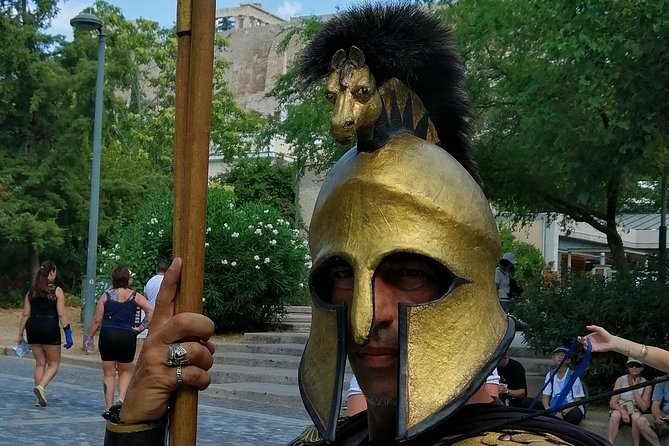
The guide is the main reason to choose this tour over renting a car. You are not only being driven from point to point. The driver-leader provides historical details, maps, booklets, and an audio documentary or videos during the journey.
Past guides have also shaped the day in practical ways. Christos has been praised for a clean Mercedes sedan, safe driving, bottled water, phone charging, and help with photographs. Nikos and Nikolaus have led groups through the battlefields with historical explanations, while Phillipi has been singled out by name as a guide worth requesting if available.
Guide assignment is not guaranteed, so treat these names as useful requests rather than promises. The strongest guide for you will be someone who can explain the battles in a way that connects geography, strategy, and the surviving evidence.
The private format also makes this a good choice for families or small groups with shared interests. Two children up to age 11 are listed as free in the sedan, minivan, and minibus arrangements. Confirm the exact vehicle and pricing terms for your party before paying.
Price, extra costs, and practical planning
The published price is $331.32 per person. That figure should be judged against what is included, not compared only with a cheap group bus excursion.
You receive a private air-conditioned vehicle, fuel, tolls, parking, pickup and drop-off within the central Athens area, and an English-speaking guide-driver. Pickup is offered from hotels or apartments in Athens and Piraeus, but locations more than 7 kilometers from central Athens carry an extra charge.
The information gives two different pickup surcharges, €15 and €25 per way, so confirm the exact amount for your location. Piraeus port and the cruise terminal cost extra, while airport and Lavrio port transfers require prior agreement. The tour is not a standard airport transfer with sightseeing added on.
Entrance fees are separate. The stated combined estimate for Marathon, Thermopylae, and Thebes is about €18 per person, with winter and summer prices differing. Carry enough for museum admissions and ask which stops are covered on your chosen date.
Gratuities are listed at €1 per person, though you can decide what feels appropriate based on the service. Free cancellation is available up to 24 hours before the start time. Changes or cancellations inside that window are not accepted for a refund.
Who should book this 10-hour route?
You should book it if you teach, study, or simply enjoy ancient military history. It is especially good for anyone who wants to connect Herodotus with real places and understands that a battlefield may be an empty field rather than a ruined city.
It also suits a small group that values privacy and does not want to manage Greek highways, tolls, parking, and museum timing. The driver can make the day less tiring and may help you fit in a photo stop or short break.
You should think twice if your ideal Greek day includes long meals, slow museum visits, or substantial ruins. There are few ancient structures to walk through, and the route moves quickly. A shorter excursion to Delphi may suit you better if you prefer a concentrated archaeological site with mountain views and more time on foot.
Should you book the Marathon, Thermopylae, Thebes, and Plataea tour?
Book this tour for the story, not for a long list of monuments. The battlefields are often quiet, and that quiet can be powerful when you know what happened there. With a strong guide, the drive becomes part of the lesson rather than dead time.
I would book it for a serious history enthusiast, a family with a shared interest, or a small group trying to see several distant sites in one day. I would skip it if you dislike long drives or want to explore each museum at leisure.
Before booking, request an early start, confirm the pickup surcharge, check Tuesday museum closures, ask about your guide, and verify the entrance-fee arrangement. If you do that homework, this private day trip offers a rare chance to walk through the geography of the Persian Wars instead of leaving Athens with only a textbook version of the story.
FAQ
How long is the Marathon, Thermopylae, Thebes, and Plataea tour?
The tour lasts approximately 10 hours. The recommended start time is 7:30 am or earlier during summer, though the private schedule can be adjusted.
Is hotel pickup included?
Pickup and drop-off are included from hotels or apartments in central Athens, generally within 7 kilometers of the city center. Longer pickup locations, Piraeus, the airport, and Lavrio port may require an additional charge or prior arrangement.
Are entrance fees included in the tour price?
No. Entrance fees are generally separate. Listed prices include €5 for the Marathon Tomb, €3 for the Thermopylae Museum, and €10 summer or €5 winter admission for the Archaeological Museum of Thebes. The tour information gives a combined estimate of about €18 in winter and €20 in summer.
Is the tour available in English?
Yes. The tour includes a professional English-speaking driver-leader. Historical booklets, maps, and audio or video material are also provided during the drive.
What type of vehicle is used?
You can choose among a sedan for up to three adults, a minivan for up to seven people, or a minibus for up to 14 people. The price changes with the group size and vehicle type.
Is the tour suitable for people who are not history enthusiasts?
The tour is designed mainly around battlefields, military history, and historical interpretation. If you are not interested in that subject, the long driving time and brief visits to open sites may make the day feel demanding.
Just added in Athens
- Ceramic and Pottery Creative Workshop with Two Local Artists★ 4.0 · 57 reviews
- Small-Group Women History in Ancient Greece Walking Tour★ 5.0 · 38 reviews
- Athens Old City Private Photoshoot Tour / 2 hrs★ 5.0 · 109 reviews
- Athens: Wine Workshop Create your Own Wine under the Acropolis★ 5.0 · 77 reviews
- Athens: Greek Wines Tasting with Sommelier and Acropolis Views★ 5.0 · 88 reviews
- Wine Trails Private Tour/ Nemea visit 3 wineries from Athens or Nafplion (10 h)★ 5.0 · 44 reviews
- FLYING DRESS Photoshoot in Athens – Greece★ 5.0 · 47 reviews
- Small-Group Wine Tour in Athens with Tasting★ 5.0 · 33 reviews
Tours in Athens, compared.
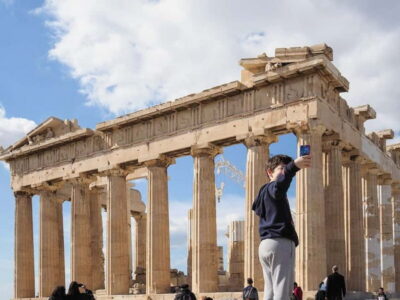
Acropolis & up to 5 Archaeological Sites Combo Pass
Read our review →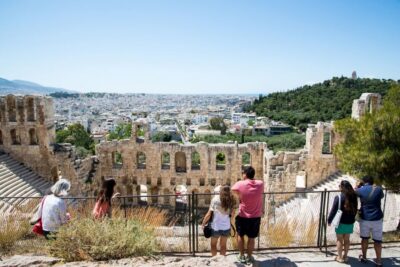
Acropolis, Parthenon & Acropolis Museum Guided Tour
Read our review →
Cape Sounion & Poseidon Temple Sunset Half-Day Trip
Read our review →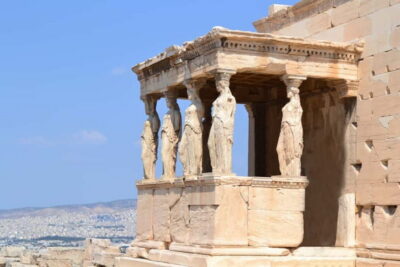

All Day Cruise -3 Islands to Agistri,Moni, Aegina with lunch and drinks included
Read our review →
Cape Sounio & Poseidon Temple Trip with Audio Guide
Read our review →