
Reviewed · ANCIENT CORINTH, MYCENAE & NAFPLIO TOURS
The Apostle Paul’s Missionary Journey in Athens and Corinth
The most meaningful part of this Athens and Corinth tour is the chance to connect Paul’s words with actual places: the Agora where he debated, the Areopagus where he presented his message, and the Bema where he faced Roman authority. You move from city streets to open ruins and a hilltop fortress in one long day.
I like the private format, since your driver can adjust the pace, answer questions, and help with practical details such as lunch or a coffee stop. I also like the blend of biblical sites and classical Greece, especially when the Temple of Apollo, Corinthian marketplace, and early Christian remains put Paul’s work into a larger setting.
The main drawback is the full schedule and rough footing. You will spend much of the day in a vehicle or walking over uneven ground, and entrance fees plus a licensed site guide are extra. Still, for a small group seeking Paul’s story beyond central Athens, this is a strong day out.
Key points to know before booking
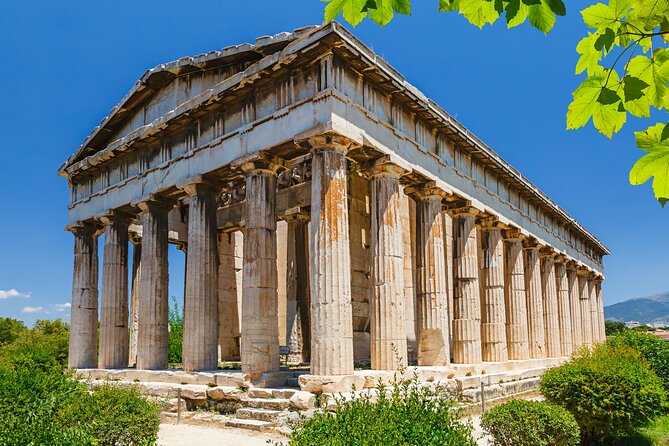
- Paul’s Athens begins at the Ancient Agora, where politics, trade, religion, and philosophical debate met.
- The private car keeps the long day comfortable, with hotel or port pickup, air conditioning, Wi-Fi, and bottled water.
- Corinth provides the strongest biblical connections, including Kenchreai, the Agora, and the Bema.
- Acrocorinth adds a serious hill climb, but rewards you with broad views and a sense of Corinth’s defensive power.
- The driver is not automatically a licensed archaeological guide, so entrance tickets and formal guiding inside the sites cost extra.
- Allow eight to nine hours, wear firm walking shoes, and bring sun protection.
Why this tour makes Paul’s story easier to picture
Paul can seem distant when you meet him only through letters and church readings. This route gives those letters a physical setting. You see the public spaces where ideas were exchanged, the ports that tied the Roman world together, and the city where Paul spent time building an early Christian community.
The day begins in Athens and heads west toward Corinth. That means you get more than a religious pilgrimage. You also see the political and commercial world Paul entered, including Greek temples, Roman civic buildings, ancient roads, ports, and a fortress above the Corinthian plain.
The tour costs $200.25 per person. That is not a bargain-basement day trip, but the price covers a private vehicle, a dedicated English-speaking driver, pickup and drop-off, Wi-Fi, water, and the flexibility of a private group. For one to four people, transport is by sedan. The value improves if you are traveling as a small family or group and would otherwise arrange a car and driver separately.
Keep extra money ready for archaeological entrance fees. A licensed guide is not included for entry into the sites, although the driver provides historical background and helps you understand what you are seeing. The current rating is 4.9 from 50 ratings, with 96 percent recommending the experience. That fits the tour’s strongest feature: personal attention rather than a fixed coach-group routine.
More Peloponnese days from Athens:
- From Athens: Mycenae, Epidaurus & Nafplio Full Day Trip
★ 4.8 · 2,438 reviews - From Athens: Mycenae, Epidaurus & Nafplio Full-Day Tour
★ 4.5 · 1,580 reviews - From Athens: Ancient Corinth Day Trip with Canal & VR Guide
★ 4.6 · 1,073 reviews
Ancient Agora: where Paul met Athens on its own ground
The Ancient Agora is the right place to begin. This was not just a market. It was the center of public life, with political meetings, commercial activity, religious buildings, and the daily arguments that shaped Athenian society.
Paul’s approach here makes sense. He was addressing people who were already used to testing ideas in public. At the Agora, you can think about his message not as a speech delivered in isolation, but as part of a city culture built around debate and civic life.
Plan on about an hour. Admission is not included, so confirm the current fee when booking or before departure. Your driver can provide context and point out important remains, but you should not assume that a licensed guide will enter the site with you.
The site also includes the Temple of Hephaistos, often called the Temple of Hephaistos or Hephaisteion. It gives you a strong visual reminder that Paul was speaking in a city filled with established religious traditions and impressive monuments.
Areopagus: a short stop with major meaning
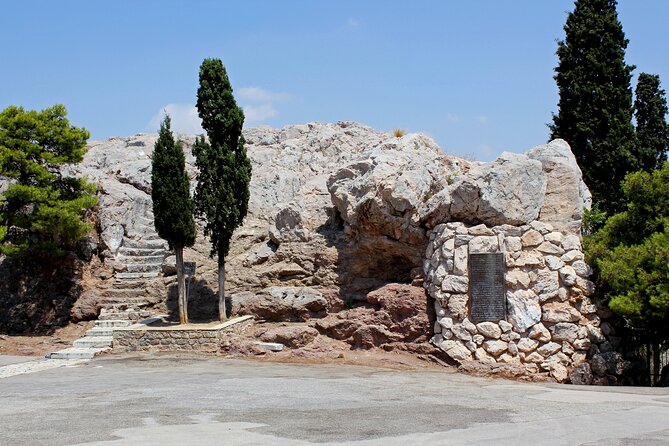
The Areopagus is a marble hill northwest of the Acropolis. The climb and footing are modest in length but can be slippery or uneven, so shoes matter here.
This place served as a judicial and political meeting point, and it was also associated with intellectual discussion. Paul’s presentation here is one of the clearest links between the New Testament and ancient Athens. You are looking across a city where philosophy, civic power, and religion were closely connected.
The stop lasts about 30 minutes and has no admission fee. That is enough time to hear the setting explained, take in the view, and consider the contrast between Paul’s message and the many religious traditions around him.
Do not expect a large museum-style visit. The power of the Areopagus comes from its setting and meaning, not from a long list of surviving structures. If you have limited mobility, ask about the footing before setting out. One driver-guide, George, was especially careful about comfort and safety for a passenger with mobility limits, but the general terrain still requires care.
Saint Dionysius: the early Christian thread in modern Athens
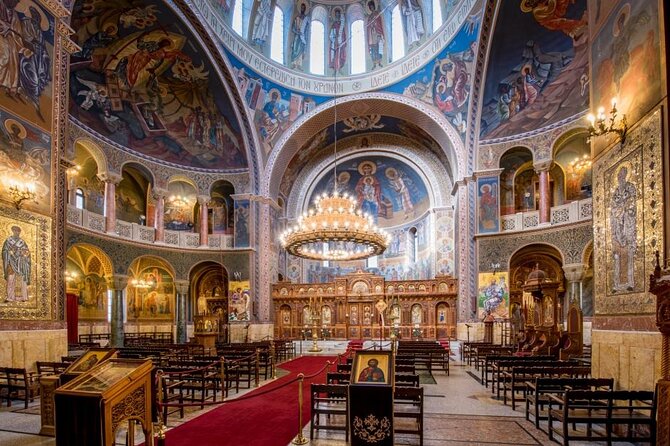
The Church of Saint Dionysius the Areopagite sits on Skoufa Street in Kolonaki, an upscale part of Athens. It is dedicated to Athens’ patron saint, Dionysius, who is connected with Paul’s mission and is described as the city’s first bishop.
This visit changes the mood. At the Agora and Areopagus, you are surrounded by ancient civic and religious remains. Here, the focus turns to the Christian tradition that followed Paul’s visit and continued through later centuries.
The stop is brief, about 20 minutes, and admission is free. Treat it as a connecting point rather than a major sightseeing block. It helps link Paul’s first contact with Athens to the development of an early Christian community.
Some tours have also included quick views of the Academy, University, National Library, or Panathenaic Stadium. Those additions depend on timing and the driver’s route, so consider them pleasant extras rather than guaranteed stops.
Same base, a completely different day:
- Athens: Acropolis & up to 5 Archaeological Sites Combo Pass
★ 4.4 · 12,619 reviews - Athens: Acropolis Ticket with Optional Audio or Live Guide
★ 4.2 · 11,055 reviews - Athens: Acropolis, Parthenon & Acropolis Museum Guided Tour
★ 4.8 · 9,316 reviews - Athens: Cape Sounion & Poseidon Temple Sunset Half-Day Trip
★ 4.8 · 8,241 reviews
Corinth Canal: a modern cut through an ancient crossroads
The drive from Athens to Corinth is one reason this works best as a private vehicle tour. You are covering a lot of ground, and air conditioning, Wi-Fi, and bottled water make the long transfer easier.
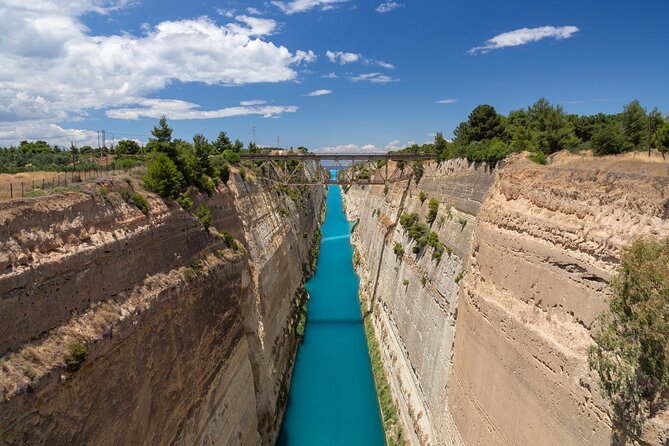
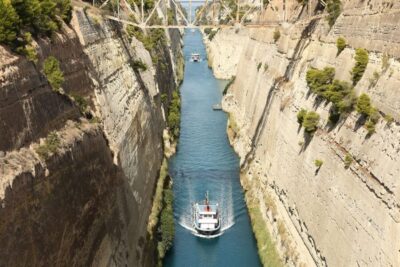
The Corinth Canal is a 20-minute photo stop. It cuts through the Isthmus of Corinth, linking the Gulf of Corinth with the Saronic Gulf and separating the Peloponnese from mainland Greece. The canal was built long after Paul’s time, so it is not a biblical site. Its value is geographic: it shows why Corinth occupied such an important position between two seas.
The stop is free and quick. You will not spend the morning here, but the canal gives you a clear sense of the region’s strategic role before you reach the ancient city.
Kenchreai: Paul’s eastern gateway into Corinth
Ancient Kenchreai, also written Kechrees, was Corinth’s eastern port. Much of the old harbor is underwater or reduced to ruins, but you can still see traces of Roman construction, including storerooms, breakwaters, a nymphaeum, sanctuaries, and an early Christian basilica from the fourth century A.D.
This is one of the most valuable stops for anyone interested in Paul’s movements. The port is identified as the place where Paul arrived in A.D. 51 to begin his mission in Corinth. It also shows the practical side of ancient travel. Religious work depended on roads, ships, merchants, and port cities.
You get about 20 minutes here, with no admission fee. That is enough for an overview, but not a long archaeological study. Since the remains are spread out and some are less dramatic than the major Corinth ruins, the guide’s explanation matters.
This is also a good point to remember that Paul’s world was not made up only of temples and speeches. Kenchreai was a working harbor, tied to trade and movement across the eastern Mediterranean.
Ancient Corinth: the center of the day
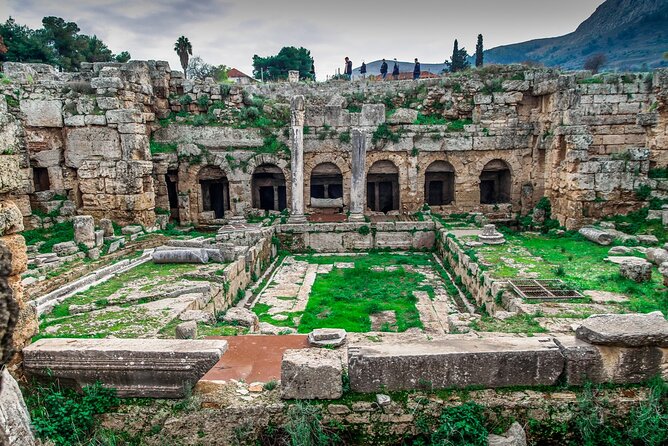
Ancient Corinth is the heart of the tour. The city was wealthy and powerful, and its ruins show the mix of Greek traditions and Roman control that shaped Paul’s surroundings.
The Agora gives you the best sense of daily life. Paul’s letters to the Corinthians deal with community tensions, worship, ethics, status, and ordinary human behavior. Standing in the old marketplace helps you picture the people behind those letters rather than treating them as abstract theology.
The Bema is the major biblical point. This raised platform in the city center is associated with Paul’s appearance before the Roman proconsul. Here, his mission meets the legal and political system of the Roman city.
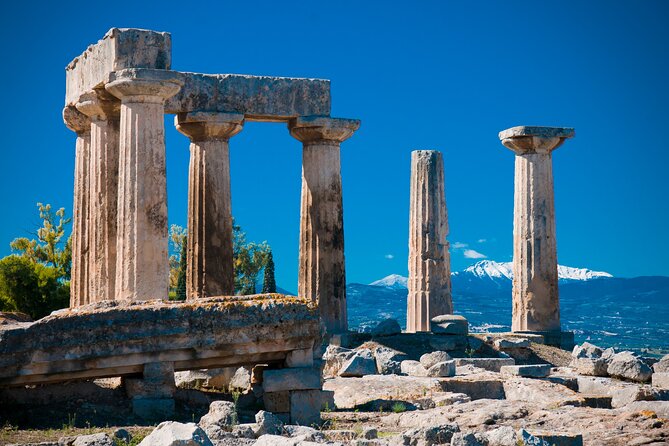
The Temple of Apollo adds another layer. Its surviving columns are among the most recognizable remains at Corinth, and they remind you that Christianity entered a city with older religious systems already firmly in place.
Allow about an hour at the archaeological site. Admission is not included. The surface is uneven, with exposed stone and rough paths, so I would not wear sandals with thin soles. Summer heat can be serious, especially in June and during the middle of the day. Take the bottled water, wear a hat, and use sunscreen.
A driver such as Ruslan or Yannis can help you identify the key remains and explain the historical setting. Still, if you want a detailed site-by-site archaeological lecture, arrange a licensed guide separately. The included driver is there for transport and historical interpretation, not as a guaranteed formal guide inside every monument.
The Corinth Museum: small scale, useful context
The Archaeological Museum of Corinth takes about 45 minutes. It was established in 1932 to protect finds from the surrounding area and covers a long period, from prehistoric material through later discoveries.
The displays help fill in what the open-air ruins cannot show. You can see objects tied to daily routines, religious practice, art, and the Sanctuary of Asklepios. After the Agora and Temple of Apollo, the museum gives you details at eye level: small objects and artifacts that make the ancient city feel less like a collection of stones.
Admission is listed as free within this tour arrangement, though site access and ticket rules can change. Confirm the current entry details when you book.
The museum is especially useful during hot weather. It offers a quieter indoor pause before the final stop at Acrocorinth. If your interest is mainly biblical, keep your expectations balanced. Much of the collection covers Corinth’s wider ancient past rather than Paul alone, but that broader setting is exactly what gives his time in the city meaning.
Acrocorinth: the day’s biggest view and hardest footing
Acrocorinth is the fortified hill above ancient Corinth. It served as a military stronghold and religious center, with the famous Temple of Aphrodite associated with the site.
The stop lasts about 30 minutes, but your actual time and effort depend on how far you walk. The hill is imposing, and the footing can be rough. You will want sturdy shoes, especially if you climb beyond the easiest viewing areas.
The reward is the view over the Corinthian region. From above, the connection between the city, port routes, and surrounding terrain becomes much easier to grasp. You can see why this height mattered for defense and control.
Some people may find Acrocorinth the highlight of the entire day. Others may find the climb too demanding after several hours of sightseeing. Tell your driver if you need a slower pace. The stop is listed as free, but access conditions can vary.
A private day with room for personal choices
The tour is private, so only your group participates. That changes the rhythm in useful ways. You can spend more time at the Agora, move along when the heat becomes tiring, or ask for a local lunch stop if the schedule allows.
One couple arranged a restaurant stop after the formal route, asking for food aimed at local dining rather than tourist convenience. Ruslan recommended options and programmed the destination into the car. Another day included a Greek lunch after Acrocorinth at Taverna Kastro, though that meal was not part of the tour price.
These examples show the benefit of a private driver, but they do not guarantee a particular restaurant or extra stop. Ask in advance if lunch matters to you.
Pickup is offered from Athens hotels or apartments, and the driver waits outside. Port pickup is also available, with a sign bearing your name at the arrival area. Airport pickup costs extra. For a cruise stop, confirm the timing carefully, since the route is long and the full program can take eight to nine hours.
The drivers praised most often by name include Ruslan, Yannis or Giannis, George, Kostas, Katerina, and Fortis. The quality of your day depends partly on who is assigned, but the common thread is careful driving, clear explanations, patience, and help with small practical needs.
Who should book this Athens and Corinth tour?
I would choose this for a small group with a real interest in Paul, early Christianity, ancient Greece, or the meeting point of religion and Roman public life. It is also a good fit if you want to see Corinth without arranging a rental car or managing the route yourself.
It is less suitable if you want a relaxed half-day outing, a purely classical Athens tour, or a fully guided archaeological program with a licensed guide at every site. The schedule is long, and admission costs are separate.
Families can request a child seat. Most people can participate, but the uneven ground and Acrocorinth climb deserve honest consideration. If walking is difficult, ask the operator what can be shortened before booking.
Free cancellation is available up to 24 hours before the start time. The tour depends on good weather, and poor conditions can lead to a new date or a full refund.
Should you book it?
Book this tour if you want Paul’s story tied to real streets, ports, civic spaces, and ruins rather than presented only in a classroom or church setting. The private car, hotel or port pickup, and flexible pace make the high price easier to justify for a couple or small group.
Go in with clear expectations: admission fees are extra, formal archaeological guiding is not included, and the day involves heat, walking, and a lot of road time. Bring firm shoes, sunscreen, a hat, and questions.
For a focused look at Athens and Corinth through Paul’s life, this is one of the more personal ways to make the journey. It gives you the biblical sites, but also the Greek and Roman setting that made Paul’s work possible.
FAQ
How long does the tour last?
The tour lasts approximately eight to nine hours.
Where can pickup take place?
Pickup is offered from Athens hotels or apartments and from the port. Airport pickup is available for an additional cost.
Is the tour private?
Yes. Only your group participates in the activity.
What type of vehicle is used?
For groups of one to four people, the tour uses a sedan. The vehicle is air-conditioned.
Is a licensed guide included at the archaeological sites?
No. A licensed guide to accompany you inside the archaeological sites is not included. The tour includes an English-speaking driver with historical knowledge.
Are entrance fees included?
No. Entrance fees for archaeological sites and museums are not included.
Is food included?
No. Lunch is not included. Depending on the timing and arrangement, your driver may help you find a local restaurant.
What should I bring?
Wear comfortable shoes for uneven walking surfaces and bring a hat and sunscreen. Bottled water is provided, and Wi-Fi is available in the vehicle.
Just added in Athens
- Ceramic and Pottery Creative Workshop with Two Local Artists★ 4.0 · 57 reviews
- Small-Group Women History in Ancient Greece Walking Tour★ 5.0 · 38 reviews
- Athens Old City Private Photoshoot Tour / 2 hrs★ 5.0 · 109 reviews
- Athens: Wine Workshop Create your Own Wine under the Acropolis★ 5.0 · 77 reviews
- Athens: Greek Wines Tasting with Sommelier and Acropolis Views★ 5.0 · 88 reviews
- Wine Trails Private Tour/ Nemea visit 3 wineries from Athens or Nafplion (10 h)★ 5.0 · 44 reviews
- FLYING DRESS Photoshoot in Athens – Greece★ 5.0 · 47 reviews
- Small-Group Wine Tour in Athens with Tasting★ 5.0 · 33 reviews
Ancient Corinth, Mycenae & Nafplio Tours, compared.
Ancient Corinth Day Trip with Canal & VR Guide
Read our review →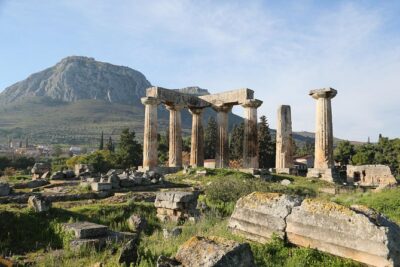
Private Biblical Tour Ancient Corinth & Isthmus Canal from Athens
Read our review →
4-Day Classical Greece Tour: Epidaurus, Mycenae, Olympia, Delphi, Meteora
Read our review →
Ancient Corinth & Nafplio Full Day Trip with Swim
Read our review →
Mycenae and Nafplion Day Trip from Athens with Official guide
Read our review →
Browse the lists this tour appears in