
Reviewed · TOURS IN ATHENS
Athens: Mythology Tour for Families
The best thing about this Acropolis mythology tour is its simple idea: let the gods and heroes lead your family through the ruins. Instead of asking children to admire one marble column after another, your guide connects each place to stories about Athena, Poseidon, Zeus, Dionysus, Theseus, Hera, and Aphrodite.
I like the small groups of up to 15 people, and I like that the tour finishes at the Pnyx, where children can take part in an activity rather than simply listen. Guides such as Christina, Kelli, Chrysa, Maria, Demi, and Sophia have been especially good at answering questions and keeping children involved. The main drawback is the length in hot weather. Three hours on the Acropolis can feel long for young children, so bring water and choose your time carefully.
Key points at a glance
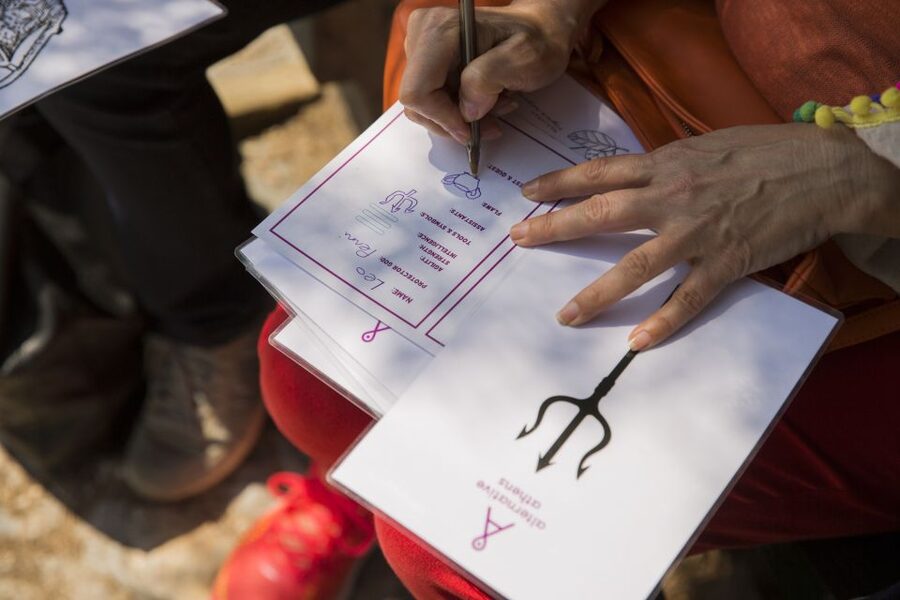
- Myths give the Acropolis a child-friendly thread: Stories about Athena, Poseidon, Zeus, and Dionysus help children understand why the monuments matter.
- Theater of Dionysus begins the story: You see the birthplace of drama before climbing toward the Acropolis monuments.
- The Parthenon gets the most time: The guided visit here lasts about 70 minutes, so expect a proper explanation rather than a quick photo stop.
- The Pnyx adds a hands-on finish: After a 15-minute walk, your guide leads a 45-minute mythology activity at the ancient meeting place.
- Small groups make questions easier: A maximum of 15 people helps the guide respond to children instead of delivering a fixed speech.
- The practical details matter: Strollers, backpacks, and large bags are not allowed at the Acropolis, and the tour is not suitable for wheelchair users.
Why mythology works so well on the Acropolis

The Acropolis can be a tough place for children. It is exposed to the sun, the stone paths are uneven, and the monuments do not explain themselves. A family guide has to turn a visual visit into a story, and this tour uses Greek mythology as its organizing thread.
That approach makes the buildings easier to remember. The Temple of Athena Nike becomes more than a small temple near the entrance. The Erechtheion becomes part of the contest between Athena and Poseidon. The Theater of Dionysus connects ancient religion with drama, music, and public performance.
You will still get history and architecture, but the guide keeps returning to people and conflict. Who wanted control of Athens? Why did the gods behave so badly? How did legends explain the world? Those questions give children a reason to look closely.
The tour is aimed most directly at children from about 5 to 11. That does not mean adults get a watered-down visit. Parents can expect useful explanations of Greek culture, philosophy, art, and the way myths influenced the city. Older children with an interest in Classics may enjoy the detail, while younger children benefit from the games and storytelling.
Other days out people book in Athens:
- Athens: Acropolis & up to 5 Archaeological Sites Combo Pass
★ 4.4 · 12,619 reviews - Athens: Acropolis Ticket with Optional Audio or Live Guide
★ 4.2 · 11,055 reviews - Athens: Acropolis, Parthenon & Acropolis Museum Guided Tour
★ 4.8 · 9,316 reviews
Starting at the Theater of Dionysus
The tour begins at one of Athens’ most important ancient venues, the Theater of Dionysus. The guided portion here takes about 15 minutes, enough time to explain why this place matters without asking children to sit through a long lecture.
Dionysus was the god of wine and theater, and the site helps children see that ancient drama was not just entertainment. It was linked to worship, festivals, and public life. The theater also gives the guide a useful opening: mythology here is not a separate bedtime subject, but something tied to the way Athenians built, celebrated, and thought.
This first stop is a good test of the guide’s style. The strongest guides use expression, questions, and short stories. Sophia, for example, was praised for keeping a mixed group of young children, parents, and grandparents involved. Demi and Maria also received high marks for balancing children’s attention with adult interest.
Climbing through the Propylaea and Temple of Athena Nike
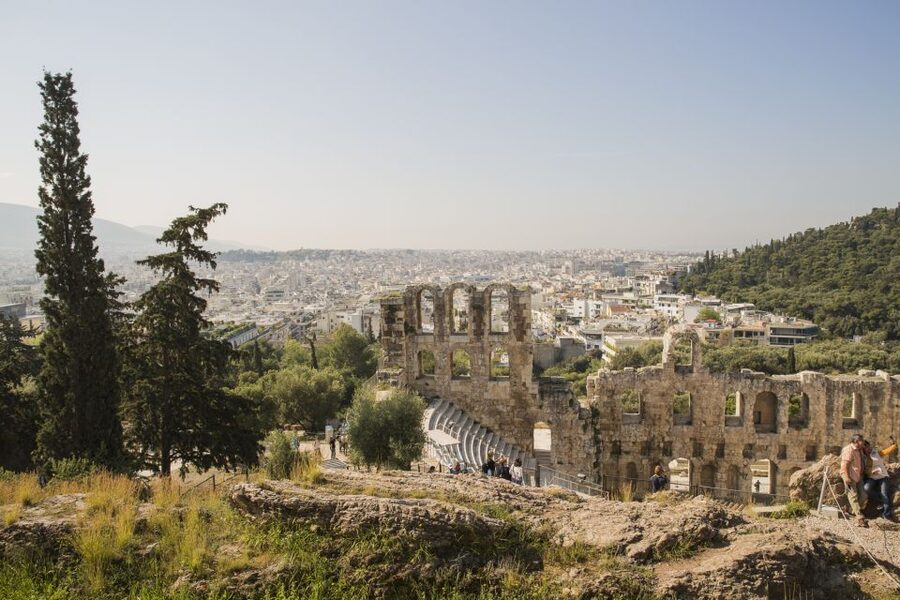
The Propylaea is the grand entrance to the Acropolis. You spend about 10 minutes here with the guide, learning how this gateway prepared ancient visitors for the sacred buildings above.
For children, the value is less about memorizing architectural terms and more about noticing the change in mood. You pass from the busy modern city into an ancient hilltop sanctuary. The columns, steps, and rising path make the route feel like part of the story.
The nearby Temple of Athena Nike receives about 15 minutes. This small temple honored Athena in her role as a bringer of victory. The guide can use it to explain how one goddess could have several roles, and why Athenians connected their city so closely with Athena.
The route is not flat or effortless. Comfortable shoes are essential, and the open stone surfaces offer little shade. I would not plan this as a relaxed stroll for a child who dislikes walking or gets tired quickly.
The Erechtheion and the contest for Athens

The Erechtheion is one of the most memorable stops because it looks different from the Parthenon. Its unusual layout and famous porch give the guide a chance to explain the sacred stories attached to the site.
This is where the rivalry between Athena and Poseidon fits naturally. Both wanted to become the city’s protector, and the contest gave Athens a mythic explanation for its identity. Poseidon offered water, while Athena offered the olive tree. The story is useful because it links a god, a useful plant, and the city’s name in one compact tale.
The guide may also bring in the wider world of the gods. Zeus, Hera, Aphrodite, Athena, Poseidon, and Dionysus were not a tidy family. Their alliances, arguments, jealousy, and rivalries are exactly what make the myths easy for children to follow.
Parents often appreciate this section because it moves beyond a list of gods. You begin to see how the stories reflect human concerns: power, competition, love, pride, loyalty, and fear.
Same base, a completely different day:
- Athens: Cape Sounion & Poseidon Temple Sunset Half-Day Trip
★ 4.8 · 8,241 reviews - Athens: Acropolis and Parthenon Guided Walking Tour
★ 4.6 · 5,882 reviews - All Day Cruise -3 Islands to Agistri,Moni, Aegina with lunch and drinks included
★ 5.0 · 4,958 reviews - Athens, Piraeus, and Coastline: Blue Hop-On Hop-Off Bus
★ 3.9 · 4,849 reviews
Spending 70 minutes with the Parthenon
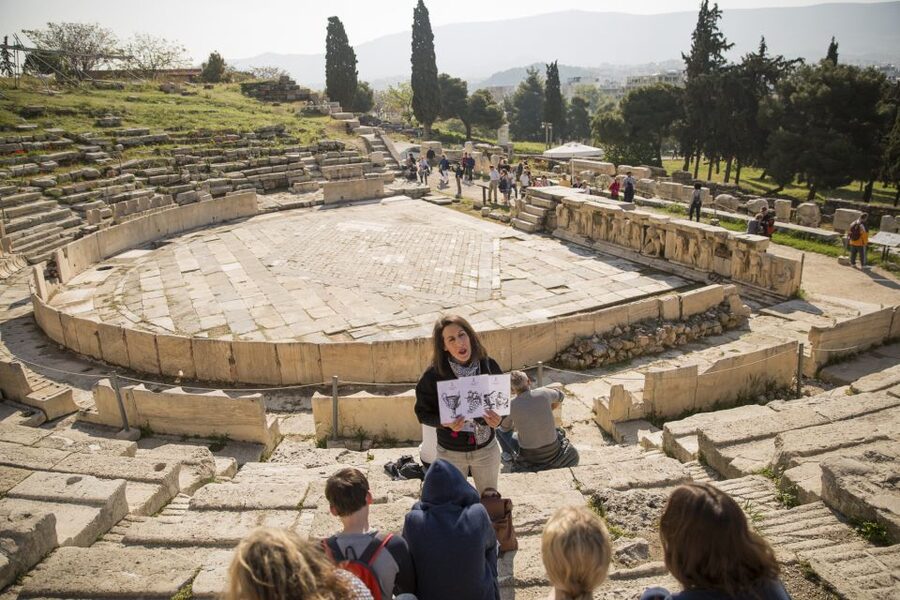
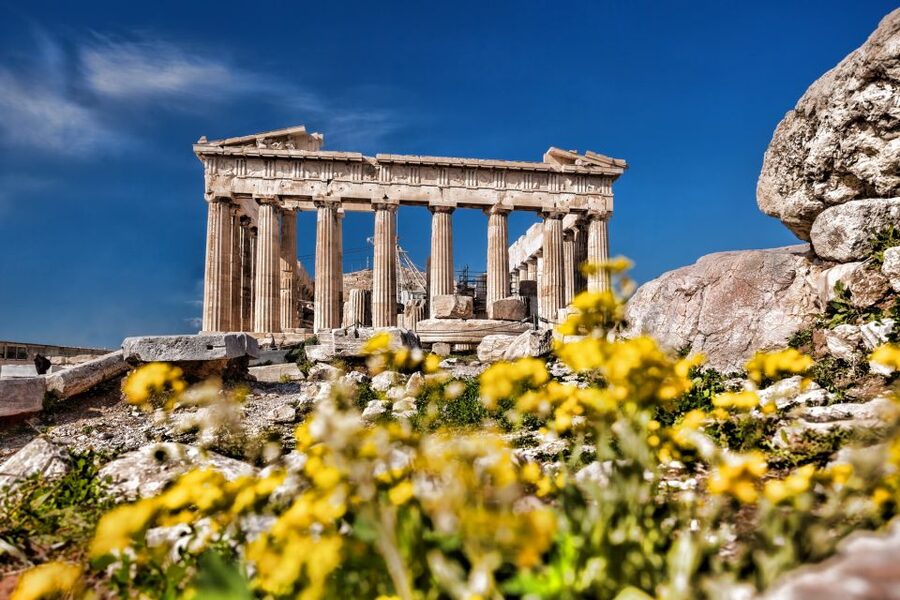
The Parthenon is the centerpiece of the tour, and the planned 70 minutes here is important. You are not simply given time to take photographs and move on. The guide can explain the building, its connection to Athena, and the ideas behind its design.
For children, the Parthenon works best when the guide keeps the explanation concrete. Look at the scale, the columns, the sculptural decoration, and the high position above Athens. Then connect those details to the city’s worship and political identity.
The long stop has a benefit and a cost. The benefit is that you have time for questions. Several guides, including Chrysa and Christina, were praised for giving children time to ask one question after another. The cost is stamina. In August heat, an hour beside the Parthenon can feel like a lot, especially after the earlier climb.
Try to book an early start if one is available. One family found that the guide arranged a 9:30 a.m. entry when late booking made securing a suitable time difficult. The exact start times depend on availability, but a cooler morning is the sensible choice for children.
Also remember that the Acropolis has strict bag rules. Strollers, backpacks, and large bags are not allowed. Bring only what you need, including water, sunglasses, and a sun hat. The supplied information specifically advises against taking backpacks, so do not assume a standard day bag will be accepted.
Walking to the Pnyx
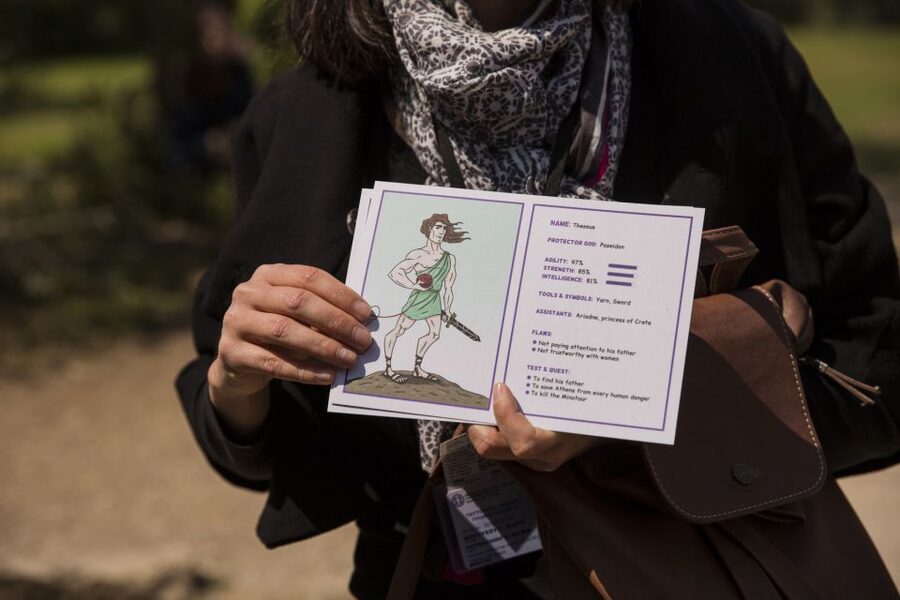
After the Acropolis, the group walks for about 15 minutes to the Pnyx. This short connection matters because it shifts the focus from sacred monuments to civic life.
The Pnyx was the place where Athenians gathered to discuss politics. It is often less immediately familiar to children than the Parthenon, but the guide gives it a clear purpose: this is where the idea of citizens meeting to debate took physical form.
The walk also gives everyone a change of pace. After the exposed upper hill, you can use this stretch to settle children, offer water, and reset their attention. The tour ends at Pnyx Hill, so plan your onward route from there rather than expecting to return to the Acropolis entrance.
The 45-minute mythology activity
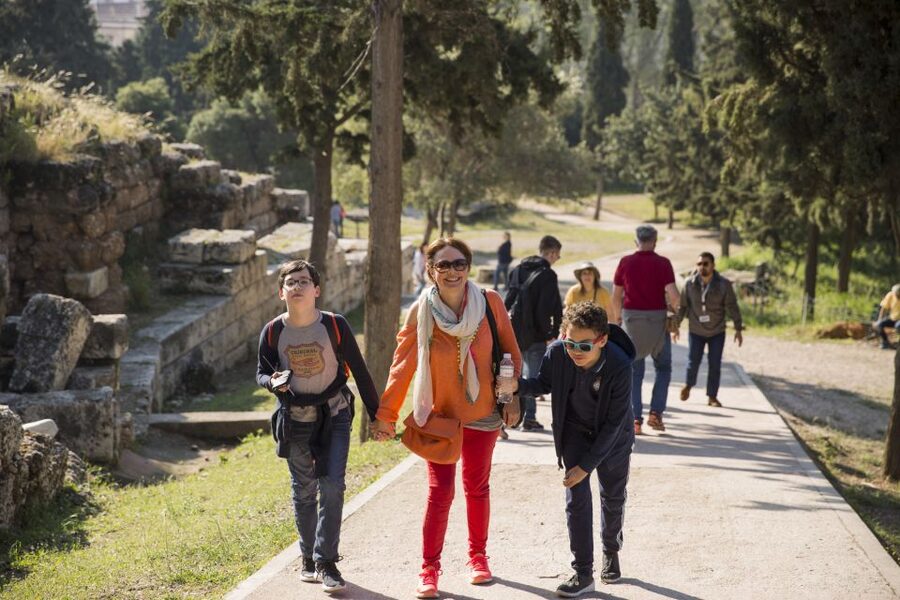
The Pnyx portion lasts about 45 minutes and includes a group activity based on the gods and heroes introduced earlier. This is one of the strongest reasons to choose this tour instead of a standard Acropolis explanation.
The activity uses the setting rather than treating it as a classroom. Children can respond to stories about Theseus and the Minotaur, Hera’s jealousy, or Aphrodite and her beauty. The goal is not to test children on names. It is to let them use imagination in a place linked to public decision-making and ancient legend.
That final activity also helps with attention. Young children may have faded during the Parthenon stop, but an interactive task gives them a fresh reason to participate. Guides have been praised for handling this well, including times when children were tired or not very responsive.
The Pnyx is not a replacement for seeing the Acropolis. It is a smart ending because the family creates something together instead of finishing with another monument and a long explanation.
What the guides do best
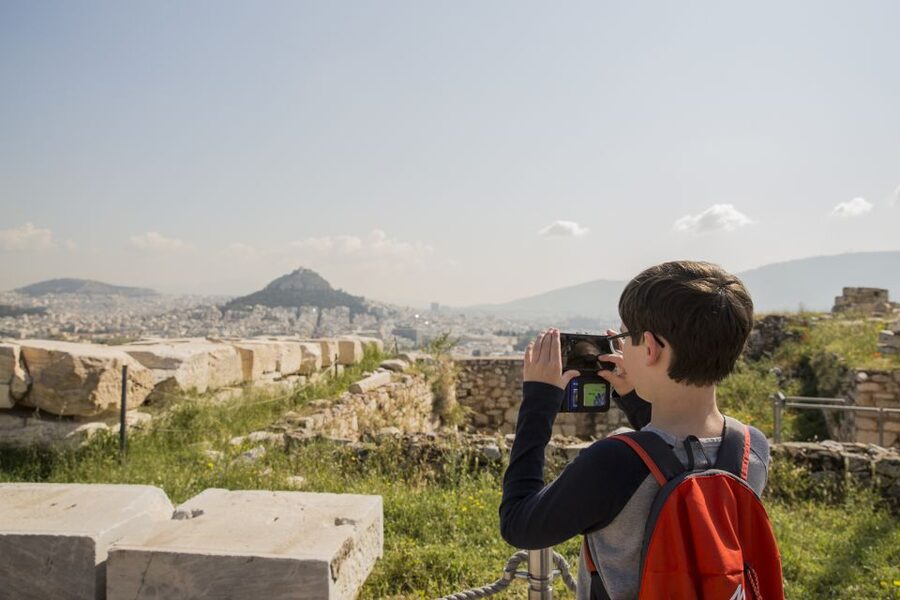
The strongest feature of this experience is the guide. A family tour succeeds or fails on tone, pacing, and the ability to answer questions without losing the group.
The guide language options are English and French. Private groups are available, which may suit families with very young children, different walking speeds, or a strong interest in mythology. In a small shared group, you still have a better chance of asking questions than on a large coach tour.
Past guides have included Christina, Kelli, Chrysa, Maria, Demi, Dani, Marika, Angelica, Sophia, Viki, Amarylis, and Heleni. Their common strength is not simply factual expertise. It is patience and performance. Angelica kept two young boys engaged with explanations suited to their ages. Sophia managed a group that included young children and older parents. Dani continued to make the tour work during a guide strike.
A good family guide does not speak only to the adults and hope the children keep up. The best ones ask questions, change the level of detail, and use humor when attention drops. That is what you should expect from this format.
The $79 price and ticket choice
At $79 per person, this is not the cheapest way to see the Acropolis. The price makes more sense if your family would otherwise need to arrange tickets, find an appropriate guide, and keep children interested for three hours.
Check carefully which booking option you choose. Acropolis entry tickets are included only if that option is selected. The tour information also says the provider can pre-purchase tickets, so ask about this before booking if you want help securing an entry time.
The ticket rules can affect the total cost. EU citizens under 25 may enter free with valid identification, and from April 1, 2025, EU and non-EU visitors under 18 may enter free with a valid passport or ID. Entry fees are non-refundable and non-exchangeable, so check your family’s eligibility before paying for tickets.
For a family that values storytelling and help with timing, the price can be fair. If your children are older, independent, and happy to read signs or use a guidebook, you may prefer a self-guided visit. The main value here is not just access to the monuments. It is the work the guide does to make the Acropolis meaningful for children.
Heat, bags, access, and meeting point
Plan this tour around the weather. The Acropolis is exposed, and the full route lasts three hours. Water, a sun hat, sunglasses, and comfortable shoes are essential. There are not many water stops, so do not rely on finding one when a child becomes thirsty.
The meeting point can vary by the option booked. Confirm the exact location before setting out. Some families had trouble when the address supplied for the meeting point was wrong or unclear, leading to backtracking around the Acropolis metro area. Build in extra time and contact the provider if the directions do not make sense.
The tour is not suitable for wheelchair users. Strollers, backpacks, and large bags are not allowed at the Acropolis, so families with babies or toddlers should plan carefully. The stated age range is 5 to 11, and very young children may find the walking and heat demanding even if they enjoy the stories.
Cancellation is free up to 24 hours before the start, and you can reserve now and pay later. That flexibility helps if your Athens schedule is still changing, but it does not remove the need to check ticket terms.
Who should book this Acropolis tour?
I would choose this tour for families with children who ask questions, enjoy legends, or need a human guide to make ancient ruins matter. It is especially useful for a first visit to Athens, when you want to see the major Acropolis sites without leaving the children behind intellectually.
It also works well for mixed-age groups. Adults get architecture, politics, philosophy, and cultural context, while children get gods, monsters, heroes, games, and stories. The private option is worth considering if your family needs to move slowly or wants full control of the pace.
I would think twice if your children are under 5, dislike walking, or cannot handle three hours in the sun. I would also avoid bringing a stroller, since it is not permitted. For a summer visit, choose the earliest practical start and carry water from the beginning.
Should you book it?
Book this tour if your family wants the Acropolis to become a story, not just a collection of famous stones. The combination of a small group, family-focused guide, major monuments, and a Pnyx activity gives children several ways to stay involved.
Skip it if you only want a quick look at the Parthenon or prefer to explore at your own pace. For most families with children aged 5 to 11, though, the mythology theme gives the visit a clear shape, and the Pnyx activity provides a memorable finish.
FAQ
How long does the mythology tour last?
The tour lasts three hours.
What sites are included?
The route includes the Theater of Dionysus, Propylaea, Temple of Athena Nike, Erechtheion, Parthenon, and ancient Pnyx.
Is Acropolis admission included?
Acropolis entry tickets are included only with the option that specifies tickets. The provider can also pre-purchase tickets if you request this.
What age group suits the tour best?
The tour is most suitable for children aged 5 to 11.
What languages are available?
Live guiding is available in English and French.
How large is the group?
The small group option has a maximum of 15 people. A private group is also available.
Are strollers and backpacks allowed?
No. Strollers, backpacks, and large bags are not allowed at the Acropolis and should not be brought on the tour.
Is the tour suitable for wheelchair users?
No. The experience is not suitable for wheelchair users.
What happens at the Pnyx?
After a 15-minute walk from the Acropolis, the guide shares more myths and leads a 45-minute family activity inspired by the gods and heroes from the tour.
Just added in Athens
- Ceramic and Pottery Creative Workshop with Two Local Artists★ 4.0 · 57 reviews
- Small-Group Women History in Ancient Greece Walking Tour★ 5.0 · 38 reviews
- Athens Old City Private Photoshoot Tour / 2 hrs★ 5.0 · 109 reviews
- Athens: Wine Workshop Create your Own Wine under the Acropolis★ 5.0 · 77 reviews
- Athens: Greek Wines Tasting with Sommelier and Acropolis Views★ 5.0 · 88 reviews
- Wine Trails Private Tour/ Nemea visit 3 wineries from Athens or Nafplion (10 h)★ 5.0 · 44 reviews
- FLYING DRESS Photoshoot in Athens – Greece★ 5.0 · 47 reviews
- Small-Group Wine Tour in Athens with Tasting★ 5.0 · 33 reviews
Tours in Athens, compared.
Acropolis & up to 5 Archaeological Sites Combo Pass
Read our review →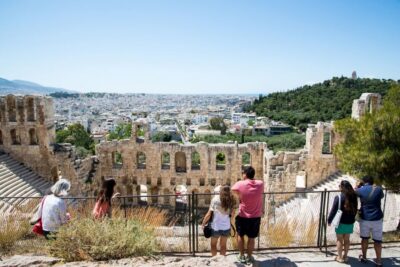
Acropolis, Parthenon & Acropolis Museum Guided Tour
Read our review →
Cape Sounion & Poseidon Temple Sunset Half-Day Trip
Read our review →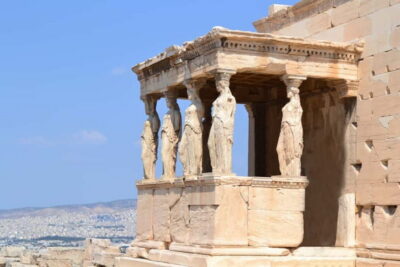

All Day Cruise -3 Islands to Agistri,Moni, Aegina with lunch and drinks included
Read our review →

Cape Sounio & Poseidon Temple Trip with Audio Guide
Read our review →