
Reviewed · OLIVE OIL TASTING TOURS
Cretan Cooking Class and Olive Oil Tasting
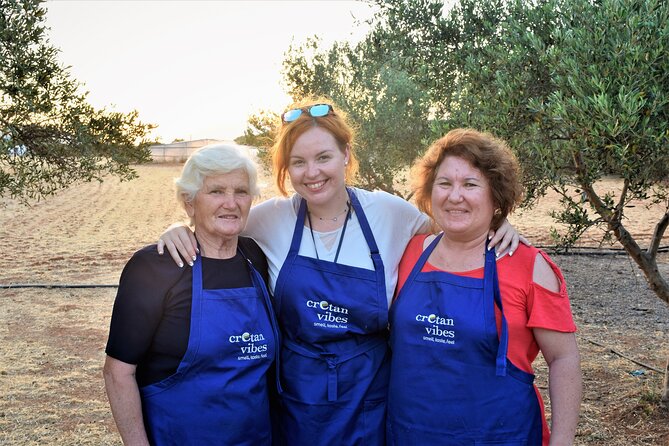
Cretan cooking is at its best when it is shared, and this four-hour class puts you at the table with Marianna and her mother, Mama Stella, on their family olive farm. You will gather ingredients, prepare several traditional dishes, taste the family’s extra virgin olive oil, then sit down to eat what you made.
I especially like the open-air kitchen among the olive trees and the fact that you do real work rather than watch a demonstration. I also like the olive oil lesson, which gives you useful skills for choosing better oil long after your holiday ends. The main consideration is the rural meeting point at Moires, since private transportation is not included.
Key points at a glance
- Cook with Marianna and Mama Stella: Their warm, family-led teaching style suits complete beginners as well as confident home cooks.
- Prepare several Cretan dishes: The changing menu can include dakos, stuffed grape leaves, zucchini flowers, a substantial main course, and cheese-filled pastries.
- Taste olive oil properly: Learn to spot fresh aromas, bitterness, and defects in lower-quality oil.
- Eat a full meal with local wine: Your cooking becomes the evening’s feast, with leftovers packed for you to take away.
- Enjoy a small-group setting: The class accepts a maximum of 12 people, and some dates are much smaller.
- Receive recipes afterward: The recipes and photos help you repeat the dishes at home.
A family kitchen among Crete’s olive trees
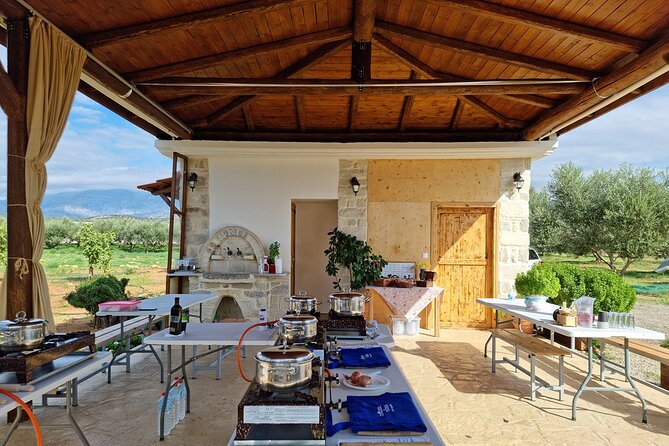
The heart of the experience is the setting. Cretan Vibes operates in a rural spot on the National Road at Moires, in a modern open cooking and dining area beside olive trees and gardens. It is not a polished restaurant show built for quick photo stops. The space is designed for working with food, sitting together, and letting the meal take its time.
You begin with a warm welcome from Marianna and Stella, often accompanied by homemade refreshments such as Mama Stella’s lemonade or cinnamon drink. Water, coffee, and tea are also provided. The friendly start matters because the class is social from the first minute. You are not simply assigned a station and left alone with a recipe.
The setting can be especially appealing if you have spent much of your holiday in busy resort areas. Several families and couples have found the farm a pleasant change from the crowds, with gardens, olive trees, family members, and even dogs adding to the relaxed feeling. Depending on the time of year, the sunset may arrive while you are eating.
More Cooking Classes in Crete
- Chania: Authentic Cooking Class in the White Mountains
★ 4.9 · 529 reviews - The Real Cretan Cooking Experience
★ 5.0 · 528 reviews - Chania Cooking Class-The Authentic Enjoy traditional Cretan meal
★ 5.0 · 339 reviews
Marianna and Stella make beginners feel at ease
Marianna leads the class with her mother, Stella, who shares recipes and techniques passed through the family. Their approach is practical and patient. You receive an apron, ingredients, utensils, and cooking equipment, then work through the dishes step by step.
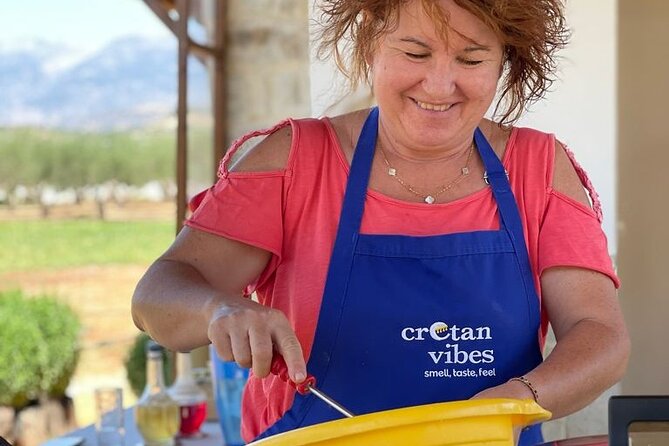
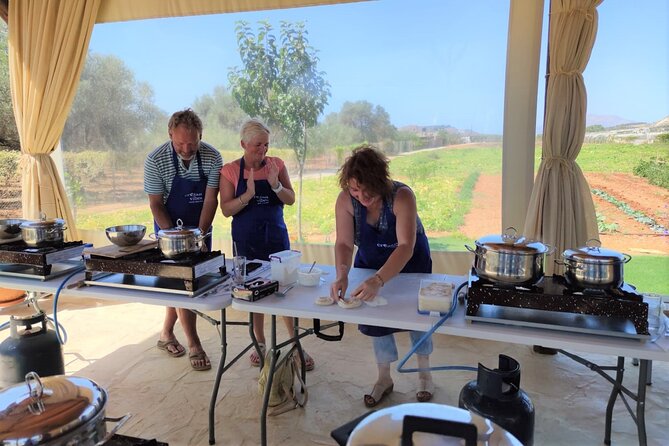
This is not a class where only the most confident cook gets near the stove. The setup can give each person a burner, pot, and utensils, allowing you to take part in much of the preparation. You may chop, stuff, mix, shape, cook, and season under guidance. The hands-on format makes the meal more memorable because you understand the work behind each plate.
You also get a glimpse of family food traditions. Some of the cheese and other products are made by relatives, including Stella’s mother, and ingredients can come from the family garden or farm. The lesson is not limited to instructions such as add this and stir. Marianna and Stella explain why particular ingredients belong together and how Cretan households use them.
The maximum group size is 12, which keeps the class personal without making it a private lesson. A date may have a much smaller group, but you should not assume that every session will be intimate. If you want extra attention, a smaller booking is a pleasant bonus rather than a promise.
What goes into the cooking session
The menu changes with the season and available produce, so you should think of the examples below as a guide rather than a fixed promise. The class generally builds toward a generous multi-course meal.
Dakos, the Cretan starter
Dakos is one of Crete’s best-known simple dishes. A crisp barley rusk is topped with fresh tomato, Cretan mizithra cheese, oregano, and extra virgin olive oil. The ingredients are basic, but the contrast between the crunchy rusk, juicy tomato, soft cheese, and peppery oil shows why freshness matters in Cretan food.
It is also a good first dish for a class. You can see how a few local ingredients create something filling without complicated technique.
Other tastings in the countryside near Crete:
- From Chania: Olive Oil, Wine, Cheese & Honey Tasting Tour
★ 4.6 · 490 reviews - From Chania: Wine and Olive Oil Tasting Tour with Snacks
★ 4.8 · 354 reviews - The Terra Creta Olive Oil Experience Tour
★ 4.7 · 344 reviews - Knossos-Zeus Cave -Old Traditional Villages-Olive Oil Factory
★ 5.0 · 694 reviews
Dolmadakia and stuffed zucchini flowers
Stuffed grape leaves require more patience. You learn how to fill and roll the leaves so they hold their shape during cooking. Stuffed zucchini flowers bring another seasonal touch, and the preparation gives you a closer look at the care involved in traditional home cooking.
This part of the class is particularly useful for anyone who wants to recreate the meal at home. You are not just tasting a finished dolma or flower. You are seeing how the filling is handled and how the ingredients are prepared before they reach the pot.
A hearty Cretan main dish
The main course depends on the session. Possibilities include vegetarian or vegan giaxni with green beans, potatoes, zucchini, tomato sauce, and ksinoxondros; lamb with artichokes, potatoes, fennel, and tomato; or lamb with stamnagathi.
Other possible dishes include avgolemono with pork or free-range chicken, leek or lettuce, fresh onions, potatoes, dill, egg, and lemon. Cretan stifado may be made with chicken, rabbit, or snails. The family may also prepare meat with seasonal vegetables.
This variety is one of the class’s strengths, but it also means you should check dietary needs before booking. The hosts have accommodated dietary restrictions with care, and a vegetarian or vegan option is included in the menu choices. Still, tell the provider in advance so the right dish can be planned.
Sarikopites or kalitsounia for dessert
Dessert brings the meal back to the family’s cheese-making traditions. Sarikopites or kalitsounia are pastries filled with fresh Cretan cheese, then fried in the family’s extra virgin olive oil. Cinnamon may add a warm finish.
These are not overly elaborate sweets, but that is part of their appeal. You see how local cheese, dough, oil, and a little seasoning can become a dessert that belongs to the island.
The olive oil tasting has real use beyond dinner
The olive oil lesson adds more value than a quick pour and a nod. As an olive-growing family, Marianna and Stella explain how to recognize authentic extra virgin olive oil, identify aromas and flavors, understand bitterness, and spot defects in poor-quality oil.
Bitterness can confuse first-time tasters, so learning that a fresh oil may have a lively, peppery quality is useful. You also learn what to look for when shopping, which can save you from choosing oil based only on an attractive label or a familiar bottle shape.
The family’s own harvest video gives you a behind-the-scenes look at olive production. That makes the tasting easier to understand: the oil is connected to the trees around you, the family’s work, and the food being prepared at the same time.
I see this as one of the strongest parts of the experience for food-minded visitors. A cooking class teaches you how to make dinner once. An olive oil lesson can change the way you shop and taste for years.
Sitting down to the meal you prepared
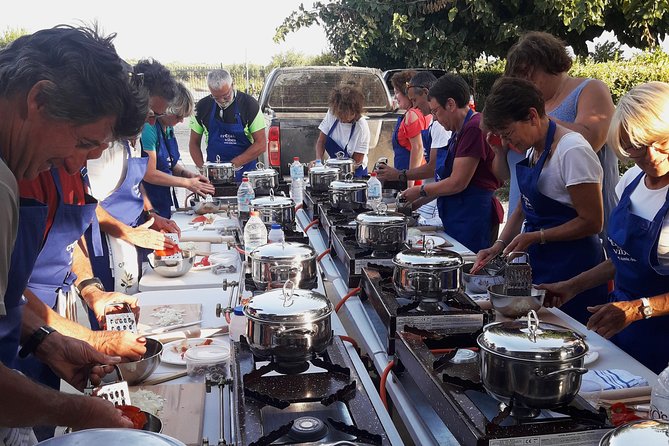
After the cooking work, you sit down to eat the full meal with local wine. The class includes alcoholic drinks, homemade refreshments, coffee, tea, and water. The meal is usually plentiful, and leftovers are packed for you to take away.
That last detail is more useful than it may sound. A long cooking session can leave you full but still curious about the dishes you made. Having food packed for later lets you enjoy the meal again or share it with someone back at your accommodation.
The shared table also gives the class its social character. Couples, families, and mixed-age groups can take part together. One group included children aged 9, 11, and 13, while another ranged from 12 to 78, suggesting that the class can work well for multigenerational parties.
The meal is not a separate restaurant course after the activity. It is the payoff for your work, which makes the food feel more personal. You have handled the grape leaves, picked or prepared ingredients, and watched the dish develop.
What the four-hour timing feels like
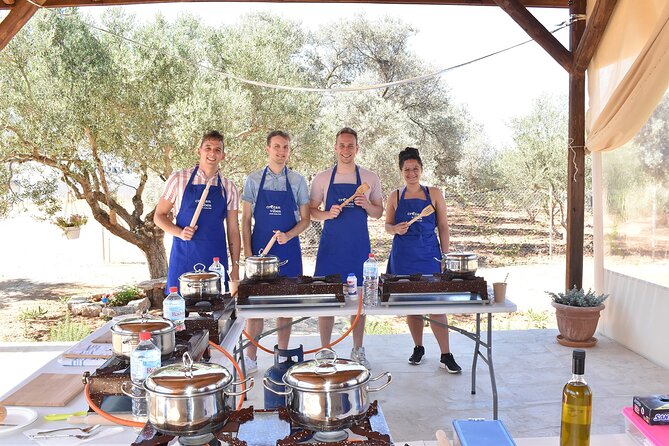
The advertised duration is about four hours. That gives enough time for preparation, instruction, the olive oil tasting, the harvest video, the meal, and conversation without forcing every step into a rush.
You should plan for an evening centered on food rather than a quick activity between sightseeing stops. The cooking pace is described as relaxed but organized. There is enough structure to keep the session moving, and enough time to ask questions or talk with the family.
The experience is offered in English. Recipes and photos are sent afterward, so you do not need to scribble down every measurement while cooking. That is helpful because your attention can stay on the activity and the people around you.
The class is booked an average of 41 days ahead, so I would reserve early if your dates are fixed. This matters most during popular periods, when a small farm-based activity may have fewer available sessions than a large city tour.
Price, transport, and practical planning
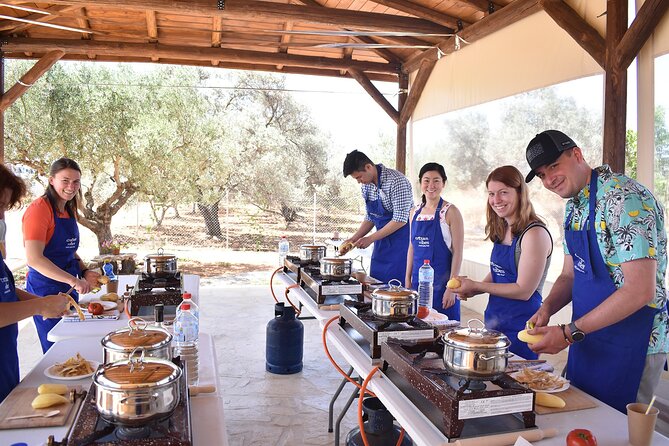
At $114.93 per person, this is not the cheapest food activity in Crete. It is also more than a simple market tasting or restaurant meal. The price includes roughly four hours of instruction, all ingredients, equipment, a full meal, wine, nonalcoholic drinks, premium olive oil tasting, recipes, photos, the harvest video, and packed leftovers.
I think the value is strongest if you want active participation and cultural context. You are paying for an evening of cooking, eating, and personal contact, not only for the food on the plate. If you mainly want to sample Cretan dishes without preparing them, a restaurant will cost less and require less time.
The meeting point is Cretan Vibes, Eθνικη οδο, Moires 704 00, Greece. Private transportation is not included, and the activity ends back at the same meeting point. Check your route carefully before booking, especially if you are staying outside the Moires area.
The experience is near public transportation, and service animals are allowed. Confirmation arrives at booking, and the class accepts a maximum of 12 people. Good weather is required because much of the experience takes place outdoors. If poor weather cancels the session, you can receive a full refund or choose another date.
You can cancel free of charge up to 24 hours before the start time. A cancellation inside that window is not refundable, and changes are not accepted within 24 hours. The same refund or rescheduling choice applies if the minimum number of participants is not reached.
Who should book this Cretan cooking class?
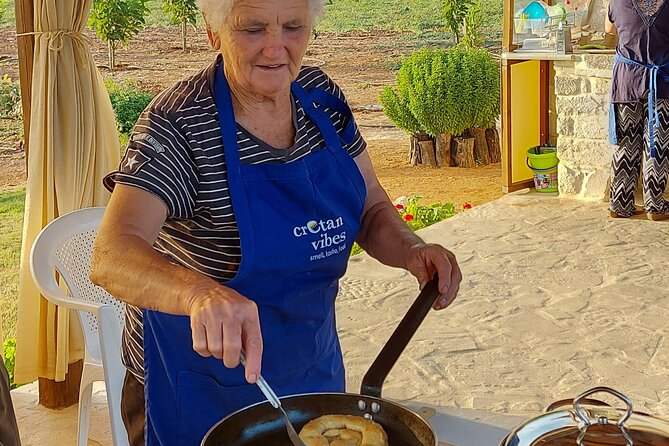
I would choose this class if you want to meet local people, cook rather than watch, and eat a substantial meal in a rural setting. It suits couples, families, multigenerational groups, and solo visitors who enjoy sharing a table with others.
You do not need advanced cooking skills. The mother-and-daughter team explains each stage and keeps the tone light, so beginners are not left behind. Confident cooks will still find value in the family methods, seasonal dishes, olive oil tasting, and unusual ingredients such as ksinoxondros or stamnagathi.
Food lovers should pay special attention to the changing menu. Lamb, rabbit, snails, cheese-filled pastries, artichokes, and stuffed flowers may appear, while vegetarian and vegan choices are also available. If you have allergies, religious restrictions, or strong dislikes, contact Cretan Vibes before the class.
I would be less enthusiastic for someone with only a few hours in Crete, no easy way to reach Moires, or little interest in cooking. The class takes a large part of an afternoon or evening, and its value comes from the full experience, not from grabbing a quick meal.
Should you book Cretan Vibes?
Yes, if you want a warm, hands-on introduction to Cretan food and family life. The strongest reasons are the beautiful olive-farm setting, the practical teaching from Marianna and Stella, the generous meal, and the olive oil skills you can carry home.
Before booking, confirm your transport, ask about the menu for your date, and mention any dietary needs. If those details work for you, this is a strong choice for a memorable evening near Moires, with enough food, conversation, and recipes to keep the experience going after you leave.
FAQ
How long does the Cretan cooking class last?
The experience lasts approximately four hours.
Where does the activity begin and end?
It begins at Cretan Vibes, Eθνικη οδο, Moires 704 00, Greece, and ends back at the same meeting point.
Is transportation included?
No. Private transportation is not included, though the meeting point is near public transportation.
What language is the class offered in?
The class is offered in English.
How many people can join the class?
The maximum group size is 12 people.
What food will be prepared?
Possible dishes include dakos, stuffed grape leaves, stuffed zucchini flowers, vegetarian or vegan giaxni, lamb dishes, avgolemono, stifado, and cheese-filled pastries such as sarikopites or kalitsounia. The menu can change with the season.
Are drinks and a meal included?
Yes. The experience includes a full meal, local wine, water, coffee or tea, and homemade refreshments such as Mama Stella’s lemonade.
Can I cancel for a full refund?
Yes. You can cancel at least 24 hours before the start time for a full refund. Poor weather or failure to meet the minimum number of participants may also lead to a refund or a different date.
More Workshops in Crete
- Heraklion: Beginner Scuba Diving Lesson with PADI Instructor
★ 4.9 · 355 reviews - Athens: Classic Cooking Class with Market Visit and Wine
★ 5.0 · 1,101 reviews - Athens: Food Market Visit and Cooking Class with Wine
★ 4.9 · 1,087 reviews - Greek Cuisine Cooking Class in Santorini with Recipes and Wine
★ 5.0 · 969 reviews
More Food & Drink in Crete
- Crete: Quad Safari, Olive Mill with Tasting & Ghost Village
★ 4.9 · 1,004 reviews - Chania: Old Town Highlights Guided Tour with Street Food
★ 4.9 · 407 reviews - Greek Food Walking Tour in Athens
★ 5.0 · 4,740 reviews - Athens: Street Food Tasting Tour
★ 4.9 · 2,557 reviews
Just added in Crete
- Balos & Gramvousa Luxury Catamaran Sailing Cruise from Kissamos★ 5.0 · 116 reviews
- Dia Island Catamaran – Premium Lunch, Open Bar, Small Group★ 5.0 · 126 reviews
- Panormo: Luxury Catamaran Cruise with Lunch & Open Bar★ 5.0 · 80 reviews
- Rethymno Catamaran Cruise: Healthy Lunch & Open Bar★ 4.5 · 79 reviews
- The Terra Creta Olive Oil Experience Tour★ 4.7 · 344 reviews
- Heraklion: Beginner Scuba Diving Lesson with PADI Instructor★ 4.9 · 355 reviews
- Chania Cooking Class-The Authentic Enjoy traditional Cretan meal★ 5.0 · 339 reviews
- From Rethymno/Chania: Imbros Gorge Hike★ 4.4 · 353 reviews
Olive Oil Tasting Tours, compared.
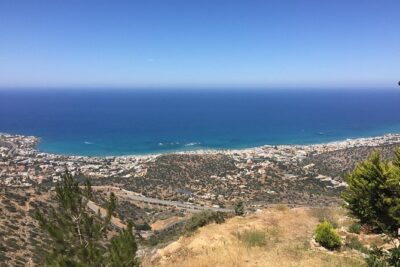
Knossos-Zeus Cave -Old Traditional Villages-Olive Oil Factory
Read our review →
The Governor’s Olive Mill Tour with Olive Oil Tasting
Read our review →

Zeus Cave, Lassithi Plateau, Olive Oil Factory, Kritza, Pottery
Read our review →
Browse the lists this tour appears in