
Reviewed · HISTORICAL TOURS
Athens: The History of Greek Mythology Private Tour
Athens makes more sense when its myths are tied to real streets, buildings, and meeting places. This private tour connects Greek mythology with the Academy and University, Varvakios Market, Monastiraki, the Ancient Agora, and the Roman Agora, giving you a story-led introduction to the city beyond the Acropolis.
I like the private format, since you can stop to ask about a god, a building, or a modern Greek custom without waiting for a large group. I also like the mix of major landmarks and ordinary city life, including markets and back streets where your guide can explain how old Athens fits into the modern capital.
The main consideration is the pace: three hours is enough for an excellent orientation, but not enough for a full visit inside every major archaeological site. You will walk a fair amount, and the tour is not suitable for wheelchair users, people with mobility impairments, or pregnant women.
Key points at a glance

- Mythology tied to real places: Stories are explained beside Athens landmarks rather than only in an abstract lecture.
- A useful first-day tour: Guides can help you understand the city layout and suggest places to explore afterward.
- More than the Acropolis: The route can include the Ancient Agora, Roman Agora, Academy, University, markets, and Monastiraki.
- Private attention: You can ask questions throughout the three-hour walk and shape the conversation around your interests.
- Local guide personalities: Guides including Markella, Costas, Elisivet, and Irini have been praised for humor, warmth, and clear storytelling.
- Walking is central: Wear comfortable shoes and expect a moderate amount of walking through busy central streets.
Why Greek mythology works so well in Athens
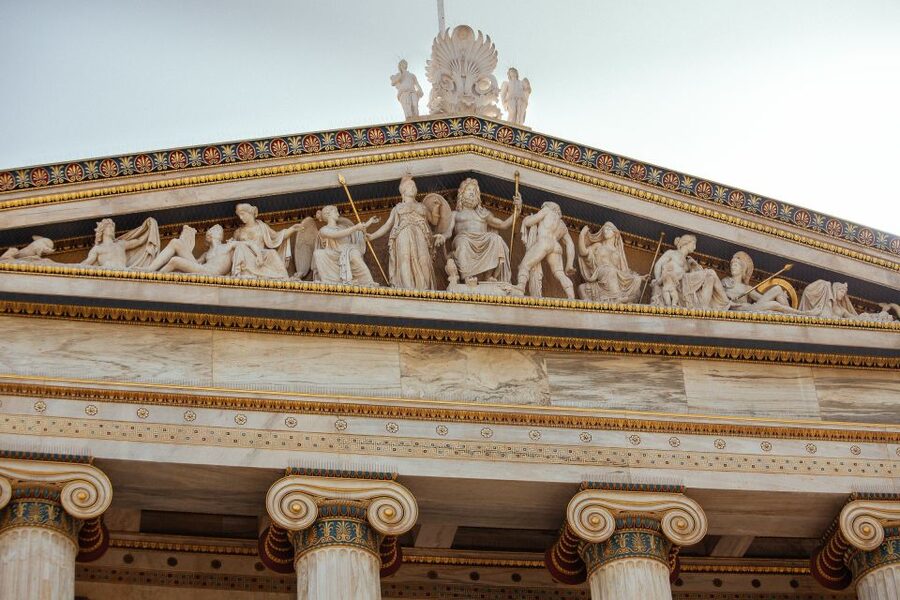
Greek mythology can feel like a pile of names when you meet it in a book: Zeus, Athena, Poseidon, Apollo, Heracles, and a long line of gods, heroes, and family disputes. In Athens, the stories gain a setting.
That is the strength of this experience. Your guide does not simply recite legends. The aim is to connect myths with the places, buildings, and civic life that shaped Athens. You may hear how a story helped explain the identity of the city, then turn a corner and see the modern streets built around that older world.
I would choose this tour if you want context before visiting archaeological sites on your own. It can give you a basic map of central Athens, a working cast of mythological characters, and a clearer idea of why certain landmarks matter.
The storytelling style will depend on your guide. Markella has been praised for keeping the walk smooth and full of interesting stories. Costas has a reputation for presenting history in a clear, engaging way. Elisivet has been described as warm and passionate, with the ability to answer questions while giving an easy introduction to both Greek mythology and Greek history.
A few more things to do in Athens worth a look
- Historical Delphi One Day Tour with Arachova Stop & Expert Guide
★ 4.5 · 1,247 reviews - Historic Athens: Small Group Electric Bike Tour
★ 4.9 · 740 reviews - The History of Athens: Greek Mythology Private Tour
★ 5.0 · 138 reviews
Starting outside Nakas Book House
The meeting point is outside Nakas Book House. Since hotel pickup is not included, you need to make your own way there and arrive ready to walk.
This is worth planning carefully. The tour is private, so the guide is expecting your party at the stated meeting point rather than collecting you from several hotels. Save the meeting address before leaving your accommodation, and allow extra time if you are unfamiliar with central Athens.
The start also sets the tone for the experience. This is not a bus tour with a distant view of the city. You meet an English-speaking local guide and move through central Athens on foot, with explanations unfolding along the way.
The Academy and University of Athens
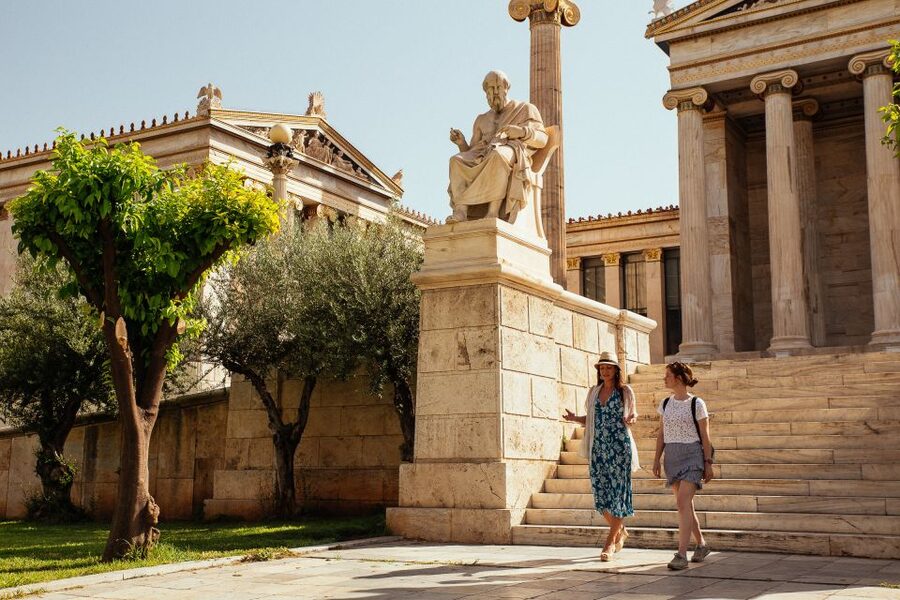
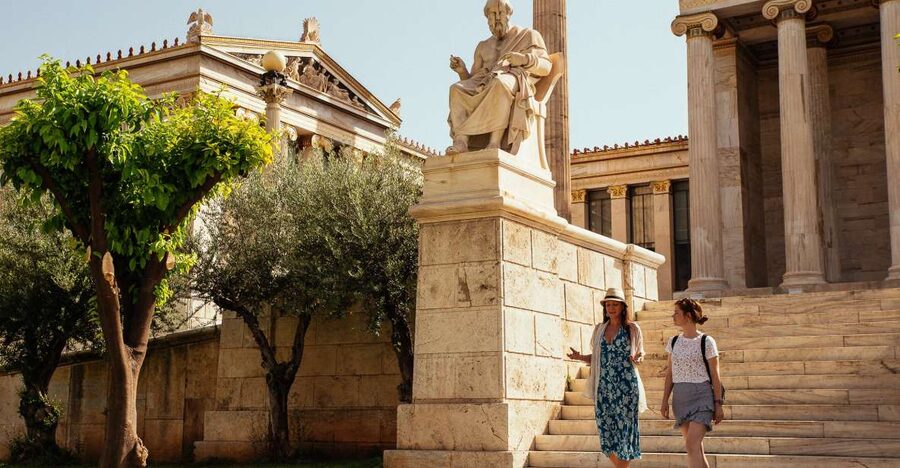
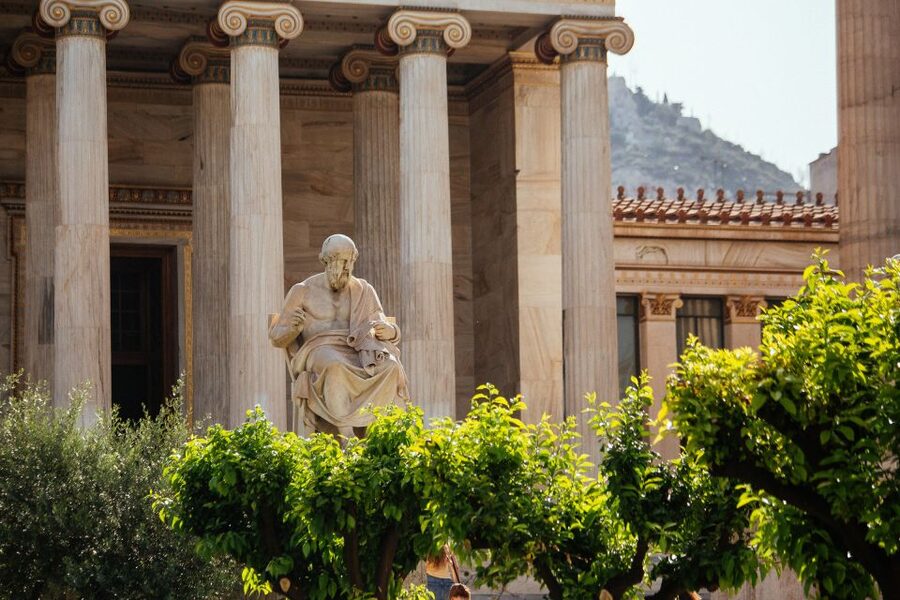
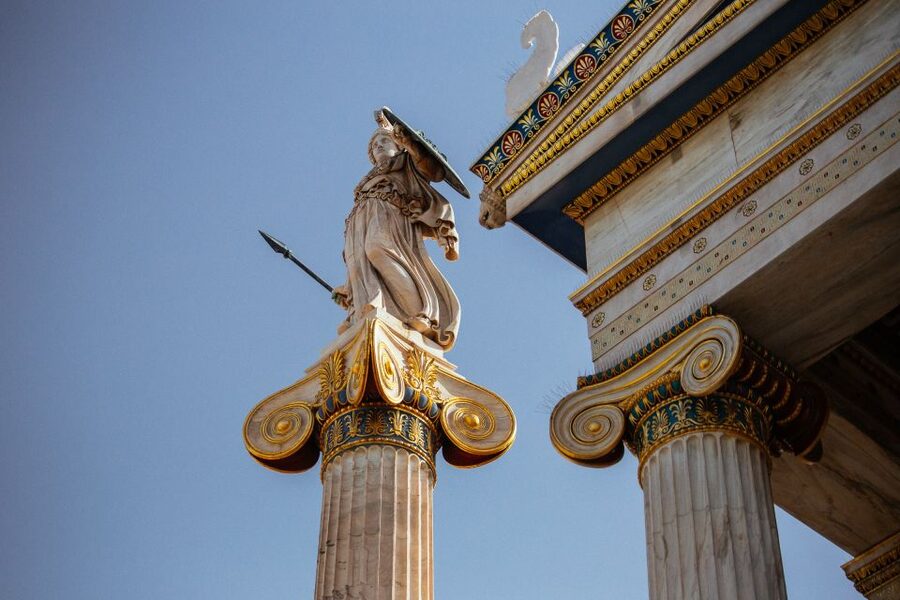
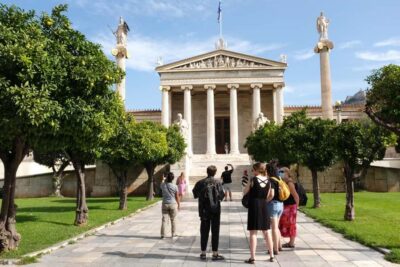
The Academy and University are among the most important stops for understanding Athens as more than an ancient city. They connect the classical idea of learning with the modern Greek capital.
Your guide can explain the historical relevance of these buildings and tie them to the intellectual world associated with Greece. The point is not only to admire the architecture. It is to see how Athens has continued to present itself as a center of education, thought, and civic life.
This part of the route should suit you if you like history presented through buildings rather than isolated facts. A guide can point out details you might otherwise pass without noticing, then explain why the location matters in the wider story of Athens.
Do not expect a long indoor museum visit here. The value comes from the explanation and the setting. If you prefer extended time inside formal museums, this tour may feel more like an introduction than a complete study.
Varvakios Market and the everyday city
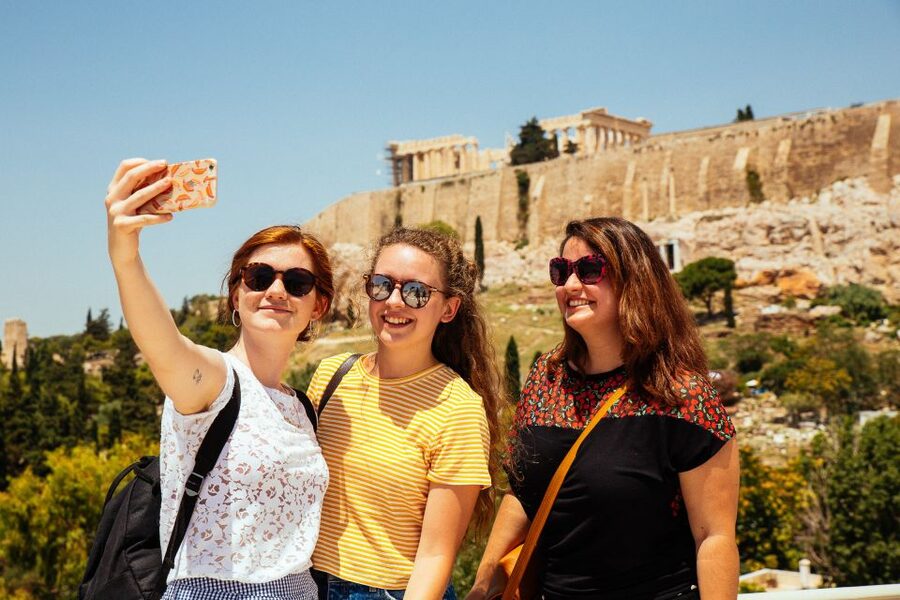
The central city market, Varvakios, brings the tour down from grand ideas to daily life. Markets are useful stops because they show how a city functions now, not only how it functioned in antiquity.
Here, the mythology theme can sit alongside practical observations about Athens and its people. You may find the contrast refreshing: one moment concerns the gods and heroes of the ancient world, and the next concerns a working city market.
The market also helps prevent the tour from becoming a procession of monuments. You are not only looking at official Athens. You are seeing a place where local life continues in a very ordinary way.
Conditions can be lively, and the route involves walking through city streets. Keep your belongings secure and wear shoes that can handle pavement. The market is best treated as part of the walking experience rather than as a separate food tour.
Same base, a completely different day:
- Athens: Acropolis & up to 5 Archaeological Sites Combo Pass
★ 4.4 · 12,619 reviews - Athens: Acropolis Ticket with Optional Audio or Live Guide
★ 4.2 · 11,055 reviews - Athens: Acropolis, Parthenon & Acropolis Museum Guided Tour
★ 4.8 · 9,316 reviews - Athens: Cape Sounion & Poseidon Temple Sunset Half-Day Trip
★ 4.8 · 8,241 reviews
Monastiraki and the flea market
Monastiraki adds another layer to the city. Its flea market and surrounding streets are associated with shopping, street life, and easy access to historic sites.
A local guide can help you understand how this area connects different periods of Athens. You may pass from modern shops to archaeological remains, then continue toward older neighborhoods and views of major landmarks. That mixture is one reason a private orientation can be useful: your guide can explain what you are seeing instead of leaving you to sort out the layers alone.
Monastiraki is also a practical location for getting your bearings. Guides have helped visitors understand how to move around Athens after the tour, including which areas to revisit and how the central districts relate to one another.
If you want a quiet walk, this may not be the best part of the route. Monastiraki can feel crowded and energetic, especially around the market. If you enjoy city atmosphere and people-watching, that is part of its appeal.
The Ancient Agora and Roman Agora
The Ancient Agora and Roman Agora are important additions because they broaden the experience beyond the usual Acropolis visit. The Ancient Agora was central to public life in classical Athens, while the Roman Agora reflects a later period when Athens was shaped by Roman rule and influence.
Your guide may include both sites depending on the exact route and timing. They are especially valuable when you want to understand Athens as a changing city rather than a single frozen moment from the fifth century BC.
The Ancient Agora can help you picture how civic life worked, while the Roman Agora shows how the city continued to develop under a different political order. A guide’s explanation matters here because ruins can be hard to read without help. Walls, foundations, and columns rarely explain themselves.
The three-hour limit matters most at archaeological areas. You should expect an informed walk and interpretation, not a long archaeological study session. If you want to explore the Agora in detail, plan a separate visit after learning what to look for.
Lesser-known streets near the Acropolis

One particularly appealing feature is the possibility of walking through quieter, less familiar streets in the Acropolis area. These passages can offer a different view of famous sites and help you see how the modern neighborhood wraps around ancient remains.
This is where a private guide can add real value. A standard route tends to focus on the landmarks everyone already knows. A local guide can adjust the walk, point out a less obvious view, and explain buildings or streets that do not appear in a basic guidebook.
The experience is not presented as a secret route that replaces the Acropolis. It is better understood as a companion to the major sights. You get a sense of the surrounding area and a chance to look at Athens from more than one angle.
The unevenness of older streets may also explain the accessibility limits. Anyone with mobility concerns should ask before booking, since the experience involves moderate walking and is not suitable for wheelchair users.
How the private guide changes the experience
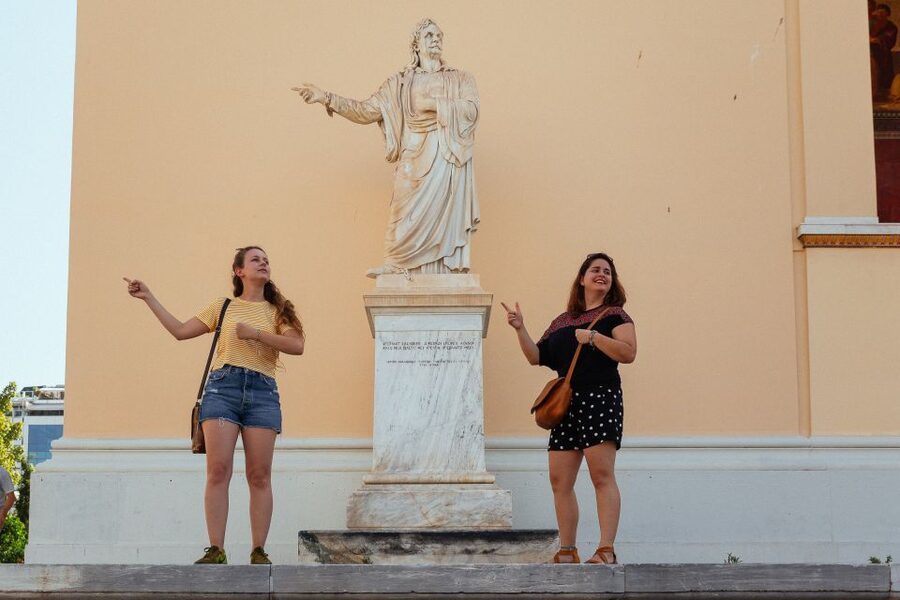
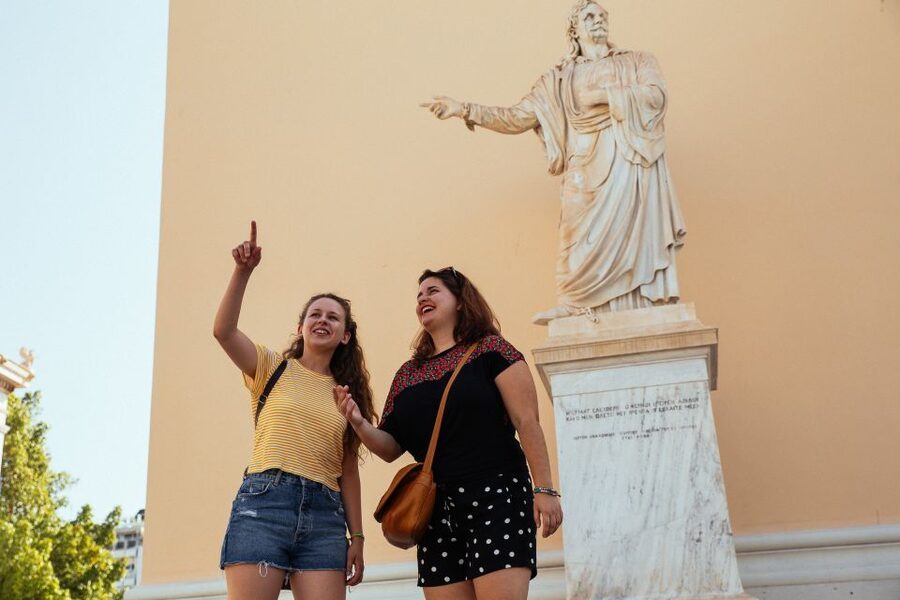
The strongest feature is the conversation. In a private group, you can ask why a myth mattered, how an ancient story shaped the city, or what a modern building represents. Your guide can spend more time on the subjects that interest you and less time on those that do not.
Several guides have been praised for an easy, personable style. Costas has been appreciated for making history feel relevant to the places around you. Elisivet has helped visitors feel ready to explore Athens independently, while Irini has been praised for local suggestions, including favorite coffee and lunch spots.
Those personal recommendations are useful, but they should not be treated as a guaranteed part of every booking. Guide assignments can vary, and the quality of the experience will partly depend on who leads your group.
The best approach is to arrive with a few questions. Ask about the myths you find confusing, the sites you plan to visit later, or the parts of Athens you want to understand better. The guide is there to answer questions, not just deliver a fixed speech.
Three hours and the value of $187 per person
At $187 per person, this is not a budget walking tour. The price makes the most sense if you are traveling with a small private party and place a high value on personal attention.
You are paying for a private guide rather than transport, entrance tickets, or hotel pickup. The price does not cover the cost of getting to the meeting point, and you should not assume that admissions to archaeological sites are included. The supplied details list the private guide as the inclusion.
For a first day in Athens, the value can be strong. A good guide may save you time later by helping you understand the city layout, suggesting where to go next, and putting famous sites into context. This is especially useful if you have only a short stay.
For a family or group that would otherwise book several separate sightseeing activities, the private format may be easier to justify. For a solo visitor comparing prices with a large group walk, $187 per person is a serious premium.
The three-hour length is practical. It gives you a focused introduction without taking up an entire day. Still, do not book it expecting to cover every major Athens sight in detail. The route is best seen as a guided orientation with mythology at its center.
Who should book this Athens mythology tour?
I would recommend it to you if:
- You want Greek mythology explained in the places connected with Athens.
- You are visiting the city for the first time and want help getting oriented.
- You prefer a private conversation to a large group lecture.
- You enjoy markets, streets, buildings, and archaeological sites in one route.
- You plan to explore Athens independently after the tour.
- You like history told with humor and personal stories.
Families may appreciate the flexible format, especially if children ask frequent questions. One family with children aged 11, 13, and 15 found the tour educational, with stops at markets, historic buildings, and less familiar streets near the Acropolis.
You should think twice if you dislike walking, want a fully accessible route, or need hotel transportation. Pregnant people, wheelchair users, and people with mobility impairments are specifically advised not to book this experience.
Practical details before you go
The tour lasts three hours and is conducted in English by a live guide. It is offered for a private group, and availability depends on the starting time you select.
Wear comfortable walking shoes. That is not a minor suggestion here. The route connects several central areas and includes a moderate amount of walking through streets, markets, and historic districts.
Cancellation is free up to 24 hours before the tour for a full refund. You can also reserve now and pay later, which helps if your Athens schedule is still changing.
Bring questions and keep the rest of your day flexible enough for independent exploring afterward. The tour does not include hotel pickup or drop-off, so plan both the journey to Nakas Book House and your onward route.
Should you book it?
Book this tour if you want Athens explained through stories, not just photographed from the outside. Its strongest qualities are the private guide, the mix of ancient and modern city life, and the chance to connect mythology with places such as the Agora, Academy, University, Varvakios Market, and Monastiraki.
I would book it near the start of an Athens stay. The orientation can help you decide which sites deserve a longer visit, and guides such as Markella, Costas, Elisivet, and Irini have shown the kind of warmth and clarity that makes a walking tour worthwhile.
Skip it if you want a dedicated Acropolis admission tour, a museum-heavy itinerary, transport, or a low-cost group experience. At $187 per person, the purchase is about private attention and useful context. If that is what you want, this is a practical and engaging way to meet Athens.
FAQ
How long does the Athens mythology tour last?
The tour lasts three hours.
Where does the tour meet?
You meet your guide outside Nakas Book House.
Is hotel pickup included?
No. Hotel pickup and drop-off are not included.
What language is the tour offered in?
The live tour guide speaks English.
Is the tour private?
Yes. It is offered for a private group.
Is the tour suitable for wheelchair users?
No. The experience is not suitable for wheelchair users, people with mobility impairments, or pregnant women. A moderate amount of walking is involved.
Just added in Athens
- Ceramic and Pottery Creative Workshop with Two Local Artists★ 4.0 · 57 reviews
- Small-Group Women History in Ancient Greece Walking Tour★ 5.0 · 38 reviews
- Athens Old City Private Photoshoot Tour / 2 hrs★ 5.0 · 109 reviews
- Athens: Greek Wines Tasting with Sommelier and Acropolis Views★ 5.0 · 88 reviews
- Athens: Wine Workshop Create your Own Wine under the Acropolis★ 5.0 · 77 reviews
- Wine Trails Private Tour/ Nemea visit 3 wineries from Athens or Nafplion (10 h)★ 5.0 · 44 reviews
- FLYING DRESS Photoshoot in Athens – Greece★ 5.0 · 47 reviews
- Small-Group Wine Tour in Athens with Tasting★ 5.0 · 33 reviews
Historical Tours, compared.
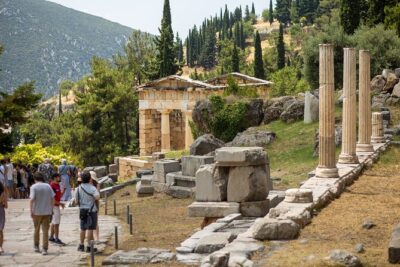
Historical Delphi One Day Tour with Arachova Stop & Expert Guide
Read our review →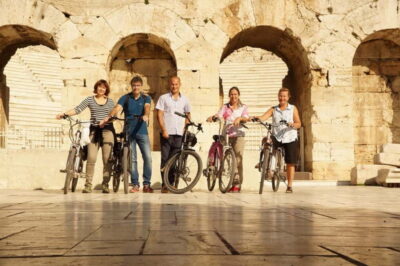
Historic Athens: Small Group Electric Bike Tour
Read our review →

Throne of Helios: The History of Rhodes in 9D Experience
Read our review →
The History of Athens: Greek Mythology Private Tour
Read our review →
Browse the lists this tour appears in