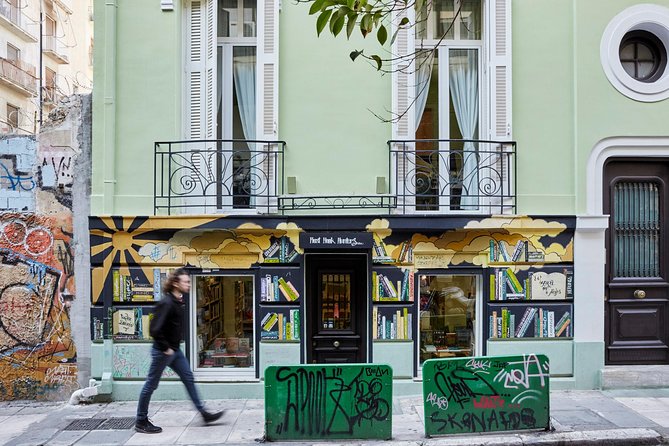
Reviewed · TOURS IN ATHENS
Unexpected Athens Orientation Tour
Athens reveals its most surprising side when you leave the Acropolis route behind. This four-hour walk connects royal squares, neoclassical buildings, old Ottoman lanes, modern protest districts, food markets, and a World War II prison site. It shows you how Athens grew from an ancient settlement into a modern European capital.
I like the clear neighborhood-to-neighborhood route, which gives the city a strong sense of place, and the way the tour links grand buildings with ordinary streets and local history. I also like that guides such as Andreas, Simos, and Antigoni have been singled out for their pacing, friendly manner, and ability to explain both ancient and modern Athens. The main consideration is that this is a long walking tour, and the prison visit is closed on Mondays and Tuesdays.
Key points to know before you book
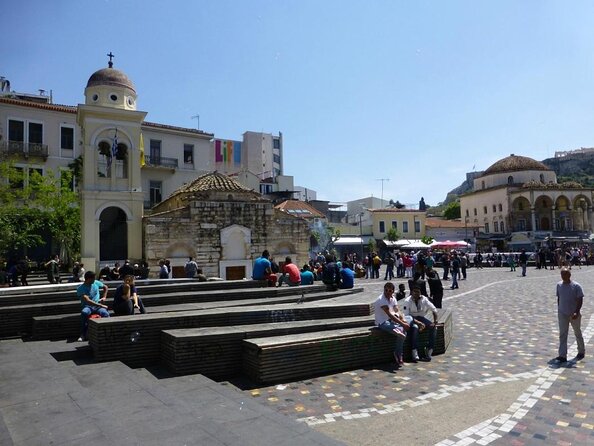
- The route begins at Syntagma Square and ends at Monastiraki Square, making it easy to continue exploring central Athens afterward.
- Kolonaki and Exarcheia show two very different sides of the modern city, from polished central Athens to a district known for its alternative character.
- The WWII prison site adds a sobering layer of history that most standard sightseeing walks leave out. It is closed Monday and Tuesday.
- Psiri and Monastiraki preserve traces of Ottoman Athens, while nearby markets and squares show how the city functions today.
- The tour includes major neoclassical landmarks, including the Parliament, Academy, University, and National Library.
- The $62 price is reasonable for a private or small-group walking experience, especially if your guide is able to adapt the pace and answer questions.
Why this Athens walk feels different
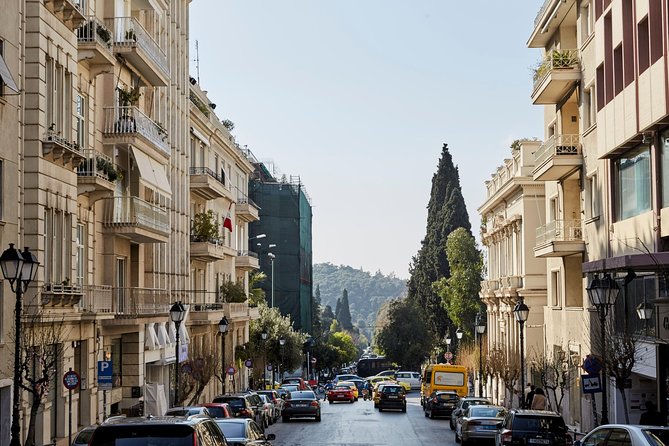
Most first visits to Athens follow a familiar pattern: Acropolis, ancient Agora, Plaka, and perhaps the National Archaeological Museum. Those places deserve your time, but they do not explain the whole city. Athens is also a 19th-century capital, a former Ottoman town, a wartime city, and a crowded modern metropolis.
This walk fills in those missing chapters. You will see how royal power, industrial growth, European architectural ideas, Ottoman traditions, and present-day urban life overlap within a fairly compact part of central Athens.
The route is especially useful if you want more than a parade of famous monuments. A guide can explain why a building matters, how one neighborhood differs from the next, and why Athens often feels like several cities sharing the same streets.
The tour lasts four hours and uses Syntagma Square as the starting point, with the walk ending at Monastiraki Square. That progression works well. You begin near the political heart of modern Greece and finish among some of the city’s oldest commercial streets and meeting places.
Other days out people book in Athens:
- Athens: Acropolis & up to 5 Archaeological Sites Combo Pass
★ 4.4 · 12,619 reviews - Athens: Acropolis Ticket with Optional Audio or Live Guide
★ 4.2 · 11,055 reviews - Athens: Acropolis, Parthenon & Acropolis Museum Guided Tour
★ 4.8 · 9,316 reviews
Starting at Syntagma and entering Kolonaki
Syntagma, or Constitution Square, is the natural place to begin. It is tied to the creation of the modern Greek state and sits beside the Parliament, one of the city’s best-known 19th-century buildings.
From here, the route moves toward Kolonaki. This part of Athens helps explain how the capital developed after independence. It is associated with the modern city, formal institutions, and the social world that grew around the new Greek state.
You will also encounter buildings connected with the 19th-century architectural program that shaped Athens. The Parliament, Academy, University, and National Library are not simply attractive facades. Together, they show how Greece presented itself as a European nation with a strong connection to classical antiquity.
That contrast is one of the tour’s strengths. Athens did not simply preserve ancient ruins. It rebuilt itself with neoclassical buildings, royal institutions, broad civic spaces, and new ideas about what a capital should look like.
Your guide may also point out how the city’s image changed over time. The modern Greek capital was planned with grand ambitions, but daily life did not always fit those plans. That tension between formal architecture and untidy urban life is part of what makes Athens so interesting.
The route spends about an hour in Kolonaki. That is enough time to look carefully without turning the tour into a lecture on every building. If you enjoy architecture and urban history, this section will likely be one of the most rewarding parts.
Exarcheia and the city beneath the official image
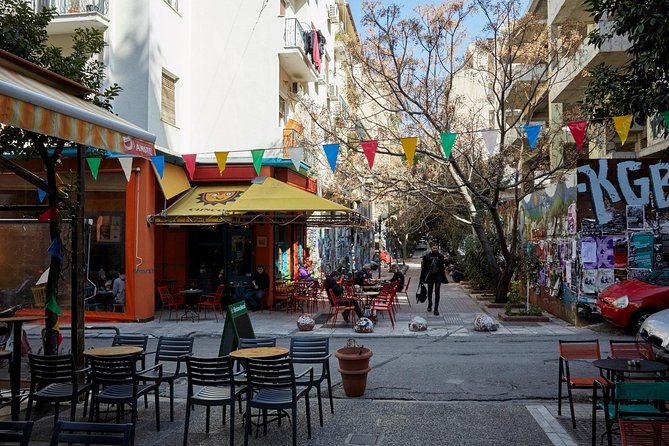
The next major stop is Exarcheia, where the tone changes. Instead of royal Athens and polished civic architecture, you get a district associated with alternative culture, political debate, and the more complicated side of city life.
This is where a good guide matters. Exarcheia can be reduced to a label, but the tour gives you a chance to understand it as part of Athens rather than as a curiosity. The guide can connect the area to wider changes in Greek society and explain some of the pressures faced by residents.
The route also includes unusual reminders of the city’s older past. You may learn about ancient rivers that still flow through or beneath Athens, along with tombs connected to earlier periods. These details help you see that the ancient city is not confined to a fenced archaeological site.
The most sobering stop is the former World War II prison site. The tour takes you down to a place linked with one of the darkest periods in modern European history. It is a sharp change from the grand facades of central Athens, and that contrast gives the walk weight.
The prison is closed on Mondays and Tuesdays, so check the day before booking. If seeing this site is important to you, schedule the tour from Wednesday through Sunday. The supplied information does not promise an equivalent replacement when it is closed, so you should treat this as a genuine limitation rather than assume the route will be identical.
Exarcheia is covered for about an hour. Comfortable shoes are essential, and you should expect a city walk rather than a gentle stroll through a park. The route includes streets, squares, and interior or below-ground sites, so the experience has more variety than a standard sightseeing loop.
Psiri, where old Athens meets the working city
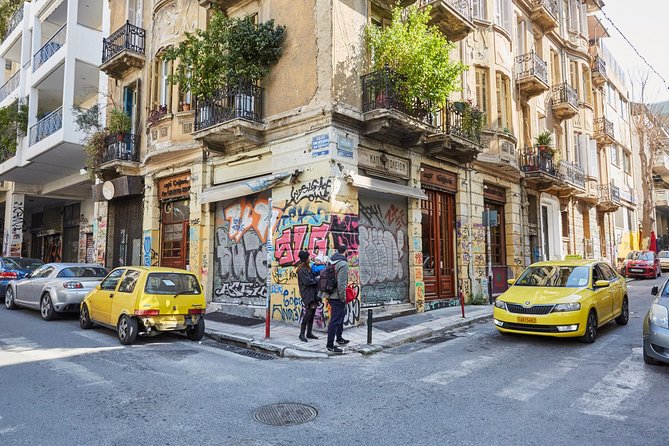
From Exarcheia, the walk continues toward Psiri. This neighborhood offers a useful bridge between older Athens and the city you see today.
Psiri and nearby streets retain traces of the Ottoman period, when Athens was a smaller town with traditions and street patterns very different from those of the modern capital. The tour helps you notice what remains instead of treating the neighborhood as just another restaurant district.
That historical layer is important because Athens is often presented as if ancient Greece were followed directly by modern Greece. The Ottoman centuries are easy to skip, yet they shaped the city’s buildings, street life, and cultural mix.
The guide also helps you understand how older customs met Western European ideas after the creation of the modern Greek state. Sometimes those influences blended. Sometimes they sat side by side without fully agreeing. Psiri is a good place to discuss that uneasy mixture because the area feels less formal than the civic center.
The walk through Psiri lasts about an hour. That is a generous portion of the tour, and it gives you time to look beyond the most obvious attractions. You may pass through streets where the past appears in small details rather than major monuments.
One of the tour’s practical strengths is the local advice that can follow naturally from this section. Antigoni, one of the guides named in the feedback, has recommended a taverna for non-tourist food and a place serving Greek coffee. Those suggestions are not guaranteed on every departure, but the tour can help you decide where to eat after it ends.
Same base, a completely different day:
- Athens: Cape Sounion & Poseidon Temple Sunset Half-Day Trip
★ 4.8 · 8,241 reviews - Athens: Acropolis and Parthenon Guided Walking Tour
★ 4.6 · 5,882 reviews - All Day Cruise -3 Islands to Agistri,Moni, Aegina with lunch and drinks included
★ 5.0 · 4,958 reviews - Athens, Piraeus, and Coastline: Blue Hop-On Hop-Off Bus
★ 3.9 · 4,849 reviews
Monastiraki and the final half hour
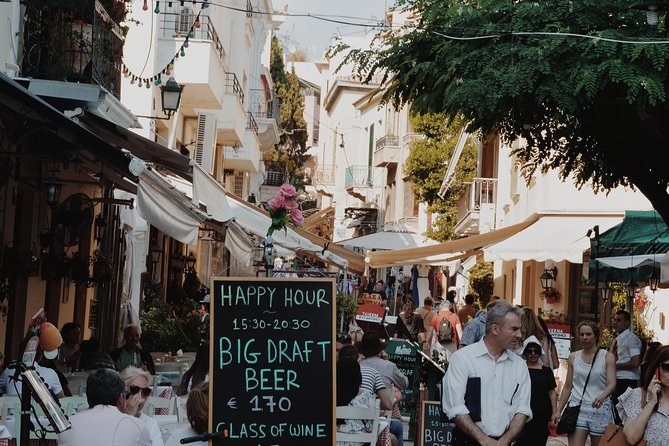
The last section takes you into Monastiraki, finishing at Monastiraki Square after roughly 30 minutes. This is the shortest portion of the walk, but it gives the route a fitting finish.
Monastiraki is where several periods of Athens come together in a small area. Ottoman traces, older commercial streets, markets, archaeological remains, and modern city crowds all overlap. You do not need a museum label to see that Athens has been rebuilt and reused many times.
The nearby central markets add another useful perspective. They show Athens as a working city rather than a collection of monuments. The route passes through market areas and other central sites, helping you connect the city’s past with its present routines.
Finishing at Monastiraki Square is convenient. You are near restaurants, shops, metro connections, and many other central sights. You can continue to the Plaka area, walk toward the ancient Agora, or simply stop for food and coffee.
Because the Monastiraki segment is short, do not expect a full market tour or an extended archaeological visit. Its purpose is to bring the story together and leave you with a clearer idea of how the old city and the modern capital fit around each other.
The guides and the value of a small group
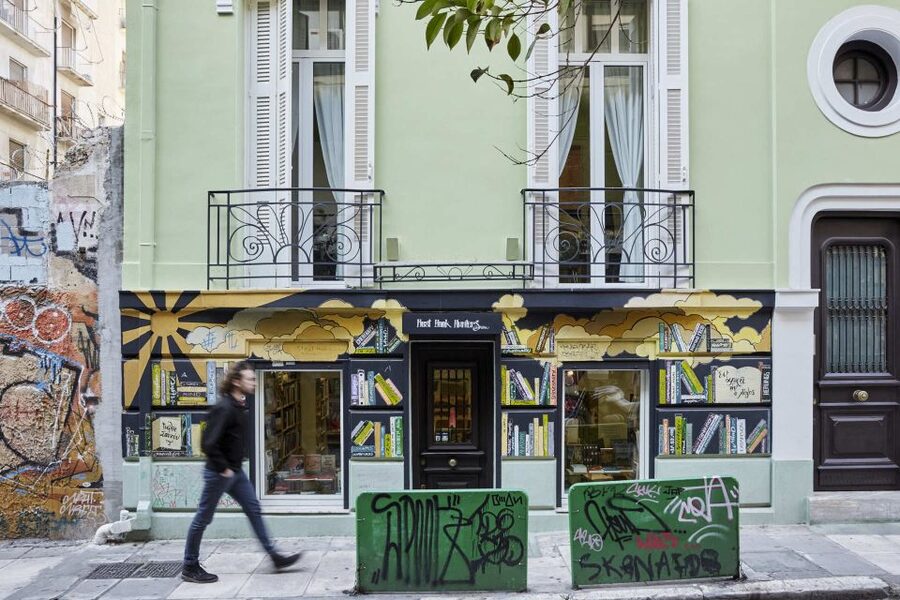
The strongest praise for this experience centers on the guides. Andreas has been described as friendly, professional, and especially effective at helping repeat visitors find parts of Athens they had missed. Simos has been noted for attentive guiding, good pacing, and clear explanations of the different neighborhoods.
Antigoni has also received warm praise for connecting history with present-day life. Other named guides include Christina, who was praised for taking people to places they would be unlikely to find alone, and a French-speaking guide who made the walk especially enjoyable for French-language participants.
The descriptions point to a consistent benefit: the guide does not simply list dates. You get help reading the city. That means understanding why a square matters, how a district changed, and what the mixture of buildings says about Greece.
A small group or private booking can improve this further. You have more room to ask questions, and the guide can adjust the pace. The activity specifically allows a private group option, though the price may vary by booking choice.
The tour is available in English or French. If you need French, confirm the language option when you book rather than assume every departure uses it.
Is $62 a fair price?

At $62 per person, this is not the cheapest way to spend four hours in Athens. You can walk through Syntagma, Psiri, and Monastiraki on your own for nothing. You can also use a guidebook to identify many of the major buildings.
The value comes from the connections. A self-guided walk may show you the Parliament, central markets, Ottoman-era streets, and Monastiraki. It is harder to understand how those places fit together, or to locate less obvious details such as old rivers, tombs, and the WWII prison site.
The price makes the most sense if you are visiting Athens for the first time and want a strong introduction beyond the Acropolis. It also works for repeat visitors. Several people who had already been to Athens found new neighborhoods and new ways to understand the city.
I would be less likely to recommend it to someone who wants only ancient monuments or a short, easy walk. You are paying for context and a broad route, not for entry to a series of major museums or archaeological sites.
Food and drinks are not included. That is no hardship in central Athens, but budget for your own meal or coffee afterward. Gratuity is optional.
Who will enjoy this tour most?
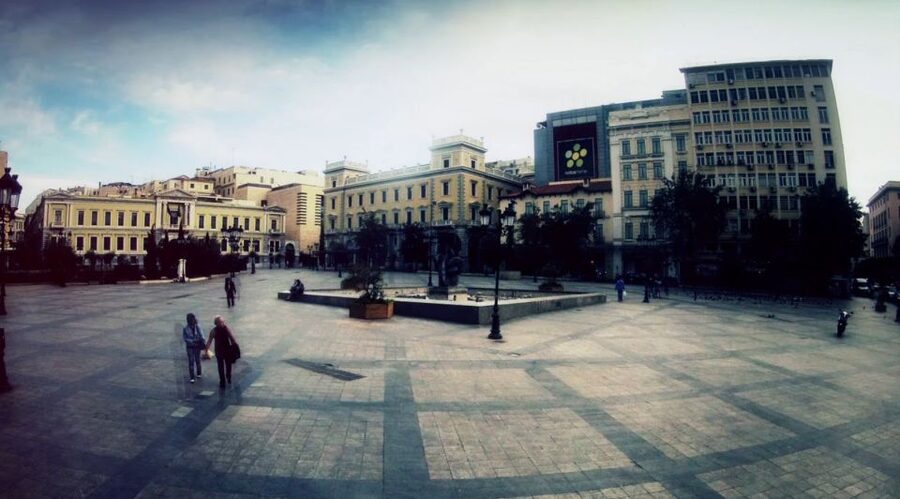
I would choose this walk if you want to:
- See Athens through its political, architectural, Ottoman, and wartime past
- Understand how the city developed beyond the ancient ruins
- Find neighborhoods you might skip when sightseeing alone
- Ask questions about modern Greek society and city life
- Get restaurant and coffee suggestions from a local guide
- Explore in English or French
- Take a private or small-group walk
It is also a good first-day activity because it helps you get your bearings. Starting at Syntagma and ending at Monastiraki gives you a useful mental map for the rest of your stay.
You should think twice if your mobility is limited, since this is a four-hour urban walk and comfortable shoes are specifically recommended. You may also prefer another activity if Monday or Tuesday is the only time you have available and the WWII prison site is a must-see.
Practical details that affect your choice

There are two possible starting options at Syntagma Square, and the exact meeting point can vary according to the option booked. Check your confirmation carefully before setting out.
The tour lasts four hours, but the timing of each section can vary slightly with the group and guide. The planned pattern is about one hour in Kolonaki, one hour in Exarcheia, one hour in Psiri, and 30 minutes in Monastiraki.
Wear shoes suitable for city walking. Bring water, especially in warm weather, although food and drinks are not part of the activity. Since the route includes both famous institutions and less formal neighborhoods, dress for a normal day outdoors rather than a museum visit.
Free cancellation is available up to 24 hours before the start time, and you can reserve now and pay later. Those policies are useful if your Athens schedule is still shifting.
Should you book the Unexpected Athens Orientation Tour?
Book it if you want Athens explained as a living city rather than a set of ancient monuments. The combination of neoclassical landmarks, Exarcheia, a WWII prison site, Ottoman streets, markets, and Monastiraki gives you a fuller picture than the usual first-day route.
I especially recommend it for repeat visitors, curious first-timers, and anyone who enjoys architecture, social history, and neighborhood life. The $62 cost is fair when you value a strong guide and a thoughtful route.
Skip it if you want a short, relaxed stroll focused only on famous sights. Also avoid Monday or Tuesday if the prison visit is essential. For everyone else, this is a smart way to meet the less obvious Athens before spending the rest of your trip exploring on your own.
FAQ
Where does the Unexpected Athens Orientation Tour start?
The tour has two possible starting options at Syntagma, or Constitution, Square. The exact meeting point may vary depending on the option booked.
Where does the tour finish?
The walk finishes at Monastiraki Square.
How long does the tour last?
The tour lasts four hours.
Which neighborhoods are included?
The route includes Kolonaki, Exarcheia, Psiri, and Monastiraki, with the walk beginning near Syntagma Square.
Is the WWII prison site open every day?
No. The prison site is closed on Mondays and Tuesdays.
What languages are available?
The tour is offered in English or French with a live guide.
Is a private group option available?
Yes. A private group option is available.
What should I bring?
Bring comfortable shoes for the four-hour city walk. Food and drinks are not included.
Just added in Athens
- Ceramic and Pottery Creative Workshop with Two Local Artists★ 4.0 · 57 reviews
- Athens Old City Private Photoshoot Tour / 2 hrs★ 5.0 · 109 reviews
- Small-Group Women History in Ancient Greece Walking Tour★ 5.0 · 38 reviews
- Athens: Wine Workshop Create your Own Wine under the Acropolis★ 5.0 · 77 reviews
- Athens: Greek Wines Tasting with Sommelier and Acropolis Views★ 5.0 · 88 reviews
- Wine Trails Private Tour/ Nemea visit 3 wineries from Athens or Nafplion (10 h)★ 5.0 · 44 reviews
- FLYING DRESS Photoshoot in Athens – Greece★ 5.0 · 47 reviews
- Small-Group Wine Tour in Athens with Tasting★ 5.0 · 33 reviews
Tours in Athens, compared.
Acropolis & up to 5 Archaeological Sites Combo Pass
Read our review →
Acropolis, Parthenon & Acropolis Museum Guided Tour
Read our review →
Cape Sounion & Poseidon Temple Sunset Half-Day Trip
Read our review →

All Day Cruise -3 Islands to Agistri,Moni, Aegina with lunch and drinks included
Read our review →
Cape Sounio & Poseidon Temple Trip with Audio Guide
Read our review →