
Reviewed · TOURS IN ATHENS
Ancient Agora: Audiovisual self-guided tour with 3D models
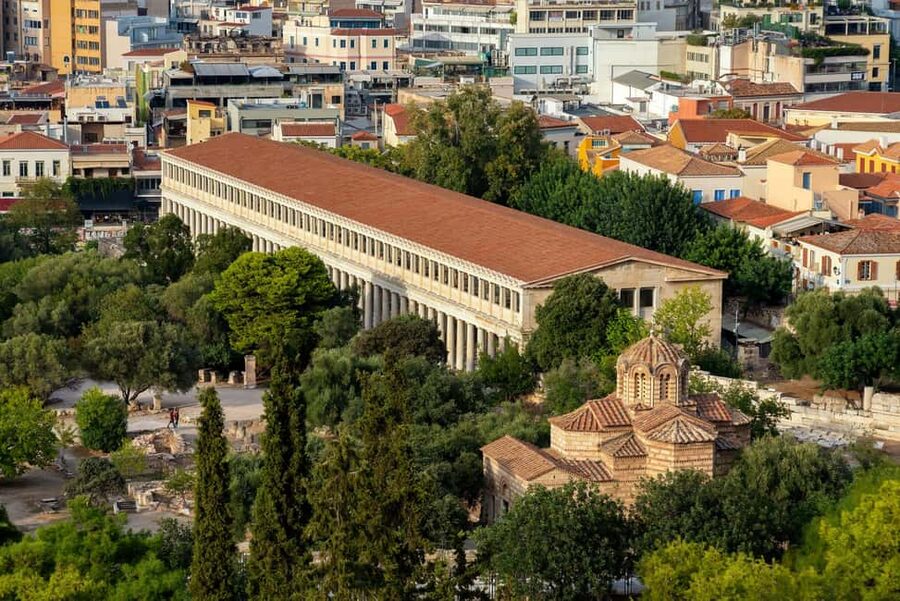
Athens’ Ancient Agora was more than a marketplace. It was the city’s political, legal, religious, and social center, and the place where democracy first took shape. I like that this tour helps you connect scattered ruins to those larger roles through 3D reconstructions and 360-degree views, not just blocks of ancient stone.
I also like the five-day validity, which lets you activate the guide when it suits your schedule, and the broad language choice, including English, Greek, German, Spanish, Italian, French, Dutch, and Chinese. The main drawback is that you must bring your own charged smartphone and headphones, download about 200MB of content, and buy the archaeological site ticket separately.
Key points to know before you go
- Sixteen monuments are explained: You receive written and audio information for the major remains in the Agora.
- Fourteen monuments get visual reconstruction: 3D models, immersive videos, and 360-degree views help show what the ruins once looked like.
- The ticket is separate: The app costs $7.89 per person, while entry to the site costs €10 for a full ticket or €5 at the reduced rate.
- Five days gives you flexibility: The tour stays valid for five days from first activation and can be used before, during, or after your visit.
- The Agora was democracy’s early home: You explore the setting for civic administration, courts, trade, festivals, temples, and philosophical teaching.
- You need your own equipment: A compatible iOS or Android phone, headphones, internet access for setup, and enough battery power are essential.
Why the Ancient Agora needs more than a quick walk
The Ancient Agora can be easy to underestimate. You see open ground, foundations, columns, and a few restored buildings, but the site once handled much of daily Athenian life. This was where people met, traded, worshipped, attended civic business, and took part in the workings of democracy.
That is the central value of an audiovisual guide. Instead of asking you to guess what a low wall meant, the app gives you historical text, spoken explanations, images, and digital reconstructions. You can move from one monument to another while keeping the broader purpose of the Agora in mind.
I find this especially useful here because the ruins do not always explain themselves. A temple may be recognizable, but the remains of administrative buildings, courts, fountains, stoas, and workshops require more context. The app is designed to fill that gap without tying you to a guide or a fixed group.
The experience is self-guided, so you decide how fast to go. You can listen carefully at each monument, skim the written section, or use the tour as a reference before and after your visit.
A few more things to do in Athens worth a look
- Athens: Acropolis Ticket with Optional Audio or Live Guide
★ 4.2 · 11,055 reviews - Athens: Cape Sounio & Poseidon Temple Trip with Audio Guide
★ 4.4 · 4,521 reviews - Athens: Acropolis Ticket with Audio Guide
★ 4.0 · 3,575 reviews
Starting with the civic heart of Athens
The Agora was the center of ancient Athens’ civil administration. This is the part of the site that gives the visit its strongest historical weight. You are not simply looking at old buildings. You are walking through a place connected with public decisions, courts, officials, and the practical business of running a city.
The guide covers 16 monuments in written and audio form, giving you a useful framework for understanding how different parts of the Agora worked together. That number matters because a short explanation of one famous temple would leave much of the site unexplained.
Use the integrated map to identify the monuments as you move around. It is a practical feature in a spread-out archaeological area, especially if you want to follow the site in a logical order rather than wander past remains without knowing what they were.
The app also provides related stories for 13 monuments. These add background beyond the basic identification of a building, helping you understand how the site connected to Greek culture and public life.
The birthplace of democracy, presented visually
The Agora’s most important theme is democracy. Ancient Athens did not create modern democracy in the same form we know today, but this was the setting where citizens took part in a new kind of civic system. The political meaning of the site can be hard to grasp from ruins alone, so the visual tools are useful.
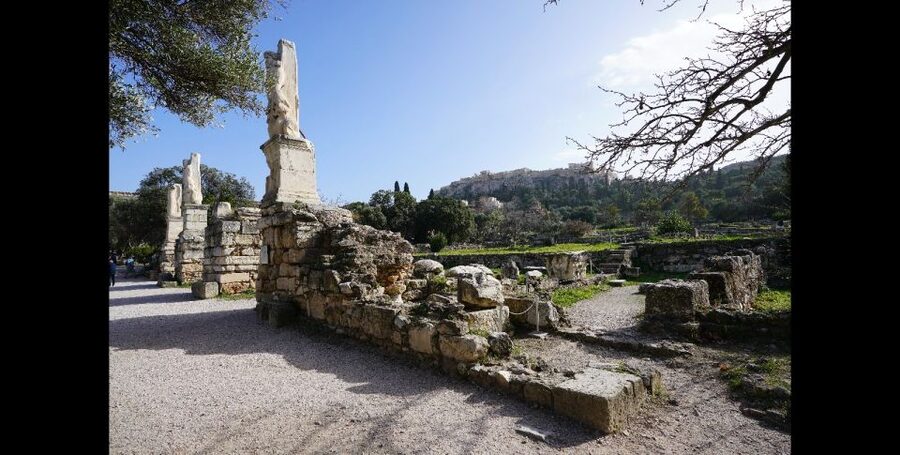
The 3D models for 14 monuments show the buildings as complete structures rather than scattered remains. The models are not a substitute for standing in the actual site, but they help you imagine the scale and purpose of what you are seeing.
The 360-degree views offer another angle. You can look around from the position of a monument and gain a better sense of how the Agora’s buildings related to one another. This is particularly helpful when walls and foundations have lost their original height.
The immersive videos are also available for 14 monuments. I would treat them as short interpretation tools rather than a separate show. Use them when you need a quick visual explanation, then look back at the physical remains in front of you.
Following the philosophers and public thinkers
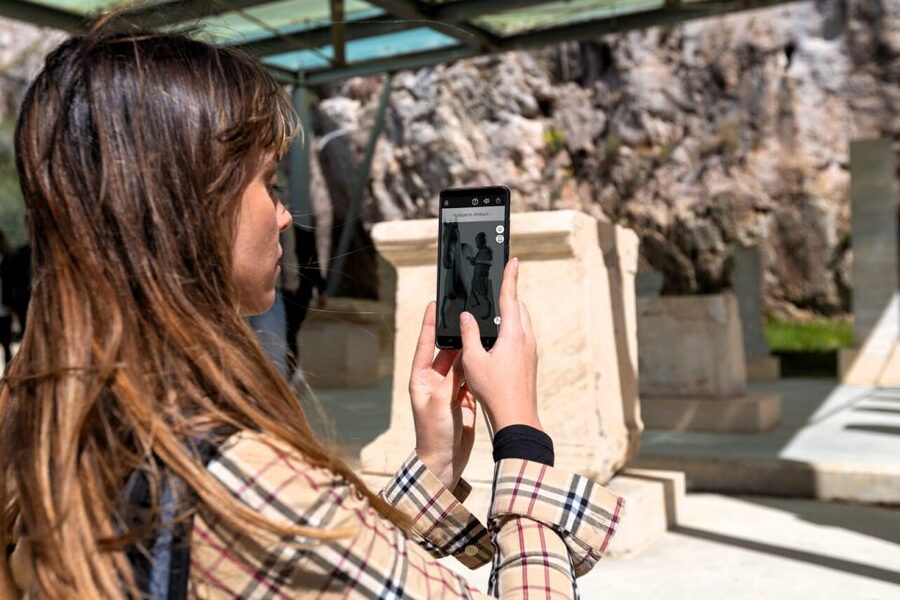
The Ancient Agora is linked with Socrates and other philosophers who taught and debated in Athens. The site’s importance is not limited to formal government. It was also a place where ideas circulated in public, alongside trade, religious activity, and everyday meetings.
The guide gives you a way to connect those philosophical associations with the physical setting. You may not find a neat classroom or a single preserved spot labeled as the place where a famous discussion happened. Instead, you gain a sense of the open civic world in which public argument and teaching took place.
This is one reason I would not rush the visit. If you use only the map and identification labels, the Agora can become a checklist of ruins. The audio stories and written explanations give you more reason to pause and think about how people used the space.
Since the tour can be used before, during, or after your visit, you can also preview the historical material at your accommodation, then listen on site without trying to read everything at once.
Same base, a completely different day:
- Athens: Acropolis & up to 5 Archaeological Sites Combo Pass
★ 4.4 · 12,619 reviews - Athens: Acropolis, Parthenon & Acropolis Museum Guided Tour
★ 4.8 · 9,316 reviews - Athens: Cape Sounion & Poseidon Temple Sunset Half-Day Trip
★ 4.8 · 8,241 reviews - Athens: Acropolis and Parthenon Guided Walking Tour
★ 4.6 · 5,882 reviews
The Temple of Hephaistos and the visual payoff
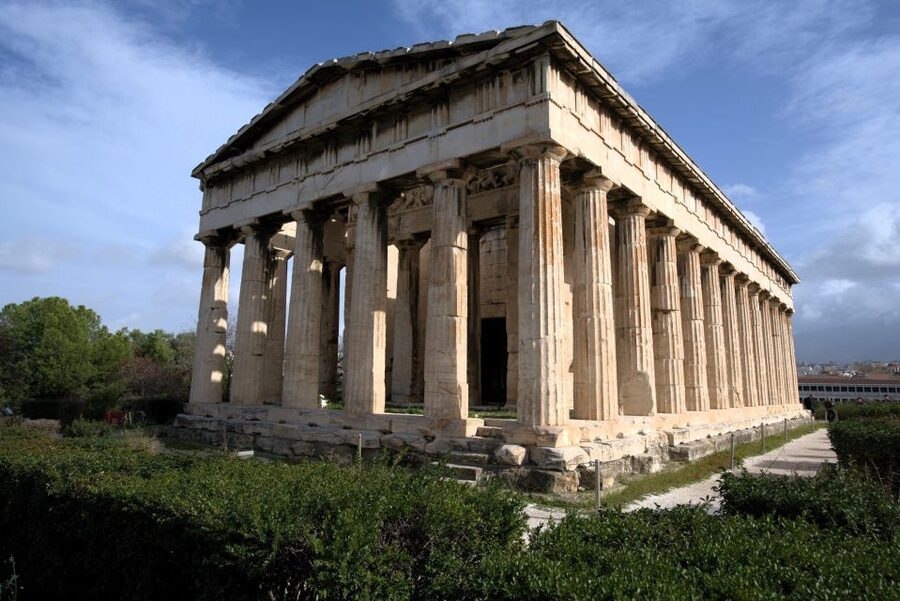
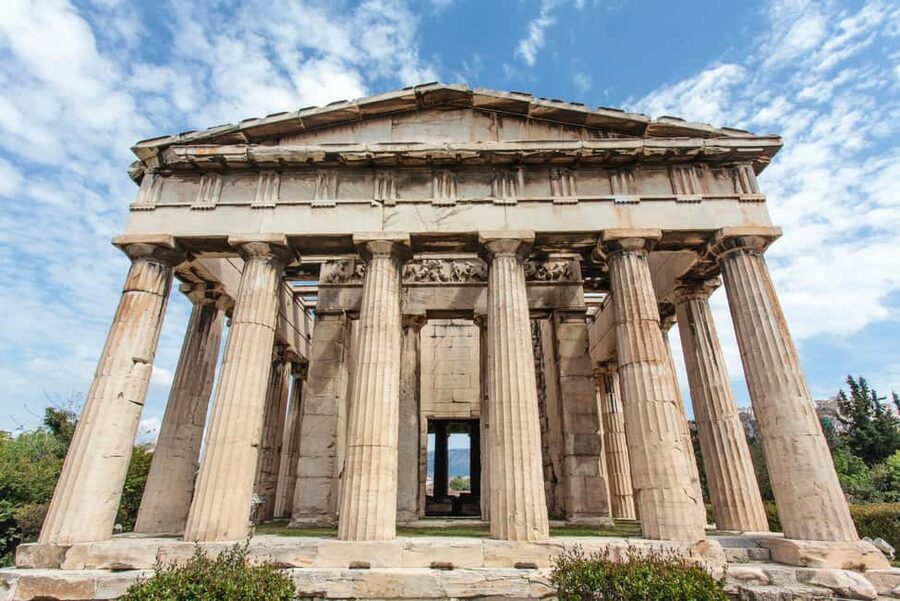
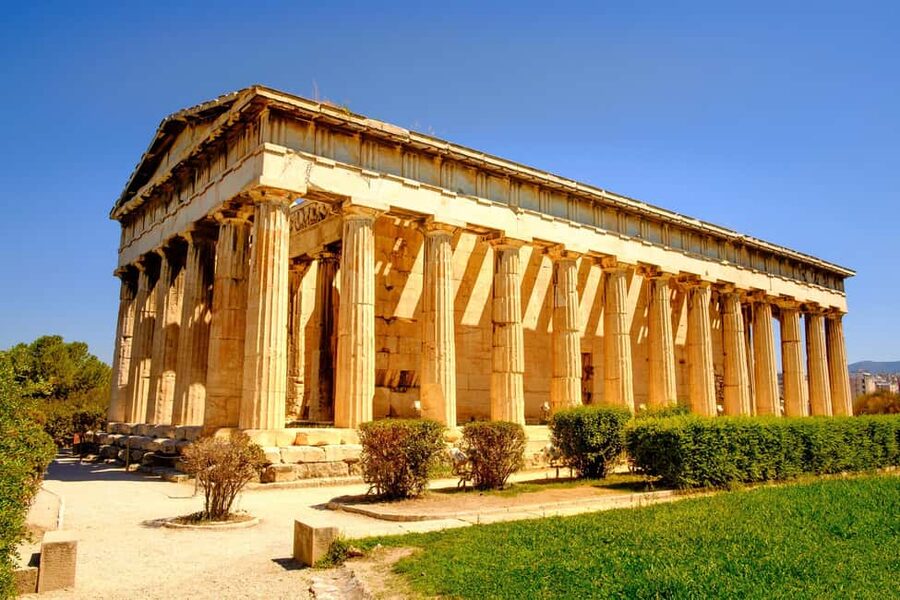
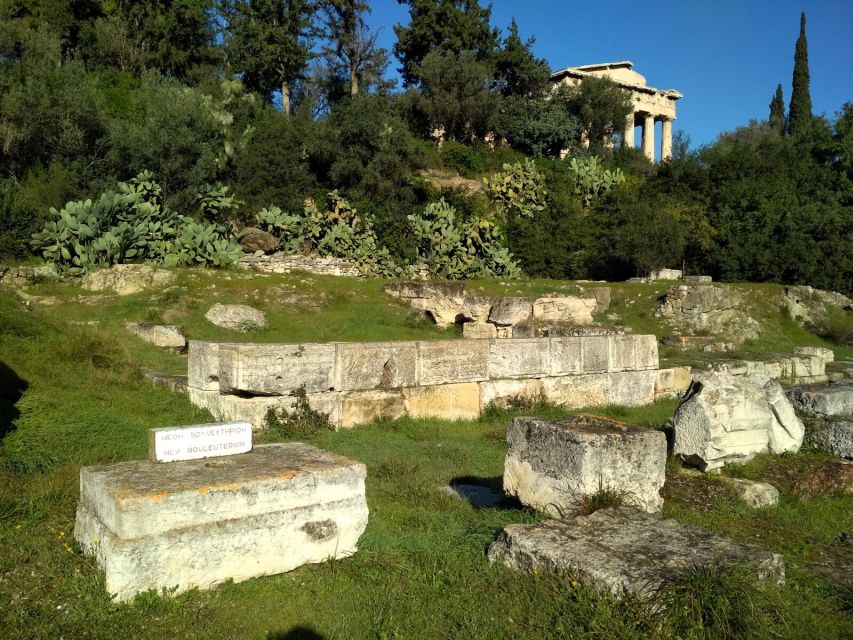
The Temple of Hephaistos is the site’s major architectural highlight. It is described as one of Greece’s best-preserved ancient temples, and its condition helps you picture the form of a classical Greek religious building more clearly than the fragmentary remains elsewhere in the Agora.
This is where the app’s digital material can work especially well. Compare the physical temple with its 3D model, then use the audio and written sections to understand its role among the other monuments.
The temple is also a useful anchor for your visit. After seeing a relatively complete building, the less intact foundations around the Agora become easier to interpret. You start to understand that the site was not one structure but a working district made up of civic buildings, sanctuaries, covered walkways, fountains, and workshops.
The app does not replace looking carefully at the temple itself. Keep your attention on the real stone, proportions, and setting, and use the phone when you need help filling in what time has removed.
What the sixteen monument entries give you
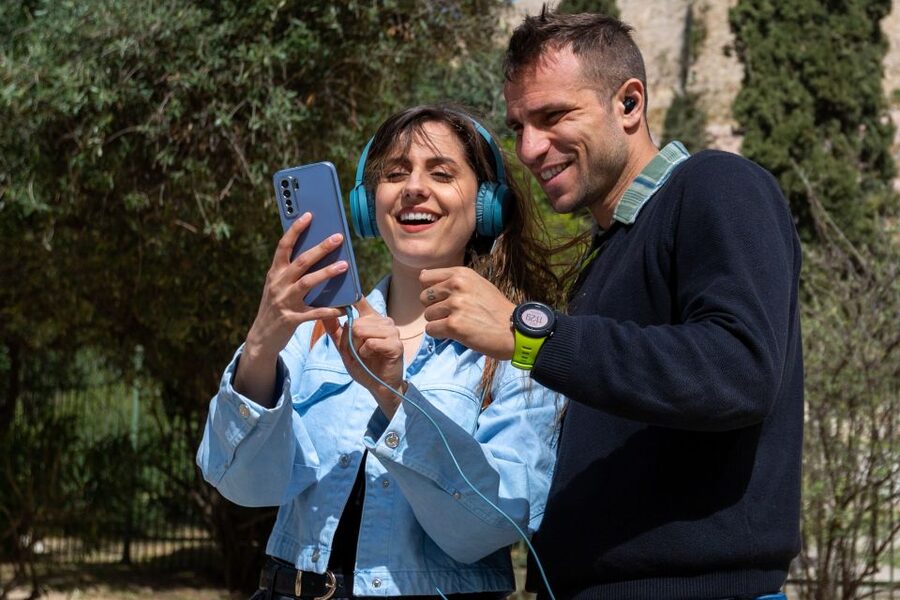
Each monument entry has a different mix of material. The core package includes:
- Written historical information for 16 monuments
- Audio information for 16 monuments
- 3D models for 14 monuments
- 360-degree panoramic views from 14 monuments
- Immersive videos for 14 monuments
- Related stories for 13 monuments
- An integrated map for identifying locations
The coverage is broad enough to support a full site visit, but it is not simply a long audio recording. You can switch between reading, listening, viewing a reconstruction, and checking your position on the map.
That flexibility suits different kinds of visits. If you prefer to listen, use the audio. If you are in a noisy area or want to move quietly, read the text. If a ruin is hard to picture, open the 3D model or video.
There is also a bonus collection of 68 written and audio pieces about culture and facts in ancient Greece. This is useful if you want more background than the Agora entries provide, though it also means the app may contain more material than you can reasonably use during one walk.
How to plan your five-day access
The tour is valid for five days from first activation. That is more generous than a guide that expires at the end of one calendar day, but you should pay attention to the activation point.
You can use the content before arriving, during the archaeological visit, or afterward. I would download everything over Wi-Fi before heading to the Agora. Internet access is required for effective use, and the instructions specifically advise downloading the tour in advance unless you have enough mobile data.
The content takes about 200MB of storage. Check that your phone has room, and make sure it runs iOS 11.0 or later or Android 5.1 or later.
Bring headphones and start with a fully charged phone. The app is your guide, map, audio player, and visual reference, so a dead battery would leave you without the main service you paid for.
After the content has been downloaded, the paid price is not refundable. That makes it sensible to confirm your device, storage, connection, and plans before activating the tour.
Price, entrance costs, and overall value
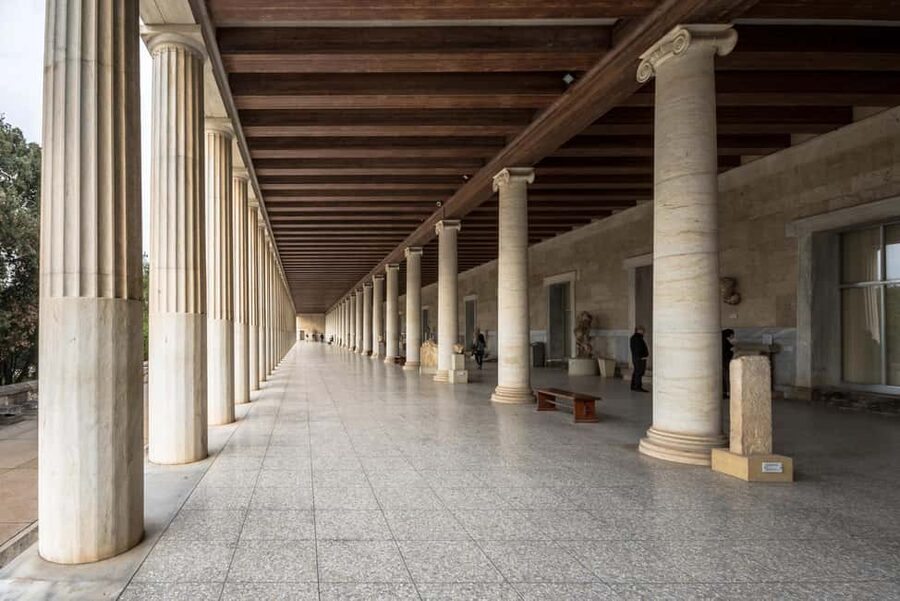
The audiovisual guide costs $7.89 per person. That price covers the digital interpretation, not admission to the Ancient Agora. Entry is listed separately at €10 for a full ticket and €5 for a reduced ticket.
The total cost is reasonable if you want more than basic signage and prefer to explore independently. You receive a large amount of material across 16 monuments, plus 3D models, panoramic views, videos, stories, and the culture bonus. The five-day validity also gives the fee more value if you want to prepare before your visit or review the site afterward.
The value is weaker if you already have another guide, do not enjoy using your phone at archaeological sites, or plan only a very short look around. You are paying for interpretation and visual context, not transportation, a human guide, food, or entry.
There is no pickup or drop-off service. This is simply a digital guide for use at the site, so plan your own arrival and buy the archaeological ticket separately.
Who will get the most from this guide
I would recommend it most strongly to independent visitors who want structure without joining a group. You can stop where you like, move at your own speed, and choose how much material to hear.
It also suits anyone who finds ruins hard to read. The 3D models and videos help bridge the gap between a surviving foundation and the building that once stood there.
Families and mixed-interest groups may appreciate the flexibility too. One person can listen while another reads, and you do not have to keep pace with a guide. On the other hand, very young children may find the amount of historical material difficult to follow, and the phone-based format requires some supervision.
History-minded visitors should get the most from the bonus culture material and related stories. If you mainly want to admire the Temple of Hephaistos and take a quick walk, you may not use enough of the package to justify the extra app fee.
The tour is available in eight languages, which makes it a practical choice for international visitors. No live guide is included, so you should choose it only if you are comfortable navigating the site and listening independently.
Booking and cancellation details
You can cancel up to 24 hours in advance for a full refund. A reserve-now, pay-later option is also available, which helps if you are still arranging your Athens plans.
After booking, Culture App sends instructions by email explaining how to download the content. Check your spam folder if the message does not appear. Before you commit, confirm the Ancient Agora’s opening days, hours, and current entry information through the official archaeological site website.
The app can be deleted or retrieved from your device later, but downloaded paid content remains nonrefundable once it has been downloaded.
Should you book the Ancient Agora audiovisual tour?
Book it if you want the Agora explained in context and like having control over your pace. The combination of audio, written material, a map, 3D models, videos, and 360-degree views is particularly helpful at a site where many remains are low or incomplete.
Skip it if you want a personal conversation with a guide, already have a trusted guidebook, or dislike using your phone while sightseeing. Remember that the €10 full entrance fee or €5 reduced fee is extra.
For most independent visitors, the $7.89 price is a fair add-on to the site ticket, especially if you use the five-day access to prepare and review. Bring headphones, download the material on Wi-Fi, and let the digital reconstructions support the real ruins rather than distract from them.
FAQ
Is the Ancient Agora entrance ticket included?
No. The audiovisual guide costs $7.89 per person, while entrance to the archaeological site costs €10 for a full ticket or €5 for a reduced ticket.
How long is the audiovisual tour valid?
It is valid for five days from the time you first activate it.
Can I use the tour before or after visiting the Agora?
Yes. The self-guided tour can be used anywhere and at any time before, during, or after your visit.
What languages are available?
Audio guidance is available in English, Greek, German, Spanish, Italian, French, Dutch, and Chinese.
How many monuments are covered?
Written and audio historical information is provided for 16 monuments. Fourteen monuments also have 3D models, 360-degree panoramic views, and immersive videos. Related stories are available for 13 monuments.
Do I need internet access?
Yes. Internet access is required for effective use. You are advised to download the tour content over Wi-Fi before visiting unless you have enough mobile data.
What phone systems are supported?
The tour requires iOS 11.0 or later or Android 5.1 or later.
Do I need to bring headphones?
Yes. A smartphone and headphones are not provided, so you should bring your own headphones and make sure your phone is fully charged.
Can I cancel the booking?
Yes. You can cancel up to 24 hours before the activity for a full refund. Once the paid content has been downloaded, the price is not refundable.
Just added in Athens
- Ceramic and Pottery Creative Workshop with Two Local Artists★ 4.0 · 57 reviews
- Athens Old City Private Photoshoot Tour / 2 hrs★ 5.0 · 109 reviews
- Small-Group Women History in Ancient Greece Walking Tour★ 5.0 · 38 reviews
- Athens: Wine Workshop Create your Own Wine under the Acropolis★ 5.0 · 77 reviews
- Athens: Greek Wines Tasting with Sommelier and Acropolis Views★ 5.0 · 88 reviews
- Wine Trails Private Tour/ Nemea visit 3 wineries from Athens or Nafplion (10 h)★ 5.0 · 44 reviews
- FLYING DRESS Photoshoot in Athens – Greece★ 5.0 · 47 reviews
- Small-Group Wine Tour in Athens with Tasting★ 5.0 · 33 reviews
Tours in Athens, compared.
Acropolis & up to 5 Archaeological Sites Combo Pass
Read our review →
Acropolis, Parthenon & Acropolis Museum Guided Tour
Read our review →
Cape Sounion & Poseidon Temple Sunset Half-Day Trip
Read our review →

All Day Cruise -3 Islands to Agistri,Moni, Aegina with lunch and drinks included
Read our review →

Cape Sounio & Poseidon Temple Trip with Audio Guide
Read our review →
Browse the lists this tour appears in