Reviewed · TOURS IN ATHENS
Athens: Family Mythology Treasure Hunt and Tour
The clever heart of this Athens outing is a game: your family helps Athena defeat Poseidon and win the right to name the city. Instead of asking children to stand quietly beside monuments, the guide gives them riddles to solve, digital clues to follow, and tokens to collect as you walk through Plaka.
I like the mix of mythology and real places, especially the way the story leads you from Hadrian’s Arch toward the Temple of Olympian Zeus and the old lanes around the Acropolis. I also like the practical touches: lukumades with honey and cinnamon, water, a final ceremony, and family photos with the Acropolis behind you.
The main caution is the walking. The route includes staircases and mild uphill sections, and one family with four boys took closer to three hours. Summer heat can make the outing tiring, so bring water beyond the included serving, wear good shoes, and consider a stroller for a young child.
Key points to know before you book

- Athena versus Poseidon gives the walk a clear purpose: Children are not simply following a guide from one monument to another. They are solving a city-making myth.
- The guide remains with you throughout: Maria, Jo, Aliki, Orestis, and Konstantinos are among the guides praised by name in past bookings.
- Lukumades are part of the experience: These light Greek doughnuts come with honey and cinnamon, plus water.
- The route covers several very different Athens settings: You move from major ancient monuments to Plaka lanes, Anafiotika, and high viewpoints.
- You use a charged smartphone, but the guide supplies the digital materials: The phone supports the game rather than replacing the human guide.
- Collected tokens can lead to family-friendly rewards: The online rewards support sustainability, women’s empowerment, and innovation.
A mythology game that gives children a reason to keep walking
Athens sightseeing can be a tough sell to a five-year-old. The Temple of Olympian Zeus may be impressive to you, but to a child it can look like a field of very old columns. This experience solves that problem by turning the walk into a mission.
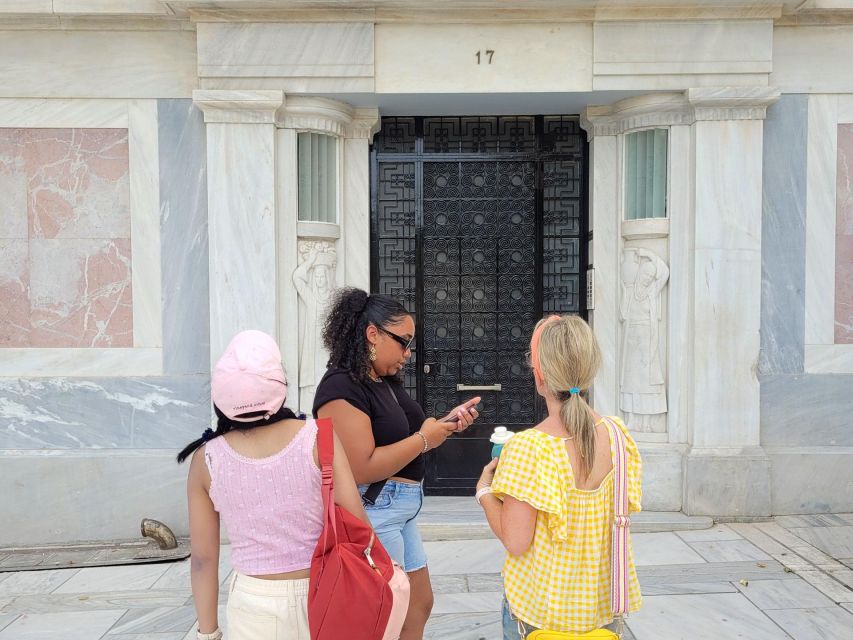
Your family helps Athena in her contest with Poseidon. The goal is to discover how Athens got its name, using riddles and short digital activities along the route. The guide adds the background, explains the monuments, and keeps the game moving when a clue proves tricky.
That balance matters. The phone gives children something active to do, while the guide prevents the activity from becoming a screen-only scavenger hunt. You still hear stories about Greek gods, monuments, and the city around you. The best moments should come when a child connects a clue with something visible in front of the group.
The activity is listed at two hours, which makes it a useful fit between larger sightseeing plans. Allow some flexibility, though. Families may stop for photos, questions, food, playground time, or a slower walk. One booking with four children lasted three hours, while other families completed the route in about the advertised time.
Other days out people book in Athens:
- Athens: Acropolis & up to 5 Archaeological Sites Combo Pass
★ 4.4 · 12,619 reviews - Athens: Acropolis Ticket with Optional Audio or Live Guide
★ 4.2 · 11,055 reviews - Athens: Acropolis, Parthenon & Acropolis Museum Guided Tour
★ 4.8 · 9,316 reviews
Starting at Hadrian’s Arch
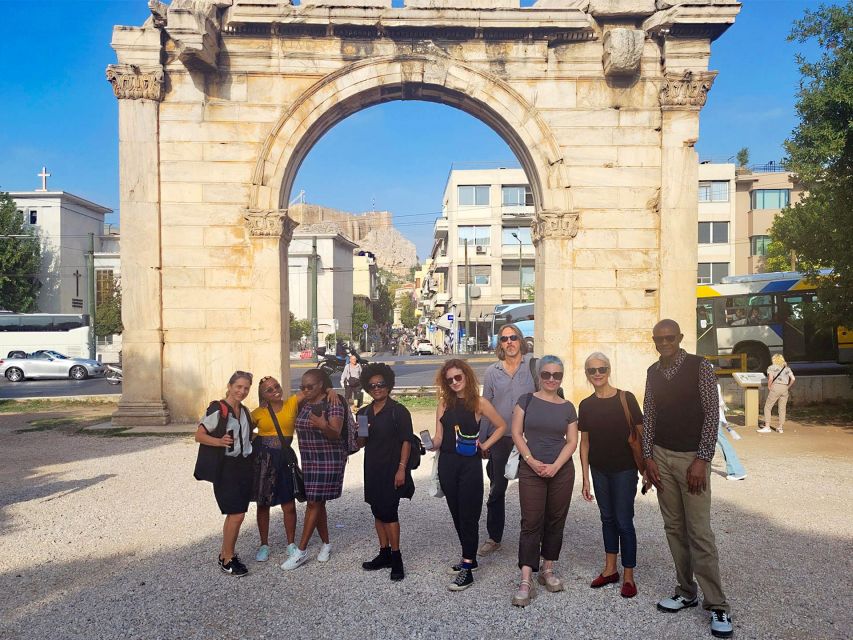
The meeting point is Hadrian’s Arch on Leof. Vasilisis Amalias 50. It is a sensible place to begin because you are close to the Acropolis area, the Temple of Olympian Zeus, and Plaka.
Your guide meets you there and provides the digital materials needed for the hunt. You should arrive with a fully charged smartphone, although the guide supplies the hunt content itself. Check your booking email for the exact meeting instructions and look in your spam folder if the message does not appear.
Hadrian’s Arch also gives the group an immediate visual introduction to old and newer Athens. You begin among major city traffic and ancient stone before turning toward the monuments and lanes around the Acropolis. That change of setting helps children see that Athens is not one single archaeological site. It is a living city built around, beside, and sometimes over its ancient past.
The Temple of Olympian Zeus and the first clues

The route passes the Temple of Olympian Zeus, one of the largest ancient temples in Athens. Even from a short visit, its scale is easy to grasp. The remaining columns are huge, and the open setting lets you understand how ambitious the original project was.
The stop is planned for around ten minutes, so do not expect a full archaeological visit. This is a sightseeing and clue-solving stop, not a long museum-style explanation. That short format suits families because you get the main visual impression without asking children to stand still for too long.
The temple also fits the mythology theme well. Zeus is central to the world of Greek gods, and the guide can connect the monument to the stories driving the hunt. Your children may remember the riddle more clearly than a long list of dates, which is part of the appeal.
Plaka turns the hunt into a real neighborhood walk
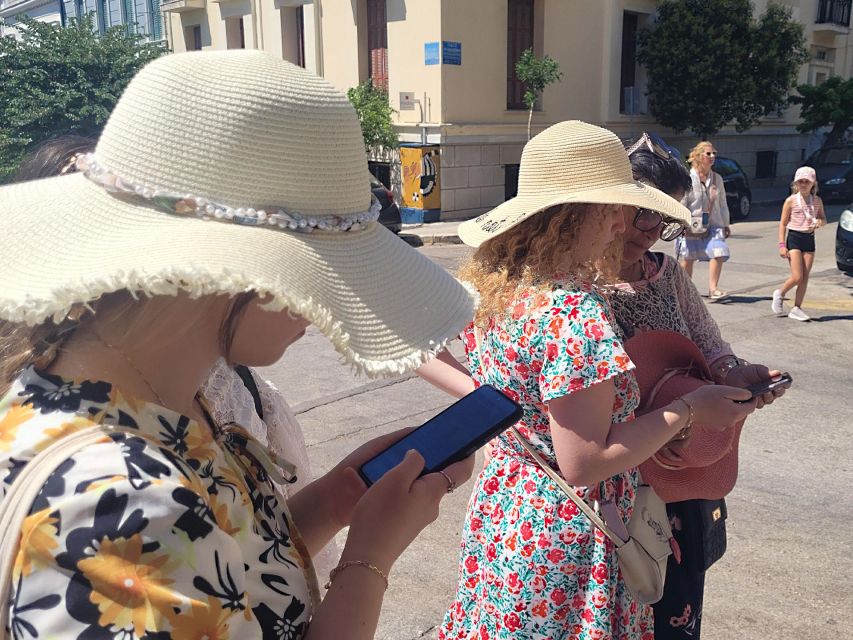
From the large ancient monuments, the experience moves into Plaka, the historic area around the Acropolis. Here the route becomes less formal. You walk through winding lanes, look for clues, and use the phone to work out where the hunt leads next.
This is one of the strongest parts of the outing because the game makes you pay attention to small details. You are not only looking at famous ruins. You are also following the shape of the streets, checking landmarks, and noticing places you might otherwise pass without a second glance.
A live guide makes a difference here. One child and parent found that their guide, Maria, helped when they could not locate a position. Orestis was praised for patience with map reading, too. That kind of help is useful because treasure hunts are fun only when the puzzle remains challenging rather than confusing.
Plaka is also a good place for family photos and short pauses. The exact pace depends on the group, the children, and how quickly you solve the riddles. If your family likes to ask questions, the guide can add more context. If your children need motion, the next clue keeps the walk active.
Same base, a completely different day:
- Athens: Cape Sounion & Poseidon Temple Sunset Half-Day Trip
★ 4.8 · 8,241 reviews - Athens: Acropolis and Parthenon Guided Walking Tour
★ 4.6 · 5,882 reviews - All Day Cruise -3 Islands to Agistri,Moni, Aegina with lunch and drinks included
★ 5.0 · 4,958 reviews - Athens, Piraeus, and Coastline: Blue Hop-On Hop-Off Bus
★ 3.9 · 4,849 reviews
Anafiotika brings a quieter change of pace
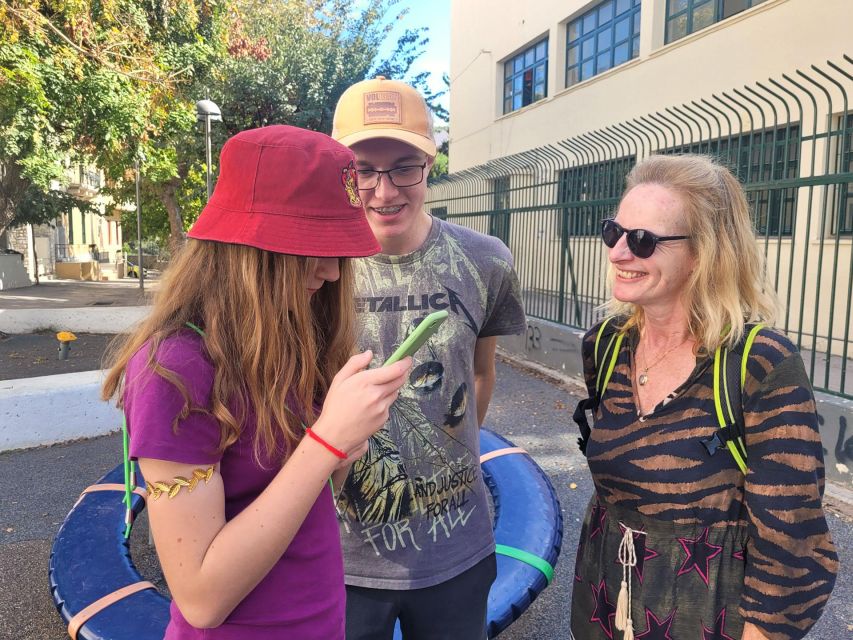
Anafiotika is a small, distinctive area on the Acropolis slopes, known for its narrow lanes and compact whitewashed buildings. The stop is listed for about ten minutes and includes sightseeing and photos.
For children, Anafiotika feels different from the broad archaeological sites. The lanes are more intimate, and the route asks you to move carefully rather than simply cross an open space. It gives the hunt a change of scenery and offers good opportunities for family pictures.
This is also where comfortable shoes matter. The route includes stairs and mild uphill stretches. The walking is manageable for families who are used to city sightseeing, but it is not a flat pavement-only activity. A family with a five-year-old found a stroller useful, and that is a sensible choice if your child tires easily.
Areopagus supplies the big view
The route continues to Areopagus, a rocky high point near the Acropolis. It is included as a photo stop and sightseeing stop, and it gives you a strong view over Athens.
The climb is one of the parts to take seriously with young children. The route includes mild uphill walking, and rocky or stepped surfaces can slow the group. Keep your attention on children here, particularly while taking photos, and let the guide set the pace.
The reward is a view that helps make sense of the city. After walking through Plaka’s narrow lanes, you can look out across Athens with the Acropolis as the visual anchor. The experience finishes with family photos on Acropolis Hill, so this section provides one of the most memorable backdrops of the outing.
Lukumades keep the family motivated

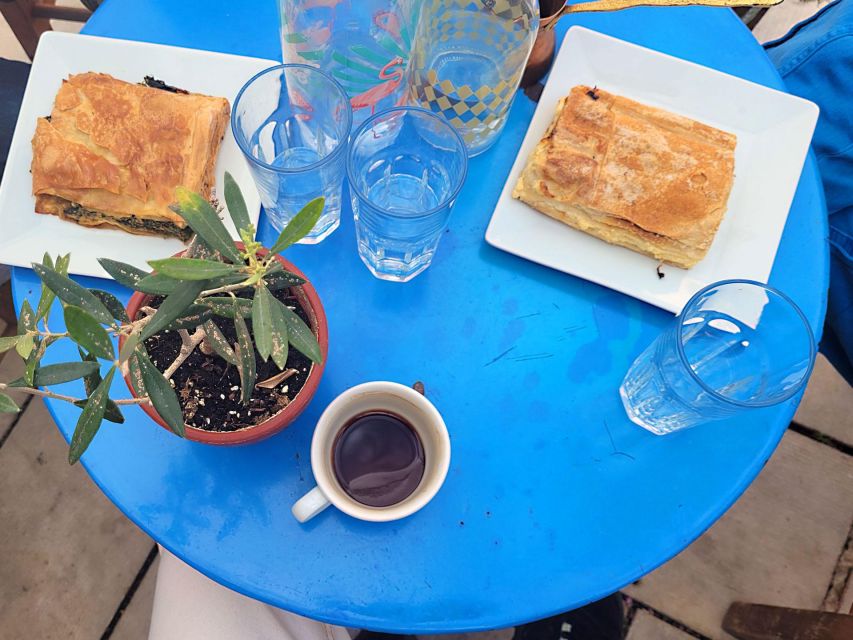
Food is not an afterthought here. The included stop features lukumades, Greek doughnuts served with honey and cinnamon, along with water.
The food break gives children a clear pause in the middle of the hunt. It also introduces a simple Greek specialty without requiring a long restaurant meal. Families with younger children can use the stop to rest, and one larger family found food breaks helpful for little legs and bathroom needs.
The supplied information also refers to food stops in the plural in one family account, including a traditional tavern away from the main tourist streets. The formal inclusion specifies one food stop of lukumades and water, so you should treat that as the guaranteed offering. Any additional stop or longer food break may depend on the route and the guide.
Tell your guide about dietary restrictions before the activity. Drinks besides water are not included, so bring extra water, especially in hot weather. A heat wave made the walk harder for one booking, and Athens in summer offers little reason to underestimate the sun.
The guide is the difference between a game and a gadget

The technology is useful, but it is not the main reason to book. The guide stays with the group, supplies the materials, explains the clues, and adds stories at each stop.
Past guides named by families include Jo, Maria, Aliki, Orestis, and Konstantinos. Jo was particularly effective with a thirteen-year-old who liked the structure and activities. Maria was praised for being friendly and helpful, while Aliki received thanks for making the clue-solving fun.
Guide quality can vary from person to person on any live activity, but the format gives the guide plenty to do. They are not merely escorting you between points. They need to explain mythology, keep children involved, adjust the pace, and help when a location is hard to find.
The tour is offered in English and Greek. If you want a slower, more story-focused experience, use the clue stops as prompts and ask questions. If your family is competitive, let the children take the lead on solving the riddles.
Rewards give the ending a little extra purpose
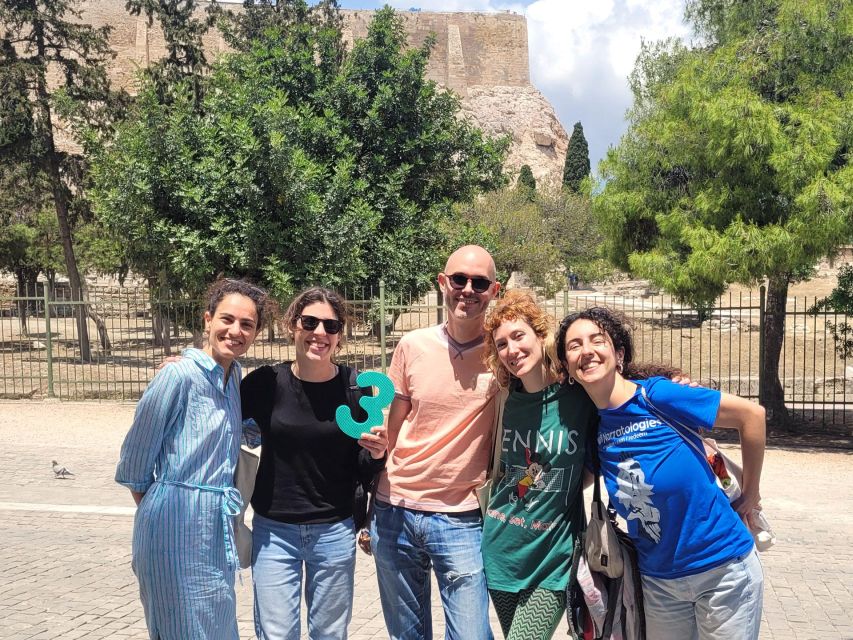
As you solve clues, you collect tokens that can be redeemed online for family-friendly gifts. The rewards support sustainability, women’s empowerment, and innovation.
That feature will not replace the pleasure of seeing Athens, but it gives children a second reason to finish the hunt. They can see that solving the puzzles has a result beyond reaching the next street. It also adds a thoughtful social angle without turning the tour into a lecture.
The activity ends with a celebratory ceremony led by the guide. You also get time for family photos with the Acropolis as a backdrop. That ending works well because the group has a clear finish rather than simply stopping at the last clue.
Is the $59 price good value?
At $59 per person, this is not the cheapest way to walk around Plaka. You are paying for a private-style family activity format, a live guide, the digital hunt, food, and the structure that keeps children involved.
The value is strongest for families who would otherwise need to split their time between sightseeing and entertaining children. You get several notable areas in one outing, plus mythology stories, a snack, and help with navigation. The guide can also answer questions that a self-guided phone game cannot.
The price is less appealing if your children are too young to enjoy riddles, dislike walking, or would rather spend the morning at an archaeological site without a game. It also is not a substitute for a full Acropolis visit or the Temple of Olympian Zeus interior experience. The route gives you selected views and context rather than a detailed archaeological tour.
For a family with school-age children, the combination is more useful than a standard adult-focused walking tour. The experience gives children a role, and that can protect your sightseeing time.
Who will enjoy this Athens treasure hunt?
I would choose this for families with children who like puzzles, stories, and active sightseeing. It worked for a lively ten-year-old, a thirteen-year-old, and a five-year-old with a stroller, though each age will experience the route differently.
It also suits families who want an introduction to Athens rather than a full academic lesson. You see important places, hear mythology, and get a feel for Plaka without spending hours inside one museum.
Think twice if anyone in your group has difficulty with stairs, hills, or extended walking. The activity is family-friendly, but that does not mean it is effortless. Sunglasses, comfortable shoes, a charged phone, and extra water are sensible preparations.
The two-hour timing works well early in a city break, when you want to learn the layout around the Acropolis. It can also fit before or after other sightseeing, provided you leave enough space for a slower group.
Should you book it?
Book this Athens treasure hunt if you want your children to learn mythology while moving through real neighborhoods and monuments. The strongest reasons are the engaging guides, the Athena and Poseidon story, the lukumades stop, and the way the riddles keep children looking up from the pavement and at the city.
Skip it if your family wants a flat, slow, detailed archaeological tour or if hot-weather walking will be a problem. For most families with school-age children, though, $59 buys more than a snack and a route. It buys a well-shaped two-hour activity that turns Athens into a story your children can help solve.
FAQ
Where does the Athens mythology treasure hunt start?
It starts at Hadrian’s Arch, at Leof. Vasilisis Amalias 50, Athens 105 58, Greece.
How long does the activity last?
The stated duration is two hours. Some families may take longer if they walk slowly, stop for photos, ask questions, or spend extra time at food stops.
What languages are available?
The live guide speaks English or Greek.
Is food included?
Yes. The activity includes Greek doughnuts called lukumades with honey and cinnamon, plus water.
Are other drinks included?
No. Drinks besides water are not included.
What should I bring?
Bring sunglasses, comfortable shoes, and a charged smartphone. The guide provides the digital materials for the hunt.
Does the route include hills or stairs?
Yes. The route includes some staircases and mild uphill sections.
Can I cancel for a full refund?
You can cancel up to 24 hours in advance for a full refund. You can also reserve now and pay later.
Just added in Athens
- Ceramic and Pottery Creative Workshop with Two Local Artists★ 4.0 · 57 reviews
- Athens Old City Private Photoshoot Tour / 2 hrs★ 5.0 · 109 reviews
- Small-Group Women History in Ancient Greece Walking Tour★ 5.0 · 38 reviews
- Athens: Wine Workshop Create your Own Wine under the Acropolis★ 5.0 · 77 reviews
- Athens: Greek Wines Tasting with Sommelier and Acropolis Views★ 5.0 · 88 reviews
- Wine Trails Private Tour/ Nemea visit 3 wineries from Athens or Nafplion (10 h)★ 5.0 · 44 reviews
- FLYING DRESS Photoshoot in Athens – Greece★ 5.0 · 47 reviews
- Small-Group Wine Tour in Athens with Tasting★ 5.0 · 33 reviews
Tours in Athens, compared.
Acropolis & up to 5 Archaeological Sites Combo Pass
Read our review →
Acropolis, Parthenon & Acropolis Museum Guided Tour
Read our review →
Cape Sounion & Poseidon Temple Sunset Half-Day Trip
Read our review →

All Day Cruise -3 Islands to Agistri,Moni, Aegina with lunch and drinks included
Read our review →
Cape Sounio & Poseidon Temple Trip with Audio Guide
Read our review →