
Reviewed · TOURS IN ATHENS
Athens: Guided Urban Street-Art Tour
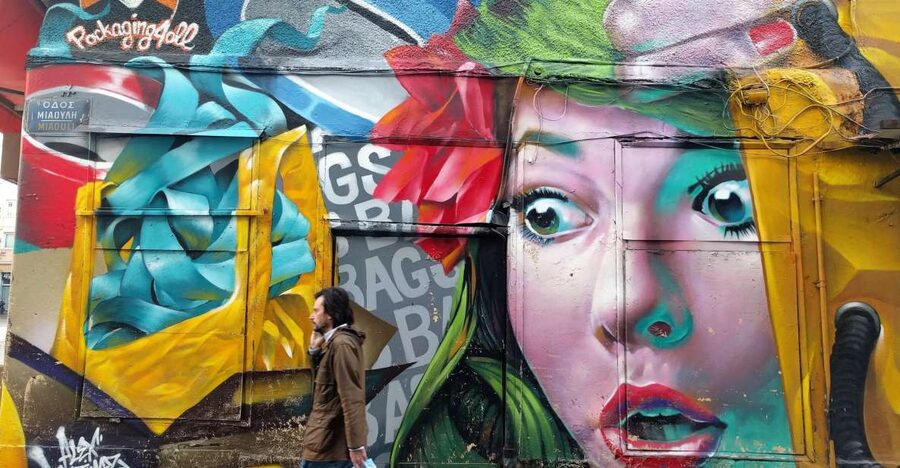
Athens saves some of its sharpest stories for its walls. On this two-hour street-art walk, you move from Monastiraki through Psyri, Sarri, Omonoia, and Metaxourgeio, learning how murals and graffiti reflect Greece’s financial crisis, politics, social struggles, and changing neighborhoods. The art is not just decoration. It is a public argument, joke, protest, or personal statement.
I like two things here. First, the guide teaches you how to read the work, from images and lettering to placement and political clues. Second, the route takes you away from the usual ancient sights and into alleys, courtyards, and districts you may otherwise pass without understanding. The main consideration is the amount of walking. The pace can be brisk, and summer heat may make the two hours tiring.
- Start beside Monastiraki metro: Meet at Lonis pastry shop on Athinas Street, right by the Athinas Street metro exit.
- Follow a changing route: See art in Monastiraki, Psyri, Platia Iroon, Sarri, Omonoia, and Metaxourgeio.
- Learn the city through its walls: Connect murals to Greek politics, the financial crisis, local culture, and urban change.
- Expect strong guides: Penelope, Katerina, Greg, Eleni, and Pascal are among the guides praised for clear explanations and warm, engaging styles.
- Finish in Metaxourgeio: The walk ends at Metaxourgeio Square, not back at the meeting point.
- Best for curious walkers: This suits people who want context and conversation, not only quick photo stops.
Why Athens street art deserves two hours
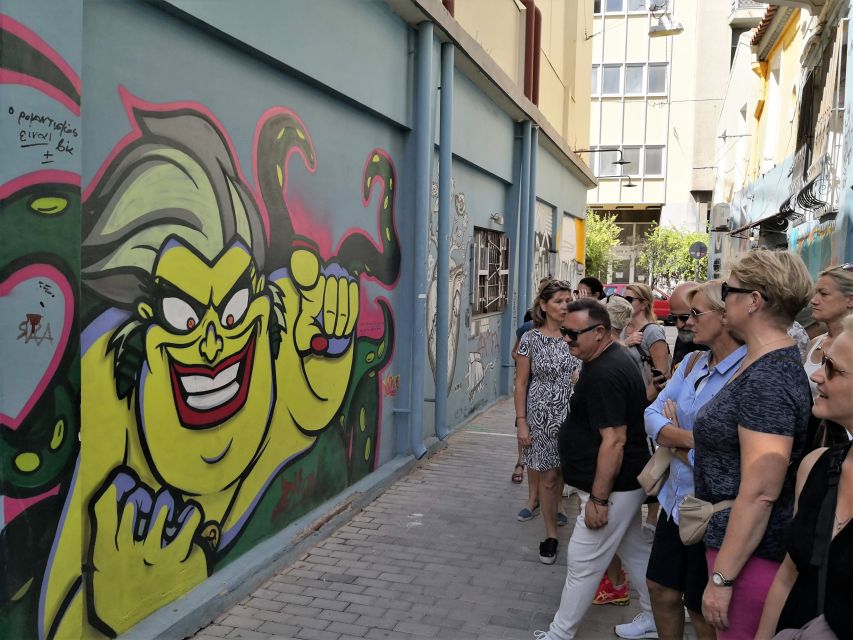
After a few days of marble temples and museum galleries, contemporary Athens can feel like a different city. Street art brings you into the present. It shows how artists respond to public events, economic pressure, neighborhood change, and the mood of ordinary city life.
The route is useful because Athens street art is scattered. You can certainly spot painted walls on your own, but it is harder to know who made a work, whether it was commissioned, what its symbols mean, or how it fits the city around it. A good guide turns a wall into a story without asking you to study art theory first.
The focus is not limited to large murals. You may stop at graffiti, smaller works, painted shutters, alleys, and pieces tucked into courtyards. Look up as well as ahead. Some work sits high on building walls and is easy to miss when you are watching traffic or following the pavement.
The experience has earned a 4.9 rating from 361 bookings, and the most consistent praise goes to the guides’ enthusiasm, clear English, and grasp of both art and modern Greek society. That matters more here than a fixed list of famous walls. Street art changes, so the quality of the explanation is what gives the walk lasting value.
Meeting at Monastiraki and entering the route
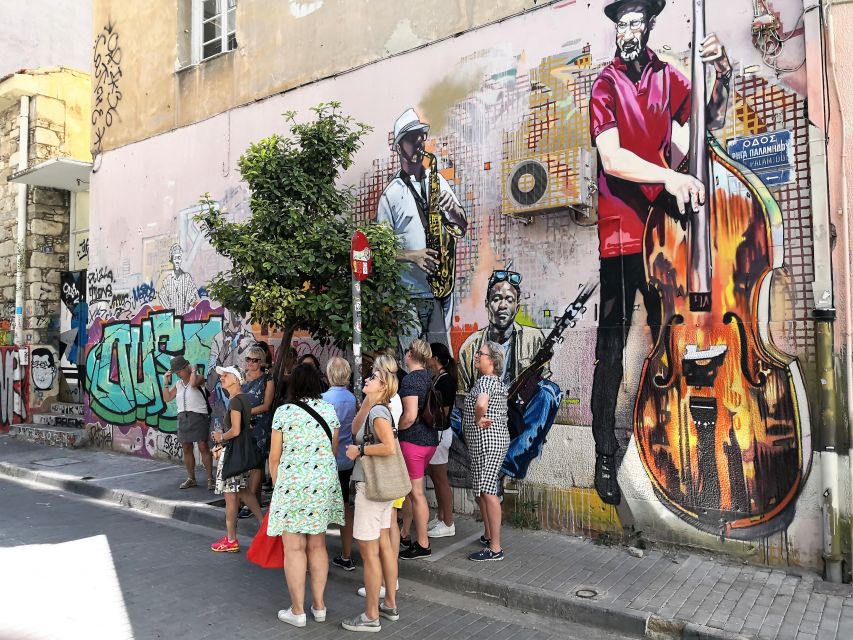
The meeting point is Athinas 7, in front of Lonis pastry shop, next to the Monastiraki metro station exit on Athinas Street. If you arrive by metro, use the Athinas Street exit. This is a practical starting point because Monastiraki is easy to reach from other parts of central Athens.
Your guide leads the group into the city on foot. The experience is offered for private groups or small groups, and that format should suit an art walk well. A smaller group makes it easier to stop without blocking a narrow lane, ask questions, and adjust the pace.
Do not treat the pastry shop as the final stop for refreshments. Food and drinks are not included. The tour is about looking, listening, and walking, so have water with you, especially in warm weather.
A few more things to do in Athens worth a look
- Athens: Acropolis Ticket with Optional Audio or Live Guide
★ 4.2 · 11,055 reviews - Athens: Acropolis, Parthenon & Acropolis Museum Guided Tour
★ 4.8 · 9,316 reviews - Athens: Acropolis and Parthenon Guided Walking Tour
★ 4.6 · 5,882 reviews
Monastiraki: a busy start with a different purpose
Monastiraki is one of Athens’s most visited areas, but this tour uses it as a starting point rather than a full introduction to the ancient city. You begin near one of the central transport hubs, then shift your attention from famous monuments to the walls around them.
This opening helps you understand the contrast at the heart of Athens. Ancient stones and modern painted walls share the same city. The guide may use the first artworks to explain local styles, common symbols, and the difference between a large mural and more informal graffiti.
The route begins with a walk of about 10 minutes. That short transfer gives your guide time to set the tone and introduce the idea that street art is tied to place. A work in a tourist center may send one message, while a work in a less polished district can speak more directly to local frustrations or neighborhood identity.
Psyri: the strongest section for street-level detail
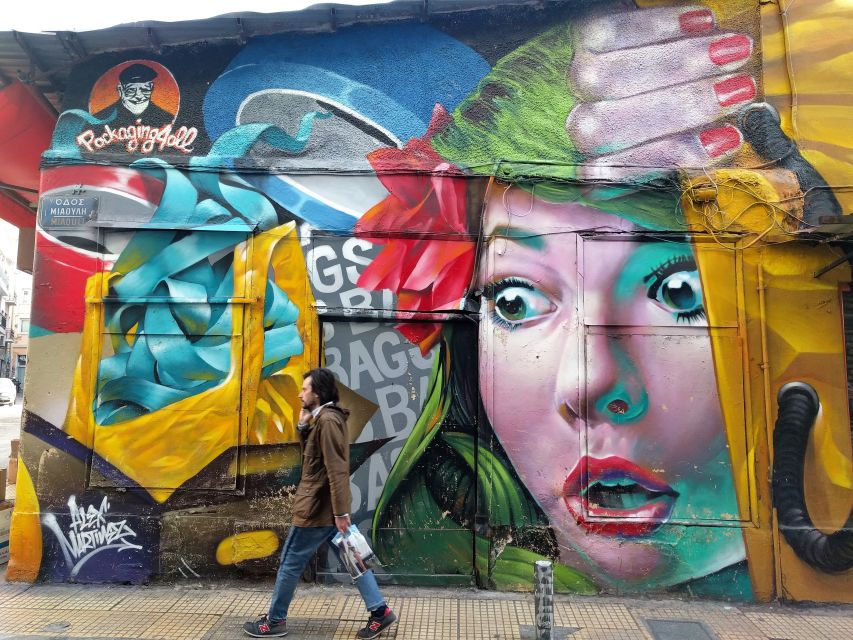
The longest listed portion of the walk is in Psyri, with about 40 minutes of walking. This is where the tour begins to feel less like a standard city stroll and more like a search for work that is easy to overlook.
Psyri is one of the main areas for the tour because its streets offer a mix of large painted walls, smaller pieces, commercial fronts, side lanes, and signs of change. Your guide explains the artists and the ideas behind selected works rather than asking you to photograph every painted surface.
The political side of the tour becomes clearer here. Several pieces connect with Greece’s financial crisis and its social effects. You may hear how artists reacted to uncertainty, public anger, or changes in everyday life. The point is not to reduce every mural to a political slogan. A good explanation also considers technique, humor, style, and the artist’s choice of location.
Penelope is especially noted for giving detailed explanations while keeping the group involved. Katerina is also praised for making the art easy to follow and bringing energy to the discussion. Your guide may be someone else, but the experience is built around this kind of personal interpretation.
Platia Iroon and Sarri: smaller streets, larger context
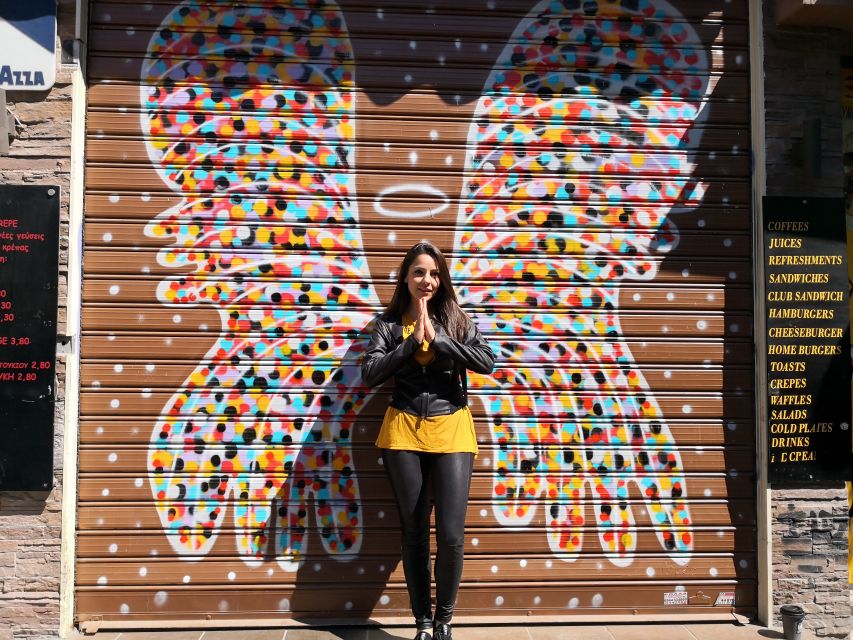
The route continues to Platia Iroon after about 10 minutes of walking, then on toward Sarri with another 15-minute walk. These shorter stages help break up the longer Psyri section and give you time to change your view of the city.
Small squares and side streets are valuable on a street-art tour because they show how public art fits daily life. You are not looking at work in a white-walled gallery. You may see a mural beside a shop, a painted surface near a residence, or an image altered by weather and later additions.
The guide also explains how local artists connect with artists from outside Greece. Athens has drawn international painters and graffiti artists, and their work sits alongside pieces made by people responding to local conditions. This gives the tour a wider frame without losing its focus on Athens.
Bring questions. The walk is designed for interaction, and the guides are praised for answering questions rather than delivering a fixed speech and moving on. In a private or very small group, you may have more room to ask about a style, artist, symbol, or neighborhood.
Same base, a completely different day:
- Athens: Acropolis & up to 5 Archaeological Sites Combo Pass
★ 4.4 · 12,619 reviews - Athens: Cape Sounion & Poseidon Temple Sunset Half-Day Trip
★ 4.8 · 8,241 reviews - All Day Cruise -3 Islands to Agistri,Moni, Aegina with lunch and drinks included
★ 5.0 · 4,958 reviews - Athens, Piraeus, and Coastline: Blue Hop-On Hop-Off Bus
★ 3.9 · 4,849 reviews
Omonoia: reading the city beyond the postcard
After Sarri, the route takes about 15 minutes to reach Omonoia. This section shifts the tone again. Omonoia is a major central area, and the walk helps you see how street art appears beyond the lanes most visitors associate with Psyri.
The guide links the art to the social and financial conditions that shaped modern Athens. This is one of the tour’s most useful features. You are not only learning names and techniques. You are getting a clearer sense of how public space can record tension, frustration, hope, humor, and debate.
Some subject matter may be serious. The tour discusses political and social themes, so it is not designed as a light photo walk with no difficult topics. That seriousness is also what makes it useful. You come away with a better sense of how artists respond when a city is under pressure.
The route can also make you question the word graffiti. Some pieces are carefully planned murals, while others are fast, rough, or unauthorized marks. Your guide helps separate the styles and explains how different artists use different methods. You do not need an art background to follow the discussion.
Metaxourgeio: finishing among changing walls
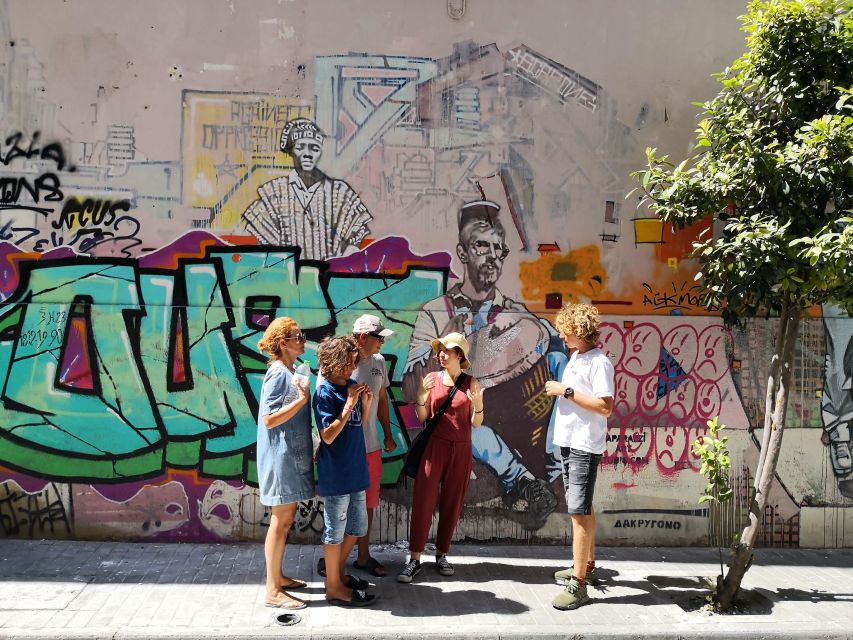
The final walk, listed at about 30 minutes, leads to Metaxourgeio Square. This is the longest closing section, and it gives the tour a strong sense of movement through central Athens rather than a series of disconnected stops.
Metaxourgeio is important because street art here can be read alongside neighborhood change. The guide points out how the area has evolved and how art can reflect, challenge, or simply document that change. You may see works that feel polished and deliberate beside rougher pieces that have been layered over time.
The tour finishes at Metaxourgeio Square. You do not return to Monastiraki, so plan your next move from the final location. The end point is helpful if you want to continue exploring the area, but it is worth remembering if you have a timed reservation elsewhere.
One recurring practical lesson from this walk is to keep your eyes up. Large work can be above storefront level, and a narrow street may reveal an image only when you reach the right angle. The guide may also use a tablet or other visual material to add context when the wall itself is not enough.
What the guides add to the experience
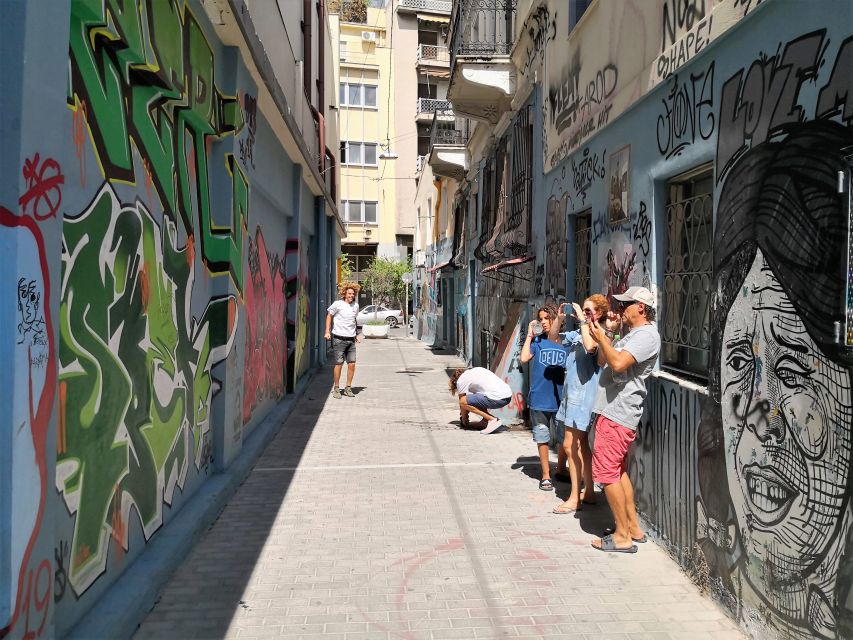
The guide is the deciding factor on this tour. The art changes, but a strong guide gives it order and meaning.
Penelope is praised for clear speech, an even walking pace, detailed explanations, and the ability to make sure everyone can take part. Katerina is described as warm and engaging, with a gift for making the work feel alive. Greg is an artist himself and brings a personal connection to Athens, especially the Psyri area. Eleni is praised for her grasp of the local scene and for explaining the artists with care. Pascal is noted for discussing techniques, background, and the social issues behind the work.
These descriptions point to the right expectation. You are not simply being led from one famous mural to another. You are listening to someone interpret the city. That can include the history of a piece, the artist’s approach, the neighborhood around it, and the wider political setting.
A small group also lets the guide respond to your interests. If you care about technique, politics, local artists, or international work, say so early. The tour can be more rewarding when the conversation becomes specific.
Walking pace, heat, and group comfort
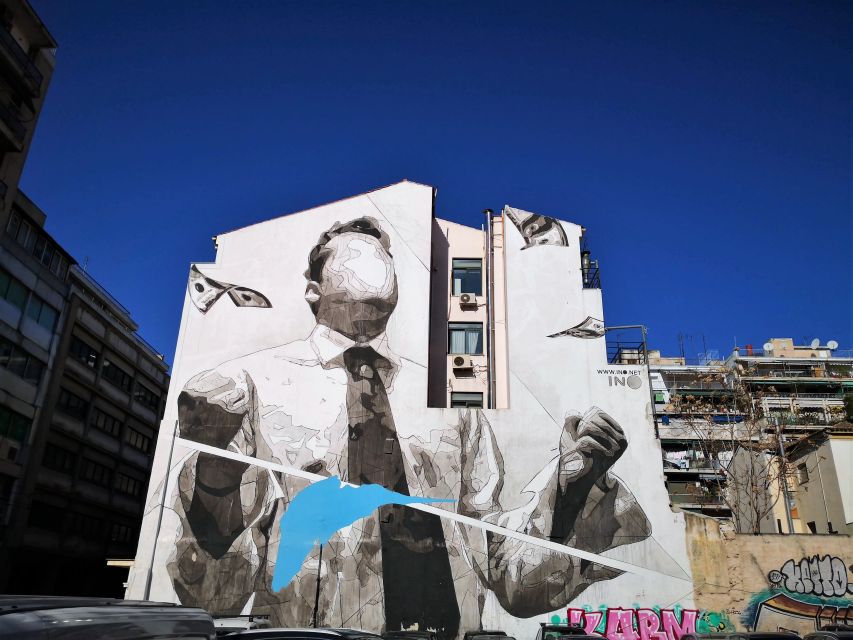
The tour lasts two hours, but the route covers several districts and includes substantial walking. One section is listed at 40 minutes and another at 30 minutes, with additional walks between the districts. Wear comfortable shoes and expect to stay on your feet.
Heat is the main comfort issue. A family with a 13-year-old ended early during a hot day, which is a useful warning rather than a flaw in the activity. If you visit Athens in summer, an earlier start may be easier, though you need to check the available departure time.
The pace is generally described as manageable, but it can be brisk. Senior visitors have enjoyed the walk with an accommodating guide, yet you should tell the guide if you need a slower rhythm or extra pauses. The route includes small alleys and hidden courtyards, so the surface may not always feel as easy as a broad sidewalk.
The walk is in English. Private and small-group options are available. Those formats are worth considering if your group includes children, older relatives, or people with different walking speeds.
Is $47 good value?
At $47 per person, this is not the cheapest way to spend two hours in Athens. You can walk around central neighborhoods without paying anything, and plenty of street art is visible from public streets.
The value comes from the interpretation. You are paying for an English-speaking guide who can identify artists, explain techniques, decode images, connect pieces to Greek politics and the financial crisis, and show you areas you might not choose on your own. That is a fair price if you are genuinely interested in street art or modern Athens.
It is less useful if your main goal is a quick collection of photographs. The tour spends time on meaning, context, and questions. One especially telling point is that the activity is described by a participant as suited to people who are genuinely interested in street art, not people seeking only a social-media backdrop.
The flexible booking terms also reduce the risk. You can cancel up to 24 hours before the activity for a full refund, and you can reserve now and pay later. Those details are useful when your Athens schedule is still taking shape.
Who should book this Athens street-art walk?
You should book it if you have already seen some ancient Athens and want to understand the city as it functions today. It is also a strong first-day activity for visitors who want a local orientation through neighborhoods rather than a standard monument route.
Art students, photographers, politically curious visitors, and repeat visitors to Greece will get the most from it. So will anyone who enjoys asking why a work looks the way it does and why it appears in that particular place.
Families can enjoy it, but consider the heat, pace, and attention span of younger children. This is a discussion-based walk, not a hands-on art class. Older visitors can manage it if they are comfortable walking for two hours and communicate their needs.
Skip it if you dislike walking, want a tour focused only on ancient sites, or prefer a relaxed ride between stops. Also skip it if you expect every stop to be a famous mural. The best parts may be smaller works in ordinary streets, where the guide’s explanation supplies the impact.
The final call
I would book this tour for a more complete picture of Athens. The route from Monastiraki to Metaxourgeio takes you through districts that reveal a modern, questioning, sometimes uneasy city. The guides, especially Penelope, Katerina, Greg, Eleni, and Pascal, are central to the experience because they connect visual details with real social and political context.
Book it when you have comfortable shoes, water, and two free hours. Choose a cooler time of day if possible, and remember that you finish at Metaxourgeio Square. If you want more than attractive walls, this is a smart use of $47. If you want only quick photos, explore on your own instead.
FAQ
Where does the Athens street-art tour begin?
It begins at Athinas 7 Street, in front of Lonis pastry shop, beside the Monastiraki metro station exit.
Which metro exit should I use?
Use the Athinas Street exit when arriving by metro.
Where does the tour finish?
The walk finishes at Metaxourgeio Square.
How long does the tour last?
The tour lasts two hours.
What language is the tour in?
The tour is conducted in English with a live English-speaking guide.
Is this a private tour or a group tour?
Private and small-group options are available.
Which Athens neighborhoods does the route visit?
The route includes Monastiraki, Psyri, Platia Iroon, Sarri, Omonoia, and Metaxourgeio.
What does the tour explain about the street art?
The guide explains the artists, techniques, drawings, messages, and images, along with the social, political, and financial conditions connected to the work.
Are food and drinks included?
No. Food and drinks are not included.
Can I cancel for a refund?
Yes. You can cancel up to 24 hours in advance for a full refund.
Just added in Athens
- Athens: Half-Day Morning Catamaran Cruise with Meal & Drinks★ 4.9 · 221 reviews
- Athens hotels to Athens airport Private departure transfer★ 5.0 · 285 reviews
- Argolis: Full-Day Tour in Mycenae & Nafplio★ 4.2 · 350 reviews
- Athens: Riviera Catamaran Cruise with Meal and Drinks★ 5.0 · 345 reviews
- Athens: Delphi, Corycian Cave, and 300 Battlefield Day Trip★ 4.8 · 344 reviews
- 3-Day Classical Greece Tour: Epidaurus, Mycenae, Nafplion, Olympia, Delphi★ 4.5 · 342 reviews
- Best of Athens Half Day Private Tour★ 5.0 · 353 reviews
- Electric Bike Tour of Athens by Night★ 5.0 · 355 reviews
Tours in Athens, compared.
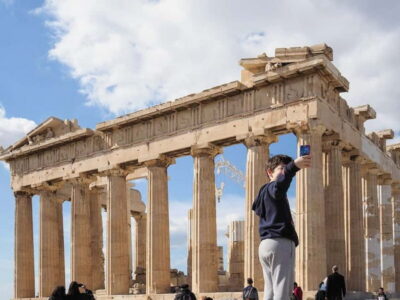
Acropolis & up to 5 Archaeological Sites Combo Pass
Read our review →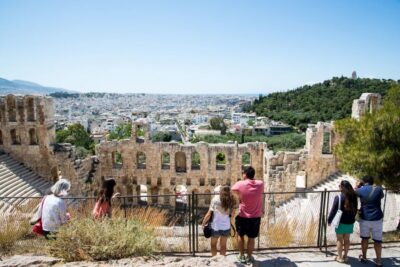
Acropolis, Parthenon & Acropolis Museum Guided Tour
Read our review →
Cape Sounion & Poseidon Temple Sunset Half-Day Trip
Read our review →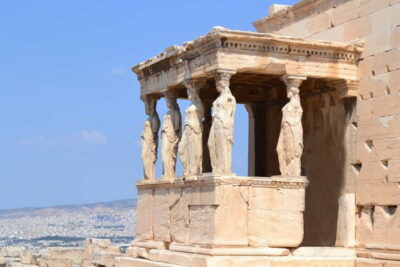

All Day Cruise -3 Islands to Agistri,Moni, Aegina with lunch and drinks included
Read our review →
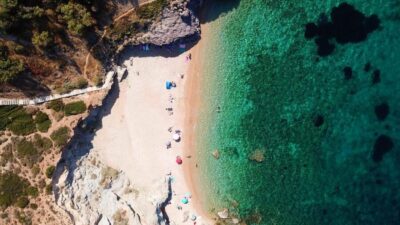
Cape Sounio & Poseidon Temple Trip with Audio Guide
Read our review →
Browse the lists this tour appears in