
Reviewed · TOURS IN ATHENS
Athens: Roman Agora E-Ticket and Audio Guide
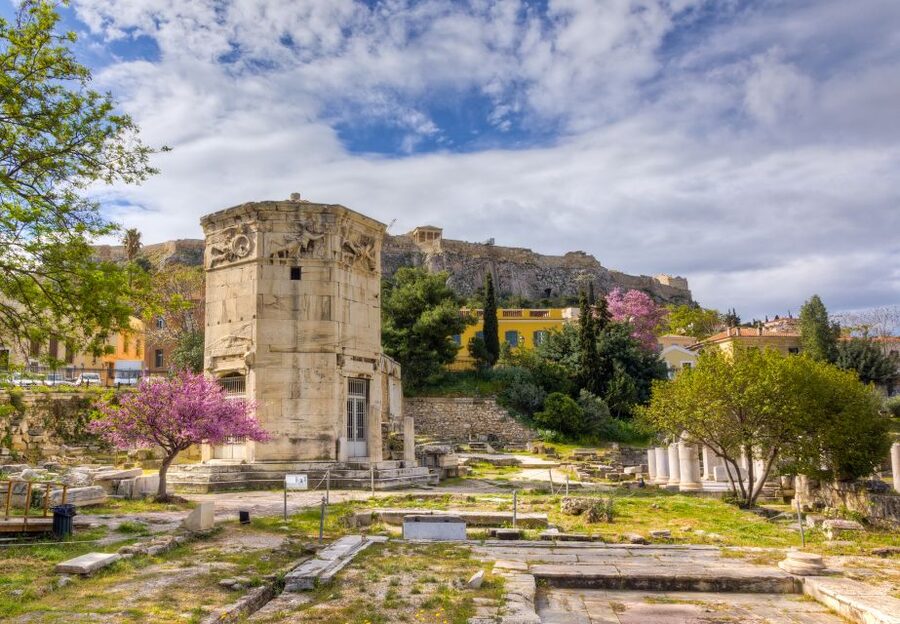
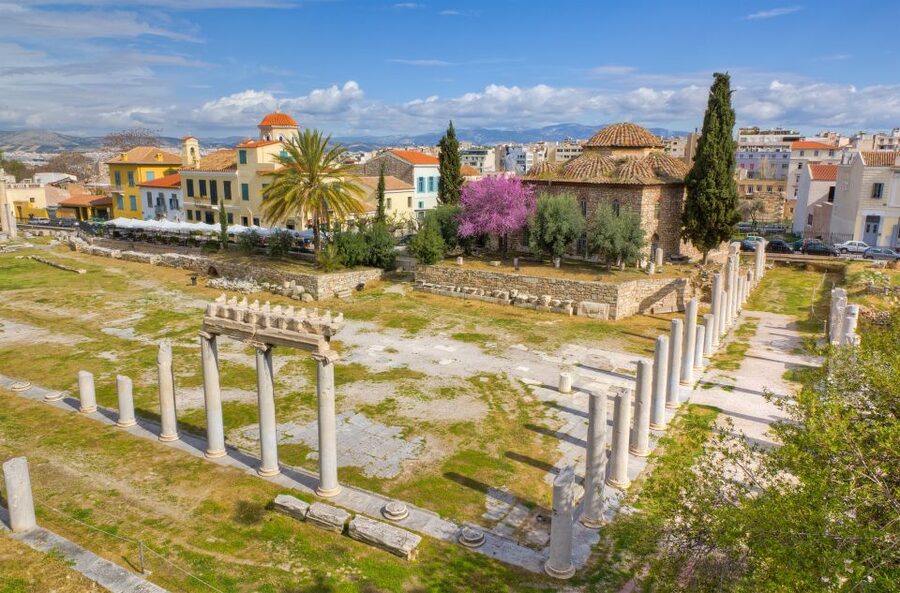
The Roman Agora is a small site with a surprisingly wide story. In less than an hour, you can see the Gate of Athena Archegetis, the Tower of the Winds, a fountain house, ancient shops, public toilets, and the Mosque of the Conqueror, with the Acropolis looking on.
I like the easy entry and the fact that the audio tour works offline. I also like that you can visit at your own pace, replay the content, and choose English, Spanish, German, French, Italian, or Greek. The main drawback is value: at $18, the ticket can feel expensive for a 45-minute visit, especially when the site is quiet and on-site tickets may be easy to buy.
Key points to know before you go
- The Tower of the Winds is the star sight, an unusual ancient structure tied to the eight winds.
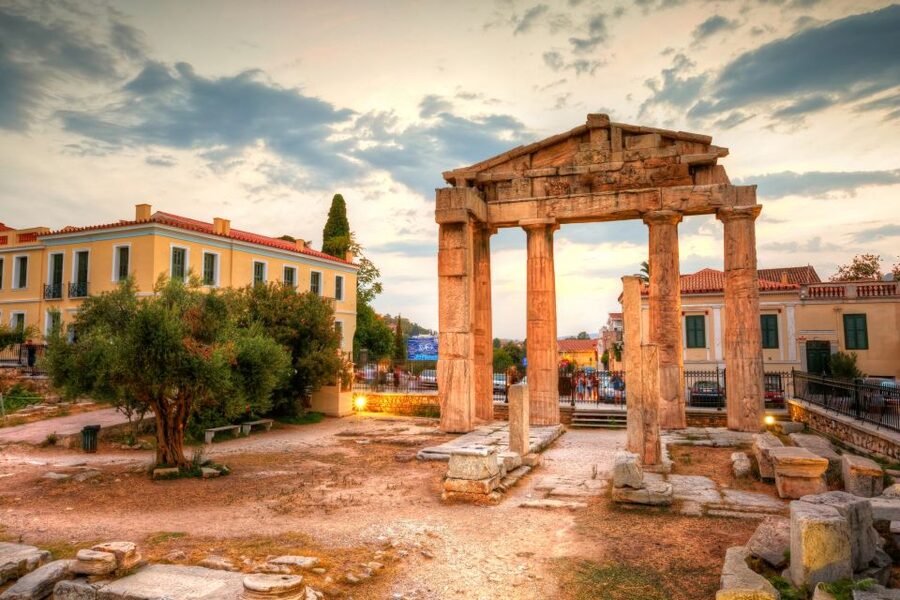
- The Gate of Athena Archegetis gives the visit a grand opening, even though the archaeological site itself is compact.
- The audio guide is best for history-minded visitors, but its directions may not always make orientation easy.
- Offline maps and narration save phone data, though you must download everything before arriving.
- The $18 price buys convenience more than a long visit, so compare it with the simple on-site ticket option.
- You need one compatible phone per booking, plus headphones, battery power, and 100 to 150 MB of free storage.
What the Roman Agora adds to an Athens visit

Athens is full of headline sights, but the Roman Agora gives you a close look at ordinary city life and practical public buildings. This was not only a place for grand monuments. It also had shops, water facilities, public toilets, and spaces connected with daily business.
That makes the site useful after the Acropolis or Ancient Agora. You are not trying to spend half a day here. Instead, you get a compact stop where the audio stories help connect scattered stones to the routines of people who lived in Athens during Roman rule.
The setting also helps. The Roman Agora offers views toward the Acropolis, so you can place the smaller site within the wider center of Athens. Bring your camera, but give yourself time to look down at the remains as well. The appeal is in the contrast between monumental buildings and the practical features that kept an ancient city running.
A few more things to do in Athens worth a look
- Athens: Acropolis Ticket with Optional Audio or Live Guide
★ 4.2 · 11,055 reviews - Athens: Cape Sounio & Poseidon Temple Trip with Audio Guide
★ 4.4 · 4,521 reviews - Athens: Acropolis Ticket with Audio Guide
★ 4.0 · 3,575 reviews
Starting with the Gate of Athena Archegetis
The Gate of Athena Archegetis is one of the clearest visual highlights. Its columns and formal design give the Roman Agora a proper entrance, even though you can walk through the site fairly quickly.
The audio guide uses this point to introduce the area and explain its role. I like having this kind of opening because it gives you a basic framework before you begin looking at smaller remains. Without some explanation, an archaeological site of this size can feel like a collection of foundations and upright stones.
Take a moment here to study the scale of the gate. It helps you imagine how public access and movement may have worked in the ancient city. The guide also provides short stories and historical details rather than asking you to read a long wall of text.
The narration is delivered through the app, not by a person on site. That means you can pause, repeat, or skip sections. It also means you are responsible for following the route and keeping an eye on where you are standing.
Meeting the Tower of the Winds
The Tower of the Winds is likely to be the most memorable stop. This octagonal building is associated with the winds, and the audio tour explains the practical and symbolic ideas connected with it.
The title of the experience makes a little more sense here. You are not simply looking at a ruin. You are being introduced to an ancient attempt to understand weather, direction, and time. The Tower of the Winds brings together science, architecture, and daily use in one compact structure.
The guide also gives you a reason to look closely rather than simply take a quick photograph. Listen for the information about the winds and the building’s purpose, then examine its shape and position in relation to the rest of the Agora.
This stop rewards patience. The Roman Agora is small, and you might be tempted to hurry through it. Give the Tower of the Winds several minutes, especially if you enjoy ancient engineering or unusual buildings.
Exploring shops, water, and the Vespasianae
The Roman Agora is valuable because it shows more than ceremonial architecture. The fountain house points to the importance of water in city life, while the shops suggest the commercial activity that took place around the public area.
The Vespasianae, or public toilets, may not sound like the obvious highlight of an ancient site. They are useful, though, because they bring the visit down to earth. Cities need places for trade, water, sanitation, and public business. These remains help you picture the Agora as a working part of Athens rather than a quiet monument.
The audio guide is at its best when it explains these less glamorous details. Short stories about everyday habits can make the site easier to understand than a list of dates and rulers. You will get more from the visit if you listen while standing near each feature, then look around for the physical evidence being described.
Some visitors may find the remains modest. That is fair. The Roman Agora does not offer the scale of the Acropolis, and many structures survive only in partial form. If you prefer large monuments and dramatic interiors, this may feel like a short stop. If you enjoy seeing how a city functioned, the smaller details matter.
Same base, a completely different day:
- Athens: Acropolis & up to 5 Archaeological Sites Combo Pass
★ 4.4 · 12,619 reviews - Athens: Acropolis, Parthenon & Acropolis Museum Guided Tour
★ 4.8 · 9,316 reviews - Athens: Cape Sounion & Poseidon Temple Sunset Half-Day Trip
★ 4.8 · 8,241 reviews - Athens: Acropolis and Parthenon Guided Walking Tour
★ 4.6 · 5,882 reviews
The Mosque of the Conqueror and Athens across time
The Mosque of the Conqueror adds another period to the site’s story. Its presence reminds you that this part of Athens was used and changed long after the classical and Roman eras.
The audio tour places the mosque within the broader history of the area, helping you see the Roman Agora as a place with more than one chapter. That is one of the better reasons to use the narration. A bare archaeological site can encourage you to focus only on ancient Greece, while the mosque points to later layers of Athens.
Look for how the building relates to the older remains around it. The contrast is more interesting than treating each feature as an isolated object. You are seeing different periods sharing one small urban space.
The site is partially accessible for people with disabilities. Conditions may vary by area, and the course of the visit can be modified if restrictions are in place. If access is important for you, check current conditions before booking.
How the Clio Muse audio tour works
Clio Muse Tours provides a downloadable app and audio content for Android and iOS. After booking, you receive an email with instructions and an activation link. Check your spam folder if the message does not appear soon.
Download the app, activate the tour, and save the text, audio narration, and maps before you arrive. The offline content is useful in Athens, where you may prefer not to rely on mobile data. It also lets you replay the tour later, either before the visit to prepare or afterward to refresh your memory.
You need a charged smartphone and your own headphones. The experience does not provide either one. The app requires about 100 to 150 MB of storage, so check your phone before leaving your hotel.
The audio is available in English, Spanish, German, French, Italian, and Greek. That range is helpful for couples or families who do not all want the same language, though each person who listens needs access to the relevant device and headphones.
There is no live guide. You do not meet a named historian or join a group. That gives you privacy and control, but it removes the chance to ask questions or receive help with orientation.
The biggest practical issue: finding your way
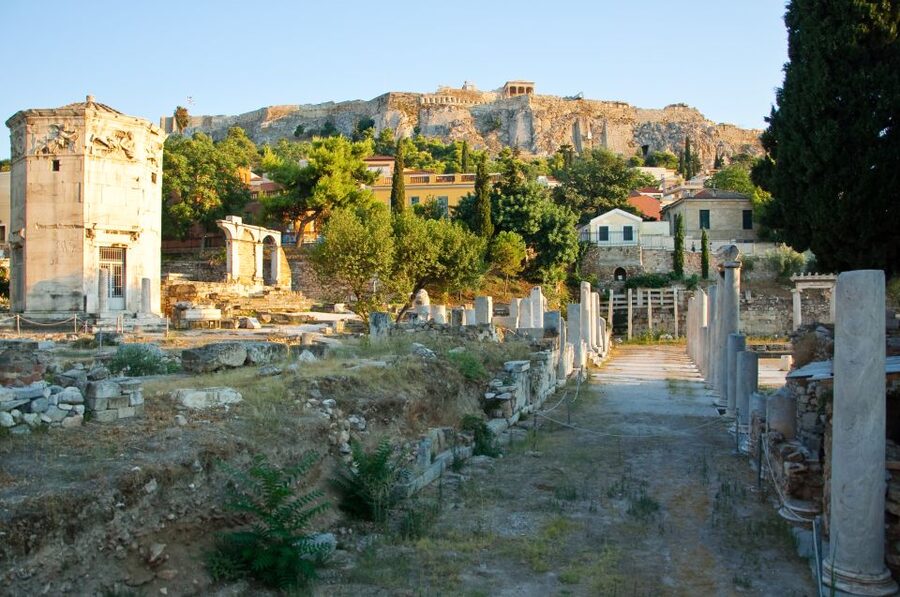
The audio guide can be informative, but navigation may require care. One French-speaking visitor found the directions difficult to follow, while another described the audio as a strong way to connect the site with its past. Those two reactions point to the key trade-off.
The storytelling may help you understand what you are seeing, but the app is not the same as having a guide physically point toward each feature. Pause the narration when you need to look around. Use the map, and do not rush to the next track simply because it has started.
I suggest downloading the material at home and opening it once before your visit. Confirm that the audio plays, that the activation link works, and that your phone has enough battery. A small power bank would be sensible for a full day of sightseeing, although it is not listed as a requirement.
The site itself is compact, so getting slightly out of order is not a disaster. You can replay the audio and return to a feature. Still, if you dislike self-guided navigation, a live tour may suit you better.
Is $18 fair for 45 minutes to an hour?
The price is $18 per person, but the booking rule is based on the device used. If two people plan to share one phone and one set of headphones, check the booking terms carefully before paying for multiple participants. The practical benefit is the ticket and the audio access together, not a long guided program.
For a 45-minute to one-hour visit, the cost sits on the high side if you are judging only the amount of time inside. The Roman Agora is small, and it may be easy to buy a ticket on site, particularly when the area is quiet. One recent visitor specifically found the ticket expensive for the length of the visit and noted that buying locally appeared straightforward.
The price makes more sense if you value advance planning, skip-the-ticket-line entry, and narration in your language. It also saves you from finding a separate guide or researching every feature in advance.
Free and reduced admission tickets are different. They must be obtained at the ticket booth and do not receive the skip-the-line benefit. If you qualify for a reduced rate, compare the savings with the convenience of the prepaid adult ticket.
The activity is non-refundable, so I would not book casually if your schedule is uncertain.
Who will enjoy this visit most?
I would choose this experience if you want a short historical stop near Athens’ major central sights and prefer exploring alone. It suits people who like audio storytelling, ancient engineering, and the details of city life.
It is also a good fit if you want to avoid a fixed group schedule. You can listen at your own speed and use the audio again later. Families may appreciate the brief format, though young children may not care much about the fountain house or public toilets unless you turn those details into a story.
History fans will probably get the most from the stop. One visitor described the place as small but interesting, especially for someone who enjoys history. That is the right expectation. This is not a grand, all-morning attraction.
I would be more cautious if you want personal explanations, easy route guidance, or a full tour with conversation. The audio cannot answer questions, and the compact site means you may finish sooner than expected.
Timing, shoes, and what to carry
Plan on 45 minutes to an hour. That gives you enough time to listen to the main tracks, examine the Gate of Athena Archegetis and Tower of the Winds, and stop at the fountain house, shops, Vespasianae, and mosque.
Wear comfortable shoes. Even a short archaeological visit can involve uneven surfaces and repeated standing. Bring headphones and make sure your phone is charged before you leave.
There is no transportation, food, drink, or hotel pick-up included. You make your own way to the Roman Agora, and the meeting details can vary by the option booked. Since no live meeting point is provided for the self-guided visit, read the arrival instructions carefully.
The site may impose restrictions or alter the visit route. Follow the current directions on arrival rather than assuming every part will be open in the same way.
Should you book the Roman Agora audio guide?
Book it if you want a short, independent introduction to an overlooked part of central Athens, especially if you value offline audio and skip-the-line entry. The Tower of the Winds, Gate of Athena Archegetis, and everyday features give the visit more variety than its size suggests.
Skip it if you are watching every euro, qualify for reduced admission, or are comfortable buying a ticket on site. The $18 price is mainly for convenience and storytelling, and the self-guided route may take some effort to follow.
My practical choice would be to book this when your schedule is tight and you want a prepared audio tour in your preferred language. Download everything in advance, bring headphones, and allow about an hour. If you want a person to lead you, explain details, and answer questions, choose a live guide instead.
FAQ
How long does the Roman Agora visit take?
The stated duration is 45 minutes to one hour. You can move faster or slower because the audio tour is self-guided.
Is a live guide included?
No. The experience includes a downloadable self-guided audio tour, not a live guide.
What languages are available?
The audio guide is available in English, Spanish, German, French, Italian, and Greek.
Do I need a smartphone?
Yes. You need an Android smartphone running version 5.0 or later, or a compatible iPhone running iOS. The app is not compatible with Windows phones, iPhone 5 or 5C and older, iPod Touch 5th generation or older, iPad 4th generation or older, or iPad Mini 1st generation.
Do I need to bring headphones?
Yes. Headphones are not included, so bring your own.
Can I use the audio guide offline?
Yes. The downloaded content includes text, audio narration, and maps, so you can use it without roaming charges after downloading it.
What sights are covered?
The audio tour covers the Gate of Athena Archegetis, Tower of the Winds, Mosque of the Conqueror, fountain house, Vespasianae, and shops.
Can I get free or reduced admission with skip-the-line access?
No. Free and reduced admission tickets must be obtained at the on-site ticket booth, and they do not include skip-the-line privileges.
Just added in Athens
- Ceramic and Pottery Creative Workshop with Two Local Artists★ 4.0 · 57 reviews
- Small-Group Women History in Ancient Greece Walking Tour★ 5.0 · 38 reviews
- Athens Old City Private Photoshoot Tour / 2 hrs★ 5.0 · 109 reviews
- Athens: Wine Workshop Create your Own Wine under the Acropolis★ 5.0 · 77 reviews
- Athens: Greek Wines Tasting with Sommelier and Acropolis Views★ 5.0 · 88 reviews
- Wine Trails Private Tour/ Nemea visit 3 wineries from Athens or Nafplion (10 h)★ 5.0 · 44 reviews
- FLYING DRESS Photoshoot in Athens – Greece★ 5.0 · 47 reviews
- Small-Group Wine Tour in Athens with Tasting★ 5.0 · 33 reviews
Tours in Athens, compared.
Acropolis & up to 5 Archaeological Sites Combo Pass
Read our review →
Acropolis, Parthenon & Acropolis Museum Guided Tour
Read our review →
Cape Sounion & Poseidon Temple Sunset Half-Day Trip
Read our review →

All Day Cruise -3 Islands to Agistri,Moni, Aegina with lunch and drinks included
Read our review →

Cape Sounio & Poseidon Temple Trip with Audio Guide
Read our review →
Browse the lists this tour appears in