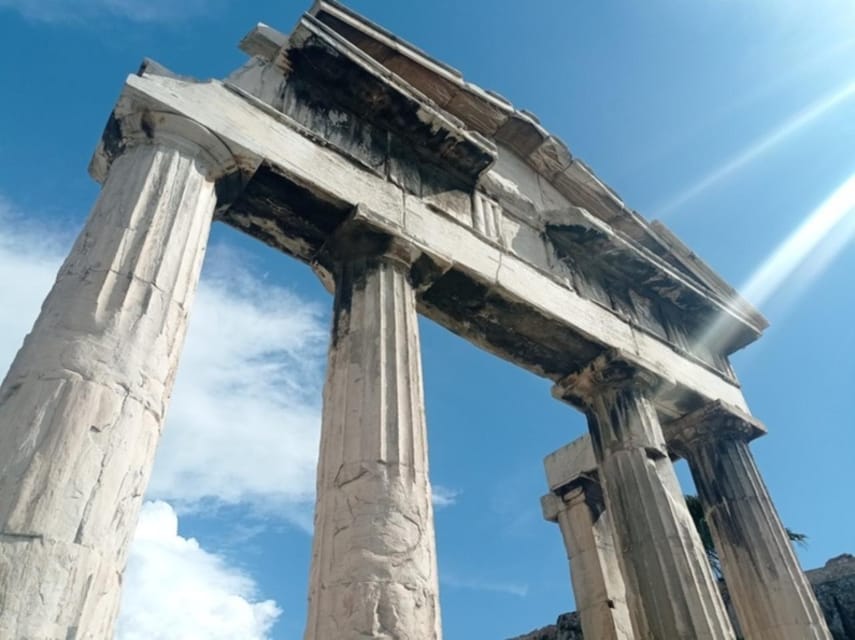
Reviewed · TOURS IN ATHENS
Athens: the Great Greek Philosophers Guided Tour in Spanish
Athens becomes far more interesting when you follow ideas instead of only monuments. This 150-minute philosophy walk links Plato’s statue, the ancient Agora, the Pnyx, the Aeropagus, and Socrates’ prison with the people and arguments that changed how humans think. I like the way it turns familiar Athens into a place of debate, doubt, and bold questions. I also like that guides such as Gregory use stories, discussion, and simple examples rather than treating philosophy like a classroom lecture.
The main consideration is language: the advertised live tour is in Spanish, so you should be comfortable following a sustained discussion in Spanish. You will also walk between outdoor sites, often in the sun, and food, drinks, and personal expenses are not included.
Key points at a glance
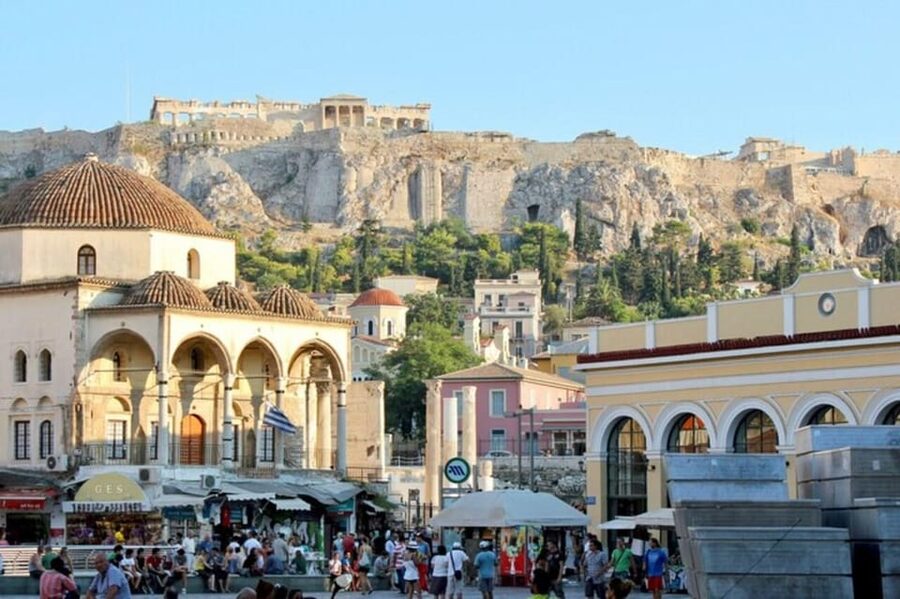
- Plato’s statue is the meeting point: Arrive 10 minutes early and look for the group in front of the statue.
- Socrates is the central character: The route examines his ideas, his method of questioning, and the price he paid for challenging accepted beliefs.
- The Agora and Pnyx add civic context: These places show how philosophy connected with public life, politics, and debate.
- The Aeropagus and Socrates’ prison bring the past close: You see locations tied to Athens’ legal and intellectual world.
- The guide shapes the experience: Gregory is praised for clear explanations, humor, flexibility, and thoughtful questions, while Sunny is also named as a friendly guide.
- $34 is a fair price for a focused walk: You receive a live guide for two and a half hours, but you should bring water and wear good walking shoes.
Why a philosophy walk works so well in Athens
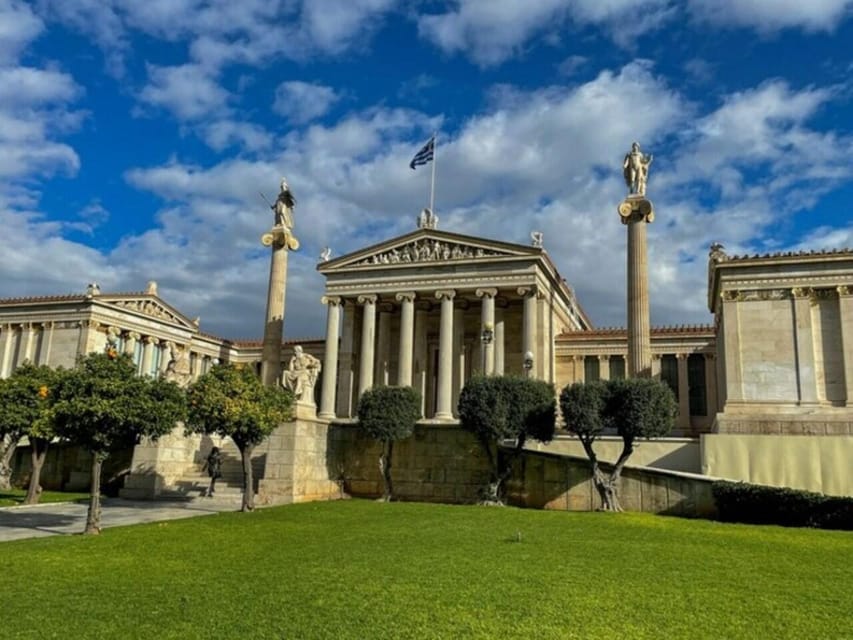
Many Athens tours give you dates, rulers, temples, and battles. This one follows a different thread: how people in ancient Athens asked what makes a good life, how society should be governed, and what it means to know anything at all.
That focus gives the city a human scale. Instead of seeing the Agora as only a collection of stones, you consider it as a place where people met, argued, traded, judged one another, and shaped public life. The Pnyx becomes more than a hill with a view. It connects to the civic world in which ideas could influence the wider community.
I especially like this approach if you have already seen the Acropolis and want a second layer of Athens. The tour does not simply point out famous names. It connects Socrates, Plato, Aristotle, and Pythagoras to their ideas and to the places associated with them.
You do not need an academic background. The guide’s role is to explain difficult ideas in plain language and relate them to familiar situations. Gregory is described as using objects around him and everyday examples to make philosophy easier to grasp. He also invites questions and adapts the discussion to the group’s interests.
A few more things to do in Athens worth a look
- Athens: Acropolis Ticket with Optional Audio or Live Guide
★ 4.2 · 11,055 reviews - Athens: Acropolis, Parthenon & Acropolis Museum Guided Tour
★ 4.8 · 9,316 reviews - Athens: Acropolis and Parthenon Guided Walking Tour
★ 4.6 · 5,882 reviews
Meeting Plato before walking into ancient Athens
The tour begins in front of the Statue of Plato. You are asked to arrive 10 minutes before the start, which matters because the walk moves through central Athens and the group needs to set off together.
Beginning with Plato gives the outing a clear tone. He was not only a famous name from a textbook. His work helped preserve and develop discussions linked to Socrates, and his ideas shaped later thought across Europe and beyond. From the first stop, you understand that this is not a general city tour with a few philosophical facts added on.
The meeting point is also practical. You can use the statue as a clear landmark, but allow enough time to find it without rushing. The supplied information does not give a street address or transport instructions, so check the exact location on your booking before leaving your hotel.
The Agora and the public life of ideas
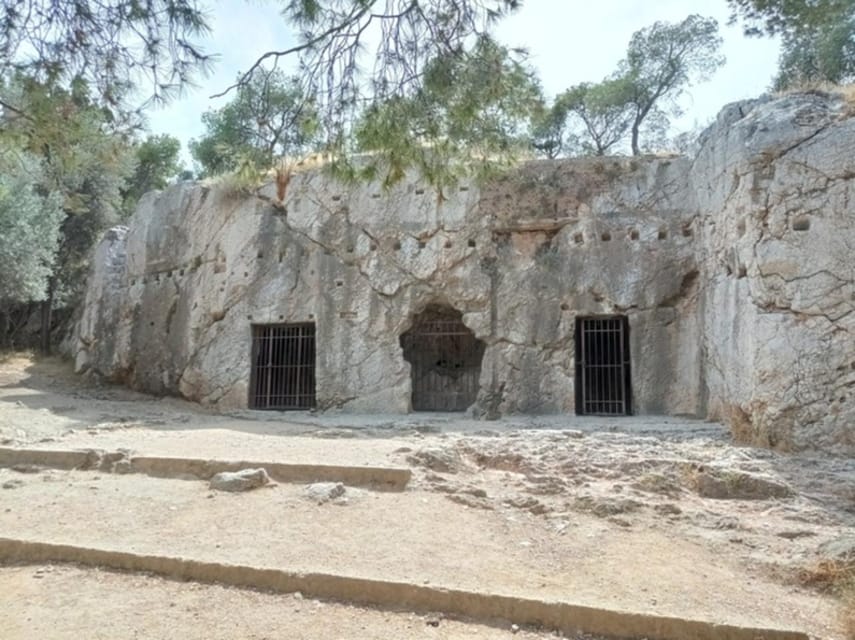
The ancient Agora is one of the most useful stops because it places philosophy in daily civic life. This was not an isolated school or private study retreat. It was part of the public center of Athens, where social, political, commercial, and legal activity came together.
Here, the guide explains how philosophy grew in relation to the city around it. Socrates is especially important because his method depended on conversation. He questioned assumptions, pressed people to define their terms, and exposed gaps in confident answers. That can sound abstract until you stand in a place associated with public discussion.
A good guide makes this section active rather than one-sided. Gregory is praised for asking the group questions and encouraging people to examine their own beliefs and moral choices. That approach can make the walk feel less like a lecture and more like a guided conversation.
You should expect discussion, not just narration. If you prefer to listen quietly, you can still follow the stories. If you enjoy joining in, there is room to ask about Socrates, Plato, Aristotle, Pythagoras, different schools of thought, or the place of philosophy in modern life.
The Agora section may be the best part of the route for understanding why Athens became so influential. The value is not simply seeing ancient remains. It is seeing how ideas developed within a society where public argument mattered.
The Pnyx and the connection between thought and power
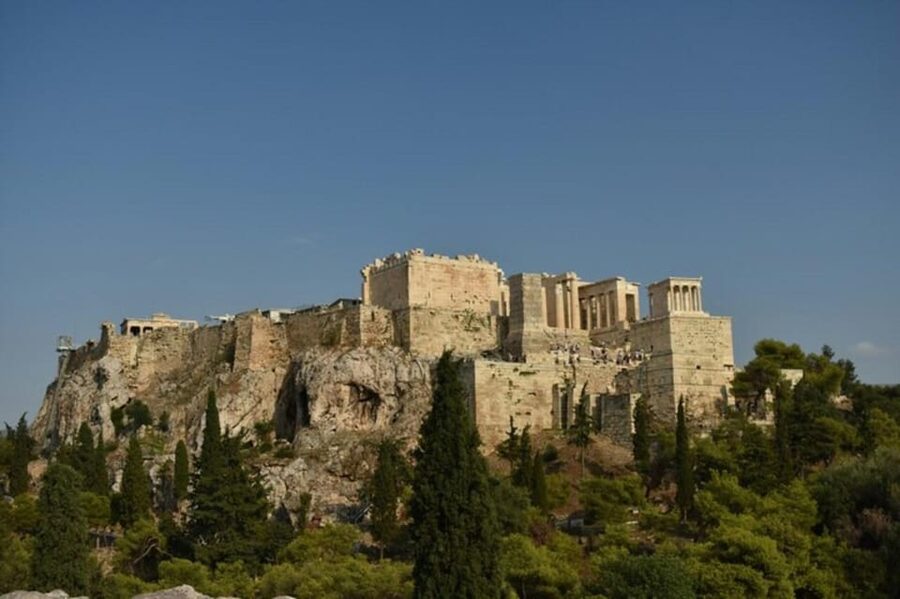
The walk continues toward the Pnyx, a hill associated with the political life of ancient Athens. The tour uses this location to discuss the meaning of civic participation and the relationship between ideas and government.
That makes the Pnyx a useful counterpoint to the Agora. The Agora helps you picture ordinary public exchange, while the Pnyx points toward larger decisions made by the community. Philosophy did not exist apart from politics. Questions about justice, leadership, citizenship, and responsibility had real consequences.
The Pnyx also gives the route a change of pace. You are no longer only among city streets and archaeological remains. The hill helps you understand the physical setting of Athens and the public spaces where people gathered. Bring water, especially in warm weather, and do not wear shoes that will make a long walk uncomfortable.
The tour lasts 150 minutes, so the guide can give these sites proper attention without turning the day into an all-day academic course. Still, the subject is broad. You will hear about several thinkers and schools of thought, but you should not expect a full study of each philosopher.
Same base, a completely different day:
- Athens: Acropolis & up to 5 Archaeological Sites Combo Pass
★ 4.4 · 12,619 reviews - Athens: Cape Sounion & Poseidon Temple Sunset Half-Day Trip
★ 4.8 · 8,241 reviews - All Day Cruise -3 Islands to Agistri,Moni, Aegina with lunch and drinks included
★ 5.0 · 4,958 reviews - Athens, Piraeus, and Coastline: Blue Hop-On Hop-Off Bus
★ 3.9 · 4,849 reviews
The Aeropagus and the serious cost of dissent
The Aeropagus adds a legal and moral edge to the tour. It is tied to Athens’ judicial world and helps the guide explain how philosophical questions could collide with civic authority.
Socrates is central here. His habit of questioning accepted beliefs made him a powerful figure in the history of thought, but it also brought danger. The tour presents the difficult idea that wisdom and social approval do not always go together. In Socrates’ case, asking uncomfortable questions came with a severe personal cost.
This is where storytelling matters. The guide does more than list a trial date or repeat a famous anecdote. Gregory is praised for dramatizing events and helping the group picture the people involved. That makes the moral issue easier to grasp: How much freedom should a society give to people who challenge its values?
The Aeropagus can be uneven underfoot, and you should take care while walking. The supplied information does not promise special access or a private archaeological visit, so treat this as an outdoor stop within a walking route rather than a museum-style presentation.
Socrates’ prison and the human side of philosophy
The stop at Socrates’ prison is one of the most memorable parts of the route because it turns a major figure into a person facing a real decision. The site gives the guide a setting for discussing the final period of Socrates’ life and the way his choices have been remembered.
This is not just a stop for a photograph. It brings together the themes introduced earlier: questioning, law, duty, personal belief, and the price of refusing to abandon your principles. The guide can explain why Socrates remains so important even though he left no written works of his own.
The location also gives the tour emotional weight. You have already heard about public debate and political life. At the prison, the questions become personal. What should you do when the law and your conscience pull in different directions? Is a peaceful society worth obeying at any cost? These are not ancient questions only.
One useful feature of the tour is its openness to different views. Several descriptions of the guide’s approach emphasize that every opinion is treated with respect. You are encouraged to think, not pushed toward one approved answer.
Gregory, Sunny, and the guide-led style
The guide is the main reason this tour works. The experience depends less on audio equipment or elaborate staging and more on a person who can explain ideas, manage a group, and keep the walk moving.
Gregory is repeatedly identified as a warm and engaging guide. He explains philosophy clearly, answers questions, and adjusts the conversation to the group. One particularly useful detail is his ability to tailor examples to a person’s background and interests. He has also helped people with wider Athens recommendations after the philosophy walk.
His method seems well suited to mixed groups. Complete beginners can follow the basic ideas, while people who have studied philosophy can ask more demanding questions. The group may discuss Socrates, Plato, Aristotle, Pythagoras, moral choices, schools of thought, and the meaning of wisdom.
Sunny is also named as a friendly guide, so the exact guide may depend on the departure. Since the advertised language is Spanish, confirm the language and guide details when booking if this matters to you.
The tour is not designed as a silent sightseeing circuit. Expect questions, discussion, and moments when you are invited to look at your own assumptions. That is a strength for curious people, but it may not suit you if you want a fast route through major ruins with little conversation.
What $34 buys you
At $34 per person, this is a reasonable price for a 150-minute guided walk in central Athens. The fee covers the official tour guide, and the route focuses on several locations that are meaningful but easy to overlook when you explore alone.
The value comes from interpretation. You can walk past a statue, hill, or ancient structure for free, but it is harder to understand how those places connect to philosophy, public life, and the story of Socrates without a skilled guide.
The price does not include food, drinks, or personal expenses. There is no meal built into the outing, so eat beforehand or plan something afterward. Carry water with you instead of counting on a convenient stop during the walk.
The free cancellation period is up to 24 hours before the tour for a full refund. You can also reserve now and pay later, which helps if your Athens schedule is still changing.
Who should book this Athens tour
I would choose this tour if you like history with a human question attached. It suits people who want to understand why ancient Athens still matters, not just collect photographs of archaeological sites.
It is also a good choice for:
- First-time Athens visitors who want a strong introduction to Greek thought
- People who have seen the Acropolis and want a different angle on the city
- Students and lifelong learners interested in philosophy, politics, or ethics
- Families with older children who enjoy discussion
- People who prefer a personal guide to a recorded audio tour
- Spanish-speaking visitors looking for a live tour in Spanish
You do not need to love philosophy before booking. The guide’s explanations are meant to make the subject approachable, and the questions can give even beginners something to consider.
I would hesitate if you dislike walking, outdoor sites, group discussion, or abstract questions. The outing also will not replace a full archaeological tour of Athens. Its subject is narrower and more focused.
Practical advice for the walk
Wear comfortable shoes. This is simple advice, but it matters because the route includes several outdoor places and the tour runs for two and a half hours.
Bring water, especially during hot weather. The activity does not include drinks, and the route can feel tiring if you arrive without anything to drink.
Arrive at the Statue of Plato 10 minutes before the start. Use the extra time to confirm that you are at the right statue and ready to join the group.
Keep your expectations clear about the language. The tour is advertised with a Spanish-speaking live guide. Some guide descriptions refer to English and Spanish, but you should confirm the language offered for your chosen departure.
The tour has a 4.9 rating from 59 reviews, and the strongest pattern is clear: people value the guide’s passion, clarity, humor, and ability to make philosophy practical. The walk is at its best when you take part, ask questions, and allow the places to prompt your own thoughts.
Should you book the Great Greek Philosophers tour?
Book it if you want Athens to give you something to think about after the ruins fade from view. At $34, the tour offers a focused route, a live Spanish guide, and a clear story linking Plato, Socrates, Aristotle, Pythagoras, the Agora, the Pnyx, the Aeropagus, and Socrates’ prison.
I would especially recommend it after your first major sightseeing day. You will recognize the city better, and the philosophy will add meaning to places that might otherwise seem like scattered remains.
Skip it if you want a short, purely visual tour or if you are not comfortable walking outdoors and taking part in discussion. For curious minds, though, this is a thoughtful and fairly priced way to meet Athens through its questions.
FAQ
How long does the Great Greek Philosophers tour last?
The tour lasts 150 minutes, or two and a half hours.
What language is the tour in?
The advertised live tour guide language is Spanish.
Where does the tour meet?
The meeting point is in front of the Statue of Plato.
How early should I arrive?
You should arrive 10 minutes before the tour begins.
Which places are included on the route?
The tour highlights Plato’s statue, the ancient Agora, the Pnyx, the Aeropagus, and Socrates’ prison.
Is a guide included?
Yes. An official tour guide is included.
Are food and drinks included?
No. Food, drinks, and personal expenses are not included.
What should I bring?
Bring comfortable shoes and water.
Just added in Athens
- Ceramic and Pottery Creative Workshop with Two Local Artists★ 4.0 · 57 reviews
- Small-Group Women History in Ancient Greece Walking Tour★ 5.0 · 38 reviews
- Athens Old City Private Photoshoot Tour / 2 hrs★ 5.0 · 109 reviews
- Athens: Wine Workshop Create your Own Wine under the Acropolis★ 5.0 · 77 reviews
- Athens: Greek Wines Tasting with Sommelier and Acropolis Views★ 5.0 · 88 reviews
- Wine Trails Private Tour/ Nemea visit 3 wineries from Athens or Nafplion (10 h)★ 5.0 · 44 reviews
- FLYING DRESS Photoshoot in Athens – Greece★ 5.0 · 47 reviews
- Small-Group Wine Tour in Athens with Tasting★ 5.0 · 33 reviews
Tours in Athens, compared.
Acropolis & up to 5 Archaeological Sites Combo Pass
Read our review →
Acropolis, Parthenon & Acropolis Museum Guided Tour
Read our review →
Cape Sounion & Poseidon Temple Sunset Half-Day Trip
Read our review →

All Day Cruise -3 Islands to Agistri,Moni, Aegina with lunch and drinks included
Read our review →

Cape Sounio & Poseidon Temple Trip with Audio Guide
Read our review →