Reviewed · TOURS IN ATHENS
Best of Athens City Segway Tour
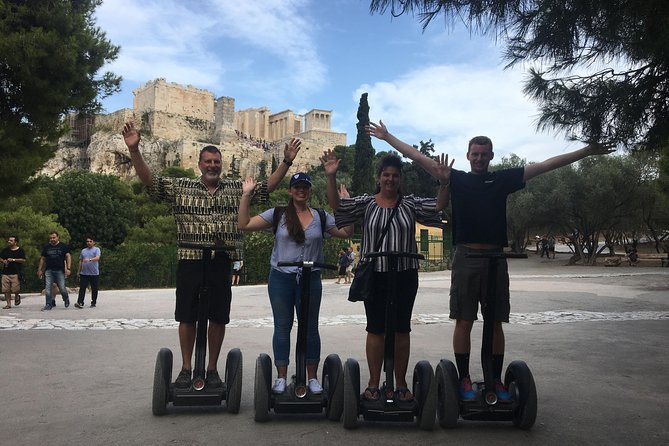
Athens is spread across hills, plazas, ruins, and busy central streets, so a Segway lets you cover far more ground than a walking tour without turning the day into a march. In about three hours, you move from the Acropolis area to the Temple of Olympian Zeus, Panathenaic Stadium, both Agoras, Monastiraki, and the changing guards.
I like the careful beginner training and the steady stream of photo stops. I also like the guides’ personal touch: Demi, Dimitri, Costas, Menelaos, Giorgia, and others are praised for patient instruction, useful history, and good judgment with nervous riders. The main catch is simple: you do not go inside the archaeological sites, so this is an orientation tour, not a substitute for visiting the Acropolis or Agora on foot.
Key points at a glance

- Three hours covers the major central sights: You see more of Athens than you could comfortably walk in the same time.
- Beginner-friendly Segway training: The machines are intuitive, and instruction comes before the tour starts.
- A photo-focused route: Expect short stops at Olympian Zeus, the Panathenaic Stadium, the Agoras, Monastiraki, and the guards.
- Useful first-day tour: It helps you understand how Athens fits together before returning to the sites you want to explore inside.
- Minimum age is 12: Anyone under 18 must be accompanied by an adult, and riders need enough strength and balance for stairs and basic movement.
- A good value for active sightseers: At $114.93 per person, the price pays for transport, a guide, safety equipment, water, and broad coverage rather than lengthy site visits.
Why a Segway works well in Athens
Athens rewards curiosity, but its central sights are not arranged in one tidy museum complex. The Acropolis rises above Plaka, the Temple of Olympian Zeus sits farther southeast, the Panathenaic Stadium is beyond the National Garden, and the Ancient Agora and Monastiraki pull you west toward the old commercial center.
Walking between these places is possible, but the distances, heat, and hills add up. The Segway gives you a practical middle ground. You are still outdoors and close to street life, but you can move between major areas without spending most of the afternoon on foot.
The tour begins with a safety briefing and riding practice. This matters if you have never used one. The Segway responds to your balance and body movement, and the first few minutes can feel odd, but the training is intended to get you comfortable before heading into the city.
Several guides are singled out for patience with first-time riders. Demi is described as especially attentive, while Menelaos is praised for moving slowly and explaining the controls clearly. Giorgia is noted for helping a nervous rider find a more comfortable alternative. That does not mean every group will have the same guide or vehicle, but the company appears used to teaching beginners.
You receive a helmet and bottled water. Wear comfortable shoes, leave large bags behind, and avoid carrying anything that could interfere with steering. The maximum group size is 20, though smaller groups may feel easier when the guide is explaining something beside a busy street.
Other days out people book in Athens:
- Athens: Acropolis & up to 5 Archaeological Sites Combo Pass
★ 4.4 · 12,619 reviews - Athens: Acropolis Ticket with Optional Audio or Live Guide
★ 4.2 · 11,055 reviews - Athens: Acropolis, Parthenon & Acropolis Museum Guided Tour
★ 4.8 · 9,316 reviews
Starting near Plaka and the Acropolis Museum
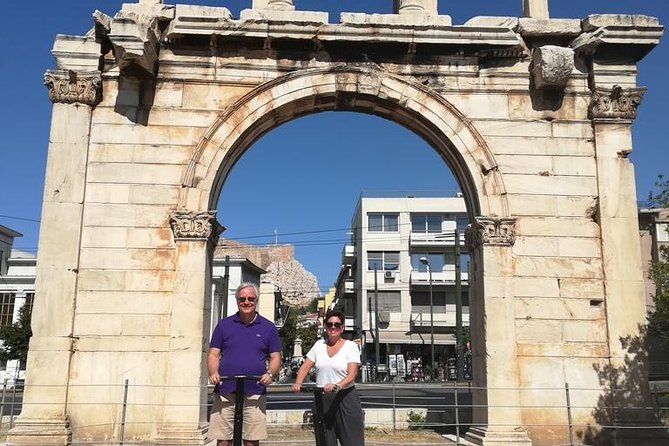
The meeting point is at Eschinou 9 in central Athens, near Plaka and public transportation. Give yourself time to arrive, since the tour does not include hotel pickup or drop-off.
The opening portion includes a short introduction, photographs, and a glimpse of the Acropolis Museum. This is a useful way to set the scene. The museum is one of the city’s key places for understanding the sculptures and objects connected with the Acropolis, but this tour only gives you an outside view.
That distinction matters. If you want the museum galleries, the Parthenon interior, or close study of archaeological remains, plan a separate visit. The Segway tour is best used to get your bearings and decide where to return later.
Temple of Olympian Zeus: a quick look at enormous ruins
The first main stop is the Temple of Olympian Zeus, one of the most striking reminders of ancient Athens’ imperial ambitions. Only a short stop is scheduled here, with time for a story and photographs.
The scale is the point. Even from outside, the remaining columns help you understand how large the finished temple once was. The stop works well as a visual introduction, especially if you have not yet visited a major ancient site in Athens.
Admission is not included, and the tour does not take you inside. You can photograph the ruins and hear the basic story, then return later if this is a place you want to study more carefully.
Panathenaic Stadium and the modern Olympic story
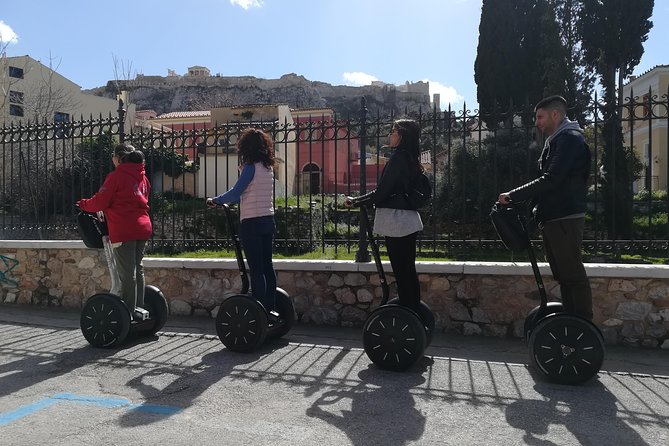
The route continues to the Panathenaic Stadium, the white marble stadium associated with the first modern Olympic Games. This is one of the most rewarding stops for visitors who enjoy the link between ancient traditions and modern events.
You get around 10 minutes for a short explanation and photographs. That is enough to appreciate the stadium’s long, narrow shape and bright marble, but not enough for a full visit. Admission is not included.
I would treat this as a strong photo stop, not as a stadium tour. If the Olympic story interests you, return with more time. The Segway gives you the setting and the headline facts, then lets you keep moving.
Same base, a completely different day:
- Athens: Cape Sounion & Poseidon Temple Sunset Half-Day Trip
★ 4.8 · 8,241 reviews - Athens: Acropolis and Parthenon Guided Walking Tour
★ 4.6 · 5,882 reviews - All Day Cruise -3 Islands to Agistri,Moni, Aegina with lunch and drinks included
★ 5.0 · 4,958 reviews - Athens, Piraeus, and Coastline: Blue Hop-On Hop-Off Bus
★ 3.9 · 4,849 reviews
Ancient Agora: the heart of everyday Athens
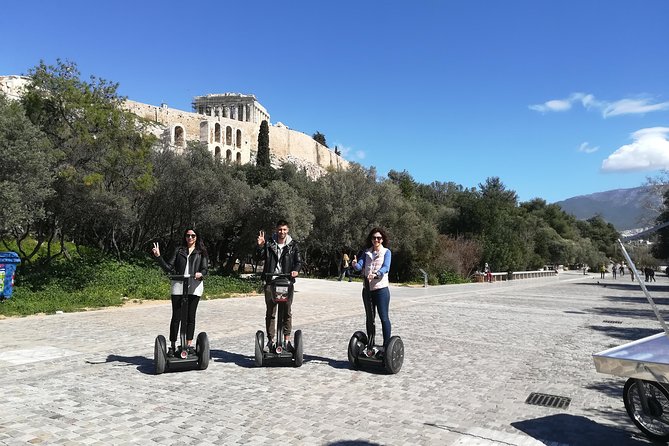
The Ancient Agora is more than another set of ruins. It was a center of public, commercial, political, and social life, so it helps you picture how ancient Athenians used the city beyond the hilltop temples.
The stop is brief, about five minutes for a story and photographs. You will not enter the archaeological area, which is the largest limitation of this section. The Agora deserves more time if you want to see its buildings, walk among the remains, and understand how the spaces connect.
Still, the outside view is useful. You can mark the entrance and return later, perhaps on a cooler morning. The guide’s short explanation gives the site meaning instead of leaving you with a collection of stones and a camera stop.
Roman Agora and the layers of Athens
The Roman Agora provides a quick look at another period in the city’s past. Athens was not frozen in its classical age. Roman influence changed the city’s public spaces, and this stop helps show that the historic center has several layers.
Again, the visit lasts about five minutes and stays outside the site. The short format keeps the tour moving, but it also means the guide’s explanation will be an overview. If you are interested in ancient architecture, make a note to return on your own.
This is where the Segway format has a clear advantage. You can see both Agoras in the same outing without spending long stretches walking between them. You get the city’s broad story first, then choose which ruins deserve a deeper visit.
Changing of the guards at Syntagma
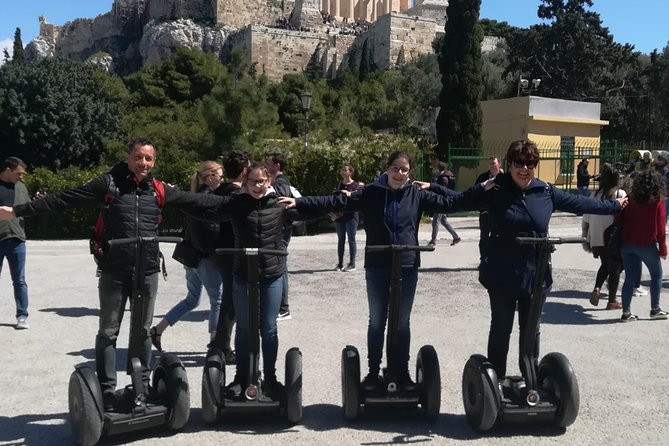
The changing of the guards is a short photo stop of about 10 minutes, with admission included. The guide places you in a useful viewing position and explains what you are seeing.
This stop adds a modern civic ritual to a route otherwise heavy with antiquity. It also gives the tour a change of pace. You are not only looking at temples and ruins. You are seeing a public ceremony that remains part of present-day Athens.
Timing can affect what you see, so do not think of this stop as a guaranteed full ceremony at every departure. The listed route includes the changing of guards, but the exact presentation can depend on the tour schedule and the day.
Zappeion and time to practice
The Zappeion Conference and Exhibition Center is used for another short photo stop. If time allows, the guide may also give you room to practice and play with the Segways.
That extra practice is a nice touch, especially for first-time riders. By this point, you may be comfortable enough to make gentle turns and control your speed with less thought. It is also a chance to ask questions or relax briefly before the final part of the route.
Do not count on a long free-riding session. The schedule is built around sightseeing, and the extra time depends on the group and the pace of the tour. Still, several participants received additional practice time, including one family whose teenager particularly enjoyed it.
Monastiraki and the final city view
The tour ends with a stop in Monastiraki, one of central Athens’ most recognizable districts. It is a useful final setting because the area connects shopping streets, food spots, historic buildings, and views back toward the Acropolis.
The planned stop lasts about 10 minutes and includes a short history and photographs. You finish back at the original meeting point, so Monastiraki also makes a convenient place to continue your day after the tour.
You might want to stay nearby for lunch or a later walk, but food and drinks are not included. The guide may be able to suggest a place. Dimitri, for example, has been praised for a useful restaurant recommendation after a tour, though restaurant advice is not a formal part of the package.
What the $114.93 price actually buys
At $114.93 per person, this is not the cheapest way to see Athens. You can walk around the historic center for much less, and public transportation costs less still.
The value comes from the combination of movement, instruction, and local guidance. You receive a three-hour route, a helmet, bottled water, a tour escort, beginner training, and a chance to cover several major areas without arranging the connections yourself.
I think the price makes the most sense for a first day in Athens, a short port visit, or anyone who dislikes long walks in strong sun. It also suits families with teenagers and adults who want an active outing without the effort of cycling.
The value is weaker if your main goal is detailed archaeology. The short stops and lack of interior admission mean you will still need separate tickets for the Acropolis, Agora, Roman Agora, Panathenaic Stadium, or other sites you want to enter. Think of this as a moving city introduction, not a complete ancient Athens visit.
The tour is booked, on average, about 53 days ahead, so popular departure times may fill early. The booking includes free cancellation up to 24 hours before the start time. Cancellations or changes made later are not refunded or accepted.
Who should book this tour
I would recommend it to you if you:
- Want to cover central Athens quickly
- Prefer a guide to explain the sights as you move
- Are comfortable learning a new vehicle
- Have limited time because of a cruise or short stay
- Want a lively introduction before choosing which sites to revisit
- Are traveling with a teenager who would find a standard walking tour dull
It may not suit you if you dislike balance-based vehicles, need extensive archaeological detail, or want to spend an hour inside each site. The minimum age is 12, and anyone under 18 must be with an adult.
You also need to be able to make ordinary movements such as climbing and descending stairs without assistance. The stated weight range is 100 to 250 pounds, or about 45 to 113 kilograms. Large bags are not suitable on the Segway.
Some groups have been accommodated with a four-wheeled vehicle when a rider became uncomfortable. Treat that as a possible accommodation, not a promise. If you already know that balancing will be difficult, contact the operator before booking.
How to get the most from the three hours
Book this near the beginning of your Athens stay. You will learn where the major areas sit, spot places worth returning to, and get a useful first look at the city’s layout.
Arrive ready to ride. Comfortable shoes matter, and a small amount of water is sensible even though bottled water is provided. Keep your bag light, since you should not carry a large one while operating the Segway.
Do not book this expecting private time at every landmark. The guide keeps the group moving, and the stops are intentionally short. Take photographs quickly, listen for the key context, and make a note of the places you want to revisit.
Ask questions during the stops rather than trying to talk while riding. A few participants found that it could be hard to hear the guide when the full group gathered around the Segways. Staying close and asking the guide to repeat an important point can improve the experience.
Most of all, remember that the point is coverage. You are trading long site visits for a broad view of Athens, with enough history to make the monuments meaningful.
Final call: book it for coverage, not archaeological detail
I would book the Best of Athens City Segway Tour if I had three hours, wanted to see the main central sights, and preferred a guided ride to a long walk. The route covers an impressive amount of ground, and the patient training makes it approachable for many first-time riders.
The best use is as a first-day orientation, a cruise-port activity, or a family outing with older children. Book something else if your priority is entering the Acropolis and Agora or spending serious time with ancient art and architecture.
At $114.93, you are paying for access to more of Athens in less time, not for admission to the ruins. If that trade suits your plans, this is a lively and efficient way to get your bearings.
FAQ
How long does the Best of Athens City Segway Tour last?
The tour lasts approximately three hours.
Where does the tour begin and end?
It begins at Eschinou 9, Athina 105 58, Greece, and ends back at the same meeting point.
Is the tour offered in English?
Yes. The tour is offered in English.
Does the tour enter the Acropolis or archaeological sites?
No. The tour provides outside views, short explanations, and photo stops. It does not visit the inside of the archaeological sites.
What is the minimum age?
The minimum age is 12. Anyone under 18 must be accompanied by an adult.
What is included in the price?
The price includes a tour escort or host, bottled water, and use of a helmet. Hotel transfers, food, drinks, and admission to most listed sites are not included.
Can I cancel for a full refund?
Yes, if you cancel at least 24 hours before the experience start time. Cancellations or changes made less than 24 hours before the start time are not accepted for a refund.
Just added in Athens
- Ceramic and Pottery Creative Workshop with Two Local Artists★ 4.0 · 57 reviews
- Small-Group Women History in Ancient Greece Walking Tour★ 5.0 · 38 reviews
- Athens Old City Private Photoshoot Tour / 2 hrs★ 5.0 · 109 reviews
- Athens: Wine Workshop Create your Own Wine under the Acropolis★ 5.0 · 77 reviews
- Athens: Greek Wines Tasting with Sommelier and Acropolis Views★ 5.0 · 88 reviews
- Wine Trails Private Tour/ Nemea visit 3 wineries from Athens or Nafplion (10 h)★ 5.0 · 44 reviews
- FLYING DRESS Photoshoot in Athens – Greece★ 5.0 · 47 reviews
- Small-Group Wine Tour in Athens with Tasting★ 5.0 · 33 reviews
Tours in Athens, compared.
Acropolis & up to 5 Archaeological Sites Combo Pass
Read our review →
Acropolis, Parthenon & Acropolis Museum Guided Tour
Read our review →
Cape Sounion & Poseidon Temple Sunset Half-Day Trip
Read our review →

All Day Cruise -3 Islands to Agistri,Moni, Aegina with lunch and drinks included
Read our review →

Cape Sounio & Poseidon Temple Trip with Audio Guide
Read our review →