
Reviewed · ANCIENT CORINTH, MYCENAE & NAFPLIO TOURS
From Athens: Small-Group Mycenae, Epidaurus & Nafplio Trip
Mycenae is the star of this day outside Athens. Its huge Cyclopean walls, Lion Gate, royal tombs, and hilltop ruins bring Bronze Age Greece to life, while the ancient theater at Epidaurus supplies a very different kind of wonder. I especially like the smart route, which breaks up the long drive with a relaxed stop in Nafplio, and the archaeologist guide who gives useful context on the road.
I also like the freedom built into the day. You can wander the sites at your own speed, choose your own lunch, and use the onboard WiFi between stops. The main caution is time: Mycenae and Epidaurus are self-guided, and some people wish they had another 30 minutes at Epidaurus.
Key points to know before booking
- Three very different stops: Bronze Age Mycenae, Venetian-influenced Nafplio, and the famous theater of Epidaurus.
- The guide usually teaches on the road: Expect strong historical explanations between sites, but not a full guided walk through each ruin.
- The real cost is higher than the advertised fare: The listed price is $35.62, but admission to Mycenae and Epidaurus adds €40 per adult, plus lunch.
- A long but well-spaced day: The tour lasts about 10 hours, with roughly two hours at Mycenae, two hours in Nafplio, and one hour at Epidaurus.
- Comfortable transport matters: You ride in an air-conditioned bus with WiFi, though a full group of up to 49 can feel less roomy than a minivan.
- Wear proper shoes: Mycenae has uneven paths, open archaeological ground, and little shade.
Why this Athens day trip works so well
Athens is full of ancient sights, but the Peloponnese gives you a wider view of Greek history. In one day, you move from the Bronze Age world of kings and epic poems to a graceful seaside town, then to a sanctuary where ancient medicine and theater met.
That variety is the best reason to book this excursion. You are not spending 10 hours at one ruin. You get a major archaeological site, a pleasant lunch stop, and one of Greece’s most famous theaters. The drive between them also gives your guide time to explain what you are seeing.
The day begins at Platia Karaiskaki, at Pl. Karaiskaki 3 in Athens. You should arrive 10 minutes before departure. The meeting point is near a metro exit, and the tour attendant carries an Ammon Express sign, making the group easier to find after you come out of the station.
The price shown is $35.62 per person, which is excellent for roundtrip transport, a full day outside Athens, an archaeologist trip attendant, basic travel insurance, WiFi, and an audio guide app. But budget carefully. Admission is not included, and the stated fees are €20 for Mycenae and €20 for Ancient Epidaurus. Lunch is also your responsibility.
That means the excursion is best judged as an affordable transport and guiding service, not as a €35 all-inclusive day. Even after adding site tickets and food, it can be good value if you do not want to rent a car or arrange three separate stops yourself.
More Peloponnese days from Athens:
- From Athens: Mycenae, Epidaurus & Nafplio Full Day Trip
★ 4.8 · 2,438 reviews - From Athens: Mycenae, Epidaurus & Nafplio Full-Day Tour
★ 4.5 · 1,580 reviews - From Athens: Ancient Corinth Day Trip with Canal & VR Guide
★ 4.6 · 1,073 reviews
Mycenae: entering the world of Agamemnon
Mycenae comes first, and that is a wise choice. You reach the most important site while your energy is still high, and the morning light can make the hilltop ruins especially striking.
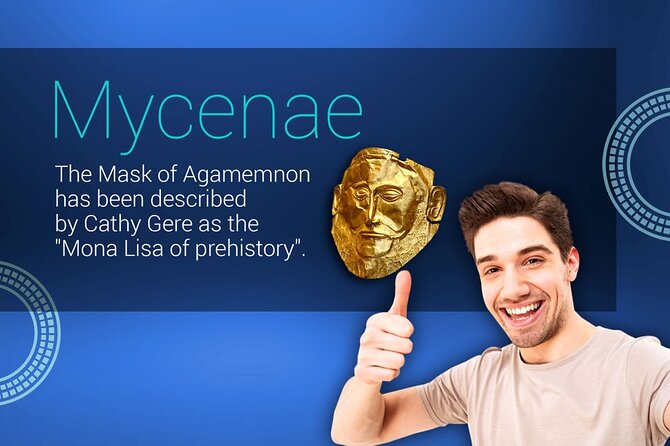
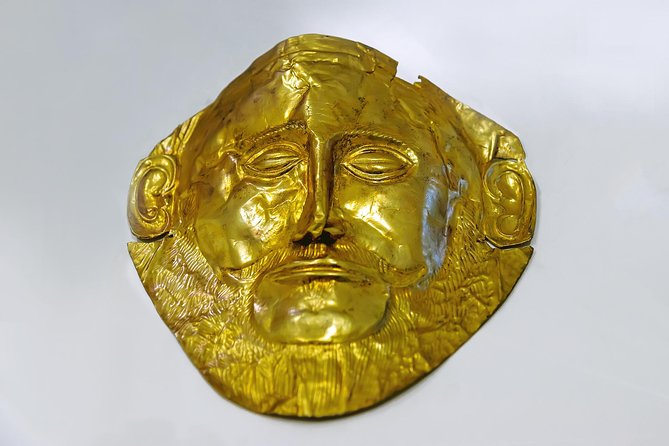
Mycenae was the leading kingdom of the later Bronze Age, around 1350 BC. The place is tied to the stories of Homer and the Trojan War, though the archaeological remains are more valuable than the legends alone. Here, you can see the physical setting of a powerful fortified center, built high above the surrounding countryside.
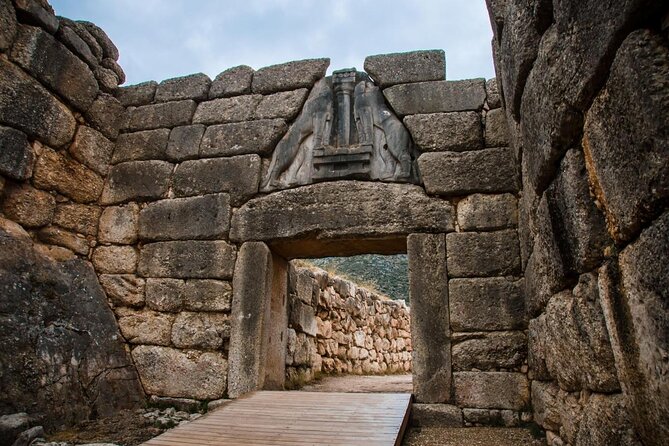
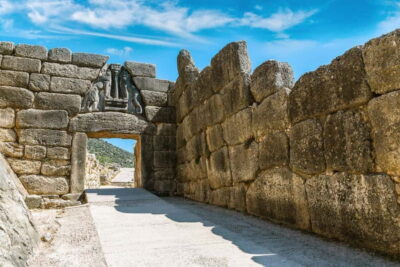
The first sight is the massive Cyclopean wall. Ancient builders fitted enormous stones together without modern machinery, and later Greeks imagined that only Cyclopes could have moved them. The walls are a useful reminder that Mycenae was built for power and defense, not just ceremony.
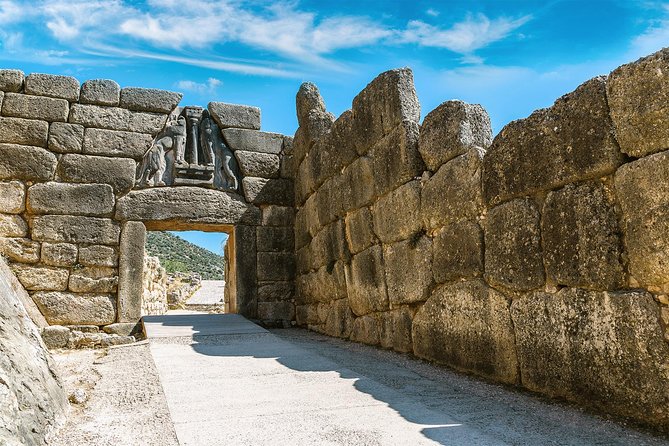
You enter through the famous Lion Gate, the best-known entrance to the citadel. Look up at the carved relief above the doorway. The gate gives you a strong sense of arrival, even though much of the palace complex is now open foundations and scattered stone.
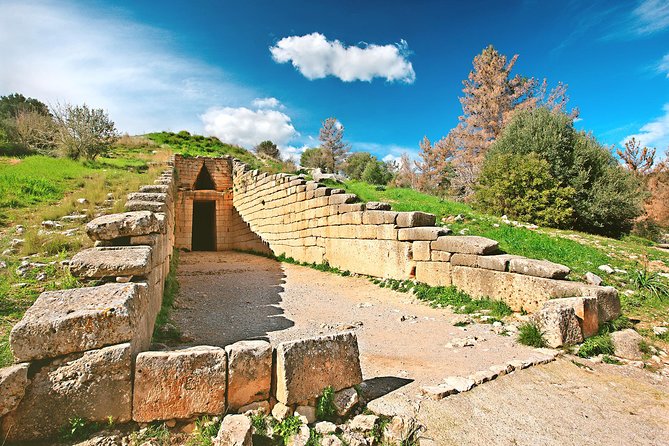
Allow time for the Tomb of Clytemnestra and the Treasury of Atreus, also called the Tomb of Agamemnon. The latter is a large beehive-shaped tomb with a carefully built stone passage. It is outside the main citadel area, so pay attention to the meeting instructions and your watch.
The palace area sits higher on the site. Paths can be uneven, and there is little shade, so comfortable shoes, water, and sun protection will make a real difference. Cats are also a common part of the setting, according to the practical notes from the day.
The small museum contains finds from the site and helps fill in what the stones cannot show. The audio guide app adds another layer, but do not expect a full personal tour through every section. Signs inside the site provide useful help, and you have the freedom to pause, backtrack, or take a quieter path.
The guide’s strongest contribution often comes before you arrive. Guides such as Dimitra, Dimi, Giorgi, Katerina, Kristi, Vivian, and Vassily have been praised for clear explanations of Greek archaeology and for answering questions on the bus. Staff names can change, so treat these as examples rather than a guarantee, but the format is consistent: expect historical context during the drive and independent exploration at the ruins.
Nafplio: two hours for lunch and a change of pace
After Mycenae, the bus continues to Nafplio, one of the most enjoyable breaks in the schedule. This former capital of Greece has a more relaxed feel than the archaeological sites, with squares, waterfront views, narrow streets, and buildings shaped by Venetian, Byzantine, Ottoman, and modern Greek influences.
The tour gives you about two hours here. That is enough for a Greek lunch and a walk through the center, but not enough to treat Nafplio as a full city visit. You choose and pay for your own meal, so this is a good place to decide between a sit-down lunch and something quicker.
The town can feel tourist-focused around the main streets, with restaurants, craft shops, and souvenirs. Still, it is easy to make the stop feel personal. I would spend part of the time walking the side streets, then use the remaining minutes for the waterfront or a square.
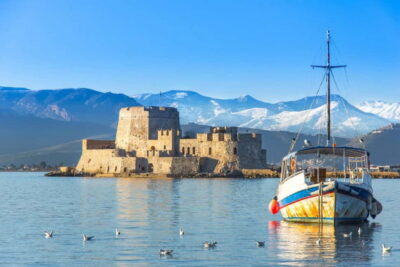
The three major fortification sights are Bourtzi, Acronauplia, and Palamidi. They add drama to Nafplio, but access to them is not included, and the tour schedule does not promise time for a full visit. Palamidi sits high on the hill above town, so do not set out toward it unless you are sure you have enough time to return to the bus.
Nafplio is also the tour’s built-in rest period. After walking Mycenae, you can sit down, eat, and enjoy a town rather than another ruin. This balance is one of the day’s best design choices. Some people may feel two hours is generous compared with the one hour at Epidaurus, but the pause keeps the excursion from becoming an exhausting chain of stone sites.
Epidaurus: more than an ancient theater
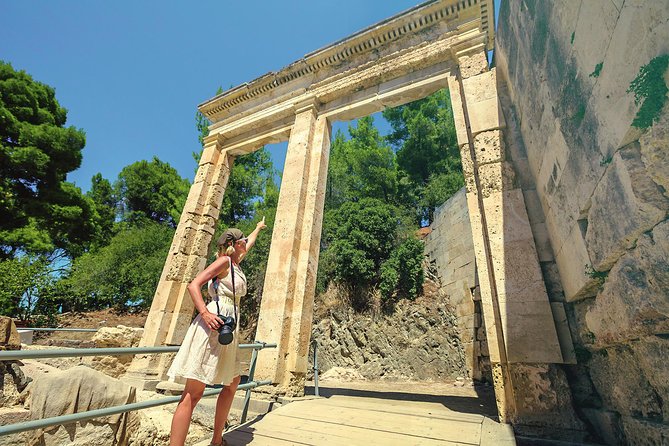
The final major stop is Epidaurus, famous for its theater and its remarkable acoustics. From the upper rows, even a quiet spoken word can carry toward the stage. The theater still hosts the Epidaurus Festival in summer, which gives the monument a living connection to performance.
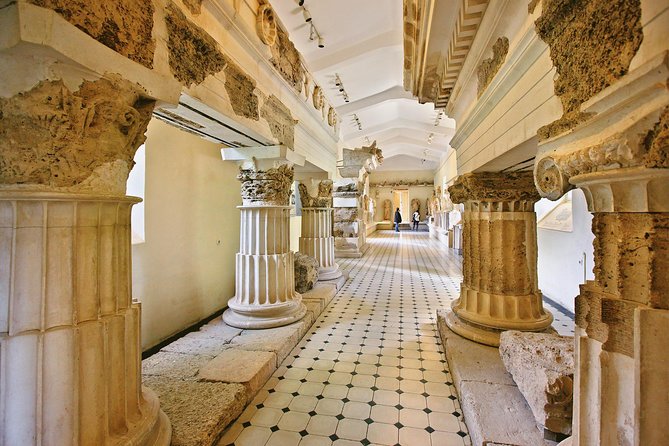
The theater is the immediate attraction, but the site is much larger. In antiquity, Epidaurus was a healing center connected with the sanctuary of Asclepius. The remains include religious, medical, and civic buildings, showing that the site was not simply a place to watch plays.
The Asclepeion functioned as a major healing complex. Ancient patients came for treatment connected with the god Asclepius, and the site is often described as an early ancestor of organized medical care. The remains will not look like a modern hospital, of course, but the layout helps you understand how healing, ritual, sleep, and religious practice were linked.
You have about one hour here. That is enough to see the theater and make a useful circuit, but it can feel tight if you want the museum and the wider sanctuary as well. Start with the sanctuary area if you want to cover more than the theater, then move toward the seating area and stage.
The museum is included with the site admission and contains a limited selection of objects. It is worth a quick look if time permits, but do not sacrifice the main ruins simply to spend longer indoors.
This is the stop where the tour’s self-guided format matters most. The guide may explain the site on the drive and give orientation, but you will explore the theater and sanctuary without a continuous guided walk. If you want detailed interpretation at every column and foundation, a private guide or a longer independent visit would suit you better.
Same base, a completely different day:
- Athens: Acropolis & up to 5 Archaeological Sites Combo Pass
★ 4.4 · 12,619 reviews - Athens: Acropolis Ticket with Optional Audio or Live Guide
★ 4.2 · 11,055 reviews - Athens: Acropolis, Parthenon & Acropolis Museum Guided Tour
★ 4.8 · 9,316 reviews - Athens: Cape Sounion & Poseidon Temple Sunset Half-Day Trip
★ 4.8 · 8,241 reviews
Transport, group size, and the long day
The advertised group limit is 49 people, though some departures are much smaller. A group of six may travel in a minivan, while a fuller departure uses a coach or bus. The smaller vehicle can feel personal and makes it easier to hear the guide, but you should not book this expecting a guaranteed minivan.
The bus is air-conditioned and equipped with WiFi. That matters on a 10-hour outing, especially during the longer road sections. You can send messages, check maps, or share photos, though the main value is simply having a more comfortable ride between sites.
The road time is broken into manageable sections by the three stops. One useful feature of this route is that you are rarely sitting for several uninterrupted hours. The result still feels like a long day, but less like a single bus transfer.
Guides and drivers have received strong praise for their organization, safe driving, humor, and clear explanations. Names such as Dimi, Dimitra, Elefteria, Orfeus, Rori, Vula, and Giorgi have been associated with particularly warm and informative service. The experience can depend somewhat on the guide assigned that day, but the archaeologist-led format is a real advantage for anyone who wants more than a bare transfer.
Bring water, sun protection, and shoes with a firm sole. Mycenae and Epidaurus are open archaeological sites, and shade is limited. You should also keep track of departure times yourself. The freedom to wander is useful, but it means you are responsible for returning to the bus promptly.
Who should book this Mycenae and Epidaurus tour
I would choose this trip if you have only one free day beyond Athens and want to see several important places without driving. It suits visitors who like a clear schedule, useful commentary on the road, and enough free time to explore without being led every minute.
It is also a good match for first-time visitors to the Peloponnese. You get a quick sense of the region, including its Bronze Age past, coastal towns, fortifications, sanctuaries, and countryside.
Families can benefit from the easy transport and varied stops, though children who dislike long days or open ruins may tire. The same is true for anyone who finds uneven ground difficult. Most people can take part, but the sites require walking and some paths are rough.
I would hesitate if your main goal is a slow, detailed archaeological study. The time at Mycenae is generous enough for the essential sights, but Epidaurus can feel rushed. You may also prefer an independent visit if you want to climb Palamidi, spend longer in Nafplio, or examine every part of the sanctuary.
Should you book it?
Book this day trip if you want three strong sights in one organized day, with air-conditioned transport and an archaeologist to explain the setting as you go. Mycenae is the essential stop, Nafplio gives the day breathing room, and Epidaurus adds one of Greece’s most memorable ancient theaters.
Just price it honestly. Add €40 for the two archaeological sites, plus lunch, and remember that the ruins are mainly self-guided. If you accept those limits, the tour offers a practical and well-planned way to reach the Peloponnese from Athens. Free cancellation is available until 24 hours before departure, which also gives you some flexibility when arranging your schedule.
FAQ
How long does the Athens to Mycenae, Nafplio, and Epidaurus trip last?
The experience lasts about 10 hours and returns to the meeting point at Platia Karaiskaki in Athens.
What is included in the tour price?
The price includes roundtrip transportation in a modern air-conditioned bus, an archaeologist trip attendant, onboard WiFi, basic travel insurance, an audio guide app, and small-group service.
Are the entrance fees included?
No. Admission to Mycenae is listed as €20 per person, and admission to Ancient Epidaurus is also listed as €20 per person. Some age-based free or reduced admission rules apply.
Is lunch included?
No. You have free time in Nafplio to choose and pay for your own lunch.
Is there a guided tour inside Mycenae and Epidaurus?
The guide provides historical information, especially while traveling between stops, but the archaeological sites are mainly explored independently. The audio guide app and site signs offer additional help.
Where does the tour begin and end?
The tour begins at Pl. Karaiskaki 3, Athens 104 37, Greece, and ends back at the same meeting point. You should arrive 10 minutes before the scheduled departure time.
Just added in Athens
- Ceramic and Pottery Creative Workshop with Two Local Artists★ 4.0 · 57 reviews
- Small-Group Women History in Ancient Greece Walking Tour★ 5.0 · 38 reviews
- Athens Old City Private Photoshoot Tour / 2 hrs★ 5.0 · 109 reviews
- Athens: Wine Workshop Create your Own Wine under the Acropolis★ 5.0 · 77 reviews
- Athens: Greek Wines Tasting with Sommelier and Acropolis Views★ 5.0 · 88 reviews
- Wine Trails Private Tour/ Nemea visit 3 wineries from Athens or Nafplion (10 h)★ 5.0 · 44 reviews
- Hydra Private Day Trip by Ferry from Athens with Transfers★ 4.0 · 30 reviews
- FLYING DRESS Photoshoot in Athens – Greece★ 5.0 · 47 reviews
Ancient Corinth, Mycenae & Nafplio Tours, compared.
Ancient Corinth Day Trip with Canal & VR Guide
Read our review →
Private Biblical Tour Ancient Corinth & Isthmus Canal from Athens
Read our review →
4-Day Classical Greece Tour: Epidaurus, Mycenae, Olympia, Delphi, Meteora
Read our review →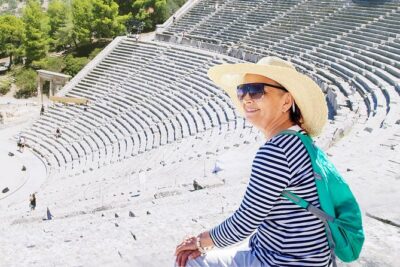
Ancient Corinth & Nafplio Full Day Trip with Swim
Read our review →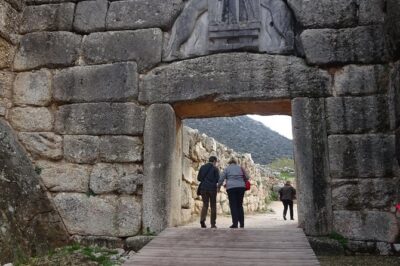
Mycenae and Nafplion Day Trip from Athens with Official guide
Read our review →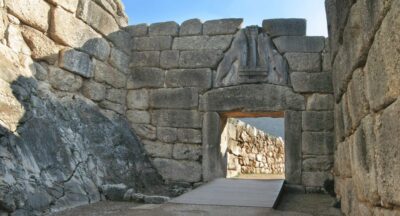
Browse the lists this tour appears in