Reviewed · TOURS IN ATHENS
Philosophical Tour in Athens
Athens reveals itself differently when you stop treating the Acropolis as a single monument and start asking what happened around it. This private walking tour uses theaters, meeting places, cemeteries, and hilltop views to explain Socrates, Plato, Aristotle, Stoicism, and Epicureanism in the places tied to their ideas.
I like the small private format, which gives Lampros room to adjust the discussion to your group. I also like the use of short videos and multimedia presentations, especially when an old philosophical argument needs a clear modern explanation. The main drawback is simple: this is a thinking tour, not a standard sightseeing walk, so it may feel too discussion-heavy if you want only quick facts and photographs.
Key points before you book
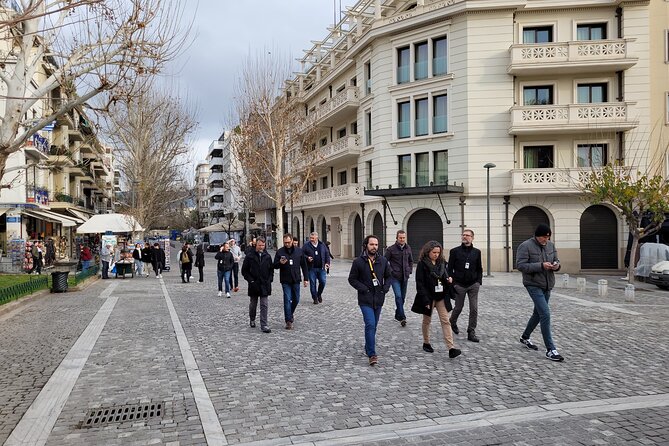
- A private group of up to six: You receive the guide’s full attention rather than sharing a large walking group.
- Ancient ideas in real places: The route connects Plato’s cave, the birthplace of democracy, Stoic teaching, and ancient approaches to happiness with Athens itself.
- A strong guide-led experience: Lampros is praised for warmth, clear storytelling, personal conversation, and adjusting explanations to different ages and levels of interest.
- Views with a purpose: Philopappos Monument and the Pnyx are not just photo stops. They frame discussions about happiness, citizenship, and the good life.
- About two and a half hours on foot: Expect several stops, uphill sections, outdoor discussion, and breaks in shady places when needed.
- Useful local advice: Lampros may also suggest places for food, rooftop drinks, open-air cinema, and other things to do in Athens.
Athens through the questions of Socrates
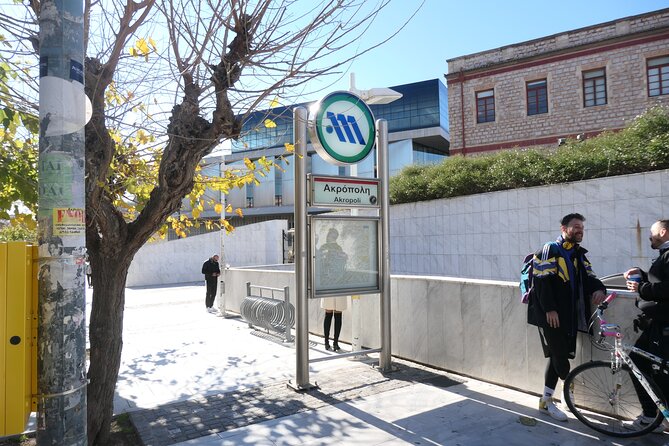
The tour begins at AcropoliAthens, near the Acropolis, at 11:00 a.m. From there, you walk into a version of Athens that is less about ticking off monuments and more about asking why people built them, gathered in them, and argued in them.
Lampros leads the walk in English. His approach combines philosophy with psychology, mythology, and modern questions about human behavior. One of the most appealing parts is the link between ancient ideas and present concerns. Previous tour experiences have included discussion of artificial intelligence, human reasoning, self-awareness, and how philosophical tools might help you examine your own habits.
That does not mean you need a university background in philosophy. The experience is designed for mixed groups. A teenager, a parent, and someone who has studied philosophy before can all take part, with Lampros shaping the conversation to the people in front of him.
Other days out people book in Athens:
- Athens: Acropolis & up to 5 Archaeological Sites Combo Pass
★ 4.4 · 12,619 reviews - Athens: Acropolis Ticket with Optional Audio or Live Guide
★ 4.2 · 11,055 reviews - Athens: Acropolis, Parthenon & Acropolis Museum Guided Tour
★ 4.8 · 9,316 reviews
Theatre of Dionysus and the value of tragedy
The first stop is the Theatre of Dionysus Eleuthereus, where the discussion begins with tragedy. The focus is not simply on the theater as an old stone structure. You consider why ancient Athenians believed people should confront tragic stories rather than make easy judgments about difficult human choices.
The discussion brings in Carl Jung, Buddhist thought, and evolutionary psychology. The supplied description has an unclear reference to the term self, but the purpose is clear: tragedy becomes a tool for self-examination. You look at why people need stories that challenge their assumptions and show the cost of pride, anger, fear, and poor judgment.
This is a good early stop because it sets the tone for the rest of the walk. You are not just hearing dates and names. You are being asked to examine how theater can shape character.
The stop lasts about 15 minutes and has no admission charge. The open-air setting also means weather matters. On a hot day, you will want water, a hat, and comfortable shoes.
Herod Atticus Odeon and the masks we wear
The nearby Herod Atticus Odeon brings the conversation back to theater, this time through the idea of persona. Lampros discusses the personality through the terms persona, animus, and anima, drawing on Jungian psychology.
The location helps make the subject easier to grasp. A theater is a place where people take on roles, perform for others, and reveal something through disguise. You can connect that public performance with the roles people play in family life, work, and society.
This stop is brief, about 10 minutes, and admission is free. It is best understood as a quick idea-building pause rather than a full theater visit. You do not spend a long time inside the venue, and the point is the discussion around it.
Plato’s cave at the Prison of Socrates
At the Prison of Socrates, the tour turns to Plato’s allegory of the cave. This is one of the clearest philosophy stops on the route because the physical setting gives the famous story a stronger sense of place.
Plato’s cave asks whether people mistake shadows and appearances for reality. Lampros uses the idea to open a wider discussion about education, perception, certainty, and the discomfort that comes with changing your mind.
I find this kind of stop more useful than hearing the allegory in a classroom. You are standing in a place linked by tradition to Socrates, while considering how easily any person can accept an incomplete version of the truth. Multimedia material helps reinforce the point for people who prefer something visual alongside a spoken explanation.
The planned stop is about 20 minutes. Expect the conversation to become interactive, especially if your group enjoys asking questions.
Same base, a completely different day:
- Athens: Cape Sounion & Poseidon Temple Sunset Half-Day Trip
★ 4.8 · 8,241 reviews - Athens: Acropolis and Parthenon Guided Walking Tour
★ 4.6 · 5,882 reviews - All Day Cruise -3 Islands to Agistri,Moni, Aegina with lunch and drinks included
★ 5.0 · 4,958 reviews - Athens, Piraeus, and Coastline: Blue Hop-On Hop-Off Bus
★ 3.9 · 4,849 reviews
Democracy at Agios Dimitrios Loumbardiaris
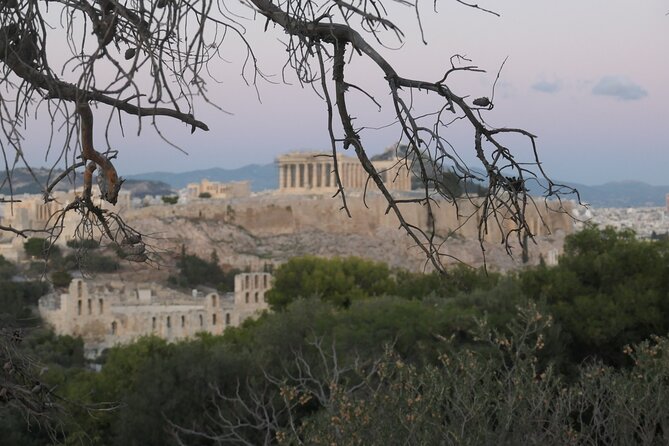
The church of Agios Dimitrios Loumbardiaris brings the subject back to public life. Here, the discussion focuses on the birth of democracy and the conditions that allowed Athenian citizens to gather, speak, and take part in civic decisions.
This is not presented as a simple claim that ancient Athens created modern democracy in its present form. The value is in considering what participation meant at the time and how public discussion shaped political life.
The stop lasts about 20 minutes and has no admission charge. It also gives the route a change of pace, moving from the private mind and personal identity toward the responsibilities of citizens.
Philopappos Monument and the recipe for happiness
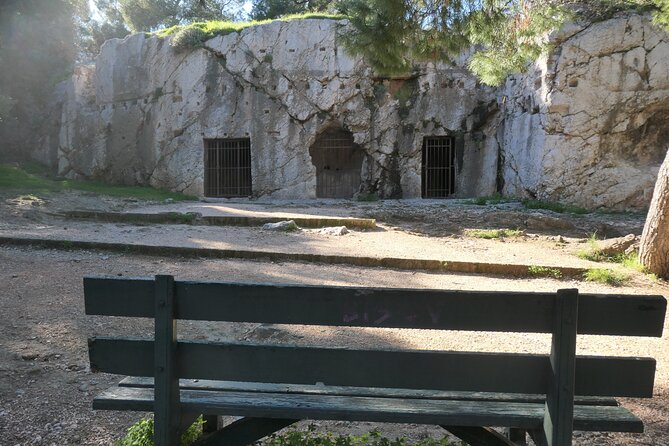
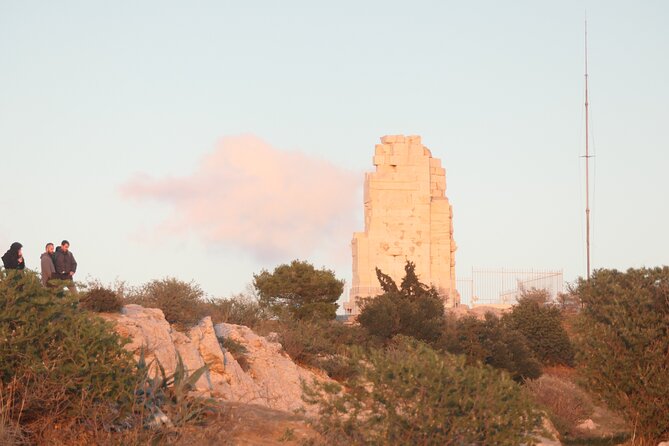
At the Philopappos Monument, the views become part of the lesson. From this hill, you can see the Acropolis and Parthenon in a way that gives the surrounding city a wider frame.
The discussion centers on happiness according to Plato and Socrates. This is not happiness as a quick mood or a shopping list of pleasures. The question is what makes a life good, ordered, and worth living.
The tour description calls this one of the most energetic points in Athens. You should treat that as a philosophical and atmospheric idea rather than a measurable fact. The real appeal is the combination of open space, views, and time to pause.
This stop lasts about 15 minutes and is free. The hill setting means comfortable footwear matters. The guide has also been praised for choosing shade and taking care with comfort in hot weather, though you should still prepare for Athens sun.
The Pnyx and Aristotle’s idea of a good life
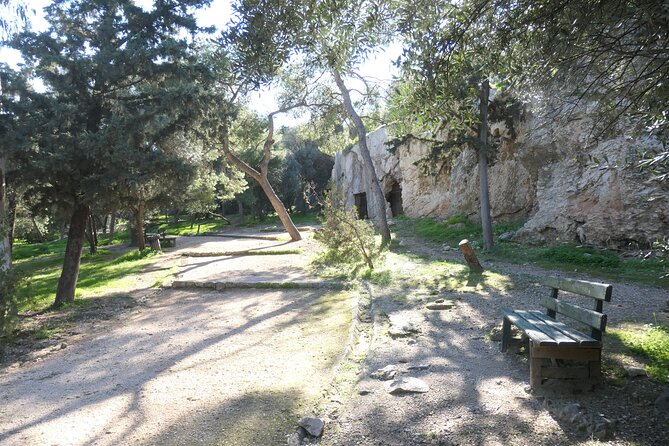
The Pnyx is one of the route’s strongest stops. It was the assembly area of Athenian citizens, so the physical setting naturally supports discussion of civic life, responsibility, and the meaning of freedom.
Here, Lampros explains Aristotle’s idea of eudaimonia, often translated as happiness, flourishing, or a life well lived. The word does not mean constant pleasure. It points toward a life shaped by purpose, virtue, and active participation.
The Pnyx also connects with the tour’s more personal side. The description refers to a secret place of Socrates, and the stop invites you to think about how private reflection and public debate can support each other.
About 15 minutes are planned here, with admission included. The view across Athens is a major benefit. You can see why this spot works so well for a discussion about citizenship and the wider shape of a human life.
Keramikos and Epicurus’ garden
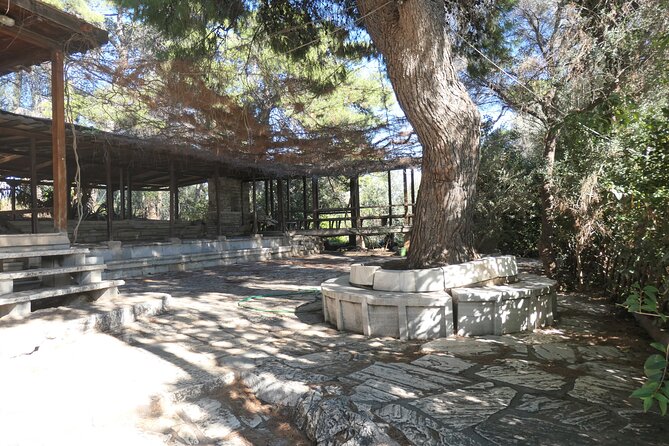
The route continues to Keramikos Archaeological Site, the ancient cemetery of Athens. This shift from civic gathering to burial ground gives the discussion a more serious tone.
Here, the focus is Epicurean happiness and the idea of Epicurus’ garden. Epicurean philosophy is often reduced to luxury or excess, but the tour presents it as a question about simple pleasure, friendship, peace of mind, and freedom from needless fear.
The cemetery setting makes the subject feel practical. Ideas about happiness are easier to weigh when you are reminded that life is limited. You can ask what pleasures are worth pursuing and which desires only create more anxiety.
The stop lasts about 15 minutes. The admission details list the archaeological site as free for this activity. As with any outdoor ancient site, surfaces may be uneven, so sturdy shoes are sensible.
Stoicism, the Roman Agora, and daily practice
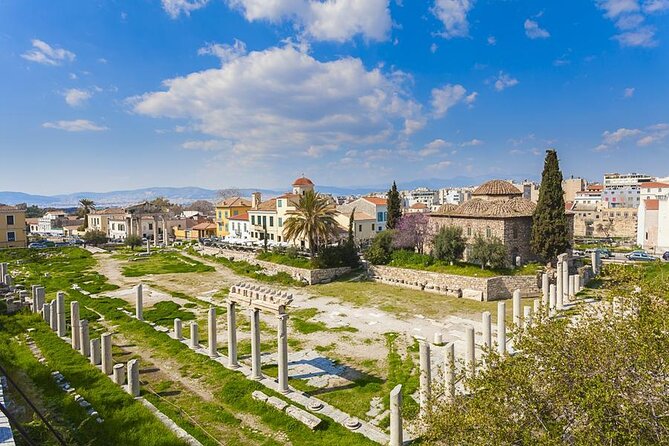
The route includes places associated with the birth and teaching of Stoicism before reaching the Roman Agora. The key point is that Stoicism is treated as a philosophy of life, not just a modern slogan about toughness.
At the Roman Agora, Lampros explains how Stoic ideas were taught and applied. You may consider control, judgment, resilience, and the difference between an event and your response to it.
The Roman Agora stop lasts about 15 minutes and has no admission charge. Nearby, the route also passes the first meteorological station in the world, adding a practical bit of science and civic history to the philosophical walk.
Another segment takes you along the Mnisikleous stair, described as a discussion point for philosophers and a good place for lunch. This is useful planning advice. If you schedule the tour early in your visit, you can ask Lampros for local food suggestions and continue the conversation over a meal afterward.
Lysikratous Square and Nietzsche’s Athens
At Lysikratous Square, the subject shifts to Nietzsche and his distinction between the Apollonian and Dionysian sides of Athens.
The Apollonian suggests order, form, balance, and reason. The Dionysian points toward emotion, instinct, music, ecstasy, and the less controlled side of human experience. The contrast gives you another way to read Athens, not as a city of pure logic, but as a place shaped by both discipline and passion.
The stop lasts about 15 minutes and is free. It works best for people who enjoy ideas that cross between philosophy, art, theater, and psychology.
Anafiotika and the final change of mood
The final stop is Anafiotika, a small area beneath the Acropolis that feels like a Cycladic island. Its narrow paths and distinct character provide a gentler ending after several hours of serious discussion.
The tour describes Anafiotika as the second most energetic point in Athens. Again, the useful part is the contrast: you move from formal ancient sites and civic spaces into a place that feels intimate, informal, and visually different from the city around it.
The stop lasts about 10 minutes. The activity ends back at the original meeting point, so you can continue toward the Acropolis, lunch, or another central Athens sight afterward.
What the $90.11 price means
The listed price is $90.11 per person. The activity is private for a group of up to six, so the value depends heavily on how many people share the booking.
For one or two people, it is a sizable spend for two and a half hours. For a group of six, the private format becomes more attractive because you are effectively sharing one guide among your own party. You also avoid the limits of a large group, where questions may be rushed or the guide’s attention divided.
Most stops do not require a separate admission payment, which keeps the cost easier to understand. You are paying mainly for the guide’s preparation, storytelling, route design, personal discussion, and multimedia support.
I would consider it good value for a group that truly wants philosophy. If your main goal is a low-cost introduction to Athens landmarks, a standard city walk may make more sense.
Who will enjoy this walk most
I would recommend this tour to you if you enjoy asking why a place matters, not just when it was built. It suits couples, families, small friend groups, and older children who can take part in discussion.
It is also a useful first-day or early-trip activity because the ideas can change how you look at later sites. One family found that a 17-year-old and the adults in the group all engaged at their own level. That is a good sign for families who worry that philosophy might lose younger participants.
You should think twice if you dislike walking, outdoor heat, hills, or open-ended conversation. This is not a rapid route from monument to monument. The listed stop times add up to a full session, and the walking between them is part of the experience.
Lampros has also helped people using wheelchairs, but the provided details do not promise full step-free access across every part of the route. Ask before booking if mobility access is essential.
Practical details for a smoother experience
The tour starts at 11:00 a.m. near AcropoliAthens, 117 42 Athens, and returns to the meeting point. It is offered in English, includes a mobile ticket, and confirmation arrives when you book.
Bring water and wear shoes suited to walking on uneven ground. The route includes hills and outdoor sites. The guide may choose shady places for explanations, but that does not remove the need for sun protection.
The experience requires good weather. If poor weather cancels the tour, you can choose another date or receive a full refund. Otherwise, cancellation is free up to 24 hours before the start time. Changes or cancellations inside that window are not accepted for a refund.
Should you book it?
Book this tour if you want Athens to become a place for reflection as well as sightseeing. Lampros brings together ancient philosophy, psychology, modern technology, and practical questions about happiness in a private setting that allows real conversation.
I would especially choose it for a small group of up to six, for families with curious teenagers, or for anyone who has studied philosophy and wants to connect those ideas with actual Athenian places. I would skip it if you want only landmark facts, a fast pace, or a mostly photographic walk.
FAQ
How long is the Philosophical Tour in Athens?
The tour lasts approximately 2 hours and 30 minutes.
What time does the tour start?
The scheduled start time is 11:00 a.m.
Where does the tour begin?
It begins at AcropoliAthens, 117 42 Athens, Greece.
Where does the tour end?
The activity ends back at the original meeting point.
Is this a private tour?
Yes. Only your group participates, with a maximum group size of six people.
What language is offered?
The tour is offered in English.
How much does the tour cost?
The listed price is $90.11 per person.
Is admission to the sites included?
Most listed stops have no admission charge. Admission is specifically listed as included for the Pnyx. The Roman Agora, Keramikos, Philopappos Monument, Theatre of Dionysus, Herod Atticus Odeon, Agios Dimitrios Loumbardiaris, Lysikratous Square, and Anafiotika are listed without an additional admission charge.
Can I cancel for a full refund?
Yes, if you cancel at least 24 hours before the local start time. Cancellations made less than 24 hours before the start time are not refunded. If poor weather causes the activity to be canceled, you are offered another date or a full refund.
Just added in Athens
- Ceramic and Pottery Creative Workshop with Two Local Artists★ 4.0 · 57 reviews
- Small-Group Women History in Ancient Greece Walking Tour★ 5.0 · 38 reviews
- Athens Old City Private Photoshoot Tour / 2 hrs★ 5.0 · 109 reviews
- Athens: Wine Workshop Create your Own Wine under the Acropolis★ 5.0 · 77 reviews
- Athens: Greek Wines Tasting with Sommelier and Acropolis Views★ 5.0 · 88 reviews
- Wine Trails Private Tour/ Nemea visit 3 wineries from Athens or Nafplion (10 h)★ 5.0 · 44 reviews
- FLYING DRESS Photoshoot in Athens – Greece★ 5.0 · 47 reviews
- Small-Group Wine Tour in Athens with Tasting★ 5.0 · 33 reviews
Tours in Athens, compared.
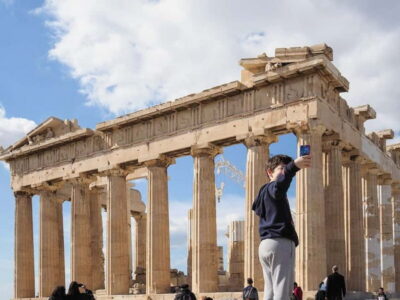
Acropolis & up to 5 Archaeological Sites Combo Pass
Read our review →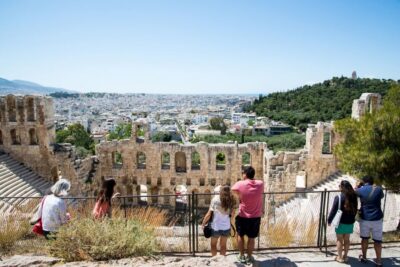
Acropolis, Parthenon & Acropolis Museum Guided Tour
Read our review →
Cape Sounion & Poseidon Temple Sunset Half-Day Trip
Read our review →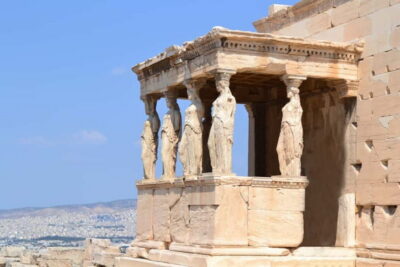

All Day Cruise -3 Islands to Agistri,Moni, Aegina with lunch and drinks included
Read our review →
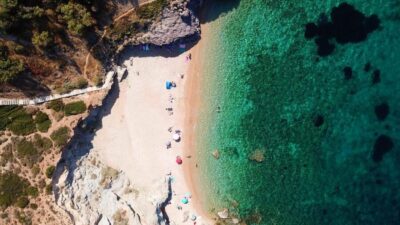
Cape Sounio & Poseidon Temple Trip with Audio Guide
Read our review →