Reviewed · TOURS IN ATHENS
Philosophy and Democracy tour of Athens
Athens is easier to understand when you connect its stones to its ideas. This 3.5-hour walk follows the birth of democracy and Western philosophy from the old cemetery at Kerameikos to Pnyx Hill, where citizens gathered to shape the city’s future. Guide Panos brings the subject to life with clear explanations, humor, and plenty of room for questions.
I like the way this tour reaches places many first-time visitors miss, especially Kerameikos and the Prison of Socrates. I also like its small maximum of 15 people, which should make discussion easier than on a large city walk. The main trade-off is that several archaeological sites are short stops and admission fees are not included, so this is more of a guided city walk than a full site-by-site visit.
Key points to know before booking
- Ideas guide the route: You compare ancient Athenian democracy with modern political life while walking through the city.
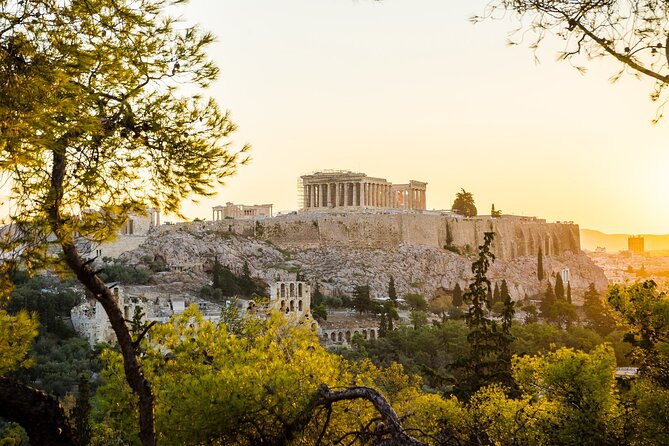
- Pnyx is the emotional high point: The hill offers views of Athens and the Acropolis, along with the story of the world’s first democratic assembly.
- Panos is the featured guide: His style combines serious subject knowledge, humor, visual explanations, and patience with questions.
- The route covers lesser-seen Athens: Kerameikos, Socrates’ prison, the Agora, Hadrian’s Library, and the Roman Agora add context beyond the Parthenon.
- It costs $50.81 per person: That is fair value if you want interpretation and connections, though site entrance fees are extra.
- Bring water and good walking shoes: The pace is described as manageable, but you will be outdoors and on foot for about three and a half hours.
Why this Athens walk is different
Many Athens tours organize themselves around monuments. This one organizes itself around questions: Who should make public decisions? What makes a good citizen? How did philosophy affect daily life? What remains of ancient democracy in the modern world?
That approach changes the way you see familiar ruins. A broken wall is no longer just an old wall. It becomes part of the setting where public arguments, political decisions, funerals, trade, and philosophical debate took place.
Panos is the guide most closely associated with this experience. The strongest praise centers on his ability to explain difficult ideas in plain language, keep the group involved, and add humor without making the subject feel lightweight. He also uses visuals at times, which helps when names and theories begin to pile up.
The tour is offered in English and is limited to 15 people. That size matters here. This is not only a sightseeing walk. You are encouraged to think, ask questions, and compare ancient Athens with the political world you know today.
Other days out people book in Athens:
- Athens: Acropolis & up to 5 Archaeological Sites Combo Pass
★ 4.4 · 12,619 reviews - Athens: Acropolis Ticket with Optional Audio or Live Guide
★ 4.2 · 11,055 reviews - Athens: Acropolis, Parthenon & Acropolis Museum Guided Tour
★ 4.8 · 9,316 reviews
Starting at the Statue of Theseus
The meeting point is the Statue of Theseus in Athens 105 55. From there, the route moves through central Athens toward the major ancient sites, finishing at Theorias 21 in the Plaka and Acropolis area.
The route is useful for orientation. Instead of spending the morning in one archaeological enclosure, you cross several parts of the old city. You get a sense of how Athens developed around the Acropolis, the Agora, its roads, markets, religious spaces, and public meeting grounds.
The duration is listed as about three hours and 30 minutes. One person described a mid-tour break at a kiosk with toilets, but this should not be treated as a formal scheduled feature unless confirmed at booking. Still, you should plan for a morning outside and bring water. One account specifically recommends it, and Athens can feel hot even when the walking pace is moderate.
Kerameikos, Athens’ cemetery and ceramic quarter
Kerameikos is the first major stop, and it is an excellent choice. The name refers to ceramics, since pottery workshops once operated here. It later served as Athens’ cemetery for many centuries.
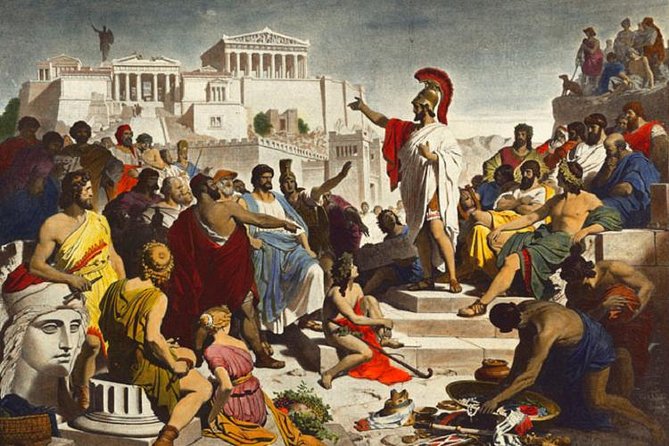
This gives Panos a strong opening for the tour. Kerameikos is not simply a place of graves. It connects ordinary work, public memory, war, politics, and civic identity. Prominent Athenians were buried here, and the area also links to Pericles’ famous funeral speech for those who died in the early part of the Peloponnesian War.
That speech praised the virtues of Athens and its democratic way of life. Hearing about it in the setting of an ancient cemetery makes the subject more human. Democracy was not only a system written in a textbook. It was tied to mourning, military service, public duty, and the city’s image of itself.
The scheduled visit is about 15 minutes, and the admission fee is not included. That short time means you should expect an introduction and interpretation rather than a detailed archaeological visit. If you want to examine every grave marker and ruin, plan a separate return visit.
A slow walk through the Athens Flea Market

The walk through the Athens Flea Market lasts about 15 minutes and is free. This is one of the route’s lighter sections, giving you a change of pace after the historical discussion at Kerameikos.
The value here is not a major lecture or a formal attraction. It is the chance to see a working part of central Athens while moving between ancient sites. You may also pick up ideas for later wandering, shopping, or eating, since the guide offers suggestions for places to eat, drink, and explore.
Do not expect a long shopping session. The stop is brief, and the tour remains focused on the city’s political and philosophical story.
Same base, a completely different day:
- Athens: Cape Sounion & Poseidon Temple Sunset Half-Day Trip
★ 4.8 · 8,241 reviews - Athens: Acropolis and Parthenon Guided Walking Tour
★ 4.6 · 5,882 reviews - All Day Cruise -3 Islands to Agistri,Moni, Aegina with lunch and drinks included
★ 5.0 · 4,958 reviews - Athens, Piraeus, and Coastline: Blue Hop-On Hop-Off Bus
★ 3.9 · 4,849 reviews
Hadrian’s Library and the Roman Agora
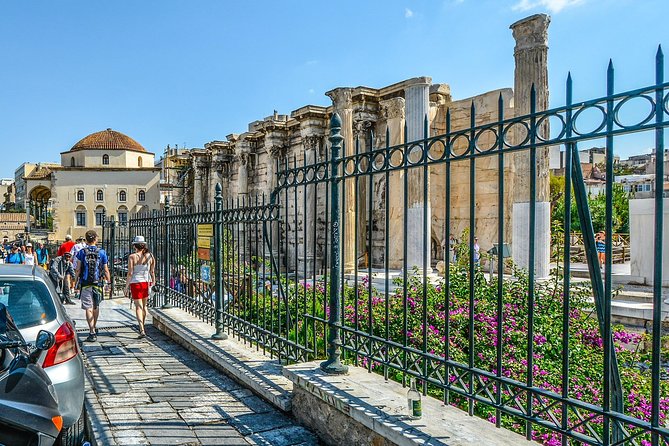
Hadrian’s Library was built by the Roman Emperor Hadrian in AD 132 on the north side of the Acropolis. Its presence reminds you that Athens did not stop mattering when the classical period ended. Roman rulers valued the city’s intellectual reputation and added their own buildings to its urban center.
The visit lasts about 15 minutes, with admission extra. As with Kerameikos, this is a guided look rather than an extended archaeological exploration. Panos uses the site to place Athens in a longer timeline, moving beyond the familiar image of a city frozen in the age of Socrates and Pericles.
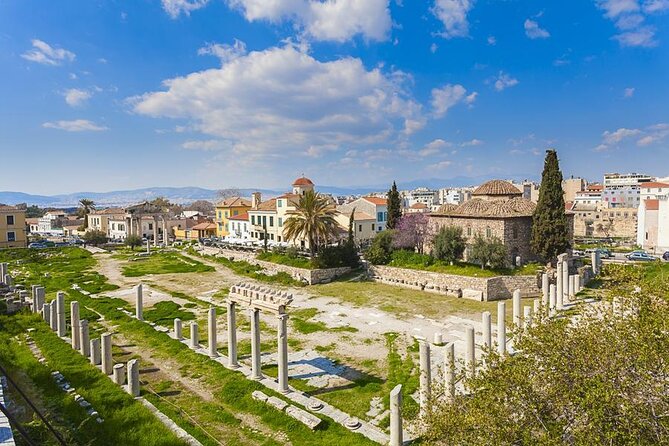
The Roman Agora is next. It lies north of the Acropolis and east of the Ancient Agora. This was a commercial and civic space built during the Roman period, and it shows how the city’s public life changed over time.
These stops are particularly useful if you have already seen the Acropolis and want more context. The Acropolis is the great symbol of Athens, but these surrounding sites explain how people used the city below it.
The Tower of the Winds, an ancient weather station
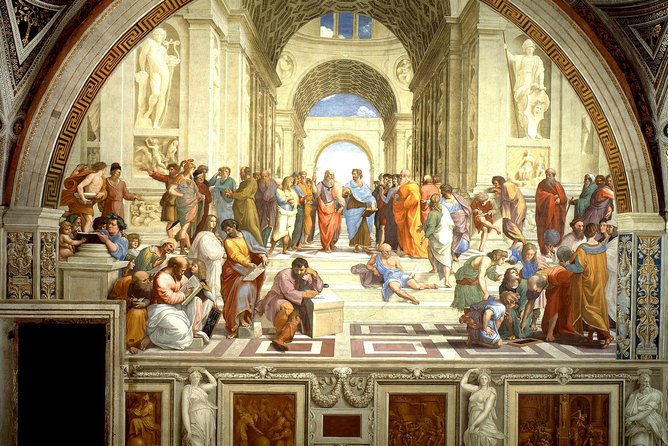
The Tower of the Winds gets only about five minutes, but it offers one of the tour’s best small stories. This octagonal building was made by the astronomer Andronicus of Kyrristos in the first century BC.
It served as a wind indicator, a clock, and what can fairly be called an early weather station. Its main clock was solar. On cloudy days, a hydraulic mechanism could produce a sound each hour.
The comparison to Big Ben is playful but useful. It helps you picture the tower as a public timekeeping device, not merely an attractive ancient structure. The site also shows how closely science, astronomy, engineering, and civic life were linked in ancient Athens.
Admission is not included. Since the stop is short, you may mainly view and discuss the building from outside or at a brief site visit, depending on the group’s access that day. The stated schedule does not promise a long interior visit.
Plaka and the changing face of Athens
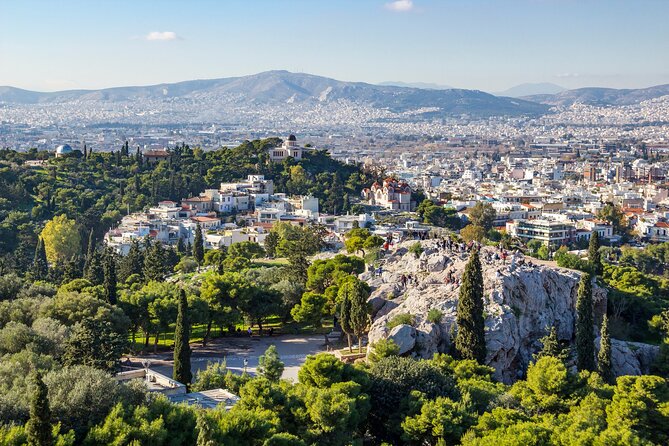
The route passes through Plaka, a scenic neighborhood known for small houses and narrow streets. It is a pleasant contrast to the large archaeological spaces and open hills earlier in the walk.
Plaka also helps show that Athens is not only a collection of ancient monuments. Its streets carry later layers of city life, with homes, shops, cafés, and everyday movement close to the Acropolis.
The exact timing for this section is not specified, so treat it as part of the walk rather than a separate long stop. If you want to return later for food or a drink, the guide’s local suggestions could be useful. The tour includes insider tips, but it does not include meals or refreshments.
The Ancient Agora, where public life happened
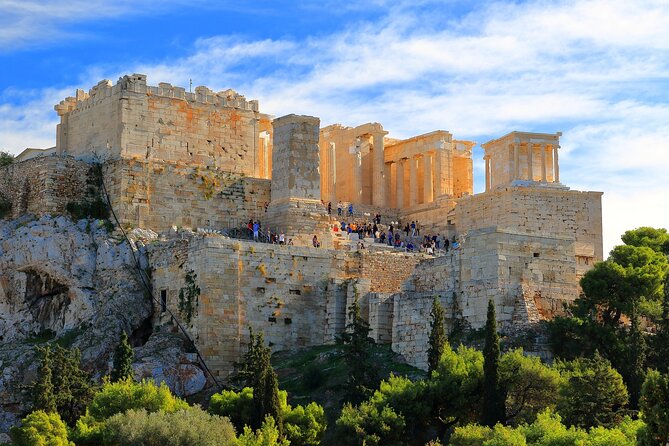
The Ancient Agora is the intellectual center of the route. In ancient Athens, it was the heart of the city, where philosophers, politicians, citizens, and working people met, argued, traded, and discussed public matters.
Socrates, Plato, Solon, Themistocles, Pericles, Thucydides, Sophocles, and Aristophanes are linked to the world of ideas and civic life that the Agora represents. The point is not to treat these figures as a list of famous names. It is to place them in a city where public debate happened face to face.
The scheduled stop is about 20 minutes, and admission is extra. That is enough for a focused explanation and a look at the setting, but not enough for every corner of the site. If the Agora is high on your list, consider returning with a separate entrance ticket and more time.
I especially like this part for people who want to understand why ancient Athens still matters. The Agora connects abstract ideas with a physical place. You can picture political arguments, public decisions, philosophical challenges, and social life sharing the same ground.
Paying respects at the Prison of Socrates
The Prison of Socrates is a free stop lasting about 10 minutes. The tour presents it as a place to pay tribute to the philosopher.
This is a quieter moment than the Agora. Socrates is central to the tour because his method was based on questioning assumptions rather than handing people easy answers. That fits the spirit of the walk. You are not asked only to memorize dates and names. You are invited to think about how people form beliefs and make decisions.
The stop is brief, so do not expect a large museum display or a long examination of the site. Its value comes from the story and the connection to the surrounding Agora.
Pnyx Hill, the birthplace of democracy
Pnyx Hill is the tour’s most important stop. It is described as the cradle of democracy because Athenians gathered here to make decisions about their future.
The setting makes the subject easier to grasp. This was not democracy conducted through a distant screen or a private office. Citizens came to a shared place, listened, argued, and voted. The system was limited by modern standards, and the tour’s comparison with present-day democracy can help you see both its achievements and its exclusions.
The hill offers views of the Acropolis and Athens. Allow about 30 minutes here, the longest scheduled stop of the day. That extra time makes sense. Pnyx is where the tour’s two main themes meet: philosophy’s habit of questioning and democracy’s demand for public decision-making.
Expect some walking and uneven outdoor conditions in the general sense of an ancient-site route, though the supplied details do not specify exact terrain or accessibility conditions. Most people can participate, and service animals are allowed. If you have mobility concerns, ask the provider about the route before booking.
What the $50.81 price includes in practical terms
At $50.81 per person, this is a reasonable price for a small English-language walking tour led by a guide who can connect many separate sites into one story. You are paying mainly for interpretation, route planning, and conversation.
The value is strongest if you want more than photographs. Panos is repeatedly praised for clear explanations, enthusiasm, humor, and the ability to make complex philosophy understandable. Several accounts also note that the tour helped make later sightseeing in Athens easier to understand.
The price does not include admission tickets to Kerameikos, Hadrian’s Library, the Roman Agora, the Tower of the Winds, or the Ancient Agora. The itinerary marks some stops as free, including the Flea Market, the Prison of Socrates, and Pnyx Hill. Check current entrance arrangements before you go, since access and ticket rules can change.
This is not the best choice if you want a long, detailed visit inside every archaeological site. It is a better choice if you want a guided framework and plan to choose which sites deserve a second visit.
Who should take this tour?
I would recommend it to adults interested in philosophy, politics, history, and the way ideas shape cities. It also works for families with older children and teenagers. One family found that children aged 11 and 15 enjoyed the material, which suggests that the presentation can work beyond a university-level audience.
It suits you especially well if:
- You have already seen the Acropolis and want the wider Athens story.
- You prefer discussion and explanation over a fast photo stop.
- You want to visit places you might not find on your own.
- You enjoy asking questions during a walk.
- You want practical suggestions for food, drinks, and further sightseeing.
- You are comfortable walking outdoors for about three and a half hours.
You may want another type of tour if your main goal is an expert examination of the Parthenon, a museum visit, or a relaxed route with very little walking. The tour finishes near the Acropolis, but the supplied details do not list a Parthenon visit as part of the route.
Practical details that affect your day
The tour starts at the Statue of Theseus and ends at Theorias 21. It is offered in English, uses a mobile ticket, and accepts a maximum of 15 people. Public transportation is nearby, which makes the start and finish points useful for building the walk into an Athens sightseeing day.
Wear comfortable shoes and carry water. The walk is described as well paced, but one account notes that there is enough walking to prepare for. The route includes open archaeological areas and a hill, so weather matters. The experience requires good weather, and a cancellation for poor conditions may result in another date or a full refund.
Free cancellation is available up to 24 hours before the start time. Changes or cancellations inside that window are not accepted for a refund. Confirmation is provided when you book, and a minimum group size applies.
Should you book the Philosophy and Democracy tour?
Book it if you want Athens to make more sense, not just look impressive. The strongest reason to choose this walk is Panos’s ability to link Kerameikos, the Agora, Socrates, Roman Athens, and Pnyx into one understandable story.
At $50.81, it is good value for a small group and a full morning of interpretation. Just keep your expectations clear: entrance fees are extra, several stops are short, and this is a walking conversation through Athens rather than a complete archaeological tour.
For a first or second day in the city, I would put it high on the list. It gives you useful context for the monuments you see afterward, while Pnyx and Kerameikos offer a side of Athens that a standard Acropolis visit may leave out.
FAQ
How long does the Philosophy and Democracy tour last?
The tour lasts approximately three hours and 30 minutes.
What language is the tour offered in?
The experience is offered in English.
How many people can join the tour?
The maximum group size is 15 people.
Where does the tour start?
The meeting point is the Statue of Theseus in Athens 105 55, Greece.
Where does the tour end?
The tour ends at Theorias 21, Athina 105 58, Greece.
Are entrance fees included?
No. Admission is not included for the archaeological sites listed in the itinerary. Some stops, including the Flea Market, Prison of Socrates, and Pnyx, are listed as free.
Is the tour suitable for most people?
Most people can participate, and service animals are allowed. The tour includes walking and requires good weather.
Can I cancel for a full refund?
Yes, if you cancel at least 24 hours before the experience start time. Cancellations or changes made less than 24 hours in advance are not refunded or accepted.
Just added in Athens
- Ceramic and Pottery Creative Workshop with Two Local Artists★ 4.0 · 57 reviews
- Small-Group Women History in Ancient Greece Walking Tour★ 5.0 · 38 reviews
- Athens Old City Private Photoshoot Tour / 2 hrs★ 5.0 · 109 reviews
- Athens: Wine Workshop Create your Own Wine under the Acropolis★ 5.0 · 77 reviews
- Athens: Greek Wines Tasting with Sommelier and Acropolis Views★ 5.0 · 88 reviews
- Wine Trails Private Tour/ Nemea visit 3 wineries from Athens or Nafplion (10 h)★ 5.0 · 44 reviews
- FLYING DRESS Photoshoot in Athens – Greece★ 5.0 · 47 reviews
- Small-Group Wine Tour in Athens with Tasting★ 5.0 · 33 reviews
Tours in Athens, compared.
Acropolis & up to 5 Archaeological Sites Combo Pass
Read our review →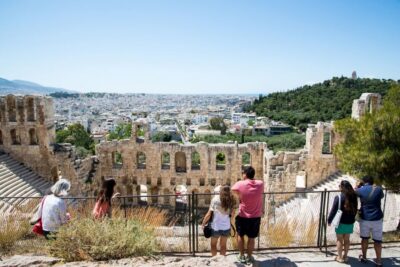
Acropolis, Parthenon & Acropolis Museum Guided Tour
Read our review →
Cape Sounion & Poseidon Temple Sunset Half-Day Trip
Read our review →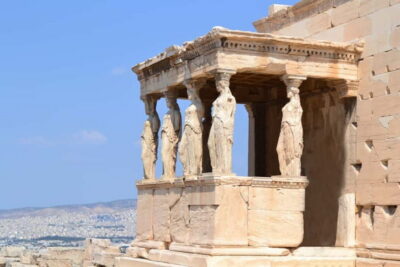

All Day Cruise -3 Islands to Agistri,Moni, Aegina with lunch and drinks included
Read our review →
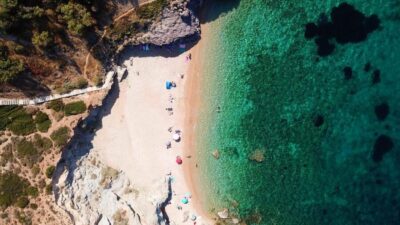
Cape Sounio & Poseidon Temple Trip with Audio Guide
Read our review →