
Reviewed · WORKSHOPS
Philosophy Experiential Workshop at Plato’s Academy Park -Athens
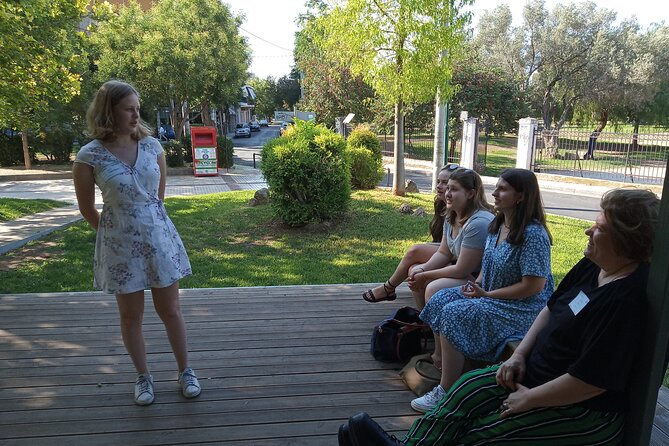
Plato’s Academy Park gives this philosophy workshop an unusually fitting setting. You do not simply hear about Socrates, Plato, and Aristotle in a lecture room. You discuss their ideas beside the ruins of the ancient Gymnasium, then test your own arguments in a timed debate using a replica water-timer.
I like the small group limit of 10, which gives you room to speak instead of hiding at the back. I also like the plain-English approach and the free Digital Museum visit, though the museum is only open Tuesday through Friday from 10:00 a.m. to 4:00 p.m., and this is an outdoor activity that depends on good weather.
Key points
- A real discussion, not a standard sightseeing tour: You read, question, argue, and connect ancient ideas to modern life.
- Ancient Gymnasium setting: The main conversation takes place near the remains of Plato’s Academy.
- Small groups of up to 10: You should have a fair chance to take part in the Socratic exchange.
- Free Digital Museum visit: The short museum stop adds context, but it may be replaced by discussion when the museum is closed.
- Water-timer role-play: An ancient-style timing device keeps the final debate lively and focused.
- Optional Aristotle extension: Add an hour focused on virtue, choice, and ethical decisions.
Why Plato’s Academy Park works so well
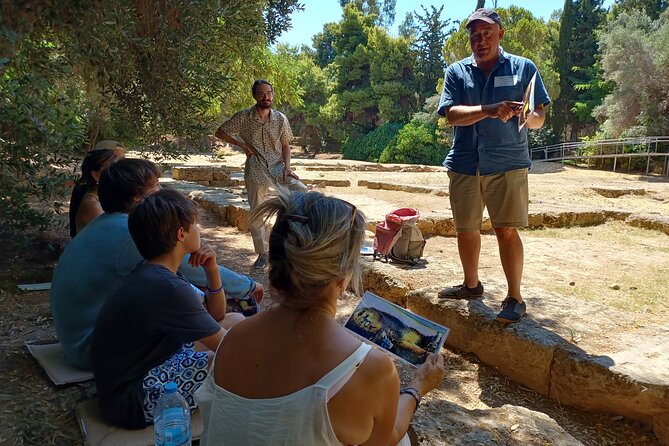
The best feature here is the match between subject and setting. Plato’s Academy was not merely a building to look at. It was a place connected with teaching, discussion, and the exchange of ideas. At the park, you get a sense of philosophy as something people did together, not simply a subject printed in a textbook.
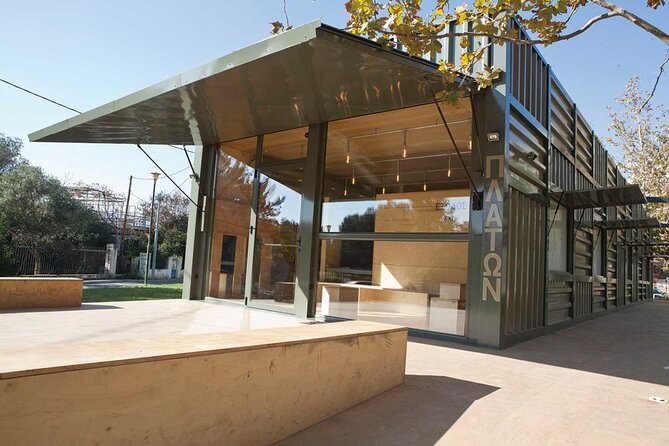
The experience begins at Plato’s Academy Digital Museum on Alkmeonos 1. You make a short visit before heading outside. The museum is free to enter and small, so do not expect a long museum morning. Its role is to give you a quick visual introduction before the facilitator turns your attention to the park itself.
That scale works in the workshop’s favor. You are not asked to absorb an enormous amount of information before the discussion begins. Instead, you get the basic setting and then use it.
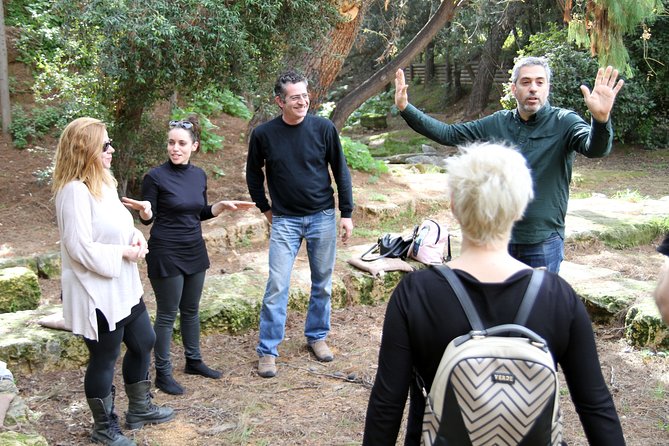
The group is limited to 10 people. That matters because the session depends on conversation. You will be asked to react, interpret, and make choices, not simply listen while someone talks for two hours. A large group would make this format less personal, but the stated limit keeps it manageable.
A few more things to do in Athens worth a look
- Athens: Classic Cooking Class with Market Visit and Wine
★ 5.0 · 1,101 reviews - Athens: Food Market Visit and Cooking Class with Wine
★ 4.9 · 1,087 reviews - Greek Cooking Class in Athens Including Rooftop Dinner with Acropolis View
★ 5.0 · 826 reviews
The Digital Museum and its changing schedule
The first stop is the Digital Museum of Plato’s Academy. It is open Tuesday through Friday, from 10:00 a.m. to 4:00 p.m., although its operating days and hours can change. It can also close without advance notice.
If the museum is open, you receive a short introduction to Plato and the Academy before entering the park. The stop is useful for orientation, especially if you have little background in ancient Greek philosophy. It also gives families and younger participants a visual starting point before the more demanding discussion begins.
If the museum is closed, the experience does not simply lose its opening section. The facilitator replaces it with a discussion covering the same main ideas. That is an important detail when choosing a date. You should not book this solely for a museum visit, since the workshop remains the main event.
The museum itself is described as small, so I would treat it as an added benefit rather than the reason to pay $53.92. The price makes more sense when you view the museum, outdoor setting, teaching, and group discussion as one package.
Walking from Plato’s Academy to the ancient Gymnasium
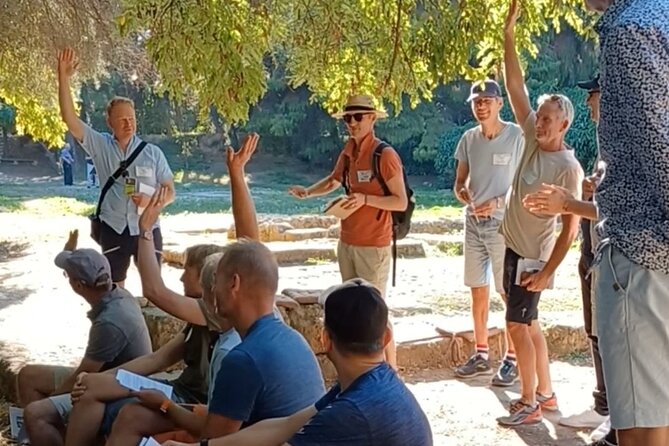
After the museum or opening discussion, you walk through Plato’s Academy Park toward the ancient Gymnasium ruins. This is not presented as a conventional guided tour with a long list of monuments and dates. The facilitator uses the park as a classroom.
You receive a timeline of Greek philosophical thought, with attention to Socrates, Plato, and Aristotle. That sequence helps you see how the ideas connect. Socrates is associated with questioning. Plato develops those questions into wider arguments about knowledge, reality, and society. Aristotle approaches philosophy in a more systematic way, with particular interest in ethics, nature, politics, and how people make decisions.
The ruins give the discussion a physical anchor. You are not standing in a polished gallery while trying to picture ancient Athens. You are near the remains of the Gymnasium, in the same general setting where education and physical training once met.
There is a small chance that archaeological excavation work will be taking place during your visit. If that happens, you may view the ruins from a short distance and use another spot in the park for the session. This could reduce the closeness of the archaeological portion, but it should not remove the main discussion-based content.
Remember that this is a historical site. The provider asks participants to dress and behave respectfully, keep the area clean, avoid excessive noise, and follow appropriate rules for photographs and video. The facilitator can end participation without a refund if someone behaves disrespectfully.
Plato’s Allegory of the Cave as a group discussion
The central portion focuses on Plato’s Allegory of the Cave. You do not simply hear an explanation of the story. The facilitator uses the Socratic method, asking questions that lead you to examine what you think you know.
The allegory describes people who mistake shadows for reality. Its value in a workshop is that it does not have only one easy answer. You can discuss knowledge, education, habit, fear, and the difficulty of changing your view once you have grown comfortable with it.
The format works especially well for participants who like to speak and think aloud. You may be asked to interpret a passage, respond to another person’s point, or connect Plato’s ideas to a modern situation. The plain-English instruction is useful here. You do not need previous study in philosophy, and the activity avoids difficult terminology.
The session has also received strong praise for its question-and-answer format and its connection to modern life. One participant described discussing the role of philosophy today, while another appreciated being able to explore Platonic ideas through present-day examples. That is the practical strength of the workshop: ancient ideas are not left behind as museum labels.
You should still know what this is not. It is not a formal university seminar, and you are not likely to receive a complete course in Plato. It is a guided conversation with a historical setting. If you prefer quiet sightseeing and short explanations, the amount of participation may feel demanding. If you enjoy exchanging ideas, it is likely to be the part you remember.
Same base, a completely different day:
- Athens: Acropolis & up to 5 Archaeological Sites Combo Pass
★ 4.4 · 12,619 reviews - Athens: Acropolis Ticket with Optional Audio or Live Guide
★ 4.2 · 11,055 reviews - Athens: Acropolis, Parthenon & Acropolis Museum Guided Tour
★ 4.8 · 9,316 reviews - Athens: Cape Sounion & Poseidon Temple Sunset Half-Day Trip
★ 4.8 · 8,241 reviews
The water-timer debate
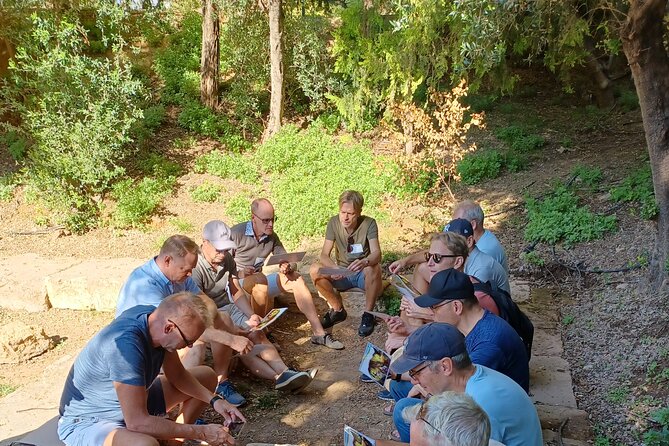
The final activity adds a playful and very concrete element. You take part in a role-play debate while using a replica of an ancient water-timer.
The device gives each speaker a set amount of time. That changes the mood at once. You cannot make a long speech, interrupt endlessly, or wait for someone else to carry the discussion. The timer introduces a simple rule that helps the group practice the structure of an ancient-style debate.
This is one of the workshop’s most distinctive details. Many history activities explain how people once spoke or argued. Here, you get to try a version of it. The role-play also keeps the session from becoming too abstract after the discussion of the Cave.
You do not need to be an experienced public speaker. The workshop is intended for people with no previous philosophy background, and the facilitator keeps the language accessible. Still, you should be ready to participate. The experience is not designed for someone who wants to remain entirely silent.
For families, the debate gives teenagers a clear way into the subject. The minimum recommended age is 14. Anyone under 18 cannot book alone, and an adult must make the booking and supervise them.
The optional Aristotle hour
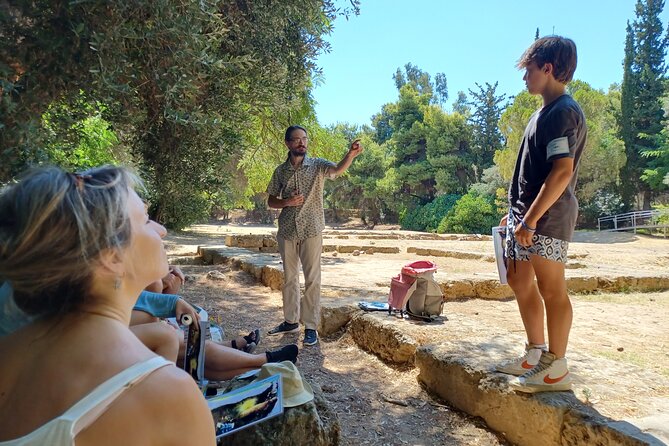
You can request an additional hour focused on Aristotle’s philosophy. This section includes a game about virtue and choice.
That extra hour changes the balance of the experience. The standard session gives you Plato, the Academy, and a practical debate. The added time lets you compare Plato’s ideas with Aristotle’s approach to ethical action.
The virtue-and-choice game should appeal to anyone who prefers moral questions with a practical angle. Instead of asking only what knowledge is or how reality appears, you consider the choices people make and what might count as a good or virtuous life.
The extra hour may be useful if philosophy is a major reason for your visit to Athens. If you are fitting the activity between other sights, the basic two-hour version may be enough. The standard session already includes a timeline linking Socrates, Plato, and Aristotle, so the additional hour is an extension, not a requirement.
Who will get the most from this workshop
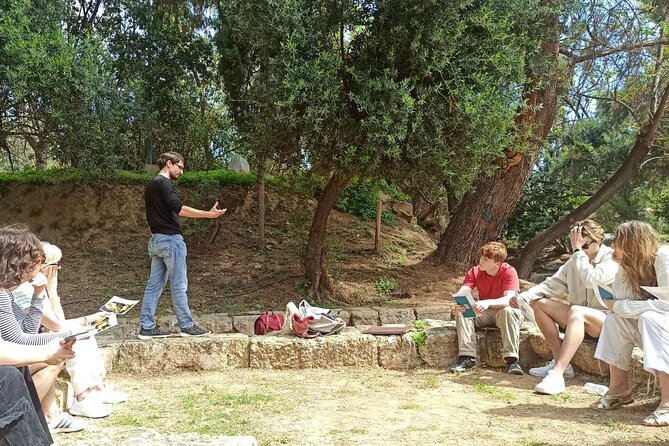
I would choose this activity if you want to do more than photograph an archaeological site. The park becomes much more meaningful when you understand why discussion mattered to ancient Greek education and how Plato’s ideas continue to raise questions.
It is a good choice for:
- Adults who enjoy open discussion and unusual cultural activities
- Families with teenagers aged 14 and older
- Visitors who want a break from standard monument tours
- People with little or no formal philosophy background
- Small groups looking for a private option
- Anyone interested in connecting ancient thought with modern problems
The experience may be less suitable if you want a fast-moving tour packed with famous buildings and dates. There is no conventional guided tour included. This is an educational workshop, and much of its value comes from taking part.
The facilitator’s style matters here. Olga led one session described as relaxed, practical, and educational, with examples and discussion that encouraged people to keep thinking after the workshop ended. Other sessions were praised for an engaging question-and-answer approach. The exact facilitator may vary, but the format depends on an active leader who can keep the conversation moving.
Price, timing, and practical value
The listed price is $53.92 per person for about two hours. That is more than you would pay for a simple walk through a public park, but the comparison is not quite fair. You are paying for an expert facilitator, the structured activities, the small group format, liability insurance, and local VAT.
The free museum visit adds some value, though its small size and changing schedule mean it should not be the main factor in your decision. The strongest part of the price is the guided discussion and the unusual setting. You are buying an activity that gives the ruins a purpose.
Because the group limit is 10, the session should offer more speaking time than a large commercial tour. A private option is available on request, which could make sense for a family or a group of friends who want the discussion shaped around their own interests.
The activity takes place outdoors, so check the forecast before you go. If poor weather causes cancellation, you will be notified at least three hours in advance and offered a different date, a similar workshop, or a full refund. You can also cancel for a full refund up to 24 hours before the start time. Changes or cancellations inside that 24-hour window are not accepted for a refund.
The meeting point is the Digital Museum at Alkmeonos 1, Athens 104 42. The activity ends back at the same meeting point. It is near public transportation, and service animals are allowed.
A few things to know before you book
Wear clothing suitable for an outdoor session and a historical site. The information provided does not give a specific dress requirement, but respectful clothing and conduct are expected.
You should also be aware that the activity takes place in a public space where photographs and video may be taken. By attending, you consent to this use, although you can withdraw your consent by contacting the provider in writing. The provider is not responsible for images made and used by other participants.
Most people can take part, and the session is designed for plain-English conversation. The main requirement is willingness to engage. You do not need to arrive with a background in Plato, but you should expect questions and some friendly debate.
The experience is offered in English. Group discounts are available, and it is commonly booked well ahead of time, with an average booking lead time of about 34 days. That does not guarantee a sellout on your chosen date, but it is a good reason to reserve early if your Athens schedule is fixed.
Should you book Plato’s Academy philosophy workshop?
Book it if you want an active cultural experience that makes you think. The strongest reasons are the ancient Gymnasium setting, the small group, the accessible discussion of Allegory of the Cave, and the water-timer debate. Those details give the two hours a clear shape and keep the activity from feeling like a standard lecture.
I would be especially happy to recommend it to families with older teenagers and to adults who prefer conversation over a procession from one photo stop to the next. The $53.92 price is fair when you value teaching and participation, not just admission to a site.
Skip it if you want a traditional archaeological tour, dislike speaking in groups, or have only a short window and cannot risk an outdoor activity being affected by weather. For the right kind of visitor, though, this is a smart way to meet Plato at the place where his Academy once shaped the study of philosophy.
FAQ
How long does the philosophy workshop last?
The standard experience lasts approximately two hours.
Where does the activity begin?
It begins at Plato’s Academy Digital Museum, located at Alkmeonos 1, Athens 104 42, Greece.
Where does the activity end?
The workshop ends back at the meeting point.
Is the Digital Museum included?
The Digital Museum has free entrance, and the workshop includes a brief visit when it is open.
What happens if the Digital Museum is closed?
The museum visit is replaced by a discussion covering the same key insights.
What days and hours is the museum open?
The stated operating hours are Tuesday through Friday, from 10:00 a.m. to 4:00 p.m. Its schedule can change, and it may sometimes close without advance notice.
Is the workshop suitable for teenagers?
Yes. It is designed for adults and teenagers aged 14 and older. Anyone under 18 must book with an adult, who is responsible for supervision.
Is previous philosophy knowledge required?
No. The workshop uses plain English and is suitable for participants without previous knowledge.
What happens if bad weather cancels the activity?
You will be notified at least three hours ahead and offered a different date, a similar workshop, or a full refund.
Just added in Athens
- Ceramic and Pottery Creative Workshop with Two Local Artists★ 4.0 · 57 reviews
- Small-Group Women History in Ancient Greece Walking Tour★ 5.0 · 38 reviews
- Athens Old City Private Photoshoot Tour / 2 hrs★ 5.0 · 109 reviews
- Athens: Wine Workshop Create your Own Wine under the Acropolis★ 5.0 · 77 reviews
- Athens: Greek Wines Tasting with Sommelier and Acropolis Views★ 5.0 · 88 reviews
- Wine Trails Private Tour/ Nemea visit 3 wineries from Athens or Nafplion (10 h)★ 5.0 · 44 reviews
- FLYING DRESS Photoshoot in Athens – Greece★ 5.0 · 47 reviews
- Small-Group Wine Tour in Athens with Tasting★ 5.0 · 33 reviews
Workshops, compared.

Classic Cooking Class with Market Visit and Wine
Read our review →
Food Market Visit and Cooking Class with Wine
Read our review →
Greek Cuisine Cooking Class in Santorini with Recipes and Wine
Read our review →
Half-Day Cooking Class at Basiliko Family Tavern
Read our review →
Greek Cooking Class in Athens Including Rooftop Dinner with Acropolis View
Read our review →
Greek Small-Group Athens Cooking Class & Dinner
Read our review →
Authentic Cooking Class in the White Mountains
Read our review →
Browse the lists this tour appears in