
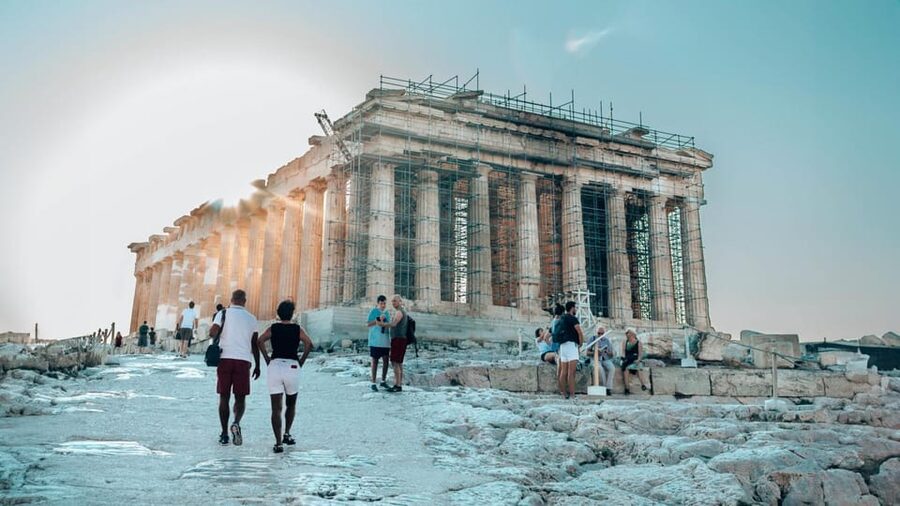
Reviewed · ACROPOLIS & ATHENS HIGHLIGHTS
Athens: Acropolis and Mythology Highlights Small Group Tour
The best part of this Athens tour is the way it connects Greek mythology with real places and historic events. You do not simply hear which god belongs to which temple. You learn how myths helped ancient Athenians explain power, nature, family, war, and daily life.
I like the small groups, which make it easier to ask questions and stay close to the guide. I also like the route: the Acropolis is the star, but the Ancient Agora and Temple of Hephaestus add the civic and everyday side of Athens. The main drawback is the amount of walking over uneven stone, and the Acropolis can be hot, crowded, and hard to hear in busy periods.
Key points
- Mythology with context: Gods and legends are tied to architecture, politics, and the daily life of ancient Athens.
- A full ancient-Athens route: See the Acropolis, Parthenon, Theater of Dionysus, Ancient Agora, Temple of Hephaestus, and more.
- Small groups help: Guides can answer questions, adjust the pace, and keep commentary more personal.
- Several highly praised guides: Antonia, Alex, Danae, Vicky, Stellios, Athina, Christina, and others are noted for clear storytelling and care with their groups.
- Plan for the ground: Comfortable shoes, water, sun protection, and light luggage matter on this uphill archaeological walk.
- Ticket choice affects value: Entry may be included with the selected option, or you can arrange prepaid tickets separately.
Why the mythology angle works at the Acropolis
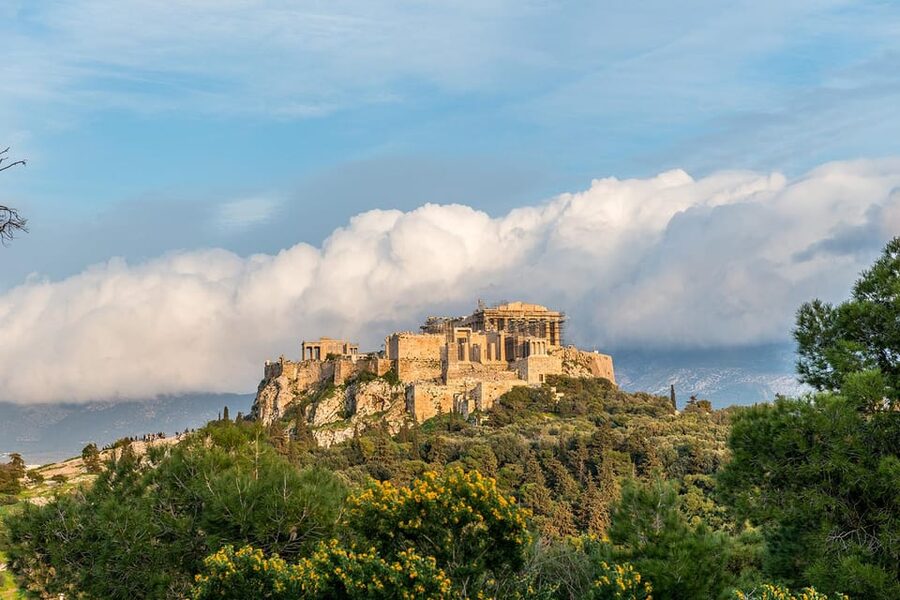
A standard Acropolis visit can leave you staring at columns and broken foundations, trying to picture the buildings as they once looked. This tour gives those stones a human story.
Your guide explains how Athens grew from a local settlement into the leading city of the Greek world, then places the myths beside the political facts. The contest between Athena and Poseidon, for example, is not treated as a cartoon tale. It becomes a way to understand why Athena mattered so much to the city and why the olive tree became such a powerful symbol.
The guides also connect names, gods, family relationships, and temple functions. That approach suits you if mythology is your main interest, but it also works if your background is limited. Danae Kousouri was praised for using visual aids that showed earlier forms of the buildings and the relationships among the gods. That can help younger visitors and visual learners follow a subject that quickly becomes crowded with names.
The best guides keep the stories tied to the ground beneath your feet. You hear a myth, then learn what the site tells us about ancient society, religion, warfare, trade, or public life. Alex, Antonia, Vicky, Athina, Christina, and Stellios are among the guides singled out for mixing humor, clear explanations, and vivid storytelling.
More of the old city on foot in Athens:
- Athens: Acropolis & up to 5 Archaeological Sites Combo Pass
★ 4.4 · 12,619 reviews - Athens: Acropolis Ticket with Optional Audio or Live Guide
★ 4.2 · 11,055 reviews - Athens: Acropolis, Parthenon & Acropolis Museum Guided Tour
★ 4.8 · 9,316 reviews
Starting beneath Hadrian’s Arch
The meeting point is under the Arch of Hadrian on Leof. Vasilisis Amalias 50, beside the Acropolis. Look for the guide holding an Alternative Athens sign.
The closest metro stop is Acropolis, about a five-minute walk from the arch. This is a sensible starting point because the arch gives you an early reminder that Athens was rebuilt and reshaped long after its famous fifth-century BC glory. The city’s ancient story did not end with the Parthenon.
Arrive ready to walk. The tour lasts about 2 to 4 hours depending on the chosen format, the group’s pace, and how much time is spent answering questions. The route includes slopes, steps, uneven surfaces, and exposed areas. Comfortable shoes are essential.
Do not bring a backpack or large bag to the Acropolis. Baby strollers are not allowed, and pets are not permitted, apart from assistance dogs. Bring identification, particularly if you may qualify for reduced or free entry based on age and citizenship.
Temple of Olympian Zeus: a useful opening chapter
The first main stop is the Temple of Olympian Zeus, viewed from outside, with about 15 minutes of guided commentary. Its surviving columns give you an immediate sense of scale, even though the temple is now a fragment of its former self.
This stop helps explain the ambition of ancient rulers. The temple project took centuries to complete, and its size reflects the desire to match the power of the gods with monumental stone. Your guide can use it to introduce Zeus, the Olympian order, and the long political story of Athens.
Do not expect a full site visit here. The experience focuses on the exterior before moving toward the Acropolis. That keeps the route moving, but it also means you will not spend extended time inside the Temple of Olympian Zeus grounds.
Walking toward the Acropolis
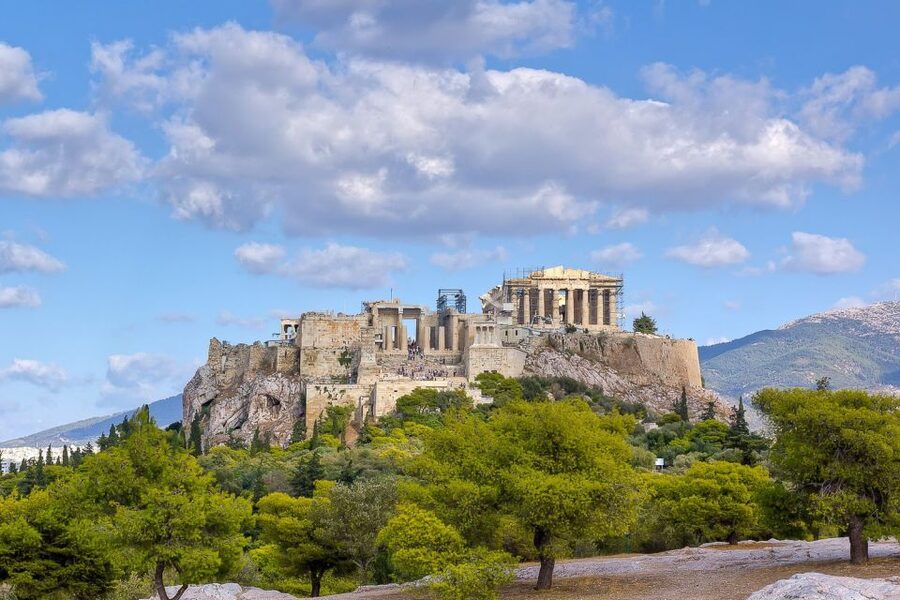
The route then moves on foot toward the Acropolis. This short transition is part of the lesson. Athens is not a collection of isolated monuments. Ancient religious sites, theaters, civic buildings, roads, and homes once worked together as one city.
Your guide may use this stretch to explain how Athens developed, why it became a center of culture and politics, and how its rivalry with Sparta shaped its fortunes. The stories cover the city’s rise, its Golden Age, and its eventual defeat by Spartan forces.
This is also where the small-group format helps. With fewer people, the guide can keep the walk together without turning every pause into a long wait. Some groups have been as small as seven people, and very small bookings may feel close to a private tour.
Same base, a completely different day:
- Athens: Cape Sounion & Poseidon Temple Sunset Half-Day Trip
★ 4.8 · 8,241 reviews - Athens: Acropolis and Parthenon Guided Walking Tour
★ 4.6 · 5,882 reviews - All Day Cruise -3 Islands to Agistri,Moni, Aegina with lunch and drinks included
★ 5.0 · 4,958 reviews - Athens, Piraeus, and Coastline: Blue Hop-On Hop-Off Bus
★ 3.9 · 4,849 reviews
Entering the Acropolis and the Temple of Athena Nike
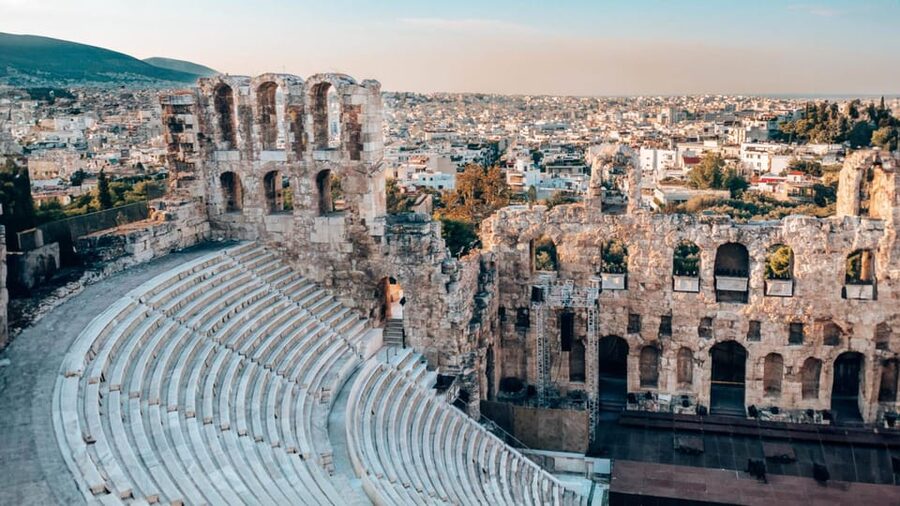
The Acropolis portion takes roughly an hour and a half, with separate attention given to several major buildings. The Temple of Athena Nike receives about 15 minutes of guided time.
This small temple sits near the entrance and honors Athena in her role as a bringer of victory. It is easy to pass it quickly while focusing on the Parthenon, but the guide gives it a proper place in the story. You learn how religious meaning and civic pride were joined in Athenian monuments.
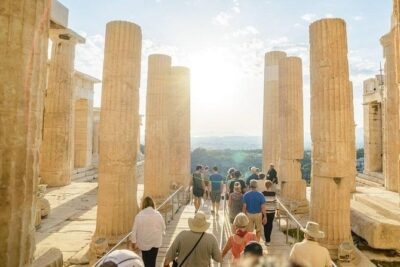
The approach can be crowded, especially in summer and around popular visiting times. Keep close enough to hear, but leave room for other groups. Some guides provide headsets, which makes a big difference when the site is noisy. That equipment is not clearly promised for every departure, so you should be prepared for the possibility of listening at close range.
The Erechtheion and the old sacred ground
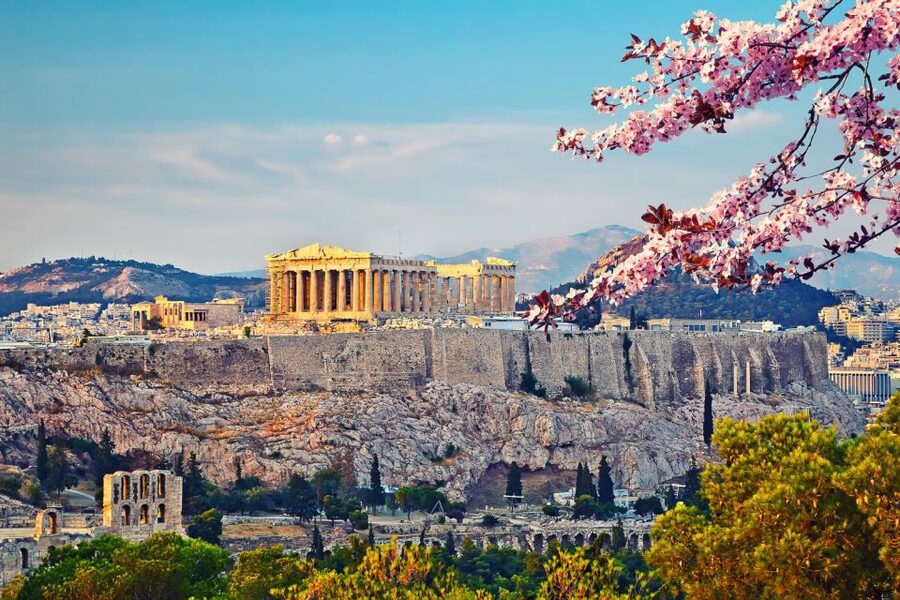
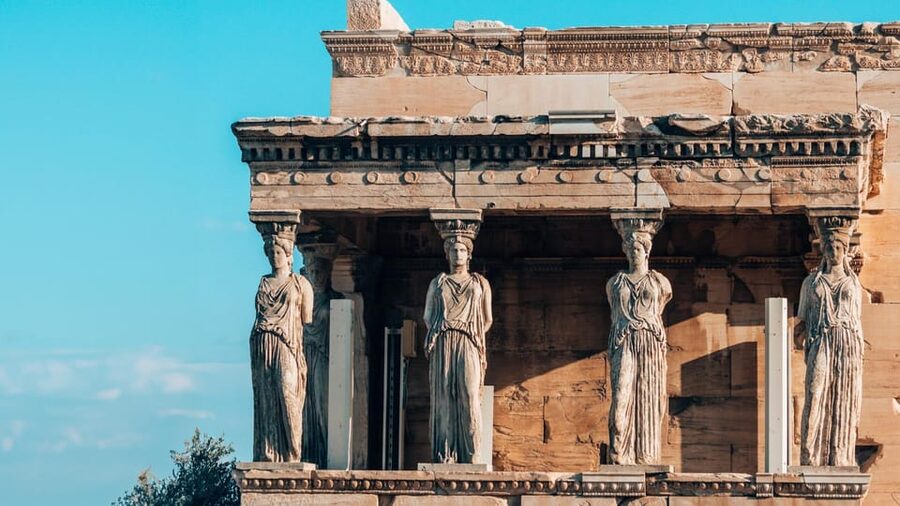
The Erechtheion receives about 15 minutes of explanation. This building is less symmetrical than the Parthenon and can seem puzzling at first. Its unusual design reflects the number of sacred traditions attached to the ground.
Here, mythology and archaeology work especially well together. The site is linked with Athena, Poseidon, and older religious traditions that existed before the great monuments of the classical period. Your guide explains why the Athenians treated this area as more than a convenient building plot.
The tour also points out the ruins of the Temple of Athena Polias and the Sanctuary of Asclepius. These lesser-known remains are useful because they show that the Acropolis was not only one temple. It was a religious center with many shrines, rituals, and layers of use.
The Parthenon, the tour’s central stop

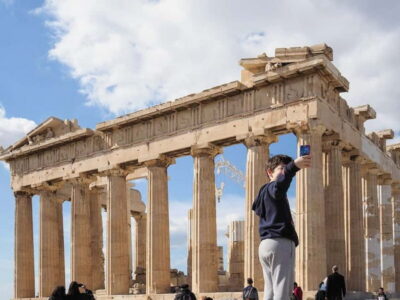
Expect about 30 minutes focused on the Parthenon. This is enough time for a clear explanation of the building, its purpose, its decoration, and its role in the identity of Athens, but not enough for every architectural detail.
The guide helps you read the structure rather than simply admire the view. You may hear about Athena, the city’s wealth, the political message of the building, and the way ancient Greeks understood proportion and order. The point is not to memorize dates. It is to see why this temple became such a strong symbol of Athenian power.
You will have opportunities for photographs, but this is not a photography-focused tour. The Acropolis can be very busy, and the group needs to keep moving. If you want long quiet pauses or detailed architectural sketching, you may want extra time at the site after the guided portion.
The views over Athens are a major reward. From the hill, you can see how the modern city spreads around the ancient center. In hot weather, shade is limited, so take water before you enter. Guides such as Evan, Karen’s guide Alex, and Antonia were especially praised for finding shade, allowing water breaks, and adjusting the pace in strong heat.
The Theater of Dionysus and the human side of Athens
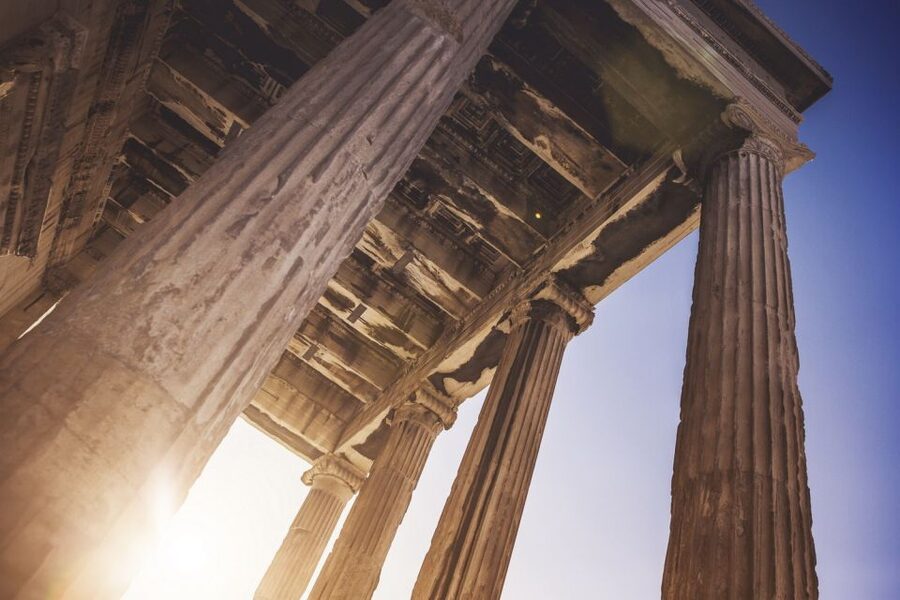
The route includes the Theater of Dionysus Eleuthereus, one of the places where ancient Athenian public life becomes easier to picture. This was not just a ruin near the Acropolis. It was a setting for drama, civic gatherings, and stories that still shape how you think about Greek culture.
The mythology theme gains another layer here. Greek myths were not only religious tales. They appeared in plays, public festivals, family stories, and debates about human behavior. A guide who explains that connection helps you see why tragedy and comedy mattered so much in Athens.
This part of the route can be uneven underfoot. Watch your step and avoid bringing anything you do not want to carry for several hours.
The Ancient Agora and Temple of Hephaestus
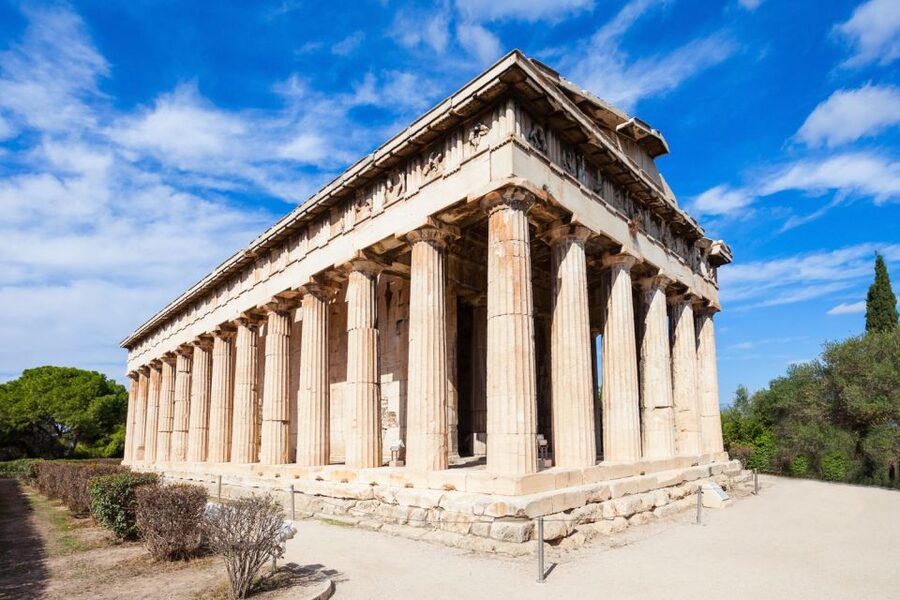
The walk to the Ancient Agora takes about 30 minutes. The Agora provides an important change of mood after the Acropolis. It was the practical heart of the city, where people met, traded, argued, conducted business, and took part in public life.
This is where the tour’s civic story becomes strongest. You learn how Athenian society worked, who held power, and why public spaces mattered to the growth of democracy. The Acropolis shows the city’s religious and symbolic side. The Agora shows the city at work.
The Temple of Hephaestus receives about 30 minutes of guided attention. It is one of the best-preserved ancient Greek temples, and its connection with Hephaestus adds a useful contrast to the worship of Athena and Zeus. The site is generally less intense than the Acropolis, giving you more room to look, listen, and take photographs.
The Agora is also a good place for the guide to answer questions. Several guides are praised for explaining etymology, mythology, and history in a way that goes beyond naming gods. If you want to understand how ancient Greeks related religious ideas to work, craft, war, and family life, this final section earns its place on the route.
Small groups, pace, and guide quality

The phrase small group matters here. A group of seven is easier to manage than a large crowd, especially on narrow paths and busy terraces. You can usually ask a question without having to shout, and the guide can notice if someone needs a rest or has fallen behind.
The strongest praise is directed at the guides’ storytelling and personal care. Antonia is noted for making myths fun and answering questions well. Alex is praised for warmth, humor, and attention to children and older members of the group. Danae worked well with adults and tweens who had very different levels of mythology knowledge.
Stellios is praised for linking myths with everyday reality, while Vicky is noted for vivid storytelling. Athina, Christina, Maria, Chrysa, and others are described as clear, friendly, and ready to explain Greece beyond the monuments.
There is one practical weakness. Sound can be difficult in busy areas, and one visitor specifically wanted hearing devices. Others had headsets and found them useful. If your hearing is limited, stay near the guide at the start and ask about audio equipment before the walk begins.
What the $53 price really covers
At about $53 per person, the price is reasonable if you want the major ancient sites explained rather than simply photographed. A certified guide, a focused route, a city map, and a small group add real value, particularly on a first visit.
Check the ticket option carefully. Some bookings include Acropolis entry or Acropolis and Ancient Agora entry, while the basic arrangement may not include entrance fees. The provider can pre-purchase tickets if you request it. Entry fees are non-refundable and non-exchangeable, so confirm exactly what your booking covers before paying.
The value is strongest for you if you have only one day in Athens or if mythology and ancient civic life are central interests. If you already know the sites well and prefer to move alone, the guided fee may feel less worthwhile.
You can cancel up to 24 hours ahead for a full refund, and the reserve-now, pay-later option keeps your plans flexible. European Union citizens under 25 and non-EU citizens under 18 may enter the Acropolis and Ancient Agora free with valid identification, subject to the stated entry rules.
Who should book this walk
I would choose this tour for a first Acropolis visit, families with school-age children, and anyone who wants myths explained without losing the historical setting. It suits Percy Jackson fans, but you do not need prior mythology knowledge. The guides are used to explaining the subject at different levels.
It is also a good match for older visitors who appreciate a measured pace and regular pauses, though you still need to be comfortable walking over rough ground. Summer heat can make the route tiring, so an early start is the better choice when available. One family found an early winter morning especially easy with children because tickets were ready and the lines were short.
You may want another option if you need a wheelchair-friendly route, want to bring a stroller or large bag, or prefer a quiet self-guided visit. The restrictions and uneven archaeological ground make this a walking tour with real physical demands.
Should you book the Acropolis and Mythology Highlights tour?
Book it if you want the Acropolis to make sense, not just look impressive. The strongest reason to choose it is the mix of mythology, architecture, politics, and daily life, delivered in a small group by guides such as Antonia, Alex, Danae, Vicky, or Stellios.
Choose an early departure, confirm your ticket option, bring identification and water, and wear shoes with a good grip. If those basics suit you, the $53 fee buys a useful framework for understanding Athens, with the Ancient Agora and Temple of Hephaestus adding much more than a quick monument checklist.
FAQ
Where does the tour meet?
Meet under the Arch of Hadrian at Leof. Vasilisis Amalias 50. The nearest metro station is Acropolis, followed by a walk of about five minutes. Your guide will hold an Alternative Athens sign.
How long does the tour last?
The stated duration is 2 to 4 hours. Starting times and the exact length depend on availability and the selected tour option.
Which languages are available?
The live guide service is available in English and French.
Are Acropolis entrance tickets included?
Tickets are included only with the option that specifically includes Acropolis entry, or Acropolis and Ancient Agora entry. Otherwise, entrance fees are separate, and the provider can pre-purchase them if you request this.
Can children enter for free?
European Union citizens under 25 and non-EU citizens under 18 may enter the Acropolis and Ancient Agora free with a valid ID card or passport.
What should I bring?
Bring a passport or ID card, comfortable shoes, and comfortable clothing. Water and sun protection are sensible choices for the exposed Acropolis route.
Can I bring a stroller, backpack, or pet?
Baby strollers, backpacks, and large bags are not allowed at the Acropolis. Pets are not allowed, though assistance dogs are permitted.
Just added in Athens
- Athens: Half-Day Morning Catamaran Cruise with Meal & Drinks★ 4.9 · 221 reviews
- Athens hotels to Athens airport Private departure transfer★ 5.0 · 285 reviews
- Argolis: Full-Day Tour in Mycenae & Nafplio★ 4.2 · 350 reviews
- Athens: Riviera Catamaran Cruise with Meal and Drinks★ 5.0 · 345 reviews
- Athens: Delphi, Corycian Cave, and 300 Battlefield Day Trip★ 4.8 · 344 reviews
- 3-Day Classical Greece Tour: Epidaurus, Mycenae, Nafplion, Olympia, Delphi★ 4.5 · 342 reviews
- Best of Athens Half Day Private Tour★ 5.0 · 353 reviews
- Electric Bike Tour of Athens by Night★ 5.0 · 355 reviews
Acropolis & Athens Highlights, compared.
Acropolis & up to 5 Archaeological Sites Combo Pass
Read our review →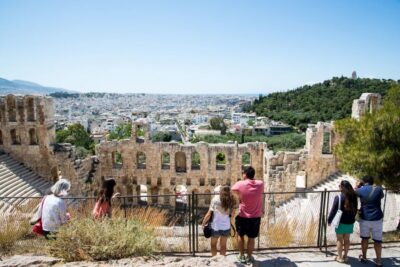
Acropolis, Parthenon & Acropolis Museum Guided Tour
Read our review →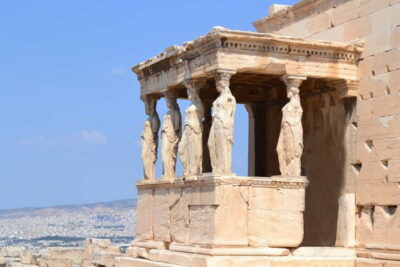

Acropolis monuments & Parthenon Walking Tour with Optional Acropolis Museum
Read our review →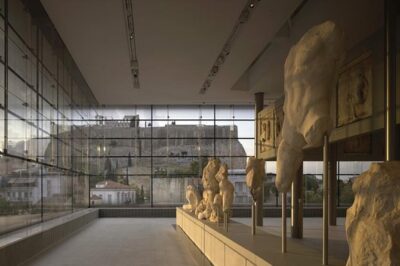
Athens All Included: Acropolis and Museum Guided Tour with Ticket
Read our review →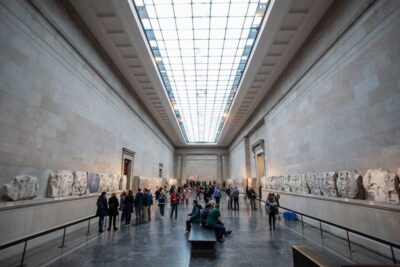
Acropolis Museum Ticket with optional Audio Guide
Read our review →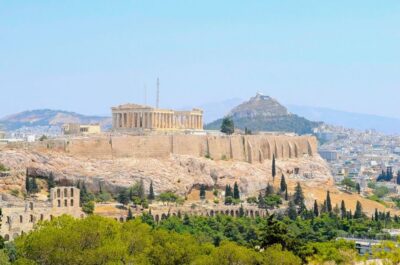
Acropolis Ticket & Optional Self-Guided Audio Tours
Read our review →Browse the lists this tour appears in