
Reviewed · ACROPOLIS & ATHENS HIGHLIGHTS
Athens Highlights: Myths & Philosophers Private Walking Tour
Athens makes more sense when you connect its stones with the ideas born among them. This private walk turns the city into a moving conversation about Socrates, Plato, Aristotle, Epicurus, mythology, and everyday Athenian life. I especially like the coffee stop in Thissio, where the discussion can slow down, and the way the guide links familiar gods such as Apollo, Athena, and Hermes to streets and monuments you might otherwise pass without much thought.
I also like the personal format. Guides such as Bianca, John, and Effie have adjusted the conversation to suit visitors interested in school teaching, ancient philosophy, or simple curiosity. The main caution is the amount of walking: four hours across central Athens, including Areopagus Hill, will not suit people with mobility impairments, and comfortable shoes are essential.
Key points at a glance
- Socrates and Plato at the Athens Trilogy: Begin among some of the city’s finest 19th-century buildings and statues.
- Epicurus in the National Garden: Learn why his Garden was a school of thought, not simply a pleasant patch of green.
- Aristotle along Ermou Street: Connect a modern shopping street with the Lyceum and Aristotle’s teaching.
- Coffee and Pre-Socratic ideas in Thissio: Take a proper pause for a Greek coffee or another traditional drink.
- Stoicism beside the Ancient Agora: Hear how the Poikile Stoa gave its name to one of antiquity’s best-known schools.
- Myths and views at Areopagus Hill: Finish beneath the Acropolis with stories of the Olympian gods.
Why this Athens walk feels different
Most first-time tours of Athens focus on temples, battles, and dates. This one asks a more interesting question: what were people here trying to understand about a good life, the gods, nature, and human behavior?
That shift matters. The Academy of Athens is no longer just a handsome building to photograph. It becomes a useful setting for talking about Socrates and Plato. Ermou Street is not only a place for shopping. Its name points back to Hermes, the god associated with trade and merchants. The Tower of Winds becomes an opening into the story of Aiolos, keeper of the winds.
You still see famous central Athens landmarks, but the guide gives them a thread. The result should suit you if you enjoy asking questions and talking as much as looking. This is not a tour built around long stretches of silent listening.
The private group format helps. Bianca has been praised for warm storytelling and for bringing philosophy into ordinary life. John has a background translating books on philosophy and has adapted the discussion for visitors with particular academic interests. Effie has also led the four-hour route. Your guide may vary, so the experience can depend on who is assigned, but the format allows room for conversation rather than a fixed speech.
More of the old city on foot in Athens:
- Athens: Acropolis & up to 5 Archaeological Sites Combo Pass
★ 4.4 · 12,619 reviews - Athens: Acropolis Ticket with Optional Audio or Live Guide
★ 4.2 · 11,055 reviews - Athens: Acropolis, Parthenon & Acropolis Museum Guided Tour
★ 4.8 · 9,316 reviews
Starting at Panepistimio and the Athens Trilogy
The meeting point is outside Panepistimio Metro Station, also called University. The exact meeting point can vary with the option booked, so check your booking details before setting out.
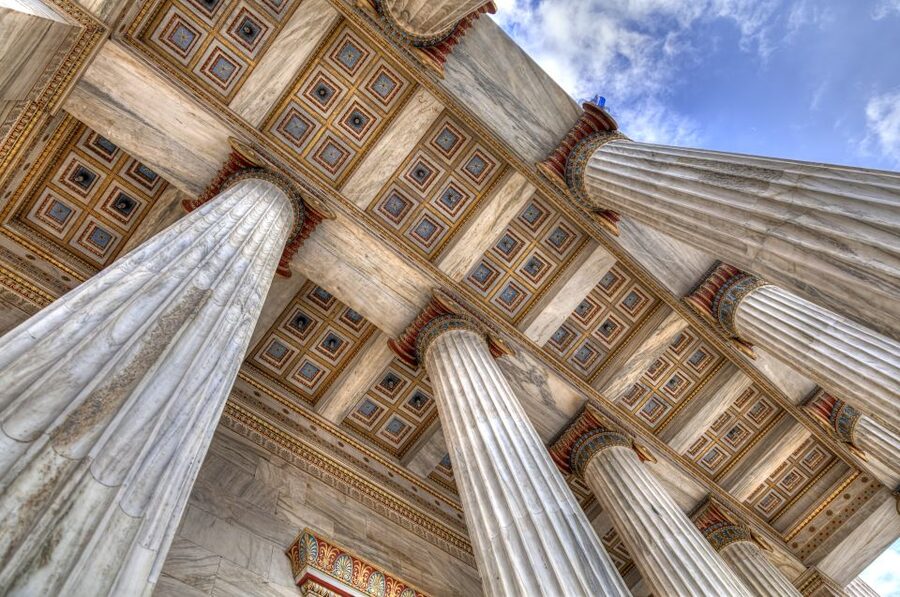
From here, you begin near the Athens Trilogy, the grand 19th-century complex associated with architect Theofilus Hansen. The architecture and statues give the opening some ceremony, but the real purpose is to set up the philosophical theme.
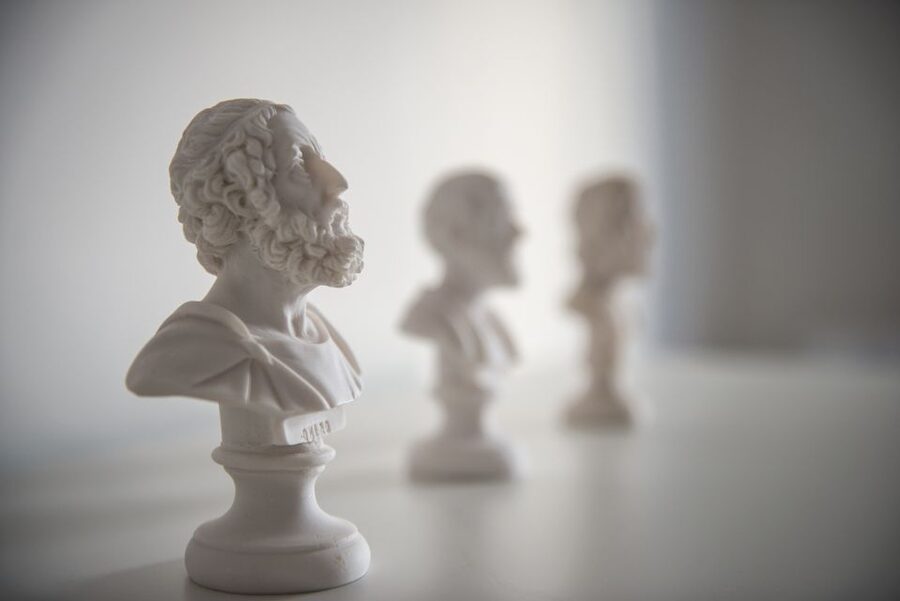
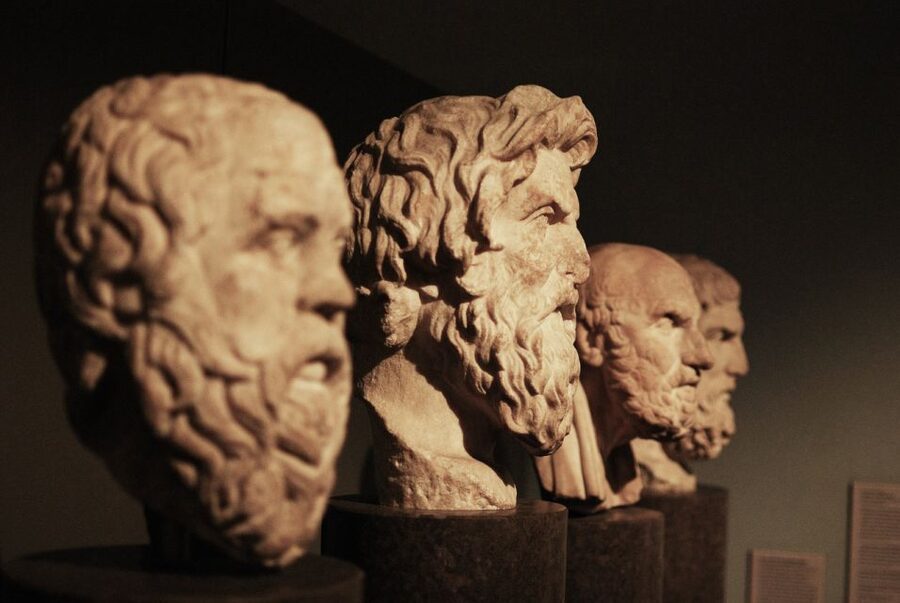
This is where Socrates and Plato come into focus. Socrates is useful for understanding the questioning method that shaped Western philosophy, while Plato takes the discussion toward ideas, education, justice, and the kind of society people should build. Your guide can explain the connection between their lives and the places around you without asking you to treat philosophy as a school lecture.
I like this beginning because it puts the hardest subjects first, while your attention is fresh. If you already studied philosophy, you can ask for more detail. If the names are familiar only from a textbook, the guide can supply a practical context.
The nearby Numismatic Museum is also part of the route. The supplied details do not promise an interior visit, so treat it as a landmark along the walk rather than a museum admission. No entrance fees are included anywhere on the tour.
Apollo, Athena, and the city of Athens
Greek mythology is woven through the philosophical conversation. Apollo and Athena provide a good example of how varied the ancient Greek gods could be.
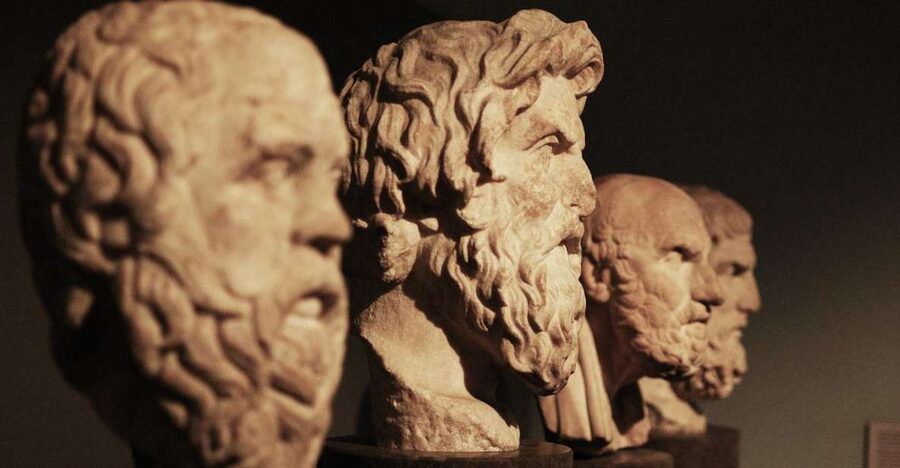
Apollo is linked with qualities such as order, prophecy, music, and reason, while Athena carries associations with wisdom, strategy, and the city that bears her name. The point is not to flatten either god into a single label. Instead, the discussion shows how myths helped ancient people think about power, skill, conflict, and civic life.
This part should appeal to you if you want mythology treated as more than a list of dramatic family arguments among the Olympians. The guide connects divine stories to the values and tensions of Greek society. You also get a chance to compare mythic explanations with the more questioning approach of philosophers.
Parliament and the National Garden: finding Epicurus
The route continues toward the Greek Parliament and the National Garden. Here the focus turns to Epicurus and his school, known as the Garden.
That name is worth pausing over. Epicurean thought is often reduced to eating, drinking, and enjoying luxury, but the school placed greater value on a calm life, friendship, and freedom from needless fear. The garden setting makes a natural backdrop for considering why a philosophical school might meet away from the formal institutions of the city.
The National Garden also provides one of the route’s more welcome changes of pace. Much of the tour takes place on city streets, so a green setting can make the discussion feel less crowded and give you a moment to reset.
This is not a garden tour, and you should not expect a long stop devoted to plants or scenery. Its importance here is as a place for ideas and as a break within a four-hour walk. If you enjoy philosophy that connects directly to daily choices, the Epicurus section may be one of the most useful parts of the morning.
A few more things to do in Athens worth a look
- Athens: Acropolis and Parthenon Guided Walking Tour
★ 4.6 · 5,882 reviews - Greek Food Walking Tour in Athens
★ 5.0 · 4,740 reviews - Acropolis: Acropolis and Parthenon Guided Walking Tour
★ 4.7 · 3,442 reviews - Acropolis monuments & Parthenon Walking Tour with Optional Acropolis Museum
★ 5.0 · 2,678 reviews
Ermou Street and the lesson of Aristotle
Ermou Street is Athens’s best-known commercial street, and it gives the tour an everyday city setting. People shop, walk, meet, and move through the center here. The street is named for Hermes, the god associated with merchants, communication, and travel.
That name lets the guide show how ancient mythology remains tucked into modern Athens. You do not need to visit a distant archaeological site to find the old stories. They are written into the city’s names.
Along the way, you can admire Kapnikarea, an 11th-century church on Ermou Street. Its age and position amid modern shops make it a striking contrast. The tour then turns to Aristotle and the Lyceum, his philosophical school.
Aristotle opens a different line of thought from Socrates, Plato, and Epicurus. The discussion can cover his teaching, his approach to observing the world, and the place of the Lyceum in Athenian intellectual life. The supplied route does not include admission to a separate Lyceum site, so expect the guide to explain the school as part of the city walk.
This section works well for comparison. You can consider how Socratic questioning, Platonic ideas, Aristotelian observation, and Epicurean calm differ. A good private guide will also let you linger on the thinkers that interest you most.
Monastiraki, Thissio, and a Greek coffee break
The walk continues through the central Athens area toward Monastiraki and Thissio. These districts bring the experience back to street level, with busy routes, shops, historic buildings, and views toward the Acropolis.
At a cozy cafe in Thissio, you receive one Greek coffee or another traditional refreshment. The drink is included in the $100 price, along with the guide, taxes, and fees. Personal purchases and souvenirs are not included.
The coffee stop is more than a small perk. Philosophy was traditionally discussed through conversation, and sitting down gives you a chance to ask the questions that did not fit neatly into the walking sections. Several visitors have especially valued this pause, including one rooftop drink stop described along the route. The exact cafe or terrace may vary, so do not assume a particular venue or a guaranteed rooftop table.
The topic here is the Pre-Socratic philosophers. These thinkers came before Socrates and tried to explain the world through reason and observation rather than relying only on traditional myth. The coffee break gives the guide a relaxed place to explain why their questions about nature, matter, change, and existence still matter.
I would use this stop to ask for a simple map of the whole story. How did myth lead into natural philosophy? How did the Pre-Socratics differ from Socrates? How did Plato and Aristotle respond? A private format gives you room to ask exactly that.
The Ancient Agora and the Poikile Stoa
Near the Ancient Agora, you hear about the Poikile Stoa, the painted porch where Stoic philosophy was born. The name Stoicism comes from this stoa.
The route does not include an entrance ticket to the Ancient Agora. You should think of this portion as an outside explanation of the setting and its philosophical importance, not a guided visit inside the archaeological site.
Stoicism is often presented today as simply keeping a stiff upper lip. The conversation can give you a fuller starting point: how people responded to hardship, what they could control, and how they might act well within a difficult world. This makes a good contrast with Epicurus. Both schools sought a steadier life, but they approached that goal in different ways.
The Agora area also helps you picture philosophy as part of public life. These ideas were not locked inside a university building in the modern sense. They developed through teaching, argument, walking, and public discussion.
Plaka, Anafiotika, and the Tower of Winds
The route then moves toward Plaka and Anafiotika at the foot of the Acropolis. This is one of the most atmospheric sections, but the focus remains on stories and ideas rather than only on photographs.
The guide discusses Cynic philosophers in this area. Cynic philosophy challenged social expectations and questioned the value of wealth, status, and convention. You may find this a lively point in the tour because Cynicism can be compared with the more structured systems associated with Plato, Aristotle, Epicurus, and the Stoics.
The famous Tower of Winds provides another mythology lesson, this time about Aiolos, keeper of the winds. The tower gives a clear way to think about how ancient Athenians represented natural forces and made them part of a wider mythic world.
You will walk through streets and passages around Plaka and Anafiotika, so expect uneven surfaces and some inclines. The tour information specifically says it is not suitable for people with mobility impairments. Wear supportive shoes, use sunscreen, and bring sunglasses, especially in warmer months.
Ending on Areopagus Hill
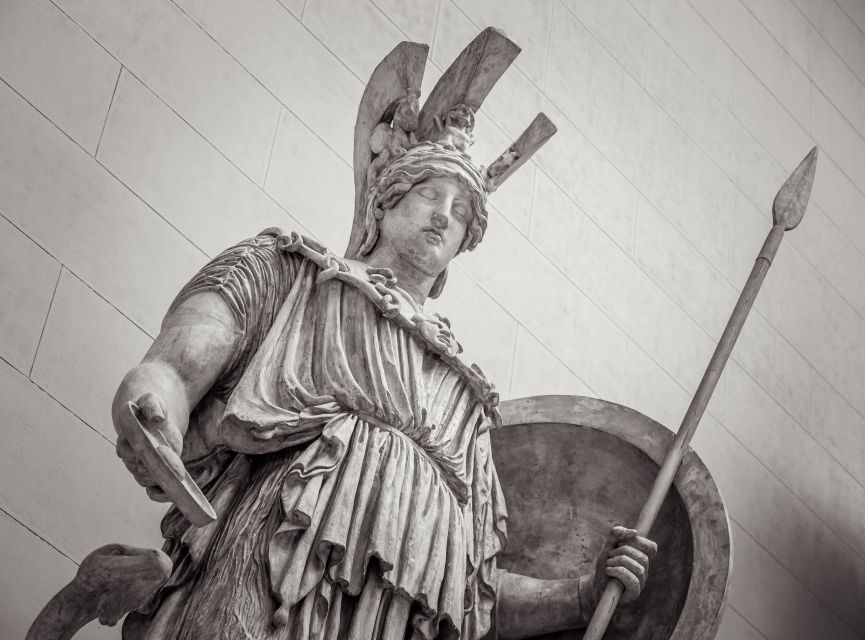
The final stop is Areopagus Hill, also called the Hill of Ares. From here, you get a view toward the Acropolis and finish with more stories about the Olympian gods.
This is a strong closing point because it brings the major strands together. You have considered philosophers who questioned traditional beliefs, myths that explained the gods and nature, and the city spaces where Athenian public life unfolded. The view gives you a chance to look back over the city while the guide returns to the stories of the Olympians.
Areopagus Hill is reached by stone steps and uneven rock, so take care. The route ends here, with Areopagus Hill listed as the drop-off location. You will need to arrange your own onward plans from this point.
Is $100 per person good value?
At $100 per person, this is not a cheap orientation walk. It is a four-hour private experience with an English-speaking guide, a Greek coffee or traditional refreshment, and no shared group to slow the conversation or pull it toward the lowest common interest.
The value depends on how much you want from the guide. If you only want to see Athens landmarks, a less expensive group walk may suit you better. You will not receive entrance to the Ancient Agora, the Numismatic Museum, or any other paid attraction as part of this experience.
If you want a conversation shaped around philosophy, mythology, and your own questions, the price makes more sense. A private guide can spend extra time on Plato for a philosophy student, explain the basics for someone new to the subject, or connect Epicurus and Stoicism to practical life. That flexibility has been a major strength of the experience.
The tour also covers a lot of central Athens without using transport between stops. You are paying for interpretation and company as much as for sightseeing.
Who should book this tour?
I would recommend it most strongly to:
- People who enjoy history through ideas, not only dates and monuments
- Visitors who want a private guide rather than a fixed group commentary
- Philosophy students, teachers, and former students
- First-time visitors who want a thoughtful introduction to central Athens
- Couples or small groups who like asking questions as they walk
- Anyone curious about the links between mythology, religion, politics, and daily life
It may be less suitable if you want to enter several museums and archaeological sites, avoid hills and steps, or spend most of the time taking photographs. It is also not a good match for people with mobility impairments.
Book with comfortable shoes, sunscreen, and sunglasses. You can cancel up to 24 hours ahead for a full refund, and the reserve-now, pay-later option keeps payment flexible. Starting times depend on availability.
Should you book it?
Book this tour if you want Athens to feel like a conversation rather than a checklist. The best part is the way the route links ordinary streets, old churches, gardens, shopping lanes, and Acropolis views with Socrates, Plato, Aristotle, Epicurus, Stoicism, Cynicism, and Greek mythology.
The experience is strongest when you arrive ready to talk. Ask questions, tell the guide what interests you, and use the coffee break to connect the different schools. If you want a purely archaeological tour with interior visits, choose something else. If you want a personal, idea-driven walk through central Athens, this is a thoughtful use of four hours.
FAQ
Where does the tour start?
The main starting point is outside Panepistimio Metro Station, also called University. The exact meeting point may vary depending on the option booked.
Where does the tour finish?
The tour ends at Areopagus Hill, also called Areios Pagos.
How long does the tour last?
The experience lasts four hours.
What language is the tour conducted in?
The live tour guide speaks English.
Is this a private tour?
Yes. It is arranged for a private group rather than a shared public group.
Which philosophers are discussed?
The tour covers Socrates, Plato, Epicurus, Aristotle, Pre-Socratic philosophers, Stoic philosophers, and Cynic philosophers.
Which mythological figures are included?
The discussion includes Apollo, Athena, Hermes, Aiolos, and the Olympian gods.
Is Greek coffee included?
Yes. One Greek coffee or another traditional refreshment is included for each person.
Are entrance fees included?
No. Entrance fees to points of interest are not included.
What should I bring?
Bring comfortable shoes, sunglasses, and sunscreen. The tour is not suitable for people with mobility impairments.
Just added in Athens
- Ceramic and Pottery Creative Workshop with Two Local Artists★ 4.0 · 57 reviews
- Athens Old City Private Photoshoot Tour / 2 hrs★ 5.0 · 109 reviews
- Small-Group Women History in Ancient Greece Walking Tour★ 5.0 · 38 reviews
- Athens: Wine Workshop Create your Own Wine under the Acropolis★ 5.0 · 77 reviews
- Athens: Greek Wines Tasting with Sommelier and Acropolis Views★ 5.0 · 88 reviews
- Wine Trails Private Tour/ Nemea visit 3 wineries from Athens or Nafplion (10 h)★ 5.0 · 44 reviews
- FLYING DRESS Photoshoot in Athens – Greece★ 5.0 · 47 reviews
- Small-Group Wine Tour in Athens with Tasting★ 5.0 · 33 reviews
Acropolis & Athens Highlights, compared.
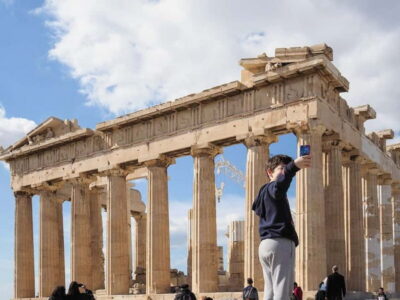
Acropolis & up to 5 Archaeological Sites Combo Pass
Read our review →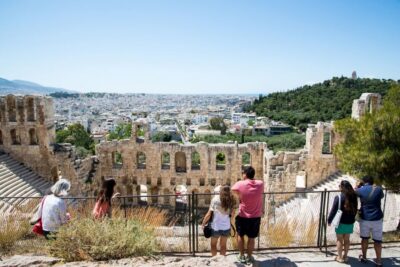
Acropolis, Parthenon & Acropolis Museum Guided Tour
Read our review →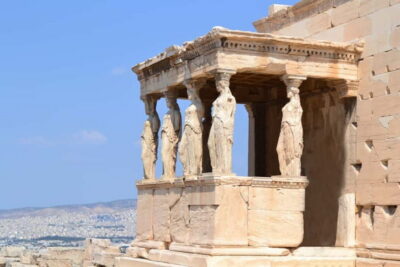
Acropolis monuments & Parthenon Walking Tour with Optional Acropolis Museum
Read our review →
Athens All Included: Acropolis and Museum Guided Tour with Ticket
Read our review →
Acropolis Museum Ticket with optional Audio Guide
Read our review →
Acropolis Ticket & Optional Self-Guided Audio Tours
Read our review →Browse the lists this tour appears in