
Reviewed · ACROPOLIS & ATHENS HIGHLIGHTS
Athens: The Acropolis Guided Walking Tour in Dutch
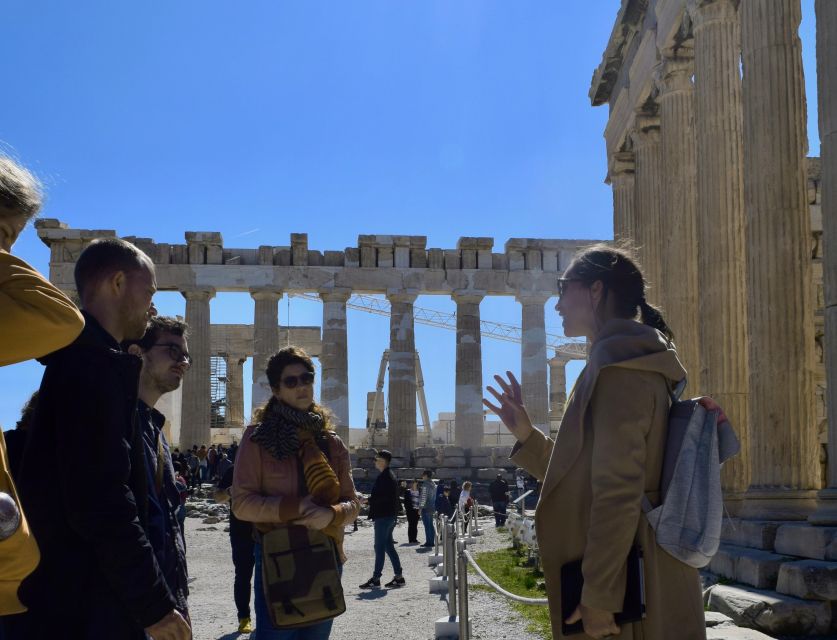
The most rewarding part of this Dutch-language Acropolis tour is the route. You begin at the Theatre of Dionysus, then climb the sunny southern slope past an ancient hospital and the Odeon of Herodes Atticus before reaching the Parthenon. That approach lets you see the hill as a working sacred complex, not just a single famous temple.
I like the clear 1.5-hour plan and the chance to hear the myths and building tricks in your own language. I also like that entry, ticket pre-booking, and time to look around after the guided walk are included. The main drawback is the price: at $95 per person, it is a costly choice for a family, especially since the tour is fairly short.
Key points at a glance
- A southern-slope approach: Begin at the Theatre of Dionysus instead of heading straight for the Parthenon.
- A Dutch-speaking live guide: Jessica is specifically praised for vivid storytelling, visual materials, and clear explanations.
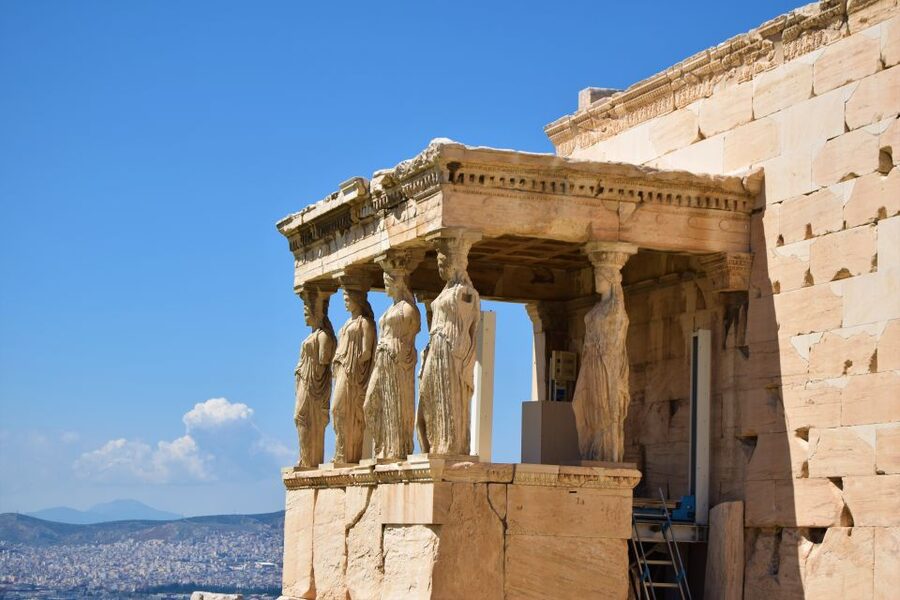
- The main Acropolis monuments: See the Propylaea, Parthenon, Erechtheion, and Temple of Athena Nike.
- Ancient medicine included: Pass the Asklepieion, one of ancient Athens’ early hospitals.
- A city view at the finish: End on the hilltop with a 360-degree view over Athens.
- A short but demanding walk: Expect uphill movement, uneven ground, strong sun, and no elevator.
Starting at Acropoli Metro station
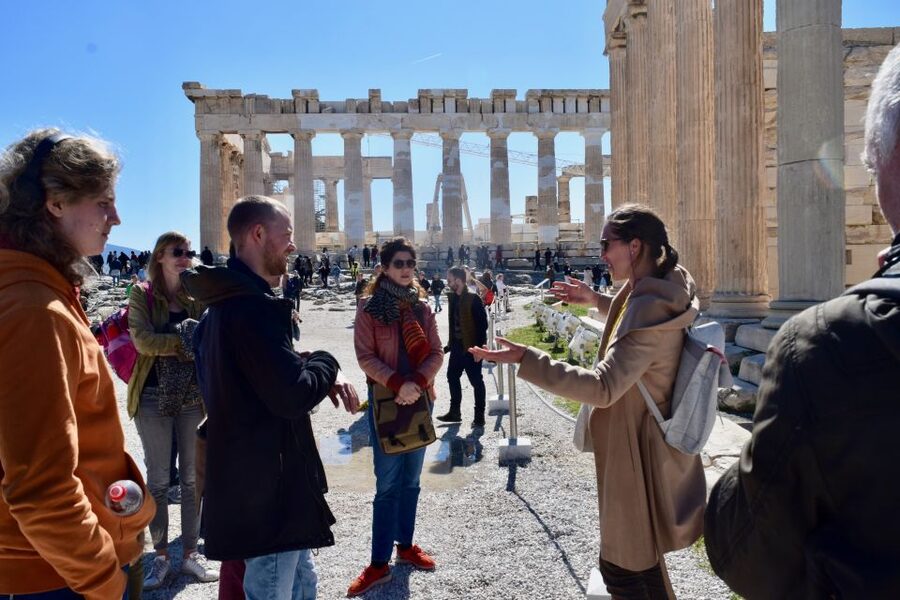
Your meeting point is outside Acropoli Metro station, using the Makriyianni or Dionysiou Areopagitou exit. This is a useful starting place because it puts you beside the pedestrian approach to the Acropolis and close to the southern side of the hill.
Allow enough time to find the correct exit. The meeting point is not inside the station, and you should arrive ready to walk rather than treating the first few minutes as a casual stroll through town. Wear shoes with a firm sole, bring water, and carry only what you need. Large bags, luggage, food, drinks, baby strollers, and pets are not allowed, except for assistance dogs.
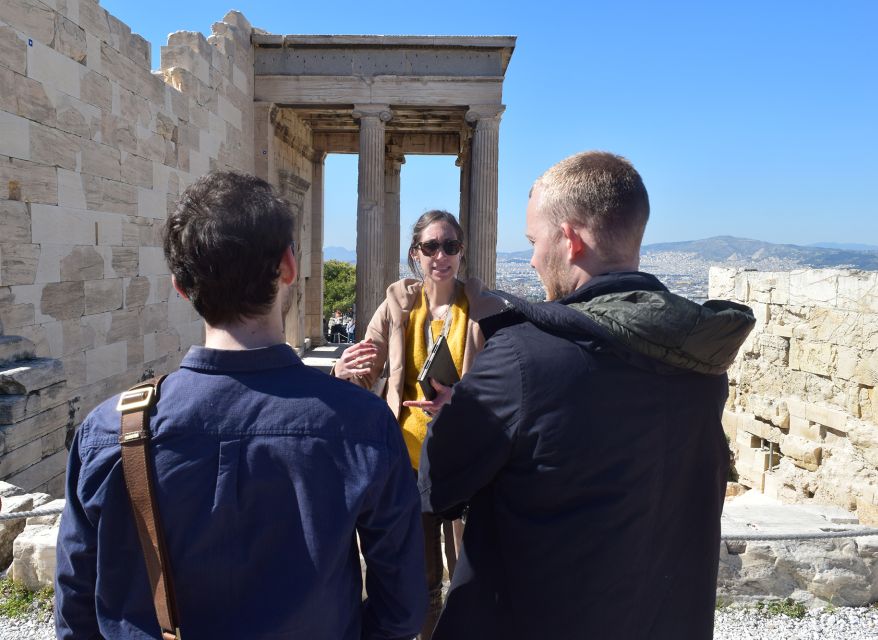
The tour is in Dutch, with a licensed live guide. That matters if you want more than a memorized string of dates. A good guide can explain why the monuments were built, connect myths with the ruins in front of you, and point out details you might miss while trying to navigate the crowds and uneven stone.
Jessica is the guide named most often in the recent feedback supplied for this experience. She is described as using visual material to help visitors picture the ancient buildings and as making links between ancient Athens and the modern city. Some small groups have also found the experience quite personal, including one couple who were the only two people on their departure.
You should not count on a private tour, though. Group size can vary, and the booking is presented as a guided group tour. The possibility of a very small group is a pleasant bonus, not something to assume when you reserve.
More of the old city on foot in Athens:
- Athens: Acropolis & up to 5 Archaeological Sites Combo Pass
★ 4.4 · 12,619 reviews - Athens: Acropolis Ticket with Optional Audio or Live Guide
★ 4.2 · 11,055 reviews - Athens: Acropolis, Parthenon & Acropolis Museum Guided Tour
★ 4.8 · 9,316 reviews
The Theatre of Dionysus and the first steps uphill
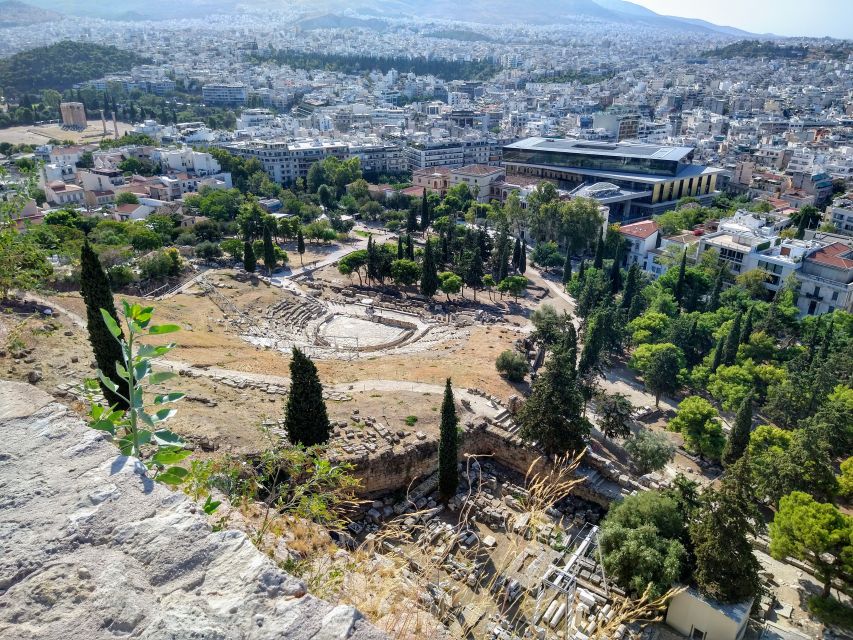
The walk begins at the Theatre of Dionysus, often treated as an opening chapter to the Acropolis rather than an afterthought. Here, you can take in the curved seating area and see the setting associated with the birth of ancient Greek theater.
The tour gives you time to sit on one of the ancient seats, at least when conditions and available space allow. That simple act helps you understand the theater as a place designed for large audiences, performance, and public life. You are not just looking at broken stone. You are seeing the remains of a building made for people to gather and watch stories unfold.
This is also where the guide can make the myths and drama of ancient Athens easier to follow. The supplied details promise centuries-old legends throughout the visit, so expect storytelling alongside the architectural facts. If you enjoy theater, mythology, or the way public spaces shaped ancient society, this opening stop adds real value.
The climb from here follows the southern, sunny side of the Acropolis hill. That route is scenic, but it is not gentle. The surface can be uneven and occasionally slippery, and the heat can be intense. One family specifically found the tour very warm in August. I would choose an early or later starting time if available, and I would not arrive without water, sunglasses, and a hat.
The Asklepieion and Odeon of Herodes Atticus
As you continue uphill, you pass the Asklepieion, an ancient healing site often described as one of the first hospitals in Athens. It gives the Acropolis visit a wider purpose. The hill was not only a place of temples and political symbolism. It also connected to health, worship, ritual, and the daily needs of the city.
The Asklepieion is not as instantly familiar as the Parthenon, which is exactly why a guide helps here. Without context, you might walk past low remains and see little more than stones. With an explanation of its medical and religious role, the stop becomes part of a larger picture of how ancient Athenians understood illness and healing.
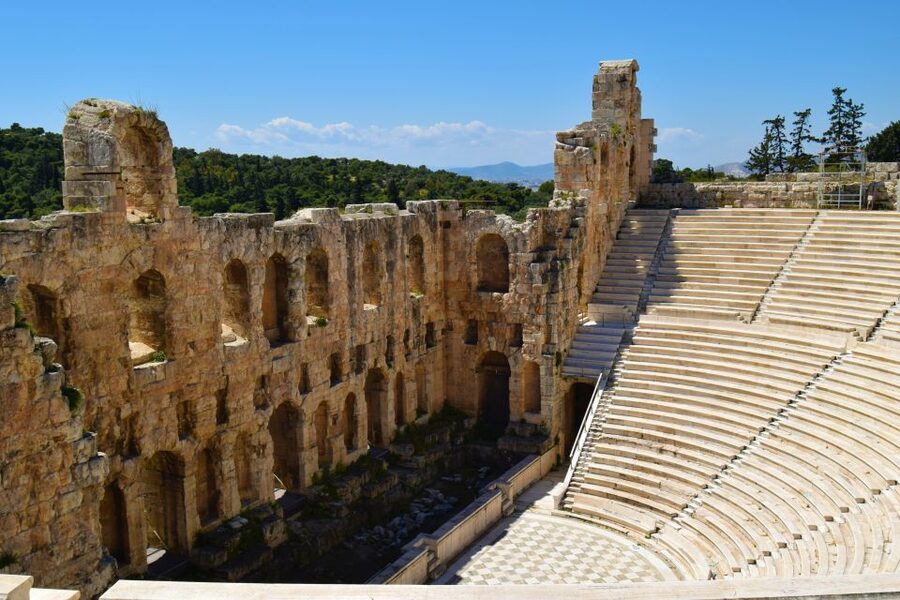
The route then reaches the Odeon of Herodes Atticus, a dramatic theater built into the southern slope. Its surviving stone structure is one of the most memorable sights on the approach to the summit. The guide can help you see how the theater fits into the hill and how different its purpose was from the Theatre of Dionysus.
This portion of the walk is one of the strongest reasons to choose the tour over simply taking photographs at the top. You see several kinds of ancient buildings in sequence: a theater for public performance, a healing center, and a major later odeon. The drawback is that the route spends time on the lower slope, so anyone focused only on the Parthenon may feel the pace is slower than expected.
Passing through the Propylaea
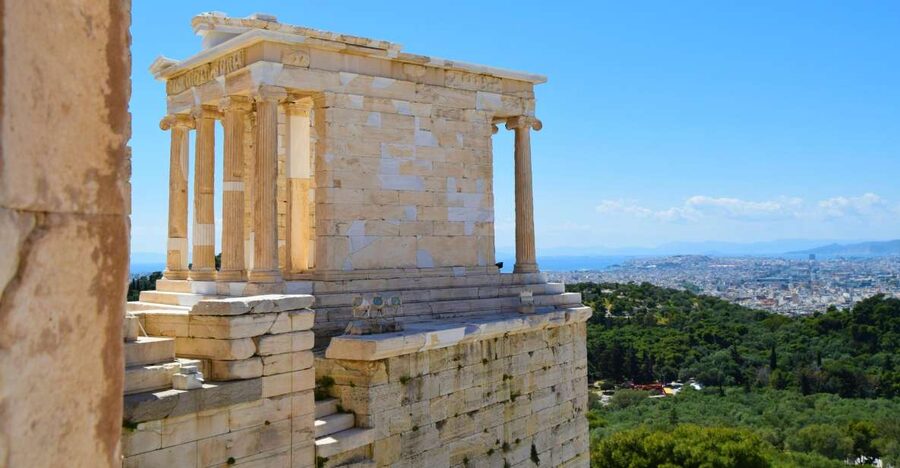
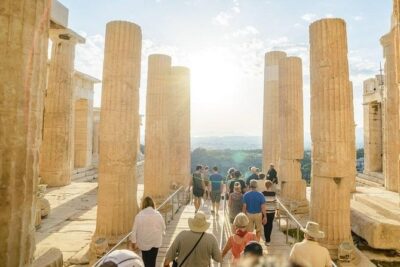
The Propylaea is the monumental entrance to the Acropolis. Reaching it after the uphill approach gives the gate a sense of ceremony. It is not merely an opening in a wall. It was designed to mark the transition from the city below to the sacred precinct above.
This is a good point to listen closely to the guide’s explanation of scale and design. The tour specifically focuses on the tricks used by ancient architects, so you can expect attention to how the buildings were planned rather than a simple list of names.
The Propylaea also makes a useful visual pause before the main temples. You move from the busy approach and theater remains into the central sanctuary, where the best-known monuments are grouped together. The space can feel exposed, bright, and crowded, so do not expect a quiet museum-like visit.
The no-elevator rule matters here and throughout the tour. The route includes uphill walking and uneven surfaces, and the experience is not recommended for people with limited mobility. If you have trouble walking on stone or managing slopes, this is not the right Acropolis option for you.
A few more things to do in Athens worth a look
- Athens: Acropolis and Parthenon Guided Walking Tour
★ 4.6 · 5,882 reviews - Greek Food Walking Tour in Athens
★ 5.0 · 4,740 reviews - Acropolis: Acropolis and Parthenon Guided Walking Tour
★ 4.7 · 3,442 reviews - Acropolis monuments & Parthenon Walking Tour with Optional Acropolis Museum
★ 5.0 · 2,678 reviews
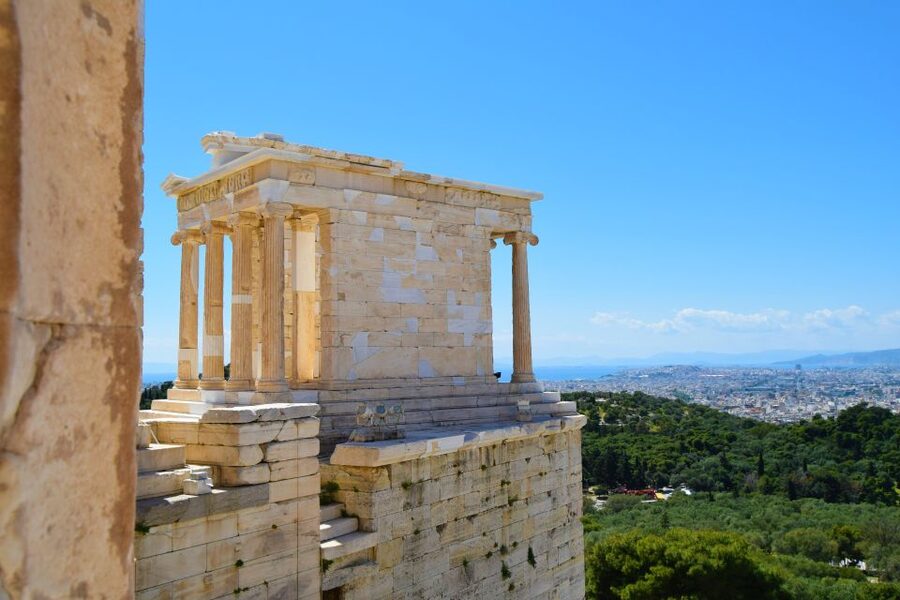
Temple of Athena Nike and the view from the entrance
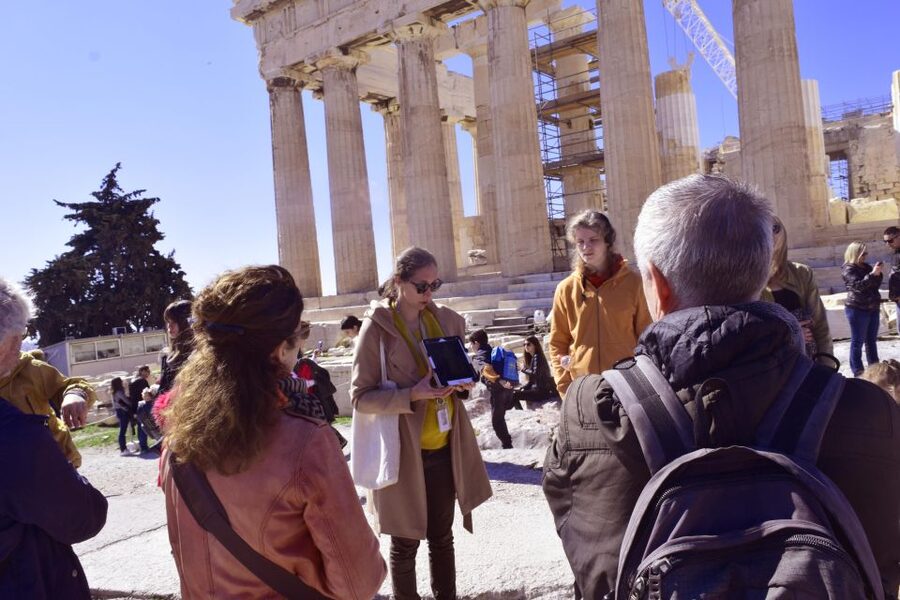
Near the Propylaea, you see the Temple of Athena Nike. It is smaller than the Parthenon, but its position near the entrance gives it a strong role in the design of the hilltop.
A guide can help you understand why the temple is placed where it is and how it relates to the approach. The tour also uses the monument to explain architectural details and the myths tied to the Acropolis. This is especially useful in Dutch, since you can ask questions and follow the explanation without translating in your head.
The temple is one of several stops packed into a short visit. That makes the 1.5-hour duration efficient, but it also means you should not expect a long, unhurried examination of every carved fragment. The tour is best for orientation, context, and the main sights. If you want detailed archaeological study or extended photography at each monument, you will need to use the included free time afterward, or return independently if your plans allow.
The Erechtheion and its unusual design
The Erechtheion gives you a striking contrast with the Parthenon. Its shape is less regular, and its different levels and porches reflect the complex sacred traditions associated with the Acropolis.
The guide explains the myths and building choices connected with the temple. This is where the promise of architectural insight becomes especially useful. You can look for the ways ancient builders handled an uneven site, combined different sacred associations, and created a building that does not follow the simple rectangular pattern most people expect from a Greek temple.
The name is sometimes written as Erechtheion rather than the misspelled Erechteion used in some tour material. Either way, it is one of the essential stops. The building is visually distinctive, and its details reward a slower look after the formal tour has ended.
Because the tour is in Dutch, it suits Dutch-speaking visitors who want more than a brief English-language overview. Several accounts describe the guide as warm and enthusiastic, with an ability to make each column and stone feel meaningful. That kind of delivery matters at a site where the ruins can otherwise seem abstract.
The Parthenon, then time to look around
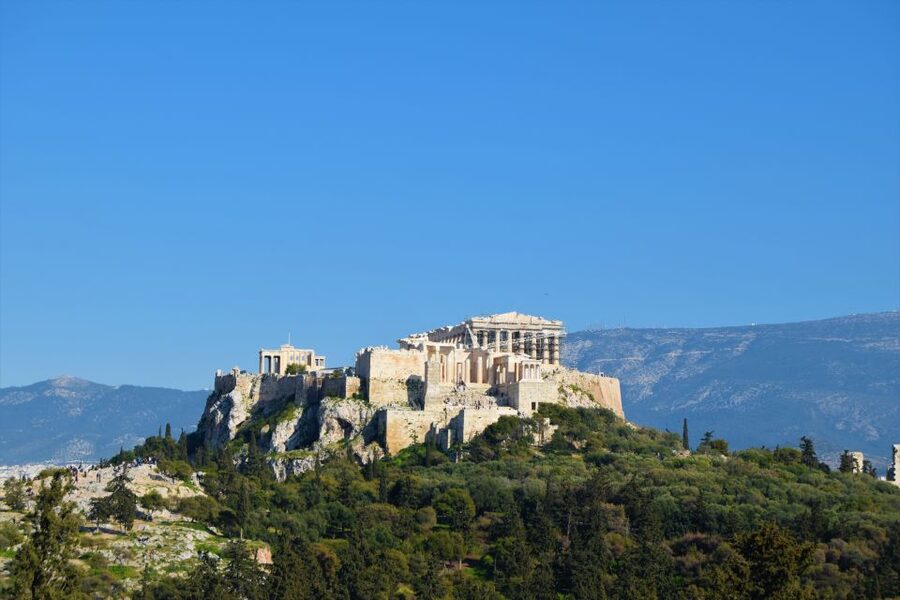
The Parthenon is the grand finale, and the tour gives you both a guided visit and free time for photographs and personal exploration. The temple needs little introduction, but a guide can change what you notice.
You can look beyond its fame to the design choices that make it appear balanced and precise. The tour promises an explanation of the architects’ methods and the myths surrounding the monuments. Listen for those details, because they help explain why the building has such force even in its damaged state.
Do not expect to walk inside the Parthenon or touch the ruins. The experience is an outdoor archaeological visit, with viewing from the permitted areas. The ground can be rough, and the sun reflects strongly off the pale stone. Comfortable shoes are essential, not optional.
The free time at the end is a useful inclusion. A guide-led walk can move quickly, especially with several monuments to cover. Once the formal explanations finish, you can pause for photographs, take in the arrangement of the temples, and enjoy the city view without needing to keep up with the group.
The finish on top of the hill gives you a full 360-degree view of Athens. This is not just a photo stop. It helps you understand the Acropolis as the city’s high point, with the urban sprawl extending in every direction below. You can also use the moment to let the sequence of theaters, sanctuaries, gates, and temples come together.
Is $95 a fair price?
At $95 per person, this is not a budget Acropolis visit. The cost includes the entry ticket, a licensed Dutch-speaking guide, ticket pre-booking administration, skip-the-ticket-line access, and free time after the guided portion.
The value depends mainly on your need for Dutch commentary. If you can follow a strong English tour with ease, cheaper options may make more sense. If you want a Dutch explanation of the myths, architecture, and historical setting, the price becomes easier to justify.
The short duration also affects the calculation. You get 1.5 hours of guided time, not a full-day Athens program. That is enough for a focused introduction, but the per-hour cost is high. Families should think carefully, since one family specifically found the price high for a group.
The experience becomes better value for a small group, first-time visitors to Athens, or anyone who wants the Acropolis explained rather than simply photographed. It is also helpful if you value a pre-arranged entry ticket and do not want to manage the visit alone.
Who should book this Dutch tour?
I would choose this tour if you want a clear introduction to the Acropolis and prefer to hear it in Dutch. It is especially suitable for couples, adult friends, and families with children who can manage an uphill walk. One family with children aged 6, 9, and 14 found the 1.5-hour format worked well, so the length can suit younger visitors better than a much longer historical tour.
It also suits people who enjoy stories. Jessica is described as a strong storyteller who links the ancient world with the present and uses visual material to make the past easier to picture. Her friendly style is a major part of the appeal when she leads the visit.
I would think twice if you have limited mobility, dislike exposed sun, or want a slow archaeological study. There is no elevator, the terrain is uneven, and the pace must cover several major sites in a short period. People carrying luggage or large bags should make other arrangements before arriving.
Bring your passport or ID card, since identification is listed among the items to carry. Wear sturdy, comfortable shoes, and pack sunglasses, a sun hat, and water. Food and drinks are not allowed on the tour, so plan around that rule rather than bringing a picnic into the site.
Final call: book it for the language and guide
Book this tour if a Dutch-speaking guide will make the Acropolis easier for you to understand. The route covers the major monuments while also giving time to the Theatre of Dionysus, Asklepieion, and Odeon of Herodes Atticus, which creates a fuller visit than a quick Parthenon stop.
The strongest reason to choose it is the guide-led storytelling, particularly if Jessica is leading your departure. The main reason to hesitate is the $95 price for only 1.5 hours, especially for a family. If you accept that cost in exchange for clear Dutch explanations, included entry, and a well-planned route, this is a focused and worthwhile way to meet Athens’ most important ancient site.
FAQ
Where does the Acropolis tour meet?
Meet outside Acropoli Metro station at the Makriyianni or Dionysiou Areopagitou exit. A Google Maps meeting point is provided for this location.
How long does the tour last?
The guided walking tour lasts 1.5 hours. Free time to explore the Acropolis after the guided portion is included.
Is the tour conducted in Dutch?
Yes. The activity includes a live Dutch-speaking guide. Jessica is a guide named in several of the supplied accounts.
What does the price include?
The $95 price includes Acropolis entry, a licensed guided walking tour, ticket pre-booking administration fees, skip-the-ticket-line service, and free time at the site after the tour.
What monuments are included?
The route includes the Acropolis, Theatre of Dionysus, Odeon of Herodes Atticus, Temple of Athena Nike, Propylaea, Erechtheion, and Parthenon. It also passes the Asklepieion.
Is the tour suitable for people with limited mobility?
No. The tour is not recommended for people with limited mobility. There is no elevator, and the route includes uphill walking on uneven surfaces that may occasionally be slippery.
What should I bring?
Bring your passport or ID card, comfortable shoes, sunglasses, a sun hat, and water. Food, drinks, luggage, large bags, baby strollers, and pets are not allowed, although assistance dogs are permitted.
Just added in Athens
- Ceramic and Pottery Creative Workshop with Two Local Artists★ 4.0 · 57 reviews
- Small-Group Women History in Ancient Greece Walking Tour★ 5.0 · 38 reviews
- Athens Old City Private Photoshoot Tour / 2 hrs★ 5.0 · 109 reviews
- Athens: Wine Workshop Create your Own Wine under the Acropolis★ 5.0 · 77 reviews
- Athens: Greek Wines Tasting with Sommelier and Acropolis Views★ 5.0 · 88 reviews
- Wine Trails Private Tour/ Nemea visit 3 wineries from Athens or Nafplion (10 h)★ 5.0 · 44 reviews
- FLYING DRESS Photoshoot in Athens – Greece★ 5.0 · 47 reviews
- Small-Group Wine Tour in Athens with Tasting★ 5.0 · 33 reviews
Acropolis & Athens Highlights, compared.
Acropolis & up to 5 Archaeological Sites Combo Pass
Read our review →
Acropolis, Parthenon & Acropolis Museum Guided Tour
Read our review →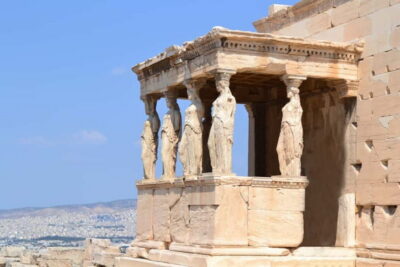

Acropolis monuments & Parthenon Walking Tour with Optional Acropolis Museum
Read our review →
Athens All Included: Acropolis and Museum Guided Tour with Ticket
Read our review →
Acropolis Museum Ticket with optional Audio Guide
Read our review →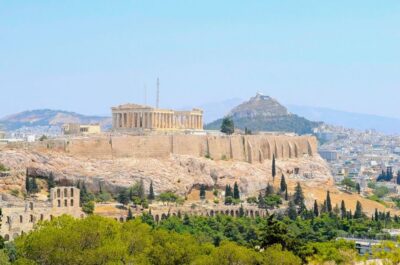
Acropolis Ticket & Optional Self-Guided Audio Tours
Read our review →Browse the lists this tour appears in