
Reviewed · ACROPOLIS & ATHENS HIGHLIGHTS
Athens Highlights: Myths & Philosophers Walking Tour
Athens has no shortage of ancient stones, but this tour gives them something to say. You walk from the Academy of Athens to Areopagus Hill, linking Socrates, Plato, Stoicism, Greek gods, democracy, and modern city life along the way. The focus is not simply on looking at monuments. It is on asking why these ideas still matter.
I like the private format, which lets you ask questions instead of keeping pace with a large crowd. I also like the smart route, which mixes famous places such as the Hellenic Parliament and Ancient Agora with quieter corners of Plaka and Anafiotika. Guides named Bianca, John, Gianni, and Effrosyni are associated with the experience, with Bianca receiving especially warm praise for her storytelling and philosophical discussions.
The main drawback is the length and subject matter. Four hours on foot can feel long in Athens heat, and this is not a quick sightseeing loop. You need to enjoy conversation, history, and ideas to get the most from the $102.80 price.
Key points to know before you book
- A private four-hour walk: Your group has the guide to itself, so the pace and discussion can respond to your interests.
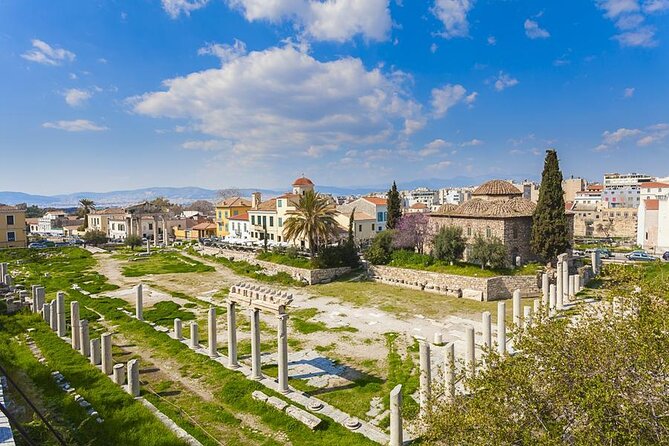
- Philosophy tied to real places: The route connects the Academy, Ancient Agora, Tower of the Winds, Anafiotika, and Areopagus Hill.
- Bianca is a frequently praised guide: Her style centers on clear storytelling, questions, and links between ancient thought and modern life.
- A strong choice for families: Teens and young adults can take part in the discussion, especially if they already like myths, classics, or philosophy.
- No attraction admissions are included: Entrance fees for places such as the Ancient Agora and Tower of the Winds are extra.
- The final view is memorable: The tour ends on Areopagus Hill, with the Acropolis above Athens.
Why this Athens walk feels different
Most Athens tours sort the city into ancient temple, Roman ruin, Byzantine church, and modern square. This one sorts it by ideas. That makes the route especially useful if you have already seen the Acropolis and want a stronger sense of how Athens shaped politics, science, ethics, and education.
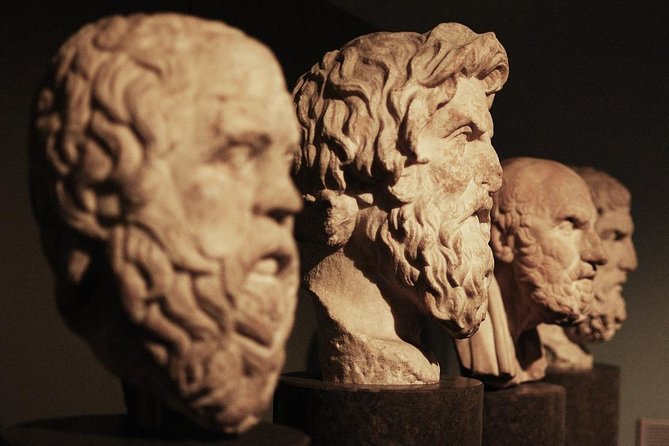
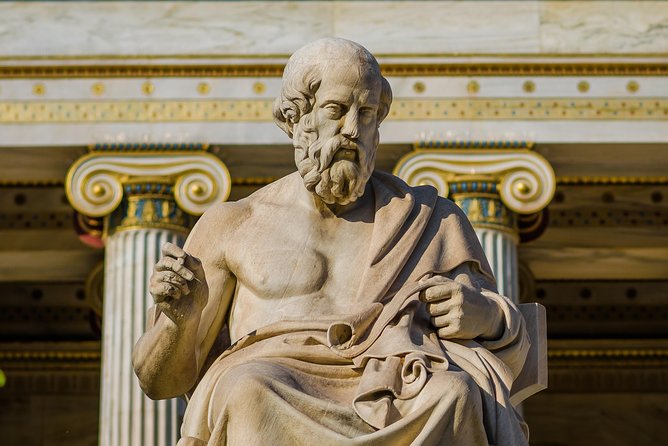
Your guide is not simply reciting names and dates. The stated focus includes the pre-Socratics, Socrates, Plato, Aristotle, Thales of Miletus, Stoicism, Cynic philosophy, and Greek mythology. The best part is the chance to stop and talk. A private guide can adjust the detail for a family with teenagers, a philosophy student, or someone starting from zero.
Bianca is the name most often associated with the strongest guide experiences. Her approach appears to be conversational rather than classroom-like. John is also described as warm and clear, with a talent for making ancient ideas easy to follow. Gianni is praised for planning the walk around a lunch reservation, while Effrosyni is noted for bringing energy to a family outing. Your assigned guide may differ, so treat those names as examples of the guiding team rather than a guarantee.
The tour is offered in English and includes coffee or tea plus bottled water. Those small inclusions matter during a four-hour walk, though you should still dress for the weather and bring your own additional water if the day is hot.
More of the old city on foot in Athens:
- Athens: Acropolis & up to 5 Archaeological Sites Combo Pass
★ 4.4 · 12,619 reviews - Athens: Acropolis Ticket with Optional Audio or Live Guide
★ 4.2 · 11,055 reviews - Athens: Acropolis, Parthenon & Acropolis Museum Guided Tour
★ 4.8 · 9,316 reviews
Starting at the Academy of Athens
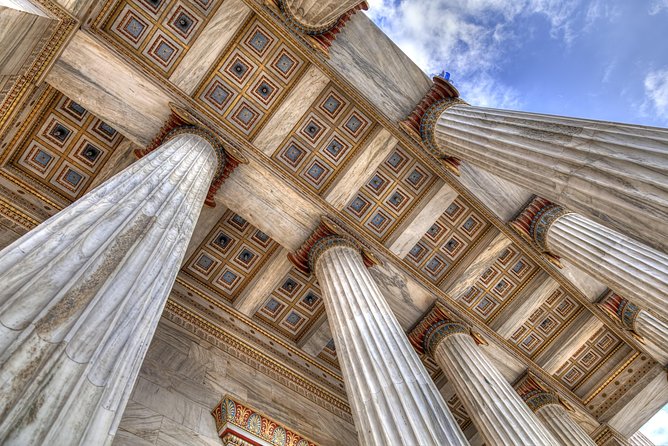
The meeting point is at Panepistimiou in central Athens, near the Academy of Athens. The first stop lasts about 15 minutes, and the focus is the Trilogy of Athens, a group of impressive neoclassical buildings that includes the Academy.
This is a good opening because it places philosophy in the setting of modern Athens, not only among ruins. Your guide can use the buildings and the city around them to introduce the intellectual movements of ancient Greece, then connect those movements to people such as Thales, Socrates, and Plato.
Do not expect a long interior visit here. Admission is not included, and the listed stop is brief. The value comes from the explanation and the setting, rather than from an extended museum experience.
A separate point in the route concerns a museum with one of the world’s major collections of coins, both ancient and modern. The information provided does not clearly name this stop or give it a separate duration. Consider it a possible passing point rather than a guaranteed museum visit, and do not plan on an included admission.
Watching the guards at the Hellenic Parliament

The route then reaches Syntagma Square and the Hellenic Parliament. The stop lasts about 15 minutes and includes the chance to see the Changing of the Presidential Guard, one of Greece’s long-running public traditions.
This is one of the tour’s useful contrasts. You move from ancient questions about government and civic life to a living national ceremony in modern Athens. The guide can help you see democracy as more than a chapter in a textbook. It is part of the city’s continuing public identity.
There is no entrance fee for this stop, but the timing may affect what you see. The tour description says you will witness the changing of the guard, yet it does not specify a precise departure time or guarantee a particular ceremony schedule. Ask your guide at the start if this moment is central to your plans.
Philosophy among the trees in the National Garden
The National Garden offers a welcome change of pace. You spend about 15 minutes walking through the garden while discussing democracy, physics, astronomy, ethics, and other fields shaped by Greek thought.
I like this stop because it gives the guide a place to pause. Philosophy is easier to follow when you are not standing beside a busy road or trying to photograph a column. Past guides have used shaded spots for conversation, which is especially helpful during a warm Athens afternoon.
The garden stop is free. It is also short, so you should not expect a full garden tour. Think of it as an outdoor classroom and a breathing space between the city’s formal buildings and the older quarters ahead.
A few more things to do in Athens worth a look
- Athens: Acropolis and Parthenon Guided Walking Tour
★ 4.6 · 5,882 reviews - Greek Food Walking Tour in Athens
★ 5.0 · 4,740 reviews - Acropolis: Acropolis and Parthenon Guided Walking Tour
★ 4.7 · 3,442 reviews - Acropolis monuments & Parthenon Walking Tour with Optional Acropolis Museum
★ 5.0 · 2,678 reviews
Following Hermes along Ermou Street
Ermou Street brings the tour back into the modern city. Here, the subject is Hermes, the mischievous god associated with travel, trade, messages, and movement.
This stop shows the tour’s central trick. Instead of treating mythology as a separate subject, the guide connects a familiar Athens street with the ancient stories that still shape names, symbols, and popular culture. At about 15 minutes, it is long enough for a focused story without turning into a lecture.
Ermou is a city shopping street, so the atmosphere may feel more urban than ancient. That is part of the point, but people seeking only ruins may find this section less visually impressive than the Agora or Acropolis views.
The route also passes a square named for the Church of the Pantanassa located there. The supplied details do not list a separate stop length or entrance plan for the church, so treat it as a contextual point on the walk.
Entering the Ancient Agora and the birthplace of Stoicism

The Ancient Agora is one of the most important stops for understanding how Athens functioned as a civic community. The tour connects it with the Poikile Stoa, the Painted Porch associated with the birth of Stoic philosophy.
The subject fits the place. The Agora was not simply a market. It was a public setting where civic, commercial, legal, and intellectual life met. Your guide can explain how Stoic ideas grew from this public world and how they differ from the questioning style of Socrates or the teachings of Plato.
The listed visit is about 15 minutes, and admission is not included. That is the point where value depends on your priorities. If you want to explore the Agora’s buildings at length, you may need a separate ticket and more time outside the tour. If you mainly want the philosophical connection and a guided look at the setting, the short stop may be enough.
The private format helps here. You can ask how Stoicism relates to modern ideas about self-control, hardship, or duty, rather than simply hearing a definition and moving on.
Reading the weather at the Tower of the Winds
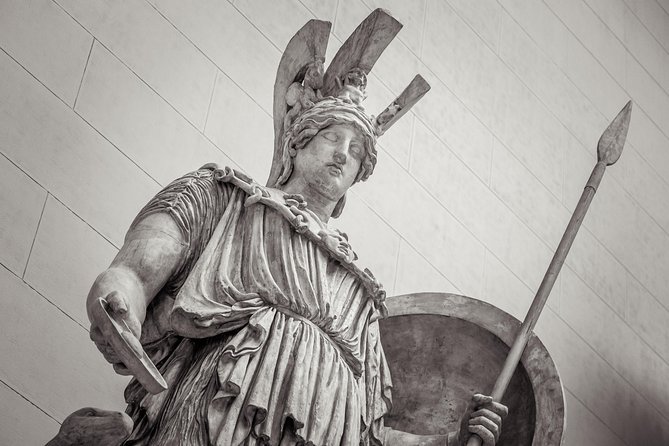
The Tower of the Winds is a compact but memorable monument in the Roman Agora area. The stop lasts about 15 minutes and centers on Aiolos, keeper of the winds.
This is a fine example of the tour’s blend of myth and applied science. The tower is tied to weather and time, while Aiolos brings in the mythic side. Ancient Greeks did not place mythology, observation, religion, and early science into separate boxes as neatly as modern tours often do.
Admission is not included. The guide can explain the monument from outside, but entering may require an additional ticket. The tour details do not state how long you remain inside or whether entry is part of the walking route, so budget for an extra fee only if you want to visit the site beyond the exterior explanation.
Anafiotika and the Cynic philosophers
From the older center, the walk reaches Plaka and Anafiotika beneath the Acropolis. This section lasts about 20 minutes and introduces the Cynic philosophers.
Anafiotika is one of the most atmospheric parts of the route. Its small lanes and close-set houses feel far removed from the broad avenues around Syntagma Square. That change makes the philosophical discussion more personal. Cynic thinkers challenged social habits, status, and material comfort, and a quiet neighborhood gives those ideas room to breathe.
The stop is free, but the ground is not described in detail. Since this is a walking tour through hillier parts of central Athens, wear comfortable shoes and expect uneven streets or slopes. The tour is accessible to most participants, but anyone with mobility concerns should ask the provider before booking.
This is also a strong family stop. Several guide accounts describe teenagers becoming engaged once the discussion turned into questions rather than a one-way speech. If your family has one person who loves classics and another who knows little about them, the private format gives the guide a better chance to include both.
Finishing on Areopagus Hill
The tour ends on Areopagus Hill, also called Mars Hill, near the Acropolis. The final stop lasts about 15 minutes and includes a view toward the Acropolis, along with myths about the Olympian gods.
This is a fitting finish. You have moved through public buildings, gardens, shopping streets, ancient civic space, mythic weather, and the lanes of Plaka. From the rock of Areopagus, the city’s layers come together in one wide view.
The hill is free to visit, but it is rocky and can be slippery. The supplied information does not give detailed footwear guidance, so sensible shoes are the safe choice. The endpoint is near major Athens sights, but the activity does not provide transportation back to your hotel.
Because the tour ends here rather than returning to the start, you can continue with the Acropolis area, Plaka, or a nearby meal. It is a useful ending point for building the rest of your day.
What $102.80 buys you
At $102.80 per person, this is not a budget walking tour. The price makes more sense for a private group that values conversation and can share the cost among several people. Group discounts are available, though the exact saving is not specified.
You are paying for about four hours of a private English-speaking guide, not for a package of attraction tickets. Coffee or tea and bottled water are included. Entrance fees at the Ancient Agora and Tower of the Winds are not, and no personal expenses are covered.
I would compare this with the cost of a standard group tour. A large group may be cheaper and may cover more monuments. This experience offers a different benefit: you can ask why Socrates used questions, how Plato differed from Aristotle, or what Stoicism means to you, without waiting for 30 other people to finish taking photos.
The value is strongest for two to six people with a shared interest. For a solo visitor, the per-person price is harder to justify unless philosophy is a major reason for the Athens trip.
Who should book this experience?
You should consider it if you like history explained through stories and questions. It suits visitors who want more than a checklist of monuments, families with older children or young adults, and anyone curious about the ideas behind democracy, ethics, science, and education.
It is also a good choice if you have already seen Athens on a standard sightseeing route. The walk adds connections between familiar places and can show you parts of Plaka, Anafiotika, and the central city in a new way.
I would be cautious if you want a strictly archaeological tour, a fast city overview, or a short activity before lunch. Four hours is a real commitment, and the tour may run longer if discussion continues. One guide has been especially generous with time, so do not schedule a tight appointment immediately afterward.
The activity requires good weather. You can cancel up to 24 hours before the start for a full refund. If poor weather causes cancellation, you will be offered another date or a full refund.
My verdict on the Myths & Philosophers walk
This is a focused Athens experience rather than a general introduction to every major sight. Its strength is the link between place and thought: the Academy for intellectual movements, Parliament for civic life, the Agora for Stoicism, the Tower of the Winds for myth and observation, and Areopagus Hill for a final look over the city.
I would book it for a private group that wants a thoughtful, personal morning or afternoon and is happy to walk for four hours. I would skip it if you mainly want interior visits or a fast look at the monuments. For families and philosophy lovers, especially those who enjoy discussion, it offers something many Athens tours miss: a reason to keep thinking after the guide says goodbye.
FAQ
How long is the Athens Highlights: Myths & Philosophers Walking Tour?
The tour lasts approximately four hours.
Is this a private tour?
Yes. Only your group participates, so you can ask questions and discuss the subjects directly with the guide.
What language is the tour offered in?
The tour is offered in English.
Where does the tour start?
It starts at Panepistimiou, Athens 106 79, Greece.
Where does the tour end?
It ends at Areopagus Hill, Theorias 21, Athens 105 55, Greece.
What places are included on the walking route?
The route includes the Academy of Athens, Hellenic Parliament, National Garden, Ermou Street, Ancient Agora of Athens, Tower of the Winds, Anafiotika, and Areopagus Hill. It also passes a museum with a major coin collection and the Church of the Pantanassa area.
Are entrance fees included?
No. Entrance fees to points of interest are not included.
Are food or drinks included?
Coffee or tea and bottled water are included. Personal expenses are not included.
Can most people participate?
Most travelers can participate, and service animals are allowed. The activity is near public transportation.
What is the cancellation policy?
You can cancel at least 24 hours before the start time for a full refund. Changes or cancellations made less than 24 hours before the start are not accepted for a refund. The tour may also be moved or refunded if poor weather causes cancellation.
Just added in Athens
- Ceramic and Pottery Creative Workshop with Two Local Artists★ 4.0 · 57 reviews
- Small-Group Women History in Ancient Greece Walking Tour★ 5.0 · 38 reviews
- Athens Old City Private Photoshoot Tour / 2 hrs★ 5.0 · 109 reviews
- Athens: Wine Workshop Create your Own Wine under the Acropolis★ 5.0 · 77 reviews
- Athens: Greek Wines Tasting with Sommelier and Acropolis Views★ 5.0 · 88 reviews
- Wine Trails Private Tour/ Nemea visit 3 wineries from Athens or Nafplion (10 h)★ 5.0 · 44 reviews
- FLYING DRESS Photoshoot in Athens – Greece★ 5.0 · 47 reviews
- Small-Group Wine Tour in Athens with Tasting★ 5.0 · 33 reviews
Acropolis & Athens Highlights, compared.
Acropolis & up to 5 Archaeological Sites Combo Pass
Read our review →
Acropolis, Parthenon & Acropolis Museum Guided Tour
Read our review →
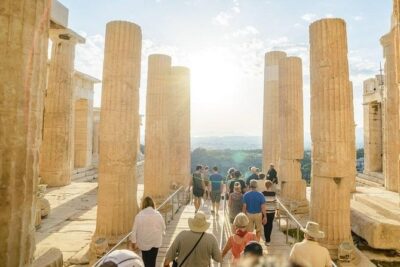
Acropolis monuments & Parthenon Walking Tour with Optional Acropolis Museum
Read our review →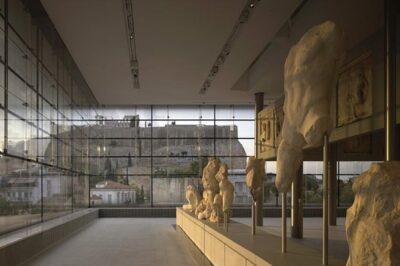
Athens All Included: Acropolis and Museum Guided Tour with Ticket
Read our review →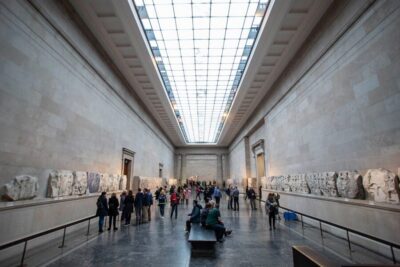
Acropolis Museum Ticket with optional Audio Guide
Read our review →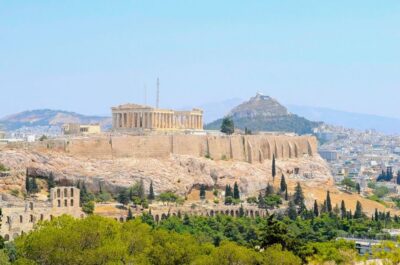
Acropolis Ticket & Optional Self-Guided Audio Tours
Read our review →Browse the lists this tour appears in