
Reviewed · MUSEUMS
Athens: Kotsanas Museum of Ancient Greek Technology Ticket
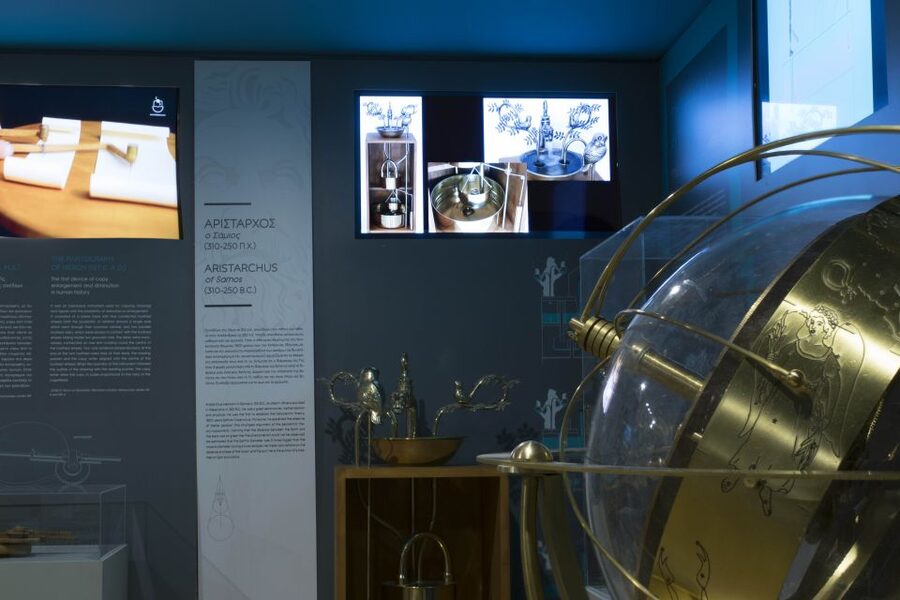
The most surprising thing here is how familiar ancient Greek technology can feel. At the Kotsanas Museum, you can see working models of calculating devices, clocks, automata, and mechanical displays that look like early versions of machines we use today.
I like the hands-on exhibits, since you are not limited to peering through glass. I also like the clear English material, with diagrams, videos, animations, and explanations that help turn strange-looking mechanisms into understandable machines.
The main consideration is that this is a self-guided museum visit, not a guided tour. If you prefer someone to explain every exhibit as you go, plan to spend time reading the displays and watching the presentation material.
Key points to know before you go
- About 100 operating models: See ancient Greek inventions recreated as working mechanisms, not just static objects.
- The Antikythera calculating mechanism: Learn about the device often described as the oldest analog computer in the world.
- Hands-on displays: Some exhibits let you operate the mechanisms yourself.
- English support throughout: Use labels, posters, diagrams, videos, animations, and documentaries in English.
- Central Athens location: The museum is at Pindarou 6, about five minutes on foot from Syntagma Metro Station.
- Low-cost, flexible visit: The $7.90 admission is valid for one day, and cancellation is allowed up to 24 hours before the visit.
Why ancient Greek technology feels surprisingly modern
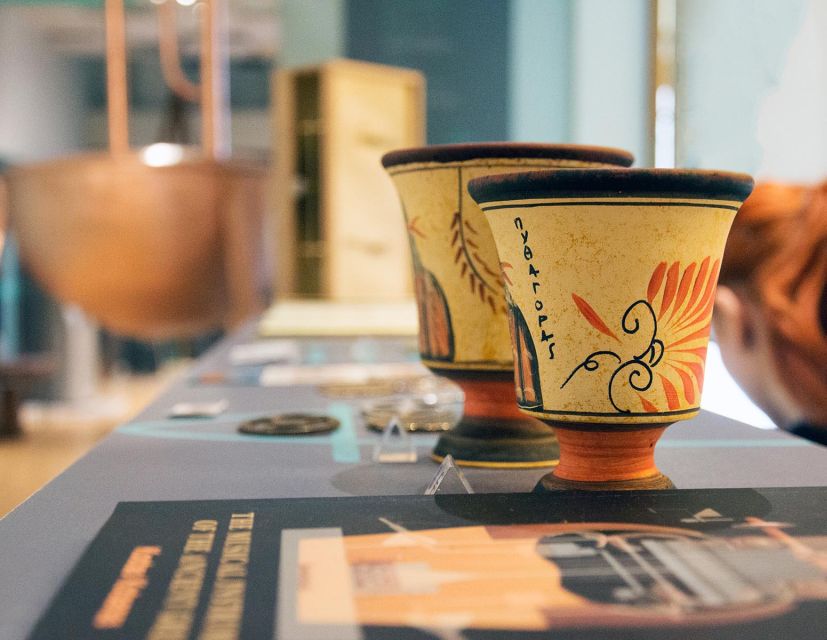
Many people picture ancient Greece through temples, statues, and philosophy. This museum adds another part of the story: practical engineering. The exhibits show how Greek inventors worked with gears, water pressure, weights, air, motion, and carefully timed mechanical parts.
That is what makes the visit more than a collection of old objects. You get to see how a culture without electricity could still create devices that measured time, displayed moving figures, performed repeated actions, and calculated astronomical patterns.
I find the comparison with modern technology especially useful. The point is not that ancient Greeks had smartphones or computers in the modern sense. The point is that they understood ideas we still use: automation, programmed movement, mechanical calculation, visual effects, and control systems.
The museum presents these ideas through approximately 100 selected models. Since many are operating replicas, you can watch the mechanisms move and, in some cases, set them in motion yourself. That physical interaction helps you understand the design far better than a paragraph in a history book.
A few more things to do in Greece worth a look
- Athens: Acropolis, Parthenon & Acropolis Museum Guided Tour
★ 4.8 · 9,316 reviews - Athens: Mythology of Delphi, Museum and Arachova Guided Tour
★ 4.6 · 4,008 reviews - Athens: Acropolis, Parthenon & Acropolis Museum Guided Tour
★ 4.8 · 3,579 reviews
Inside the 700-square-meter Art Nouveau building
The museum occupies a historic Art Nouveau building with about 700 square meters of exhibition space. Its central Athens setting makes it easy to fit into a day of sightseeing around Syntagma Square, Kolonaki, or the central shopping streets.
You enter a museum devoted to a fairly specific subject, so the visit has a clear purpose from the start. It is not a general archaeology museum with technology scattered among pottery and sculpture. Here, the focus stays on machines and mechanisms.
The exhibition is titled The Hi-Tech Inventions of Ancient Greeks. That title gives you a useful clue about the experience. You are not only looking at artifacts from the distant past. You are examining how ancient engineers solved problems through motion, pressure, timing, and mechanical design.
The building itself adds some character, but the machines are the reason to come. The displays are arranged with explanatory material that helps you follow the basic function of each invention. You will find large posters, detailed diagrams, photographs, and bibliographical references.
You should allow yourself time to stop and read. A quick walk through the rooms will give you a general impression, but the value comes from understanding how the devices work.
The Antikythera mechanism and ancient calculation
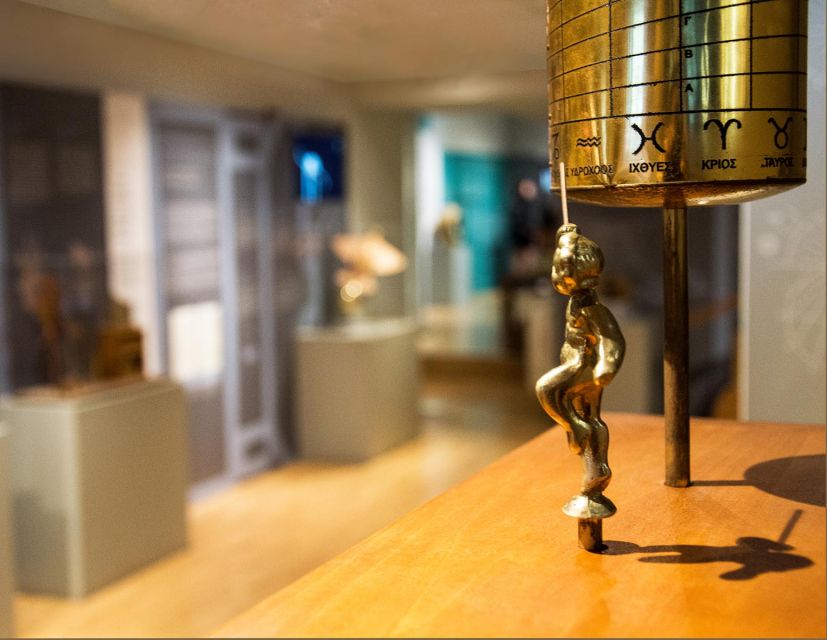
The Antikythera calculating mechanism is likely to be the main attraction for many visitors. It is often described as the oldest analog computer in the world, and the museum presents a model that lets you think about what such a device was designed to do.
The phrase analog computer can sound technical, but the basic idea is approachable. Instead of using electronic circuits, a mechanical device uses parts that move in relation to one another to represent calculations or cycles.
At the museum, diagrams and explanatory material help show how the mechanism functioned. You can study the arrangement of its components and watch the model operate. This makes the subject easier to grasp than a photograph of a corroded ancient object alone.
I recommend giving this exhibit extra time. It is tempting to look quickly, register that it is an ancient calculating machine, and move on. If you read the diagrams and follow the moving parts, you will better understand why the mechanism matters.
The exhibit also gives the wider museum a strong anchor. Other devices may seem playful or theatrical, but the Antikythera mechanism shows the serious mathematical and astronomical side of ancient Greek engineering.
Automata, robot servants, and mechanical theater
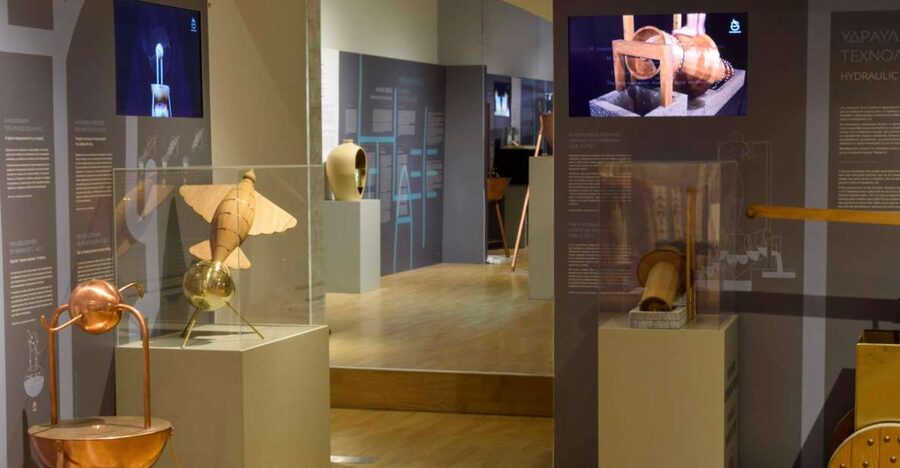
The collection includes a robot-servant associated with Philon and an automotive-puppet show associated with Heron. These names refer to ancient mechanical ideas presented through working models.
The robot-servant is a good example of how mechanical movement could be used for a practical task. The puppet show shows another side of the same skill: using mechanisms to create a performance with moving figures.
These exhibits are useful because they make ancient engineering feel less abstract. You do not simply see gears and levers. You see how those parts could be arranged to produce a repeated action or a staged display.
The museum also presents what it calls the cinema of Philon. The word should not be understood as a modern movie theater. It refers to an early form of mechanical visual presentation, showing how inventors used movement and sequential images to create an effect for an audience.
This part of the collection should appeal to families and to anyone interested in the history of theater, animation, or special effects. Children may respond first to the moving figures, while adults can look more closely at the engineering behind them.
Same base, a completely different day:
- Athens: Acropolis & up to 5 Archaeological Sites Combo Pass
★ 4.4 · 12,619 reviews - Athens: Acropolis Ticket with Optional Audio or Live Guide
★ 4.2 · 11,055 reviews - Athens: Cape Sounion & Poseidon Temple Sunset Half-Day Trip
★ 4.8 · 8,241 reviews - From Kissamos Port: Boat Cruise to Balos Lagoon & Gramvousa
★ 4.2 · 6,755 reviews
Clocks, water power, and controlled movement
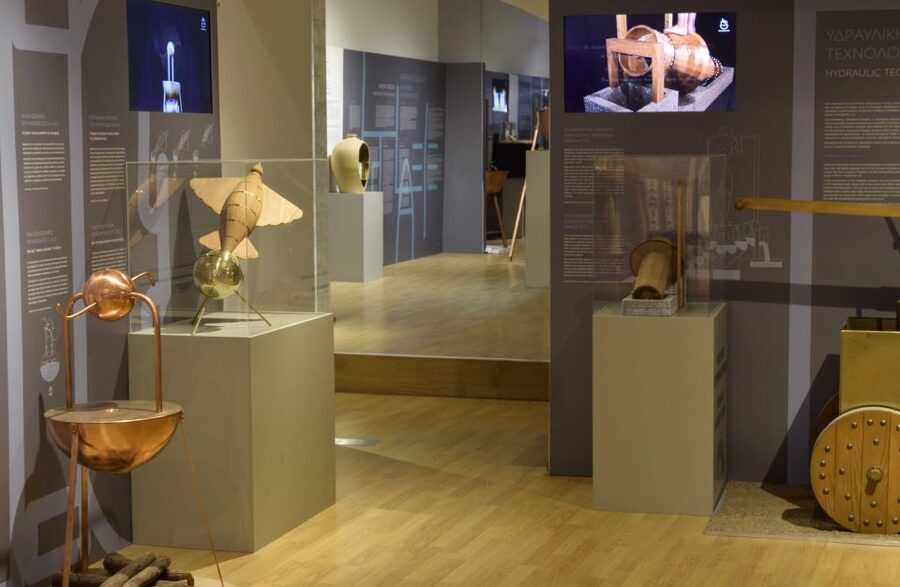
The hydraulic clock of Ktesibios introduces a different kind of ancient technology. Water clocks use the controlled movement of water to mark time. That sounds simple until you consider the need to manage flow and keep the measurement steady.
The museum’s model lets you see the mechanism in operation and study how the parts work together. The display material is important here, since the purpose of each vessel, opening, and moving component may not be obvious at first glance.
This exhibit also helps explain why ancient technology often depended on natural forces. Without electric motors, engineers used water, air, gravity, and human movement to produce reliable action.
As you move through the collection, look for this repeated pattern. A device may appear complicated, but its power often comes from a small number of basic forces arranged with care. The museum is at its best when it shows that connection between a simple physical principle and a clever machine.
How the interactive displays change the visit
The hands-on elements are one of the strongest reasons to choose this museum over a display of static replicas. When you can put a mechanism into use, you gain a better feel for the timing and movement involved.
The interaction is not just entertainment. It helps answer practical questions. What moves first? What triggers the next action? How does a gear transfer motion? How does water control a clock? How can a figure appear to act on its own?
Not every exhibit necessarily requires the same level of participation, so you should expect a mixture of interactive models and displays supported by visual material. The available information specifically notes that many exhibits are interactive.
There are also projection stations with video and animation. Documentaries show the exhibitor explaining how the mechanisms worked and how they were used. This is helpful when a model is complicated or when you want to see the process before trying to interpret it yourself.
The material is available in Greek and English, with English listed among the museum’s language options. That makes the museum a practical choice for international visitors who want more than short labels.
A self-guided visit with plenty to read
Admission does not include a guided tour. You explore independently, using the explanatory labels, posters, diagrams, photographs, videos, and documentaries provided in the exhibition.
I see this as both an advantage and a limitation. You can move at your own pace and spend extra time with the Antikythera mechanism or the automata that interest you most. You also avoid being tied to a fixed group schedule.
The tradeoff is that you need to take responsibility for the order and pace of your visit. If you rush, you may miss the reasoning behind the machines. If you enjoy technical subjects, you can take your time and follow the references and diagrams.
The host or greeter speaks English, but the activity is not described as a guided English tour. For that reason, book this as an independent museum visit rather than expecting a personal lecture.
A useful approach is to watch a video or animation when you meet a difficult mechanism, then return to the model and examine it again. The combination of moving replica and explanation is more effective than either one alone.
Location, timing, and practical details
The museum is at Pindarou 6 in Athens, in the central area of the city. From Syntagma Metro Station, it takes about five minutes to walk. That makes the museum easy to reach without arranging transport or setting aside a full day.
Your ticket is valid for one day, with the available starting times shown when you book. The experience ends back at the museum because this is an admission visit, not a walking tour or transport activity.
The listed price is $7.90 per person. I consider that good value if you enjoy science, engineering, ancient history, museums, or family activities where children can do more than look at objects. It is also a modest choice for a hot afternoon or a short gap between other central Athens plans.
The value depends on how much attention you give the displays. If you spend only 20 minutes walking through, the price still remains low, but you will not get the full benefit. If you read the explanations, try the mechanisms, and watch some of the video material, the admission buys a more substantial visit.
Food and drinks are not allowed inside. The museum is wheelchair accessible, which is useful for visitors planning a central Athens museum day.
The ticket can be canceled up to 24 hours in advance for a full refund, and the reserve-now, pay-later option allows you to keep your plans flexible. Those terms are helpful if you are arranging several activities around changing Athens weather or arrival times.
Who will enjoy the Kotsanas Museum most
I would recommend this museum to you if you like seeing how things work. You do not need an engineering background, but curiosity helps. The displays reward questions and patience.
It is particularly suitable for:
- Families looking for an interactive indoor activity
- Visitors interested in ancient Greek inventions beyond temples and sculpture
- Anyone curious about the history of computers, clocks, automata, or theater
- Museum fans who prefer working models to static objects
- People with a spare hour or more in central Athens
- Visitors who want an affordable activity near Syntagma
You might find the visit less satisfying if you want a traditional archaeological museum filled with original statues, pottery, and monumental objects. This is a technology museum centered on models, explanations, and demonstrations.
It is also not the right pick if you expect a guide to lead you from one invention to the next. The self-guided format works best when you are happy to read, watch, and experiment at your own pace.
Should you book this Athens museum ticket?
Book it if the idea of an ancient analog computer, hydraulic clocks, mechanical theater, and hands-on machines sounds more interesting to you than another conventional archaeological collection.
At $7.90, the risk is small, and the central location makes the museum easy to add to your Athens plans. Give yourself enough time to read the English explanations and watch the demonstrations, rather than treating it as a quick photo stop.
I would choose this experience for a family, a curious solo visitor, or anyone who wants to understand the practical side of ancient Greek culture. If you prefer guided storytelling, check your expectations before booking. The museum gives you the tools to understand the inventions, but you guide yourself through them.
FAQ
Where is the Kotsanas Museum of Ancient Greek Technology?
The museum is at Pindarou 6, Athens 106 71, Greece. It is about a five-minute walk from Syntagma Metro Station.
How much does admission cost?
The listed price is $7.90 per person.
How long is the ticket valid?
The ticket is valid for one day. You should check availability for the available starting times.
Is a guided tour included?
No. The entry ticket includes museum admission, but a guided tour is not included.
Is English available at the museum?
Yes. English is available through explanatory labels and audio-visual material. The listed activity language is English.
What can I see inside the museum?
You can see approximately 100 operating models of ancient Greek inventions, including the Antikythera calculating mechanism, hydraulic clocks, automata, a robot-servant, a mechanical puppet show, and Philon’s cinema.
Can I interact with the exhibits?
Many of the exhibits are interactive, and some mechanisms can be put into use with your own hands.
Is the museum wheelchair accessible?
Yes. The activity is wheelchair accessible.
Can I bring food or drinks inside?
No. Food and drinks are not allowed inside the museum.
Can I cancel for a refund?
Yes. You can cancel up to 24 hours in advance for a full refund. The reserve-now, pay-later option is also available.
Just added in Greece
- Luxury Day Cruises to Ithaca – swimming, snorkeling food and more !★ 5.0 · 84 reviews
- Manousakis Winery Shuttle Service Tour and Taste★ 4.5 · 34 reviews
- Queen Bee Sunset Cruise with Swim Stops and Dinner★ 5.0 · 100 reviews
- Knossos Palace, Museum & Rethymno city Private Tour from Chania★ 5.0 · 69 reviews
- Zante Cruise to Blue Caves & Shipwreck Beach Photo stop★ 4.0 · 64 reviews
- Full-Day Private Tour in Kefalonia★ 5.0 · 111 reviews
- Kefalonia in a day: Full-Day Private Sightseeing Tour★ 5.0 · 26 reviews
- “QueenBee” Full-Day Boat Trip with Lunch★ 5.0 · 293 reviews
Museums, compared.

Acropolis, Parthenon & Acropolis Museum Guided Tour
Read our review →
Mythology of Delphi, Museum and Arachova Guided Tour
Read our review →
Acropolis monuments & Parthenon Walking Tour with Optional Acropolis Museum
Read our review →
Athens All Included: Acropolis and Museum Guided Tour with Ticket
Read our review →
Acropolis Museum Ticket with optional Audio Guide
Read our review →
Small-Group Delphi, Museum & Arachova Day Trip
Read our review →
Parthenon & Acropolis Museum with Audio or Live Tour Option
Read our review →
National Archaeological Museum Ticket & Audio Guide
Read our review →Browse the lists this tour appears in