
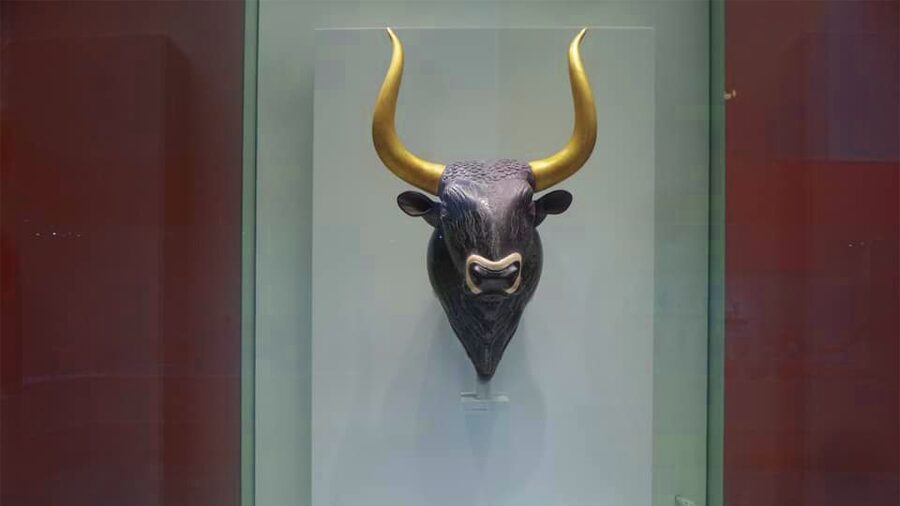
Reviewed · MUSEUMS
Heraklion Archaeological Museum Ticket & Audio Guide
The Phaistos Disk, Minoan bull-leaping frescoes, and thousands of other objects make this one of Crete’s essential stops. The Clio Muse audio guide helps you spot the key pieces without turning your visit into a race through room after room.
I like the simple email ticket and the freedom to pause the narration whenever you want. I also like that the commentary covers more than 5,500 years, from Neolithic Crete to the Roman era, in short stories rather than dry textbook notes. The main catch is that the audio guide highlights selected objects, so you still need extra time if you want to see every gallery properly. Some rooms may also be closed or rearranged, which can make the app’s route less clear.
Key points to know before you book
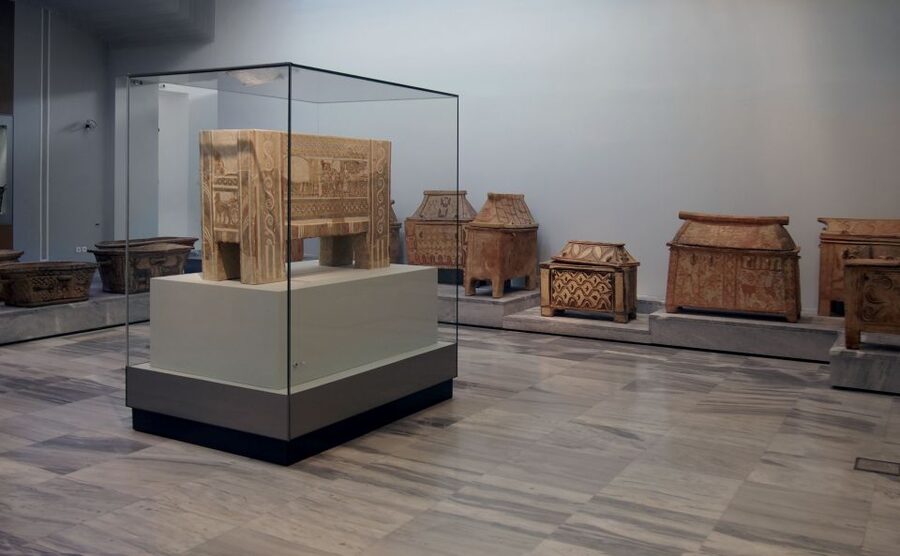
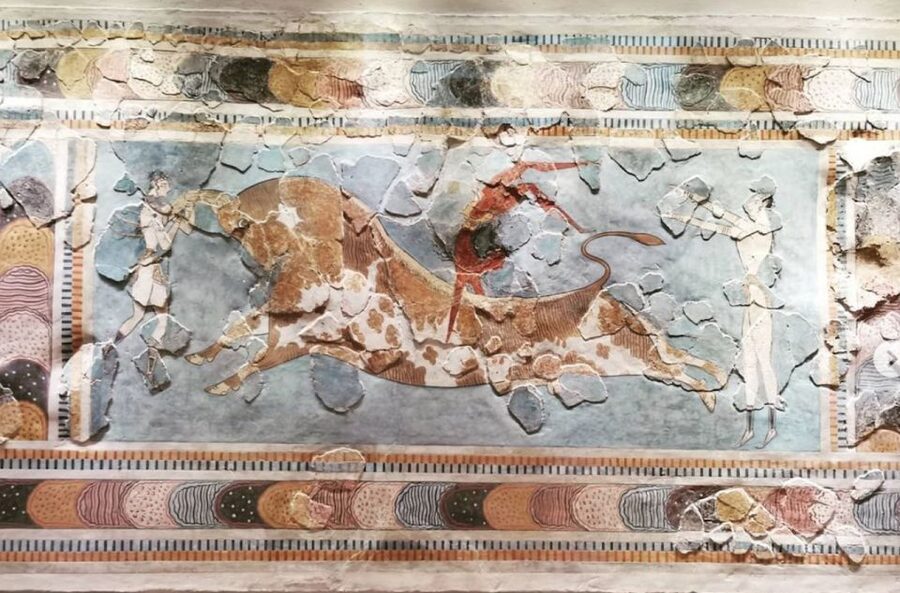
- The Phaistos Disk is one of the headline objects, along with striking Minoan frescoes such as the bull-leaping scene.
- The audio tour takes about one to one and a half hours for its main route, but you should allow two to two and a half hours for a fuller museum visit.
- Your ticket and audio guide arrive by email, with offline text, narration, and maps for Android and iOS.
- You explore independently, with no live guide, fixed group, or required pace.
- The guide is available in five languages: English, German, French, Spanish, and Italian.
- Bring your own charged smartphone and headphones, since neither is included.
Why this museum matters in Heraklion
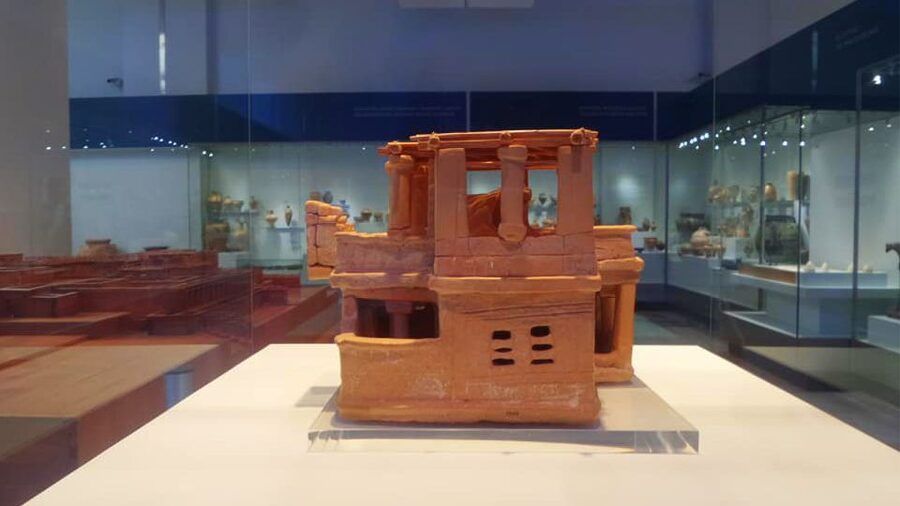
The Heraklion Archaeological Museum is the best place in Crete to make sense of Minoan culture. At Knossos, you walk among the remains of a major Bronze Age palace. Here, you see the objects that explain how people lived, worshipped, traded, worked, and created art.
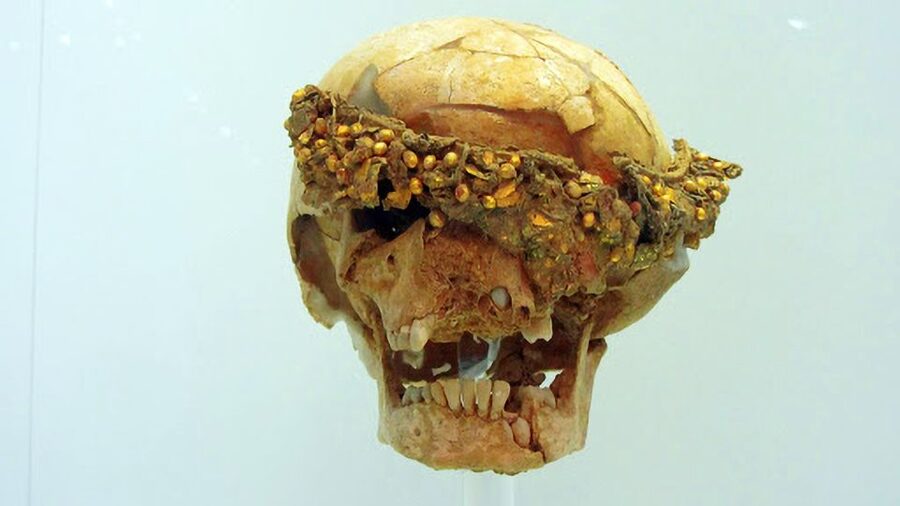
The collection covers a very long span, more than 5,500 years from the Neolithic period through Roman times. That range gives you useful context. You are not looking at isolated treasures with no connection. You can follow the development of Cretan art and daily life across several eras.
I find the museum especially useful before or after Knossos. Visit Knossos first if you want the objects in the museum to put the palace site into clearer focus. Visit the museum first if you want a stronger introduction before walking through the archaeological remains. If you must choose only one, the museum gives you a broader look at Minoan material and spiritual life, while Knossos gives you the physical setting.
The audio guide supports this context with brief, researched stories. It does not try to narrate every object in every room. Instead, it points you toward important pieces and explains why they matter.
A few more things to do in Crete worth a look
- Crete: Knossos Palace and Museum E-Tickets with Audio Guides
★ 4.0 · 828 reviews - Athens: Acropolis, Parthenon & Acropolis Museum Guided Tour
★ 4.8 · 9,316 reviews - Athens: Mythology of Delphi, Museum and Arachova Guided Tour
★ 4.6 · 4,008 reviews
Getting started with the Clio Muse audio guide
You receive the entry ticket and audio guide information by email. Before reaching the museum, download the Clio Muse app and the tour content, then check that the narration works on your phone.
This preparation matters. The guide includes offline text, audio, and maps, so you do not need to depend on a strong connection inside the museum. A charged smartphone is essential, and headphones are required. The activity does not provide either one.
The instructions are generally easy to follow. Once inside, you use your own phone and move from object to object at your own speed. You can pause the narration while examining a display, replay a section, or skip ahead if a particular item interests you less.
The audio guide can also be used again before or after your visit. That makes it more flexible than a fixed spoken tour. You might listen to a section later in your hotel, or replay a story after seeing Knossos.
The app route is not always perfectly clear. Changes to the gallery layout can leave the audio sequence out of order, especially on the upper floor. If a room is closed, do not assume you have missed something. Use the museum signs and the app map together, and treat the suggested route as a helpful guide rather than a strict path.
The first galleries: a long story in small objects
The museum’s collection begins far earlier than the Minoan palace culture most people associate with Crete. The opening material covers Cretan prehistory and helps show how objects changed over time.
You will see representative pieces from different periods rather than a single narrow display. The audio commentary gives you a way to connect them, explaining historical information and less familiar stories in short sections.
This is where the guide earns its keep. Museum labels can tell you what an object is, but narration can help explain why it belongs in the larger story. You are encouraged to look closely, then continue at your own pace rather than stand in one place listening to a long lecture.
If you are interested in every period represented, allow more than the standard audio route. The main narration is designed to focus your attention on key items. It is not a substitute for reading every label or studying every room.
Minoan art and the objects you should not miss
The museum is best known for its Minoan collection, and this is where your time becomes most rewarding. The displays include major examples of Minoan art, along with objects that show the skill and imagination of the people who made them.
The Phaistos Disk is a central attraction. The disk’s symbols have made it one of the most famous objects in the museum, and the audio guide helps place it within the wider collection instead of leaving it as a famous mystery on its own.
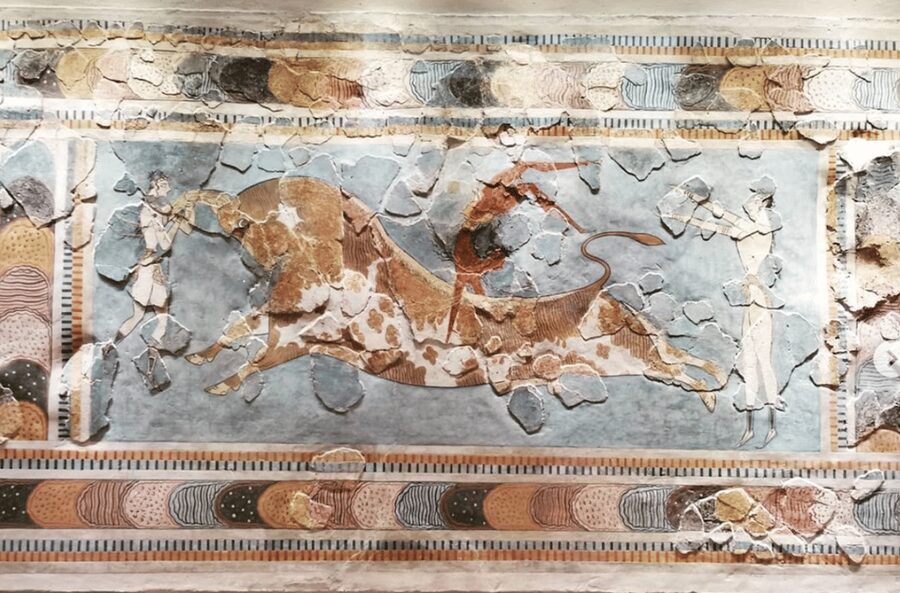
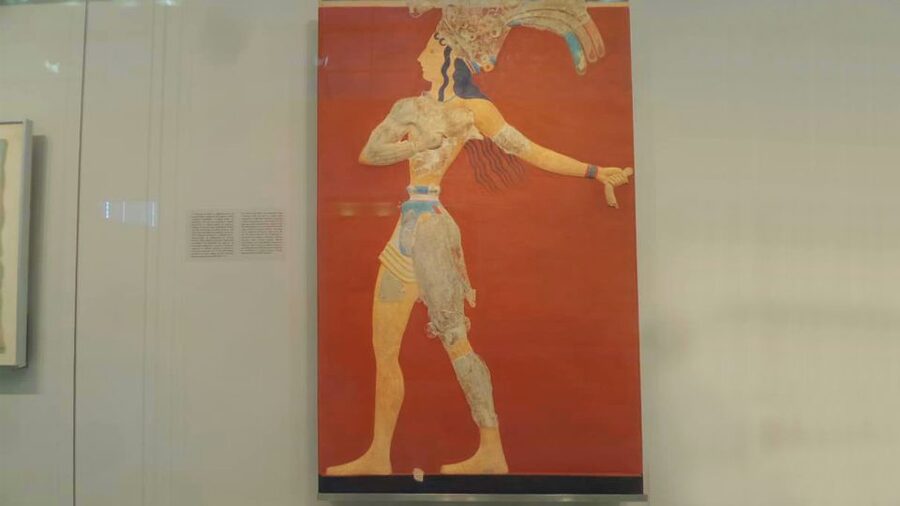
The Minoan frescoes are another major reason to visit. Look for the bull-leaping scene, one of the memorable images highlighted by the tour. The frescoes are valuable not only for their color and movement, but also for what they suggest about ceremony, sport, belief, and social life.
The audio narration focuses attention on these headline pieces, but do not rush away after hearing the main section. The surrounding displays hold plenty of additional objects. The museum’s clear presentation makes it possible to pause the app and spend time with pieces that catch your eye.
One useful approach is to follow the audio guide once from beginning to end, then return to the rooms you found most interesting. The main tour takes roughly an hour to an hour and a half, while a fuller visit can take two to two and a half hours.
Same base, a completely different day:
- Crete: Day Trip to Agios Nikolaos and Spinalonga Island
★ 4.6 · 4,416 reviews - Agios Nikolaos: Boat Trip to Spinalonga with Swim Stop
★ 4.4 · 3,031 reviews - Crete: Knossos Palace Entry Ticket with Optional Audio Guide
★ 3.9 · 2,251 reviews - From Chania: Day Trip to Elafonisi Island Pink Sand Beach
★ 4.5 · 2,014 reviews
The upper floor and the limits of a recorded route
The upper floor can be especially rewarding, but it may also be the least predictable part of the visit. Gallery arrangements can change, and some rooms may be closed. This has caused the recorded sequence to feel out of order at times.
That is not a reason to skip the floor. It is a reason to remain flexible. If the next audio stop seems to be missing, check the map, look for the object by name, and continue to another section if necessary.
The app’s narration can still add useful detail even when the route is imperfect. You are free to pause or stop it, and you will not lose the benefit of having a human voice explain the importance of selected pieces.
The museum also provides signage in English and Greek, which gives you a useful backup. I would not rely on the audio guide alone if you want to cover every room. Use it as a filter for the most important objects, then explore beyond its suggested stops.
How long should you plan?
The stated duration is one to four hours, which reflects the freedom built into the visit. The recorded highlights can take about an hour. Many people will find an hour and a half enough for a focused introduction, especially if they are visiting Knossos afterward.
For a proper look at the museum, I would allow at least two hours. Give yourself two and a half hours if you like to read labels, compare objects, and stop often for photographs or close viewing.
The difference between a rushed and satisfying visit is significant. A short audio tour can show you the museum’s main ideas, but the collection contains far more than the selected stops. If you have come to Heraklion mainly for Minoan culture, extra time is well spent.
The museum can also be a good choice in a busy sightseeing day because you control the pace. You are not tied to a group departure or a live guide’s schedule. If one room holds your attention, stay. If your children lose interest, move on.
Is the $33 price good value?
At $33 per person, this is more than a basic adult admission. You are paying for the convenience of pre-booked entry and the Clio Muse self-guided audio tour.
The value depends on how you use it. If you want a quick look at the museum and are happy to read the signs, the audio guide may not be essential. One museum visit can work perfectly well without added narration, particularly for people who already know Minoan archaeology.
For many first-time visitors, the extra cost is reasonable. The guide directs your attention to the Phaistos Disk, frescoes, and other important pieces, then explains their place in Cretan culture. That can make a large collection feel more manageable.
The strongest value comes when you would otherwise walk past objects without knowing why they matter. The audio commentary turns a series of displays into a more connected story. It also saves you from hiring a private guide if you prefer to explore alone.
The ticket is a regular adult entry ticket and can be used by all ages, but some visitors may qualify for reduced or free admission through museum rules. EU citizens aged 0 to 25 may enter free with an ID card or passport, though they must wait in line to show it. From April 1 through October 31, non-EU citizens aged 6 to 25 can receive 50 percent off with a passport, while children up to age five from non-EU countries enter free with a passport. Greek and other EU citizens over 65 can receive 50 percent off during that same period.
If you qualify for one of these rates, check the official conditions before paying for an adult ticket. The offered activity includes the regular adult admission, not a special reduced ticket.
Who will like this experience most?

I would choose this for independent visitors who want structure without a live guide. You get a clear set of highlights, but you remain free to stop, wander, and revisit sections.
It suits first-time visitors to Heraklion, people heading to Knossos, and anyone who prefers listening to a story rather than reading every label. The five language options also make it practical for many international visitors.
Families can use the pause function to keep the visit flexible. The audio route is not designed as a dedicated children’s tour, so younger children may need a shorter visit and extra freedom to move around.
You may want to skip the audio add-on if you already have a strong background in Minoan archaeology or prefer complete silence and self-guided reading. The museum itself is the main attraction. The app adds focus and explanation, but it does not replace the collection.
The experience is wheelchair accessible. Pets and smoking are not allowed. There is no transportation, food, or drink included, so you arrange those separately.
Practical tips for a smoother visit
Download everything before you arrive. The offline content includes the audio, written information, and maps, but it is still wise to check the app while you have a reliable connection.
Bring headphones that you can wear comfortably for at least an hour. If you are visiting with another person, sharing one pair of wireless earbuds can work, though you may find it easier for each person to listen separately.
Arrive with enough time for the entrance process and bathroom needs. The ticket is meant to make entry easier, but it does not remove every line or delay inside the building.
Start with the audio guide’s main route, then add your own exploration. This gives you a clear introduction without forcing you to ignore displays that are not part of the narration.
If a section appears closed, do not let the app dictate your entire visit. Follow the available rooms, read the English and Greek signs, and return to the missing section only if it reopens.
Should you book the ticket and audio guide?
Book it if you want an easy museum visit with clear highlights and useful storytelling. The pre-booked ticket removes some friction, while the Clio Muse narration gives you a practical way to understand the Phaistos Disk, Minoan frescoes, and other major objects.
Think twice if you mainly want a quick admission ticket, qualify for a reduced price, or prefer to explore every display without an audio route. The app can occasionally become confusing when galleries change, and the main narration covers only selected objects.
For most first-time visitors who have one and a half to two and a half hours, I think the combination is worthwhile. Bring a charged phone, bring headphones, and leave enough time to wander beyond the stops the guide selects.
FAQ
Where is the experience located?
It takes place at the Heraklion Archaeological Museum in Heraklion, Crete, Greece.
How long does the visit take?
The stated duration is one to four hours. The audio route may take about one to one and a half hours, while a fuller museum visit can take two to two and a half hours.
Is a live guide included?
No. The activity includes a self-guided audio tour for your smartphone, not a live guide.
Which languages are available?
The audio guide is available in English, German, French, Spanish, and Italian.
What do I need to bring?
Bring a charged smartphone and headphones. The activity does not provide either item.
Does the audio guide work offline?
Yes. Offline content includes text, audio narration, and maps.
Is the museum wheelchair accessible?
Yes, the activity information states that it is wheelchair accessible.
Can children use this ticket?
The included ticket is a regular adult entry ticket and can be used by all ages. Some children and young adults may qualify for free or reduced admission under the stated age and nationality rules.
Can I cancel the booking?
No. This activity is non-refundable.
More Audio Tours in Crete
- Athens: Acropolis Ticket with Optional Audio or Live Guide
★ 4.2 · 11,055 reviews - Athens: Cape Sounio & Poseidon Temple Trip with Audio Guide
★ 4.4 · 4,521 reviews - Athens: Acropolis Ticket with Audio Guide
★ 4.0 · 3,575 reviews - From Athens: Delphi Full Day V.R. Audio Guided Tour
★ 4.6 · 3,028 reviews
Just added in Crete
- Balos & Gramvousa Luxury Catamaran Sailing Cruise from Kissamos★ 5.0 · 116 reviews
- Cretan Cooking Class and Olive Oil Tasting★ 5.0 · 178 reviews
- Dia Island Catamaran – Premium Lunch, Open Bar, Small Group★ 5.0 · 126 reviews
- Panormo: Luxury Catamaran Cruise with Lunch & Open Bar★ 5.0 · 80 reviews
- Rethymno Catamaran Cruise: Healthy Lunch & Open Bar★ 4.5 · 79 reviews
- The Terra Creta Olive Oil Experience Tour★ 4.7 · 344 reviews
- Heraklion: Beginner Scuba Diving Lesson with PADI Instructor★ 4.9 · 355 reviews
- Chania Cooking Class-The Authentic Enjoy traditional Cretan meal★ 5.0 · 339 reviews
Museums, compared.

Acropolis, Parthenon & Acropolis Museum Guided Tour
Read our review →
Mythology of Delphi, Museum and Arachova Guided Tour
Read our review →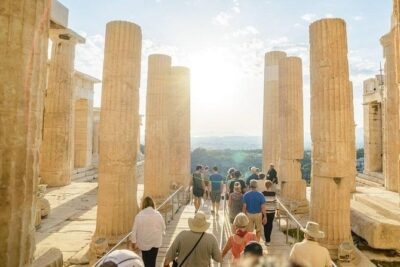
Acropolis monuments & Parthenon Walking Tour with Optional Acropolis Museum
Read our review →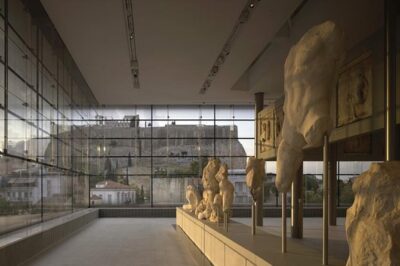
Athens All Included: Acropolis and Museum Guided Tour with Ticket
Read our review →
Acropolis Museum Ticket with optional Audio Guide
Read our review →
Small-Group Delphi, Museum & Arachova Day Trip
Read our review →
Parthenon & Acropolis Museum with Audio or Live Tour Option
Read our review →
National Archaeological Museum Ticket & Audio Guide
Read our review →Browse the lists this tour appears in