

Reviewed · ACROPOLIS & ATHENS HIGHLIGHTS
Athens: Acropolis and Acropolis Museum Premium Guided Tour
The best thing about this tour is the order: you approach the Acropolis from the south slope, pass the Theatre of Dionysus, then climb toward the Parthenon before finishing among the statues and artifacts of the Acropolis Museum. That sequence gives you the ruins first and the museum evidence afterward.
I like the way the guide connects the big monuments with theater, politics, religion, and daily life. I also like the practical route planning, especially the chance to avoid the main entrance crowds and the 15-minute pause at the summit for photos and Athens views. The catch is stamina: this is a serious 3.5-hour walk over uneven stone, stairs, and slopes, and the Acropolis Museum may feel like a lot after time in the sun.
Key points at a glance
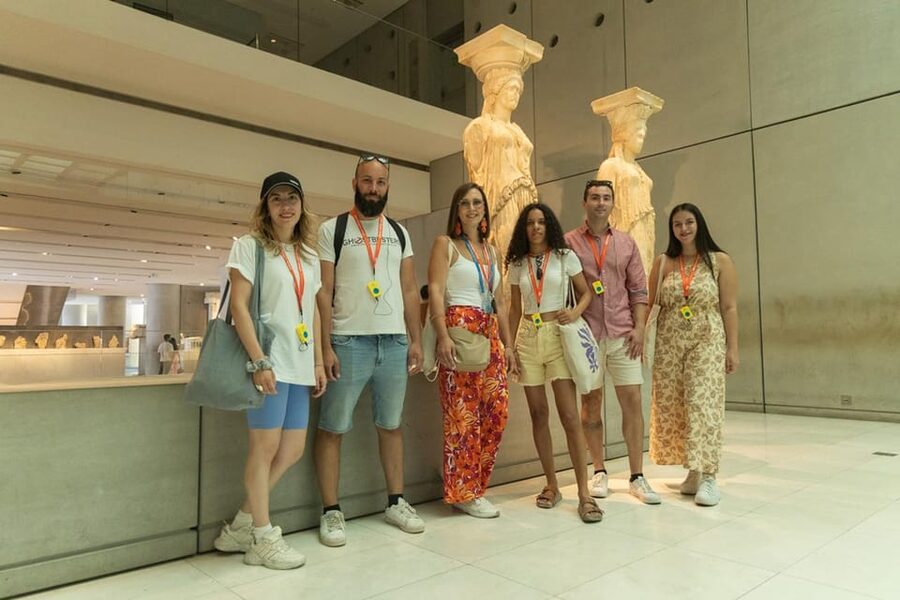
- South-slope approach: Enter by way of the Theatre of Dionysus and Dionysus Sanctuary rather than going straight to the hilltop.
- Major monuments included: See the Propylaea, Erechtheion, Temple of Athena Nike, Parthenon, and Odeon of Herodes Atticus.
- Two-part guided visit: Plan on about two hours at the Acropolis and 1.5 hours in the Acropolis Museum.
- Strong guide element: Past guides including Yolanda, Apollon, Maria, Sissy, and Angeliki have been praised for clear explanations, good pacing, and lively storytelling.
- Timed entry matters: Arrive 20 minutes early, bring required identification, and expect security checks even with skip-the-ticket-line access.
- Best for active sightseers: Comfortable shoes, water, and a tolerance for heat and uneven ground are essential.
Starting at Dionysiou Areopagitou Street

Your meeting point is at 3 Dionysiou Areopagitou Street, in front of the Lukumades and Pilino shops. It is about a three-minute walk from Acropolis Metro Station, near the pedestrian route leading from Hadrian’s Arch toward the Acropolis.
Look for the orange Athens Walking Tours sign. Arrive 20 minutes before departure. This is not a tour where arriving at the last second works well. The Acropolis uses strict timed entry, and late arrivals cannot be accommodated or refunded.
The tour is offered in English with a local, licensed guide. Group size can vary, but several past participants described groups of fewer than 20 people or a size that still felt manageable. That matters here. A guide needs to gather everyone on busy paths, find a patch of shade, and speak clearly above the city noise.
The provider has more than 20 years of experience running Athens walks. That does not remove the crowds, but it can help with the basic flow: where to meet, how to approach the hill, and how to get the most from a short visit.
More of the old city on foot in Athens:
- Athens: Acropolis & up to 5 Archaeological Sites Combo Pass
★ 4.4 · 12,619 reviews - Athens: Acropolis Ticket with Optional Audio or Live Guide
★ 4.2 · 11,055 reviews - Athens: Acropolis, Parthenon & Acropolis Museum Guided Tour
★ 4.8 · 9,316 reviews
Walking through the Theatre of Dionysus
The tour begins at the foothills of the Acropolis, then moves toward the Theatre of Dionysus. This fifth-century amphitheater is often called the birthplace of the performing arts, and it gives the opening walk a useful sense of place.
Your guide explains how the theater worked and what it meant to ancient Athenians. You can look across the stone seating and picture an audience gathered for drama, music, and religious festivals. The setting also helps you understand that the Acropolis was not an isolated monument. It was part of a larger civic and sacred center.
Nearby, the Dionysus Sanctuary adds another layer. Dionysus was linked with wine, fertility, and theater, so the sanctuary and theater belong to the same religious world. This is the kind of context that can be easy to miss if you simply climb to the Parthenon, snap a few pictures, and leave.
The path is uphill, and the stones can be slippery or irregular. Wear sturdy shoes with a reliable sole. This is not a good outing for a stroller, wheelchair, or anyone who has trouble with stairs and uneven ground.
Seeing the Odeon and entering the Acropolis
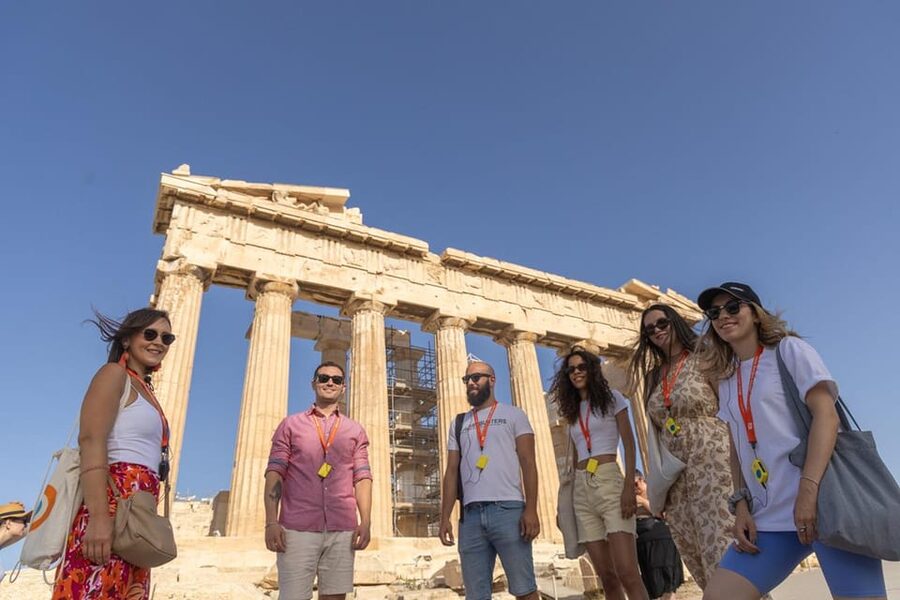
As you continue uphill, you pass the Odeon of Herodes Atticus. The itinerary allows about ten minutes here, mainly as a guided pass-by. You may not get a long stop, but the structure is one of the most memorable sights below the Acropolis walls.
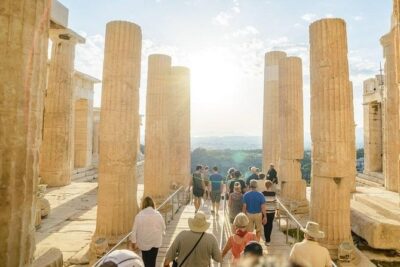
From there, the route leads toward the Propylaea, the monumental gateway to the hilltop. The approach gives you a dramatic sense of arrival, but it also brings the more demanding part of the walk. Expect inclines, steps, exposed sun, and crowded passageways.
The skip-the-ticket-line service saves you from buying tickets at the regular ticket window, but it does not guarantee instant entry. Security screening remains mandatory. Waiting times are often between zero and 10 or 30 minutes, and in the busiest periods can run longer than that.
The tour runs in rain or shine. On hot mornings, guides have made a point of stopping in shade when possible and warning people about tricky footing. Still, shade is limited on the Acropolis. Bring water, wear comfortable clothes, and consider a hat.
The Parthenon, Erechtheion, and Temple of Athena Nike
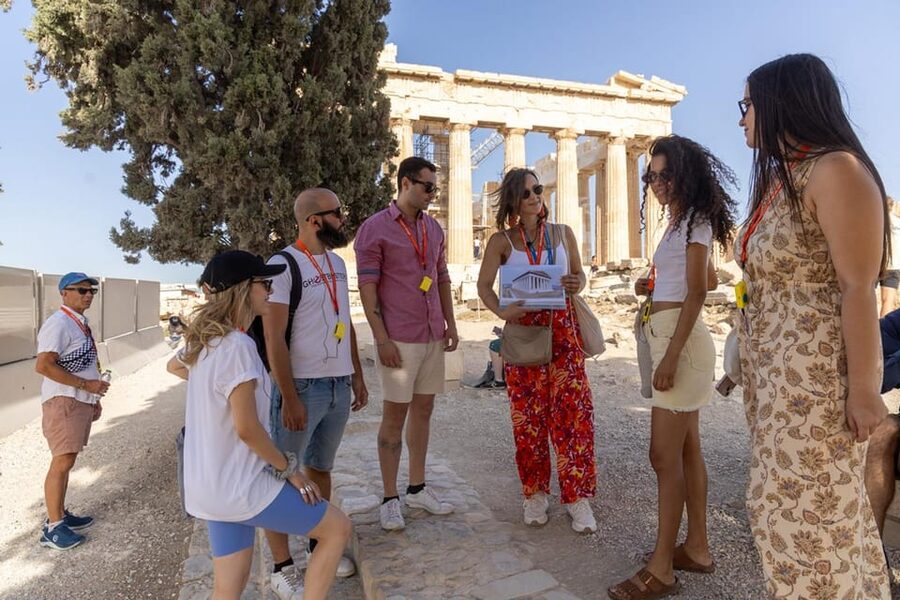
Inside the Acropolis, the guide brings you close to the site’s best-known monuments. The Propylaea frames the entry, while the Temple of Athena Nike sits near the approach, a small but elegant shrine dedicated to Athena in her role as bringer of victory.
The Erechtheion is especially rewarding when you know what to look for. Its unusual shape reflects the complicated sacred traditions attached to the hill. Your guide can point out architectural details and explain why this building does not have the simple, regular appearance associated with the Parthenon.
Then comes the Parthenon. You will hear about its design, purpose, political meaning, and place in the story of Athens. Several past guides, including Apollon, Maria, and Angeliki, were praised for making the monuments easier to understand without burying the group in dry facts. That balance is important. The Parthenon is visually powerful, but its meaning is much harder to grasp from a signboard alone.
You should not expect to walk inside the Parthenon. The experience is about viewing the temple and its surrounding ruins from permitted paths, while the guide explains the site and points out details you might otherwise overlook.
The Acropolis portion lasts about two hours. That is enough time to see the principal sights, pause for photos, and get a clear explanation of the hill, but not enough for a slow, solitary study of every stone.
A few more things to do in Athens worth a look
- Athens: Mythology of Delphi, Museum and Arachova Guided Tour
★ 4.6 · 4,008 reviews - Athens: Acropolis, Parthenon & Acropolis Museum Guided Tour
★ 4.8 · 3,579 reviews - Acropolis monuments & Parthenon Walking Tour with Optional Acropolis Museum
★ 5.0 · 2,678 reviews - Athens All Included: Acropolis and Museum Guided Tour with Ticket
★ 4.5 · 2,673 reviews
Taking in Athens from the summit
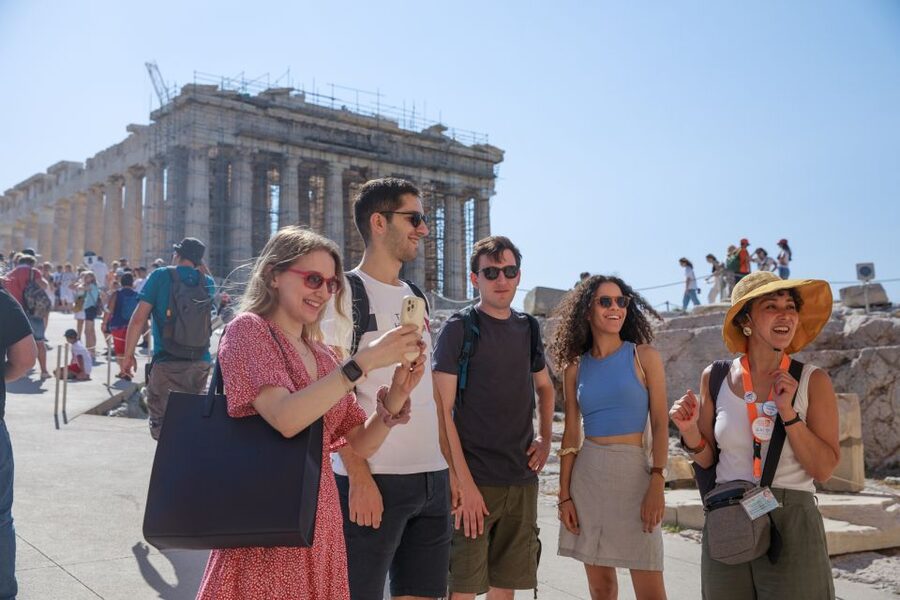
At the top, you get a 15-minute break and photo stop. The views stretch across Athens, with nearby ancient sites such as Mars Hill, the Odeon of Herodes Atticus, and the Ancient Agora visible from the hill.
This pause is useful because the Acropolis visit is not just a march from monument to monument. The view shows how the ancient city was arranged and why this hill mattered. Your guide discusses excavations and the surviving remains, then helps place the nearby monuments in relation to one another.
Fifteen minutes is not a long rest. If you want extensive personal photography, you may need to use the time carefully. The tour keeps moving, and the guide cannot wait indefinitely for each person to find the perfect angle.
Finishing at the Acropolis Museum
After the hill, the group continues to the Acropolis Museum for about 1.5 hours. This is a major strength of the tour, but it is also where some people may feel the length of the day.
The museum houses sculptures, architectural fragments, and other objects connected with the Acropolis. The visit helps you see details that are difficult to appreciate among the open-air ruins, including decorative work and objects that reveal how the buildings were conceived.
Do not skip the Gallery of the Slopes. Glass floors reveal archaeological excavation areas below the museum, giving you a direct look at layers of earlier settlement. That connection between the building above and the remains below makes the museum more than a collection of objects in glass cases.
The guide leads you through the main highlights and explains the objects in context. Guides such as Sissy and Thanassis were praised for carrying the same clear storytelling from the hill into the museum. That continuity is valuable. You are not starting from zero after two hours of outdoor sightseeing.
The tour ends inside the museum at 11 Chatzichristou Street. You are free to continue exploring on your own after the guided portion. This is a good arrangement if you want more time with particular sculptures, but you should not assume the guide will cover every gallery in detail.
A practical point: large bags and big backpacks are not allowed at the Acropolis, and the museum may require you to check a backpack. Bring a small bag if possible. Pets and baby strollers are also not permitted.
Is $55 a fair price?
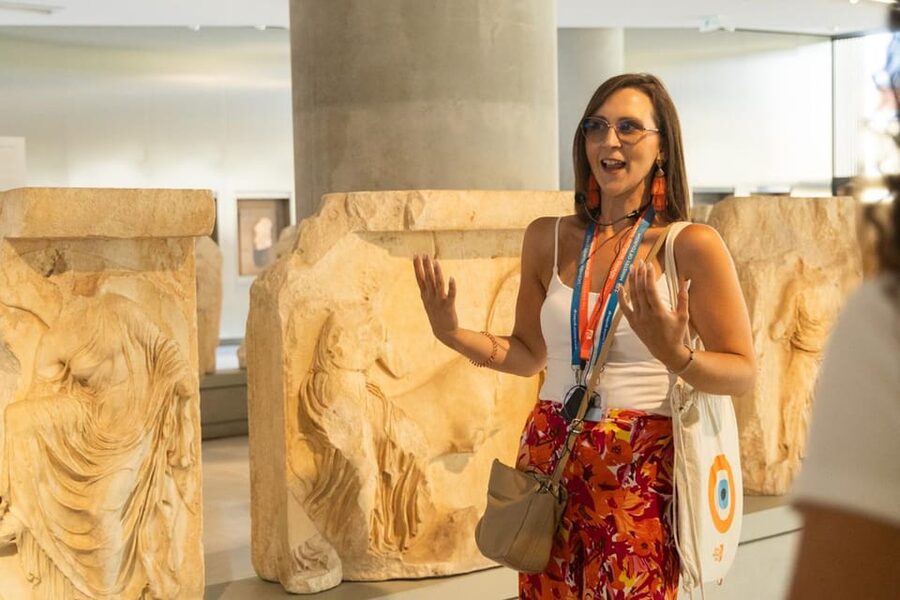
At $55 per person, the value depends on what you want from Athens’ two major ancient sights. The price includes a licensed guide, the two-hour Acropolis visit, the 1.5-hour museum visit, an Athens guide magazine, and an Athens map. Entrance tickets are included only if you choose the ticket-included option.
If you choose the option without tickets, you receive a link after booking to buy the Acropolis and museum tickets yourself. Pay close attention to the entry time. The ticket slot must match the tour’s Acropolis entry time exactly, not simply the general time you plan to arrive.
For many people, the guide is the reason the price makes sense. You could walk through the site alone, but the monuments are easier to read when someone explains the links between architecture, mythology, theater, politics, and religion. Past guides such as Yolanda, Philippina, Olysia, and Alexandria were singled out for clear delivery, strong pacing, and useful archaeological insight.
The price is less attractive if you prefer to wander slowly or already know ancient Greek history well. The combined visit is efficient rather than leisurely. One past participant felt the museum was more than they wanted after the Acropolis, while another found seeing both essential. You should choose the full tour if you want a guided overview in one block of time, not a relaxed afternoon with long breaks.
Timing, crowds, and physical effort
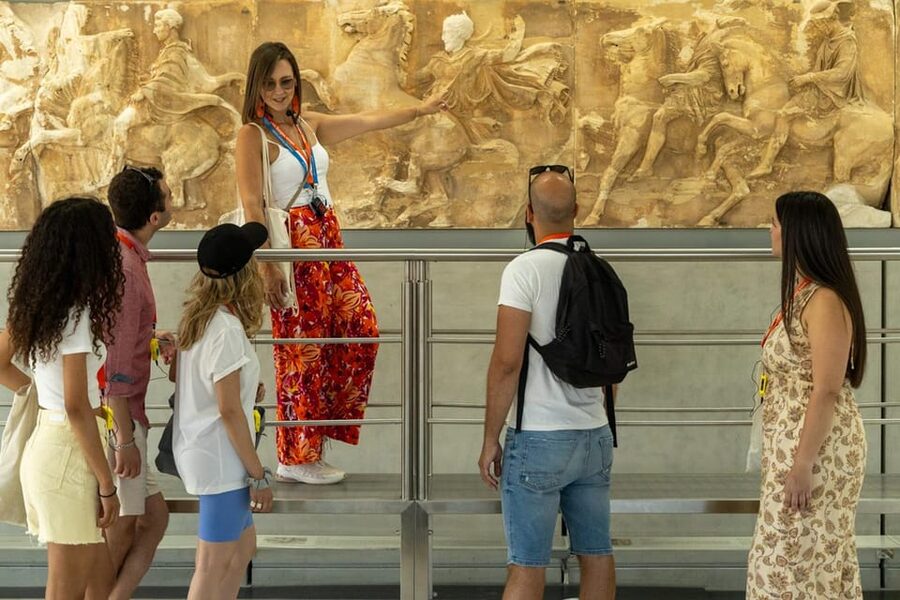
Early starts have a clear advantage. A tour beginning around 8:30 or 9:30 can help you get onto the Acropolis before the worst heat and later crowds, though even shoulder-season mornings can be very busy. Do not read skip-the-ticket-line as skip-all-waiting. Security and timed entry still control the pace.
The walk is moderate to demanding rather than gentle. You will be on your feet for 3.5 hours, with stone paths, steps, inclines, and limited shade. The group usually pauses for explanations and photos, but this is not a seated museum tour.
Bring:
- Comfortable, sturdy shoes
- Water
- A hat for sunny days
- Comfortable clothing
- Official identification if you are using a reduced or free admission rate
Children may need passports or other official proof for entry, depending on ticket eligibility. Bring the required documents, since a missing ID can mean denied entry or paying the full ticket price if available.
The tour is not suitable for wheelchair users or people with mobility impairments. It also does not include hotel pickup, drop-off, food, or drinks.
Who will get the most from this tour?
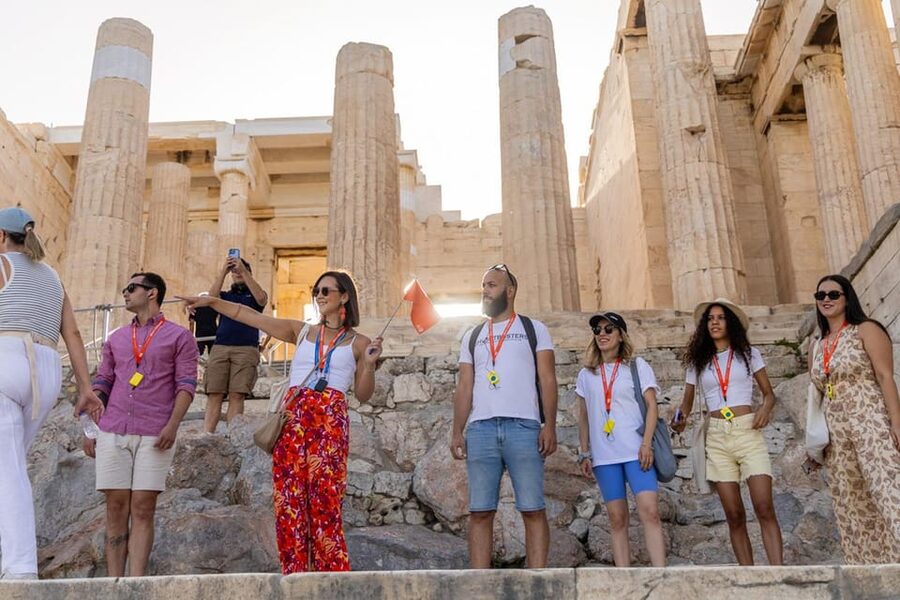
I would choose this tour for a first visit to Athens, especially if you want the Acropolis and museum explained in one carefully arranged morning. It also suits you if ancient sites can feel confusing without a guide. The route gives you a useful story, not just a list of famous stones.
Families with older children can benefit from the theater and mythology connections, but parents should judge the heat, walking, and strict timing carefully. The no-stroller rule and uneven ground make this a poor fit for babies or anyone who needs wheeled access.
History enthusiasts will appreciate the museum and the guide’s explanations of excavation work. Photography-minded visitors will like the summit pause and city views, but should not expect unlimited time at each monument.
The tour runs in English only. If you need another language, this is not the right choice.
Should you book it?
Book it if you want the main Acropolis monuments and museum highlights in one well-organized visit, and if you value interpretation more than free-form wandering. The strongest part is the combination of a south-slope approach, a licensed guide, and a museum visit that adds meaning to what you saw outdoors.
Skip it if you dislike group schedules, have limited walking ability, or want a slow museum afternoon after the Acropolis. For everyone else, $55 is a reasonable price for the guide, structure, and time saved, especially on a busy morning. Arrive early, bring water and ID, wear proper shoes, and you will be ready for one of Athens’ most demanding and rewarding walks.
FAQ
How long does the Acropolis and museum tour last?
The tour lasts 3.5 hours. About two hours are devoted to the Acropolis and about 1.5 hours to the Acropolis Museum.
Where is the meeting point?
Meet at 3 Dionysiou Areopagitou Street, in front of the Lukumades and Pilino stores. It is about a three-minute walk from Acropolis Metro Station. Look for the orange Athens Walking Tours sign.
How early should I arrive?
Arrive 20 minutes before the scheduled departure time. The Acropolis has strict timed entry, and late arrivals cannot be accommodated or refunded.
Are admission tickets included?
Tickets are included only with the ticket-included option. If you select the option without tickets, you receive an email link after booking to purchase the Acropolis and museum entrance tickets.
Is there still a wait with skip-the-ticket-line access?
Yes. You may still wait for security screening and entry control. Typical waits range from zero to 10 or 30 minutes, though longer waits can occur during busy periods.
What should I bring?
Bring comfortable shoes, comfortable clothing, water, and any required official identification. Identification is especially important if you qualify for reduced or free admission.
Is the tour suitable for wheelchair users or strollers?
No. The tour is not suitable for wheelchair users or people with mobility impairments. Baby strollers, luggage, and large backpacks are not allowed.
What happens after the guided museum visit?
The tour ends inside the Acropolis Museum at 11 Chatzichristou Street. You may continue exploring the museum on your own after the guided portion.
Just added in Athens
- Ceramic and Pottery Creative Workshop with Two Local Artists★ 4.0 · 57 reviews
- Small-Group Women History in Ancient Greece Walking Tour★ 5.0 · 38 reviews
- Athens Old City Private Photoshoot Tour / 2 hrs★ 5.0 · 109 reviews
- Athens: Wine Workshop Create your Own Wine under the Acropolis★ 5.0 · 77 reviews
- Athens: Greek Wines Tasting with Sommelier and Acropolis Views★ 5.0 · 88 reviews
- Wine Trails Private Tour/ Nemea visit 3 wineries from Athens or Nafplion (10 h)★ 5.0 · 44 reviews
- FLYING DRESS Photoshoot in Athens – Greece★ 5.0 · 47 reviews
- Small-Group Wine Tour in Athens with Tasting★ 5.0 · 33 reviews
Acropolis & Athens Highlights, compared.
Acropolis & up to 5 Archaeological Sites Combo Pass
Read our review →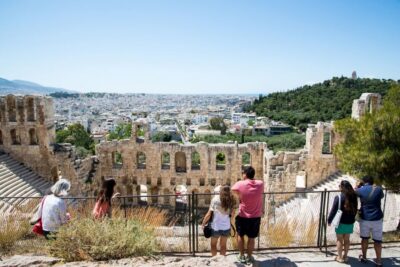
Acropolis, Parthenon & Acropolis Museum Guided Tour
Read our review →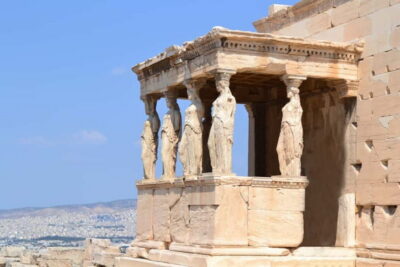

Acropolis monuments & Parthenon Walking Tour with Optional Acropolis Museum
Read our review →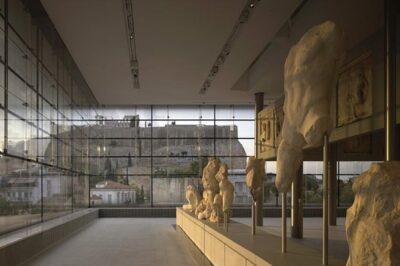
Athens All Included: Acropolis and Museum Guided Tour with Ticket
Read our review →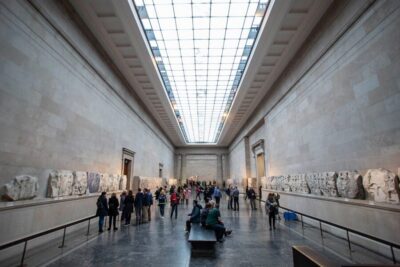
Acropolis Museum Ticket with optional Audio Guide
Read our review →
Acropolis Ticket & Optional Self-Guided Audio Tours
Read our review →Browse the lists this tour appears in