

Reviewed · ACROPOLIS & ATHENS HIGHLIGHTS
Athens: Acropolis Museum Ticket with Audio Guide
The Acropolis Museum does something special: it lets you study the sculptures and artifacts from the hill while looking directly toward the Parthenon. I like the clear museum layout and the chance to hear the stories behind the Caryatids and Parthenon carvings rather than simply walk past them. Pre-booking also helps you avoid the ticket line, a useful perk in Athens’ busy summer months.
The audio guide adds welcome context and works offline, but its directions can be awkward. You may hear a good explanation of an object, then need to pause and find it yourself. The museum ticket is also non-refundable, so check the option, date, and phone requirements carefully before paying.
Key points to know before you book

- See the Caryatids up close: The famous female figures from the Erechtheion are among the museum’s most memorable works.
- Look toward the Parthenon: The upper gallery gives you a powerful connection between the sculptures inside and the temple outside.
- Use your own pace: The museum can take about an hour and a half, or closer to three hours if you read labels and take your time.
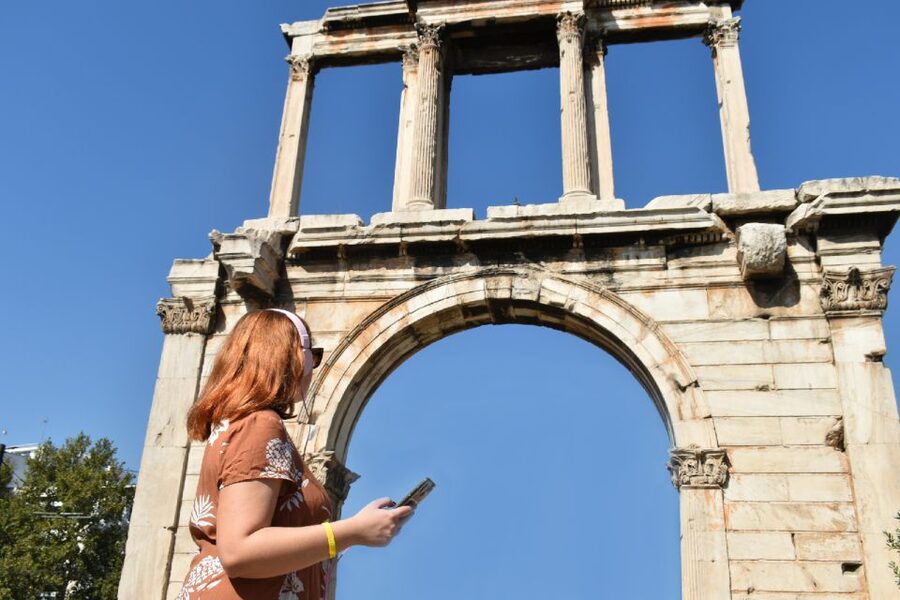
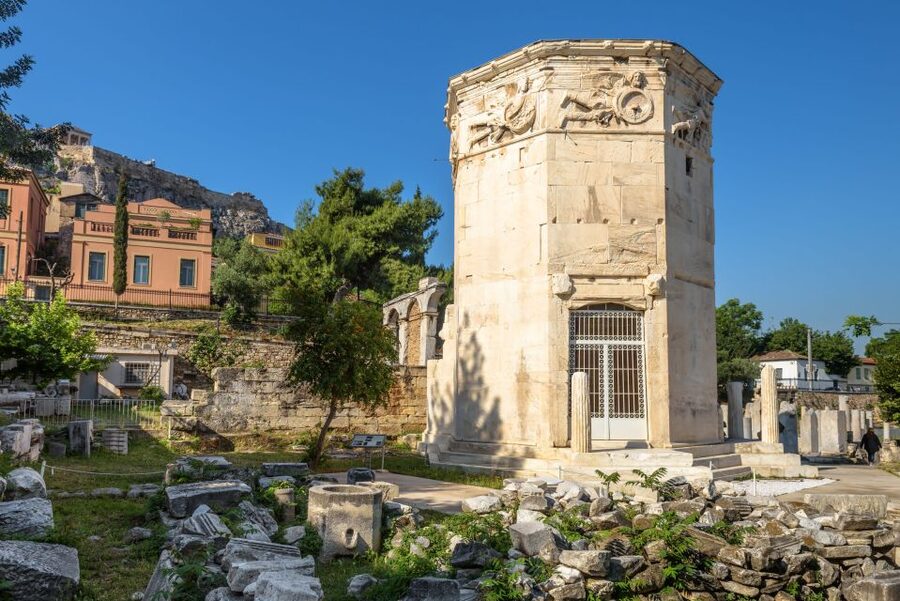
- Add Athens’ major sites: Depending on the option you choose, you can include Acropolis Hill, the Ancient Agora, Kerameikos, the Olympieion, the Roman Forum, Hadrian’s Library, and Aristotle’s Lyceum.
- Bring a charged phone and headphones: Your audio tour is delivered through an app, not by a person at the museum.
- Go early in warm months: Morning visits help you avoid heavier crowds and leave more room for careful viewing.
Why the Acropolis Museum deserves time of its own

Many people treat the Acropolis Museum as a quick stop before or after the Parthenon. I think that undersells it. The museum gives you the missing pieces of the hill: sculptures, architectural fragments, and archaeological finds that are easier to understand indoors than from a distance on the rocky summit.
The building itself is part of the experience. Its modern design frames the ancient material without trying to imitate it. As you move through the galleries, you see how Athens developed from early settlements into the city associated with the Golden Age.
The museum is often described as relatively small compared with some European museums. That can work in your favor. You are not facing endless rooms and a long list of objects. You can focus on the Acropolis, the temples, and the artistic ideas that shaped the city.
The main question is how much time you have. A fast visit may take about an hour. I would set aside 90 minutes at minimum, and up to three hours if you want to read the displays, stop for breaks, and explore the area beneath the museum.
More of the old city on foot in Athens:
- Athens: Acropolis & up to 5 Archaeological Sites Combo Pass
★ 4.4 · 12,619 reviews - Athens: Acropolis Ticket with Optional Audio or Live Guide
★ 4.2 · 11,055 reviews - Athens: Acropolis, Parthenon & Acropolis Museum Guided Tour
★ 4.8 · 9,316 reviews
What the smartphone audio guide adds
The optional audio guide turns a ticket into a self-guided tour. You listen on your own phone, using offline content and an interactive offline map. That matters in a large stone museum, where mobile reception or data access may not always be convenient.
The commentary covers the museum’s architecture, the Acropolis monuments, Greek mythology, and key works such as the Caryatids. It also explains scenes shown on the metopes and pediments, including the birth of Athena and the battle of the Centaurs.
I like this type of guide for independent sightseeing. You can stop the narration, replay a section, or move ahead when a display does not interest you. The audio tours can be used repeatedly and at any time, which gives you more flexibility than a fixed group visit.
There is a catch. The audio usually explains an object well, but the movement instructions can be less natural. You may hear directions such as moving behind a column or standing near a particular statue, then spend a moment figuring out exactly where to go. A good method is to find the object first, then press play.
The guide can also skip parts of the museum. That does not mean those areas are unimportant. Pause the audio and inspect the displays around you before continuing. The narration is a route, not a substitute for looking at every gallery.
The available languages are English, Spanish, French, Italian, German, and Greek. There is no live guide included, so you should choose this experience only if you are comfortable managing the tour from your phone.
Entering the museum and finding your rhythm
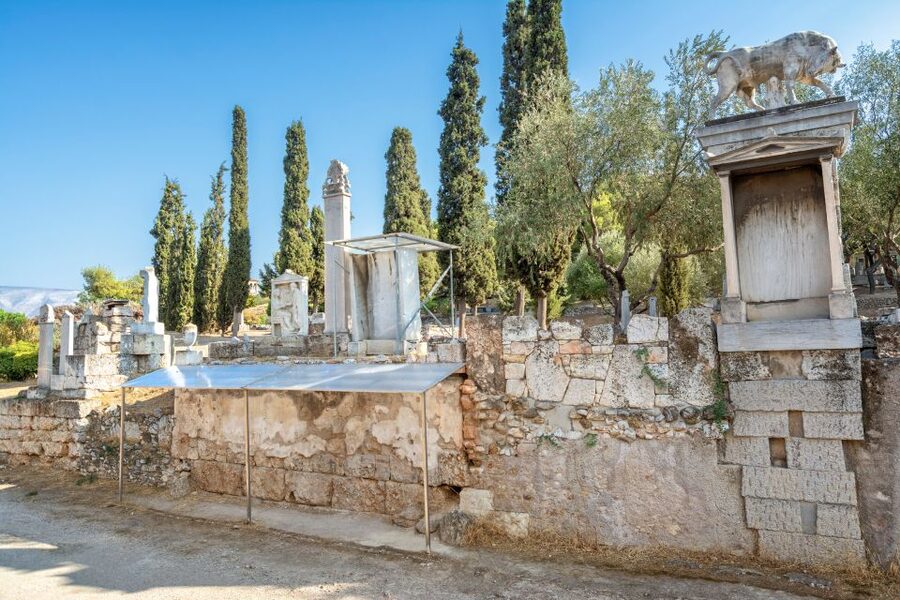
Your ticket is delivered electronically, with a separate message from the provider containing the ticket and the app link for the audio guides. Download everything before you arrive. This avoids wasting museum time dealing with an app, password, or weak connection.
The activity information says to book per device, not per person. That is an important detail for couples or families. If two people want to listen independently, each device needs to be covered according to the booking instructions.
Once inside, take a moment to get your bearings. Do not rush straight into the audio. Look at the room, note where the displays sit, and then begin the narration. This small pause makes the directions easier to follow.
The museum is wheelchair accessible. Large bags and luggage are not allowed, and baby strollers are also listed among the prohibited items. Wear comfortable shoes, especially if you combine the museum with the Acropolis or other archaeological sites.
The Caryatids and the faces of ancient Athens
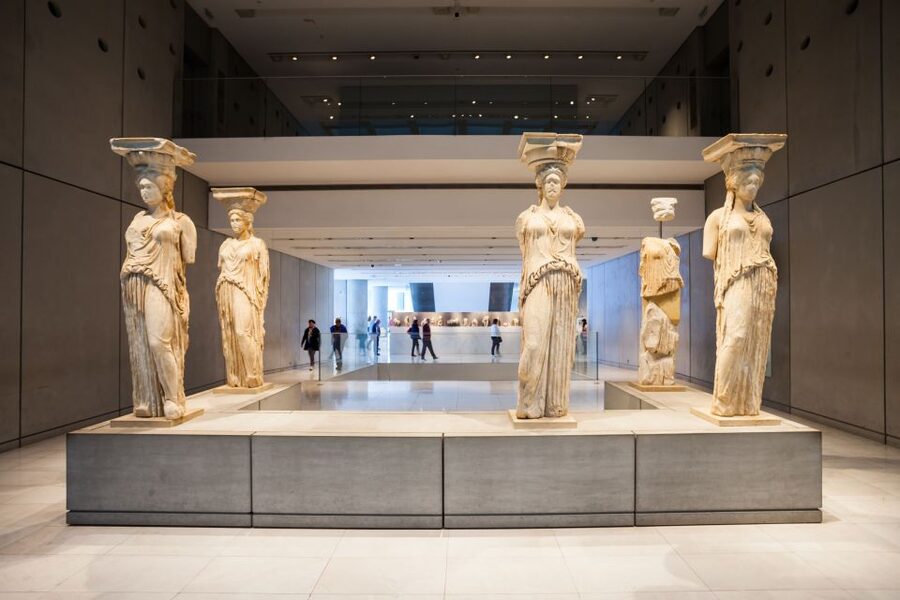
The Caryatids are the museum’s great crowd-pleaser, and for good reason. These sculpted female figures once supported the porch of the Erechtheion on the Acropolis. Seeing them at close range lets you notice the folds of their clothing, their posture, and the way the figures carry architectural weight while appearing calm and human.
The audio guide uses their story to connect the statue, the temple, and the wider religious life of ancient Athens. Even if you know the Caryatids from photographs, the real works are more impressive when you see their scale and detail in person.
The museum also helps you understand the difference between seeing a monument from below and studying its decoration up close. On the Acropolis, you see the Parthenon as a building. Here, you can examine parts of its sculpture without distance, glare, or the need to squint across a ruined temple.
I would spend longer here than the audio strictly requires. Let the narration finish, then look again without your headphones. The details often register better the second time.
A few more things to do in Athens worth a look
- Athens: Mythology of Delphi, Museum and Arachova Guided Tour
★ 4.6 · 4,008 reviews - Athens: Acropolis, Parthenon & Acropolis Museum Guided Tour
★ 4.8 · 3,579 reviews - Acropolis monuments & Parthenon Walking Tour with Optional Acropolis Museum
★ 5.0 · 2,678 reviews - Athens All Included: Acropolis and Museum Guided Tour with Ticket
★ 4.5 · 2,673 reviews
Parthenon sculptures and Greek mythology
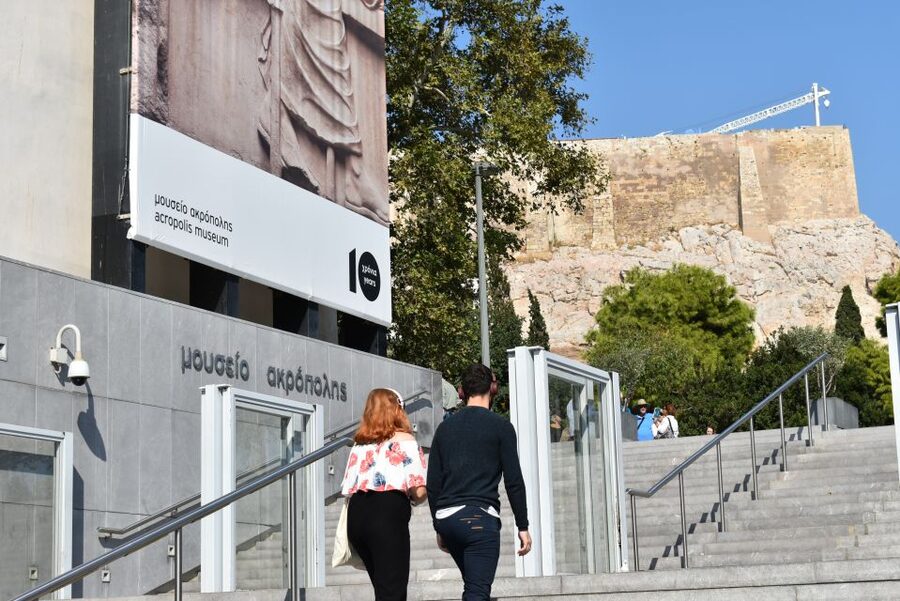
The Parthenon’s sculptural decoration is not just a collection of damaged marble. It tells stories through battles, gods, heroes, and mythical creatures. The audio guide points you toward scenes such as the fight between the Centaurs and the Lapiths, along with the story of Athena’s birth.
These stories give the fragments a purpose. You begin to see why certain poses, wounds, animals, and gestures appear in the decoration. Greek mythology can feel like a long list of unfamiliar names, but the visual scenes make the material easier to follow.
The museum’s displays also let you compare pieces that once belonged to the same monument. That is one of the strongest reasons to visit before or after the hill. On the Acropolis, weather, distance, and crowds limit what you can study. Inside, you can walk around the objects and listen to their background.
The collection includes many damaged pieces. That is part of the reality of ancient sculpture, not a flaw in the museum. The presentation helps you imagine how the original buildings looked without pretending that every fragment survived intact.
The upper gallery and the view toward the Acropolis
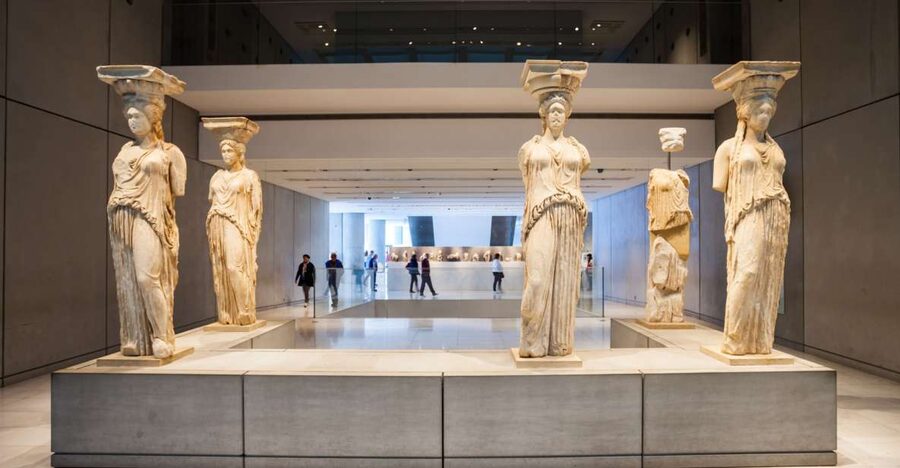
The upper section is where the museum’s location becomes especially effective. You can look toward the Acropolis and connect the galleries with the monuments above. The view gives the sculptures a sense of place, rather than presenting them as objects separated from their original setting.
This is also a good point to slow down. The museum can feel busy, especially during the middle of the day, so take your time around the upper gallery and wait for a clear view if needed.
A café at the top offers a useful break. Seating can be limited, so do not count on finding a stool whenever you need one. If you are visiting with older relatives or anyone who needs frequent rest, plan pauses rather than trying to complete the museum in one push.
The museum area beneath the building is also worth noticing. It offers another look at the layers of Athens and can be an unexpected highlight for anyone interested in how the modern city sits above older remains.
Choosing the Acropolis Hill combination

You can book the museum alone or select a combination that includes Acropolis Hill. If you add the hill, you receive a time slot for entry. That is different from the museum ticket, so check the selected option carefully before booking.
The combination makes practical sense if you already plan to see the Parthenon. The museum explains the monuments, while the hill lets you stand among them. Together, the two visits create a much fuller picture than either stop alone.
You can also choose combinations that include the Ancient Agora, Kerameikos, the Olympieion, the Roman Forum, Hadrian’s Library, and Aristotle’s Lyceum. Some options provide up to six audio tours on your phone.
These additional sites turn a one-hour museum visit into a longer Athens archaeology day. The advertised duration ranges from one hour to 270 minutes, depending on your choice. You should not select a multi-site ticket unless you have enough time to reach and explore each included attraction.
The ticket allows one admission per attraction. There are no multiple entries, so plan your order before you begin. If you choose the Acropolis Hill option, use the selected time slot as the fixed point in your day and fit the museum or other sites around it.
Is the $30 price good value?
At about $30 per person, the museum-only ticket with audio is not the cheapest way to enter a museum. You are paying for advance booking, digital access, and the convenience of avoiding the ordinary ticket line. In summer, that time saving can matter more than the ticket price itself.
The value improves if you would otherwise spend time waiting at the ticket desk. One visit saved roughly 45 minutes for a customer using the skip-the-line arrangement. That benefit is most useful from May through September, when queues can be longer.
The price is less compelling if you only plan to rush through in an hour and do not use the audio. In that case, you are mainly buying convenient entry. Some people use the ticket without listening to the guide, and the museum remains worthwhile, but the package makes more sense when you want the historical explanations.
Reduced-price admission is not handled through this regular ticket. If you qualify for a discount, you need to go to the attraction’s ticket counter, where lines can be long, especially in high season. Families and eligible visitors should compare the potential saving with the extra wait before booking.
Timing, crowds, and a sensible plan
Morning is the safest choice if you want quieter galleries. An early start also leaves time for the Acropolis Hill or another archaeological site before the hottest part of the day.
If your Acropolis Hill ticket has a fixed entry time, work backward. Allow enough time to enter the museum, collect your bearings, listen to the key sections, and reach the hill without rushing. The museum and Acropolis belong together, but they do not need to be visited in one frantic block.
Some people prefer the museum first, then the hill. I agree with that order when your schedule allows it. You learn what the Caryatids and Parthenon sculptures looked like in detail, then recognize their setting above the city.
Others prefer the hill first, especially if the timed slot is early. That works too. In this case, the museum becomes the place where you fill in the details you could not see from the summit.
Bring a hat and sunscreen if you add outdoor sites. Bring headphones and a fully charged smartphone for the audio. The ticket and audio content are digital, so arriving with a nearly empty battery is an avoidable nuisance.
Who should book this experience?
I would recommend it to independent visitors who want structure without joining a group. You get historical storytelling, but you choose the pace and decide how long to spend at each object.
It suits first-time visitors who want the Acropolis explained in plain sequence. It also works well for returning visitors who already know the hill and want a closer look at the sculpture.
Families may appreciate the ability to pause and skip sections, though the audio directions require some adult help. History fans will likely want the longer visit, while casual sightseers can follow the main route in about an hour and a half.
You should think twice if you dislike smartphone tours, do not have compatible headphones, or want a person to answer questions as you walk. This is not a live guided visit. It is a digital guide paired with independent museum entry.
The app requires an Android phone version 5.0 or later, or an iPhone that meets the stated compatibility requirements. Older devices, including iPhone 5 and earlier models listed in the instructions, are not supported.
Final decision: book the museum alone or add the sites?
Book the museum ticket with audio if you want a convenient entry and clear background on the Caryatids, Parthenon decoration, and Greek mythology. The museum is worth visiting even if you skip the extra sites, and the upper gallery view helps connect the collection with the Acropolis.
Choose a combination if you have a full day for archaeology and want to visit the hill, Ancient Agora, Kerameikos, Olympieion, Roman Forum, Hadrian’s Library, or Aristotle’s Lyceum. Check the exact option, because the included attractions and audio coverage vary.
My practical choice would be an early museum visit followed by the Acropolis Hill at its selected time. Download the app before leaving your hotel, bring headphones, and treat the audio as a helpful route rather than a command to march from object to object.
FAQ
Is the Acropolis Museum ticket timed?
The museum ticket information does not specify a fixed museum entry time. If you select the Acropolis Hill option, a time slot is available for Acropolis Hill.
Is a live guide included?
No. The experience includes self-guided audio tours on your smartphone. A live guide is not included.
Which languages are available for the audio guide?
The audio guide is available in English, Spanish, French, Italian, German, and Greek.
Can I use the audio guide offline?
Yes. The audio tours include offline content and an offline interactive map.
How long should I allow for the museum?
The stated activity duration ranges from one hour to 270 minutes, depending on the option selected. The museum itself can take about an hour and a half, while a careful visit may take up to three hours.
Can I visit other Athens attractions with this ticket?
Only if you select an option that includes them. Available combinations may include Acropolis Hill, the Ancient Agora, Kerameikos, the Olympieion, the Roman Forum, Hadrian’s Library, and Aristotle’s Lyceum.
Can I enter each attraction more than once?
No. One admission is allowed per attraction, and multiple entries are not included.
What do I need to use the audio guide?
You need a charged Android or iOS smartphone, headphones, and the app link sent by the activity provider. The audio guide is not compatible with the older devices listed in the booking information.
More Audio Tours in Athens
- Athens: Acropolis Ticket & Optional Self-Guided Audio Tours
★ 4.1 · 2,542 reviews - Parthenon & Acropolis Museum with Audio or Live Tour Option
★ 4.1 · 2,446 reviews - Athens: Peloponnese Highlights Day Trip and V.R. Audio Guide
★ 4.5 · 1,425 reviews - Athens: Acropolis Ticket with Multilingual Audio Guide
★ 3.9 · 926 reviews
More Self-Guided Tours in Athens
- Athens: Cape Sounio & Poseidon Temple Trip with Audio Guide
★ 4.4 · 4,521 reviews - Athens: Acropolis Ticket with Audio Guide
★ 4.0 · 3,575 reviews - From Athens: Delphi Full Day V.R. Audio Guided Tour
★ 4.6 · 3,028 reviews - Athens: Acropolis Museum Ticket with optional Audio Guide
★ 4.4 · 2,652 reviews
Just added in Athens
- Athens: Half-Day Morning Catamaran Cruise with Meal & Drinks★ 4.9 · 221 reviews
- Athens hotels to Athens airport Private departure transfer★ 5.0 · 285 reviews
- Argolis: Full-Day Tour in Mycenae & Nafplio★ 4.2 · 350 reviews
- Athens: Riviera Catamaran Cruise with Meal and Drinks★ 5.0 · 345 reviews
- Athens: Delphi, Corycian Cave, and 300 Battlefield Day Trip★ 4.8 · 344 reviews
- 3-Day Classical Greece Tour: Epidaurus, Mycenae, Nafplion, Olympia, Delphi★ 4.5 · 342 reviews
- Best of Athens Half Day Private Tour★ 5.0 · 353 reviews
- Electric Bike Tour of Athens by Night★ 5.0 · 355 reviews
Acropolis & Athens Highlights, compared.

Acropolis & up to 5 Archaeological Sites Combo Pass
Read our review →
Acropolis, Parthenon & Acropolis Museum Guided Tour
Read our review →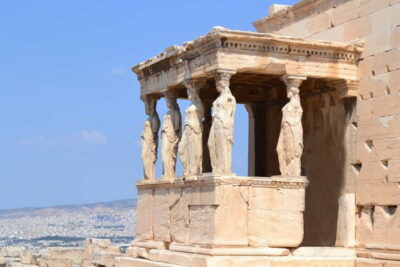


Acropolis monuments & Parthenon Walking Tour with Optional Acropolis Museum
Read our review →
Athens All Included: Acropolis and Museum Guided Tour with Ticket
Read our review →
Acropolis Museum Ticket with optional Audio Guide
Read our review →
Acropolis Ticket & Optional Self-Guided Audio Tours
Read our review →Browse the lists this tour appears in