
Reviewed · WALKING TOURS
Athens: Guided Mythological Walking Tour
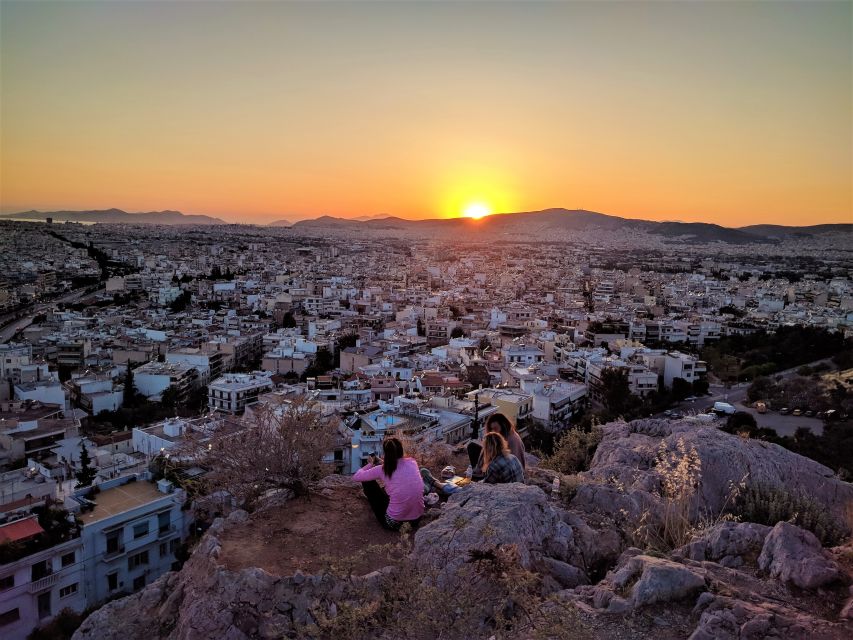
Greek mythology feels different when you hear it on the streets of Athens. This two-hour walk links gods, lovers, satyrs, nymphs, heroes, statues, and civic buildings to the city around you. Guides such as Penelope and Christina add history and social customs, so the stories are not floating free from real Athenian life.
I like the route for two reasons: it shows you parts of central Athens you might otherwise pass without noticing, and it gives familiar myths a local setting. I also like that children and teenagers can follow the stories, while adults get references to philosophy, literature, architecture, and the development of Greek society.
The main consideration is the amount of information. This is not just a light stroll with a few amusing legends. If you want a quick, easy walk, the detail may feel heavy. If you enjoy mythology and asking questions, the depth is a major strength.
Key points to know before you go

- Mythology meets city life: The guide connects gods and ancient customs to buildings, statues, monuments, and streets in modern Athens.
- A central route with a useful finish: You walk from Korai 4 through Syntagma and Plaka, ending near Monastiraki.
- Excellent for families: Children around 10 and older, along with teenagers, have found the storytelling easy to follow and engaging.
- Expect serious detail: The tour covers mythology, history, social customs, philosophy, and cultural change in just two hours.
- Penelope is a frequent guide: Her clear English, humor, enthusiasm, and ability to answer questions have been central to many excellent tours.
- Bring water and comfortable shoes: Summer heat can be strong, though guides make an effort to use shade and include pauses.
Why this Athens mythology walk feels different
Athens has no shortage of tours about the Acropolis and classical monuments. This experience takes another route. Instead of treating mythology as a separate subject, it uses the city as a classroom.
You may hear how gods chased, deceived, seduced, punished, and helped humans. Those tales can be strange, funny, violent, and sometimes uncomfortable. That is part of their value. They show a society trying to explain nature, power, family, desire, war, and the behavior of the gods through memorable stories.
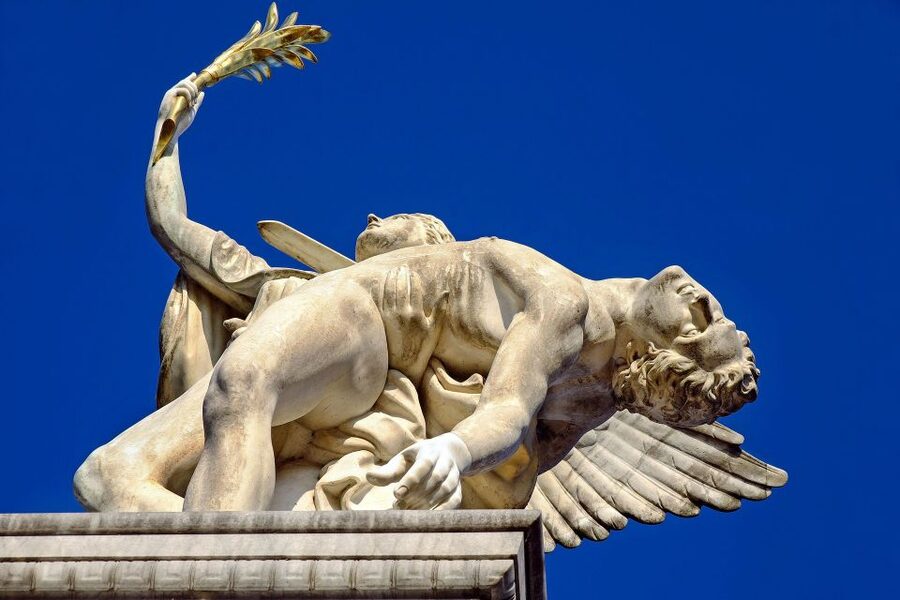
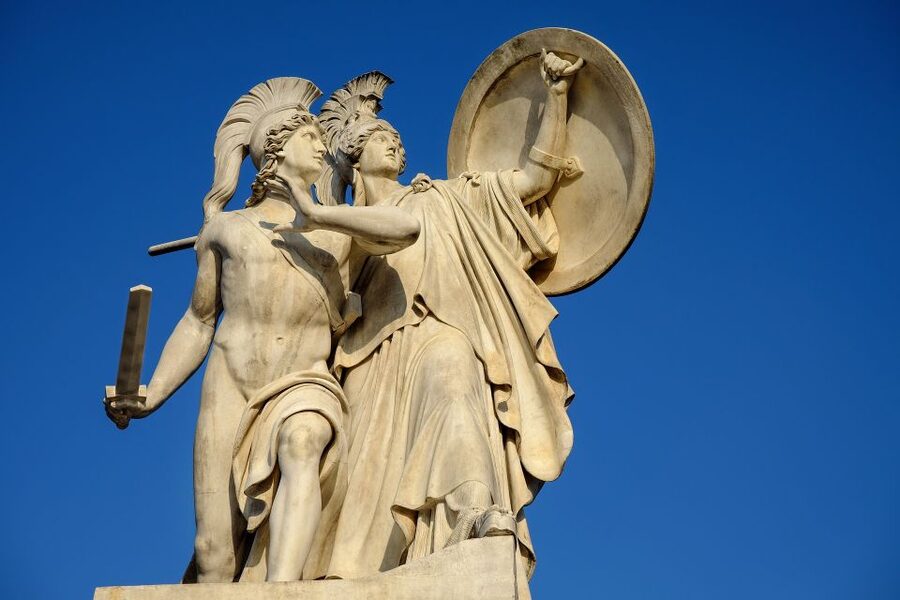
I especially like the way this approach changes your eyesight. A statue, a carving, or a decorative figure on a building can look like background detail when you are walking quickly. With the right explanation, it becomes a clue. You start looking for symbols and figures instead of simply moving from one major sight to the next.
This is also a walking orientation to central Athens. You are not entering archaeological sites, so the tour does not replace a visit to the Acropolis, Ancient Agora, or another paid site. It adds a layer of meaning to the streets between those places.
A few more things to do in Athens worth a look
- Athens: Acropolis and Parthenon Guided Walking Tour
★ 4.6 · 5,882 reviews - Greek Food Walking Tour in Athens
★ 5.0 · 4,740 reviews - Acropolis: Acropolis and Parthenon Guided Walking Tour
★ 4.7 · 3,442 reviews
Starting at Korai 4 and the Academy of Athens
The meeting point is in front of the Starbucks cafe at Korai 4. That is a practical place to begin because it is in central Athens and easy to identify, but give yourself enough time to find the exact spot.
From there, the walk heads toward the Academy of Athens. The route includes about 20 minutes of walking to this area, with the guide using the streets and buildings as part of the lesson.
The Academy is one of the most striking neoclassical buildings in Athens. Its decoration gives the guide plenty to discuss, especially the way ancient Greek gods and ideals appear in later architecture. You are not simply hearing a story about Zeus or Athena in the abstract. You are looking at a modern building that uses the visual language of classical Greece.
This is one of the tour’s strongest habits: it keeps asking you to connect the old stories with the city in front of you. The result is more useful than memorizing a long list of gods.
The Numismatic Museum and the overlooked details
The next section leads toward the Numismatic Museum, with roughly 15 minutes of walking. The museum itself is not included as an entrance stop, so you should not expect a museum visit during the tour.
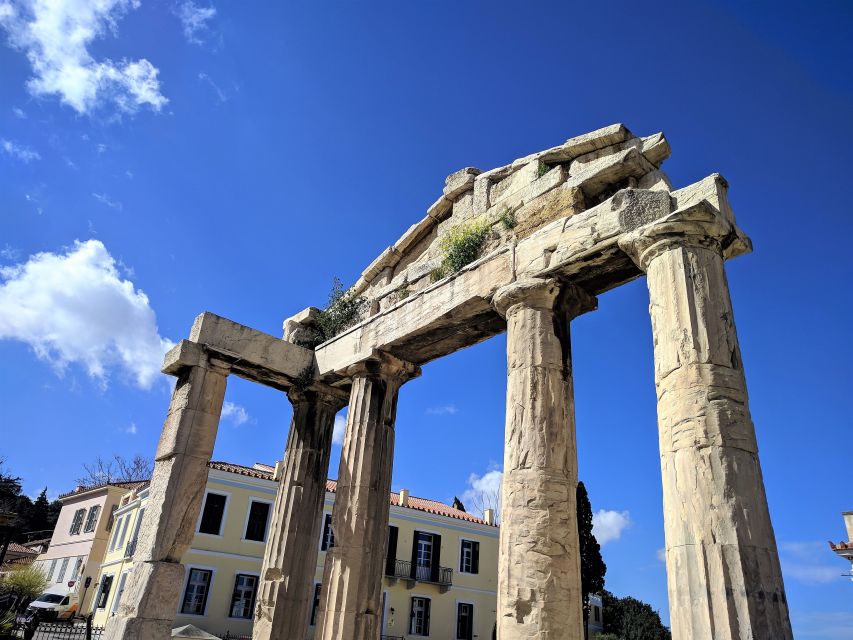
Still, this part of the route helps show how much Athens offers beyond its headline monuments. The surrounding streets and buildings reward a slower look, and the guide points out details that are easy to miss when you are focused on reaching Syntagma or the Acropolis.
Past participants have described learning about statues, architecture, and corners they had already walked by without noticing. That is an important benefit if you have already spent several days in Athens. The tour can give familiar streets a new reading instead of simply repeating the standard sightseeing route.
The mythology here is also tied to human behavior. Ancient stories are full of competition, jealousy, pride, and punishment. The guide explains how those tales fit into the wider Greek view of gods and people, rather than presenting each myth as an isolated fairy tale.
Akadimias to Syntagma Square
The route continues along Akadimias before reaching Syntagma Square. The listed walking segments are approximate, and the actual pace depends on the group, questions, stops, and street conditions.
Syntagma is a useful point in the walk because it brings the discussion into the heart of modern Athens. The square is not an ancient ruin, yet the surrounding architecture and public spaces help illustrate how the city has changed while continuing to use symbols from its classical past.
At this stage, you will likely have heard stories about Zeus and other major gods, along with tales of satyrs, nymphs, heroes, and divine punishment. The guide also places these stories alongside facts about daily life and social customs. That balance matters. Greek mythology makes more sense when you understand that it was part of a culture, not just a collection of adventure stories.
I would pay attention to the guide’s explanations of how humans and gods interacted in the ancient imagination. These stories often reveal what people feared, admired, or wanted to control. They can also show why certain gods mattered to a city or a household.
Same base, a completely different day:
- Athens: Acropolis & up to 5 Archaeological Sites Combo Pass
★ 4.4 · 12,619 reviews - Athens: Acropolis Ticket with Optional Audio or Live Guide
★ 4.2 · 11,055 reviews - Athens: Acropolis, Parthenon & Acropolis Museum Guided Tour
★ 4.8 · 9,316 reviews - Athens: Cape Sounion & Poseidon Temple Sunset Half-Day Trip
★ 4.8 · 8,241 reviews
Mitropoleos and the walk toward Plaka
From Syntagma, the walk continues toward Mitropoleos, with another short walking section. This part of the route helps bridge the formal center of Athens and the older-feeling streets around Plaka.
The city changes as you walk. The focus shifts away from grand avenues and toward a more intimate urban setting. That makes it easier to picture the old stories as part of a lived city, even though modern Athens surrounds you.
The guide may also use this section to explain how myths have survived through art and public decoration. Statues and building details can preserve characters and symbols long after the original religious practices have changed.
One practical point: do not expect every minute to be spent walking. The tour is built around storytelling, so the guide may stop to speak, take questions, or point out a feature. That is why comfortable shoes matter even though the tour lasts only two hours.
Plaka, where the myths gain a local setting
Plaka is the emotional center of this experience. Its picturesque streets make a natural setting for stories about gods, lovers, transformations, and deception.
The route allows around 30 minutes for this section before ending near Monastiraki. Plaka is popular, and the streets can be busy, but it also offers the kind of close-up detail that makes a mythology walk work well. Look above shopfronts and around corners. The guide may show you visual references that would otherwise disappear into the scenery.
This is also where the tour’s cultural side becomes clearest. You learn not only who the gods were, but how ancient Athenians understood their relationship with divine forces. The stories touch on family, power, gender, desire, social rules, and the consequences of disrespect.
Some myths are not gentle. Divine affairs, revenge, abduction, and punishment are part of the material. A family can still enjoy the tour, and children around 10 or 11 have followed it successfully, but parents should know that the subject matter is broader than children’s versions of Greek mythology.
For me, Plaka works best when the guide does not rush. The point is not to check off one more neighborhood. It is to notice how the old stories cling to the city’s visual language.
Finishing near Monastiraki
The tour finishes at Monastiraki, one of the most useful areas in central Athens. From here, you can continue sightseeing, find food, or walk toward other major attractions.
Ending at Monastiraki also makes the tour practical as a first or early activity in Athens. It gives you a sense of the relationship between the central districts, Syntagma, Plaka, and the areas around the historic core.
One past guide, Christina, has also offered suggestions for restaurants, cafes, bars, and other places to visit after the walk. You should not treat personal recommendations as a formal part of the tour, but a local guide can help you make better use of the neighborhood once the storytelling ends.
The guide makes or breaks this experience
A mythology walk depends heavily on the person leading it. The strongest guides here, especially Penelope and Christina, do more than recite names and dates.
Penelope has a clear, enthusiastic presentation style and a strong command of the myths. She has also been praised for her humor, patience, and ability to keep younger members of a group involved. Her explanations can move from the birth of the gods to the origins of humans, then connect those ideas to history and cultural change.
That level of detail is useful if you already know the basic stories. Even someone familiar with Greek mythology can find new links between characters, philosophy, architecture, and Athens itself.
The small-group experience can also change from one date to another. At quieter times, the walk may have only a few people or even feel private. That gives you more chances to ask questions and shape the discussion. A larger group may feel less personal, though the guide’s use of stops and storytelling should still keep the route focused.
The English-language guiding is intended for an English-speaking audience. Bring questions. The guides have been especially effective when explaining a detail, checking that everyone can hear, or following up on something a participant wanted to know.
Is $47 a fair price for two hours?
At $47 per person, this is not the cheapest way to walk around Athens. You are paying for a specialist-led experience rather than transportation, food, or entry to a monument.
The value depends on how much you want from the subject. If you only want to see the city’s main sights, you can walk many of these areas on your own for free. But you will not get the same connected explanation of mythology, social customs, architecture, and daily life.
There are no archaeological admission tickets included. That keeps the tour simple, but you should budget separately for the major ancient sites you want to enter.
I think the price makes the most sense for three types of visitors: people who love Greek mythology, families who want a story-led introduction to Athens, and repeat visitors who have already seen the obvious monuments. It is less convincing for someone who dislikes long explanations or wants a purely visual city walk.
The booking terms are also flexible. You can reserve and pay later, and cancellation is free up to 24 hours before the activity for a full refund. Check the available start times before booking, since the two-hour duration does not by itself tell you which part of the day will be most comfortable.
Heat, shoes, and the practical side
Wear comfortable clothes and walking shoes. The route covers central streets and includes several walking sections, with the longest listed section taking about 30 minutes.
Athens can be hot, particularly in summer. Guides have made a point of finding shade, taking pauses, and keeping the group comfortable, but you should still bring water and a hat. One simple improvement is to choose a cooler start time if the schedule gives you that option.
The tour does not include hotel pickup or drop-off. You meet at Korai 4 and finish at Monastiraki, so plan your route to and from those points.
Because no archaeological entrance is included, this is best viewed as a guided city walk, not a substitute for an ancient-site tour. You will see monuments and important places along the way, but the focus is the guide’s storytelling and interpretation.
Who should book this Athens mythology tour?
I would book it early in an Athens stay if you want a strong orientation to the central neighborhoods. You will learn how several districts connect, then recognize more details when you return on your own.
It is also a good fit for families with older children and teenagers. The myths supply action and humor, while the history gives adults something more substantial. Guides have been particularly good at drawing younger people into the discussion without making the material childish.
History, literature, anthropology, and architecture fans should also get a lot from the walk. The best parts are not only the famous gods. They are the links between stories, public life, symbols, and the way later Athens presented its ancient past.
I would think twice if you want a short, casual walk with only a few famous legends. The information comes quickly, and the tour can feel like a compact class in mythology and history. That is a benefit for the right person, but a drawback if you prefer to wander without much explanation.
FAQ
How long is the Athens Mythological Walking Tour?
The tour lasts two hours. It begins at Korai 4 and ends at Monastiraki, with stops and walking sections through central Athens.
Where does the tour meet?
The meeting point is in front of the Starbucks cafe at Korai 4.
Where does the tour finish?
The walk finishes in Monastiraki.
Is the tour offered in English?
Yes. The live guide conducts the tour in English.
Are archaeological site entrance tickets included?
No. Entrance to archaeological sites is not included in the price.
What should I wear and bring?
Wear comfortable clothes and shoes. Water and a hat are sensible choices, especially in hot weather.
Should you book it?
Book this tour if Greek mythology interests you and you want to connect the stories to actual Athens streets, buildings, statues, and customs. It is also a smart choice for families and for anyone who has already seen the major sights but wants a new way to read the city.
Skip it if you want a very light stroll or need a tour with site admissions included. For everyone else, $47 buys two focused hours with guides such as Penelope or Christina, a useful central route, and a fuller understanding of why Athens still speaks through its ancient gods.
Just added in Athens
- Ceramic and Pottery Creative Workshop with Two Local Artists★ 4.0 · 57 reviews
- Small-Group Women History in Ancient Greece Walking Tour★ 5.0 · 38 reviews
- Athens Old City Private Photoshoot Tour / 2 hrs★ 5.0 · 109 reviews
- Athens: Wine Workshop Create your Own Wine under the Acropolis★ 5.0 · 77 reviews
- Athens: Greek Wines Tasting with Sommelier and Acropolis Views★ 5.0 · 88 reviews
- Wine Trails Private Tour/ Nemea visit 3 wineries from Athens or Nafplion (10 h)★ 5.0 · 44 reviews
- FLYING DRESS Photoshoot in Athens – Greece★ 5.0 · 47 reviews
- Small-Group Wine Tour in Athens with Tasting★ 5.0 · 33 reviews
Walking Tours, compared.
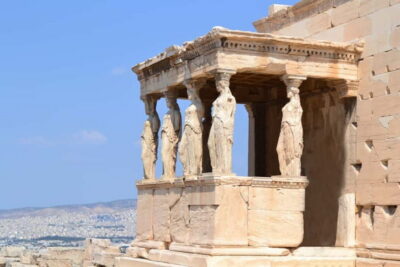

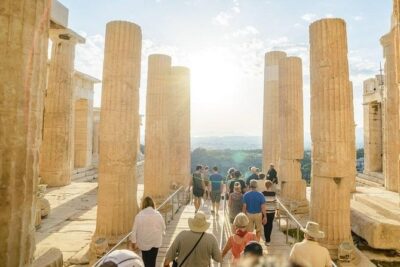
Acropolis monuments & Parthenon Walking Tour with Optional Acropolis Museum
Read our review →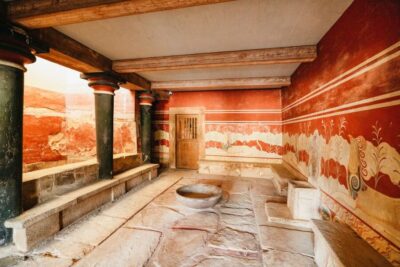
Knossos: Knossos Palace Skip-the-Line Guided Walking Tour
Read our review →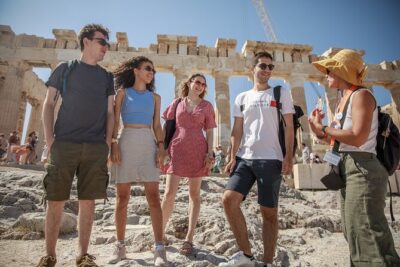

Athens Authentic Greek Food Walking Tour (Small Group)
Read our review →
Early Morning Acropolis & Old Athens Guided Walking Tour
Read our review →
Browse the lists this tour appears in