
Reviewed · MUSEUMS
Athens: National Archaeological Museum Private Guided Tour
The museum’s most arresting object may be the Antikythera mechanism, an ancient device often described as the world’s oldest analogue computer. It is only one stop in a museum filled with more than 11,000 objects, so a good guide matters here. In two hours, Christos Theodoropoulos leads a private group through key works and explains how Greek civilization developed from prehistoric Aegean cultures to late antiquity.
I like the private format, especially for families or small groups who want to ask questions without keeping pace with a large tour. I also like the way the tour gives you a sensible introduction to an enormous museum, rather than leaving you to wander through 8,000 square meters without a plan.
The main drawback is time. Two hours is enough for a strong overview, but not enough to see everything carefully. You will need to keep moving, and the $400 group price is hard to justify for one or two people unless personal guidance is a high priority.
Key points at a glance

- The Antikythera mechanism: See the ancient geared device that tracks astronomical cycles and is often called the world’s oldest analogue computer.
- A private group of up to six: You get a more personal pace and can ask questions without competing with a crowd.
- Christos Theodoropoulos: The named provider is a licensed archaeologist who has led lively, detailed tours through the museum’s major collections.
- Five major collections: The route can introduce you to prehistoric antiquities, sculpture, pottery, bronzes, and Egyptian and Near Eastern objects.
- Two hours with a clear focus: This works best as an orientation to the museum, followed by extra solo time if you want a slower look.
- Entry is extra: Budget €10 per person for the museum ticket, plus the tour price and your own transport.
Why the National Archaeological Museum deserves your time
Athens has famous monuments outdoors, but this museum gives you the objects that make ancient Greece more than a collection of ruins. Here, you can look closely at sculpture, jewelry, pottery, bronze figures, tools, and ritual objects. The result is a long view of Greek culture, beginning in prehistory and continuing into the Roman period and late antiquity.
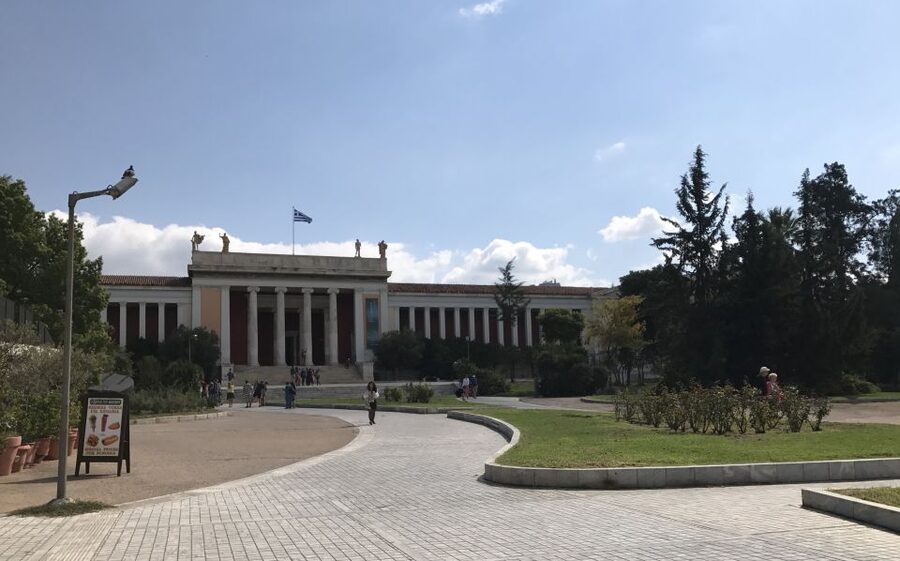
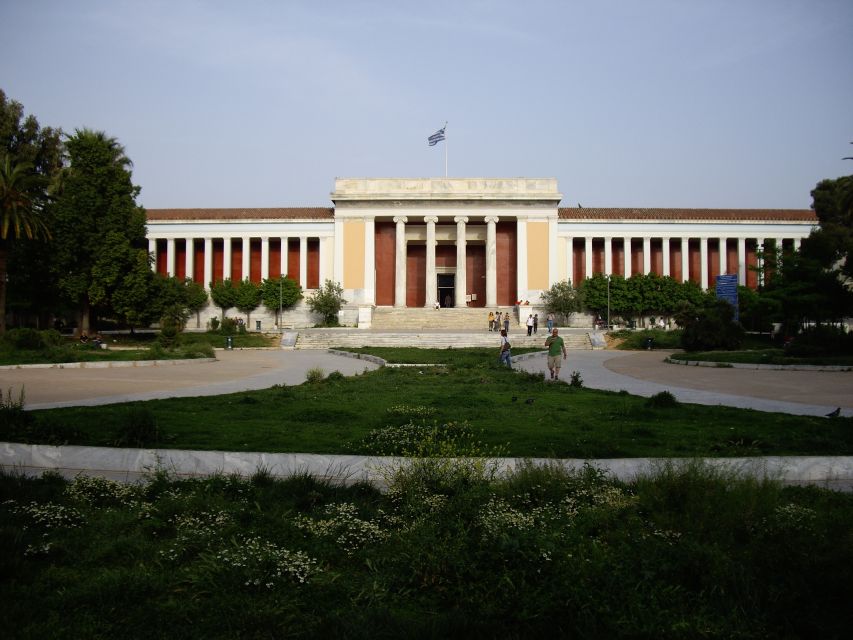
The building itself sets the tone. It occupies an imposing neoclassical structure from the late 19th century, designed by L. Lange and later remodeled by Ernst Ziller. Once inside, you move through broad galleries on two floors, with permanent collections arranged by period and type.
The museum began with a practical purpose: to gather finds from 19th-century excavations in and around Athens. Over time, objects from across Greece joined the collection. That is why the museum feels much bigger than a local Athens museum. It is a national survey, with the Aegean islands, mainland Greece, Mycenae, Thera, Egypt, and the Near East all represented.
I would not try to see every room during a first visit. The scale can wear you down, and the labels cannot always explain how one object fits into the larger story. A licensed guide helps you decide what deserves your attention.
A few more things to do in Athens worth a look
- Athens: Acropolis, Parthenon & Acropolis Museum Guided Tour
★ 4.8 · 9,316 reviews - Athens: Mythology of Delphi, Museum and Arachova Guided Tour
★ 4.6 · 4,008 reviews - Athens: Acropolis, Parthenon & Acropolis Museum Guided Tour
★ 4.8 · 3,579 reviews
Meeting at 44 Patission Street
The meeting point is at the steps in front of the main entrance to the National Archaeological Museum, 44 Patission Street, Athens 10682. The activity information also identifies 28is Oktovriou 42 as the starting location, so I would check your booking details carefully and arrive at the museum entrance rather than expecting a hotel pickup.
Hotel transfer is not included. You make your own way to the museum, and the guide meets you there. This keeps the arrangement simple, but it also means you should allow enough time to reach central Athens before the scheduled start.
The museum ticket is separate and listed at €10. The $400 price covers the private guiding service for a group of up to six, not admission. For six people, the guide fee works out to about $67 per person before the museum ticket. For two people, the same fee becomes much less attractive.
The experience is offered in English, Greek, German, or Turkish. If language matters to your group, select carefully when booking and confirm the arrangements before the day of the tour.
A fast but useful route through Greek civilization
The tour lasts two hours, and the route is designed as an introduction rather than a room-by-room inspection. I would expect the guide to connect major objects across the museum instead of treating each gallery as a separate stop.
The first part may place Greek civilization in its prehistoric setting. The Collection of Prehistoric Antiquities covers material from the 6th millennium B.C. to about 1050 B.C., including Neolithic, Cycladic, and Mycenaean cultures. Finds from the prehistoric settlement at Thera are also part of this collection.
This section matters because it shows that Greek culture did not begin suddenly in the Classical period. Long before the familiar marble statues and temples, Aegean communities produced pottery, figurines, tools, jewelry, and ceremonial objects. A guide can help you see links between everyday objects and the later artistic traditions associated with Greece.
The Sculpture Collection follows the development of Greek sculpture from the 7th to the 5th centuries B.C. This is likely to be one of the tour’s main attractions. You can see how Greek artists moved from earlier stylized forms toward more natural poses, balanced bodies, and a stronger sense of human movement.
I like this kind of explanation because it turns a row of statues into a sequence of choices. You begin to notice posture, clothing, facial expression, and the treatment of hair. Without that framework, it is easy to see only a series of impressive white figures.
The Antikythera mechanism and the Bronze Collection
The Antikythera mechanism is the object I would make sure to see. Recovered from a shipwreck and displayed as part of the museum’s ancient technology material, it is a small but remarkable geared device associated with astronomical calculations. The experience description identifies it as the world’s oldest analogue computer.
The mechanism is important not because it looks grand. It is important because it challenges the simple idea that ancient technology was basic. Its surviving parts reveal an ability to design complicated gear systems for tracking celestial cycles. Your guide can provide the historical setting and explain why the object matters beyond its size.
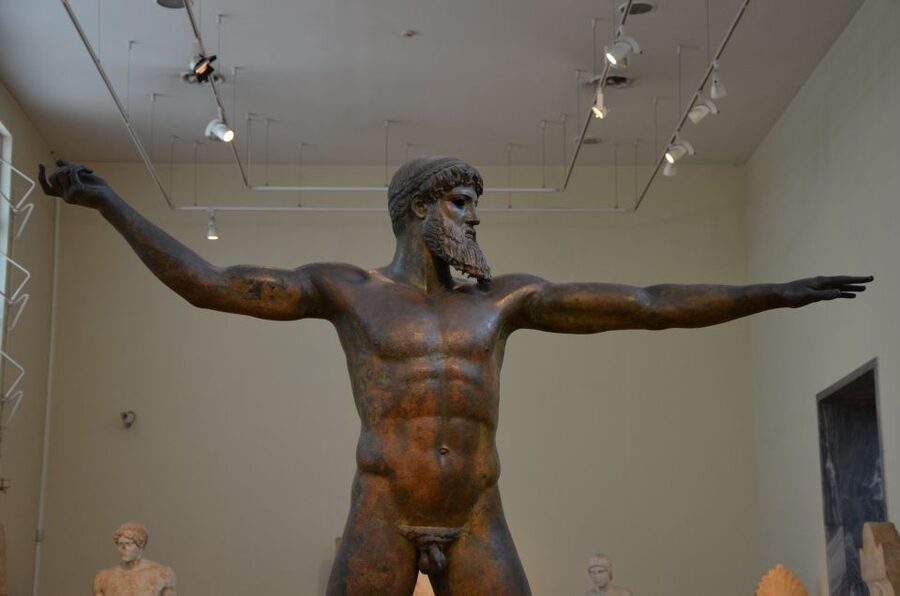
The Bronze Collection adds another layer. It includes major statues, figurines, and smaller bronze objects. Bronze survives differently from marble, and the collection gives you a chance to see another side of ancient Greek craft.
I would pay attention to the contrast between monumental works and small objects. A large statue commands the room, but a tiny bronze figure can reveal details about religious practice, decoration, or personal use. With only two hours, a guide’s choices help prevent the most famous objects from taking all your attention.
Same base, a completely different day:
- Athens: Acropolis & up to 5 Archaeological Sites Combo Pass
★ 4.4 · 12,619 reviews - Athens: Acropolis Ticket with Optional Audio or Live Guide
★ 4.2 · 11,055 reviews - Athens: Cape Sounion & Poseidon Temple Sunset Half-Day Trip
★ 4.8 · 8,241 reviews - Athens: Acropolis and Parthenon Guided Walking Tour
★ 4.6 · 5,882 reviews
Pottery, small objects, and daily life
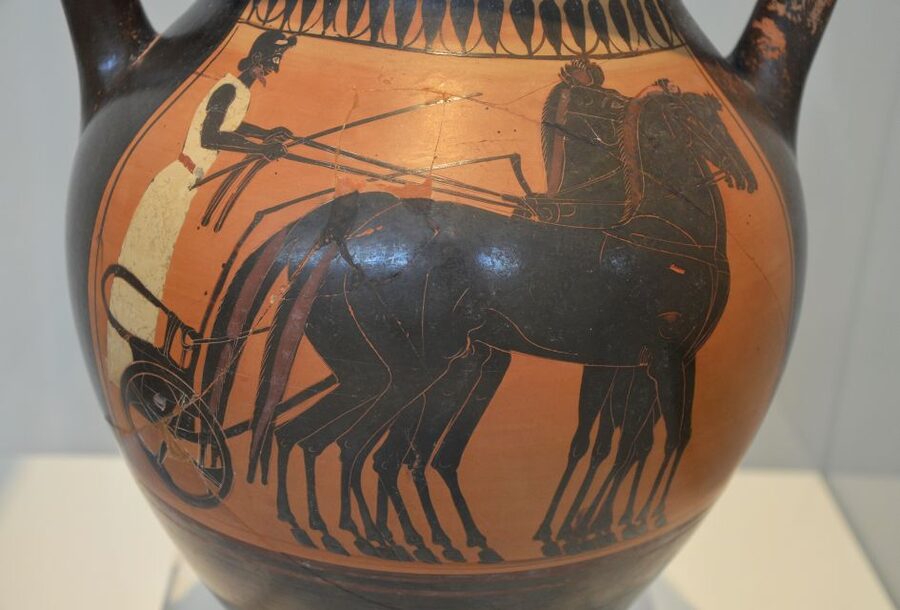
The Vase and Minor Objects Collection covers ancient Greek pottery from the 11th century B.C. through the Roman period. It also includes the Stathatos Collection, a group of smaller objects from different periods.
Pottery gives you a more grounded view of ancient life than statues alone. Painted vessels can show myths, ceremonies, athletic scenes, clothing, work, and social customs. Their shapes also had practical purposes. A cup, storage jar, mixing bowl, or funerary object tells you something about how people lived and what they valued.
This is where a guide can be especially useful. The museum contains too many vessels to examine individually, and the key is learning how to read a few well-chosen examples. Look at the figures, the repeated patterns, the handles, and the relationship between decoration and use.
If you have a special interest in ancient jewelry, mention it when booking. One past booking included a private showing of the jewelry room, which is usually locked at that time of year. I would not treat this as guaranteed, but it is a good reason to tell Christos in advance about a specific research or personal interest.
Egyptian and Near Eastern antiquities
The museum also holds Greece’s only collection of Egyptian and Near Eastern antiquities. The objects range from the predynastic period, around 5000 B.C., to the Roman conquest.
This collection broadens the visit beyond a strictly Greek story. It places Greek art and culture within the larger eastern Mediterranean world, where ideas, objects, styles, and technologies moved across regions for thousands of years.
You may not have time to study this collection at length during a two-hour tour. Still, its presence matters. It helps you avoid viewing ancient Greece as an isolated civilization. Ask the guide to include it if Egypt or the Near East is a priority for you.
What Christos adds to the experience
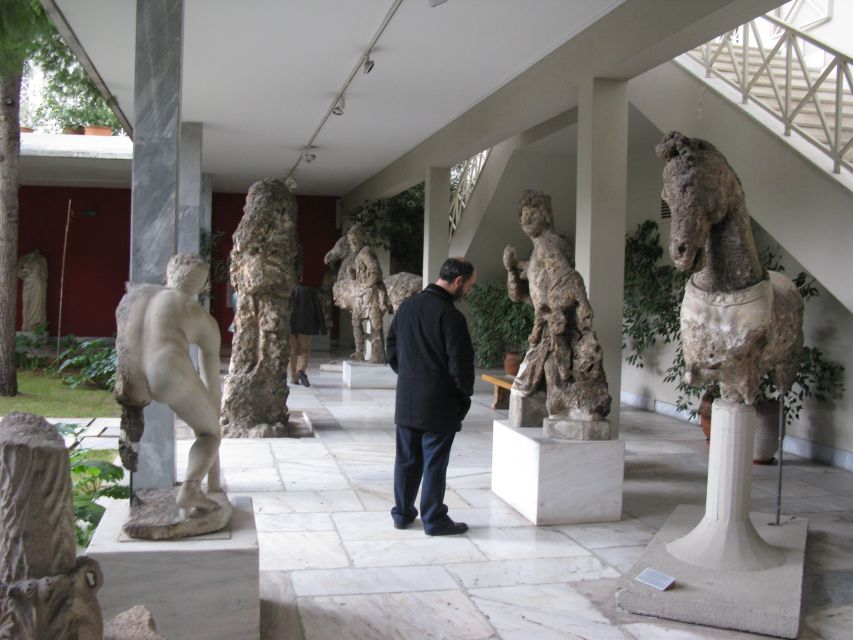
Christos Theodoropoulos is the named experience provider and a licensed archaeologist. His guiding style, based on the available tour details, is direct and energetic, with a strong emphasis on historical explanation, major objects, and questions from the group.
Several practical details make a difference. He has adjusted the schedule for an afternoon booking, helped with museum tickets, and continued showing parts of the upper floor after the official tour time in one case. Those extras are not promises, but they suggest that it is worth telling him what your group hopes to see.
His pace is quick because the museum is simply too large for a slow examination in two hours. Families with children can still make good use of the tour. The approach has worked for groups with teenagers and children as young as seven, especially when the guide keeps the story moving and connects objects to larger events.
I would tell Christos in advance if your group includes young people, a specialist interest, or someone who prefers a slower pace. A private tour gives him more room to adjust than a standard group visit, although the museum’s size still sets limits.
Is $400 good value?
The answer depends almost entirely on group size and your interest in guided interpretation. At the full group limit of six, the cost is reasonable for a private two-hour service led by a licensed archaeologist, especially if you want a focused introduction and the chance to ask questions.
For three or four people, the price can still make sense if the museum is a major priority. You are paying for organization, context, and a route through a very large collection, not simply for entry.
For one or two people, I would think carefully. The museum is well laid out and clearly labeled, so you can visit independently. One past booking specifically found that a guide was helpful but not essential. If you enjoy reading labels and setting your own pace, the $400 fee may be better spent elsewhere.
The private format is most valuable when your group has mixed interests or limited time. You can ask about sculpture, mythology, archaeology, jewelry, or technology without waiting for a general explanation to finish. You can also continue exploring on your own after the two-hour tour, as several bookings did.
Who should book this museum tour?
I would recommend it to first-time visitors who feel intimidated by the museum’s scale, families who want ancient history explained in an engaging way, and small groups who prefer a private guide to an audio guide or printed labels.
It also suits anyone who wants a historical framework rather than a checklist of famous objects. The route can connect prehistoric Aegean cultures, Classical sculpture, pottery, bronze work, Egyptian antiquities, and the Antikythera mechanism into one clear story.
I would skip it if you want to spend half a day studying individual objects in silence. Two hours is brisk, and the private fee is high for a short visit. In that case, visit independently, read the labels, and give yourself more time.
The overall rating is 4.5 from 47 ratings, and the strongest pattern is clear: the guide’s explanations, good humor, flexibility, and ability to make a large museum manageable are the main reasons to book. The museum itself is the star, but the guide helps you see why its objects matter.
Practical details before you go
The tour begins at the museum’s main entrance, not at your hotel. Admission costs €10 per person and is not included in the $400 group price.
The private group limit is listed as six people. One past booking involved seven people, but I would plan around the stated limit and confirm any larger group before paying.
You can cancel up to 24 hours before the start for a full refund, and the reserve-now, pay-later option allows you to keep your plans flexible. Starting times vary, so check availability for your date.
Plan on staying longer if you want to see the rest of the museum. The guided route gives you an efficient foundation, but the collection is too large to finish in two hours.
Should you book it?
Book this tour if you want the National Archaeological Museum to make sense quickly, especially if you have six people to share the cost. Christos offers the kind of focused historical guidance that can turn an intimidating museum into a clear, engaging introduction.
Skip the private tour if you are comfortable exploring alone or want a slow, all-day museum visit. The ticket price is modest, the displays are organized, and independent visitors can see plenty.
For most small groups with a strong interest in ancient Greece, the best plan is to take the two-hour tour, ask for the Antikythera mechanism and your personal priorities, then stay on afterward for the galleries you missed.
FAQ
How long does the private museum tour last?
The guided tour lasts two hours. You can continue exploring the museum independently afterward if you want more time.
Where is the meeting point?
Meet at the steps in front of the main entrance to the National Archaeological Museum at 44 Patission Street, 10682 Athens. The starting location is also listed as 28is Oktovriou 42.
Is museum admission included in the tour price?
No. The museum entry ticket costs €10 per person and must be paid separately.
How much does the private tour cost?
The price is $400 per private group of up to six people. Hotel transfer is not included.
Which languages are available?
The live guide is available in English, Greek, German, or Turkish.
Who leads the tour?
The experience provider is Christos Theodoropoulos, a licensed archaeologist. The tour information identifies him as the guide associated with the experience.
Can I cancel the booking?
Yes. You can cancel up to 24 hours in advance for a full refund. A reserve-now, pay-later option is also available.
Just added in Athens
- Ceramic and Pottery Creative Workshop with Two Local Artists★ 4.0 · 57 reviews
- Small-Group Women History in Ancient Greece Walking Tour★ 5.0 · 38 reviews
- Athens Old City Private Photoshoot Tour / 2 hrs★ 5.0 · 109 reviews
- Athens: Wine Workshop Create your Own Wine under the Acropolis★ 5.0 · 77 reviews
- Athens: Greek Wines Tasting with Sommelier and Acropolis Views★ 5.0 · 88 reviews
- Wine Trails Private Tour/ Nemea visit 3 wineries from Athens or Nafplion (10 h)★ 5.0 · 44 reviews
- FLYING DRESS Photoshoot in Athens – Greece★ 5.0 · 47 reviews
- Small-Group Wine Tour in Athens with Tasting★ 5.0 · 33 reviews
Museums, compared.
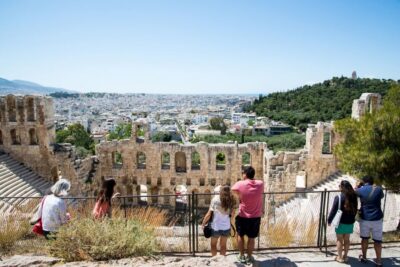
Acropolis, Parthenon & Acropolis Museum Guided Tour
Read our review →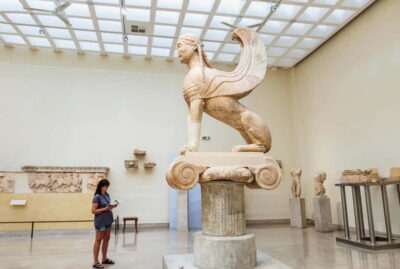
Mythology of Delphi, Museum and Arachova Guided Tour
Read our review →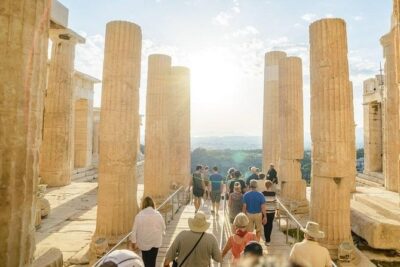
Acropolis monuments & Parthenon Walking Tour with Optional Acropolis Museum
Read our review →
Athens All Included: Acropolis and Museum Guided Tour with Ticket
Read our review →
Acropolis Museum Ticket with optional Audio Guide
Read our review →
Small-Group Delphi, Museum & Arachova Day Trip
Read our review →
Parthenon & Acropolis Museum with Audio or Live Tour Option
Read our review →
National Archaeological Museum Ticket & Audio Guide
Read our review →Browse the lists this tour appears in