
Reviewed · ACROPOLIS & ATHENS HIGHLIGHTS
Athens, Acropolis & Museum Tour without Tickets
The best part of this five-and-a-half-hour walking tour is the way it links modern Athens with ancient Athens. You begin beneath Syntagma Square, where archaeological discoveries from the metro construction are displayed, then walk past Parliament, the National Garden, Plaka, and the Acropolis before finishing among the treasures of the Acropolis Museum. I like the clear historical flow and the chance to see the changing of the guard. I also like that guides such as Effie, Kostas, Katerina, and Georgina have been praised for making complicated history easy to follow.
The catch is important: this version costs $79 but does not include admission tickets. You must buy timed tickets for the Acropolis and the museum yourself, match them to the tour schedule, and arrive on time. Add a long walk, steep and uneven surfaces, strong sun, and airport-style security, and this is a rewarding tour that still demands sensible planning.
Key points to know before booking
- The tour starts underground at Syntagma: Meet one floor below street level, beside the ticket-validation machines and beneath the large central clock.
- The Acropolis comes about two hours after the start: The scheduled Acropolis entry is approximately 11:40 a.m., so your ticket must match that time.
- The museum follows at about 2 p.m.: Buy a separate timed ticket for the New Acropolis Museum before reserving the tour.
- You see more than the famous hilltop: Parliament, the Unknown Soldier, the National Garden, Zappeion Hall, Hadrian’s Arch, Plaka, and ancient sites around the Acropolis are included.
- Expect a serious walk: Comfortable shoes, water, a hat, sunscreen, and a reasonable level of fitness matter here.
- The guide is the main value: A licensed English-speaking guide explains the monuments, mythology, restoration work, and museum pieces in a way a solo visit cannot easily match.
Why this Athens route works so well
Athens is easier to understand when you see its layers in sequence. This route begins with the modern capital, passes through nineteenth-century Athens, enters the old Plaka quarter, and finishes at the center of classical Greek culture.
That order gives the day a natural rhythm. You are not simply dropped at the Acropolis, shown a few columns, and sent away. You first get a sense of how Athens functions today, then move toward the ancient core with the city spread around you.
The price is $79 per person before admission fees. That is not the cheapest way to see the Acropolis, but the fee pays for five and a half hours with a licensed guide and covers a large amount of central Athens on foot. If you would otherwise spend much of the day piecing together the history yourself, the cost can be sensible.
The tour is conducted in English. Guide quality will always vary by departure, but the route has been led by guides including Effie, Kostas, Katerina, Georgina, Aristotle, Angeliki, and Ermis. The strongest pattern is clear: the guide’s storytelling, pacing, and care with shade and rest stops make a big difference.
More of the old city on foot in Athens:
- Athens: Acropolis & up to 5 Archaeological Sites Combo Pass
★ 4.4 · 12,619 reviews - Athens: Acropolis Ticket with Optional Audio or Live Guide
★ 4.2 · 11,055 reviews - Athens: Acropolis, Parthenon & Acropolis Museum Guided Tour
★ 4.8 · 9,316 reviews
Meeting beneath Syntagma Square
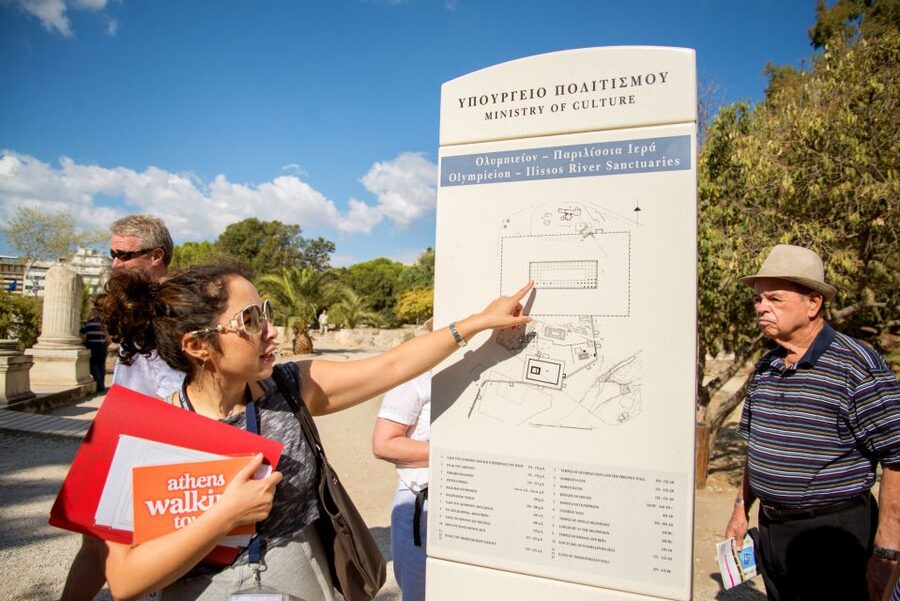
The meeting point is inside Syntagma Metro Station, one floor down from the main square. Look beside the ticket-validation machines and under the large hanging clock for a guide holding an orange Athens Walking Tours sign.
This is a practical starting point because Syntagma is central and easy to identify. Still, do not rush into the station and wait near the first entrance you see. The guide is specifically inside the station, below street level, near the machines. Arrive early enough to find the right spot without starting the day flustered.
The first stop is the metro’s small archaeological display. During construction, workers uncovered ancient remains, and some are displayed inside the station. It is a useful reminder that Athens is not an ordinary modern city built on empty ground. Ancient layers appear beneath daily life.
This opening is brief, but it sets the tone. You begin by seeing archaeology in an everyday setting rather than treating the past as something sealed away at a monument.
Parliament, the guards, and the National Garden
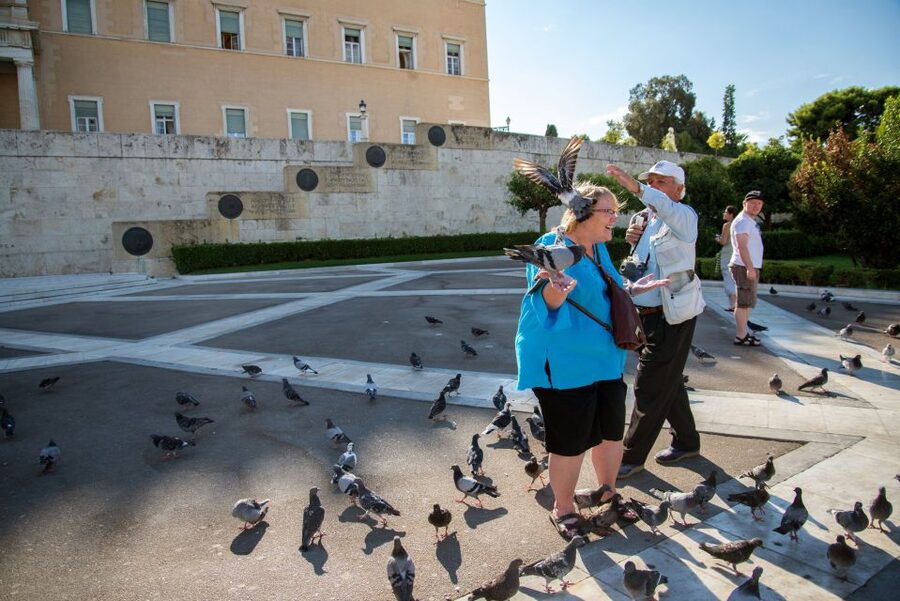
From Syntagma, the route heads toward Parliament House and the Monument to the Unknown Soldier. The changing of the guard is one of Athens’ most recognizable public ceremonies, and the tour gives you a chance to see it as part of the city rather than as an isolated photo stop.
The ceremony can be slow and formal, with distinctive uniforms and carefully controlled movements. Your guide can provide the context, which helps turn a short viewing into something more than a colorful interruption.
Next comes the National Garden. This is a welcome change of pace after the open square and city streets. The garden also gives the walk a cooler, quieter stretch before the climb toward the Acropolis.
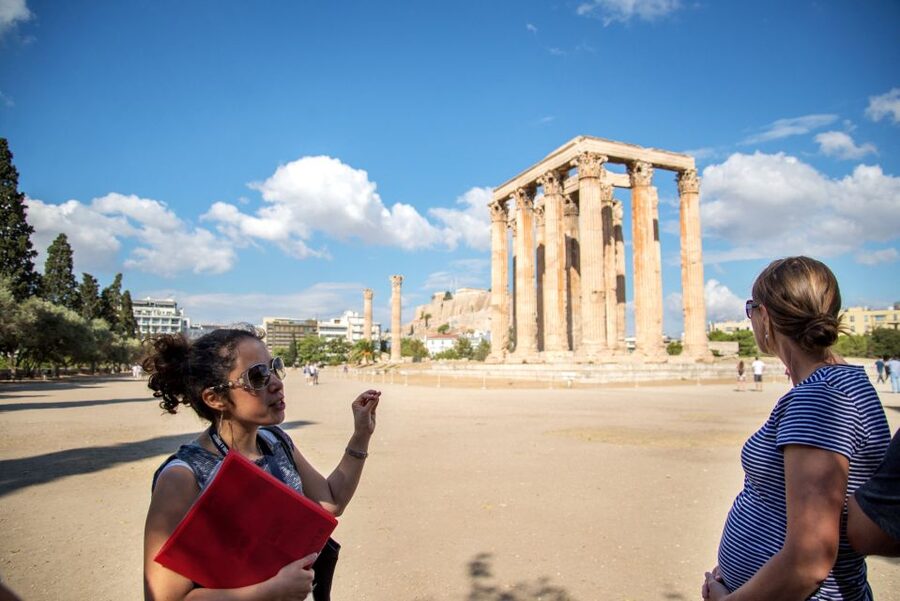
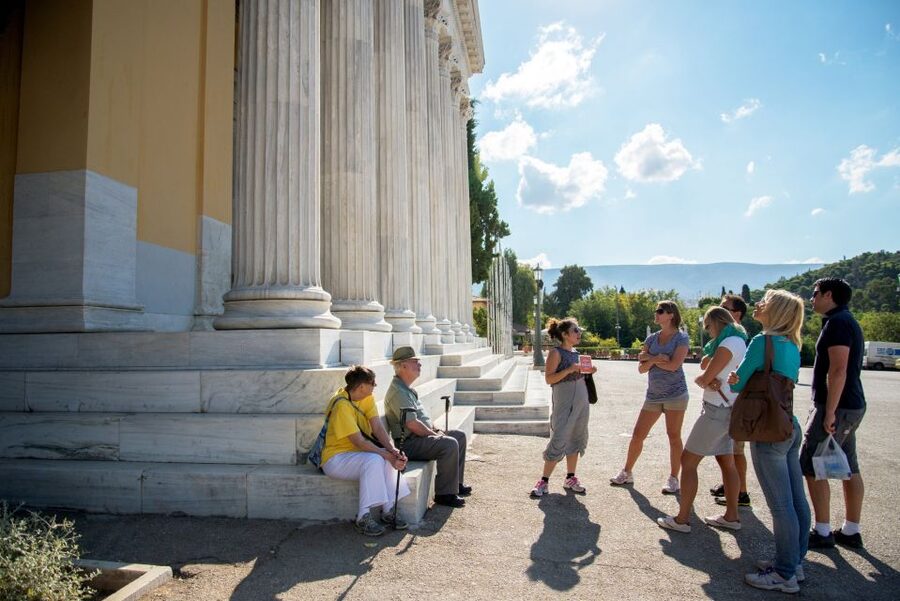
Nearby, you see Zappeion Hall, an elegant neoclassical building, and Hadrian’s Arch. The arch is especially useful for understanding the way Athens expanded and changed over time. Your guide can connect the Roman-era monument with the older Greek center ahead.
I like this section because it prevents the day from becoming an ancient-monument checklist. You get public ceremony, a garden, nineteenth-century architecture, and Roman remains before reaching the classical sites.
Plaka and the walk toward the Acropolis
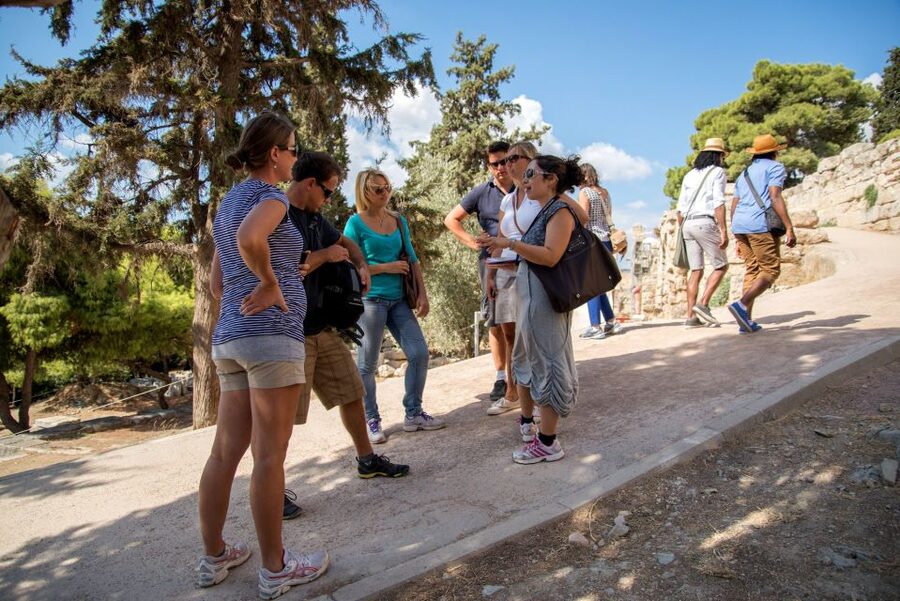
The route enters Plaka, the old neighborhood below the Acropolis, then follows Dionysiou Areopagitou, a beautiful pedestrian walkway toward the hill.
This is one of the more pleasant parts of the day. You are moving through an area where the Acropolis remains visible above the city, while the route itself gives you time to absorb the change from ordinary Athens to archaeological Athens.
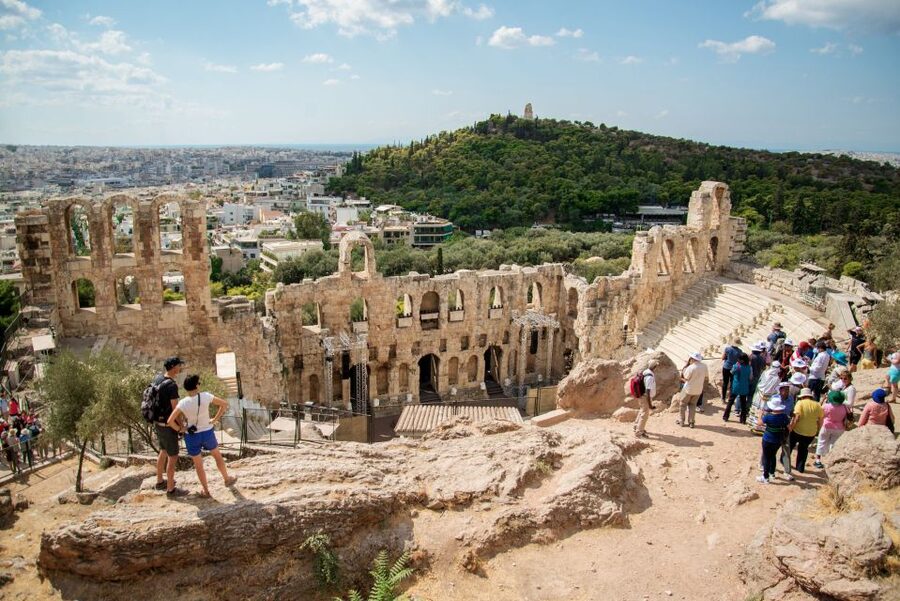
The walk also helps you understand scale. The Acropolis is not just a temple viewed from a distance. It is a rocky high point above a city filled with sanctuaries, theaters, hills, and later buildings. From the pedestrian path, your guide points out surrounding places such as the Sanctuary of Dionysus, Philopappos Hill, Mars Hill, and the Ancient Agora.
You should expect plenty of walking before the main climb even begins. Several people who have taken similar departures found the day tiring but manageable, especially when guides stopped for water, shade, photographs, and restroom breaks. That pacing is particularly useful in summer.
A few more things to do in Athens worth a look
- Athens: Mythology of Delphi, Museum and Arachova Guided Tour
★ 4.6 · 4,008 reviews - Athens: Acropolis, Parthenon & Acropolis Museum Guided Tour
★ 4.8 · 3,579 reviews - Acropolis monuments & Parthenon Walking Tour with Optional Acropolis Museum
★ 5.0 · 2,678 reviews - Athens All Included: Acropolis and Museum Guided Tour with Ticket
★ 4.5 · 2,673 reviews
Reaching the Acropolis and its four major monuments
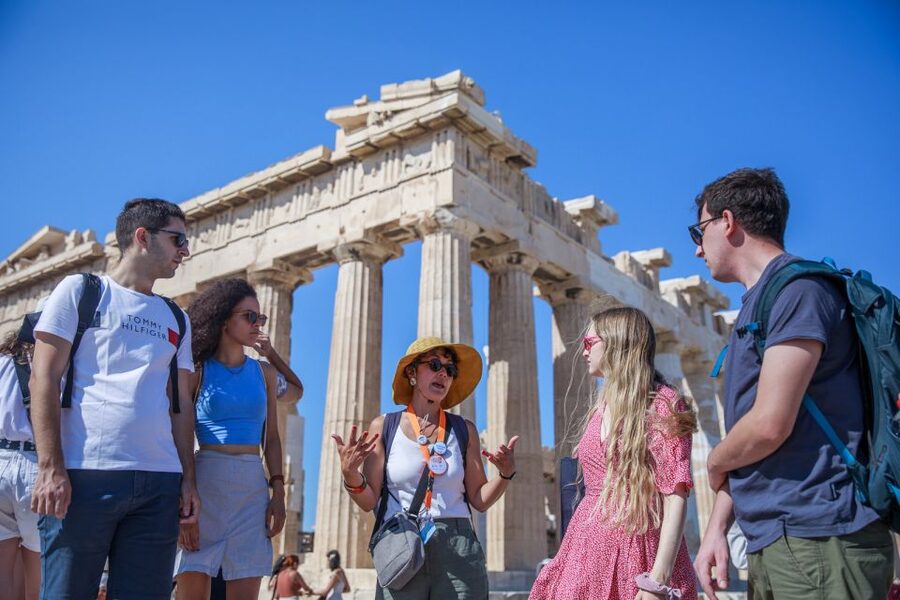
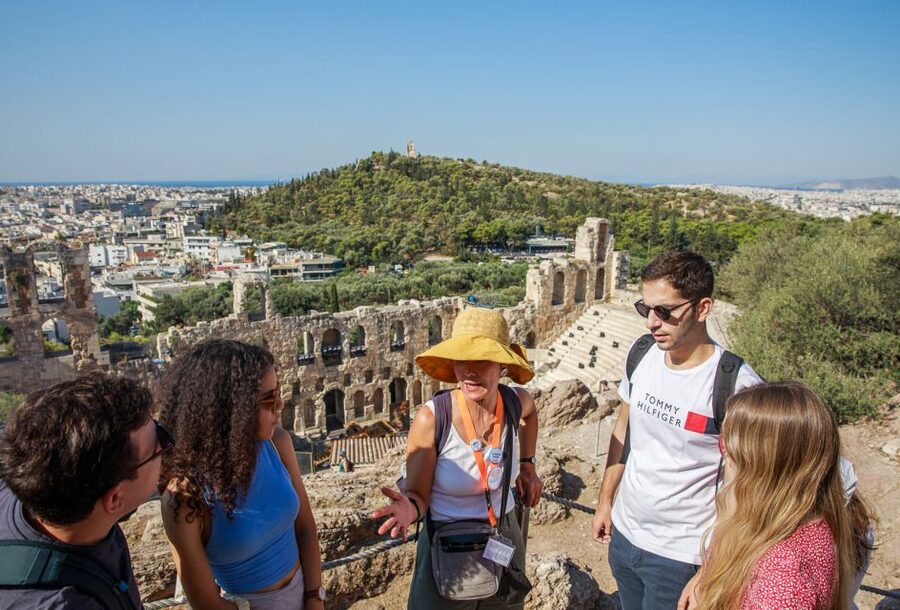
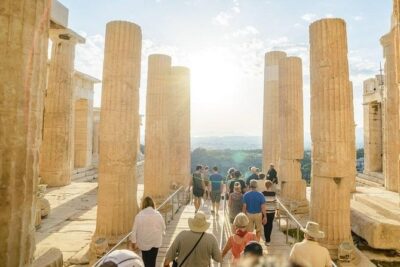
The climb to the Acropolis is the physical heart of the tour. The ground is uneven, and the ascent includes exposed areas where the sun can feel intense. Wear shoes with a firm grip. Smooth sandals or fashion shoes are poor choices here.
At the top, the reward is not only the Parthenon. Your guide explains the principal monuments as parts of one sacred complex:
- The Propylaia: The monumental entrance gives you a sense of how visitors approached the hill in antiquity.
- The Temple of Athena Nike: This smaller temple occupies a prominent position near the entrance.
- The Parthenon: The best-known building on the Acropolis, with its architecture, religious purpose, later uses, and continuing restoration work.
- The Erechtheion: Famous for its unusual design and the figures associated with its porch.
A good guide makes the stones easier to read. Kostas was praised for mixing history with humor, while Angeliki used myths, facts, and stories to keep younger visitors interested. Other guides, including Katerina and Aristotle, were especially attentive to shade and rest points.
That detail matters. On the Acropolis, standing in the right place can determine whether you hear the explanation or spend the whole time squinting into the sun. A strong guide will also keep the group together without forcing everyone to move at the same pace.
Take your own photos, but do not treat the hilltop as a quick photo stop. The views over Athens are excellent, and the guide’s explanation helps you connect the visible hills and ruins with the city’s ancient plan.
Ticket timing is the main logistical challenge
This tour is sold without admission tickets, and that changes the booking process. You must purchase your Acropolis ticket from the official site and your Acropolis Museum ticket from the museum’s official ticket site before booking the tour.
The timing supplied for the route is important:
- The Acropolis is reached approximately two hours after the tour begins, around 11:40 a.m.
- The Acropolis Museum is reached at approximately 2 p.m.
Choose the correct date, time slot, and ticket category. Your two tickets must match the schedule. Do not assume that buying a ticket for the right day is enough.
The Acropolis uses strict entry times. The group cannot wait for late arrivals, and no refund is provided for missing the entry. Build in extra time to reach Syntagma Station and find the meeting point.
Skip-the-ticket-line service applies only when you book the version that includes tickets. Even then, it does not mean walking straight through every checkpoint. Security screening is similar to airport security, and waits can range from none to 10 or 30 minutes, with longer delays possible during busy periods.
This is the single biggest reason to read the booking details carefully. The guided experience may be excellent, but your own ticket planning controls whether the day works.
The Acropolis Museum gives the ruins a second layer
The tour ends at the New Acropolis Museum, where more than 4,000 objects from the archaeological site are displayed. This is a strong finish because the museum lets you see the sculpture, architectural fragments, and everyday objects connected to the monuments you have just visited.
The museum is not simply a backup plan for bad weather. It gives you details that are difficult to appreciate on the exposed hilltop. Inside, your guide can explain how the pieces relate to the Parthenon, the Erechtheion, and other buildings.
The order matters. Seeing the monuments first gives the museum displays a physical setting. When you encounter a sculpture or fragment afterward, you already know where it belonged and why it mattered.
Several guides have been praised for making the museum part especially useful. Kostas was described as keeping the explanations interesting even for people who do not normally seek out history museums. That is exactly what you want here: enough detail to make the objects meaningful, without turning the final part of a long day into a lecture.
The visit is scheduled for about 2 p.m., so your museum ticket needs to fit that time. If you are booking separately, do not choose a slot that begins too late or too early for the group.
How demanding is the five-and-a-half-hour walk?
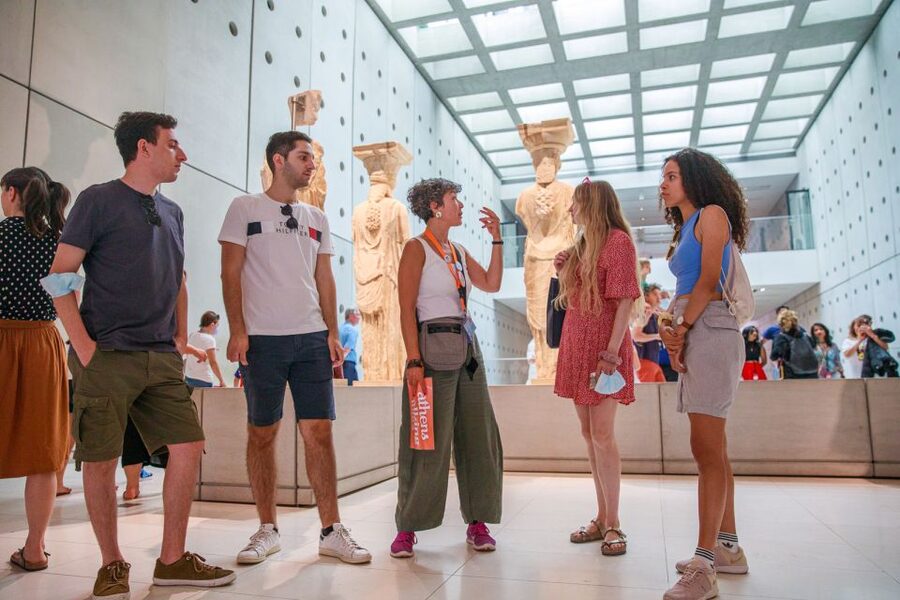
This is an active tour. You walk through central Athens, climb the Acropolis, stand on uneven archaeological surfaces, and continue through the museum. The total distance is not provided, but the repeated advice to wear comfortable shoes is well founded.
You should bring:
- Comfortable walking shoes
- Water
- Sunglasses
- A sun hat
- Sunscreen
- Passport or identification
Guides have made regular restroom and water stops, and several have adjusted their pace for hot weather. That helps, but you should still arrive prepared. Athens can be hot and exposed, especially around the Acropolis.
The tour is not suitable for wheelchair users or people with mobility impairments. Baby strollers and luggage or large bags are not allowed. If you tire easily, the route may feel long even though the breaks make it more manageable.
Families can enjoy it if children are comfortable walking and listening for several hours. The mythology and stories can hold the attention of older children and teenagers, but the climb and heat still need to be taken seriously.
Is $79 good value without the tickets?

At first glance, $79 may seem high because you still pay admission separately. The fair way to judge it is to consider what the fee covers: a licensed English-speaking guide, a five-and-a-half-hour route, the Acropolis, the museum, and several major city sights between them.
You are paying for interpretation and organization, not just entry. A solo visitor can walk past the same monuments for less, but will need to arrange timed tickets, build a route, research the history, and manage the schedule alone.
The value is strongest if you have limited time in Athens or want a clear first-day orientation. It is also useful if ancient architecture feels confusing without an explanation. The value is weaker if you prefer wandering alone, already know the Acropolis well, or want to spend long stretches at one monument.
The Athens guide magazine and city map are small but useful extras. They can help you continue exploring after the tour, though they should not be the reason you book.
Who should book this Acropolis tour?
I would choose this tour if you want the major sights explained in one organized day and you are comfortable walking for hours. It suits first-time visitors, families with older children, and anyone who wants Athens’ ancient sites placed in a wider city setting.
It is also a good fit if you like history presented through stories rather than reading every sign yourself. Guides such as Effie, Georgina, Katerina, and Kostas have been recognized for clear explanations, humor, steady pacing, and care in hot weather.
I would look elsewhere if you need an accessible route, dislike fixed schedules, or want to avoid buying and coordinating separate tickets. You also need to accept that security lines may still occur even with skip-the-line arrangements.
Book only after checking the official Acropolis and museum ticket times. That one step prevents the most serious problem.
Final verdict
This is a strong introduction to Athens because it combines the city’s present-day center, Roman and neoclassical landmarks, Plaka, the Acropolis, and the Acropolis Museum in one logical route. The guides are the heart of the experience, turning a long walk into a connected story rather than a string of famous names.
The tour is not effortless, and the without-tickets option requires careful planning. If you prepare your timed admissions, bring water and sun protection, and arrive early at Syntagma, the $79 fee can be a fair price for a full day of context and guidance. If you want freedom and a slower pace, visit independently. If you want to understand what you are seeing, book the tour.
FAQ
What does the Athens Acropolis and Museum tour include?
It includes a local licensed English-speaking guide, the guided walking tour, an Athens guide magazine, and an Athens map. The without-tickets option does not include admission fees.
Where is the meeting point?
Meet inside Syntagma Metro Station at Syntagma Square, one floor down beside the ticket-validating machines and beneath the large central hanging clock. Your guide will hold an orange Athens Walking Tours sign.
What time does the tour visit the Acropolis?
The route reaches the Acropolis approximately two hours after the start, at around 11:40 a.m. Your Acropolis admission ticket must match the tour’s schedule.
What time does the tour visit the Acropolis Museum?
The group reaches the museum at approximately 2 p.m. You need to buy a separate museum ticket with an entry time that matches the tour.
Do I need to buy tickets before booking?
Yes. With the without-tickets option, you must purchase your Acropolis and Acropolis Museum tickets from their official sites before booking the tour. Select the correct date, time, and ticket category.
Does skip-the-line access remove all waiting?
No. Skip-the-ticket-line service does not remove security screening. Airport-style security can take anywhere from zero to 10 or 30 minutes, and longer waits can occur during busy periods.
What should I bring?
Bring your passport or identification, comfortable shoes, sunglasses, a sun hat, sunscreen, and water.
Is the tour suitable for wheelchair users or people with mobility impairments?
No. The tour is not suitable for wheelchair users or people with mobility impairments.
Can I cancel the tour?
You can cancel up to 24 hours in advance for a full refund. The tour runs in rain or shine, and no refund is given if you miss the strict Acropolis entry time.
Just added in Athens
- Ceramic and Pottery Creative Workshop with Two Local Artists★ 4.0 · 57 reviews
- Small-Group Women History in Ancient Greece Walking Tour★ 5.0 · 38 reviews
- Athens Old City Private Photoshoot Tour / 2 hrs★ 5.0 · 109 reviews
- Athens: Wine Workshop Create your Own Wine under the Acropolis★ 5.0 · 77 reviews
- Athens: Greek Wines Tasting with Sommelier and Acropolis Views★ 5.0 · 88 reviews
- Wine Trails Private Tour/ Nemea visit 3 wineries from Athens or Nafplion (10 h)★ 5.0 · 44 reviews
- FLYING DRESS Photoshoot in Athens – Greece★ 5.0 · 47 reviews
- Small-Group Wine Tour in Athens with Tasting★ 5.0 · 33 reviews
Acropolis & Athens Highlights, compared.
Acropolis & up to 5 Archaeological Sites Combo Pass
Read our review →
Acropolis, Parthenon & Acropolis Museum Guided Tour
Read our review →

Acropolis monuments & Parthenon Walking Tour with Optional Acropolis Museum
Read our review →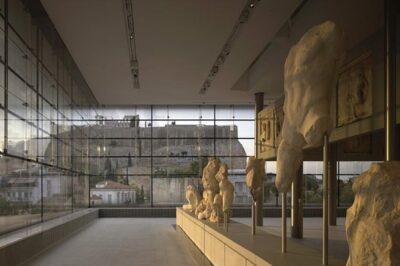
Athens All Included: Acropolis and Museum Guided Tour with Ticket
Read our review →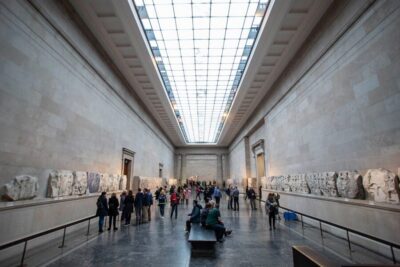
Acropolis Museum Ticket with optional Audio Guide
Read our review →
Acropolis Ticket & Optional Self-Guided Audio Tours
Read our review →Browse the lists this tour appears in