
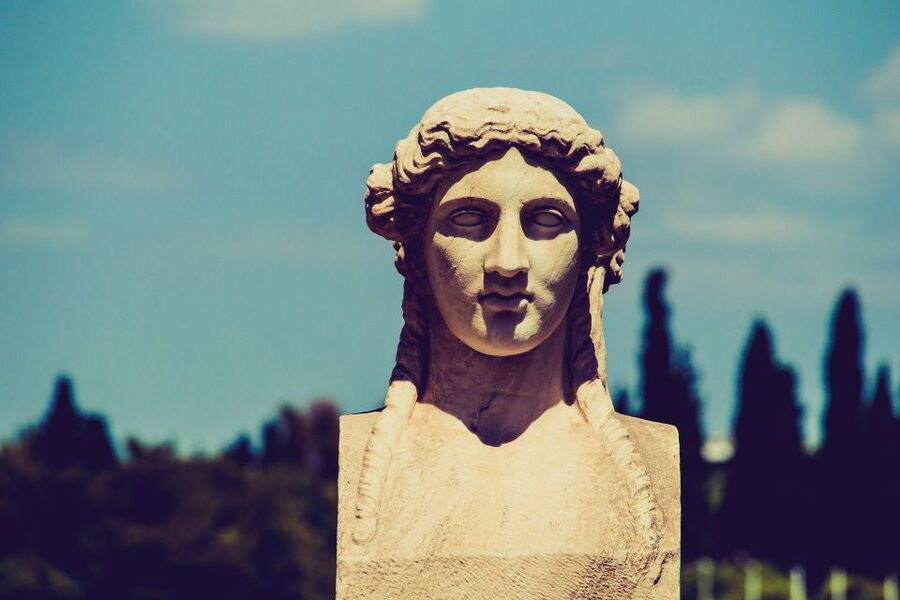
Reviewed · WALKING TOURS
Athens: Women in Ancient Greece Guided Walking Tour
Ancient Athens is usually told through generals, philosophers, and voters. This two-hour walking tour asks a sharper question: where were the women, and what did their lives look like? You’ll hear about household duties, social limits, goddesses, festivals, and women who pushed past the rules, while walking from Monastiraki toward the Agora, Pnyx, and Filopappou Hill.
I like the route’s fresh point of view and the way it connects mythology with ordinary life. I also like the conversational style reported by several guests, especially with guide Maelle, who asks questions and welcomes discussion instead of delivering a dry speech. The main drawback is physical: the walk includes steps and uphill sections, and archaeological sites are viewed from outside, with admission not included.
Key points to know before you go
- Women take center stage: Hear about Sappho, Aspasia, Agnodice, Penelope, Demeter, Athena, and Pandora.
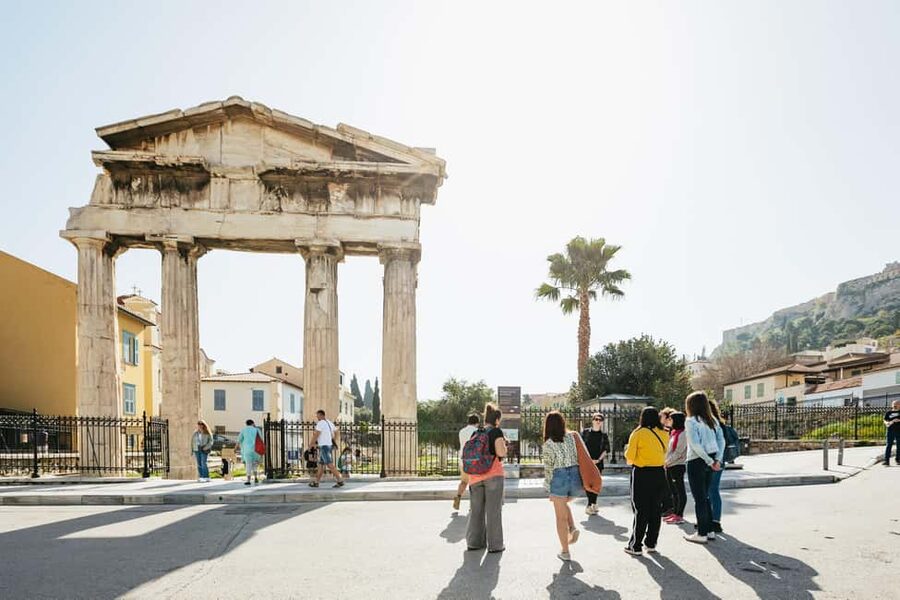
- A useful route through old Athens: The walk links Monastiraki, Hadrian’s Library, Plaka, the Ancient Agora, Pnyx, and Filopappou Hill.
- More than mythology: The guide covers daily duties, social rights, marriage, work, education, and the status of women from different social groups.
- A discussion-led experience: Maelle is praised for encouraging questions and connecting ancient customs with present-day social issues.
- Outdoor-only sightseeing: You see major monuments from the street. Entry tickets to archaeological sites are not included.
- Plan for sun and steps: Bring water, sunscreen, and a hat. The tour is not suitable for wheelchair users or people with significant mobility or heart problems.
Why this Athens walk feels different
The usual Athens tour puts the Acropolis, democracy, temples, and male thinkers at the center. Those subjects matter, but they can leave half the population in the shadows. This walk shifts your attention to the women who lived in the same city but often had no formal political voice.
You’ll consider the life of an Athenian woman inside the home, the work involved in running a household, and the different expectations placed on women depending on their status. The guide also brings in women who do not fit the standard picture, including poets, doctors, philosophers, and political companions.
That range is important. The tour is not simply a list of famous women. It looks at goddesses and mythical figures, but also at women whose names appear in historical accounts and at the many ordinary women who left little written evidence behind. You’ll hear stories connected with Sappho, Aspasia, and Agnodice, then set those exceptional lives against the rules that shaped everyday Athenian society.
The tone can be thought-provoking. Several people who took the walk found themselves comparing ancient expectations with problems that still affect women and minorities today. That does not turn the tour into a modern political lecture. It gives the old stones a human question: who was allowed to speak, learn, vote, work, or be remembered?
A few more things to do in Athens worth a look
- Athens: Acropolis and Parthenon Guided Walking Tour
★ 4.6 · 5,882 reviews - Greek Food Walking Tour in Athens
★ 5.0 · 4,740 reviews - Acropolis: Acropolis and Parthenon Guided Walking Tour
★ 4.7 · 3,442 reviews
Starting at Monastiraki Square
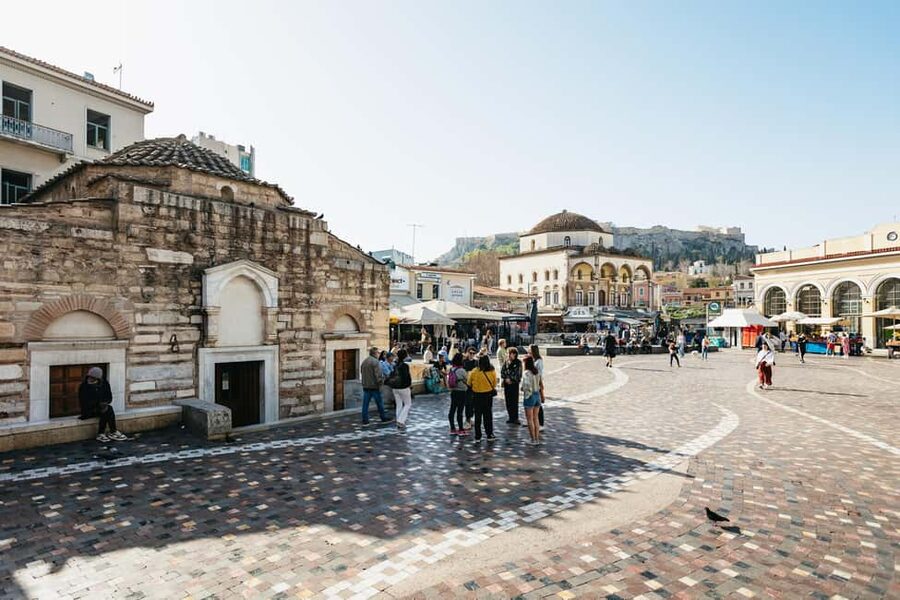
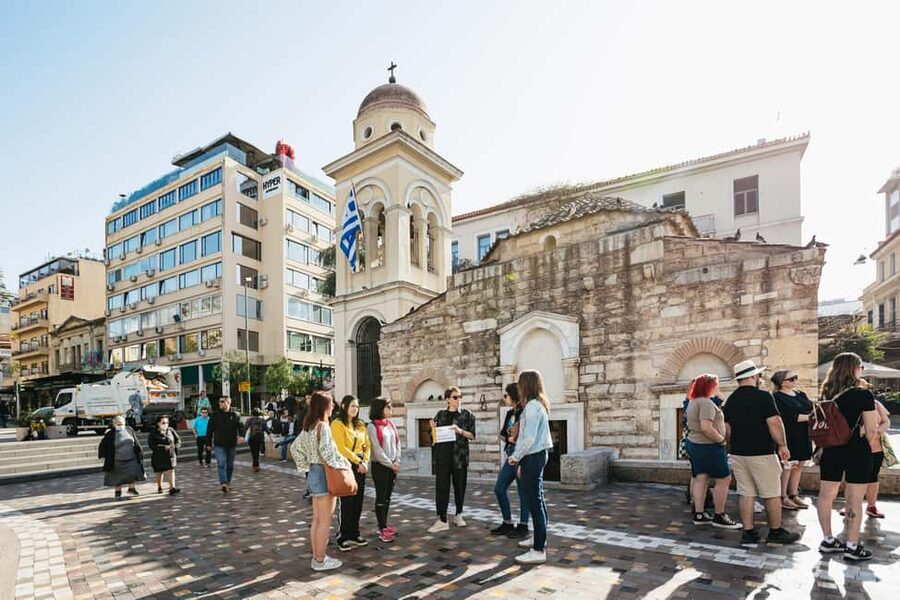
Meet your guide in front of the Holy Church of the Virgin Mary Pantanassa on Monastiraki Square. Look for the person holding a sign marked Women in Ancient Greece. This is a busy part of central Athens, so give yourself enough time to locate the church and guide without rushing.
Monastiraki is a practical starting point because it puts you close to several layers of Athens at once. The square is lively, central, and easy to pair with other sightseeing. The tour itself begins on foot, with no transport between stops.
Your first short stop is Monastiraki, where the guide sets the scene for the ancient city and introduces the main theme. The early explanation matters because it helps you read the later monuments through a social lens. Instead of asking only what a building was used for, you’ll be encouraged to think about who could enter, who could speak there, and who was left outside.
The group format can vary, and a private option is available. The guide languages are English and French. If you are interested in asking lots of questions, a smaller or private group may suit you especially well, though the conversational approach appears to be part of the experience in any format.
Hadrian’s Library and the streets of Plaka
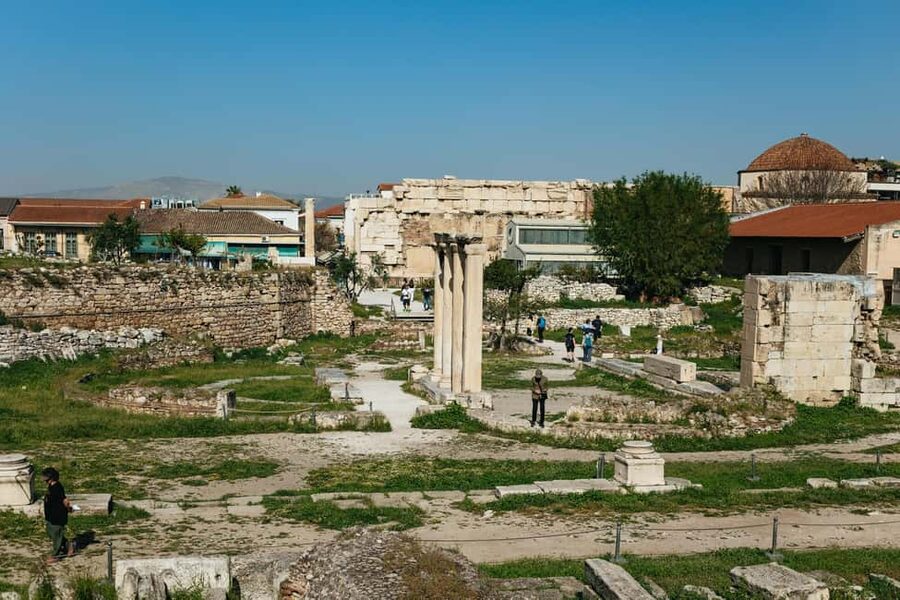
The route continues to Hadrian’s Library for a short guided look. You’ll see the site from outside, since entry tickets to archaeological locations are not included. This is a recurring point to keep clear: the walk is about interpretation and street-level access, not a full archaeological-site visit.
Hadrian’s Library gives the guide another chance to discuss access to learning and public life. The structure itself is a reminder of Athens as a center of books, ideas, and scholarship, but the tour asks you to consider who could take part in that intellectual world. The contrast between the city’s reputation for thought and the limits placed on many women is one of the walk’s strongest themes.
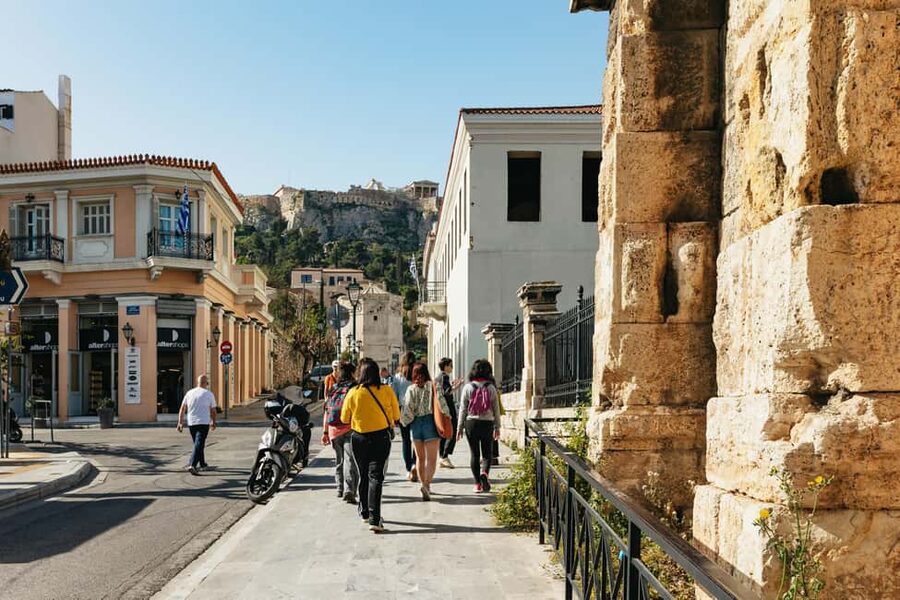
From there, you move through Plaka. The stop is short, but the setting helps connect the ancient past with the modern city around you. The guide tells stories as you walk, so this is not a tour where you spend every minute standing in front of one monument.
Plaka is also a useful place to notice the practical side of the experience. Athens can be hot, and some streets offer more shade than others. One guide, Maelle, has been praised for finding shady places to pause on warm days. Still, you should bring water, sunscreen, and a sun hat rather than count on shade throughout the route.
The Gate of Athena Archegetis and the stories behind the myths

At the Gate of Athena Archegetis, the tour turns more directly toward the link between myth and social roles. Athena, Penelope, Demeter, and Pandora are among the figures used to explore how Greek stories shaped ideas about women.
The gods and mythic women are not presented as simple role models. Athena could represent wisdom, strategy, and civic protection, while other stories placed women inside narrower roles tied to marriage, family, beauty, temptation, or loss. Penelope’s patience and loyalty, Demeter’s grief and power, and Pandora’s troubling place in the mythic tradition all give the guide material for examining what ancient society admired or feared in women.
This part will suit you if you like mythology with a social angle. If you are hoping for a tour focused mainly on temple architecture, battles, or dates, it may feel less familiar and less monument-heavy. The reward is that familiar myths begin to look less like isolated stories and more like clues to the values of the society that told them.
The schedule includes a short secret stop after the Gate of Athena Archegetis. The exact nature of that stop is not specified, so expect an additional guided point along the route rather than a major museum visit. It is a small detail, but it helps keep the walk from feeling like a standard checklist of Athens sights.
Same base, a completely different day:
- Athens: Acropolis & up to 5 Archaeological Sites Combo Pass
★ 4.4 · 12,619 reviews - Athens: Acropolis Ticket with Optional Audio or Live Guide
★ 4.2 · 11,055 reviews - Athens: Acropolis, Parthenon & Acropolis Museum Guided Tour
★ 4.8 · 9,316 reviews - Athens: Cape Sounion & Poseidon Temple Sunset Half-Day Trip
★ 4.8 · 8,241 reviews
The Ancient Agora, seen from the women’s side
The Ancient Agora is one of the most useful places on the route because it was tied to public, commercial, civic, and social life. From here, the guide can explain the sharp divide between the public world of male citizens and the private responsibilities assigned to many women.
You’ll hear about women’s everyday lives, including their duties and social position. The guide also tells stories such as the tale of kidnapped Spartan girls and the mysterious women’s festival in Athens. These episodes add texture to the subject. They show that ancient women were not simply passive figures waiting inside houses. They could be central to religious customs, family structures, labor, ritual, and conflict, even when formal political rights were limited.
The Agora is also where the tour’s balance matters. You will not get a picture of one single ancient Greek woman, because there was no single experience. A woman’s life could differ by city, class, family, legal status, and whether she was a citizen, foreign resident, enslaved person, poet, priestess, or mythic figure.
The stop lasts about 10 minutes according to the planned schedule, so do not expect a full archaeological tour of the Agora. You’ll be standing outdoors and looking at the remains from the route. If you want to explore the site itself, you would need to arrange a separate visit and buy the required ticket.
Pnyx and the limits of Athenian democracy
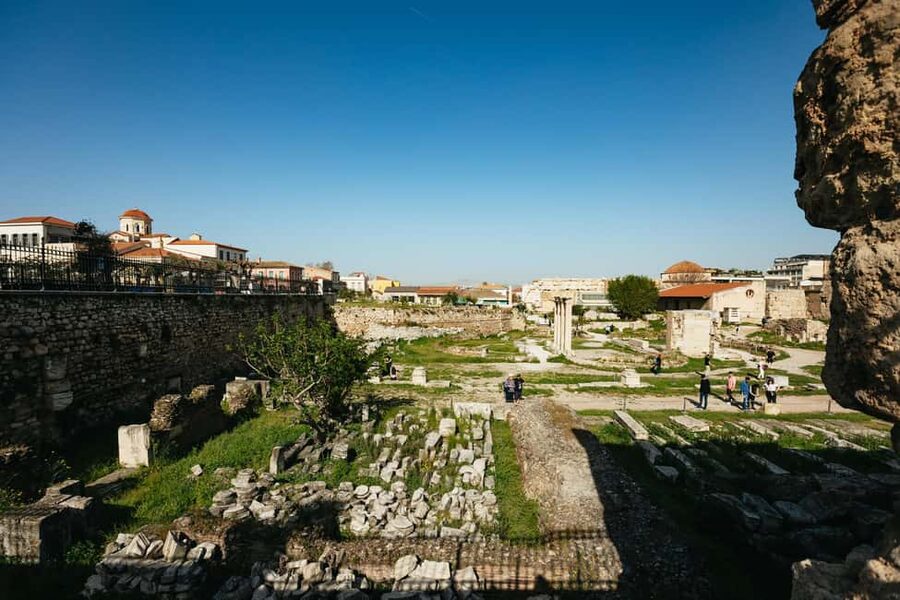
The route then reaches the Pnyx, the hill associated with the first democratic votes. This is one of the most powerful stops because democracy is so closely tied to Athens in the modern imagination.
Here, the guide can make the central contrast plain: the birth of democracy did not mean equal political participation for everyone. Women were connected to the life of the city, but they were excluded from the public voting role celebrated at the Pnyx.
That contrast gives the tour intellectual weight without requiring a long lecture. You are looking across the same city where public decisions were made and thinking about who had the legal right to take part. It is a good setting for discussing how an achievement can be groundbreaking and limited at the same time.
The Pnyx stop is planned for about 15 minutes, the longest formal stop on the route. You should expect some standing and uneven ground. The path includes steps, and the later walk toward Filopappou Hill adds an uphill element, so comfortable shoes are sensible.
The view toward the Acropolis
A viewpoint along the way gives you time to look toward the Acropolis. The view is scenic, but the real value comes from seeing the famous monument after hearing stories that usually receive less attention.
You may find yourself thinking differently about the Acropolis after the tour. The temples and civic buildings were part of a society that gave women important religious and family roles while restricting many of their public rights. That tension is more useful than a simple modern judgment or a romantic picture of the ancient world.
The guide also brings in women such as Sappho, Aspasia, and Agnodice. Their stories help show that women did not fit one neat pattern. Sappho is remembered as a poet, Aspasia as an influential intellectual figure linked with Athens, and Agnodice as a woman associated with medicine and defying expectations. The details give you names to remember after you leave, but the broader lesson is just as important: the written record is selective, and famous women are only the visible edge of a much larger population.
Finishing at Filopappou Hill
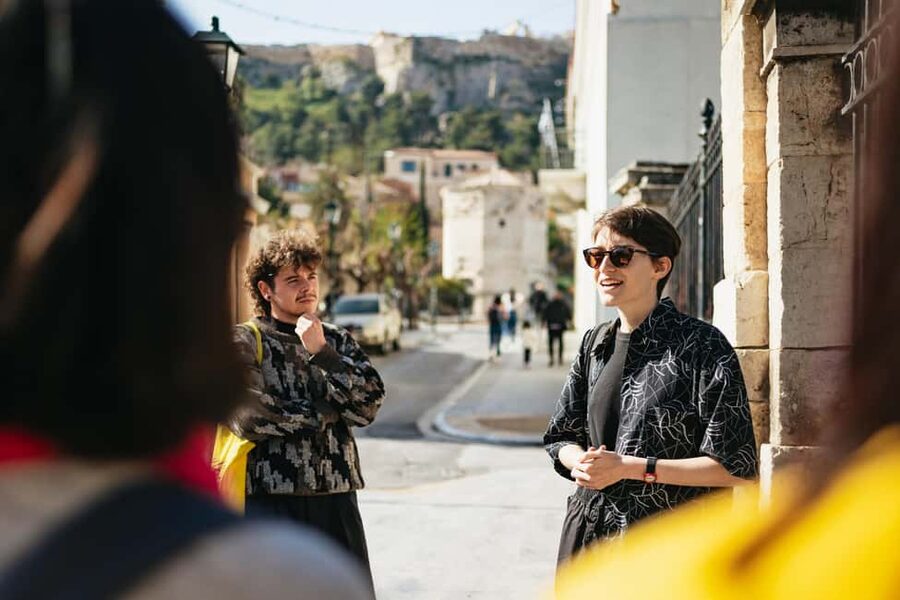
The walk ends at Filopappou Hill after a final guided stop of about 10 minutes. This is a fitting finish because it offers a scenic setting and a chance to gather the tour’s main ideas: women’s daily work, myth, civic exclusion, religion, education, and the rare women who managed to gain a public reputation.
The route information lists a drop-off point near the Kiosk at Rovertou Galli 69, while the meeting information says the activity ends back at the meeting point. Since those details differ slightly, confirm the exact finish with the guide when you meet. In either case, you remain in central Athens, close to other sights and places to eat.
Filopappou Hill also makes clear why the walk is not ideal for everyone. Steps and slopes are part of the experience, and the tour is specifically not recommended for wheelchair users, people with mobility impairments, or people with heart problems. If you have any concern about walking uphill in the heat, ask before booking.
What the $44.04 price gets you
At $44.04 per person, the price is reasonable if you want a focused historical theme and an active guide rather than a standard monument tour. You are paying for two hours of guiding, storytelling, route planning, and a small gift. You are not paying for entry to the Acropolis, Ancient Agora, Hadrian’s Library, or other archaeological sites.
That distinction affects the value. If your main goal is to go inside major ruins, this tour will not replace an archaeological-site ticket. If you already plan to visit those places separately, the walking tour can add a different layer by showing you how to interpret them through women’s lives and social roles.
The tour has a perfect 5 rating from 86 reviews, and the most consistent praise centers on the guide’s preparation, warmth, enthusiasm, and ability to answer questions. Maelle is singled out by name several times. People who walked with her describe a friendly, interactive style that feels more like a conversation than a speech, with links between ancient society and modern questions.
That praise is useful, but you should still choose the tour for its subject. The experience works best if you enjoy discussion, mythology, social history, and stories that challenge the standard version of Athens. It is less suitable if you want a fast overview of every major monument or a quiet walk with little conversation.
Practical planning for a comfortable walk
The tour lasts two hours, but the route involves more than simply strolling on level pavement. There are steps, uneven areas, and an uphill section toward Filopappou Hill. Wear shoes you can walk in comfortably and bring water from the start.
Sun protection matters. Pack a hat and sunscreen, especially during the warmer months. The guide may find shade for pauses, but you should prepare for outdoor exposure.
You can cancel up to 24 hours before the start for a full refund, and a reserve-now, pay-later option is available. Starting times vary, so check availability for the date you want. English and French tours are offered, and you can choose a private group if that format is available for your booking.
I would combine this walk with a separate Acropolis visit rather than treat it as a substitute. The tour gives you a thoughtful framework for the city, while an archaeological-site visit lets you spend more time inside the monuments themselves.
Who should book this tour?
I would book this if you have already seen the basic Athens highlights, want a less predictable angle on the city, or care about women’s history, mythology, and the limits of ancient democracy. It is also a good choice for friends, families with older children, and anyone who enjoys asking questions rather than just taking photographs.
The strongest reason to go is the guide-led storytelling. Maelle receives especially warm praise for her humor, personal interest, and ability to make the subject engaging without losing its seriousness. The route also includes several important Athens landmarks, so you get familiar sights with a new set of questions.
I would skip it if you need step-free access, cannot manage an uphill walk, or want extensive interior visits. But if you can handle the route and want Athens presented from a viewpoint that standard tours often miss, this is a smart two-hour addition to your itinerary. It may leave you looking at the Pnyx, the Agora, and the Acropolis with more curiosity than you had before.
FAQ
Where does the Women in Ancient Greece tour start?
Meet your guide on Monastiraki Square in front of the Church of the Virgin Mary Pantanassa. The guide will hold a sign marked Women in Ancient Greece.
How long does the walking tour last?
The tour lasts two hours. Starting times vary, so check availability for your chosen date.
Which languages are available?
The tour is offered in English and French.
Are archaeological-site entrance tickets included?
No. The tour provides exterior views of the sites. Tickets for archaeological locations are not included.
Is the tour suitable for wheelchair users?
No. The route includes steps and is not suitable for wheelchair users or people with mobility impairments. It is also not recommended for people with heart problems.
What should I bring?
Bring water, sunscreen, and a sun hat. Comfortable walking shoes are also a sensible choice because the route includes steps and uphill sections.
Just added in Athens
- Ceramic and Pottery Creative Workshop with Two Local Artists★ 4.0 · 57 reviews
- Athens Old City Private Photoshoot Tour / 2 hrs★ 5.0 · 109 reviews
- Small-Group Women History in Ancient Greece Walking Tour★ 5.0 · 38 reviews
- Athens: Wine Workshop Create your Own Wine under the Acropolis★ 5.0 · 77 reviews
- Athens: Greek Wines Tasting with Sommelier and Acropolis Views★ 5.0 · 88 reviews
- Wine Trails Private Tour/ Nemea visit 3 wineries from Athens or Nafplion (10 h)★ 5.0 · 44 reviews
- FLYING DRESS Photoshoot in Athens – Greece★ 5.0 · 47 reviews
- Small-Group Wine Tour in Athens with Tasting★ 5.0 · 33 reviews
Walking Tours, compared.

Acropolis monuments & Parthenon Walking Tour with Optional Acropolis Museum
Read our review →
Knossos: Knossos Palace Skip-the-Line Guided Walking Tour
Read our review →

Athens Authentic Greek Food Walking Tour (Small Group)
Read our review →
Early Morning Acropolis & Old Athens Guided Walking Tour
Read our review →
Browse the lists this tour appears in